Where does the tea ceremony come from? From Murata Jukō to Sen no Rikyu
Tea reached Japan from China with Buddhist monks as early as the Nara period. But it was the monk Eisai, founder of the Rinzai Zen school in Japan, who popularised whisked powdered tea at the end of the 12th century, presenting it as a remedy and an aid to meditation.
For two centuries tea remained a luxury of aristocrats and warriors, who held tasting contests and showed off costly Chinese porcelain. In the 15th century, Murata Jukō took the opposite approach: a plainer practice in a small room with simple utensils, in tune with the Zen spirit. Takeno Jōō continued along that path.
Sen no Rikyu (1522–1591), a Sakai merchant who became tea master to Oda Nobunaga and then Toyotomi Hideyoshi, turned it into a complete art. We owe him:
- the aesthetic of wabi, the beauty of what is simple, imperfect, worn by time;
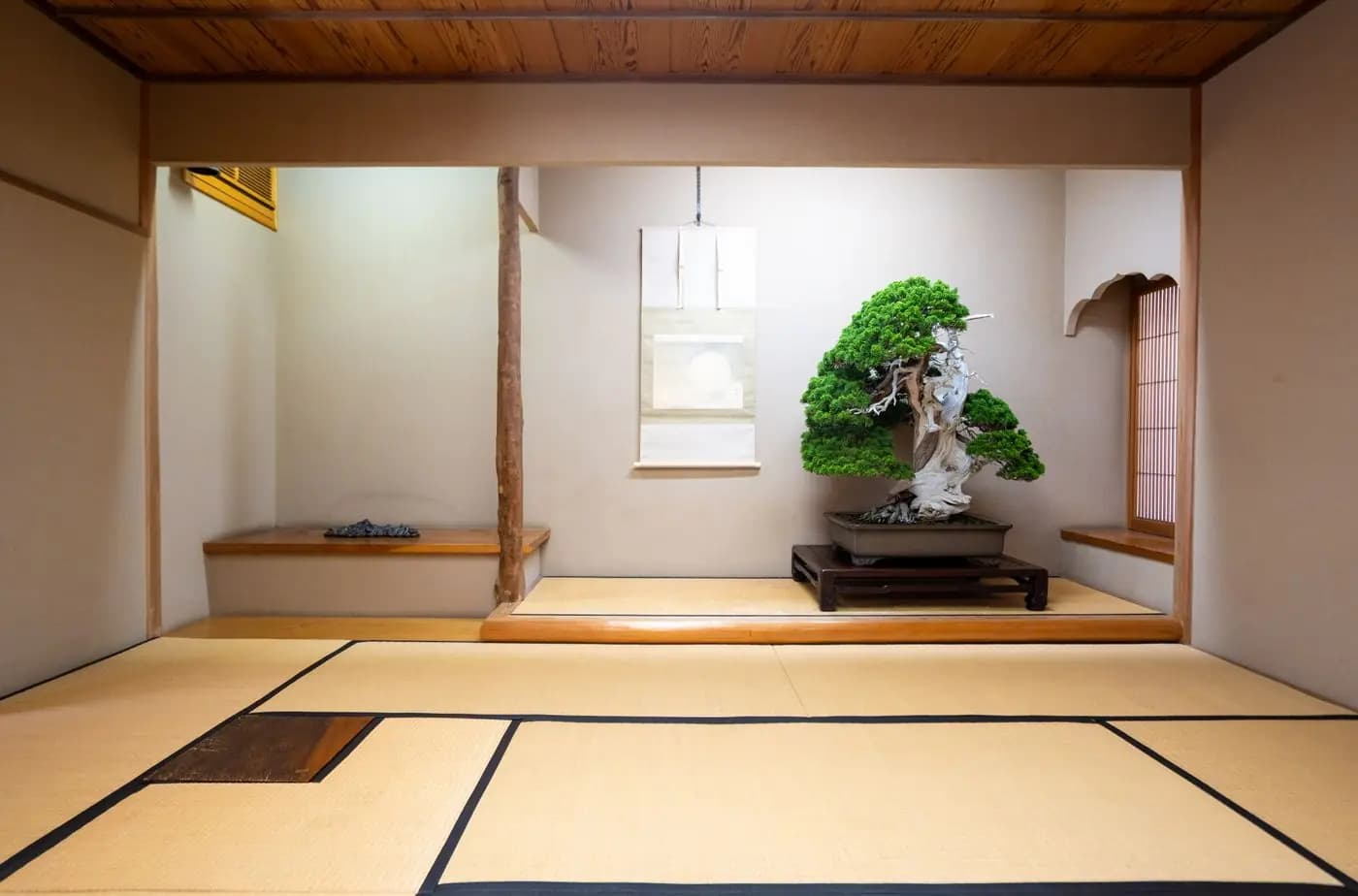
- the reduction of the tea room to two tatami mats, like the Tai-an, preserved at Myōki-an temple near Kyoto and designated a National Treasure;
- the low nijiriguchi entrance, which forces everyone, samurai included, to bow down and leave their sword outside;
- the four principles wa, kei, sei, jaku: harmony, respect, purity and tranquillity.
Rikyu died in 1591, ordered to take his own life by Hideyoshi for reasons still debated. His descendants founded the three Sen houses, Omotesenke, Urasenke and Mushakōjisenke, which still pass on his teaching from Kyoto today. Urasenke is the most active internationally.
The idea that sums it all up is ichigo ichie: “one time, one meeting”. Every gathering around tea is unique and will never happen again.
The steps of a tea ceremony (chadō): from the garden to the last bowl
There are two formats. The chaji is the full gathering, about four hours, with a kaiseki meal, a thick tea and a thin tea. The chakai is a shorter meeting around a sweet and a thin tea: this is what most visitors experience.
A chaji in outline:
- waiting in a garden shelter, where guests gather and decide the order; the first guest (shōkyaku) acts as spokesperson;
- the roji, the dewy garden, crossed in silence;
- purification at the tsukubai, a low stone basin where you rinse your hands and mouth;
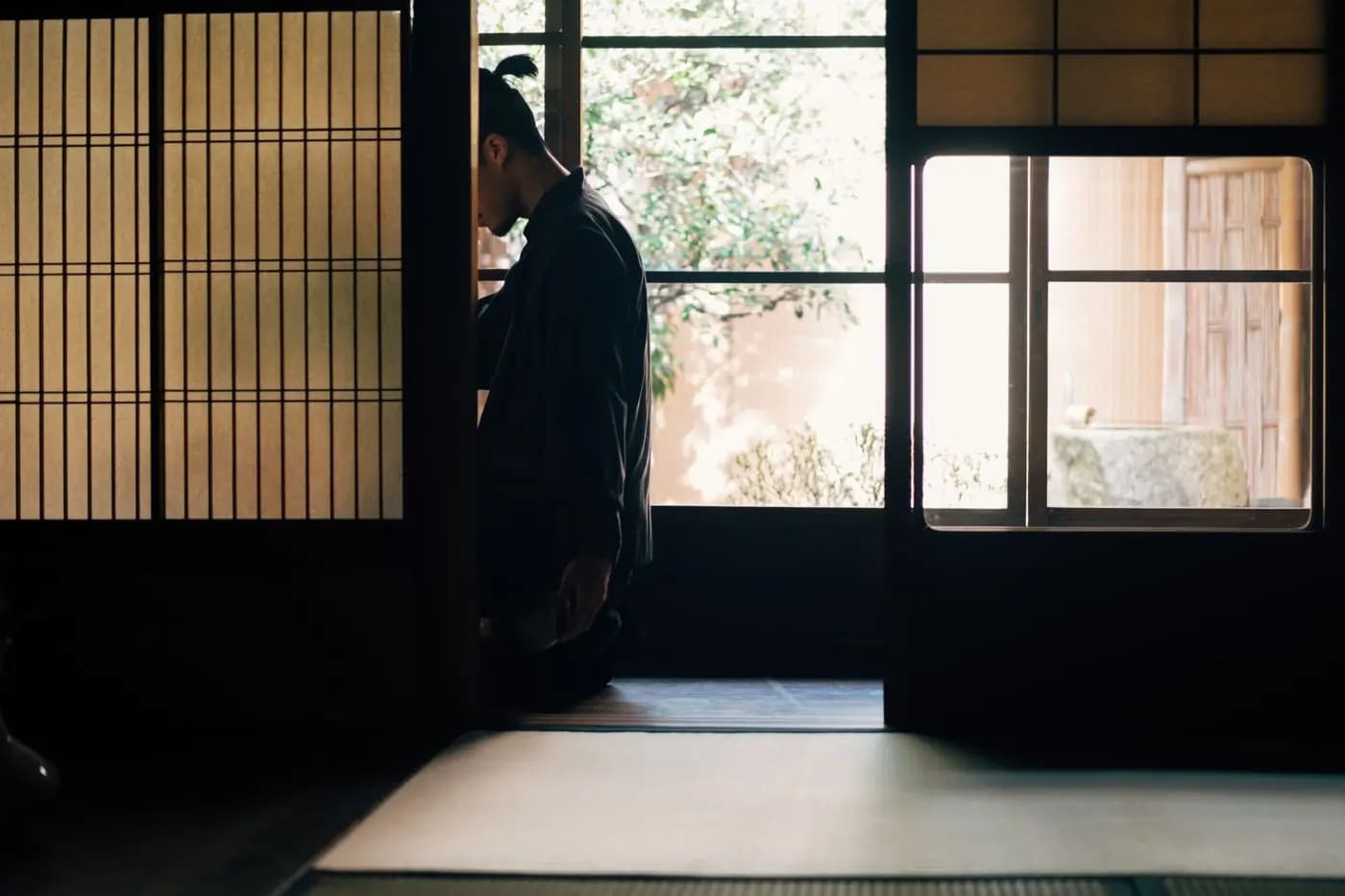
- entering through the nijiriguchi, on your knees;
- contemplating the alcove (tokonoma): a calligraphy scroll chosen for the occasion, sometimes a flower arrangement;
- the kaiseki meal, served in small portions with sake;
- charcoal: the host revives the fire under the kettle in front of the guests;
- koicha, a thick tea, almost a paste, prepared in a single bowl that guests pass along;
- usucha, a light, frothy tea, one bowl per guest.
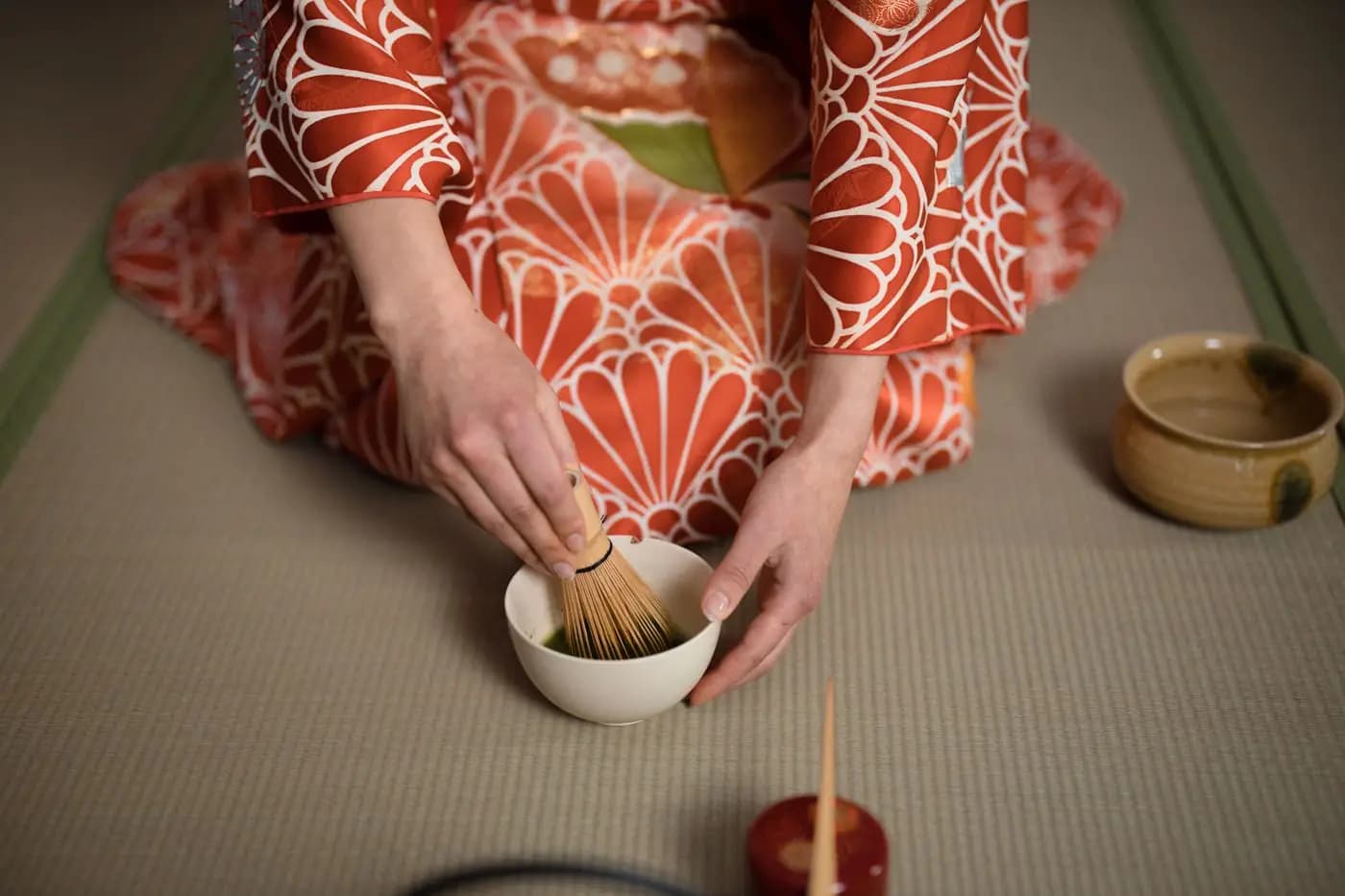
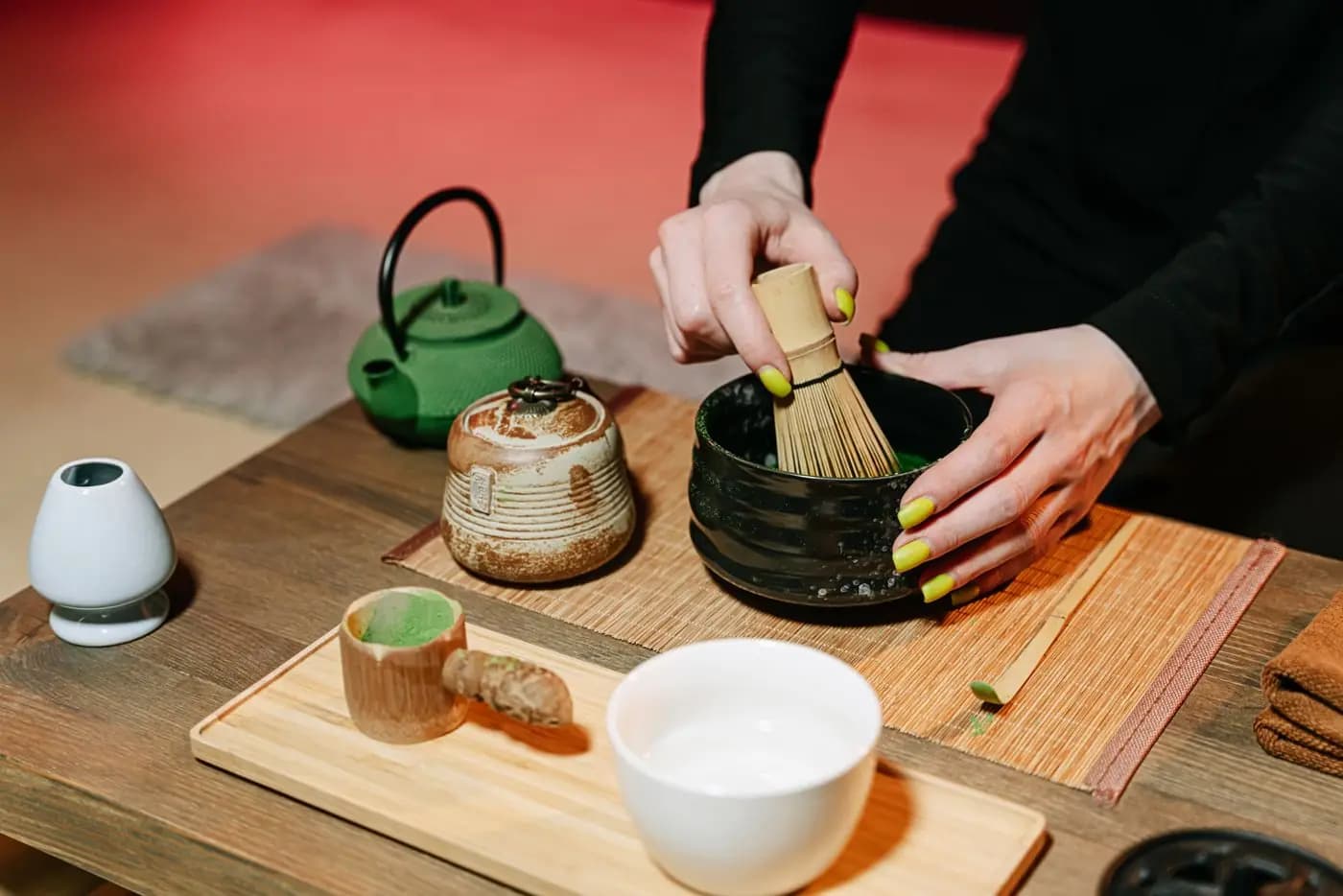
Throughout, the host performs the temae, a codified sequence of gestures: purifying the tea caddy and scoop with a silk cloth (fukusa), rinsing the whisk, measuring the matcha, pouring the water, whisking. Nothing is left to chance and nothing is done to impress: the precision is there to put the guest at ease.
At a chakai or an introduction for visitors, you get the essence in 45 minutes to an hour: explanation, demonstration by a teacher, a wagashi and a usucha, then, often, whisking your own bowl.
Matcha and wagashi: what you drink and what you eat
Matcha is not ordinary green tea ground into powder. The tea bushes are covered for several weeks before harvest to shade them, which raises their amino-acid content and gives the bright green colour and mellow taste (umami). The leaves are then steamed, dried, stripped of stems and veins (producing tencha), and slowly ground on a stone mill. A mill produces only about forty grams an hour.
The benchmark regions are Uji, south of Kyoto, 20 minutes by train, and Nishio in Aichi Prefecture. Uji is easy to visit in half a day, with its tea houses and Byōdō-in temple.
There are two preparations:
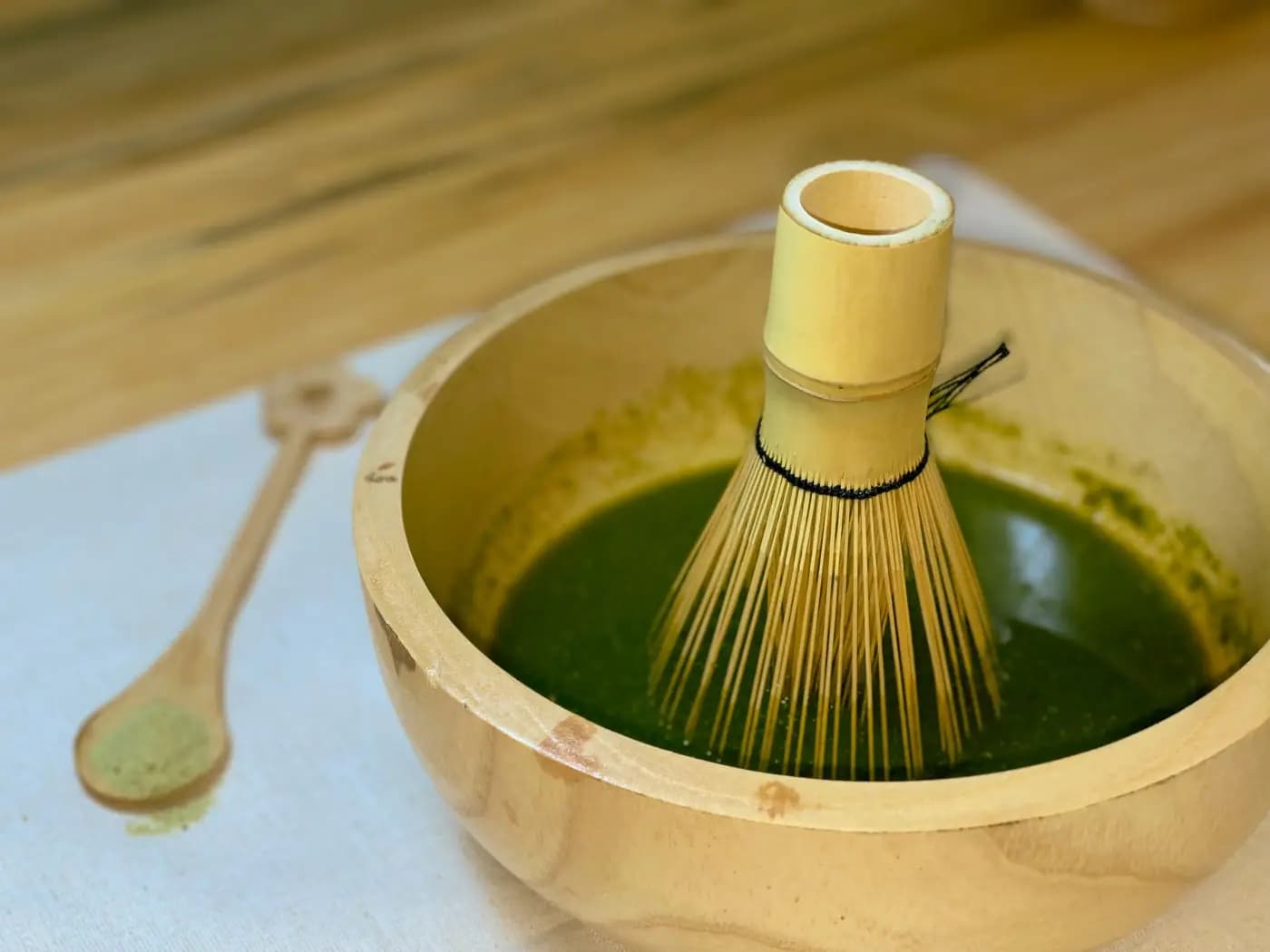
- usucha (thin tea): about 2 g of matcha and 60 to 70 ml of water at around 80°C, whisked briskly into a fine froth;
- koicha (thick tea): roughly twice the matcha and half the water, kneaded slowly; it calls for a higher-grade matcha.
The bamboo whisk (chasen) is carved from a single piece, usually with 80 to 120 tines. It is soaked before use to soften it.
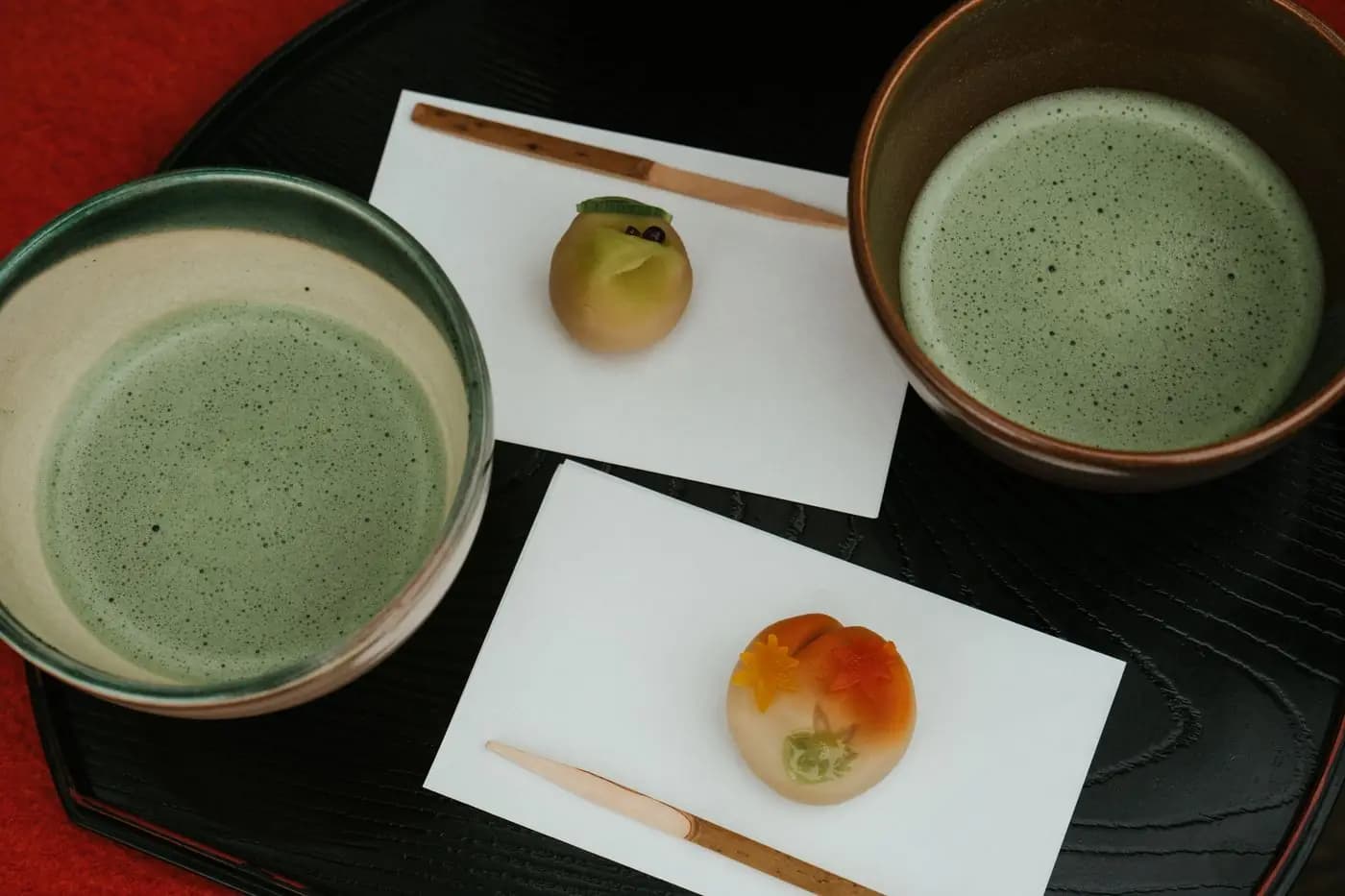
Wagashi are eaten before the tea, so that their sweetness softens the bitterness of the matcha. There are two families:
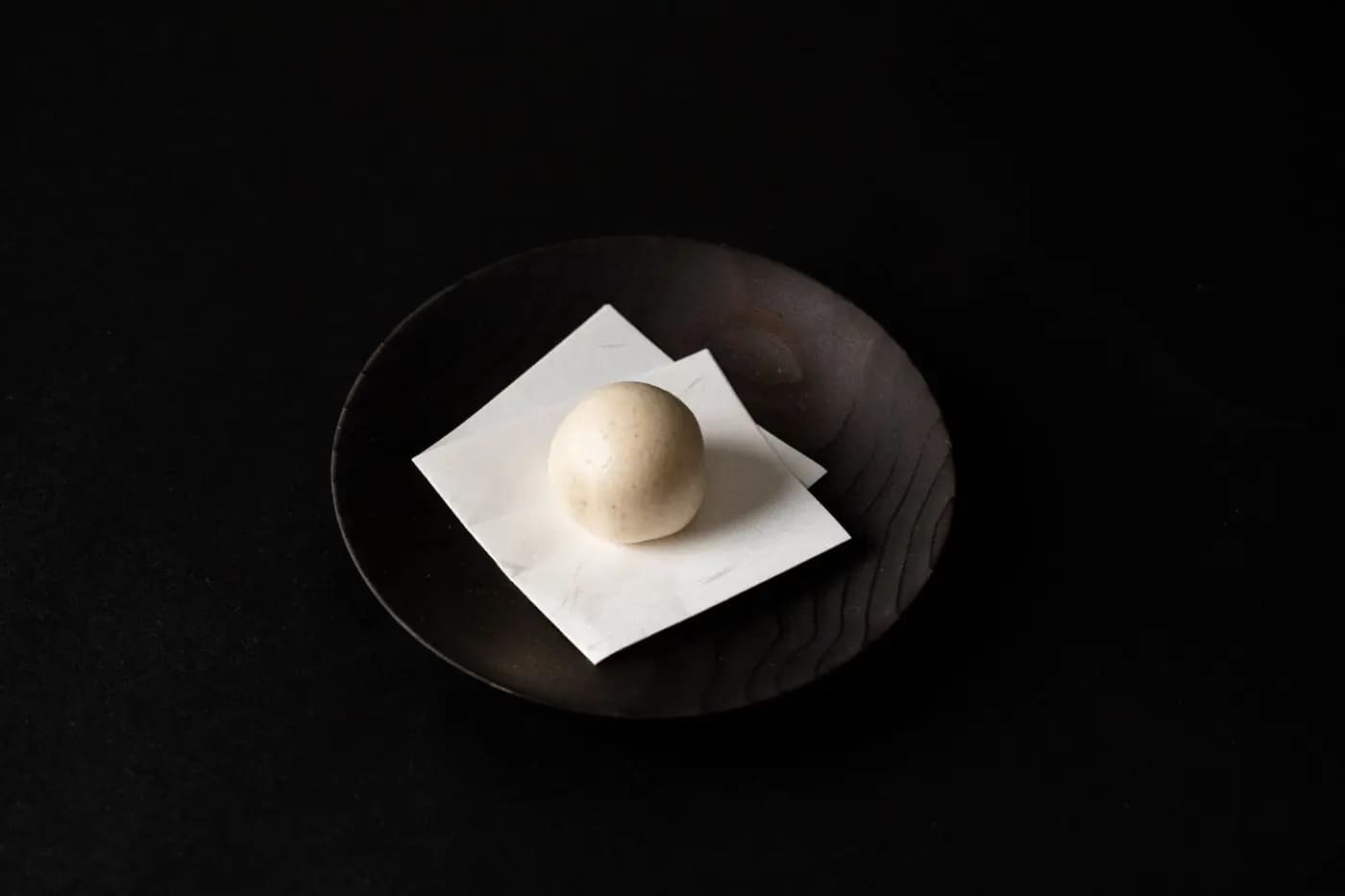
- omogashi, fresh, moist sweets made with bean paste (an); nerikiri are shaped according to the season: cherry blossom in April, hydrangea in June, maple leaf in November;
- higashi, dry sweets, often of pressed sugar (rakugan), served with thin tea.
Wagashi are eaten with a small wooden pick (kuromoji), placed on paper (kaishi) that you bring yourself to a formal ceremony.
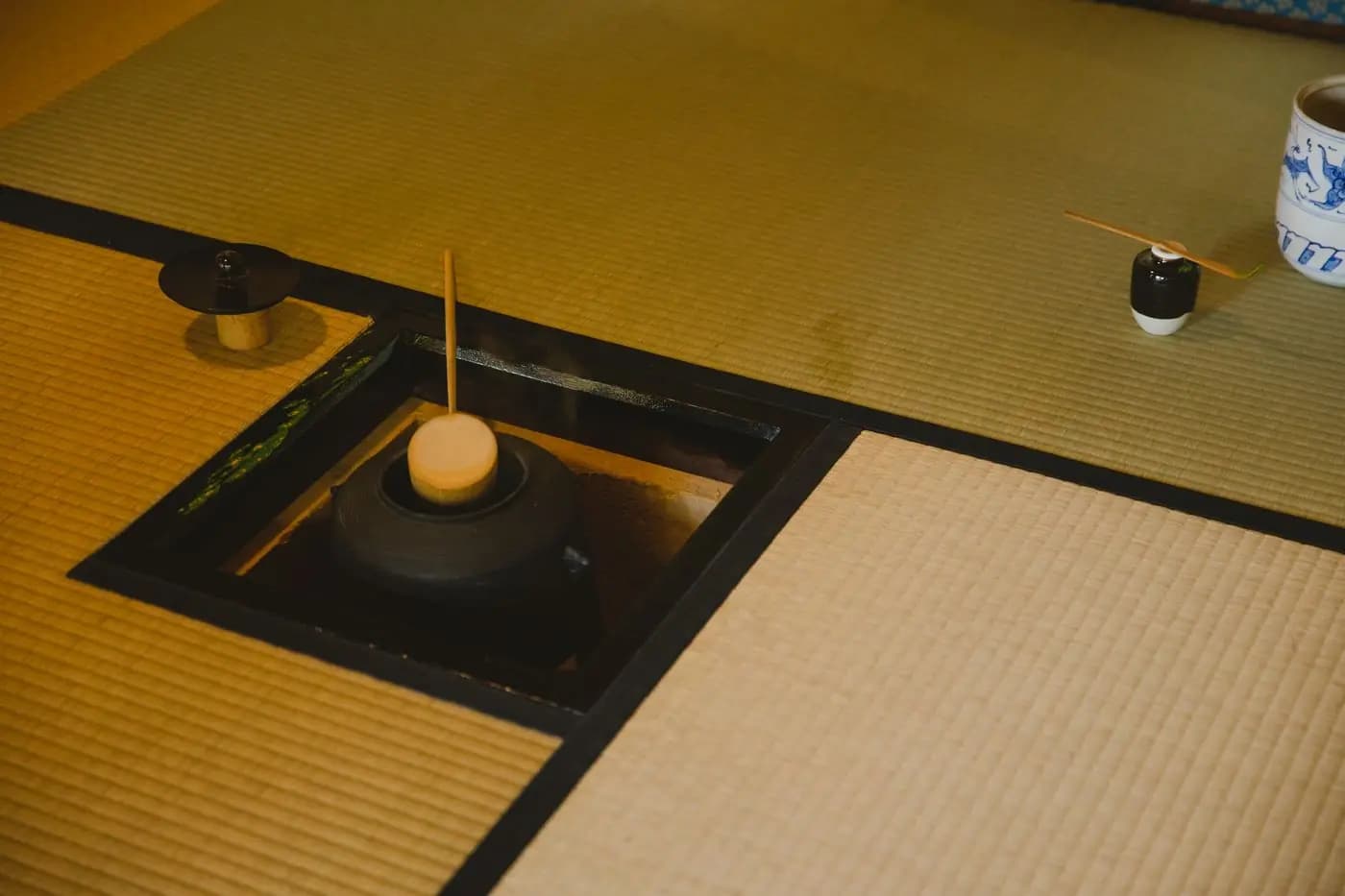
One last detail reveals the season: from November to April, the water is heated in a hearth sunk into the floor (ro), bringing the warmth closer to the guests; from May to October, a brazier set on the tatami (furo) is used, placed further away from them. Bowls change too: wide and open in summer so the tea cools quickly, taller and thicker in winter to hold the heat. An attentive host chooses each object according to the day, the weather and the guests.
How to behave as a guest: tea ceremony etiquette
Nobody expects a visitor to know the temae. A few gestures are enough to take part respectfully.
Before entering:
- remove rings, bracelets and watches, which can scratch the bowls, sometimes old and valuable;
- avoid perfume, which masks the scent of tea and incense;
- wear clean socks, ideally white, since you walk on tatami;
- dress simply, in trousers or a long skirt that lets you sit on the floor.
During the ceremony:
- sit in seiza, kneeling on your heels, if you can; after ten minutes it is acceptable to sit cross-legged, and many places offer a small stool;
- eat the wagashi when it is offered, before the tea;
- when the bowl arrives, say “o-saki ni” (“excuse me for going first”) to the next guest;
- pick up the bowl with your right hand, rest it on your left palm, bow slightly;
- turn the bowl two quarter-turns clockwise, so as not to drink from its front, the most decorated side, which the host turned towards you;
- drink in three or four sips; the last can be slurped slightly, a sign of appreciation;
- wipe the rim with your thumb and forefinger, then wipe your fingers on the kaishi;
- turn the bowl back the other way so the front faces the host, set it down and admire it.
At the end, you may ask to look at the utensils and ask about the bowl, the tea caddy, the scroll. It is even expected: the host chose them for that very day.
Where to experience a tea ceremony in Kyoto and Tokyo
There are three levels of experience, from the simplest to the most exclusive.
1. A bowl of matcha with a view. Many temples and gardens serve a bowl of tea and a sweet in a pavilion, without a full ceremony, for a few hundred to just over a thousand yen. It is a chance to taste real matcha in a fitting setting:
- in Kyoto, several sub-temples of Daitoku-ji, Kennin-ji or Higashiyama serve tea facing the garden;
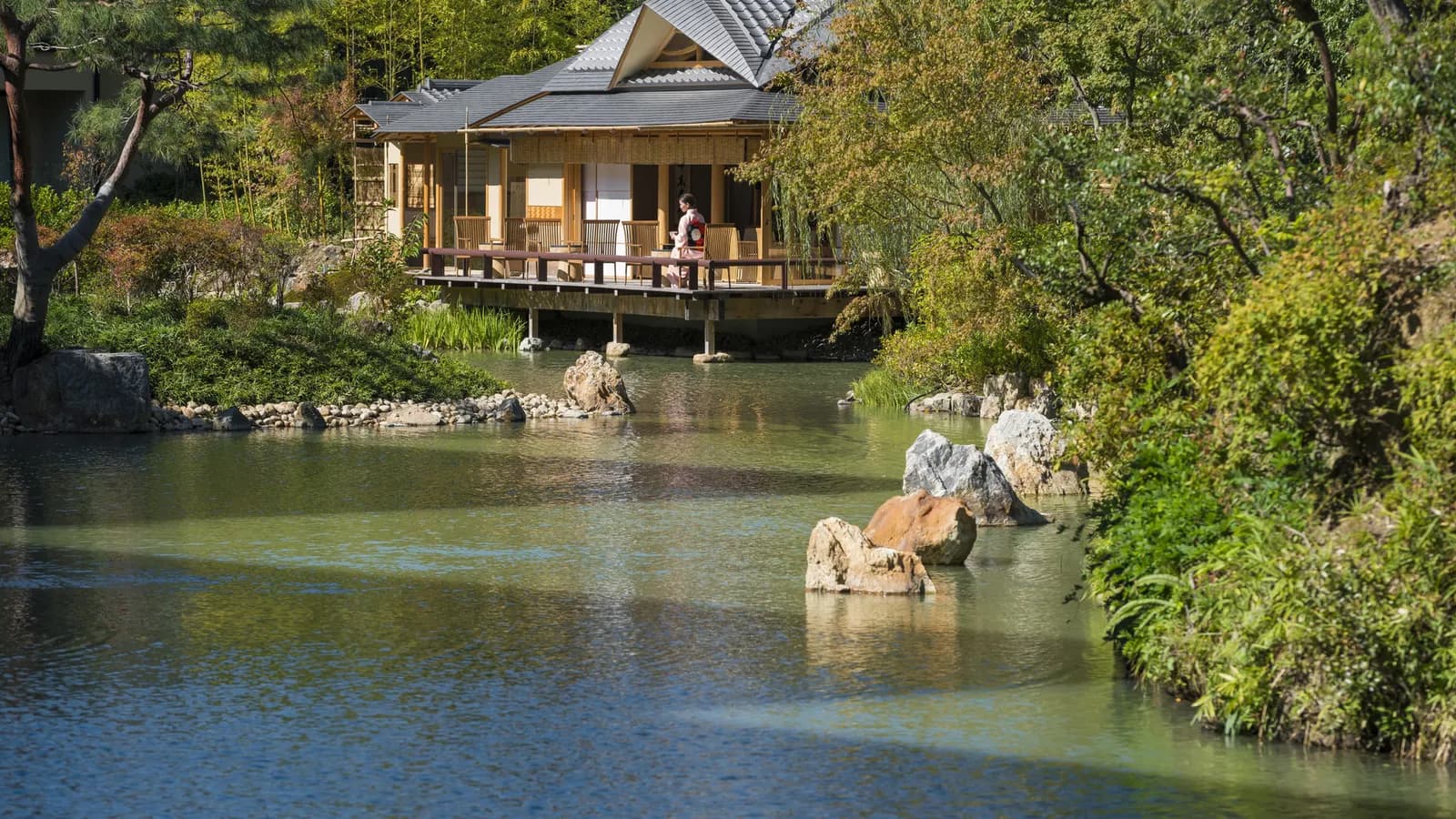
- in Tokyo, the Nakajima no Ochaya teahouse, in the middle of the pond at Hama-rikyū Gardens, serves matcha and wagashi with a view of the Shiodome towers.
2. A guided introduction. Specialised tea rooms offer 45 to 60-minute sessions with explanations in English, a demonstration and whisking your own bowl, usually for ¥3,000 to ¥7,000 per person. In Kyoto you find them around Gion, Higashiyama (Ninenzaka, Sannenzaka) and near Nishiki; in Tokyo, mainly in Asakusa, Ginza and in several large hotels with their own tea room. Book a few days ahead, more in spring and autumn.
3. A private ceremony. With a teacher from a recognised school, in a historic tea house or ryokan, sometimes preceded by a kaiseki meal. It is the format closest to a chaji and is booked several weeks ahead through a hotel, agency or DMC.
To go further, the Urasenke Chadō Center in Kyoto hosts exhibitions on the history of tea and the art of utensils. And half a day in Uji connects the ceremony with the product: tea fields, grinding workshops and side-by-side tastings of different grades of matcha.
Tea ceremony for groups: format, duration and practical tips
The tea ceremony works very well for seminars and incentive trips: it is short and calm, and it gives participants a real role when they whisk their own bowl. It does need a few adjustments.
Size. A tea room rarely holds more than 10 to 15 people. For 40 participants, plan either several sub-groups in rotation (while one has tea, the other visits the garden) or a large temple or hotel room.
The chair-based format. The ryūrei style, devised in the late 19th century to welcome foreign visitors, is performed seated at a table. It avoids seiza, which becomes painful after ten minutes for many participants, while keeping all the gestures.
Duration. Allow 60 to 90 minutes for a group: welcome and explanation, demonstration by the teacher, tasting, whisking your own bowl, questions. Beyond that, attention drops.
Interpretation. A teacher who speaks English or an interpreter trained in tea vocabulary makes all the difference: without the explanations about the scroll, the bowl or the choice of wagashi, the ceremony remains a pretty but silent gesture.
Linking it to the seminar. Rikyu's principles, attention to the guest, invisible preparation, ichigo ichie, lend themselves well to a discussion on customer care or service quality. Some groups add a visit to Uji or a wagashi workshop.
SHINOGI DMC organises these ceremonies in Kyoto and Tokyo with teachers from recognised schools, in private rooms at temples, ryokan or hotels, with interpretation in French or English.
Frequently asked questions
How long does a tea ceremony last?
A visitor introduction lasts 45 to 60 minutes, 60 to 90 minutes for a group. A full formal gathering (chaji) with a meal lasts about four hours.
How much does a tea ceremony cost in Kyoto?
A guided introduction usually costs ¥3,000 to ¥7,000 per person. A simple bowl of matcha with a sweet at a temple or garden costs a few hundred to just over a thousand yen; a private ceremony with a teacher costs considerably more.
Why do you turn the bowl during the tea ceremony?
The host presents the bowl with its finest side facing the guest. Out of modesty, the guest turns it two quarter-turns so as not to drink from that side, then turns it back before returning it.
Who was Sen no Rikyu?
Sen no Rikyu (1522–1591) was the tea master who codified the ceremony around the wabi aesthetic and the principles of harmony, respect, purity and tranquillity. He served Oda Nobunaga and Toyotomi Hideyoshi; his descendants founded the three Sen schools.
Do you have to kneel during the tea ceremony?
Traditionally yes (seiza), but visitors are allowed to sit cross-legged after a few minutes. Many places provide a small stool or a chair-based format (ryūrei).
What is the difference between usucha and koicha?
Usucha is a thin tea, whisked until frothy, one bowl per person. Koicha is a thick tea, with about twice the matcha and half the water, kneaded slowly and shared from a single bowl.
Rédaction SHINOGI DMC · Updated