What is an onsen? Public baths, rotenburo and sento
An onsen is a bath fed by a natural hot spring. In Japan, the Hot Springs Act defines it precisely: the water must come out of the ground at 25°C or more, or contain certain minerals in sufficient quantity. The country has more than 3,000 hot spring localities, from big resorts to isolated mountain baths. For many Japanese, a weekend at an onsen is the ultimate form of rest.
A few words to know:
- uchiyu: the indoor bath, often the hottest;
- rotenburo: the outdoor bath, framed by rocks or wood, facing a garden, river or mountain;
- kashikiri or kazoku-buro: a private bath booked for a fixed time, alone, as a couple or a family;
- higaeri onsen: a public bath used for the day, without staying overnight;
- sento: a neighbourhood public bath heated with tap water; same rules, but not strictly an onsen.
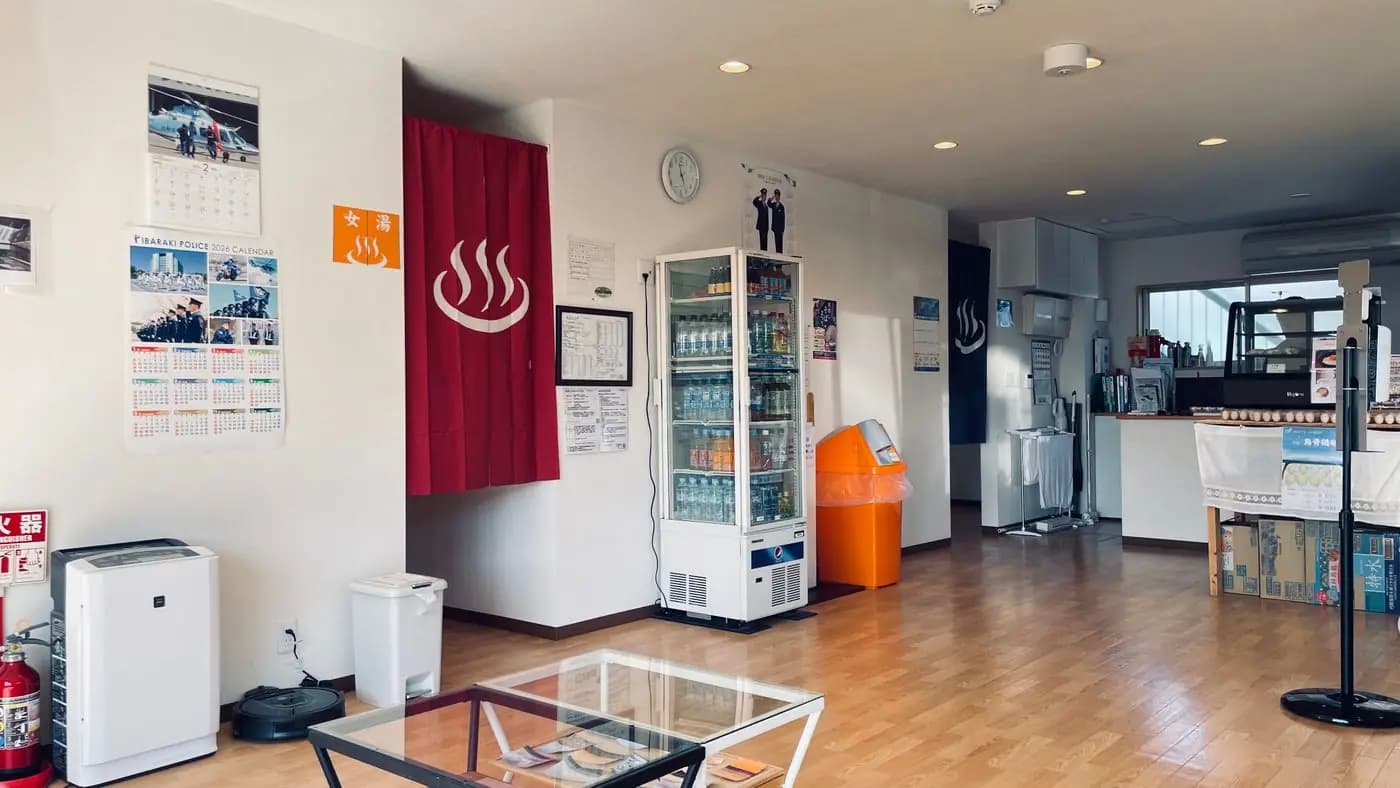
Baths are almost always separated by sex. The curtain at the entrance (noren) shows which: 男 for men, often blue, 女 for women, often red. In many ryokan, the men's and women's baths swap every day, usually at night or in the morning: re-read the noren each time. Mixed baths (konyoku) still exist at a few rural springs, increasingly with towels or bathing wear allowed.
Indicative prices: ¥500 to ¥1,500 for a day-use public bath, free for guests of a ryokan or hotel with an onsen, about ¥2,000 to ¥5,000 for 45 to 60 minutes in a private bath.
Onsen rules step by step
The first time, the onsen is intimidating mainly because you don't know the order of things. Here is the sequence, from changing room to bath.
1. Shoes. At the entrance, put them in a shoe locker (you sometimes keep the wooden key). In a ryokan, you come straight in yukata and slippers. 2. Changing room (datsuijo). Undress completely. Clothes go in a basket or locker; the large towel stays in the basket. Take only the small towel with you. 3. Rinse (kakeyu). Before even washing, pour a few bowls of bath water over yourself, starting at the feet, to get used to the temperature. 4. Washing. Sit on the small stool at a shower station and wash fully: body and hair, with the soap and shampoo provided. Rinse carefully without splashing your neighbours, and rinse the stool and bowl before you leave. Washing standing up is frowned upon. 5. Entering the bath. Step in slowly; no diving or swimming. Long hair is tied up and stays out of the water. The small towel stays out of the water: on the edge, or folded on your head, as many Japanese do. 6. In the water. Speak quietly. No phone, no photos, no drinks in the water (some ryokan rotenburo serve sake, but that's the exception). 7. Getting out. You may rinse off or not: many Japanese leave the minerals on their skin. Before going back to the changing room, pat yourself dry with the small towel so you don't soak the floor. 8. After the bath. Dress, drink water or the traditional bottled milk, and rest for a few minutes.
Things to avoid at all costs: going in with a swimsuit, getting in without washing, putting your head under water, washing clothes or shaving in the bath. Anyone ill or with a cold should skip it.
Towels, hair, make-up: the practical details
In a ryokan or hotel with an onsen, everything is provided: two towels in the room (one large, one small, the latter often yours to take home), soap, shampoo, conditioner, hairdryer, combs and sometimes lotions. You go down to the bath in yukata, with your two towels and room key.
At a day-use public bath, it varies:
- large facilities provide soap and shampoo, but towels often cost extra (rental ¥200 to ¥500, or a small towel to buy);
- small village baths (kyodo-yu) sometimes have nothing: bring a towel, soap and a few coins for the locker;
- some only take cash, or a ticket bought from a machine at the entrance.
A few details that prevent missteps:
- make-up: remove it at the shower station before entering the bath, not in the pool;
- jewellery: take it off; sulphurous water blackens silver and copper in minutes;
- glasses: you can keep them to get around, but they fog up; many leave them in the changing room;
- plasters: a small cut can be covered with a waterproof plaster; an open wound rules out bathing;
- periods: avoid the shared bath; a private bath is the right option;
- children: welcome, but no nappies in the water, and they stay close to an adult.
Quiet is part of the experience. Talking softly is fine, but a group laughing loudly in the rotenburo will quickly draw looks, even without a word said.
Onsen and tattoos: tattoo-friendly options and private baths
This is the most frequently asked question. In Japan, tattoos are still associated with the yakuza in the minds of part of the population, and many onsen display a "no tattoos" sign (入れ墨お断り). In 2015, a Japan Tourism Agency survey of about 3,800 hotels and ryokan (some 600 responses) found that 56% of facilities refused tattooed guests, 31% accepted them and 13% accepted them if the tattoo was covered. The Agency then urged facilities to find solutions for foreign visitors rather than refuse outright. Things are changing, but there is no national rule: each facility decides.
The options, from simplest to safest:
- Cover stickers. For a small tattoo (roughly credit-card size), many facilities accept a skin-coloured patch. Some sell them at reception. Ask first.
- Private baths (kashikiri). Booked for 40 to 60 minutes, alone or as a pair, they avoid any question. Most ryokan have one or more, sometimes free for guests.
- Rooms with a private bath. Many ryokan offer rooms with a private rotenburo on the terrace. More expensive, but the most comfortable solution.
- Tattoo-open towns. In Kinosaki Onsen (Hyogo Prefecture), all seven of the town's public baths accept tattoos, uncovered. In Beppu, many municipal baths accept them too. Specialist websites list tattoo-friendly facilities.
- Neighbourhood sento. Urban public baths often accept tattoos, unlike large leisure complexes.
What not to do: hide a tattoo under a towel at a facility that forbids it, or insist at reception. Staff won't make an exception, and it makes everyone uncomfortable.
Health and precautions: temperature, duration, alcohol
Onsen water is usually 40 to 43°C, sometimes more (some Kusatsu baths exceed 45°C). For Europeans used to 35°C spas, it is hot. The body adjusts, but a few rules prevent dizziness, the most common incident:
- 5 to 10 minutes per soak to start, then a break sitting on the edge or outside, and possibly a second dip;
- drink water before and after: you sweat a lot without noticing;
- no bathing after alcohol or right after a heavy meal; in a ryokan, bathe before dinner and wait an hour or two after;
- stand up slowly when getting out: blood pressure drops, and that's when your head spins;
- in winter, beware of the temperature shock between a cold changing room and a very hot bath, especially for older people;
- people with heart conditions or high blood pressure, and pregnant women, should ask their doctor; every facility displays its spring's contraindications.
Not all waters have the same properties, and comparing them is part of the fun:
- sulphurous (egg smell, milky water): Kusatsu, Noboribetsu, Unzen;
- acidic: Kusatsu, whose water is among the most acidic in the country (pH around 2), keep it out of your eyes;
- alkaline, known as "beauty water" (bijin-no-yu), soft and slightly slippery;
- iron-rich, red or brown, as at Arima;
- chloride, salty water that holds heat.
One last point: onsen often close for cleaning in the middle of the day or late at night. In a ryokan, check the hours on arrival.
Japan's best onsen towns
Every region has its onsen, but a few towns combine good water, setting and easy access.
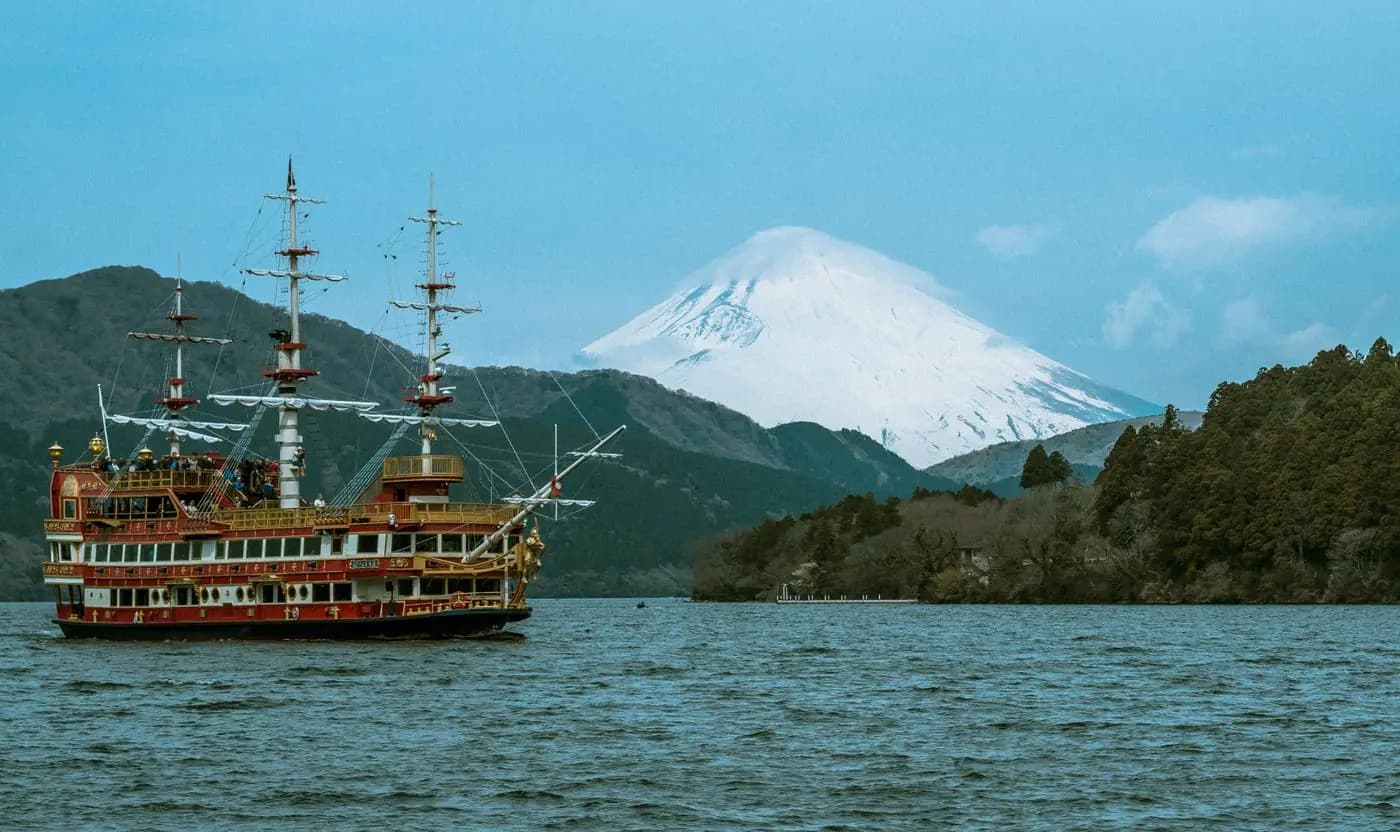
- Hakone (Kanagawa): about 1h25 from Shinjuku by Romancecar, the most convenient from Tokyo. Large ryokan, Mount Fuji views on clear days, Lake Ashi. Very busy at weekends.
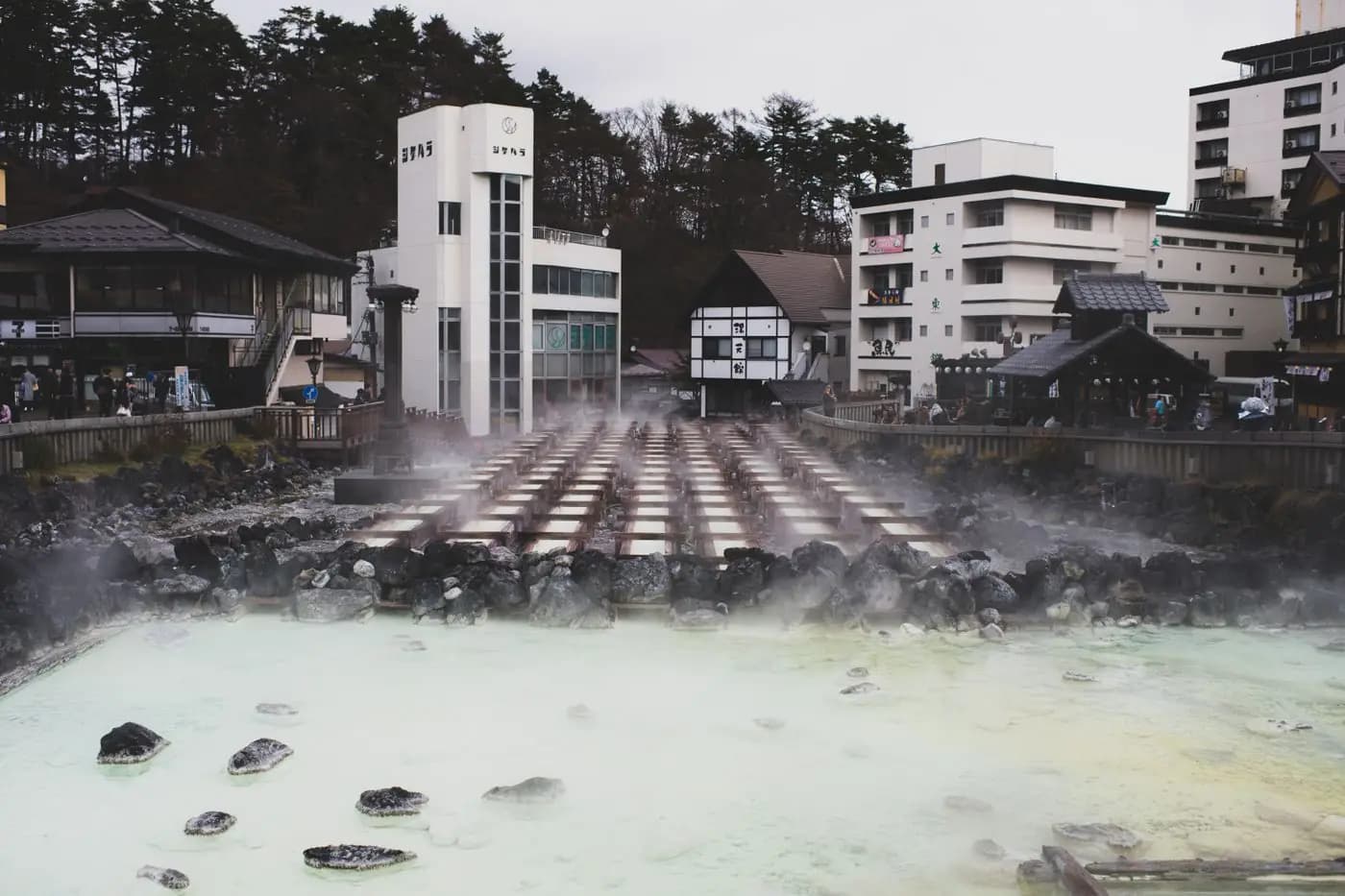
- Kusatsu (Gunma): one of the country's most abundant springs, very acidic sulphurous water, and the yubatake, a large wooden field where water cools in the open in the village centre. Watch yumomi, water being stirred with boards to song. About 2h30 to 3 hours from Tokyo.
- Kinosaki (Hyogo): a village along a willow-lined canal, where you go from one of seven public baths to the next in yukata and geta. Your ryokan provides a bath pass. Tattoo-friendly. About 2h30 from Kyoto by limited express.
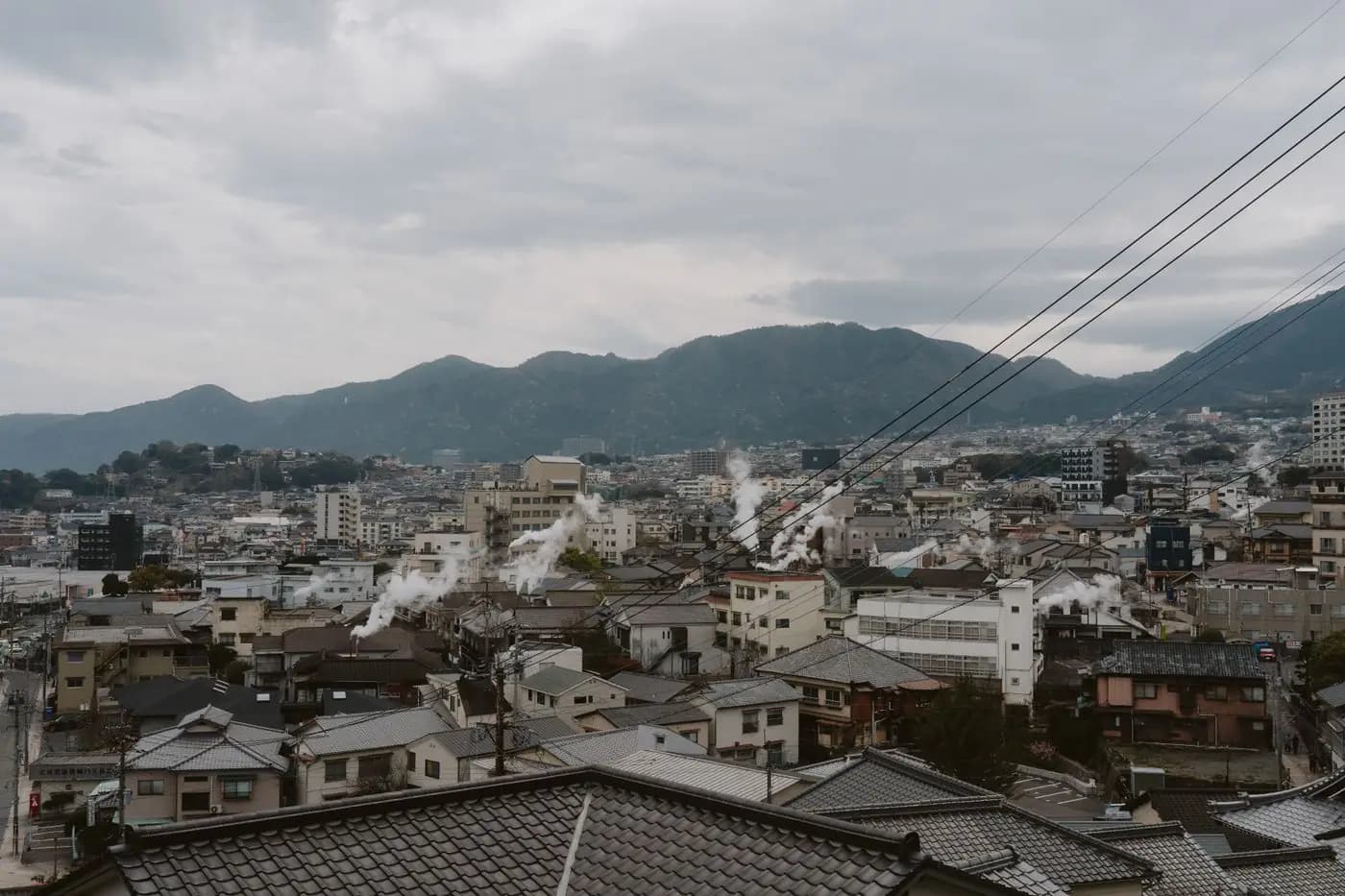
- Beppu and Yufuin (Oita): Beppu has the most springs in Japan and its steaming "hells"; Yufuin, an hour away, is more intimate, below Mount Yufu.
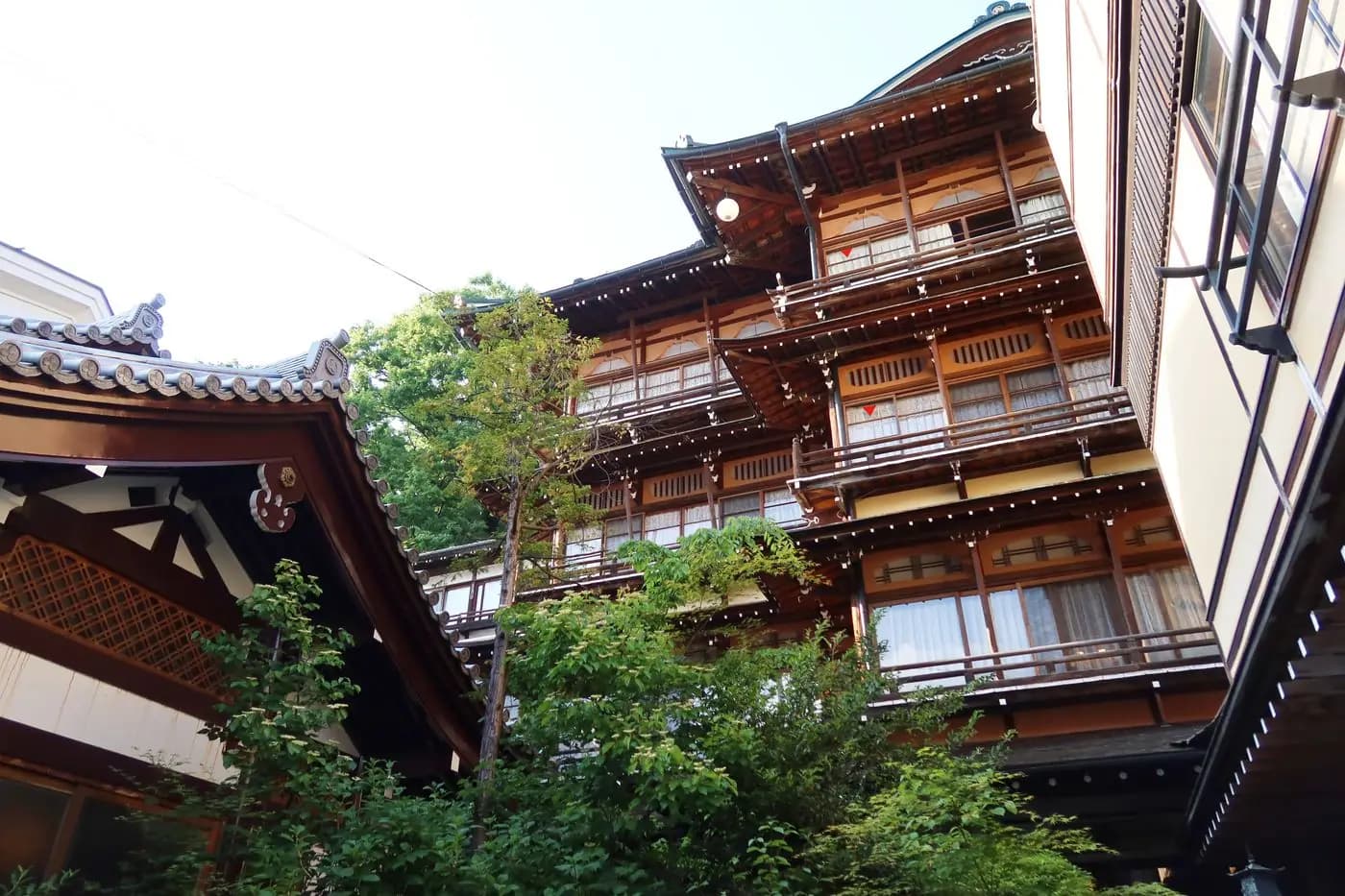
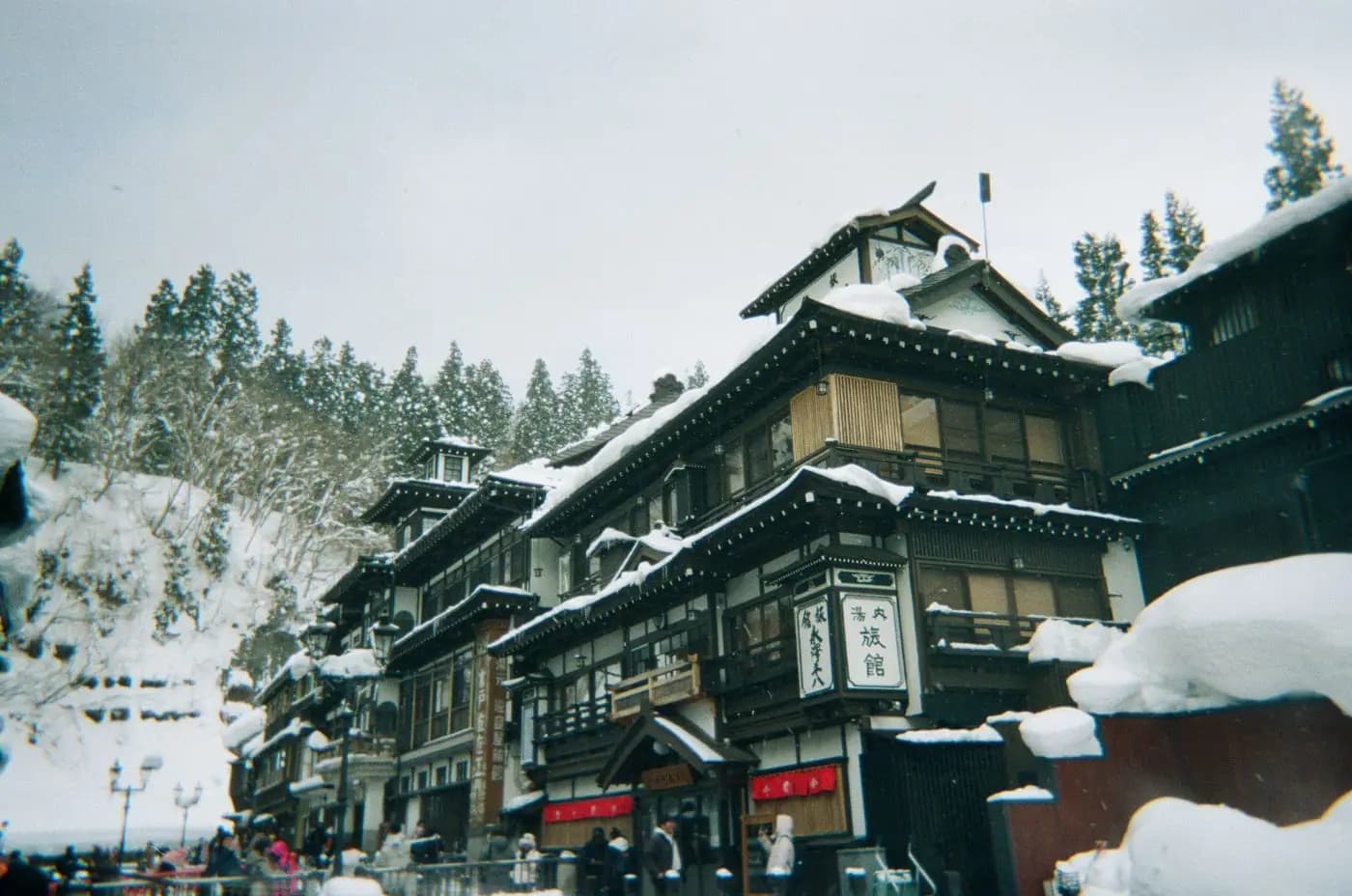
- Ginzan (Yamagata): a narrow street of Taisho-era wooden ryokan along a river. Superb under snow, but in great demand and with regulated access in winter.
- Dogo (Ehime): one of Japan's oldest onsen; the main Dogo Onsen Honkan building, an Important Cultural Property, fully reopened in July 2024 after more than five years of works.
- Noboribetsu (Hokkaido): the volcanic Jigokudani valley and large spa hotels, 1h30 from Sapporo.
- Nozawa and Shibu (Nagano): free or nearly free public baths, and the Jigokudani snow monkeys near Shibu.
For a first experience, Hakone or Kinosaki are easiest; for a complete change of scene, Ginzan or Kusatsu.
Onsen with a group: preparing participants
An evening at a ryokan with an onsen is often the moment corporate travellers remember most. It can also make some uncomfortable if nothing is explained. A few organising rules:
- Briefing before arrival. Explain the steps (wash first, naked, towel out of the water) on the coach, with a visual guide. People feel much more at ease when they know what to expect, and nobody has to ask in front of colleagues.
- Impose nothing. Nudity among colleagues is not easy for everyone. Present the onsen as an option, never as a compulsory team activity, and book private baths for those who prefer.
- Tattoos. Ask once, neutrally and confidentially, on the registration form. Then choose a ryokan that accepts tattoos or has private baths and rooms with baths.
- Timing. With 40 people, the main bath quickly fills between 5pm and 7pm. Stagger arrivals, schedule dinner for 7 or 7:30pm, and remind everyone of closing and bath-swap times.
- Health. Remind people about water, alcohol and duration. After a well-lubricated dinner, wait before going back to the bath, and never alone.
- Capacity. Men's and women's baths are not always the same size; with a group that is mostly male or mostly female, check capacity with the ryokan.
- Alternatives. An outdoor footbath (ashiyu), free in many onsen towns, lets everyone share the moment fully dressed.
For groups, we favour ryokan that can privatise a bath or a floor, or towns like Kinosaki and Hakone. SHINOGI DMC selects these properties and prepares participants before the trip.
Frequently asked questions
Do you have to be naked in an onsen?
Yes, in shared baths you go in naked, without a swimsuit. Only a small towel is allowed, and it must not touch the water. Private baths let you avoid being naked in front of others.
Can you go to an onsen with a tattoo?
It depends on the facility. Solutions: a cover sticker for a small tattoo, a private bath (kashikiri), a room with a private bath, or open towns such as Kinosaki, whose seven public baths accept tattoos.
What do you do with the small towel at an onsen?
Use it to wash and to cover yourself while walking around, then leave it on the edge of the bath or on your head. It never goes in the water. Also use it to pat yourself dry before returning to the changing room.
How long should you stay in an onsen?
Five to ten minutes per soak to start, as the water is often 40-43°C. Take a break, drink water, then go back in if you like. Avoid bathing after drinking alcohol.
Which onsen should you choose near Tokyo?
Hakone is the most convenient, about 1h25 from Shinjuku by Romancecar. Kusatsu, 2h30-3 hours away, has more distinctive water, and Nikko-Kinugawa is another option for a day or a night.
Do men and women bathe together?
No, baths are almost always separate: 男 for men, 女 for women. In many ryokan the two baths swap daily. To bathe as a couple or family, book a private bath.
Rédaction SHINOGI DMC · Updated
Sources