Why visit Kanazawa and how many days to plan
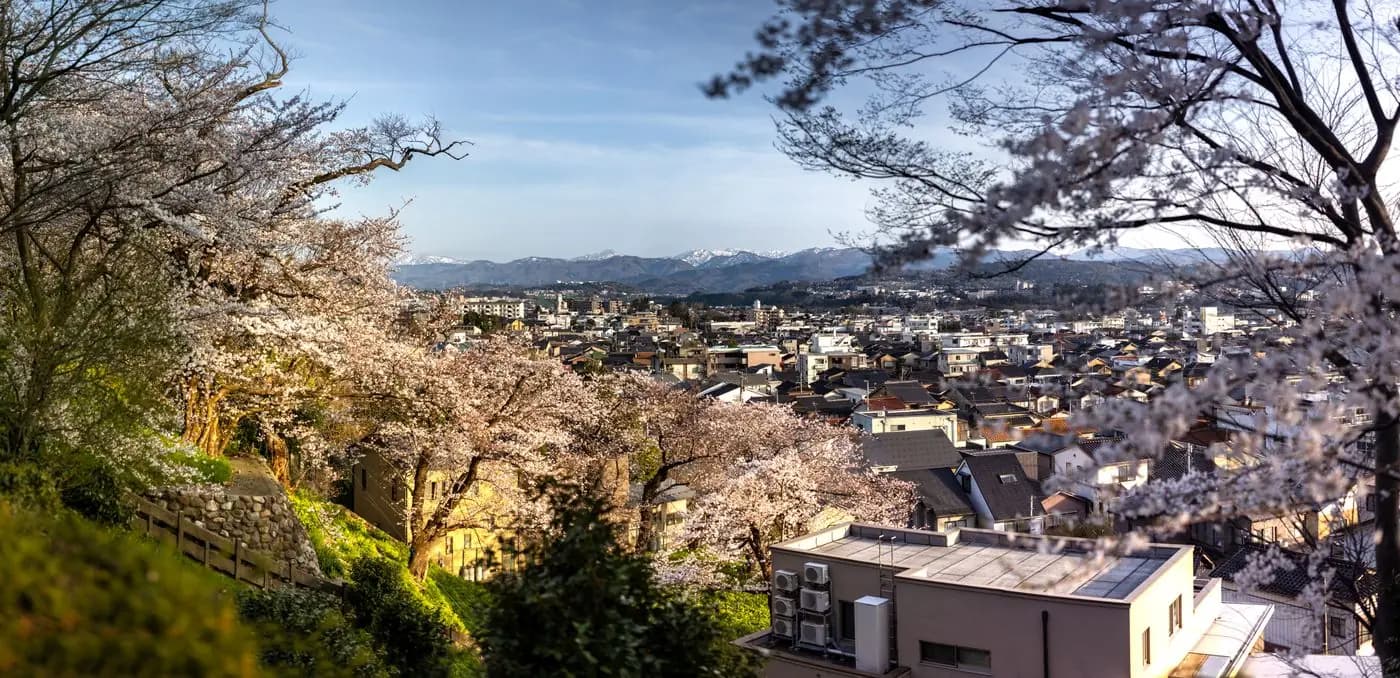
Kanazawa was the stronghold of the Maeda lords, the richest daimyo family in Edo-period Japan after the Tokugawa. Spared from bombing in the Second World War, the city has kept its geisha districts, samurai streets and canals, plus an unusual density of crafts: gold leaf, lacquer, Kutani porcelain, Kaga-yuzen dyed silk.
It is a city on a human scale. The centre fits into a rectangle of roughly 3 km by 2, easily covered on foot or by bus. Two days let you see the essentials without rushing:
- Day 1: Omicho Market early, the castle and Kenroku-en garden, the 21st Century Museum in the afternoon, dinner in Katamachi.
- Day 2: Higashi Chaya district at opening time, a gold-leaf workshop, the Nagamachi samurai house, Myoryu-ji temple (the "ninja temple", guided tours by reservation).
With a single day, keep Kenroku-en, Higashi Chaya and Omicho. With three, add Shirakawa-go or the Noto Peninsula.
The city is known for its rain: locals say you can forget your lunch but never your umbrella. Pack something waterproof whatever the season.
Kenroku-en and Kanazawa Castle: hours, fees and best time to go
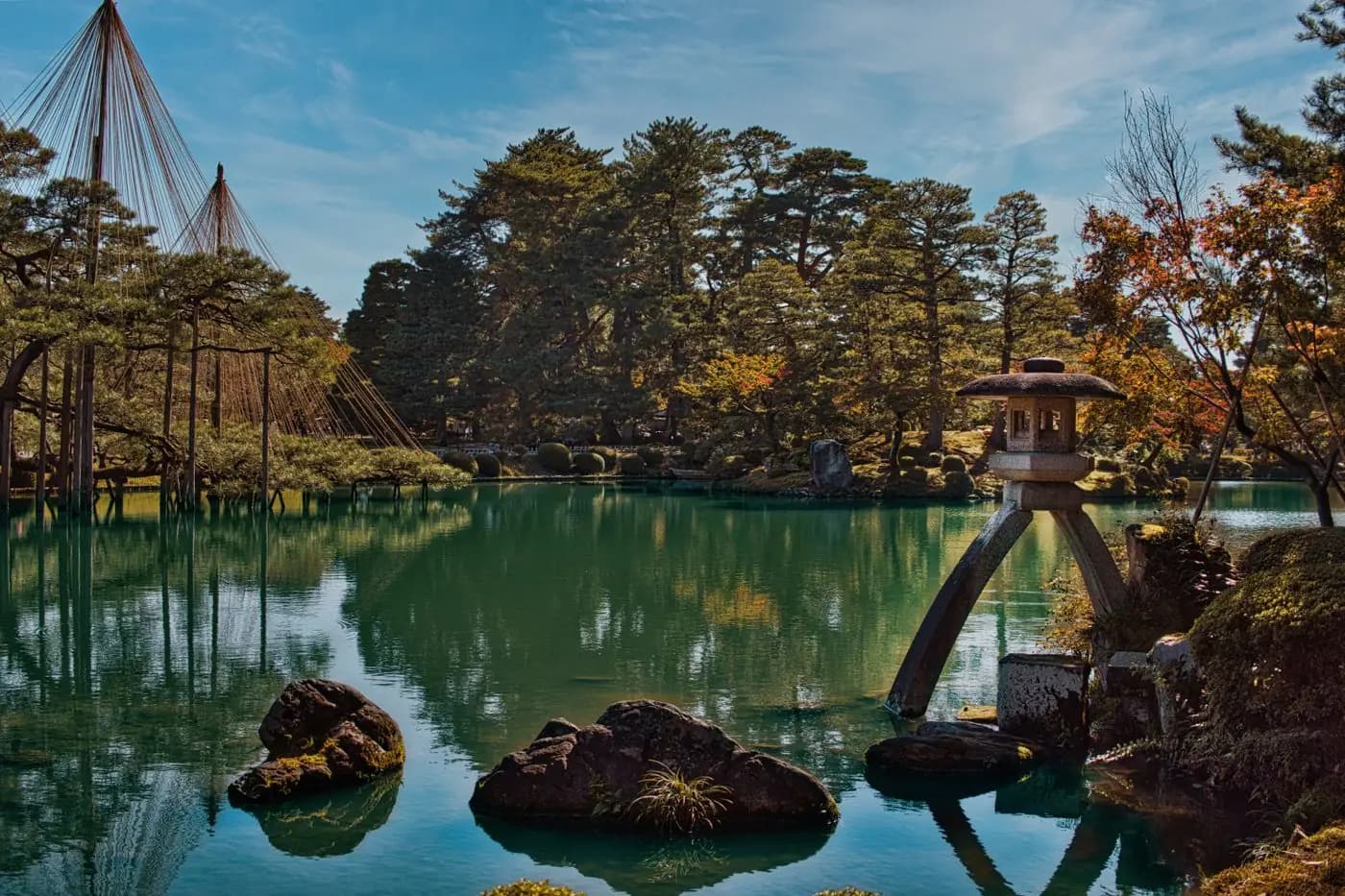
Kenroku-en is one of Japan's three great gardens, along with Koraku-en in Okayama and Kairaku-en in Mito. Its name refers to the six qualities of an ideal garden, including spaciousness and seclusion, artifice and antiquity, water and views. People come for the two-legged Kotoji-toro lantern by Kasumigaike pond, Japan's oldest gravity-fed fountain and the centuries-old pines.
Practical information (Kanazawa tourism office):
- Hours: 7am–6pm; 8am–5pm from 16 October to end of February. Open every day.
- Fee: ¥320 per adult, ¥100 for ages 6–17, free from 65 with ID.
- Time needed: 1 to 1 h 30.
The best time is opening: at 7am the garden belongs to locals walking their dogs and to the gardeners. Tour coaches arrive from 9:30am.
Each season looks very different: plum blossom in February–March, cherry blossom in early April, irises in June, maples in November. From early November, gardeners put up the yukitsuri, cones of rope that protect pine branches from the weight of snow; it is Kanazawa's signature winter image.
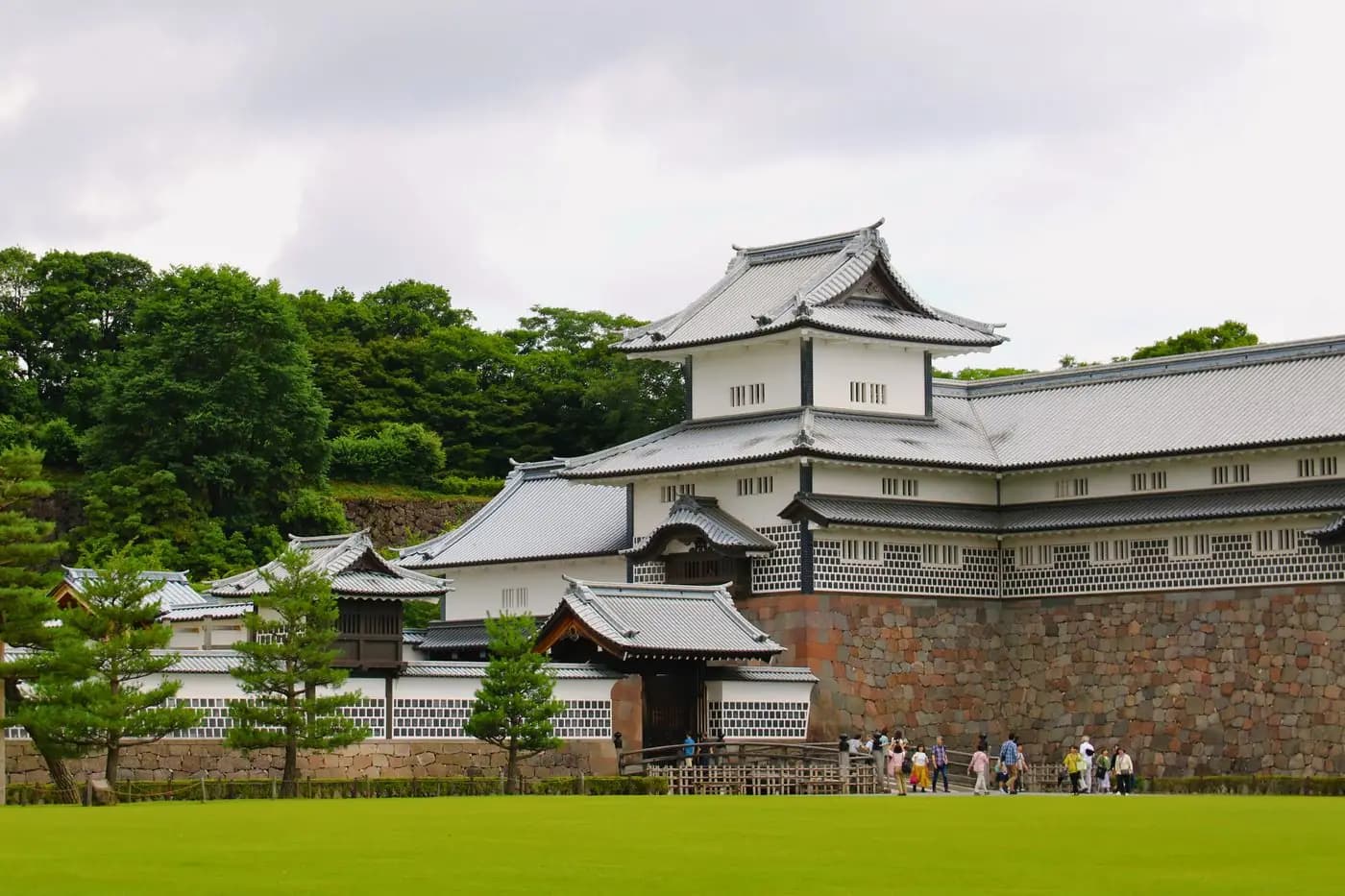
Right across, through the Ishikawa-mon gate, Kanazawa Castle Park is free to enter (only some reconstructed buildings charge a fee). Gyokusen-inmaru garden, at the foot of the ramparts, is lit up on certain evenings.
Higashi Chaya and the geisha districts: what to see and how to behave
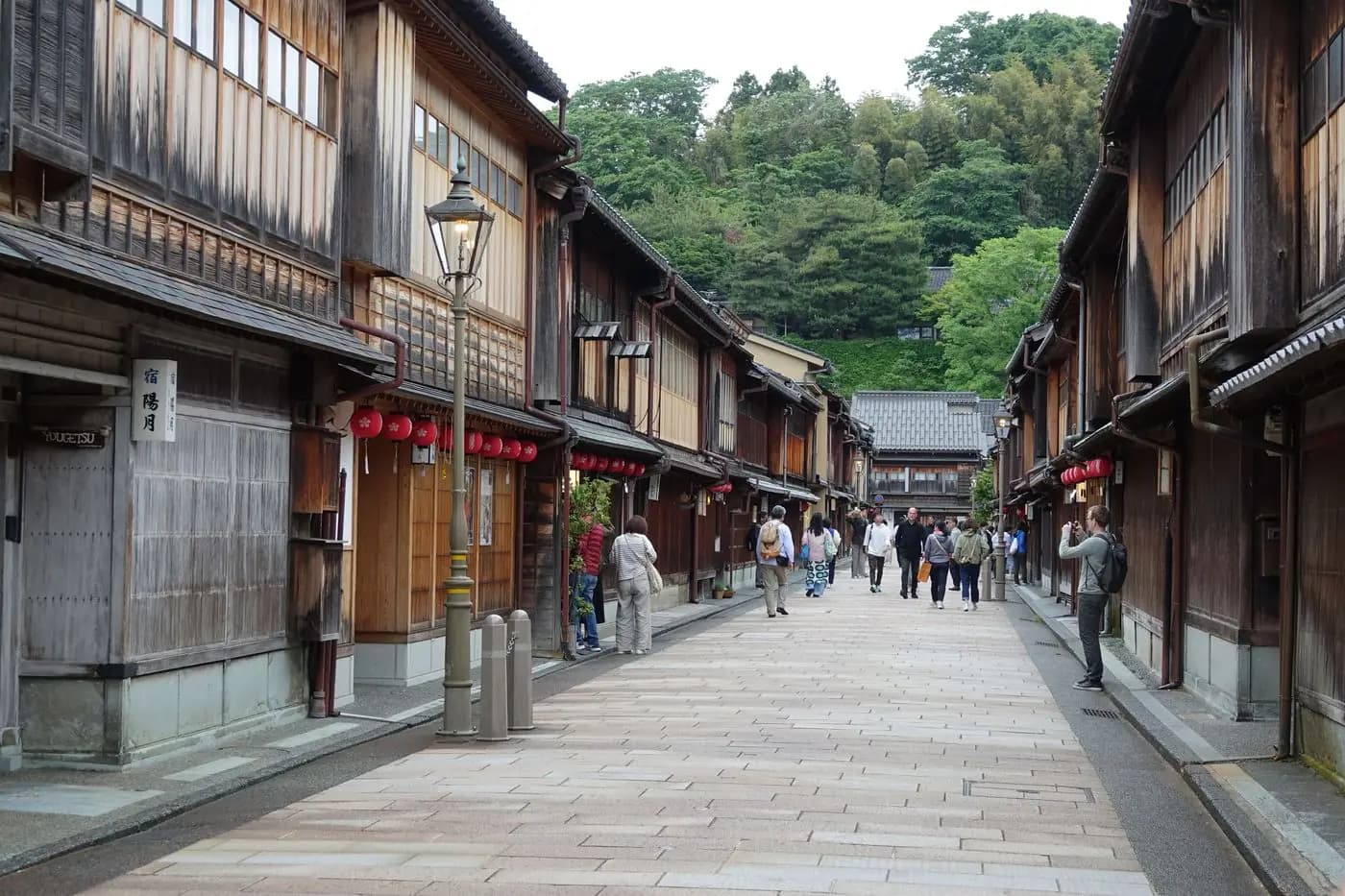
Higashi Chaya is the largest of Kanazawa's three teahouse (chaya) districts, along with Nishi Chaya and Kazue-machi. Many of its slatted wooden facades, called kimusuko, date from the early 19th century. Geiko still work here, and you sometimes hear the shamisen in the evening.
What to see:
- Shima, an 1820 teahouse listed as an Important Cultural Property, open to visitors (upstairs reception room, service rooms, small garden).
- Kaikaro, the largest teahouse still in business, open in the daytime.
- Gold-leaf, lacquer and ceramics shops set up in former chaya, and the café that serves ice cream wrapped in a whole sheet of gold leaf.
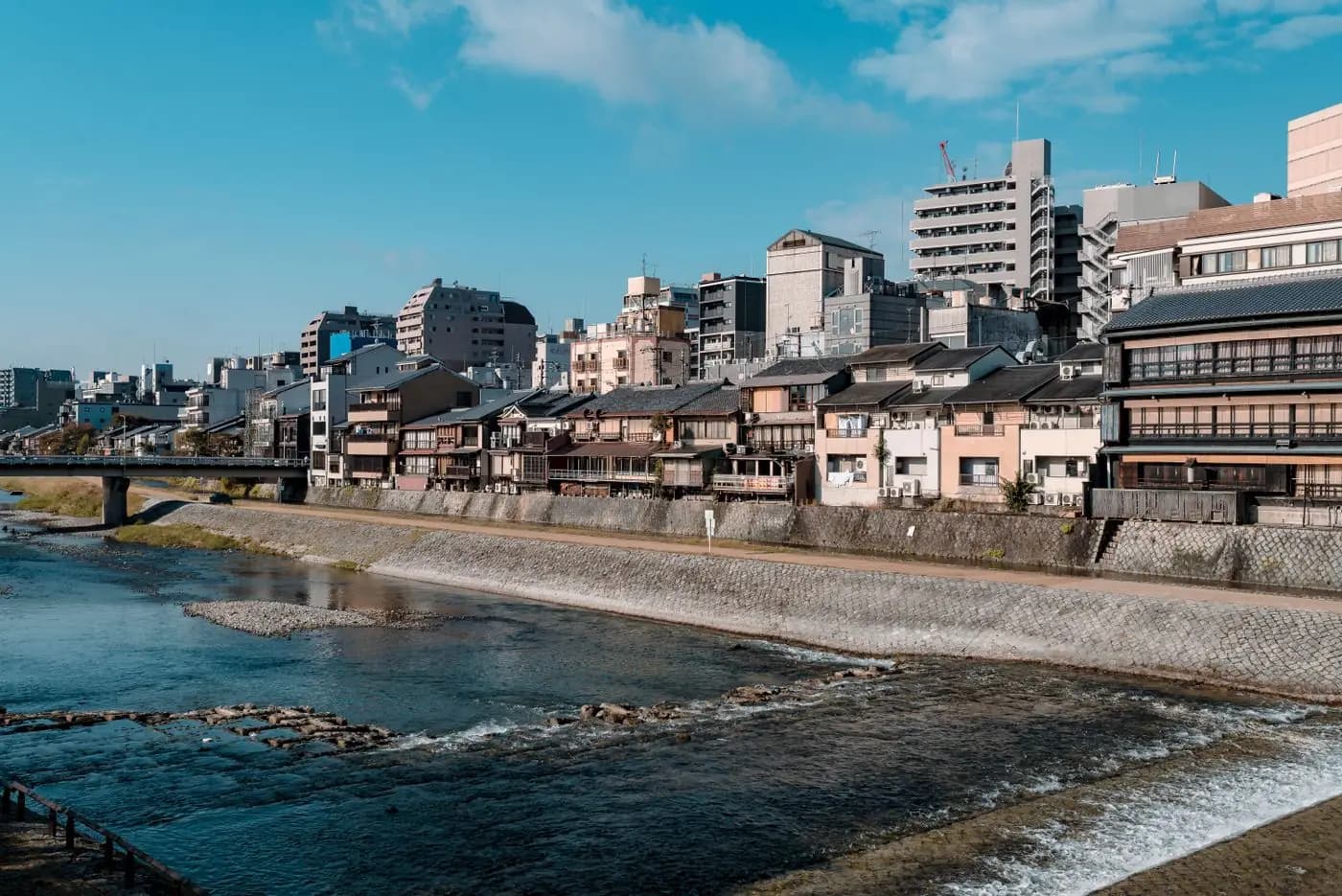
- Nearby, the banks of the Asano River and the sloping lane of Kazue-machi, quieter and often more photogenic.
The district is tiny (two main streets) and fills up from 10:30am. Aim to be there around 9am, when shops open, or in the late afternoon. As in Kyoto, do not photograph geiko without their consent, do not touch the facades and do not sit on doorsteps: these are homes.
To see a geiko dance without a private invitation, the city holds public performances on certain days, by reservation.
Omicho Market and Kanazawa food
Omicho Market has fed Kanazawa for around three centuries. Some 170 shops crowd its covered lanes, a 15-minute walk from the station. Stalls generally open from 9am to 4pm, with hours varying from shop to shop; many restaurants serve from 7 or 8am.
What to eat:
- kaisendon, a bowl of rice topped with raw fish and seafood (¥2,000 to ¥5,000 depending on the topping);
- oysters and shellfish grilled in front of you;
- in winter, local snow crab (Kano-gani), whose fishing season opens in early November, and nodoguro, a much sought-after fatty fish.
The trap is the queues: from 11am, the well-known kaisendon counters have 30 to 60-minute waits. Come at 9am or push lunch back to 2pm. Do not eat while walking in the lanes; most stalls have a corner where you can eat on the spot.
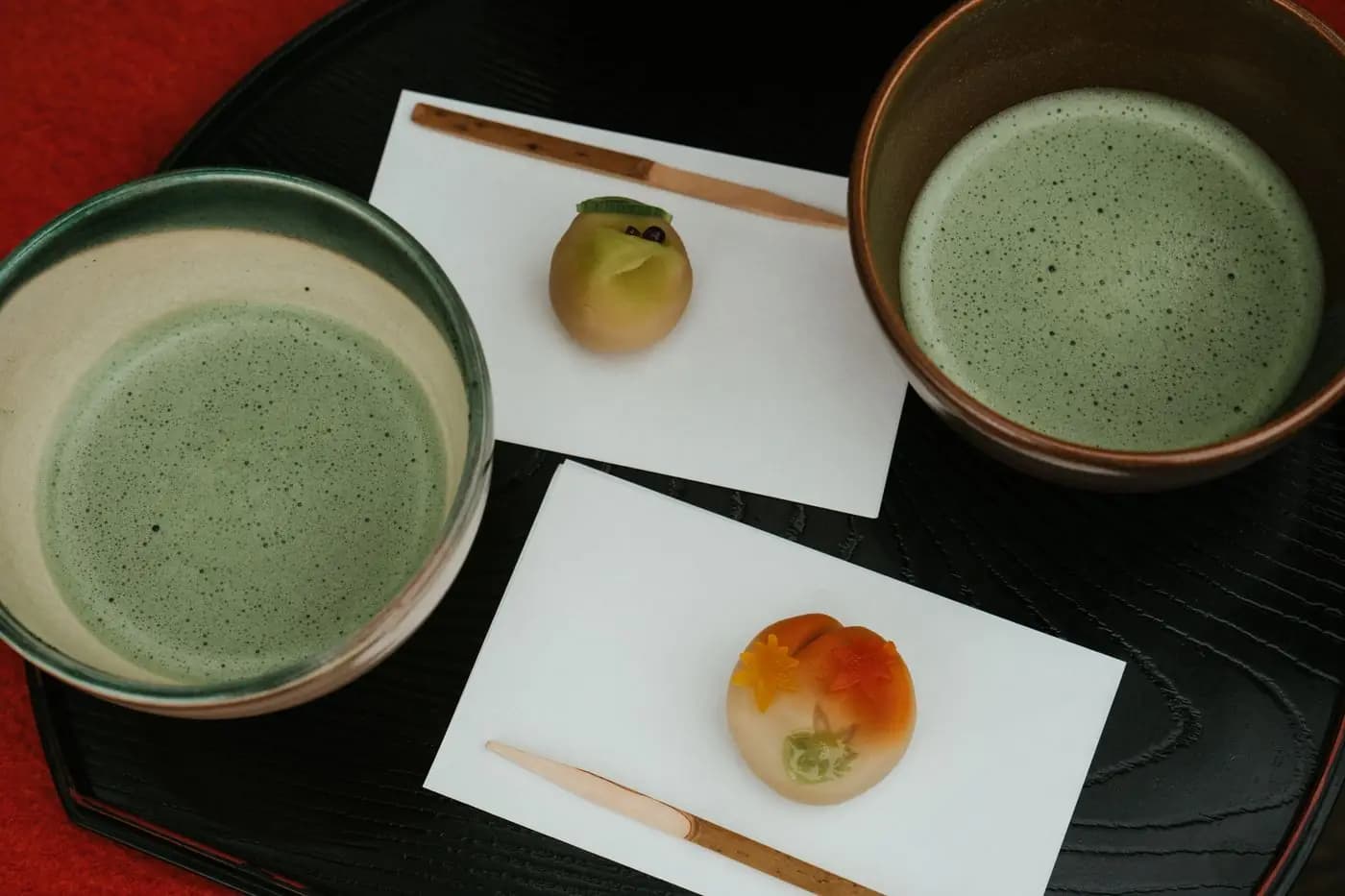
In the evening, the Katamachi district and the Kigura-machi lane are full of izakaya and bars. Specialities to try: jibu-ni (duck simmered in a thickened broth), Kanazawa oden with its crab slices, and sake from Ishikawa breweries. As for sweets, Kanazawa is one of the cities in Japan that eats the most wagashi.
The 21st Century Museum of Contemporary Art
The 21st Century Museum of Contemporary Art, designed by SANAA (Kazuyo Sejima and Ryue Nishizawa), is a large single-storey glass disc with no main facade, open on all sides to a park. It is a 5-minute walk from Kenroku-en, so the two are easy to combine.
There are two zones:
- The free zone, open 9am–10pm every day including Mondays: corridors, library, some permanent works and the installations in the park.
- The paid exhibition zone, 10am–6pm (8pm on Fridays and Saturdays), closed Mondays or the following day if Monday is a public holiday. The price depends on the current exhibition.
The best-known work is The Swimming Pool by Leandro Erlich: seen from above, a pool with people who seem to walk underwater; seen from below, a dry room beneath a thin layer of water. Access to the lower part is in the paid zone and, on busy days, works with time slots handed out on site. At weekends and during Japanese holidays the ticket queue can exceed an hour: buy online when possible, or come on a weekday at opening time.
To round it off, the D.T. Suzuki Museum, dedicated to the Zen Buddhist thinker, has a still-water pond and a contemplation space that visitors in need of calm love.
Kanazawa gold leaf: workshops, museum and shops
Kanazawa produces almost all of the gold leaf made in Japan. The gold is beaten down to a thickness in the order of a ten-thousandth of a millimetre. You find it on Buddhist altars, lacquerware and temples (Kyoto's Kinkaku-ji is covered in it), but also, in the city's shops, on cosmetics, cakes and sake.
Three ways to explore it:
- The Yasue Gold Leaf Museum, near Higashi Chaya: tools, the stages of beating, gilded objects. Open 9:30am–5pm, closed Tuesdays.
- A gilding workshop: apply leaf to a lacquer box, chopsticks or a tray with stencils and brushes. Allow about an hour. At Sakuda, for example, workshops start at 9am, 10:30am, 1pm and 3pm and take up to 50 people (30 on Sundays and holidays).
- The shops in Higashi Chaya, where you can often watch a craftsman working behind glass.
As a corporate gift, a box or tray gilded by each participant is personal and easy to carry home. Note that the leaf is so thin that a draught blows it away; workshops take place with windows closed and no air conditioning aimed at the tables.
Getting to Kanazawa: Hokuriku Shinkansen, Thunderbird and flights
- From Tokyo: the Hokuriku Shinkansen links Tokyo Station to Kanazawa in about 2 h 30 on the Kagayaki, the fastest trains (all seats reserved). Hakutaka trains, with more stops, take just over 3 hours.
- From Kyoto and Osaka: since the shinkansen was extended to Tsuruga in March 2024, you take the Thunderbird limited express to Tsuruga, then the shinkansen to Kanazawa. Allow about 2 hours from Kyoto and 2 h 10 from Osaka, change included. The change at Tsuruga is quick but means getting off with your luggage.
- From Nagoya: shinkansen to Maibara, Shirasagi express to Tsuruga, then shinkansen; or a direct express bus in just under 4 hours.
- By air: one hour from Haneda to Komatsu Airport, then about 40 minutes by bus to Kanazawa Station.
In town, the Kanazawa Loop Bus and Hokutetsu buses serve every sight; the main stops (Kenroku-en, Higashi Chaya, Omicho, 21st Century Museum) are announced in English. The station itself is worth a look for its large wooden Tsuzumi-mon gate.
Kanazawa is also the gateway to Shirakawa-go (about 1 h 30 by express bus, reservation required) and Takayama, which makes it a natural stop on a Tokyo – Kanazawa – Shirakawa-go – Takayama – Nagoya circuit.
Visiting Kanazawa with a group: planning tips
Kanazawa suits groups very well: short distances, craft workshops with good capacity, Kaga-cuisine restaurants used to banquets. A few things to plan ahead:
- Coaches and parking. Full-size coaches cannot enter the lanes of Higashi Chaya: they park at the Higashiyama coach park and the group walks the last 5 minutes. At Kenroku-en, drop the group near the Katsurazaka or Mayumizaka gate depending on your route.
- Sub-groups. Higashi Chaya and Shima cannot take 40 people at once; visit in teams of 15–20, staggered by 15 minutes, each with a guide.
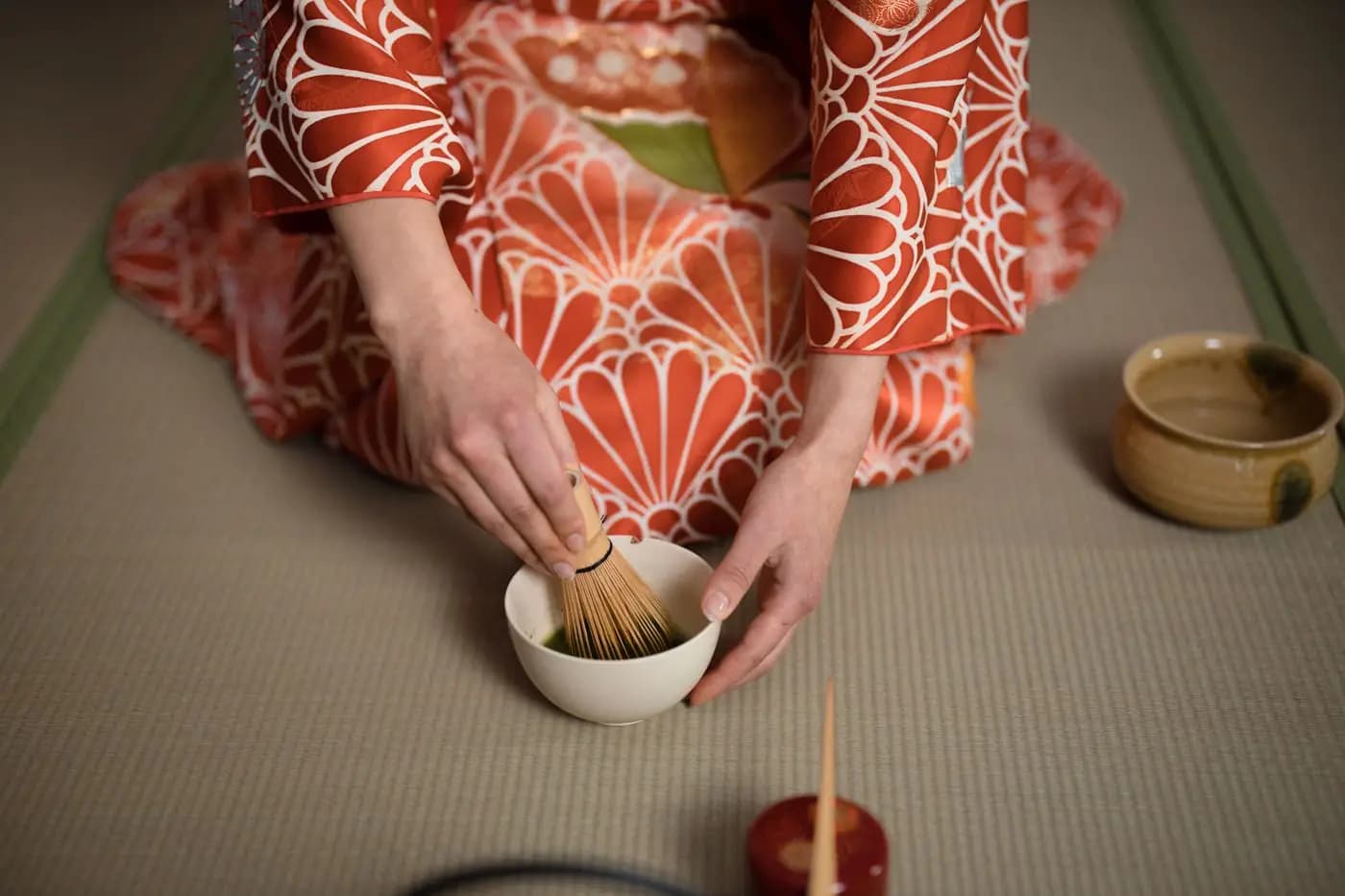
- Workshops. Gold leaf, Kutani porcelain painting, wagashi making or tea ceremony must be booked several weeks ahead for large groups; some workshops run double sessions above 50 people.
- Evenings. A geiko dinner in a Higashi Chaya teahouse is negotiated well in advance and for a limited number of guests; for a large group, a ryotei with a banquet room and a dance performance works better.
- Seasons. November (maples, start of crab season) and early April (cherry blossom) are in high demand; Golden Week and summer fill the hotels around the station. Late January–February, snow and yukitsuri make a beautiful setting, but proper footwear is a must.
- Combining. Kanazawa pairs naturally with Shirakawa-go and Takayama over three days, with a private coach following the group.
SHINOGI DMC organises this kind of circuit for company groups, coordinating shinkansen, coaches, guides and workshops.
Frequently asked questions
How many days do you need in Kanazawa?
Two days let you see Kenroku-en, Higashi Chaya, Omicho, the 21st Century Museum and a gold-leaf workshop without rushing. One day is enough for the three main sights.
How much is the entrance fee for Kenroku-en?
¥320 for an adult, ¥100 for ages 6–17, free from 65 with ID. Open 7am–6pm (8am–5pm from 16 October to end of February).
How do you get from Tokyo to Kanazawa?
By Hokuriku Shinkansen from Tokyo Station: about 2 h 30 on the Kagayaki, just over 3 hours on the Hakutaka.
How do you get from Kyoto to Kanazawa since 2024?
Thunderbird to Tsuruga, then the Hokuriku Shinkansen to Kanazawa: about 2 hours in total, with a change at Tsuruga.
Is the 21st Century Museum in Kanazawa free?
Partly: the free zone is open 9am–10pm every day. Exhibitions, including access beneath The Swimming Pool, are paid and closed on Mondays.
Can a group do a gold-leaf workshop in Kanazawa?
Yes. Some workshops take up to 50 people per session (about an hour). Book several weeks ahead for a large group.
Rédaction SHINOGI DMC · Updated
Sources
- VISIT KANAZAWA (office de tourisme officiel) — Kenrokuen Garden
- VISIT KANAZAWA — 21st Century Museum of Contemporary Art, Kanazawa
- VISIT KANAZAWA — Omicho Market
- VISIT KANAZAWA — Higashi Chaya District
- VISIT KANAZAWA — Kanazawa Yasue Gold-Leaf Museum
- VISIT KANAZAWA — Gold Leaf Sakuda Main Store (ateliers)
- VISIT KANAZAWA — Getting to Kanazawa
- Kanpai — Kanazawa (inspiration)