- Duration
- About 2 hours
- Group size
- 4–30 pax
- Cities
- Kyoto
- Indicative budget
- From ¥39,000 per person
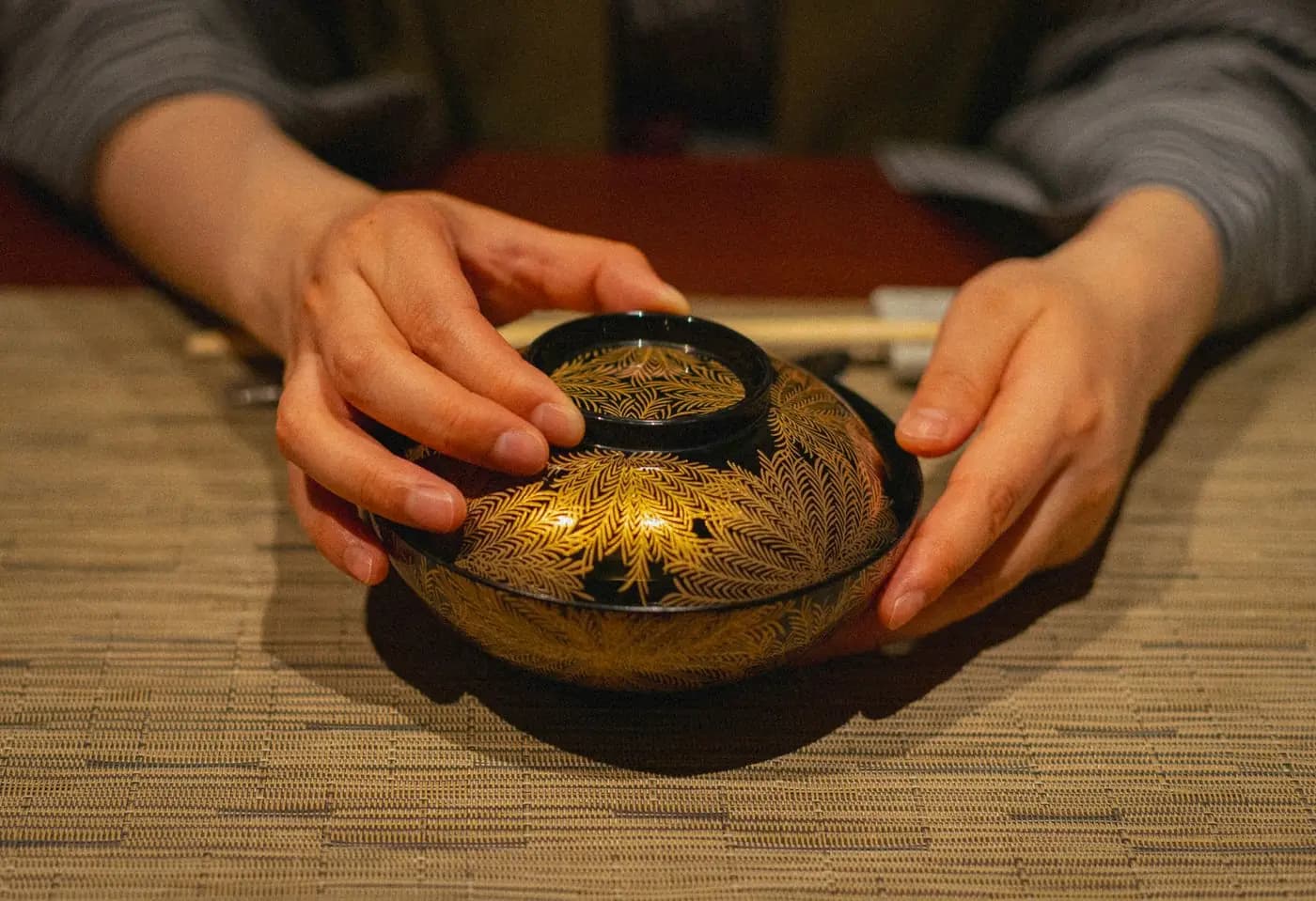
The craftsman introduces urushi, the sap of the lacquer tree worked in Japan for thousands of years, and the stages of a traditional repair: bonding, filling, sanding, lacquering and dusting with gold. Because real lacquer takes weeks to cure, each participant works on a piece prepared in advance and carries out the finishing stages themselves, up to applying the gold. Work is done seated at a table, in a calm setting, with an interpreter.
Kintsugi does not hide the break: it highlights it and makes the repair part of the object's story. The idea resonates easily with teams: accepting imperfection, learning from failure, taking the time to do things well. On request, the craftsman can open a short discussion on these themes, which the seminar leader or facilitator can then build on.
The workshop fits well in the late afternoon after a day of meetings, or in a programme about transformation, a merger or rebuilding a team. Depending on the format, the finished piece is handed over the same day or cured in the workshop and then sent to the hotel or abroad: a personal and meaningful keepsake for every participant.
Objectives
- Open a team reflection on failure, repair and resilience
- Offer a calm, focused moment in a busy programme
- Give everyone a personal piece they finished by hand
How it works
- 1Welcome in the historic house and introduction to urushi and the tools.
- 2Demonstration of the stages of a traditional repair, with commentary.
- 3Each participant finishes their own piece: lacquer, then gold powder.
- 4Discussion of the kintsugi philosophy, translated by the interpreter.
- 5Pieces handed over or set to cure, followed by a group photo.
Good to know
- Urushi can irritate the skin: gloves are provided and long sleeves recommended. Let us know in advance of any known allergy to lacquer or mango.
- Rooms take 4 to 12 people; up to 30, two rooms in parallel or two consecutive sessions.
- Shoes come off in the house, so bring clean socks. Work is done at tables, with no kneeling.
- Pieces cured in the workshop are shipped within 3 to 6 weeks; a same-day take-home version exists for programmes without shipping.
- Indoor activity, available year-round in any weather.
Indicative budget
From ¥39,000 per person (private workshop, piece and materials included, small-group basis). Group rates quoted on request depending on headcount; interpreter, transfers and shipping of the pieces optional.
Frequently asked questions
Why isn't the piece always handed over the same day?
Urushi does not dry in the air: it hardens slowly in a warm, humid cabinet. An authentic repair therefore takes several weeks. We then ship it to each participant's address, or offer a format suited to same-day handover.
Is the workshop suitable for people with no manual skills?
Yes. The delicate stages are prepared by the craftsman, and the movements asked of participants are simple and guided step by step. The result always works, and every piece is different.
Can the workshop be part of a team-building session?
Yes. We prepare a few discussion questions on repair and imperfection with your facilitator, and the craftsman opens the conversation at the end of the workshop. The room can then remain available for a debrief.