Osaka or Kyoto as a base for Kansai?
Stay in Kyoto if your trip revolves around temples, gardens and historic districts, and you want to be on site at 7am while things are still quiet. Stay in Osaka if you want cheaper and larger hotels, lively nightlife, a direct link to Kansai Airport and a central base for Nara, Kobe, Himeji or Koyasan. The two cities are so close (28 minutes by JR Special Rapid) that the choice is never irreversible.
The case for Kyoto:
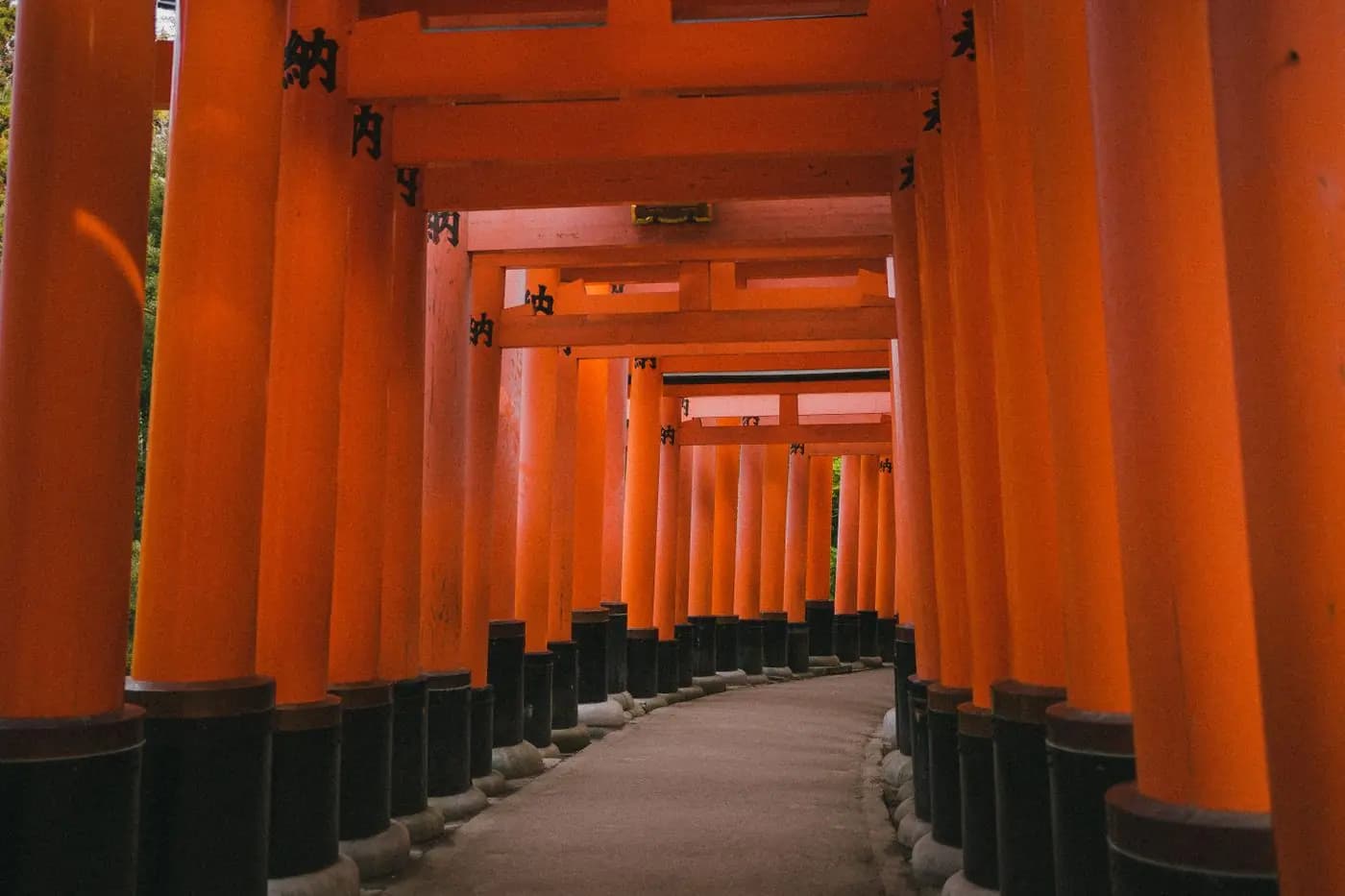
- Major sites are best visited early (Fushimi Inari, Arashiyama, Kiyomizu-dera): sleeping in town saves a 45-minute journey before 7am.
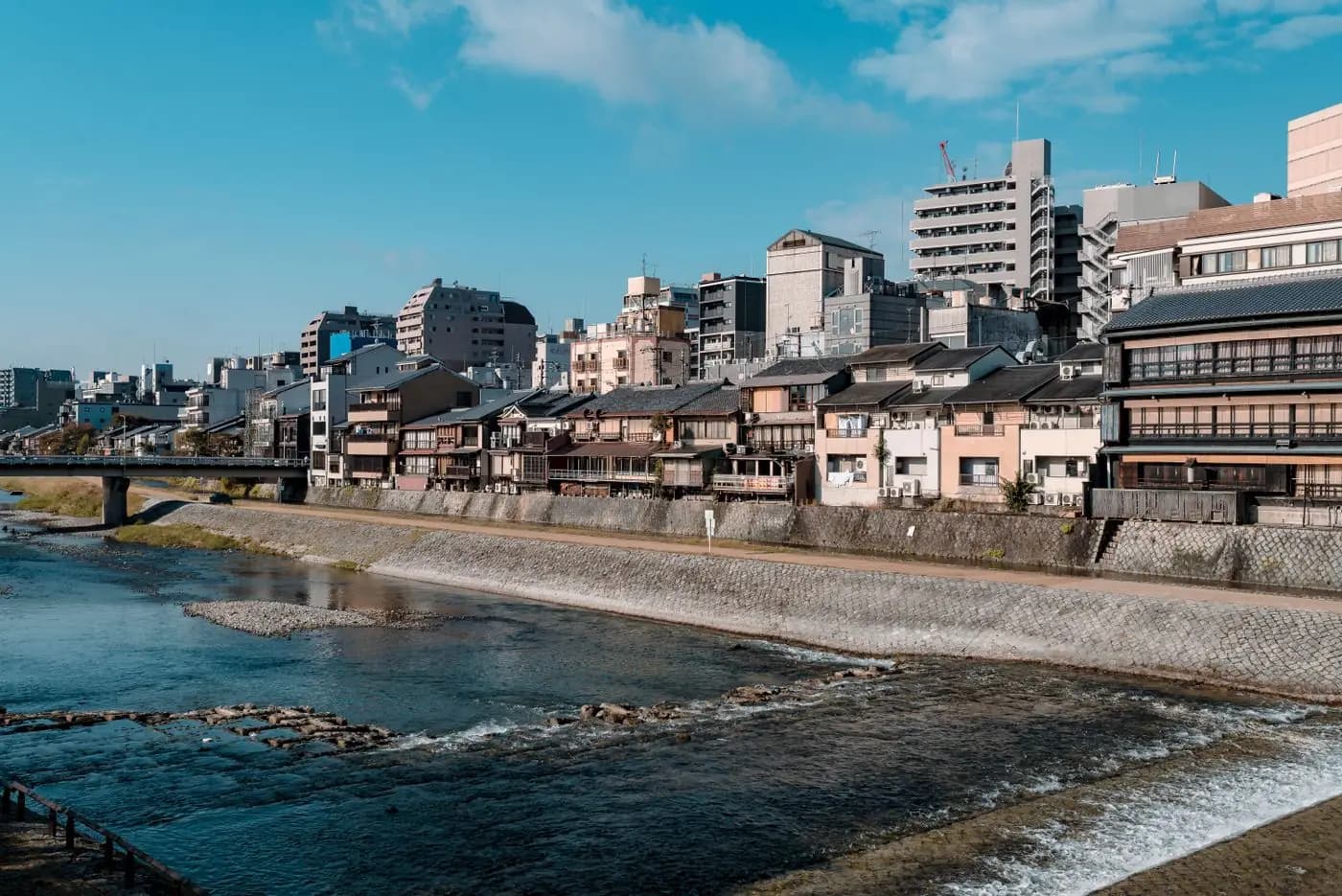
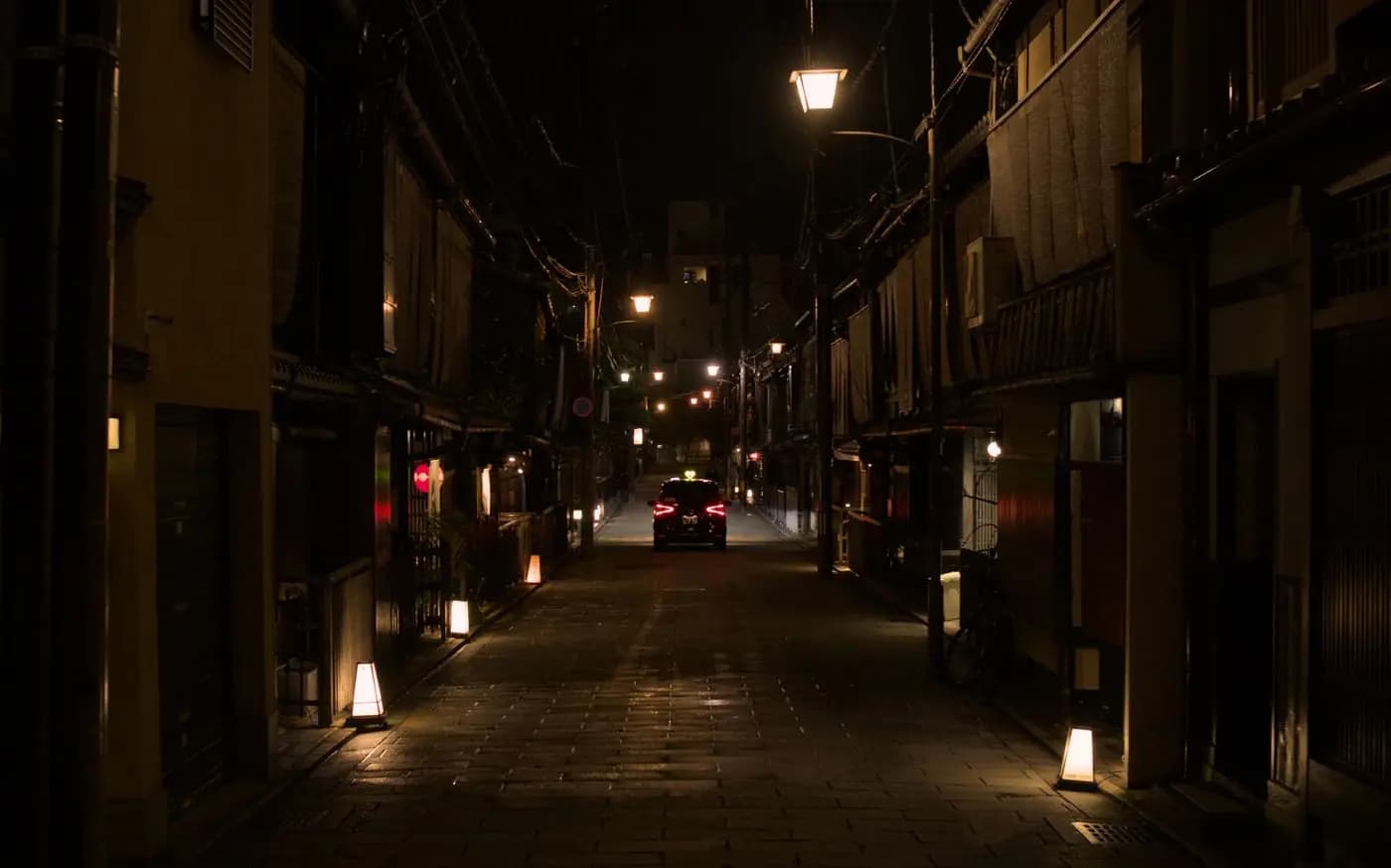
- Evenings in Gion, Pontocho or along the Kamo River have a charm Osaka does not offer.
- Ryokan, machiya townhouses and hotels with character.
The case for Osaka:
- More rooms, more large hotels, and generally lower prices than Kyoto for the same category, especially in peak season.
- An accommodation tax capped at ¥500 a night, against up to ¥10,000 in Kyoto.
- Umeda or Namba put Nara, Kobe and Kansai Airport 20 to 45 minutes away.
- Late-opening restaurants, street food, bars: Osaka comes alive at night.
For a first 4–6 night trip to Kansai, the most comfortable option is to split the stay: Kyoto first, then Osaka, with luggage forwarded between the two hotels.
Kyoto to Osaka by train: time and fares
Four rail companies link the two cities. The best choice depends on where you sleep and what you visit.
- JR Special Rapid (Shinkaisoku): Kyoto Station → Osaka Station (Umeda) in about 28 minutes, ¥580. The simplest from Kyoto Station, often packed at rush hour.
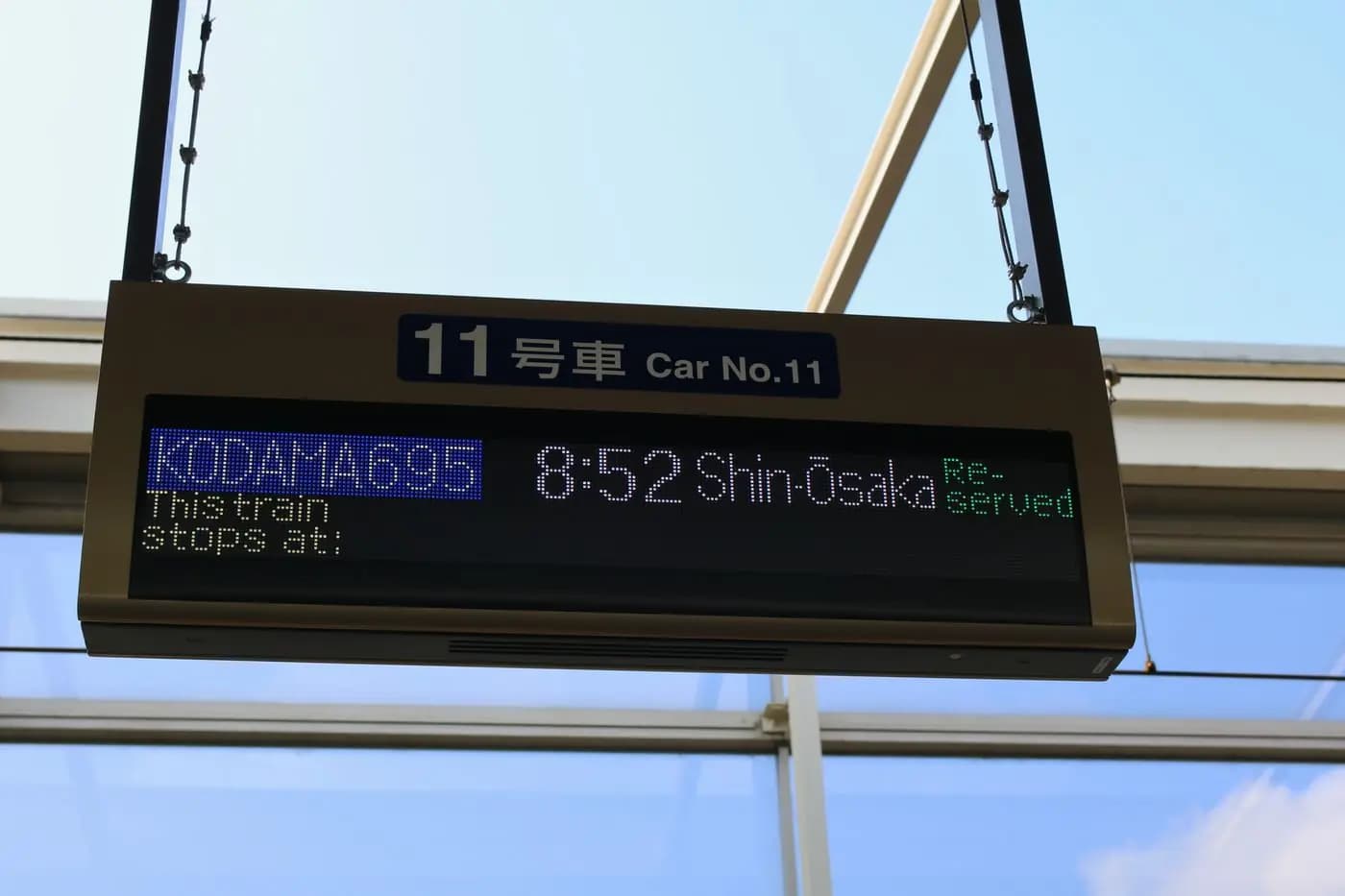
- Shinkansen: Kyoto → Shin-Osaka in about 14 minutes. More expensive; useful only if you sleep near Shin-Osaka or hold a JR Pass.
- Hankyu: Kyoto-Kawaramachi (downtown, near Gion) → Osaka-Umeda in 43–45 minutes by express, ¥410. The best option if you stay in central Kyoto around Shijo.
- Keihan: Gion-Shijo → Yodoyabashi in about 50 minutes by limited express, ¥490 (fare as of 1 April 2026). Handy for Gion, Fushimi Inari and Osaka's Kitahama and Nakanoshima districts.
All these lines accept IC cards (ICOCA, Suica). Note that Kyoto Station lies south of the historic centre, and Osaka Station (Umeda) north of Namba. From a Namba hotel, add 15 minutes by subway to reach Umeda.
Do you need a pass? For a few return trips between Kyoto and Osaka, no: at ¥410–580 a ride, an IC card is enough. A regional pass only pays off if you string together Kyoto, Osaka, Nara, Kobe, Himeji or Hiroshima within the same period; do the maths trip by trip, and our JR Pass guide covers when it is still worth it since the 2023 price rise. A taxi between the two cities is a false good idea: it costs tens of thousands of yen and takes longer than the train, except late at night.
An often underestimated factor is rush hour. Between 7:30 and 9am, trains between the two cities are packed with commuters. A daily commute with luggage, or with a group of 20, at that time is painful. In practice, leave after 9:30am or use a private coach.
Group hotels in Kyoto and Osaka: capacity and prices
Accommodation often decides the matter more than sightseeing does.
In Kyoto, large-capacity hotels are limited and in high demand. A few reference points among hotels we know:
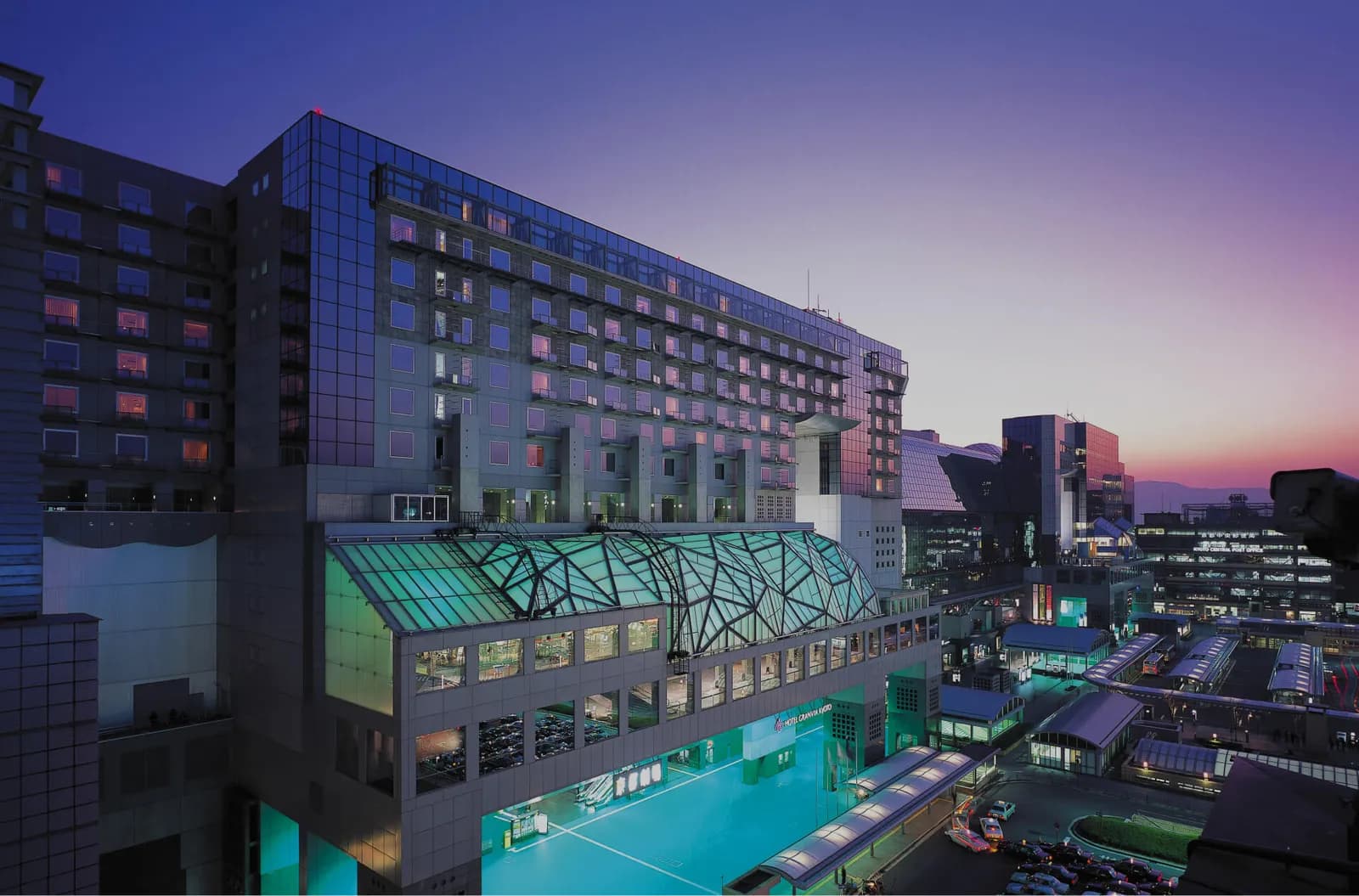
- Hotel Granvia Kyoto: 541 rooms, built into JR Kyoto Station. Ideal for a group making rail day trips or arriving by Shinkansen.
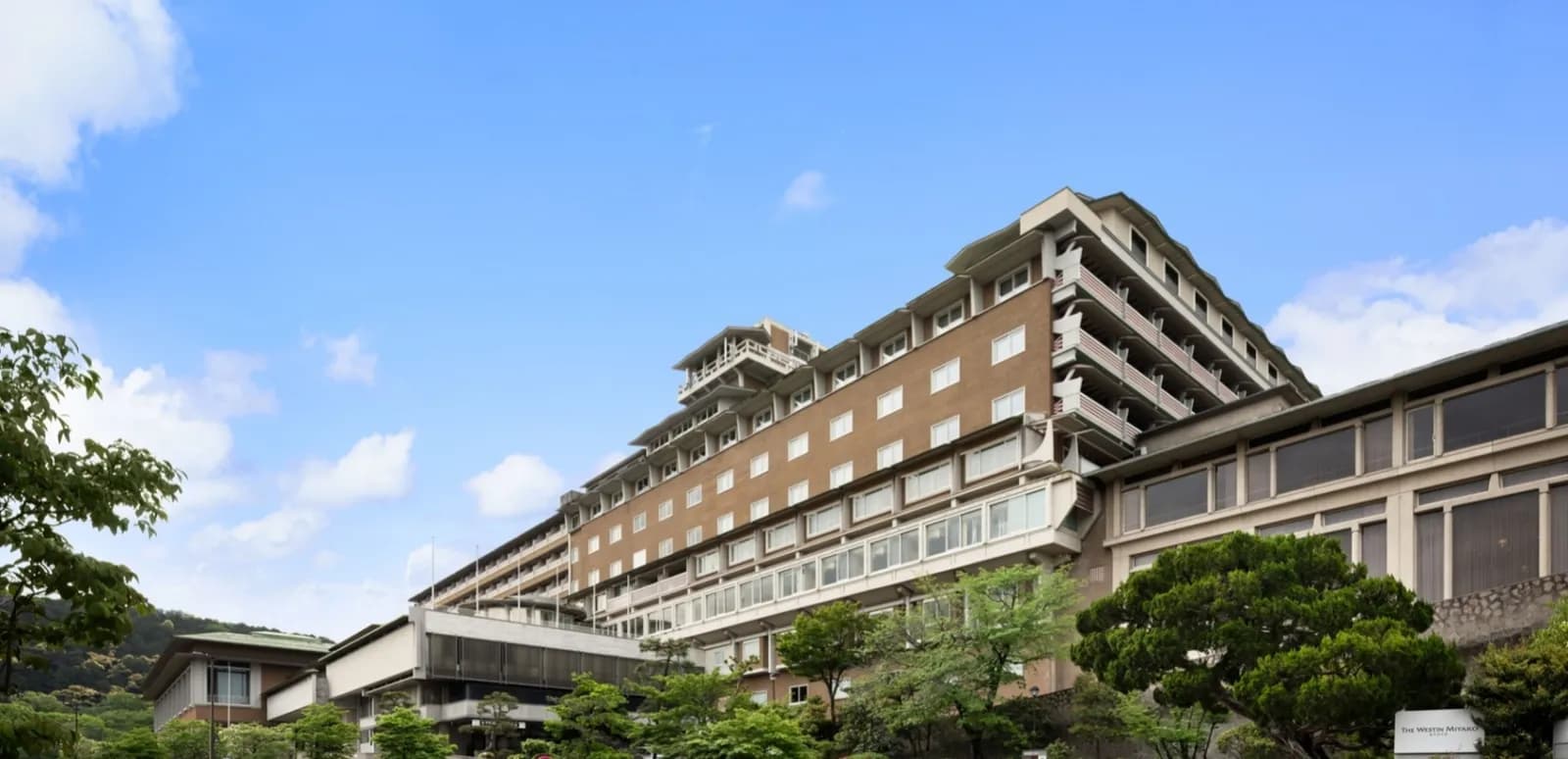
- The Westin Miyako Kyoto: 266 rooms and event capacity of up to 2,000 people, on the Higashiyama hillside, 2 minutes from Keage subway station.
In Osaka, the choice is wider, especially in Umeda and Nakanoshima:
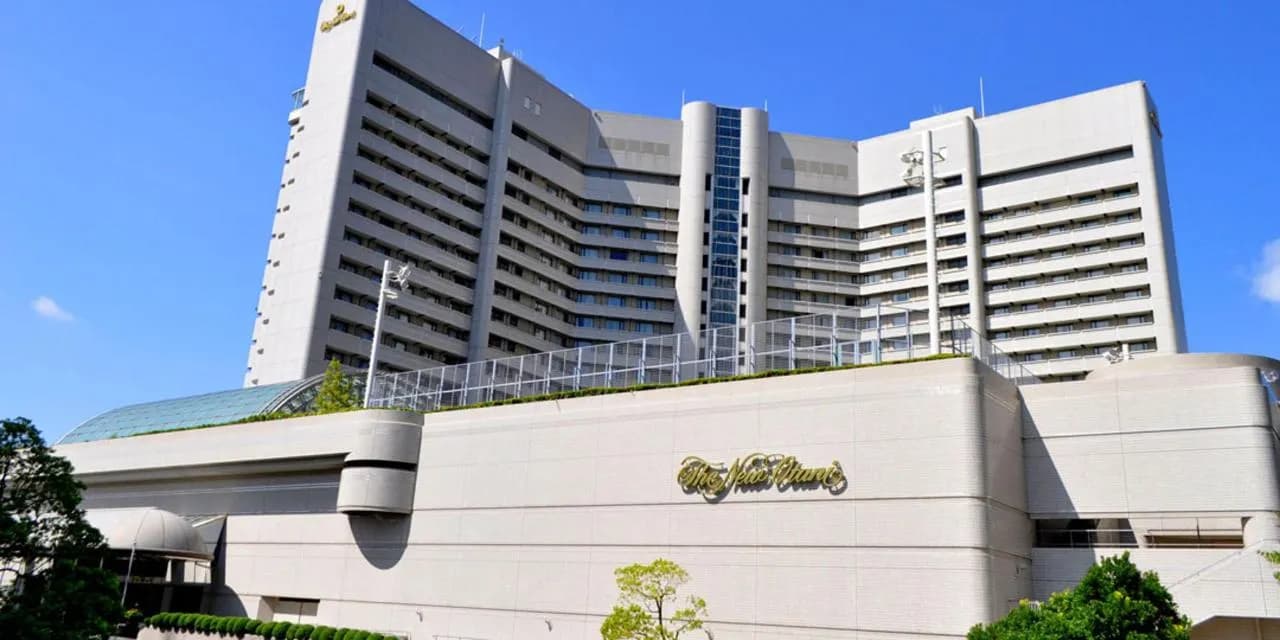
- Hotel New Otani Osaka: 525 rooms, function rooms for up to 3,100 people, facing Osaka Castle Park.
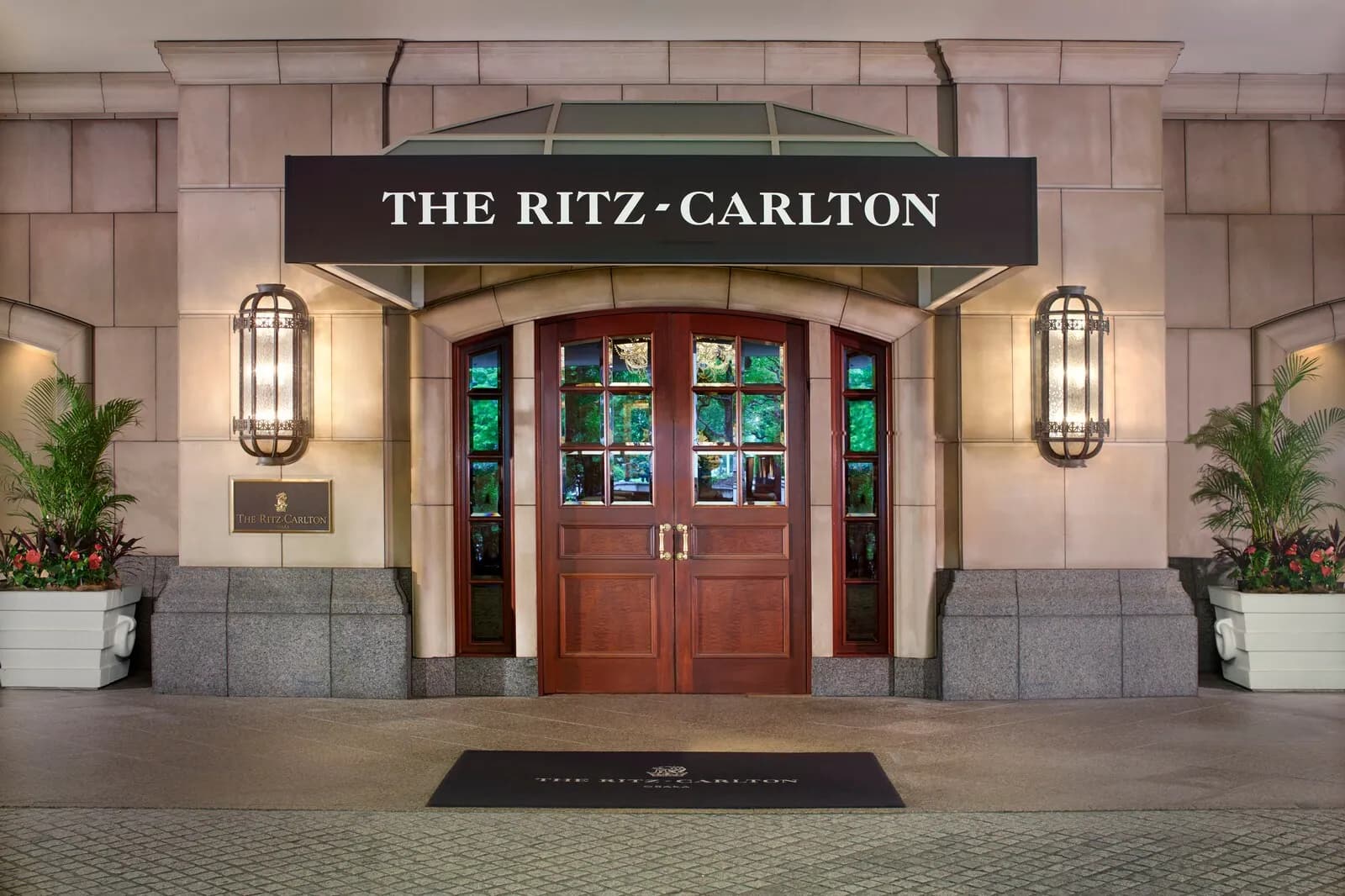
- The Ritz-Carlton Osaka: 291 rooms, a 7-minute walk from Osaka Station.
- Conrad Osaka: 164 rooms in a Nakanoshima tower, suited to an executive group.
There is no official rate: everything depends on dates. As a guide, a double room in a 4-star hotel often costs ¥35,000 to ¥70,000 a night, and Kyoto can reach twice Osaka's price during cherry blossom and autumn leaf season. For a block of 20 rooms in Kyoto in November, book 9 to 12 months ahead.
Another group-specific point: in Kyoto, coaches cannot enter the lanes of Higashiyama or Gion, and stopping in front of some central hotels is difficult. A hotel near the station or on a main road makes logistics easier.
Kyoto and Osaka accommodation tax in 2026
The gap has widened since Kyoto's reform of 1 March 2026. Amounts apply per person per night, based on the room rate per person (excluding meals and consumption tax).
Kyoto (from 1 March 2026):
- under ¥6,000: ¥200
- ¥6,000 to under ¥20,000: ¥400
- ¥20,000 to under ¥50,000: ¥1,000
- ¥50,000 to under ¥100,000: ¥4,000
- ¥100,000 and over: ¥10,000
Osaka Prefecture (from 1 September 2025):
- under ¥5,000: no tax
- ¥5,000 to under ¥15,000: ¥200
- ¥15,000 to under ¥20,000: ¥400
- ¥20,000 and over: ¥500
A concrete example: a group of 40 in a 4-star hotel at ¥30,000 per person per night pays ¥1,000 per person per night in Kyoto, against ¥500 in Osaka. Over three nights, the difference reaches ¥60,000 for the group. In a luxury hotel above ¥50,000 per person, it rises to ¥3,500 per person per night.
The tax is paid at the hotel unless it is already included in a package paid to an agency or booking platform. Ask for it to be shown clearly on the quote.
Osaka or Kyoto first? And in November?
Where to start mostly depends on the airport:
- Arriving at Kansai Airport: Osaka first makes sense (about 35–40 minutes by Nankai train to Namba, around 30 minutes by JR Haruka to Tennoji), then Kyoto. The Haruka also runs directly from the airport to Kyoto in 75–80 minutes.
- Arriving from Tokyo by Shinkansen: Kyoto first, then Osaka, and fly home from Kansai.
- End of the trip: finishing in Osaka makes the last evening easier and brings you closer to the airport.
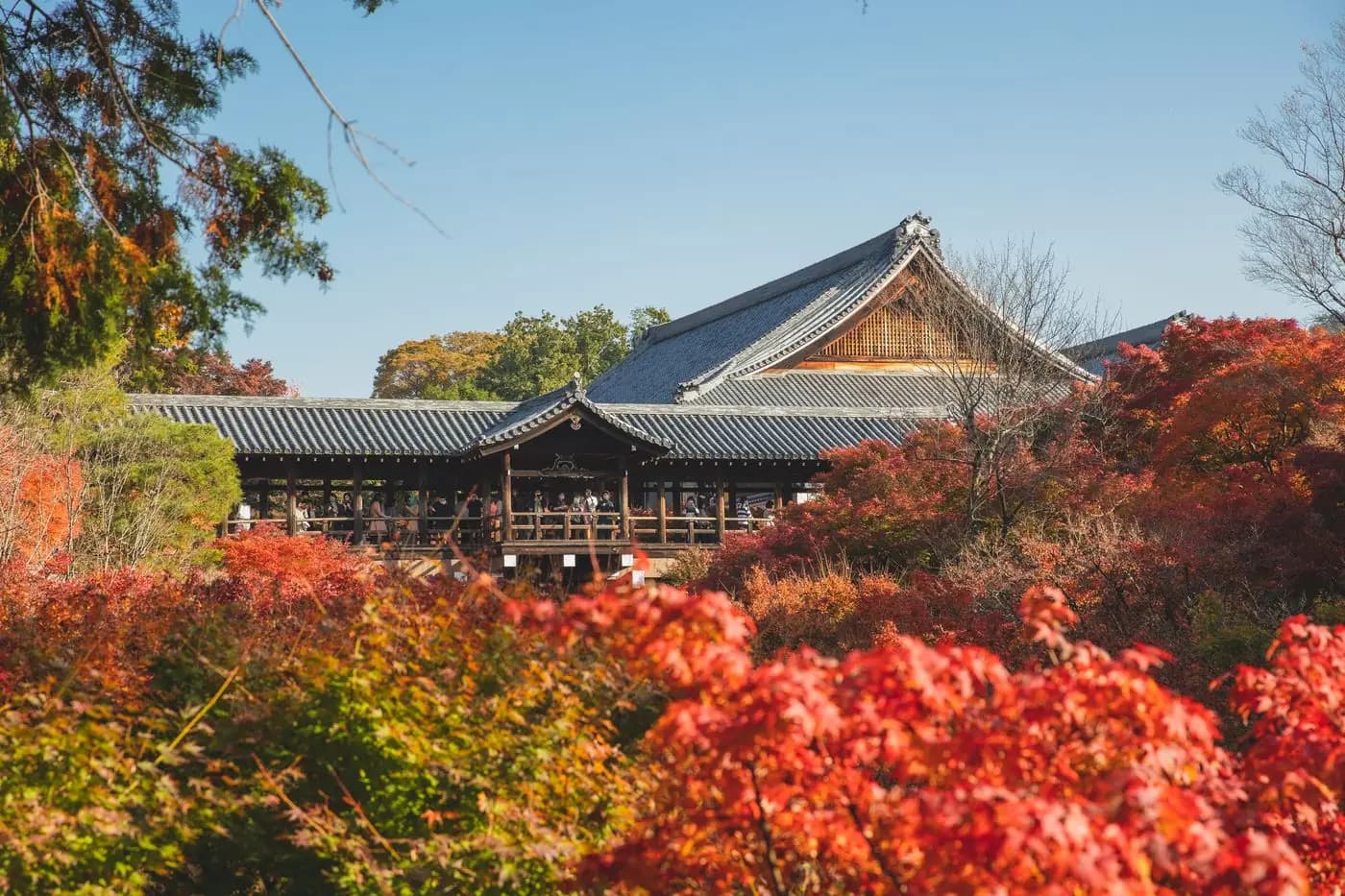
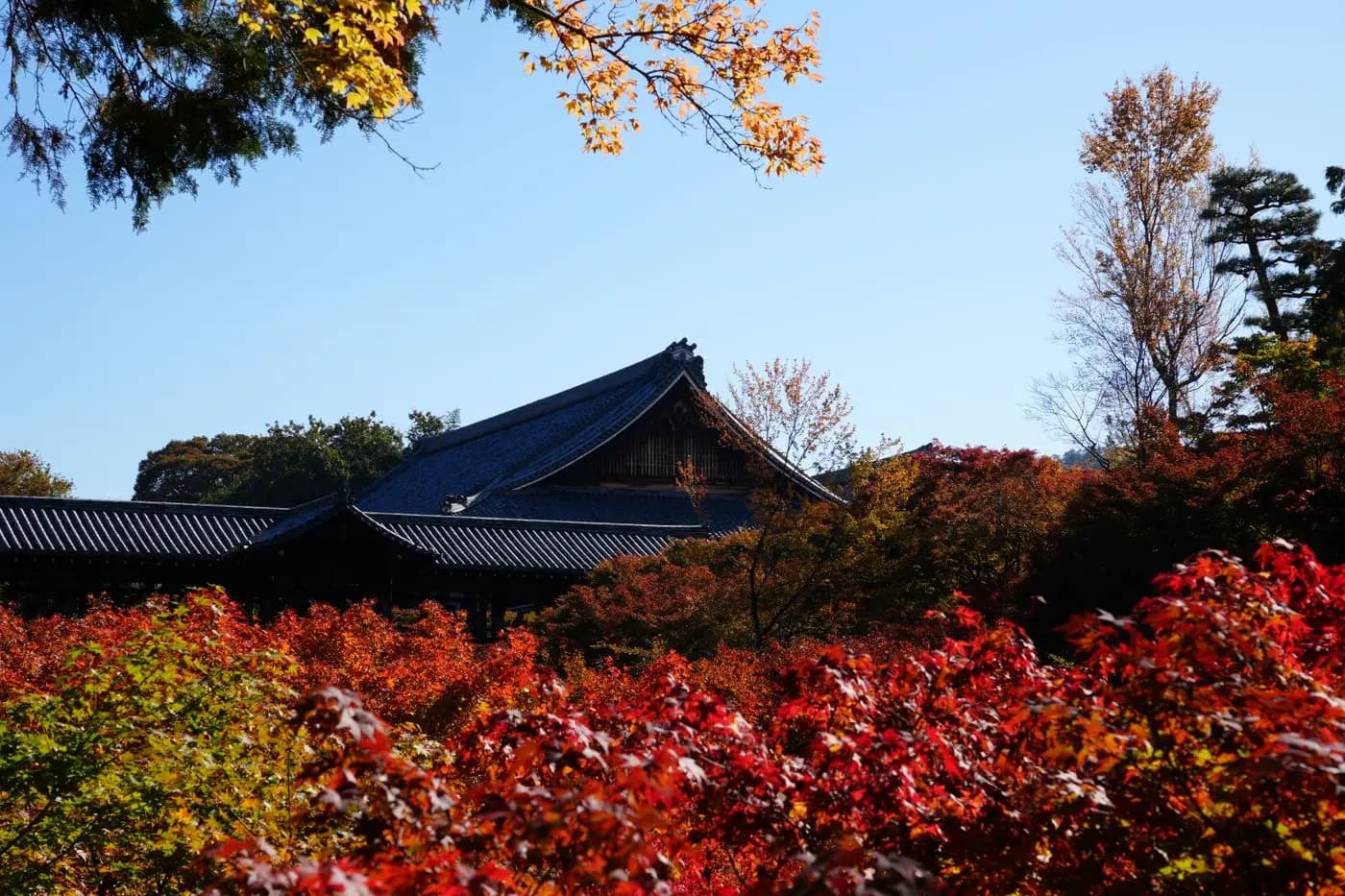
In November, the question changes. Autumn foliage peaks in Kyoto in the second half of the month: Tofuku-ji, Eikan-do, Arashiyama and Kiyomizu-dera draw huge crowds, Kyoto hotel prices rise and city buses are saturated. For a trip at that time:
- Stay in Osaka and take the train into Kyoto from 7am, focusing on two or three sites a day.
- Or book Kyoto very early, ideally near the station, and accept a higher budget.
- Consider lesser-known autumn sites (Daigo-ji, Ohara, the northern temples) and illuminated evening openings.
The same reasoning applies to cherry blossom season in late March and early April. For details on seasons, see our guide to the best time to visit Japan.
Nara, Kobe, Himeji, Koyasan: which base for day trips?
Most Kansai day trips are shorter from Osaka, with one exception.
- Nara: 35–40 minutes from Osaka-Namba (Kintetsu), about 35–45 minutes from Kyoto (Kintetsu or JR). A draw: both bases work. Our Nara day trip article gives the itinerary.
- Kobe: 20–25 minutes from Osaka by JR Special Rapid, against about 50 minutes from Kyoto. Advantage Osaka.
- Himeji: about 30 minutes by Shinkansen from Shin-Osaka, just under an hour from Kyoto. Advantage Osaka, especially as Kobe fits on the same route.
- Koyasan: about 2 hours from Namba (Nankai then cable car). From Kyoto you first need to get to Osaka. Clear advantage Osaka.
- Uji, Ohara, Kurama: half-day trips from Kyoto. Advantage Kyoto.
- Hiroshima and Miyajima: about 1 h 25 by Nozomi Shinkansen from Shin-Osaka, a quarter of an hour more from Kyoto.
For a group making three day trips in five days, a single base in Osaka avoids moving luggage and cuts transfer times. For a group that never leaves Kyoto, staying in Kyoto saves an hour a day.
Kyoto or Osaka for a group: one base or a split stay
For a company group, a club or an association, three patterns come up.
- Single base in Osaka (4–5 nights): Kyoto as a day trip, twice. Pros: one check-in, larger hotels, lower accommodation tax, the airport close by. Cons: you reach Kyoto after the early crowds, and evening returns take time.
- Single base in Kyoto (3–4 nights): well suited to a cultural programme or an executive committee. You book earlier and pay more, but the mornings are unbeatable.
- Split stay: 2–3 nights in Kyoto, then 2–3 nights in Osaka. This is the format we recommend most often: culture first, then the city and dinners, with a final evening 40 minutes from the airport.
A few practical rules for groups:
- Forward suitcases hotel to hotel (takkyubin service) so the group travels light by train or coach.
- Avoid trains between 7:30 and 9am; above 25 people, a private coach between the two cities (about an hour depending on traffic) is often simpler.
- Book group dinners in Kyoto early: private rooms are rare and small.
- Keep a free evening in Osaka (Dotonbori, Shinsekai), much appreciated at the end of a trip.
SHINOGI DMC organises this kind of split stay between Kyoto and Osaka, coordinating hotels, luggage forwarding, coaches and restaurant bookings.
Frequently asked questions
Is it better to stay in Kyoto or Osaka?
Kyoto for a mainly cultural trip and early-morning visits; Osaka for prices, nightlife, large hotels and access to Nara, Kobe, Himeji and Kansai Airport. For 4–6 nights, splitting the stay between the two is often best.
How long is the train from Kyoto to Osaka?
About 28 minutes by JR Special Rapid (¥580), 14 minutes by Shinkansen, 43–45 minutes by Hankyu (¥410) and about 50 minutes by Keihan (¥490).
Can you visit Kyoto while staying in Osaka?
Yes, many travellers do. Leave early for the busiest sites and avoid trains between 7:30 and 9am. For Gion, take Hankyu or Keihan rather than JR.
What is Kyoto's accommodation tax in 2026?
Since 1 March 2026: ¥200 to ¥10,000 per person per night depending on the room rate (¥400 for ¥6,000–20,000, ¥1,000 for ¥20,000–50,000, ¥4,000 for ¥50,000–100,000).
Osaka or Kyoto in November?
Kyoto is at its most beautiful in November, but also more expensive and crowded in the second half of the month. Staying in Osaka and visiting Kyoto early in the morning is a good alternative if you have not booked far ahead.
Should you visit Osaka or Kyoto first?
If you land at Kansai Airport, start with Osaka; if you come from Tokyo, start with Kyoto. Ending in Osaka keeps you close to the airport for your flight home.
Rédaction SHINOGI DMC · Updated
Sources
- JR West — Fact Sheets 2026, p. 9 : tarifs et temps de parcours JR, Hankyu, Keihan, Kintetsu, Nankai (au 1er avril 2026)
- Ville de Kyoto — Révision de la taxe de séjour au 1er mars 2026 (Kyoto Kanko Navi)
- Ville de Kyoto — Taxe de séjour (宿泊税)
- Préfecture d'Osaka — Taxe de séjour (宿泊税), barème depuis le 1er septembre 2025
- Osaka Info — Accommodation tax notice
- Kintetsu Railway — accès Kyoto / Osaka-Namba – Nara
- Kansai International Airport — Access
- Koyasan Shukubo Association — Access to Koyasan