Shizuoka, Japan's great green tea region
When Japanese people think of everyday tea, the sencha drunk at the office, at home or bottled from the konbini, they think of Shizuoka. The prefecture, between Tokyo and Nagoya, was the country's leading tea producer for more than sixty years. In 2024, for the first time since records began in 1959, Kagoshima overtook it in crude tea (aracha) volume: 40.4% against 38.6%. Shizuoka nonetheless remains the reference for sencha, the tea trade and tea culture.
The climate explains it all: mild winters, regular rain, morning mists over the Oi and Abe rivers, and well-drained slopes. Tea bushes are everywhere, from the hills of Kakegawa to the steep valleys of Kawane and the foot of Mount Fuji.
Uji, near Kyoto, is the historic home of matcha and the tea ceremony. Shizuoka is something else: a large-scale farming region where you see how tea goes from field to factory to cup. The two visits complement rather than repeat each other.
A few landmarks to place the region:
- Makinohara and Shimada: the great tea plateau and the tea museum, about 1 hr 30 min from Tokyo.
- Kakegawa and Kikugawa: home of fukamushi-cha, "deep-steamed" sencha.
- Kawane: a mountain valley of fragrant teas, served by the Oigawa Railway steam train.
- Fuji and Fujinomiya: tea fields with Mount Fuji as a backdrop.
- Okabe (Fujieda): one of the major gyokuro (shade-grown tea) areas.
Makinohara plateau and the Fujinokuni Tea Museum: practical visit
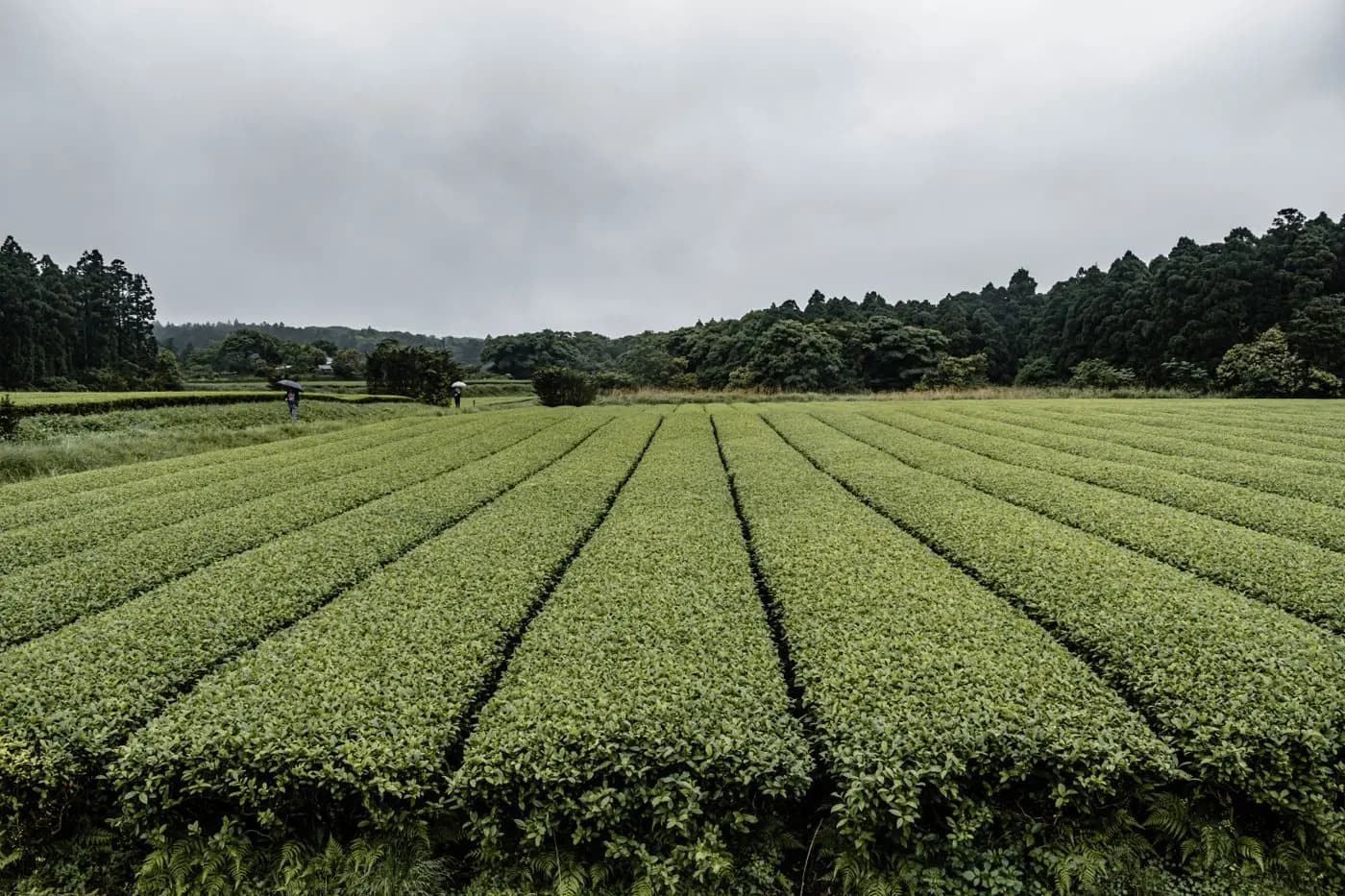
The Makinohara plateau, between the cities of Shimada, Makinohara and Kikugawa, is Japan's largest continuous expanse of tea fields. This wasteland was cleared from 1869, after the fall of the shogunate, by former Tokugawa retainers who settled in the area and by the porters who had carried travellers across the Oi River, put out of work by the new bridges. Rows of rounded, clipped tea bushes stretch as far as the eye can see; on clear days Mount Fuji appears to the north-east.
In the same area, around Kakegawa and Kikugawa, growers practise chagusaba: they cut grass from nearby meadows and spread it between the rows of tea to feed the soil and retain moisture. The system, which also preserves a wide diversity of plants and insects, was listed by the FAO as a Globally Important Agricultural Heritage System (GIAHS) in 2013.
The best starting point is the Fujinokuni Cha no Miyako Museum ("tea capital" museum) in Shimada, on the edge of the plateau. It covers the origins of tea, its spread around the world, Shizuoka's tea industry, and a garden recreated after Kobori Enshu, the 17th-century tea master, with its tea pavilion.
Practical information (official website):
- Hours: 9am–5pm (last entry 4:30pm); tea pavilion 9:30am–4pm.
- Closed: Tuesdays (the next day if Tuesday is a holiday), and over New Year.
- Admission: ¥500; ¥400 per person for groups of 20 or more paying visitors; free for students and younger, and over-70s.
- Grind your own matcha with a stone mill: ¥300 on top of admission, about 20 minutes, 6 people per session; you take the powder home.
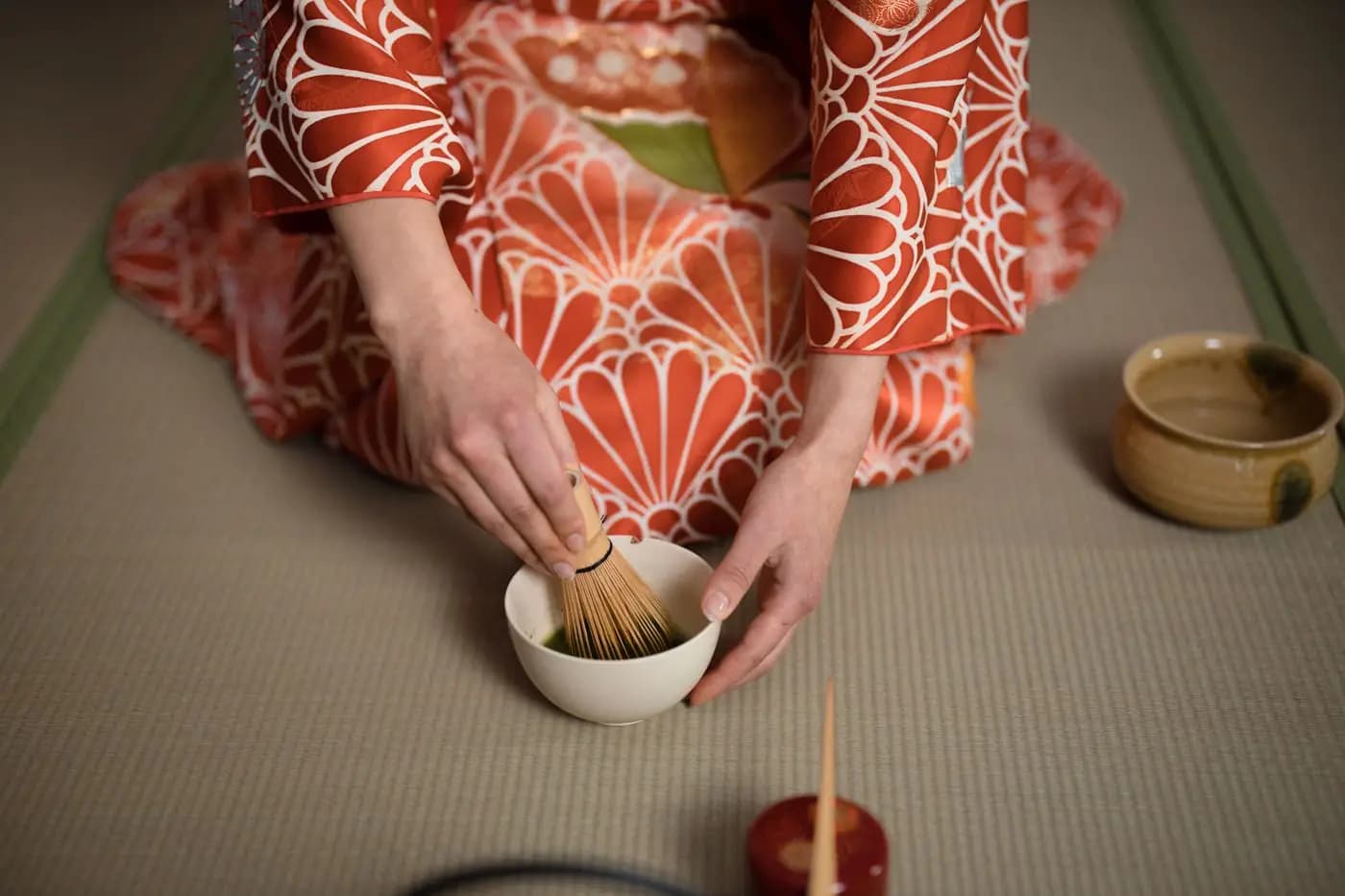
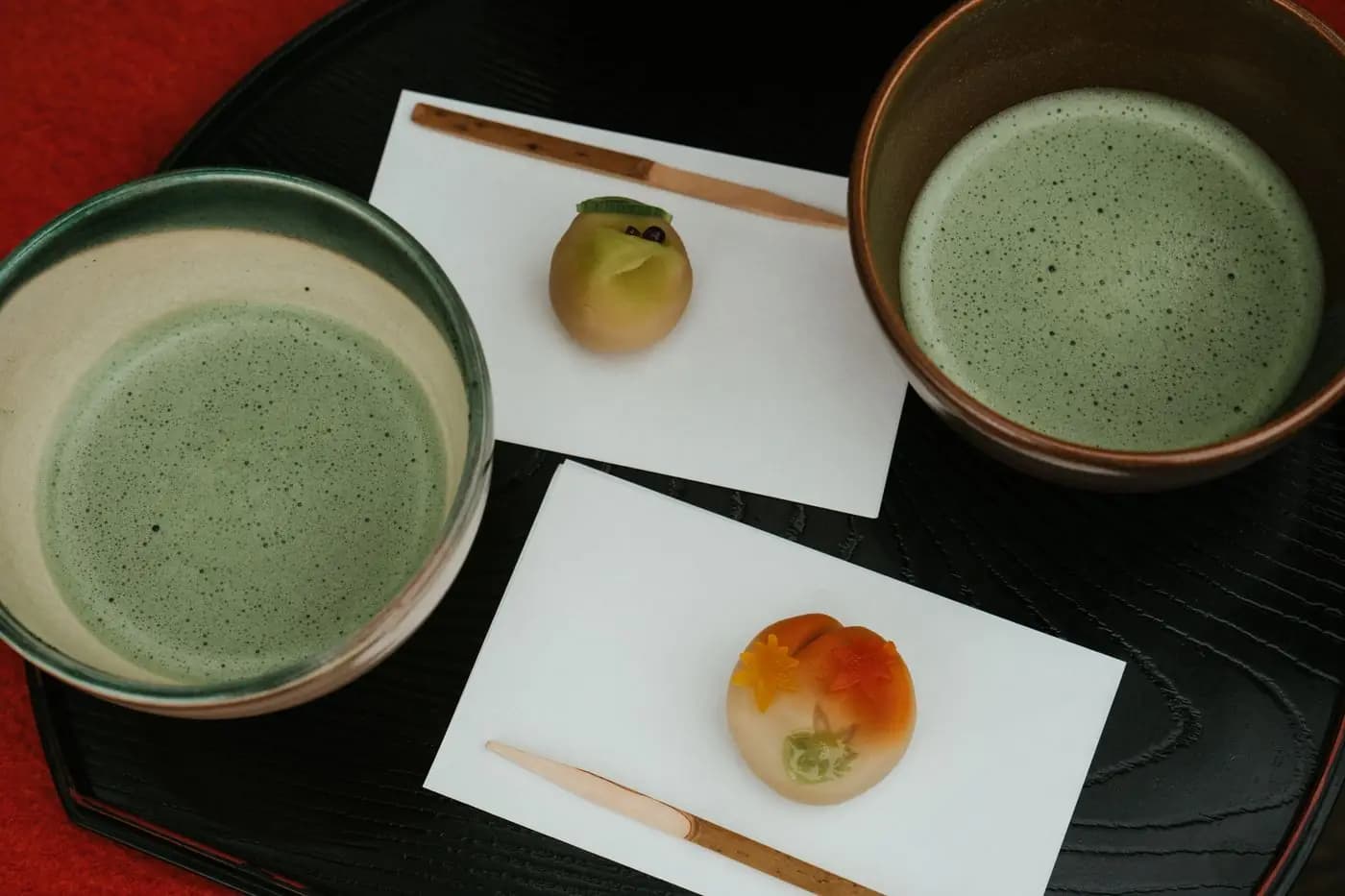
- Tea in the pavilion: matcha prepared by a teacher with a seasonal wagashi, ¥700 (cash only), about 20 minutes, up to 16 people per session.
- On site: a café-restaurant cooking with tea and Shizuoka produce, a shop with tastings of the prefecture's teas, and a Mount Fuji viewing space on the 3rd floor.
Allow 1 hr 30 min to 2 hours. Access is by car (about ten minutes from the Shimada-Kanaya or Sagara-Makinohara exits) or by bus from JR Kanaya Station.
Sencha, gyokuro, matcha, hojicha: Shizuoka's teas and how to brew them
All Japanese green teas come from the same plant (Camellia sinensis). What changes is cultivation, harvest timing and processing. In Japan, fresh leaves are steamed within hours of picking to stop oxidation, which gives the green colour and vegetal taste, quite different from pan-fired Chinese green teas.
The main types you will find in Shizuoka:
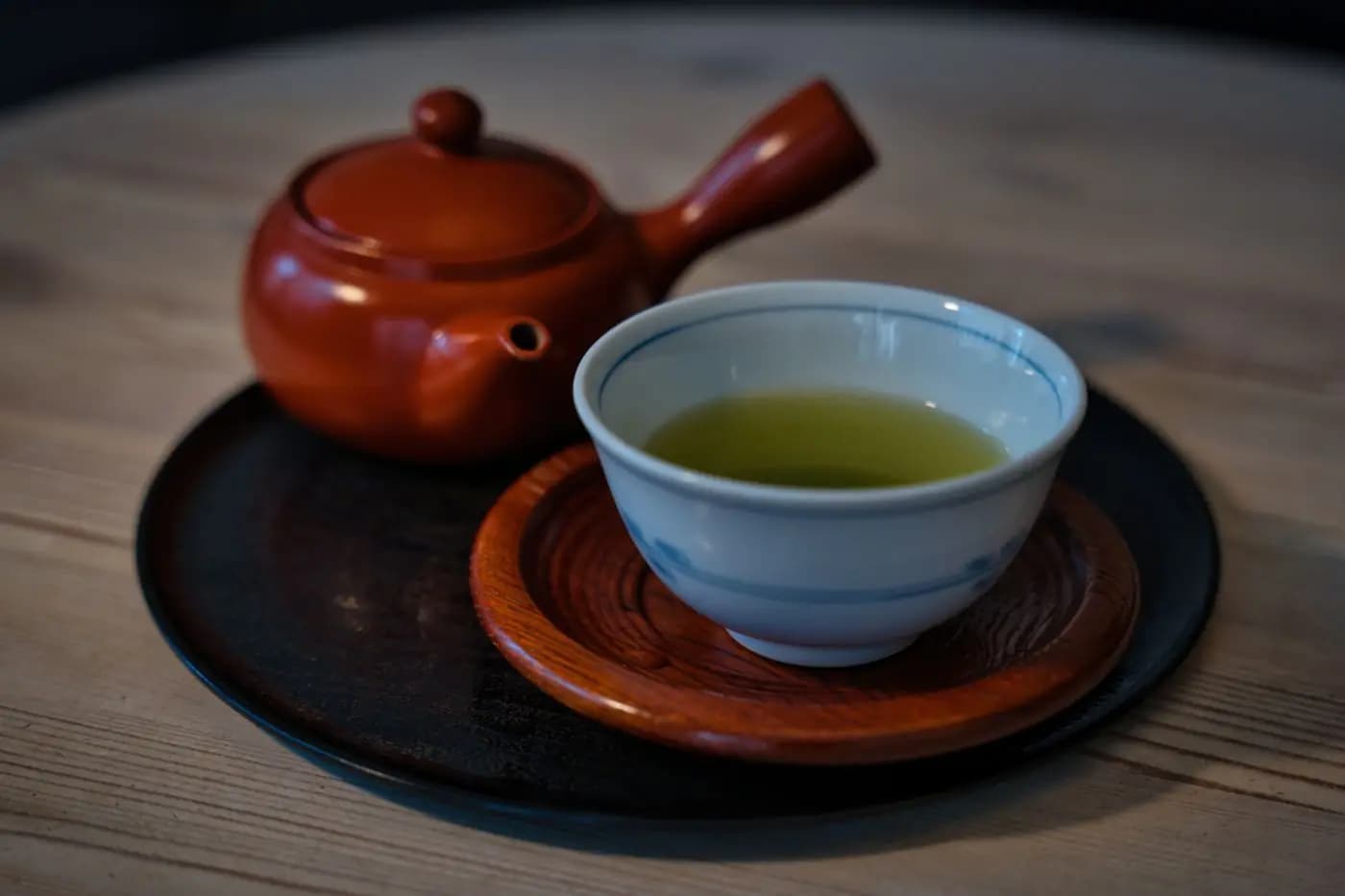
- Sencha: everyday tea, steamed, rolled and dried. It is the region's speciality. Brewing: water at 70–80°C, about one minute.
- Fukamushi-cha: sencha steamed two to three times longer, typical of Kakegawa and Makinohara. Finer leaves, a dark, cloudy green liquor, a round taste with little bitterness. Short infusion, 30 to 40 seconds.
- Gyokuro: shaded for around twenty days before harvest, which increases sweetness and umami. Okabe in Fujieda is a renowned area. Brew at 50–60°C for two minutes, in small amounts.
- Kabuse-cha: shaded for a shorter time (about a week), between sencha and gyokuro.
- Matcha: shaded leaves steamed and dried without rolling (tencha), then stone-ground. Shizuoka produces it, but for the history of matcha and the tea ceremony, Uji remains the reference.
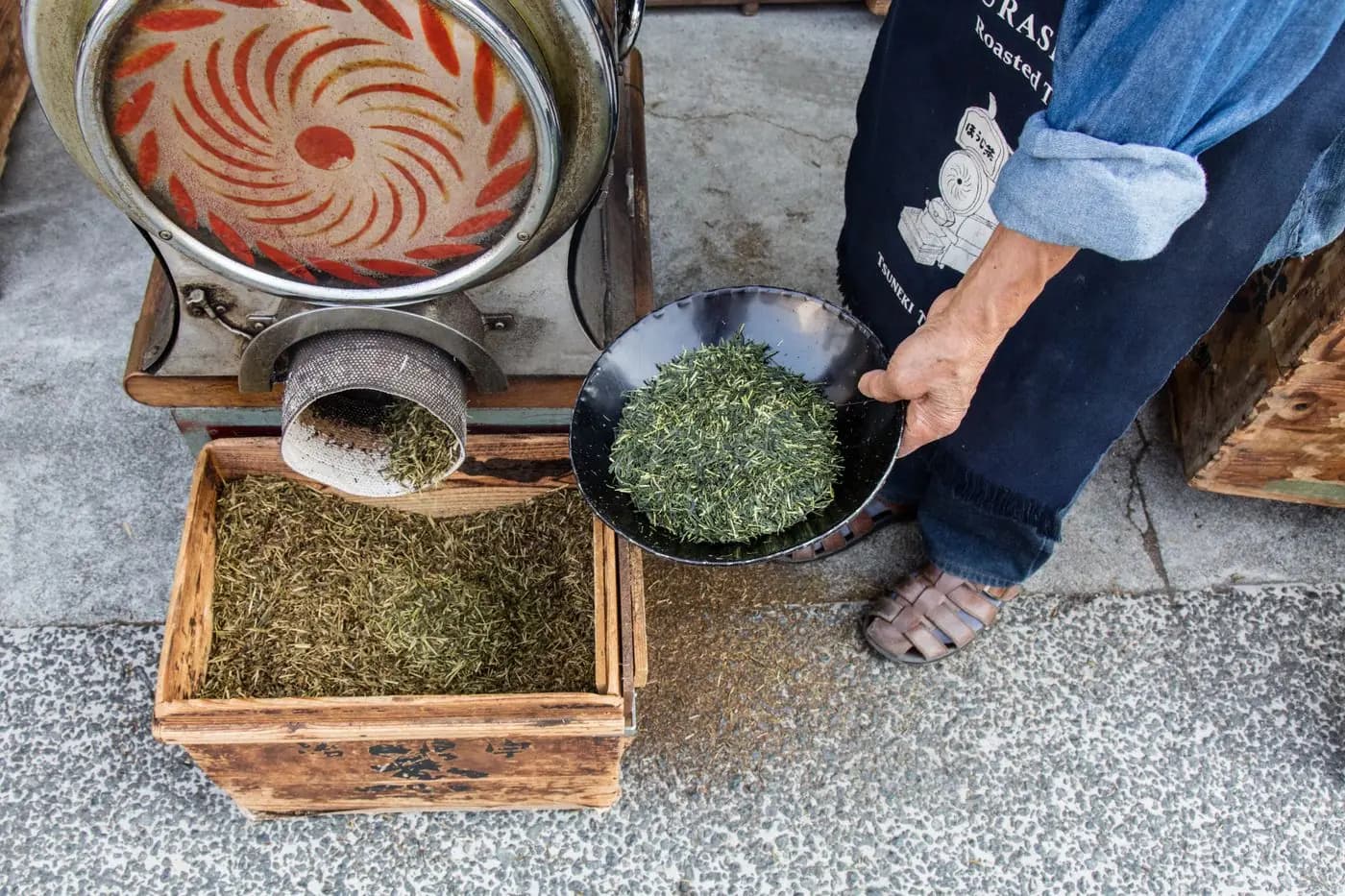
- Hojicha: roasted tea, brown, with toasty notes and little caffeine. Brew with boiling water, 30 seconds.
- Genmaicha: sencha or bancha mixed with roasted rice.
The calendar matters too. The first harvest (ichibancha) produces shincha, "new tea", sold from late April into May. It is followed by summer (nibancha) and autumn harvests, more ordinary teas often used for bottled drinks and hojicha.
When buying, taste first: most Shizuoka tea shops will pour a cup on request. A good first-flush sencha costs around ¥1,000 to ¥2,000 per 100 g; gyokuro and competition shincha cost far more. Keep tea cool and away from light, and drink it within two months of opening.
When to go: shincha season and tea picking
The best period is late April to mid-May. Tea bushes are covered in tender green shoots, factories run day and night to process each day's leaves, and the smell of steamed tea drifts over the villages. The symbolic moment is hachijuhachiya, the 88th day after the start of spring in the traditional calendar (risshun), around 2 May: by tradition, tea picked that day brings luck and good health.
It is also tea-picking (chatsumi) season. Several farms and visitor sites in the prefecture let you pick a few handfuls of leaves by hand, sometimes dressed in a picker's kimono with apron and hat, then roll and dry them to make your own tea. These activities are seasonal, often limited to a few weeks and must be booked ahead; conditions vary from place to place.
Other seasons have their advantages:
- June–July: the second harvest, fields still very green, fewer people.
- October–December: the tea bushes flower (small white blossoms with yellow centres) and the dry air makes Mount Fuji visible more often.
- Winter: the clearest skies for snow-capped Fuji above the fields; the leaves are dark, but the contrast is superb.
To avoid: Golden Week (29 April–5 May) if you dislike crowds, as it falls right in shincha season. A visit just before or after offers the same scene on quieter roads.
Practical tip: in peak season, farms and factories are overstretched. A visit to a crude-tea (aracha) factory needs to be arranged several weeks ahead, and often only for small groups.
Tea fields and Mount Fuji: where to find the view
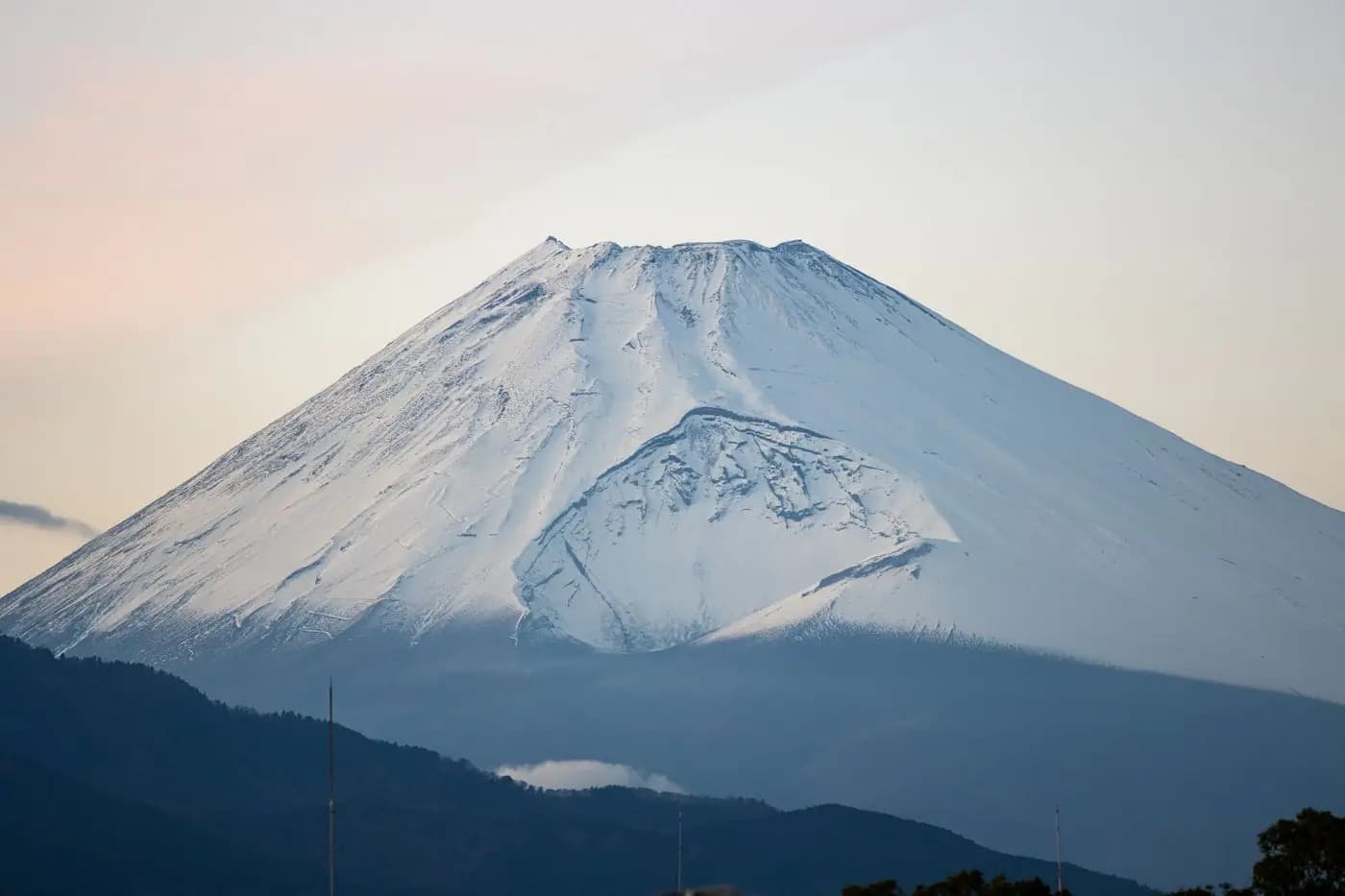
The photo of tea rows with Fuji in the background has become a Shizuoka classic. It takes some planning, because the volcano often hides in late-morning cloud, especially in spring and summer.
The best-known viewpoints:
- Obuchi Sasaba (Fuji City): a sloping tea field with no buildings or power lines between the rows and the volcano. It is the most photographed view, especially in May, when Fuji still has its snow above the new shoots. Access by car (about fifteen minutes from the Fuji exit of the Tomei Expressway) or on foot from a bus stop. A private terrace set among the tea bushes ("chanoma") can be booked for 90 minutes, with a tea tasting.
- Makinohara plateau: Fuji is further away, but the scale of the fields is spectacular. The tea museum's viewing space gives you the view without walking.
- Nihondaira (Shizuoka City): a hill with tea fields, views over Suruga Bay and Fuji, and a ropeway down to Kunozan Toshogu Shrine.
- The Kawane valleys: no Fuji, but fields clinging to the slopes and the Oigawa Railway steam train running along the river.
Photo tips:
- Come early in the morning, ideally before 9am, from November to May.
- Check webcams and visibility forecasts the day before; a blue sky in Tokyo guarantees nothing at the foot of Fuji.
- Never walk into the rows: they are private crops. Stay on paths and designated areas, and do not touch the leaves.
- Park only in signposted car parks: farm tracks are used by machinery.
Getting to Shizuoka, how long to stay and a sample itinerary
Access. From Tokyo, the Hikari shinkansen takes about 1 hour to Shizuoka Station (the slower Kodama also serves Shin-Fuji and Kakegawa). From Nagoya it is also about 1 hour. The JR Pass covers these trains; note that Nozomi services do not stop at Shizuoka.
Once there:
- Tea museum and Makinohara: JR Tokaido Line to Kanaya (about 25 minutes from Shizuoka), then bus or taxi. Mt. Fuji Shizuoka Airport is very close to the plateau.
- Obuchi Sasaba: from Shin-Fuji (Kodama) or Fuji Station, by taxi or car.
- Kawane: Oigawa Railway from Kanaya; the steam train runs on a seasonal timetable and needs booking.
In practice, tea sites are scattered and poorly served: a car with driver or a coach saves hours.
How long?
- Day trip from Tokyo: tea museum and Makinohara, lunch, then a Fuji-view field in the late afternoon. Doable, but long.
- One night: add Obuchi Sasaba at dawn and a tasting at a grower's. This is the right format.
- Two nights: with Kawane and the steam train, or combined with Hakone or the Izu Peninsula.
Sample two-day itinerary:
- Day 1: shinkansen to Shizuoka, Nihondaira and Kunozan Toshogu, night in Shizuoka.
- Day 2: early start for Obuchi Sasaba, then drive to Shimada, tea museum (matcha grinding, tea in the pavilion), lunch at the museum restaurant, Makinohara plateau, shinkansen back from Kakegawa or Shizuoka.
Shizuoka tea for groups: tastings, workshops and seminars
Shizuoka has a rare advantage for groups: it is an hour from Tokyo on the Tokaido line and can slot in between Tokyo and Kyoto without a detour. Tea offers hands-on activities that work well for international teams.
What works well with 20 to 40 people:
- The tea museum as a base: group rate of ¥400 from 20 paying visitors (advance booking requested), parking for 8 coaches, and a 200-seat multipurpose hall (213 m²) facing the garden, bookable for a meeting or conference. The matcha-grinding sessions (6 people each) and tea in the pavilion (16 each) run in rotation.
- A comparative tasting at a tea merchant or grower: sencha, fukamushi, gyokuro and hojicha side by side, with a blind identification game. Simple, convivial, and everyone learns something.
- Spring tea picking: in late April and early May, some farms host groups to pick and roll their own tea. Slots are very limited and should be requested months ahead.
- A factory visit to a crude-tea plant, possible for small groups, ideally outside the May peak.
- Gifts: Shizuoka tea in customisable tins, sencha-and-hojicha sets, small teapots. For an order with a company-branded label, allow several weeks.
Good to know: the museum closes on Tuesdays, and Golden Week weekends are saturated. A Wednesday or Thursday in May, or a clear November day, give the best conditions.
SHINOGI DMC builds these stops into Tokyo-Hakone-Kyoto programmes or seminars from Tokyo: museum and workshop bookings, a private tasting, coach, guide and corporate gifts.
Frequently asked questions
When is shincha season in Shizuoka?
From late April to mid-May for the first harvest. The symbolic day is hachijuhachiya, the 88th day after the traditional start of spring, around 2 May.
How much is the Shizuoka tea museum?
¥500 (¥400 for groups of 20+ paying visitors), free for students and over-70s. Matcha grinding ¥300 and tea in the pavilion ¥700 extra. Closed Tuesdays.
Where can you see tea fields with Mount Fuji?
At Obuchi Sasaba (Fuji City), the most famous viewpoint, especially in May and early in the morning. The Makinohara plateau and Nihondaira also have more distant views.
What is the difference between sencha and gyokuro?
Sencha grows in the sun; it is fresh and slightly astringent, brewed at 70–80°C. Gyokuro is shaded for about twenty days before harvest, sweeter and richer in umami, brewed at 50–60°C.
How do you get from Tokyo to the Shizuoka tea fields?
Hikari shinkansen to Shizuoka (about 1 hour), then the JR Tokaido Line to Kanaya (about 25 minutes) for the museum and Makinohara. A car with driver is advised to link several sites.
Can you organise a tea activity for a corporate group in Shizuoka?
Yes: the tea museum welcomes groups (reduced rate, 200-seat hall, rotating workshops), and tea merchants run private comparative tastings. Spring picking should be booked months ahead.
Rédaction SHINOGI DMC · Updated
Sources
- Fujinokuni Cha no Miyako Museum — Horaires, tarifs, accès (site officiel)
- Fujinokuni Cha no Miyako Museum — Meule à matcha
- Fujinokuni Cha no Miyako Museum — Thé dans le pavillon
- Fujinokuni Cha no Miyako Museum — Groupes et salle polyvalente
- MAFF — Production de thé brut 2024 par préfecture
- Chagusaba — Système chagusaba de Shizuoka (GIAHS 2013)
- Préfecture de Shizuoka — Plan de promotion du thé