Why Tsubame-Sanjo is Japan's metalworking capital
Tsubame and Sanjo are two neighbouring towns on the Niigata plain, separated by the Shinano River and joined by a shared shinkansen station, Tsubame-Sanjo. Between them they have several thousand workshops and factories, from the lone blacksmith to the company polishing millions of spoons a year. Few places in the world pack so much metalworking know-how into such a small area.
The story starts with floods. In the 17th century, farmers on the plain, often robbed of their harvest when the Shinano burst its banks, began hand-forging nails (wakugi) through the winter. Sanjo became a town of blacksmiths, then of knives, planes, chisels and farm tools. Tsubame, across the river, specialised in tobacco pipes (kiseru), files and hammered copper. When pipes went out of fashion in the late 19th century, Tsubame's craftsmen switched trades: in 1911 they made their first Western-style cutlery.
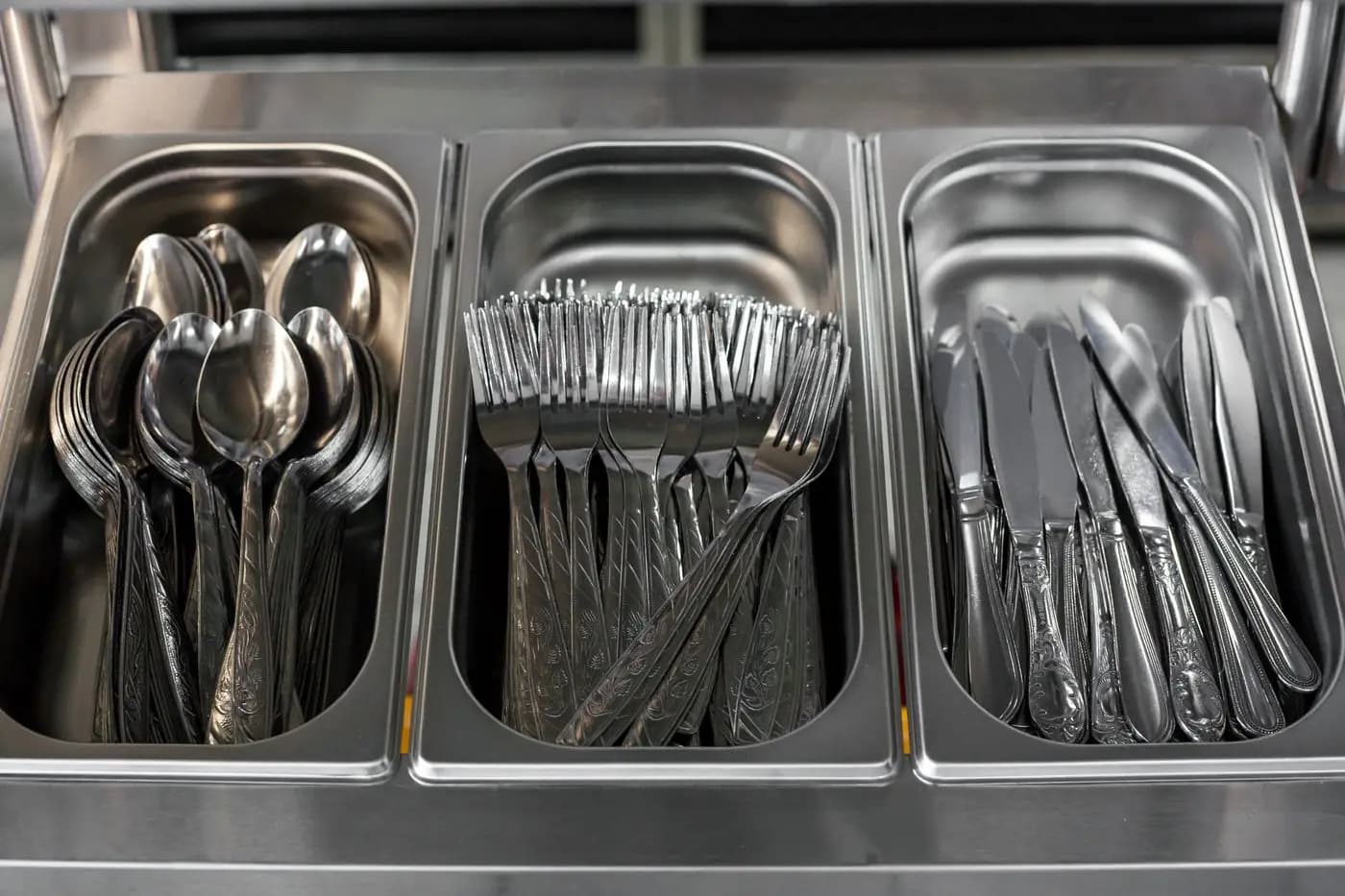
Today Tsubame accounts for more than 90% of Japan's cutlery output. Yamazaki Kinzoku Kogyo, based there, has made the cutlery for the official Nobel Prize banquet in Stockholm since 1991. Sanjo remains the town of blades and tools.
Two local crafts are listed as traditional crafts by the Ministry of Economy, Trade and Industry (METI):
- Tsubame tsuiki doki (Tsubame hammered copperware), recognised in 1981.
- Echigo Sanjo uchihamono (Sanjo forged blades), recognised in 2009.
What makes a visit worthwhile is the mix: in a single day you go from an early-19th-century workshop to a robotic polishing line, and most sites welcome visitors without any staging.
Gyokusendo: visiting Tsubame's hammered copper (tsuiki) workshop
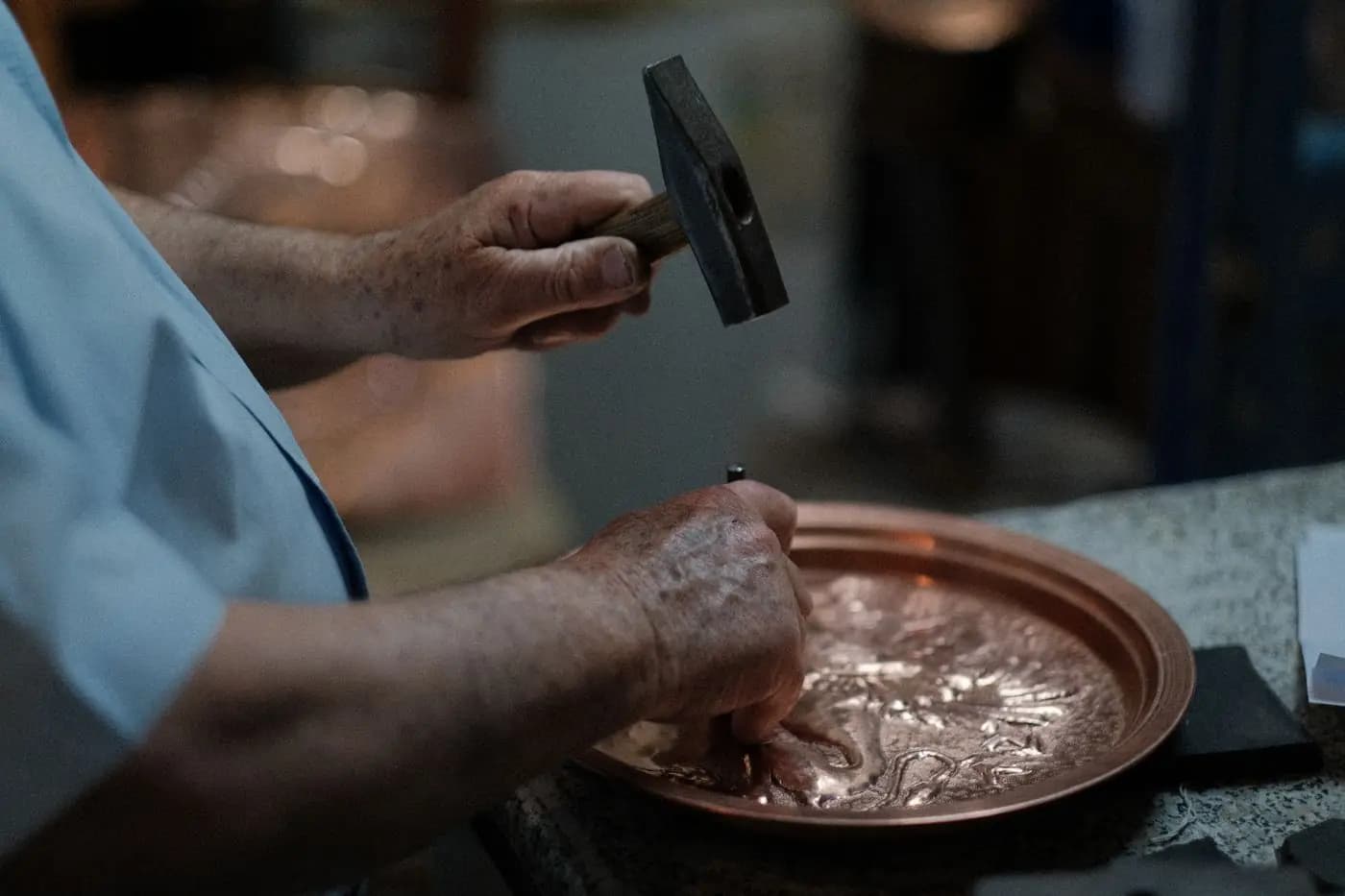
Founded in 1816, Gyokusendo makes copperware using the tsuiki technique: a single sheet of copper is struck with hammers over anvils of different shapes until it becomes a teapot, kettle or cup, with no seams or welding. The metal hardens as it is struck, so it has to be annealed in the fire at regular intervals to soften again before hammering resumes. A kettle takes tens of thousands of blows. The colours (deep brown, purple, bluish grey) come afterwards from baths and patinas whose recipes the company keeps to itself.
The main Tsubame workshop is housed in a building registered as a tangible cultural property. The tour takes you among the craftsmen crouching at their anvils: the noise is constant and the smell of heated metal quite strong.
Gyokusendo's published conditions:
- Time slots: 10am, 11am, 1pm, 2pm and 3:10pm, for a 15 to 20-minute tour.
- Price: free for 1 to 5 people. From 6 people, for tours booked through a travel agency and for corporate delegations, a fee applies (on request).
- Booking: given priority, via the online form or by phone. Without a booking you may be turned away if the slot is full.
- Closed: Sundays, public holidays, the New Year period and workshop closure days. Fewer craftsmen work on Saturdays.
- Rules: touch nothing, follow the guide, no pets, no visits after drinking alcohol.
The adjoining shop lets you see and handle the pieces. Prices reflect the hours of work: expect tens of thousands of yen for a sake cup or tea cup, and much more for a kettle or teapot. Copper darkens and mellows with use, which makes it a lasting gift. For those who do not make it to Niigata, Gyokusendo also has a shop in Tokyo, on the 4th floor of Ginza Six.
Knives, tools and nail clippers: Sanjo's blades and open factories
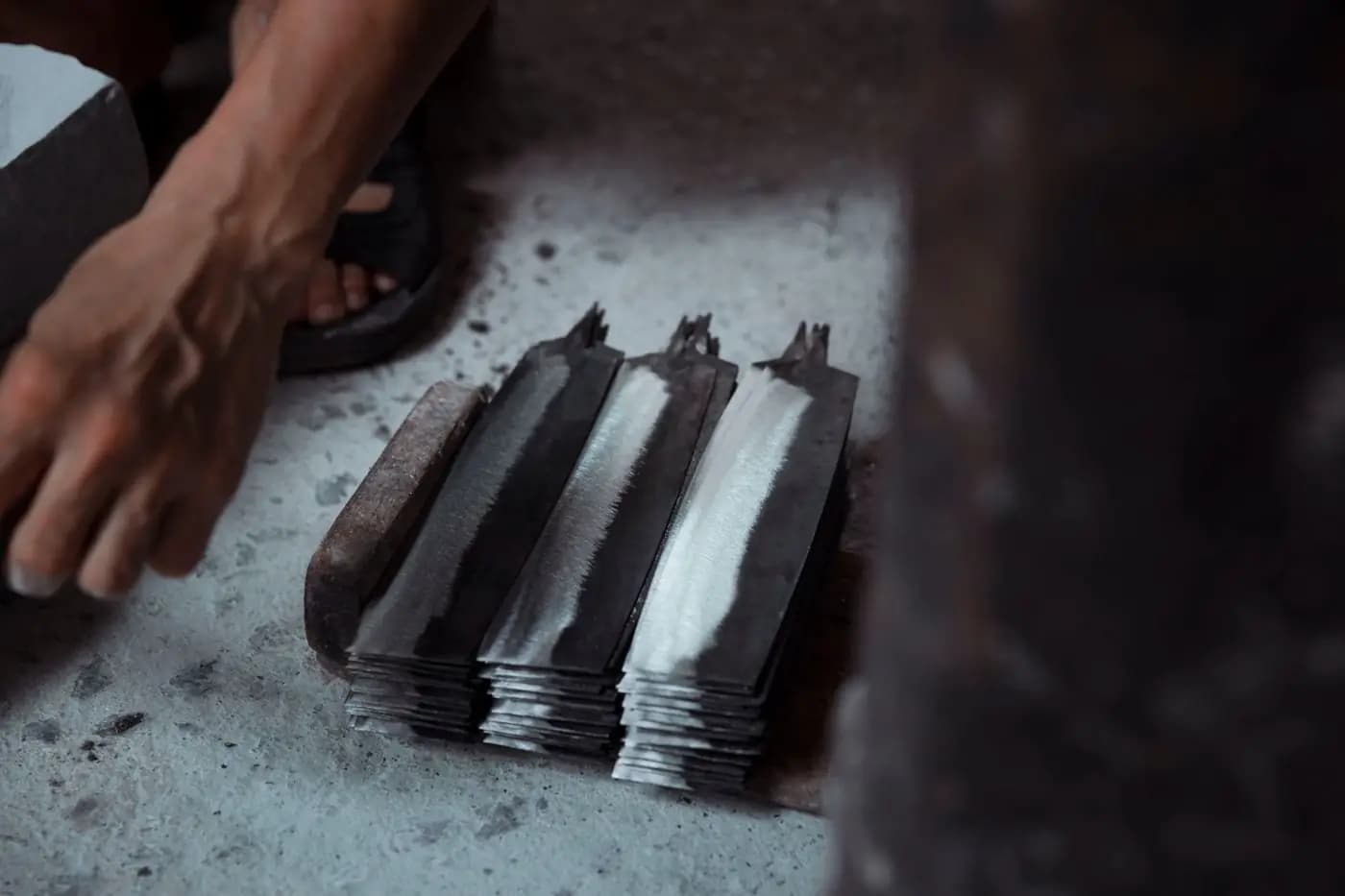
In Sanjo, everything that cuts is forged somewhere in town: kitchen knives, chisels, planes, pruning shears, axes, shovels, as well as nail clippers and pliers. What sets Sanjo blades (Echigo Sanjo uchihamono) apart is the forging: a hard steel that will hold the edge is hot-welded onto softer iron that absorbs shocks, then hammered, quenched, tempered and sharpened. Many workshops still do these steps by hand in small batches.
Several companies have set up their workshops to be seen. The best known among foreign visitors is Suwada, which specialises in forged nail clippers and nippers. Its "Open Factory" is free and needs no booking, generally open from 10:10am to noon and 1pm to 5pm: a glass gallery overlooks the floor where each jaw is forged, fitted and sharpened by hand. Allow about 20 minutes by taxi from Tsubame-Sanjo Station and check closing days before you set off.
Other makers of knives, cookware or outdoor gear (the Snow Peak brand is headquartered in Sanjo) run factory shops or showrooms. Opening hours change often: it is better to build the day around two or three confirmed sites than to count on improvised visits.
A few pointers for buying a knife:
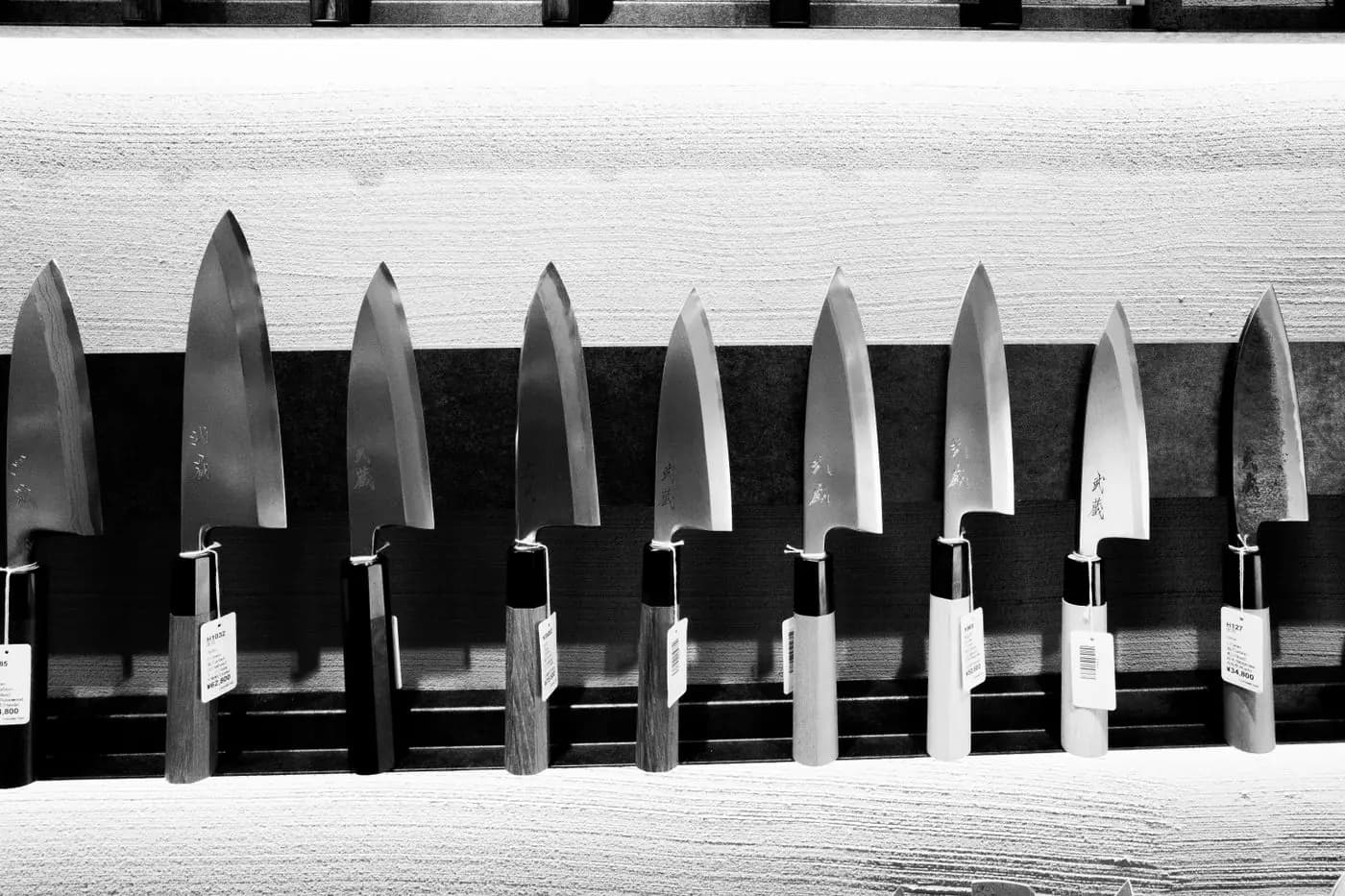
- A handmade Sanjo kitchen knife starts at around ¥10,000; carbon steel or Damascus pieces quickly reach ¥30,000 and more.
- Carbon steel cuts better but rusts: it must be wiped dry after each use. Stainless steel is easier as a gift.
- On the way home, knives go in checked baggage, never in the cabin.
Hands-on workshops: forge a nail, hammer copper, sharpen a knife
Watching is good; holding the hammer is better. Two public facilities run short workshops that need no prior experience.
Sanjo Kaji Dojo (Sanjo), a 3-minute walk from JR Kita-Sanjo Station and a 10-minute drive from Tsubame-Sanjo Station, is a city-run blacksmith school. Its regular workshops run every opening day from 9am to 11am and 1pm to 3:30pm, with sign-up on the spot:
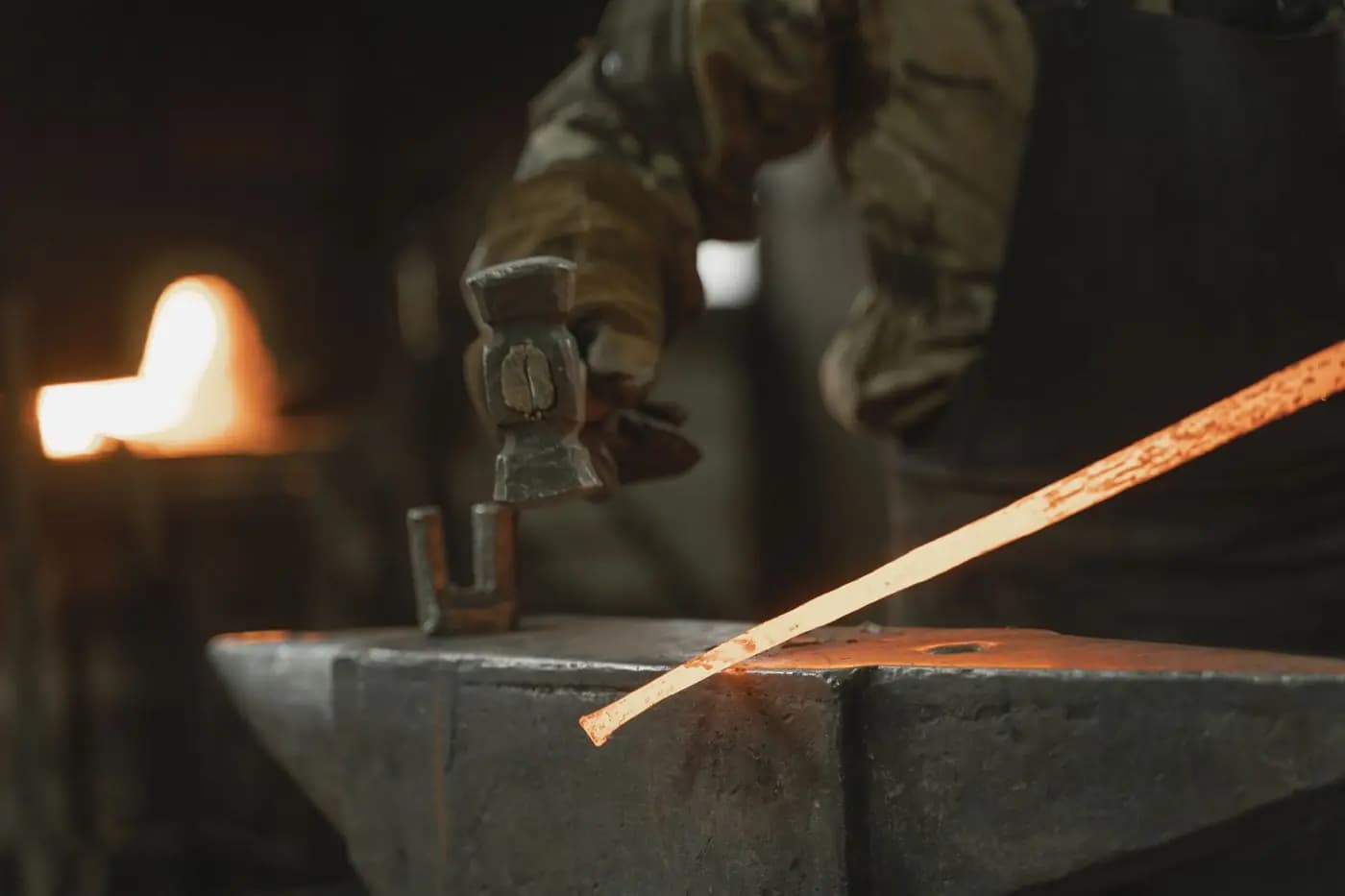
- Japanese nail (wakugi) forging: ¥770 for non-residents. You heat a square iron bar in the forge, bend the head and draw out the point with the hammer.
- Letter opener forged from a large nail: ¥2,200. You flatten, twist, grind and polish; this is the most complete workshop.
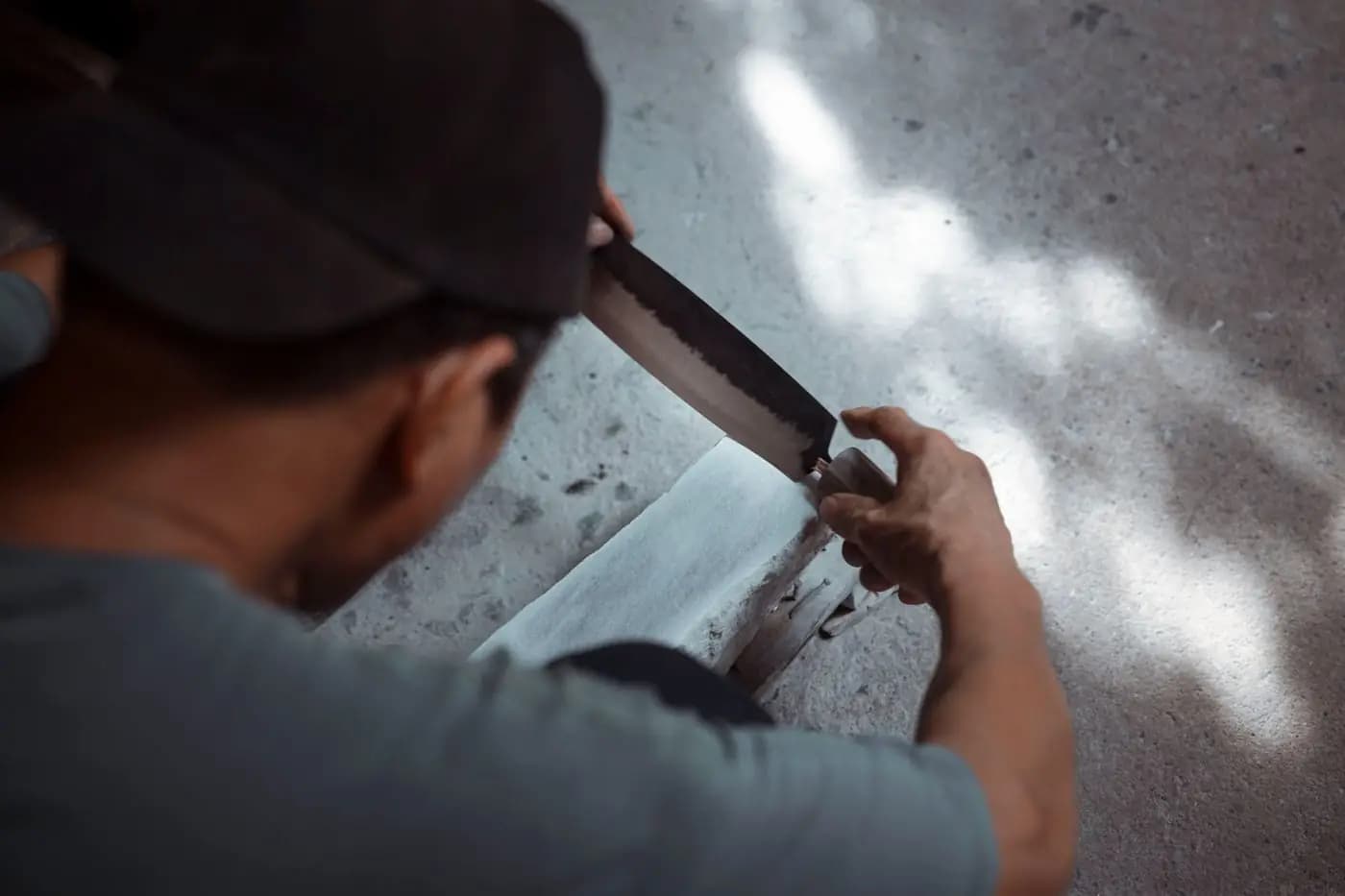
- Knife sharpening: ¥770, bringing your own knife (wrapped).
- Knife finishing: ¥3,300 plus the price of the semi-finished knife bought on site.
The dojo is open 9am to 5pm and closed on Mondays (the next day if Monday is a holiday) and from 29 December to 3 January. Closed-toe shoes are required. Longer courses (santoku knife, Damascus steel) are held on some Sundays, in Japanese.
The Tsubame Industrial Materials Museum (Tsubame Sangyo Shiryokan) traces four centuries of metalwork, with pieces by Living National Treasures, a collection of kiseru pipes and spoons from around the world. Admission ¥400 (¥100 for school pupils), 9am to 4:30pm, closed on Mondays. Its workshop lets you hammer a pattern into a copper plate (tsuchime) or shape a small sake cup: a good introduction before or after Gyokusendo.
Our advice: do the forging workshop in the morning, while energy is high, and keep factory visits for the afternoon.
Kouba no Saiten: the Tsubame-Sanjo open factory festival
Every year in early October, the two towns hold Kouba no Saiten ("the festival of factories", also called KOUBA FES). For four days, workshops and factories normally closed to the public open their doors: forges, cutlery plants, polishers, toolmakers, as well as farmers and local producers. Launched in 2013, the event usually involves between 80 and 110 sites depending on the year (113 in 2019, 87 in 2023).
The 2026 edition runs from 1 to 4 October. Entry to most workshops is free; some offer demonstrations, paid workshops or official guided tours to book on the festival website. Dates for 2027 are usually announced over the summer: keep an eye out for them before locking in an autumn trip.
A few practical tips from experience:
- Accommodation: hotels around Tsubame-Sanjo Station are booked out weeks ahead during the festival. Book early, or stay in Niigata (about 15 minutes by shinkansen).
- Getting around: sites are spread over several kilometres. Without a car, pick one area and stick to it, or book taxis in advance.
- Choosing: download the official map and select 4 or 5 workshops a day, mixing crafts (copper, knives) and industry (polishing, pressing).
- Language: explanations are mostly in Japanese; a guide-interpreter changes the visit completely.
Outside the festival, the area is easy to visit: the permanent sites (Gyokusendo, Suwada, Kaji Dojo, the museum) are open year-round, with fewer people.
How to get to Tsubame-Sanjo and how long to stay
From Tokyo, the Joetsu Shinkansen (Toki trains) links Tokyo Station with Tsubame-Sanjo in 1 hr 38 min to 2 hr 06 min depending on stops, a distance of about 290 km. The JR Pass covers the journey. From Niigata it takes about 12 minutes by shinkansen, or around 40 minutes on the local Shinetsu Line.
Once there, Tsubame-Sanjo Station sits away from both town centres. Workshops are scattered and buses infrequent: taxi, rental car or private coach are the only efficient ways to fit three or four sites into a day. Kita-Sanjo Station (local Yahiko Line), next to the Kaji Dojo, and Tsubame Station (central Tsubame, for Gyokusendo) let you cover a little ground on foot.
How long?
- Day trip from Tokyo: doable if you leave around 7am. You fit in Gyokusendo, a workshop at the Kaji Dojo or the museum, and an open factory. A packed day.
- One night on site: the most comfortable format. You add a second factory, shopping without rushing and a dinner with Niigata sake, one of Japan's great sake regions.
- Two nights: to combine with Yahiko Shrine and its ropeway (about 30 minutes by car), or with Niigata city and its breweries.
Tuesdays, Wednesdays and Thursdays are the best days: Gyokusendo closes on Sundays, the museum and Kaji Dojo on Mondays, and on Saturdays some workshops run at half speed.
To get heavy purchases home (knives, pans), most shops will ship them to your hotel or the airport by takkyubin, which saves carrying boxes onto the shinkansen.
Tsubame-Sanjo for groups: industrial tourism, workshops and corporate gifts
For a company, Tsubame-Sanjo ticks several boxes: a concrete subject (manufacturing, quality, passing on skills), hosts who are often the owners themselves, and activities where everyone makes something. It works well for an industrial study tour, a seminar on operational excellence or an incentive day away from the usual circuits.
What to know for a group of 20 to 40 people:
- Workshops are small. Gyokusendo takes 1 to 5 people free of charge; beyond that the tour is paid and must be booked ahead. The Kaji Dojo forges have a limited number of stations. You need to split the group into sub-groups of 8 to 12 and rotate: forge, copper workshop, factory, museum.
- Plan transport from the start. A private 45-seat coach from Tsubame-Sanjo Station, with a driver who knows the factory approaches, avoids lost time. Some workshop lanes are only reachable by minibus.
- Interpreting makes the difference. A guide-interpreter with an industrial background lets the group ask about processes, production rates or how family businesses are handed down.
- Gifts can be ordered locally: cutlery engraved with the company name, hammered copper cups, forged nail clippers or paring knives. Allow several weeks for engraving or a series.
- Timing: Kouba no Saiten week has a unique atmosphere but complicates hotels and transport; groups are often more comfortable in May, June or November.
SHINOGI DMC organises this kind of day (workshop bookings, rotations, coach, interpreters and gift orders) from Tokyo, combined with a seminar or a wider itinerary.
Frequently asked questions
How do you get from Tokyo to Tsubame-Sanjo?
Take the Joetsu Shinkansen (Toki trains) from Tokyo Station: 1 hr 38 min to 2 hr 06 min to Tsubame-Sanjo Station. The JR Pass covers it. Locally, plan on taxis, a car or a private coach.
When is the Kouba no Saiten factory festival?
Every year in early October, over four days. The 2026 edition ran from 1 to 4 October, with dozens of workshops and factories open to the public, most of them free.
Can you visit the Gyokusendo workshop?
Yes, in Tsubame, on weekdays and Saturdays at 10am, 11am, 1pm, 2pm and 3:10pm (15 to 20 minutes). It is free for 1 to 5 people, paid beyond that and for corporate groups. Booking advised; closed Sundays and holidays.
Where can you try blacksmithing in Sanjo?
At Sanjo Kaji Dojo, near Kita-Sanjo Station: Japanese nail (¥770), forged letter opener (¥2,200), sharpening (¥770), 9–11am and 1–3:30pm. Closed Mondays; closed-toe shoes required.
How much does a Sanjo knife cost?
Expect from about ¥10,000 for a handmade kitchen knife, and ¥30,000 or more for high-grade carbon steel or Damascus. Knives must travel in checked baggage.
Is Tsubame-Sanjo suitable for a corporate group?
Yes, provided you split the group into sub-groups of 8 to 12, book workshops and a coach in advance and bring an interpreter. Engraved gifts should be ordered several weeks ahead.
Rédaction SHINOGI DMC · Updated
Sources
- Gyokusendo — Visite de l'atelier de Tsubame (site officiel)
- Gyokusendo — Boutiques et horaires (site officiel)
- Sanjo Kaji Dojo — Installations et tarifs
- Sanjo Kaji Dojo — Ateliers et accès
- 燕三条 工場の祭典 2026 (KOUBA FES) — site officiel
- Niigata Kanko — Tsubame Industrial Materials Museum
- Niigata Kanko — SUWADA OPEN FACTORY
- Préfecture de Niigata — Artisanat traditionnel (tsuiki doki, uchihamono)
- JR East — Horaires shinkansen Joetsu (Tsubame-Sanjo)