What is a ryokan and which one should you choose?
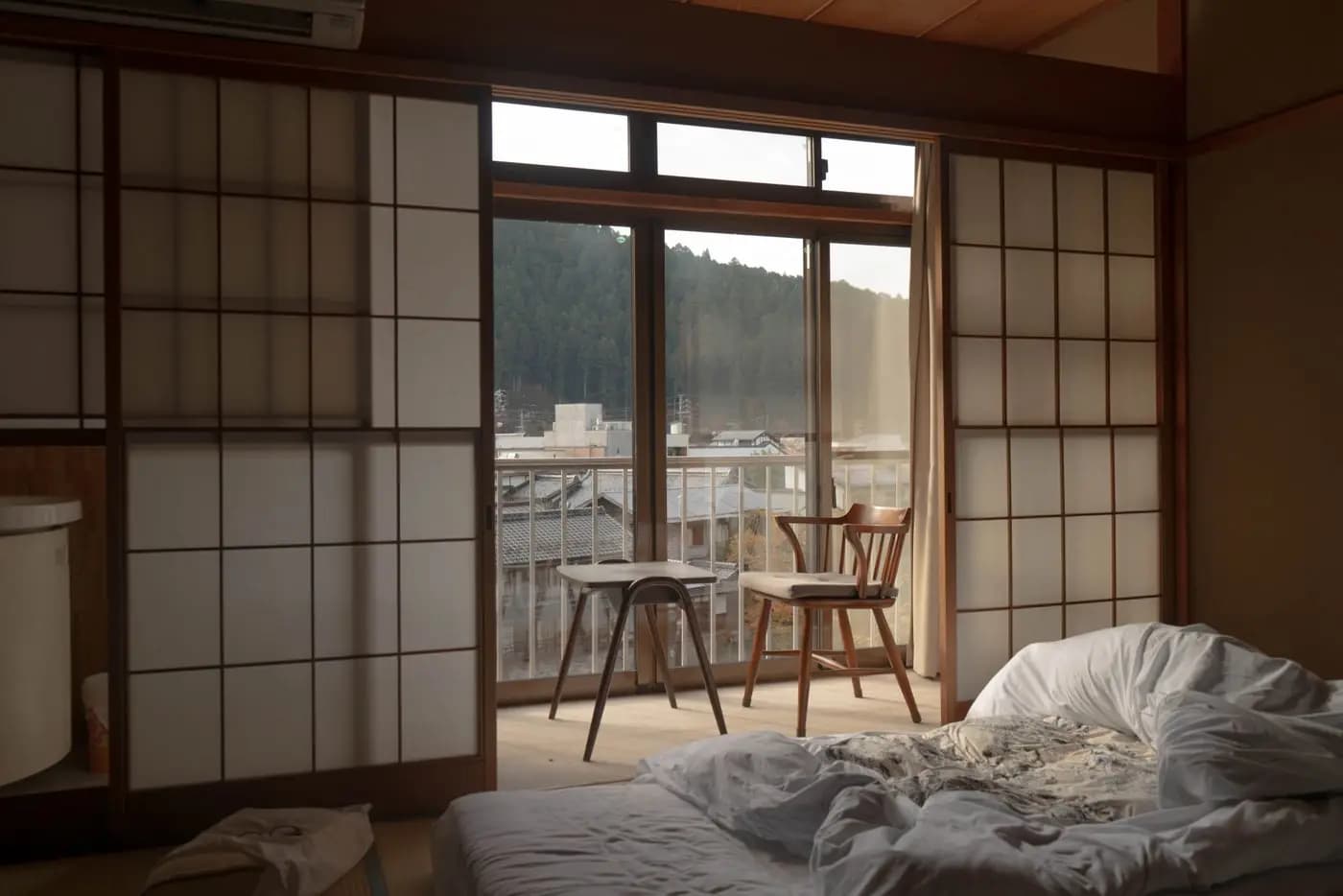
A ryokan is a traditional Japanese inn: tatami-floored rooms, futons, meals served on site and very often a hot spring bath. You don't go just to sleep. The stay is a programme in itself, from arrival in mid-afternoon to departure the next morning, and most travellers count it among the highlights of their trip.
There are several kinds:
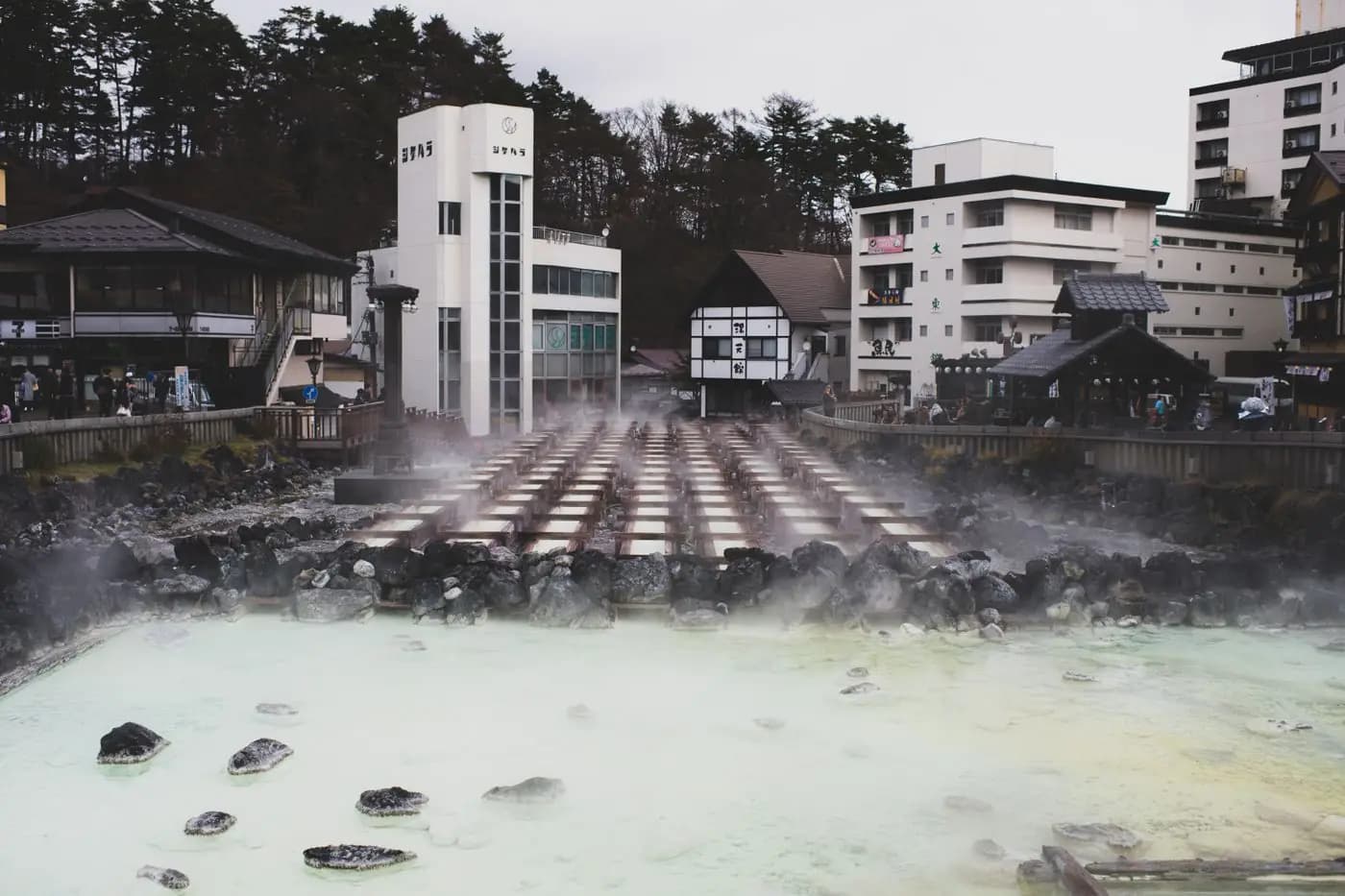
- onsen ryokan, in a hot spring town (Hakone, Kinosaki, Kusatsu, Yufuin…), the most common: shared bath, often a private bath, sometimes a rotenburo in the room;
- city ryokan, in Kyoto or Tokyo, often smaller, sometimes without an onsen, with very refined food;
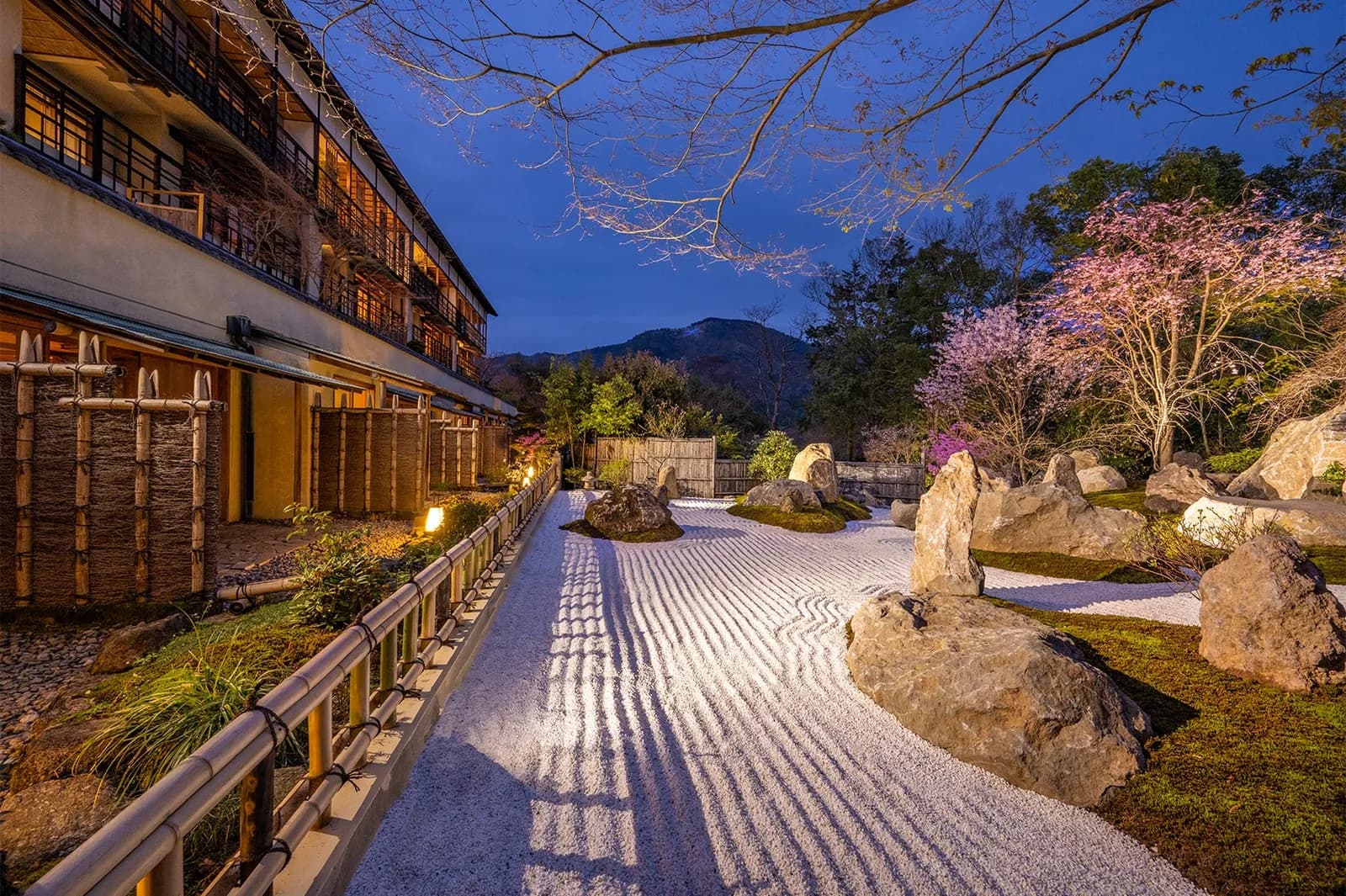
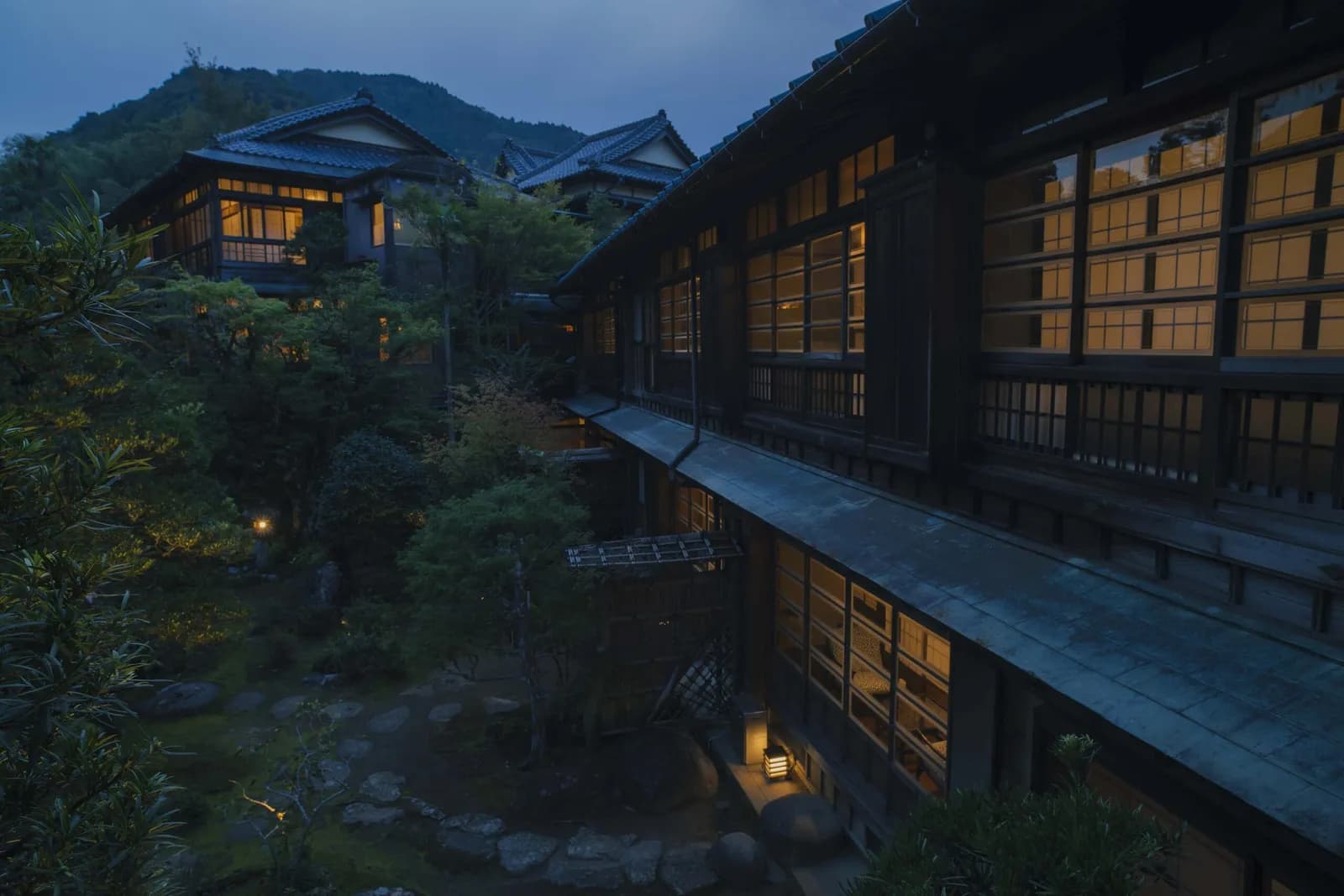
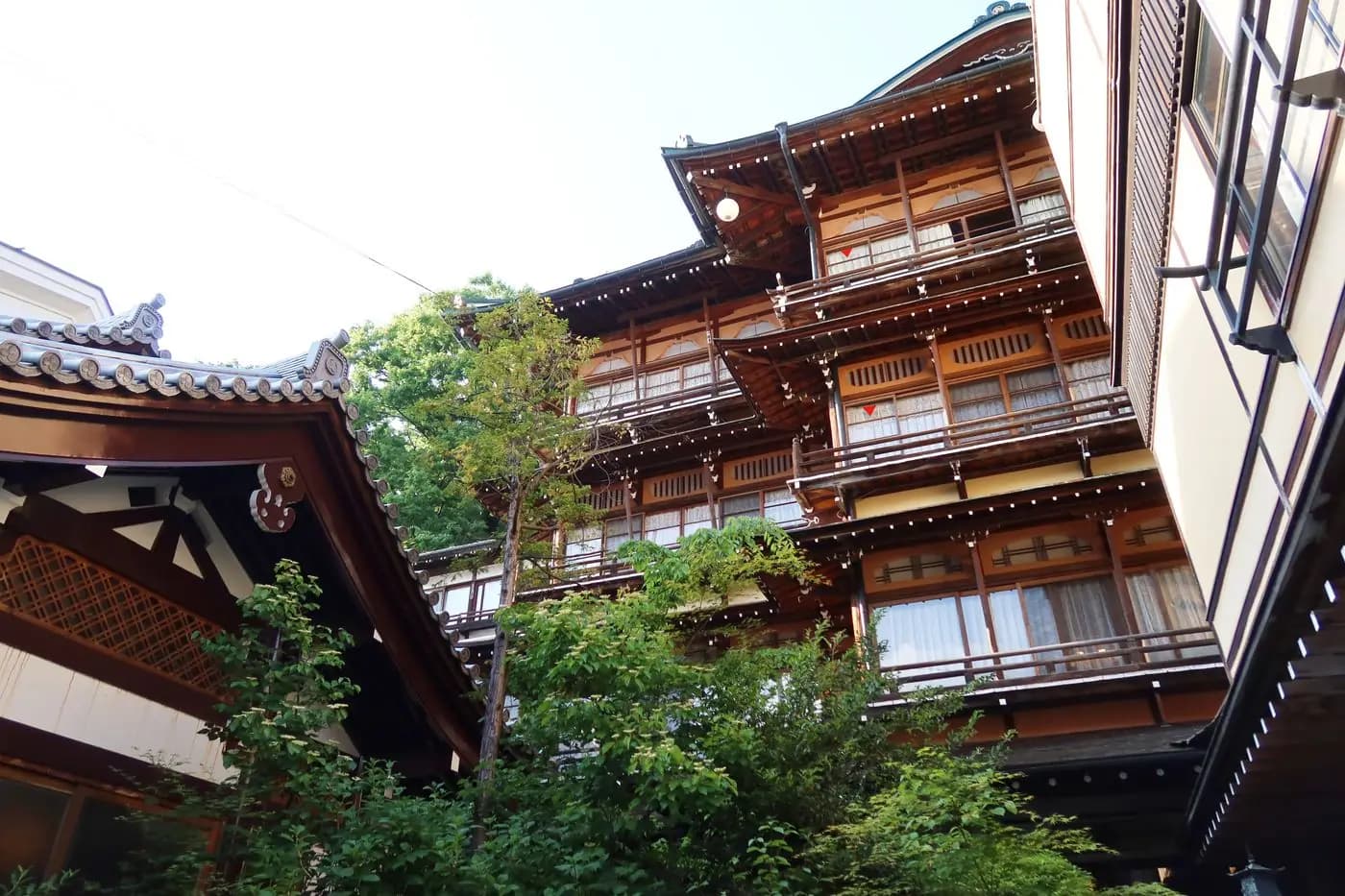
- luxury ryokan (Gora Kadan, Kyoto's historic houses), where every room has its garden or bath and service is almost one-to-one;
- minshuku, simpler family guesthouses, with meals taken together and often shared bathrooms: ¥8,000 to ¥15,000 per person with meals, ideal for a first taste on a budget;
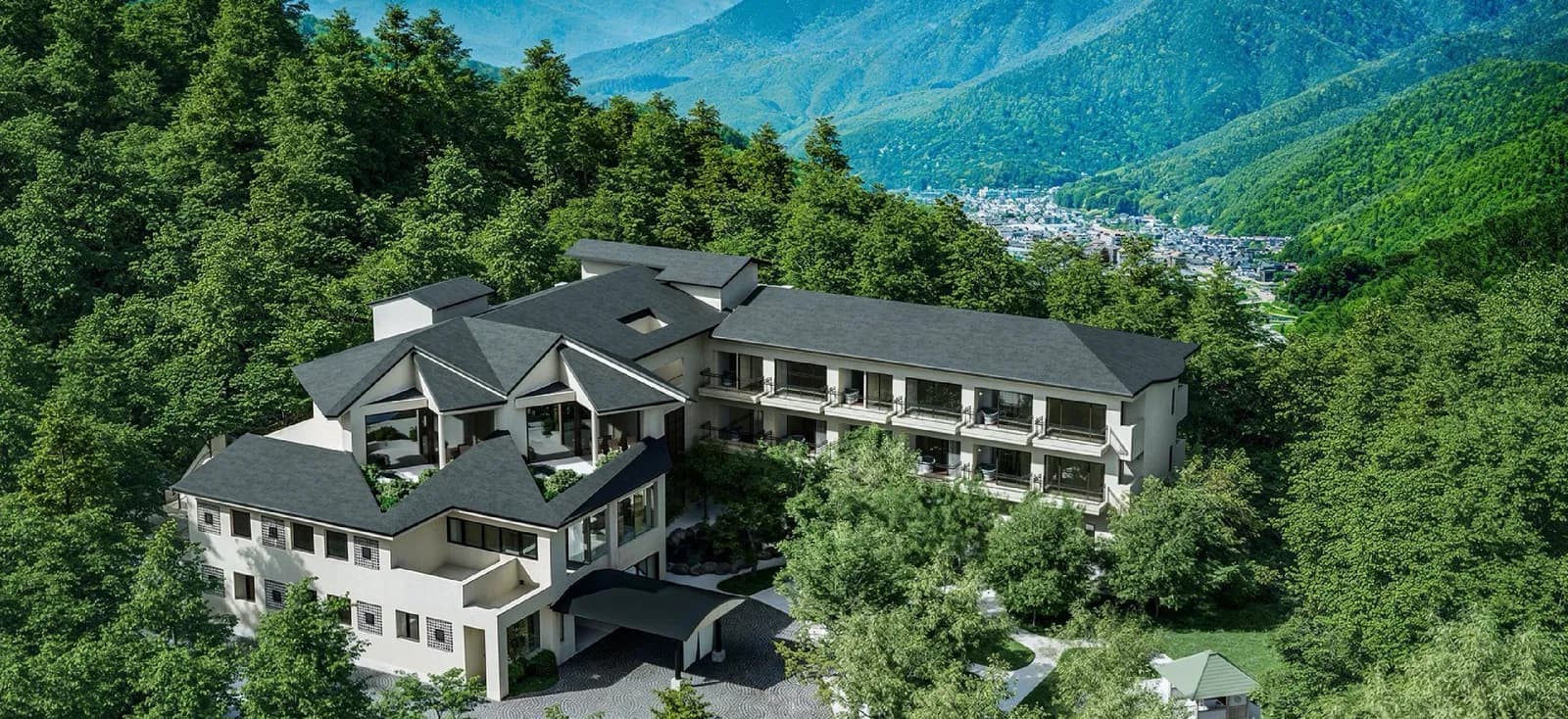
- renovated machiya and modern ryokan mixing tatami and beds.
How to choose? A few criteria that really matter:
- the bath: natural onsen or heated water, shared bath only or private bath, rotenburo in the room;
- meals: served in the room (heyashoku), in a private dining room or in a restaurant;
- bedding: futon or beds (many ryokan offer "wa-yo" rooms with low beds on tatami);
- accessibility: stairs without lifts, shared toilets in old houses;
- language: large inns have English-speaking staff, small ones not always.
One night is often enough; two let you enjoy the place without constantly packing and unpacking.
How a ryokan stay unfolds, hour by hour
A ryokan runs to a set rhythm. Knowing it means you won't miss dinner or find yourself alone in an empty lobby at 4pm.
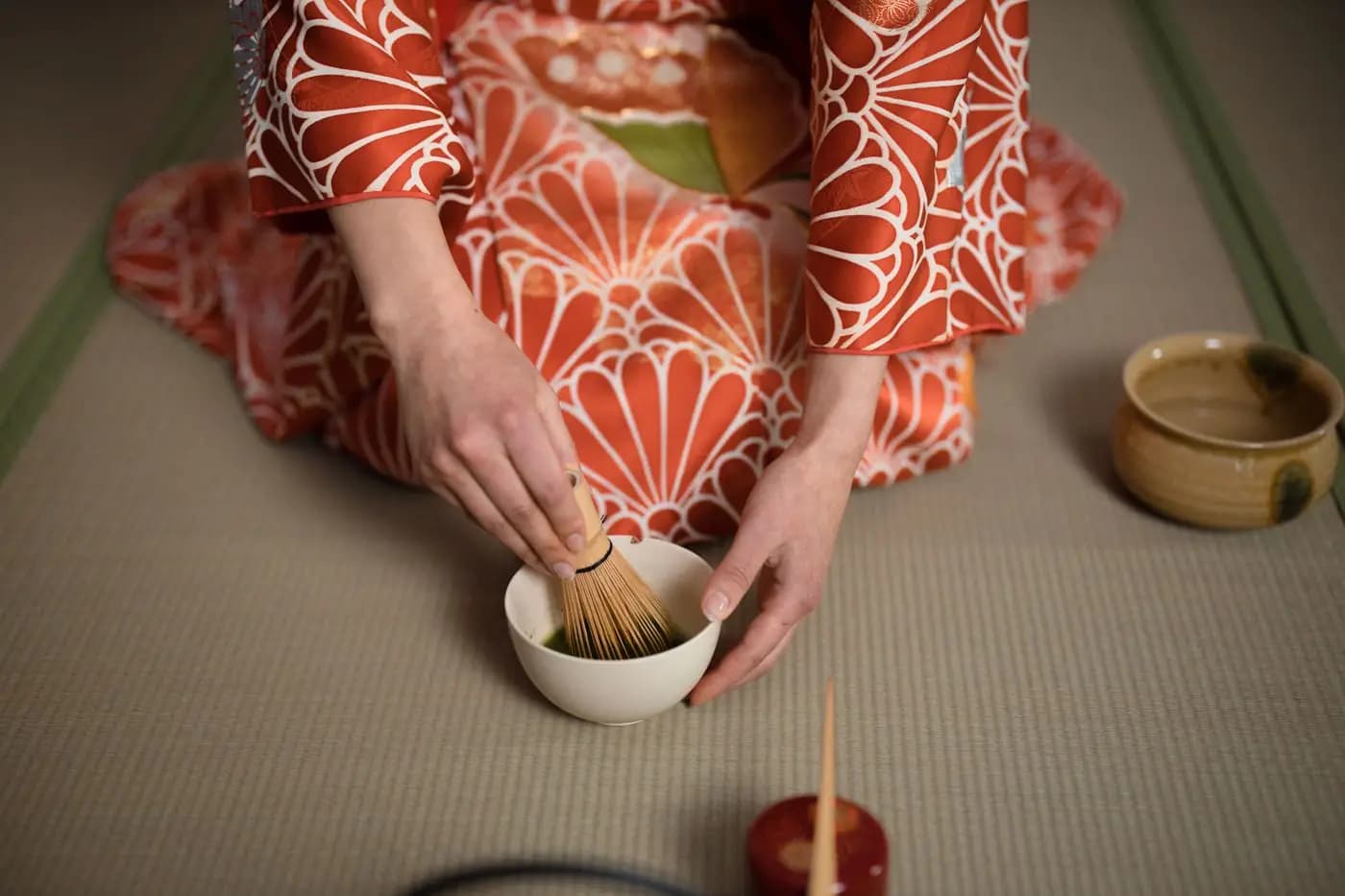
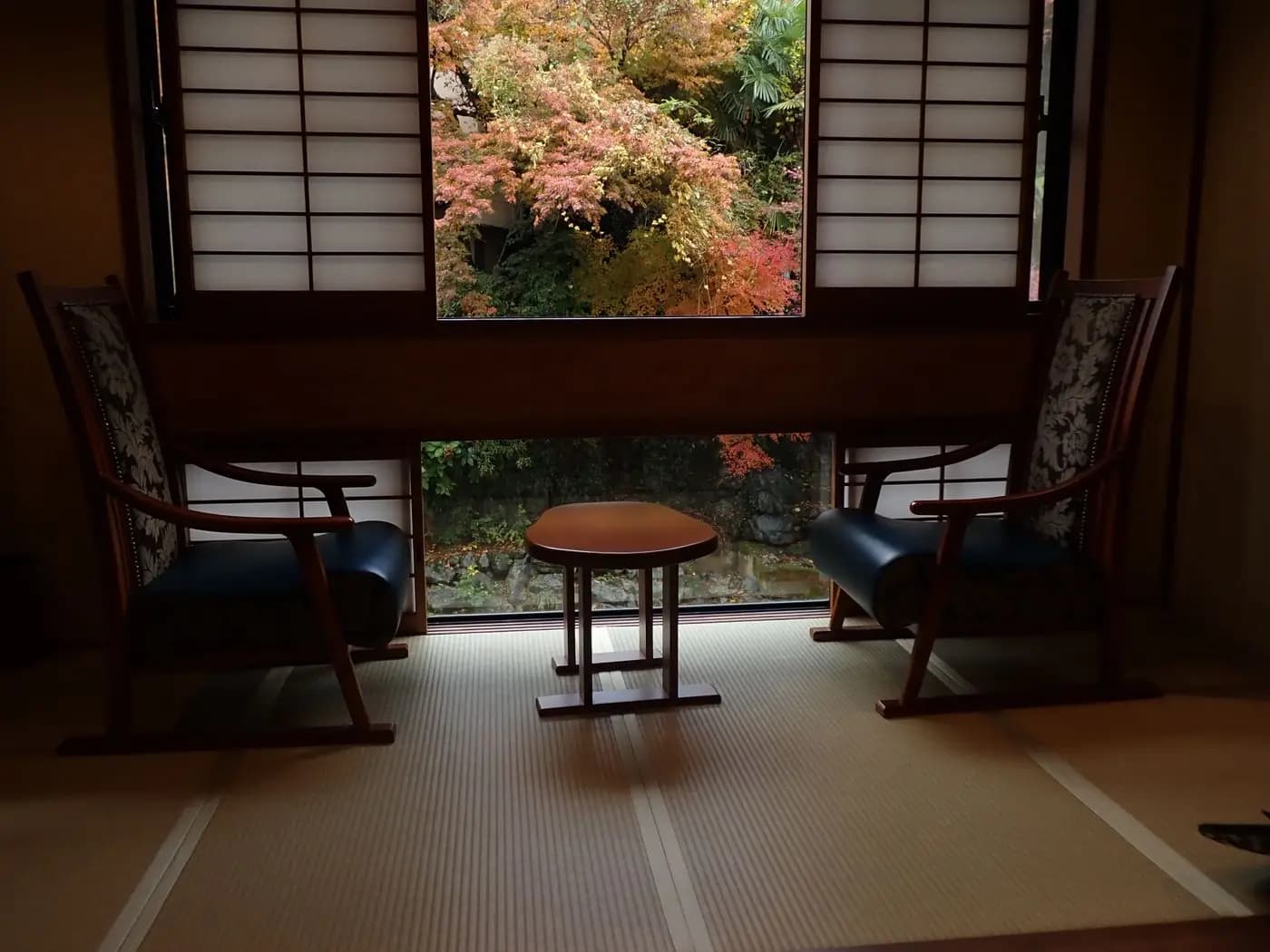
- 3pm-5pm: arrival. Check-in usually starts at 3pm, sometimes 2pm or 4pm. You can come earlier to drop your bags. Take off your shoes in the entrance (genkan), put on slippers and you are shown to your room, sometimes by the nakai-san, the hostess who will look after you during your stay. Green tea and a small sweet await on the low table. This is when you choose your dinner time and breakfast time.
- The yukata. In the closet you'll find a yukata (cotton kimono), a belt and often a jacket (haori or tanzen) for winter. Wear it throughout the ryokan, to the bath, to dinner, and in the streets of onsen towns. It is crossed left over right: the right side against your body, the left on top. The reverse is for the dead.
- 5pm-6pm: the bath. Before dinner is the ideal time for the onsen. Go down in yukata with your towels.
- 6pm-8pm: kaiseki dinner. Served in your room, a private room or the restaurant, at the set time. Being late throws the kitchen off: let them know if something comes up.
- During dinner: the futon. If you eat in your room, staff come to move the table and lay out the futons after the meal; otherwise you find the beds made when you return.
- Evening. A second bath, a stroll in yukata and geta through the onsen town, or a cold beer in the lounge.
- 7am-9am: breakfast, at the time you chose.
- 10am-11am: departure. Leave the yukata in the room and settle extras (drinks, private bath) at reception.
A ryokan is not a hotel where you come and go at all hours: some close their doors around 11pm. You come for the afternoon and evening, not late at night.
The kaiseki dinner: what you eat and how
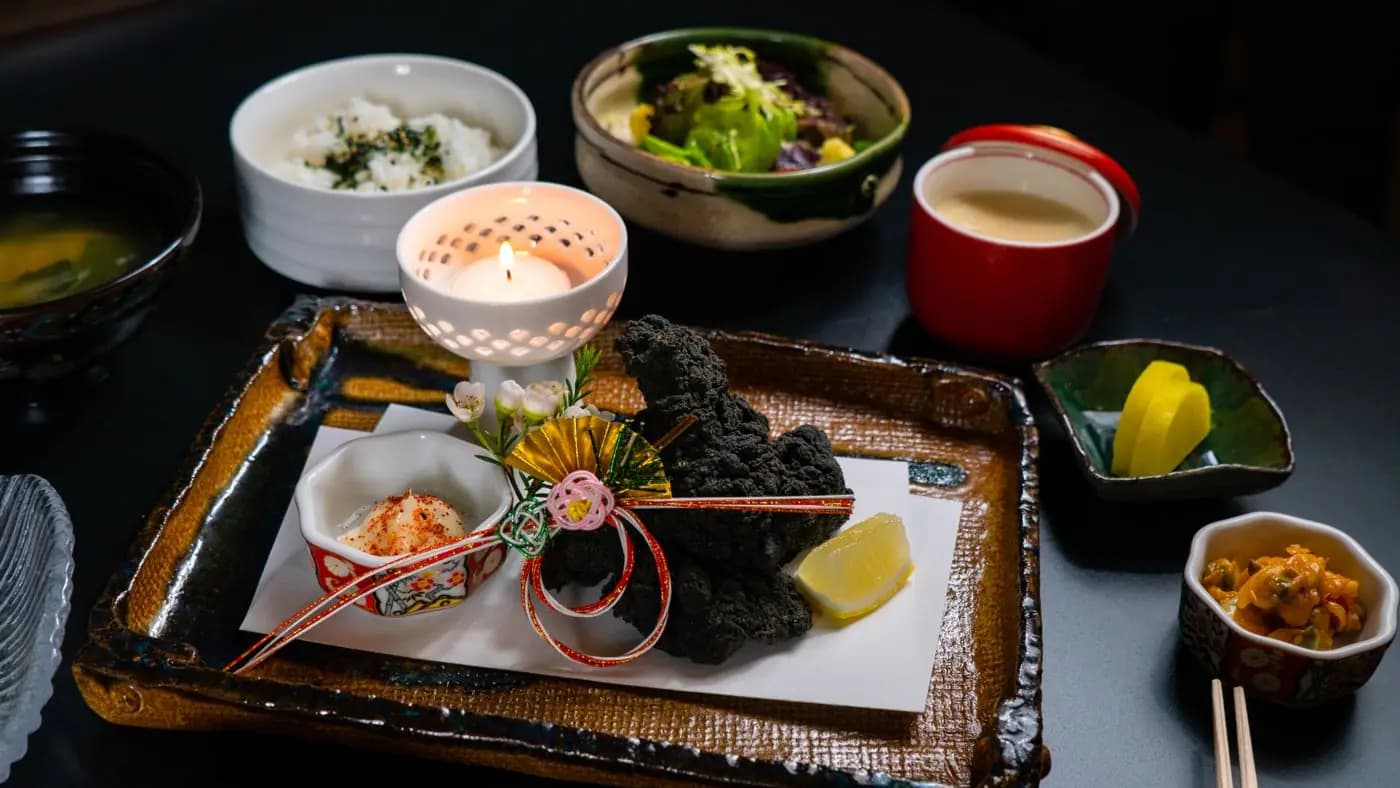
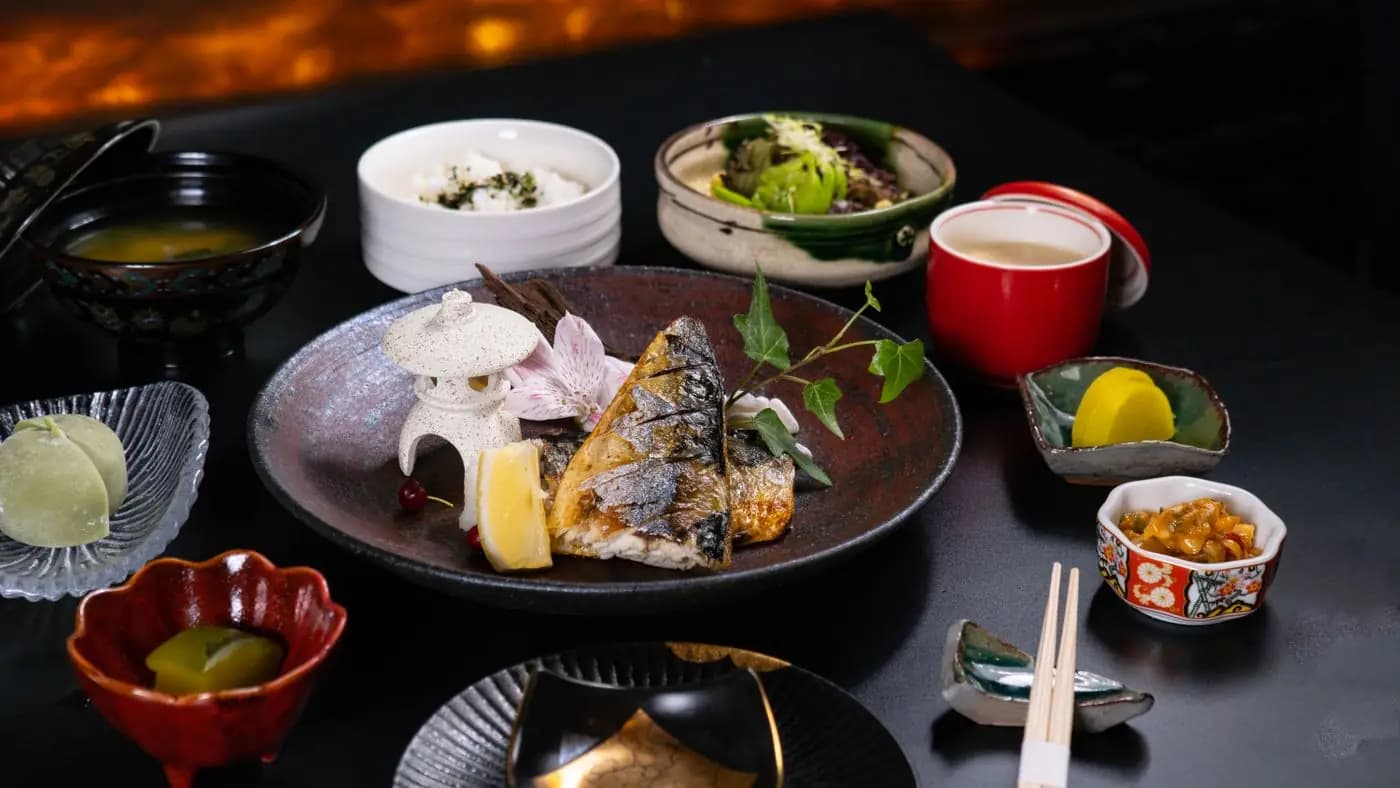
Dinner is the heart of the stay, and often what justifies the price. Kaiseki (or kaiseki ryori) is a meal of small dishes served one by one, following the season closely: bamboo and spring fish, summer eel and vegetables, autumn matsutake mushrooms and chestnuts, winter crab and fugu. It lasts 1.5 to 2 hours and usually has 8 to 12 dishes. A classic order:
- sakizuke: an appetiser;
- hassun: a tray of small bites setting the season's theme;
- owan: a clear soup, often the most delicate dish;
- otsukuri: sashimi;
- yakimono: a grilled dish, fish or meat;
- nimono: a simmered dish;
- a hot dish depending on the region: small hotpot, wagyu on a hot stone, tempura;
- gohan, tomewan, kounomono: rice, miso soup and pickles, closing the meal;
- mizumono: dessert, fruit or a sweet.
Nothing is complicated. Eat each dish as it arrives, ask what it is, and leave what you don't like. Rest your chopsticks on the rest, never stuck upright in the rice.
Drinks are not included: beer, local sake, sometimes wine, paid on departure.
Important: dietary requirements must be flagged when booking, not at the table. Kaiseki is prepared for each guest from the morning. Allergies (shellfish, buckwheat, nuts) are handled well if announced. Vegetarian is harder than you'd think, because dashi stock is made from dried bonito: many ryokan offer a vegetarian menu on request, some not at all. Halal and kosher need a specialised property.
Futon, the night and Japanese breakfast
The futon is rolled out directly on the tatami: a mattress a few centimetres thick, a duvet and a pillow often filled with buckwheat hulls (sobagara), firm and a little noisy. At good ryokan the mattress is thick and genuinely comfortable. For those who sleep badly on the floor:
- ask reception for a second mattress (shikibuton), a common request;
- book a wa-yo room, with low beds on tatami, increasingly common;
- ask for a regular pillow if the buckwheat one doesn't suit.
Walls in older ryokan are thin and partitions sometimes paper: talk quietly after 10pm. Rooms have air conditioning and heating. The toilet, in a small separate room, has its own slippers: leave them there when you come out, don't walk back into the room in them.
Breakfast is a full meal, served at the time chosen the night before, often in a shared room or private area:
- white rice, miso soup;
- grilled fish (salmon, mackerel or dried fish);
- rolled omelette (tamagoyaki) or onsen tamago, an egg slow-cooked in hot water;
- tofu, simmered vegetables, nori seaweed, pickles;
- sometimes a small burner for hot tofu or fish to grill yourself;
- natto (fermented soybeans), worth trying at least once.
Some ryokan offer a Western option (eggs, bread, salad), to request on arrival. Coffee isn't always served: often green tea, sometimes a machine in the lounge.
After breakfast there is usually time for a last bath before leaving: many baths reopen from 5 or 6am.
What a ryokan night costs and how to book
At a ryokan you pay per person, not per room, and the price usually includes dinner and breakfast (ippaku nishoku, "one night, two meals"). A room for two therefore shows a price you multiply by two. 2026 orders of magnitude:
- minshuku and simple small ryokan: ¥8,000 to ¥15,000 per person;
- mid-range ryokan, onsen, kaiseki dinner: ¥15,000 to ¥30,000 per person;
- high-end ryokan with private-bath rooms: ¥40,000 to ¥80,000;
- grand houses (Kyoto, Hakone, Izu): ¥100,000 and up per person.
What changes the price:
- the day: Saturdays and nights before public holidays cost 20 to 50% more;
- occupancy: one person in a room for two pays a much higher per-person rate, and some ryokan don't accept solo travellers;
- the menu: several kaiseki levels are often offered; crab, wagyu or fugu options push the bill up;
- the room: view, private bath, rotenburo on the terrace;
- taxes: a hot spring tax (nyuto-zei, often ¥150 per person per night) and, in some cities, a municipal accommodation tax that rises with the room rate.
Tipping is not expected. In traditional houses some guests leave a small amount (kokorozuke) in an envelope for the nakai-san, but it is never required, and modern ryokan often politely decline it.
To book: directly on the ryokan's website, or via the large Japanese platforms (Jalan, Rakuten Travel), which often have more choice and detailed plans. Read the plan carefully: dinner included or not (sudomari = room only), latest arrival time for dinner, type of bath. Popular ryokan in Kyoto and Hakone are booked three to six months ahead for cherry blossom and autumn leaf seasons.
Ryokan etiquette: the rules to know
Ryokan staff are used to foreigners and forgive a lot. A few rules still avoid awkward moments:
- Shoes: take them off in the entrance; staff often have them lined up for you on departure.
- Slippers: wear them in corridors, but take them off before stepping on tatami. On tatami you go in socks or barefoot.
- Toilet slippers: they stay in the toilet.
- Suitcases: don't roll them on tatami; carry them and put them on the wooden floor or in the space provided.
- Tokonoma: the alcove decorated with a scroll and flower arrangement is the room's most honoured place. Don't put luggage or clothes there, and don't sit in it.
- Yukata: left over right, belt at the waist for men, slightly higher for women. You can wear it to breakfast at most ryokan; at a few very formal houses, ask.
- Punctuality: keep to the dinner time you chose, and call ahead if you'll be late arriving. Turning up after 6pm without warning can cost you dinner.
- Noise: partitions are thin; keep voices low in the evening.
- Departure: don't fold the futon (staff do it), but leave the room tidy and the yukata on the futon or in the basket provided.
And what you can do without hesitation: ask for help tying your yukata, request an extra pillow, change the breakfast time, or ask about the dishes. Service is part of the experience, and staff enjoy explaining.
Ryokan for groups: banquets, rooms and buyouts
For a seminar or incentive trip, a night in a ryokan brings something no hotel can: a dinner where everyone is in yukata, sitting side by side, and a rhythm that forces you to slow down. But organising it differs from a hotel.
- Rooms. Japanese rooms are designed for 2 to 5 people, and rates are per person. For participants used to single rooms, costs climb fast. Three solutions: rooms shared by two (colleagues who know each other), single rooms for executives, or ryokan with smaller wa-yo rooms.
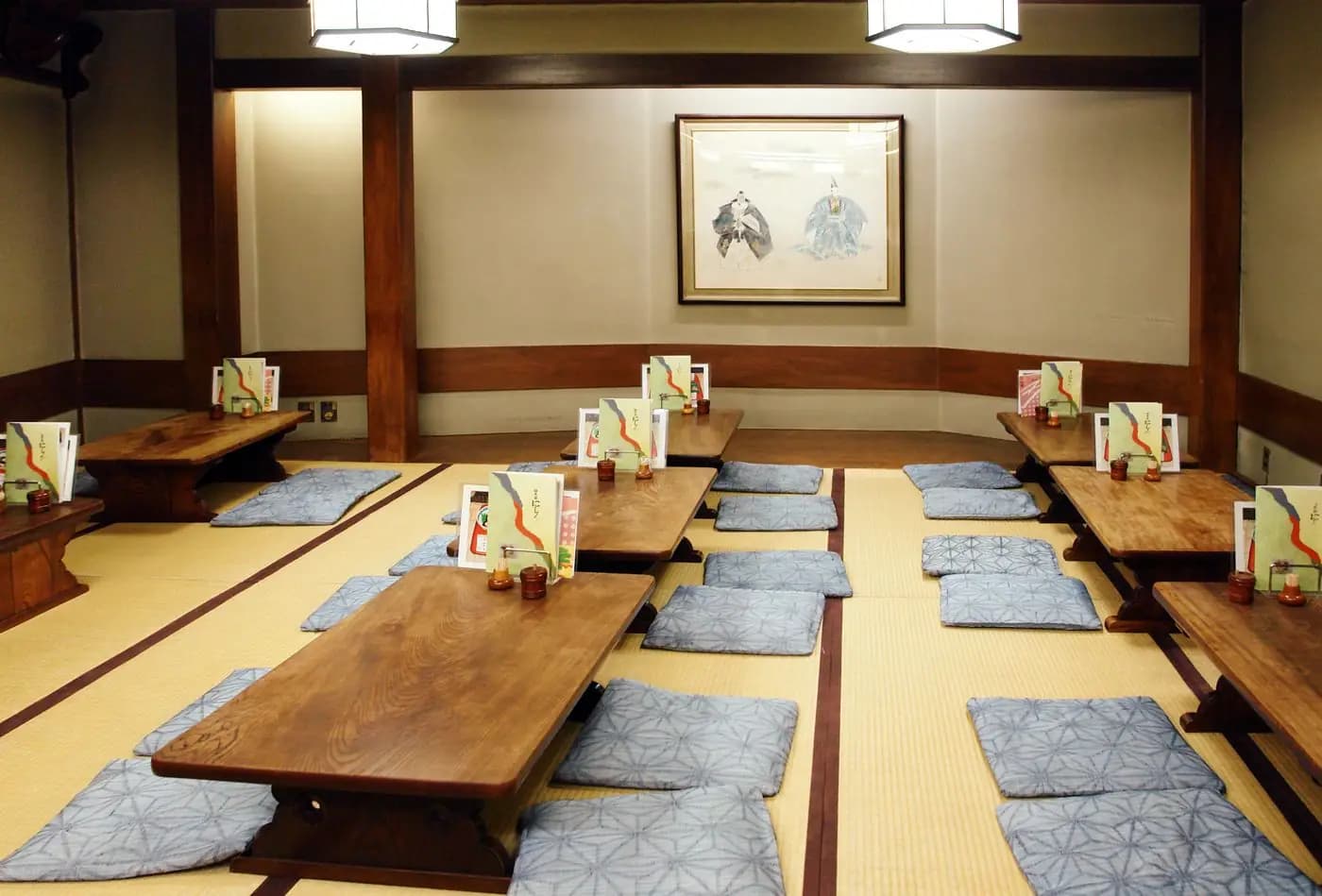
- Dinner. Large ryokan have banquet halls (enkaijo) seating 20 to 200, on tatami with cushions or with low chairs. Kaiseki is served to everyone at the same time; you can add entertainment, speeches, free-flow sake (nomihodai), even a small stage for taiko or geiko. For the less flexible, ask for chairs (backed zaisu or high tables).
- Buyouts. Small ryokan of 10 to 20 rooms can be privatised entirely for a group: bath, lounges and garden to yourselves. The most memorable option for an executive committee.
- Diets. Collect allergies and dietary needs on the registration form and send them at least two weeks ahead. Plan a replacement menu for vegetarians.
- Bathing. Arrange private baths for those who don't want the shared bath or have tattoos.
- Luggage. Forward large suitcases directly to the next hotel (takkyubin) and keep only an overnight bag: ryokan corridors and rooms aren't made for 40 suitcases.
- Timing. Arrival around 3-4pm, bath, dinner at 6:30pm: the coach has to leave on time.
We generally recommend a single ryokan night in a 5- to 7-day programme, in Hakone, Kyoto, Izu or Yufuin. SHINOGI DMC selects group-friendly ryokan and handles rooms, menus and buyouts.
Frequently asked questions
How much does a night in a ryokan cost?
Prices are per person, with dinner and breakfast: about ¥8,000-15,000 at a minshuku, ¥15,000-30,000 mid-range, ¥40,000 and up at luxury ryokan. Saturdays cost more.
What time should you arrive at a ryokan?
Ideally between 3 and 5pm, to enjoy the bath before dinner, usually served between 6 and 7:30pm. If you'll be late, call ahead, or dinner may be cancelled.
How do you wear a yukata?
Right side against the body, left side on top, then tie the belt at the waist. The reverse is for the dead. You can wear it everywhere in the ryokan and in onsen town streets.
Can you eat vegetarian at a ryokan?
Often, but only if requested when booking: dashi stock is fish-based and kaiseki is prepared in advance. Some ryokan offer no alternative, so check before you book.
Should you tip at a ryokan?
No. Tipping isn't expected in Japan. At some traditional houses you may leave a small sum in an envelope for your hostess (kokorozuke), but it is never required.
Can a ryokan host a corporate group?
Yes. Large ryokan have banquet halls for 20 to 200 and meeting rooms; small ryokan of 10 to 20 rooms can be privatised. Japanese rooms are usually shared by two or more.
Rédaction SHINOGI DMC · Updated