Is Japan a safe country to travel in?
Yes, and not only according to the rankings. Its homicide rate is among the lowest in the world, around 0.2 per 100,000 inhabitants. You can walk alone in Tokyo at midnight without worry, leave your bag on a café chair to save a seat, and a lost wallet very often turns up at the neighbourhood police box (koban), cash included.
That does not mean zero risk. The problems visitors actually face are of another kind:
- Bar touts in some nightlife districts, notably Kabukicho in Shinjuku and Roppongi. They offer a cheap drink, then present a bill of several hundred thousand yen. Several embassies also report drink-spiking cases. The rule: never follow someone who approaches you in the street about a bar.
- Opportunistic theft in very crowded places: rare, but not non-existent, especially on packed trains and at tourist sites.
- Harassment on public transport at rush hour: hence the women-only cars on several lines, marked on the platform.
- Bike and scooter accidents, more frequent among visitors unfamiliar with the rules: traffic keeps left.
One legal rule surprises travellers: foreign visitors must carry their passport at all times. Police may ask for it during a check, and hotels copy it on arrival.
In practice, the real safety question in Japan is not crime. It is natural hazards, which call for a little preparation.
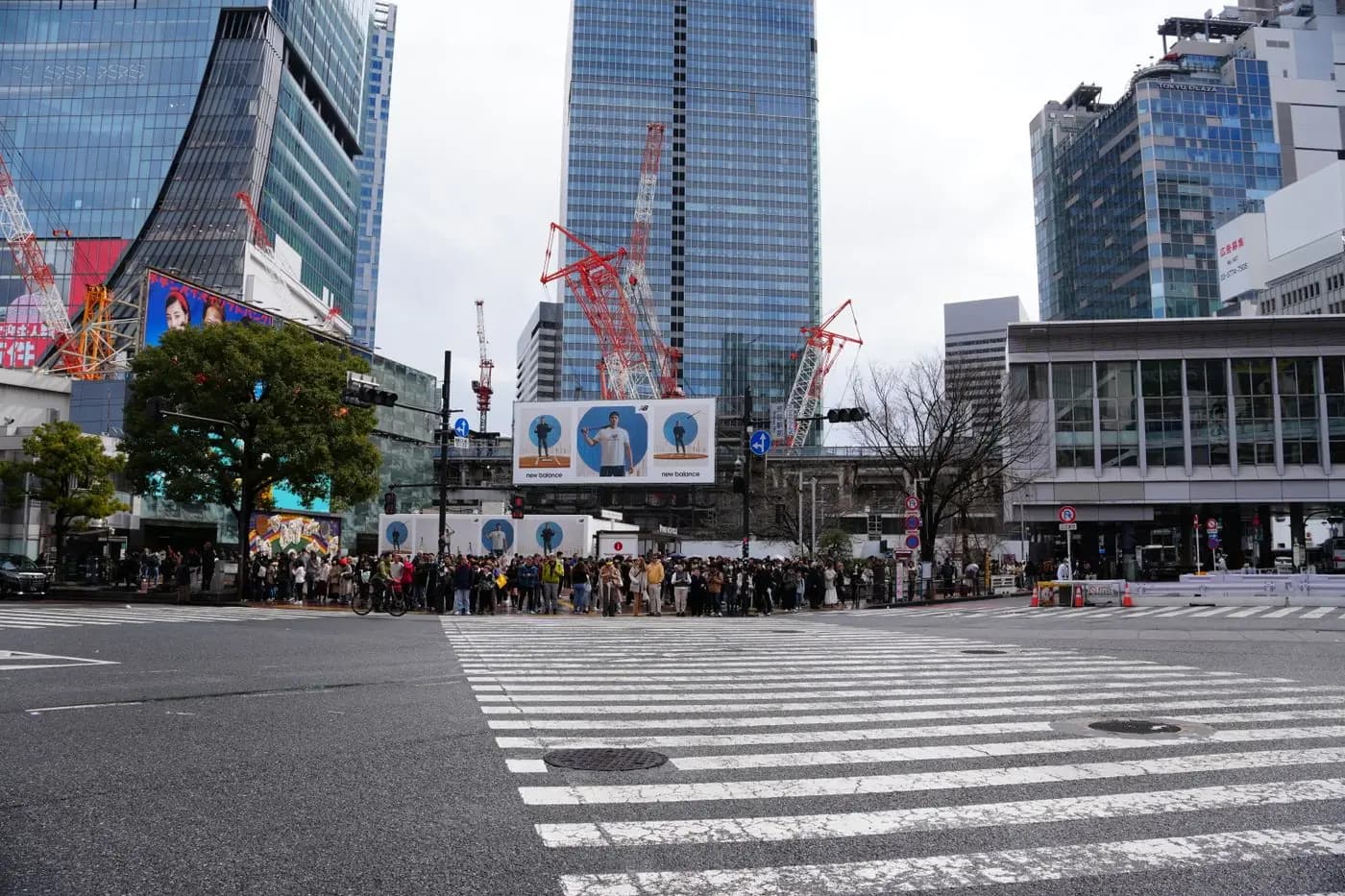
Earthquakes in Japan: what is the real risk?
Japan sits at the junction of four tectonic plates. According to the Japanese government, it accounts for about one fifth of the world's earthquakes of magnitude 6 or more. Most tremors a traveller feels are weak: a few seconds of shaking, a swaying light, and life goes on.
To understand local information, you need to know the Japanese scale, shindo, which measures the intensity felt at a given place (not magnitude, the energy of the earthquake):
- Shindo 1 to 3: felt by people indoors, no damage.
- Shindo 4: objects move, many people are startled. Trains sometimes stop for inspection.
- Shindo 5 lower to 5 upper: objects fall, unsecured furniture moves, transport disruption.
- Shindo 6 lower to 7: hard to stay standing, serious damage to older buildings.
Buildings built since 1981, when a much stricter seismic code came in, and recent hotels even more so, are designed to withstand the strongest shaking. Towers sway; that is intended.
Authorities watch two scenarios in particular: a large earthquake directly beneath the Tokyo area, and a Nankai Trough earthquake off the Pacific coast between Shizuoka and Kyushu. Since August 2024, the Meteorological Agency can issue a special advisory asking for heightened vigilance for a week after an earthquake in that zone. If this happens during your stay, transport generally keeps running: follow local instructions, check the hotel's evacuation routes and avoid beaches.
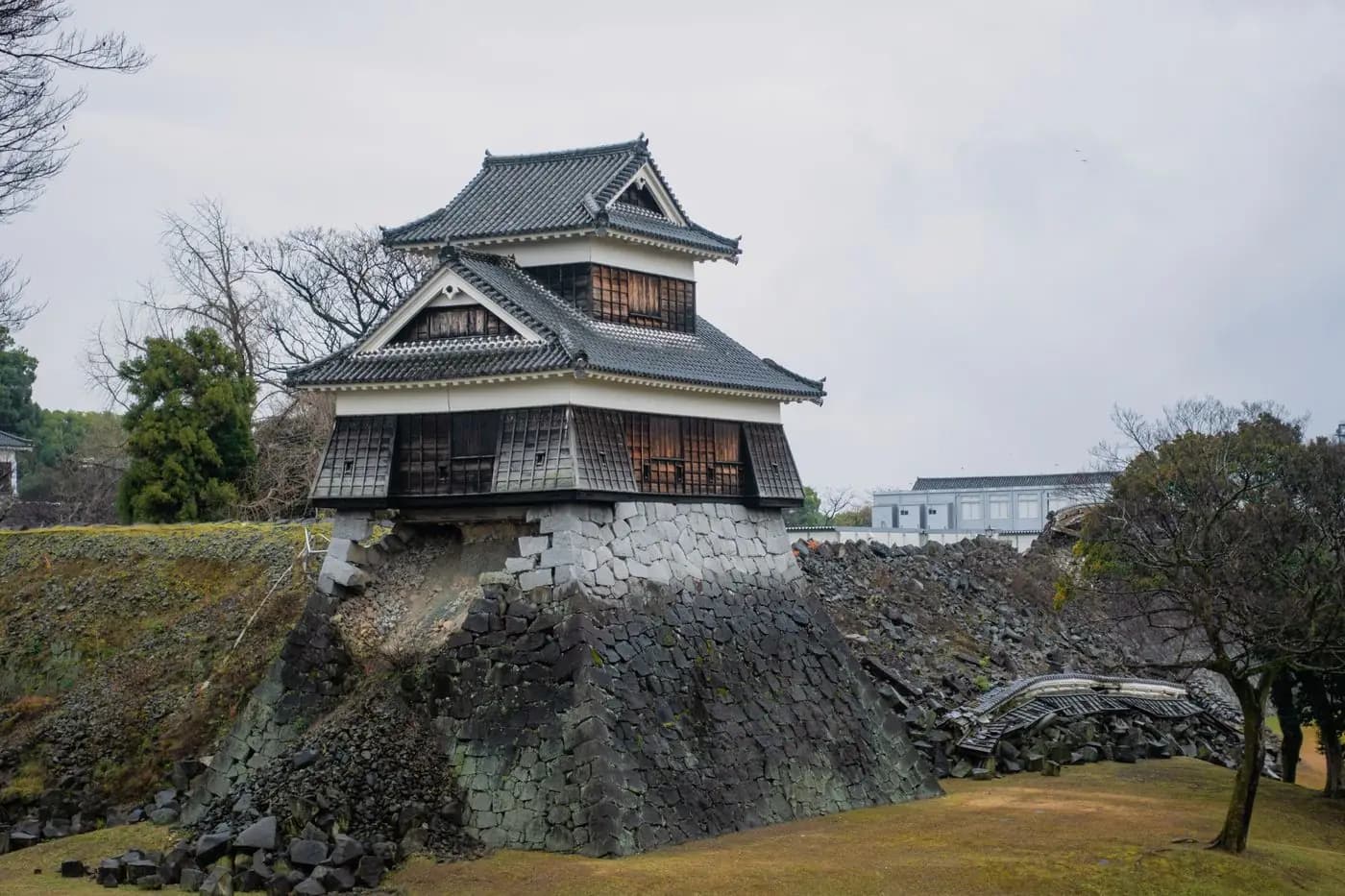
What to do in an earthquake in Japan
The right reflexes are simple, and the Japanese practise them from primary school.
During the shaking, indoors:
- get under a sturdy table and protect your head, or crouch against an interior wall away from windows and tall furniture;
- don't run outside: falling glass, signs and roof tiles injure more people than collapsing buildings;
- in a lift, press all the floor buttons and get out at the first stop; recent lifts stop automatically at the nearest floor;
- at the hotel, stay in your room until the shaking stops, then follow staff announcements.
In the street: move away from glass façades, vending machines and concrete block walls; a park or open square is the safest place.
On a train: the Shinkansen brakes automatically as soon as the first waves are detected. Stay seated and wait for instructions; the stop can last from a few minutes to several hours while tracks are inspected.
Near the coast: if the shaking is strong or long, or as soon as a tsunami warning is announced, move to high ground immediately, on foot, without waiting to see the wave. Tsunami evacuation buildings are marked with a green and white sign.
Afterwards: watch for aftershocks, keep your shoes on (broken glass), check alerts and don't clog phone lines. To let people know you're safe, messages and the Japanese carriers' disaster message board service (171 and its web version) work better than calls.
Earthquake and tsunami alerts: the Safety tips app and other tools
Japan has an earthquake early warning system: as soon as sensors detect the first waves, the Meteorological Agency broadcasts an alert that precedes strong shaking by a few seconds to a few tens of seconds depending on distance. It appears on television, in stations and on phones, with a distinctive shrill tone.
For visitors, the tool to install before leaving is Safety tips, the free app from the Japan Tourism Agency. It sends earthquake, tsunami, volcanic eruption, weather and heatstroke alerts in 15 languages, including English and French, with action sheets and useful phrases to show if needed. Remember to allow notifications and location.
Other sources complement it:
- NHK World-Japan (app and website) broadcasts emergency information in English and other languages, live during major events;
- JNTO's Japan Safe Travel information gathers what visitors need to know in a disaster;
- hotel and station announcements, in Japanese and often in English.
Phones bought outside Japan do not always receive Japanese network alerts, even with a local SIM or eSIM. So don't rely on the phone alone: the app is a necessary complement.
Finally, remember the five-level evacuation scale municipalities use for heavy rain and landslides: at level 4, everyone in the affected area must evacuate.
Typhoons, heavy rain and heat: seasonal risks
Earthquakes are frightening, but seasonal risks are what most often disrupt a trip.
Typhoons. The season runs from July to October, peaking in August and September; Okinawa and Kyushu are the most exposed. A typhoon is forecast several days ahead and its track followed hour by hour. On the day it passes, flights are cancelled, rail companies often announce planned suspensions the day before, and shops close. You stay at the hotel for a day, rarely more. The real risk is logistical: a missed return flight, a lost connection.
Heavy rain. The rainy season (June to mid-July on Honshu) and late summer bring bouts of intense rain, with flood and landslide risks in mountain valleys. When hiking, follow municipal evacuation instructions.
Heat. This is the most underestimated risk. Japanese summers regularly exceed 35 °C with high humidity in Tokyo, Kyoto or Osaka. The Ministry of the Environment publishes a heat index (WBGT) and, since 2024, a special heatstroke alert when the risk becomes extreme. Good habits: drink before you are thirsty, take a little salt (konbini sell salted drinks and sweets), stay in the shade between 11 a.m. and 3 p.m., wear a hat.
Snow and volcanoes. In winter, mountain roads and some flights to Hokkaido can be cut for a few hours. About a hundred volcanoes are considered active: sites such as Mount Aso or Hakone's Owakudani sometimes close their surroundings depending on the alert level.
Emergency numbers, medical care and insurance in Japan
Numbers to save in your phone before leaving:
- 110: police.
- 119: fire and ambulance. Ambulances are free; the operator may answer in English or use an interpreter.
- 118: coast guard, for an accident at sea.
- 050-3816-2787: the Japan National Tourism Organization's Japan Visitor Hotline, 24/7, in English, Chinese and Korean, for emergencies, disasters and practical questions.
- The number of your country's embassy or consulate in Tokyo or Osaka.
French citizens can register with the foreign ministry's Ariane service; many countries have a similar travel registration scheme, which sends instructions in a crisis and tells the consulate who is in the area.
Care is excellent, but access takes a little organisation. Small clinics often close in the evening and at weekends, and English is not guaranteed. The tourism board publishes a list of facilities that accept foreign visitors. Visitors pay the full rate with no coverage, and some hospitals charge uninsured foreigners more than the Japanese fee scale; a few days in hospital quickly reaches several thousand euros.
Hence three precautions:
- travel insurance with high medical cover and repatriation assistance, with the assistance number close at hand;
- your usual medication in its original packaging, with the prescription; some common European medicines (notably some stimulants and decongestants) are banned or restricted in Japan, and more than a one-month supply requires prior authorisation (Yunyu Kakunin-sho);
- a bank card and some cash: many clinics require immediate payment.
Group travel: duty of care and crisis plan
When a company sends employees to Japan for a seminar or incentive, it remains bound by its duty of care towards them throughout the trip. An association or club organising a trip is also responsible. In practice, this means a simple plan, written before departure and known to every group leader.
Before departure:
- a name list with passport number, phone, emergency contact at home, insurance, room and known medical needs;
- a risk assessment of the programme: sea, mountain or outdoor summer activities, dates in typhoon season;
- a buffer day before the return flight from July to October;
- a 10-minute safety briefing on arrival: emergency numbers, the Safety tips app, what to do in an earthquake, the hotel rally point.
The crisis chain:
- one person in charge on site and one at headquarters, reachable 24/7;
- subgroup leaders for 10 to 15 people each, responsible for roll call;
- a rally point for each hotel and each programme day;
- a clear goal: know where every participant is within 30 minutes of an event.
Scenarios to prepare: an earthquake felt during a visit, a typhoon forecast 48 hours ahead, heat-related illness, a participant in hospital, a cancelled return flight. For each, who decides, who calls whom, and where everyone meets.
Contracts must follow too: supplier cancellation terms in a natural disaster, cancellation insurance and the organiser's liability cover. This is the framework SHINOGI DMC sets up for its groups in Japan, with a local team reachable around the clock during the stay.
Frequently asked questions
Is Japan dangerous because of earthquakes?
Earthquakes are frequent but almost always weak, and buildings built since 1981 follow a strict seismic code. The risk for a traveller is low if they know the right reflexes and install the Safety tips alert app.
What is the emergency number in Japan?
110 for police, 119 for fire and ambulance (free). The Japan Visitor Hotline (050-3816-2787) helps visitors 24/7 in English.
Which app should you install for alerts in Japan?
Safety tips, the Japan Tourism Agency's free app: earthquake, tsunami, weather and heat alerts in 15 languages. NHK World-Japan complements it with live information.
When is typhoon season in Japan?
From July to October, peaking in August and September. Okinawa and Kyushu are the most exposed. A typhoon usually disrupts transport for a day; plan a buffer day before the return flight.
Is travel insurance mandatory for Japan?
It is not required at entry but strongly recommended: visitors pay full rate for care, and a medical repatriation costs tens of thousands of euros.
What should a company plan for a group's safety in Japan?
An up-to-date name list, a programme risk assessment, a safety briefing on arrival, subgroup leaders, a rally point, a 24/7 contact, written scenarios (earthquake, typhoon, heat, hospitalisation) and suitable insurance.
Rédaction SHINOGI DMC · Updated
Sources
- JNTO — Staying safe in Japan (Safety tips app, earthquake early warnings)
- JNTO — Japan Visitor Hotline
- Japan Meteorological Agency — Earthquake Early Warnings
- Japan Meteorological Agency — Nankai Trough Earthquake Extra Information
- Cabinet Office — Disaster Management in Japan
- Ministry of the Environment — Heatstroke prevention information (WBGT)
- Ministry of Health, Labour and Welfare — Bringing medicines for personal use into Japan
- France Diplomatie — Ariane
- France Diplomatie — Conseils aux voyageurs, Japon
- JNTO — Guide for when you are feeling ill (medical institutions for visitors)