What is awamori, Okinawa's spirit?
Awamori is Okinawa's distilled spirit, and probably the oldest in Japan: distillation is thought to have reached the Ryukyu Kingdom in the 15th century through trade with Siam. Under the kingdom, production was restricted to three districts of the capital, Shuri (Sakiyama, Akata and Torihori), under royal license. Today there are about forty distilleries across the islands.
What sets it apart from Kyushu's shochu is its method, defined by the "Ryukyu Awamori" geographical indication (1995):
- long-grain indica rice, in practice Thai rice, which is easier to work with koji;
- black koji (Aspergillus luchuensis), a mold suited to the hot climate, whose citric acid protects the fermentation;
- "zen-koji" fermentation: all of the rice is turned into koji, with no cooked rice added along the way, unlike sake or most shochu;
- a single distillation in a simple pot still, which keeps the aromas of the raw material.
Strength ranges from about 25% to 43%; the most common awamori is 30%. In Okinawa's izakaya it is drunk with water and ice (mizuwari), neat in small cups, or flavored with shikuwasa citrus.
One historical detail matters to enthusiasts: the Battle of Okinawa in 1945 destroyed Shuri and almost all the old awamori kept in jars. The few pre-war jars that survived, such as the one at the Shikina distillery, are regarded as treasures.
Kusu: why is jar-aged awamori so prized?
Kusu ("old spirit") is awamori aged for at least three years. Since August 2015 the rule has been strict: to be labeled kusu, 100% of the contents must have aged three years or more. Previously, more than half was enough. The stated age refers to the youngest spirit in the blend.
Aging is traditionally done in earthenware jars (kame), more rarely in oak casks, which give amber awamori closer to whisky. In jars, the spirit stays clear and grows rounder, with notes of vanilla, caramel or mushroom as the years go by.
The most typical method is shitsugi, a topping-up system comparable to a solera: you draw off a little of the oldest awamori, then refill that jar with slightly younger awamori, and so on down a series of jars. Many Okinawan families keep a jar at home this way, opened for special occasions.
Price benchmarks:
- standard awamori, 720 ml: about ¥1,500 to ¥3,000;
- 5 to 10-year kusu: about ¥3,000 to ¥15,000;
- old limited-edition or jar-sold kusu: far more, including collector's pieces.
Small Tsuboya ceramic jars filled with awamori make a much-appreciated gift, but they are heavy and fragile: shipping from the shop to your hotel or home is often the best solution.
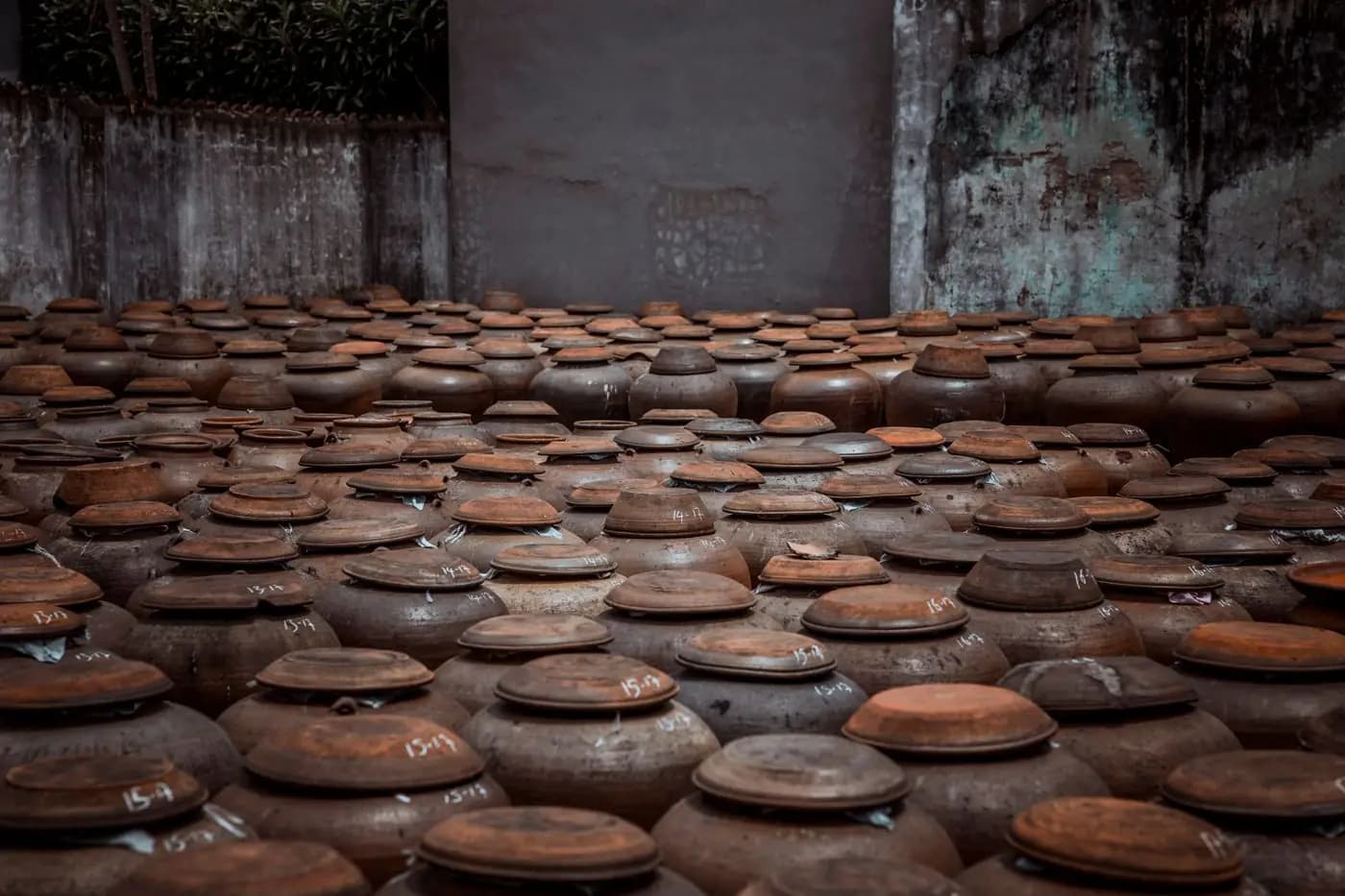
Visiting an awamori distillery in Shuri: Zuisen and Shikina
Shuri, on the heights of Naha, is the logical place to see awamori up close: it is the old royal distillery quarter, a few minutes from the castle.
Zuisen Shuzo (Shuri Sakiyama), founded in 1887, is the most accessible distillery:
- free tour: a film on production, a view of the tanks and the jar cellar, then a tasting of several awamori and kusu;
- hours: 9am–4pm (last entry), weekdays only; closed on Saturdays, Sundays and public holidays, with occasional extra closures;
- access: a 10-minute walk from Shuri Station (Yui Rail monorail);
- shop: a wide range of kusu and jars, with shipping.
Zuisen is also known for reviving a pre-war black koji strain kept in a university laboratory in Tokyo, which gave rise to its "Usaki" bottling.
Shikina Shuzo (Shuri Akata), smaller, belongs to a family of distillers. It keeps a jar of kusu around 150 years old, one of the few to survive the war. Visits are possible by phone reservation, for just a few people, and in Japanese: it is not a place for a group.
Elsewhere on the island, several distilleries also welcome visitors, sometimes with a jar workshop or a tasting shop, notably in the south near the airport. Reminder: legal drinking age is 20, and nobody drives after the tasting.
Ryukyu glass: glassblowing at the Ryukyu Glass Village
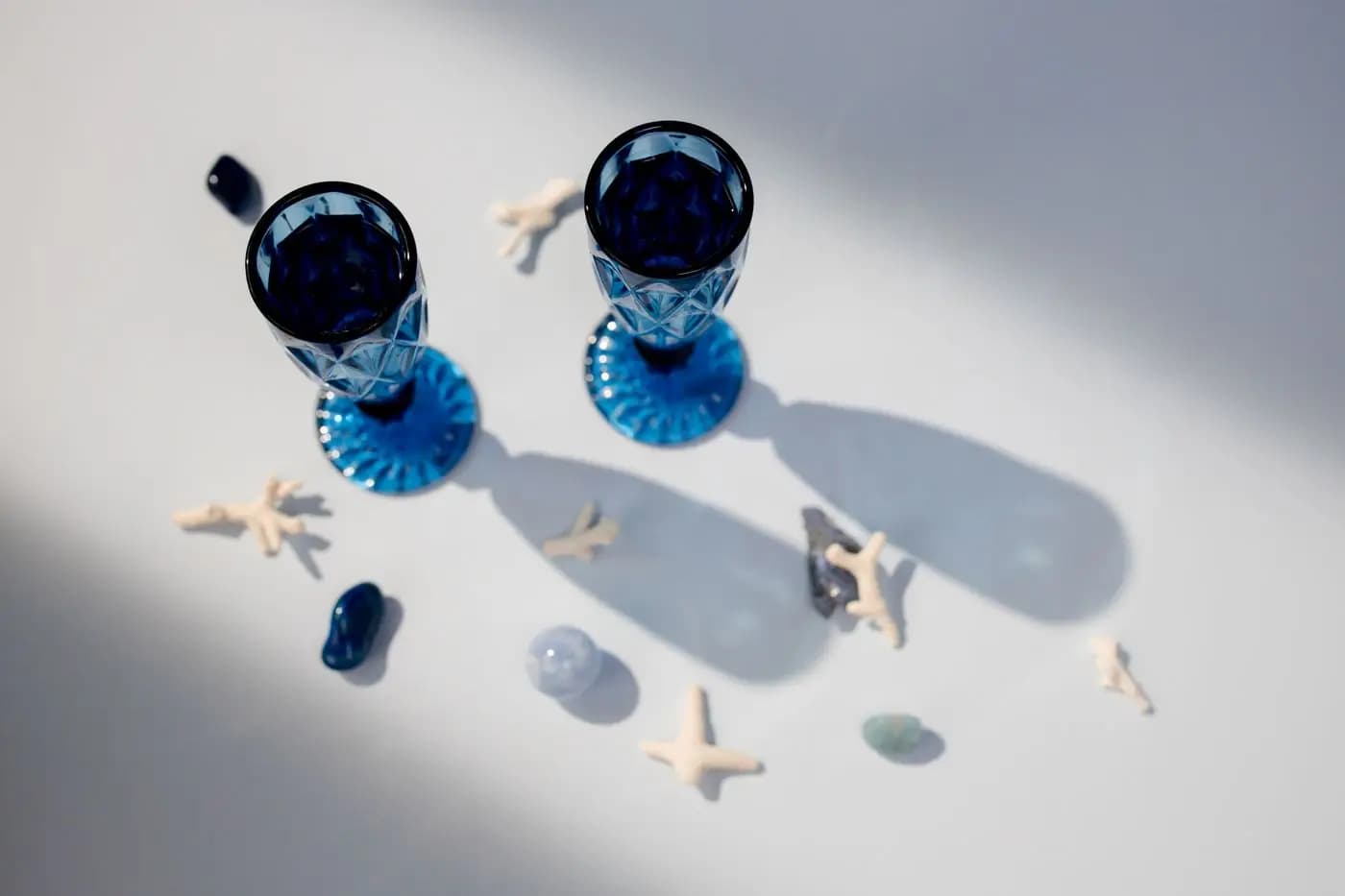
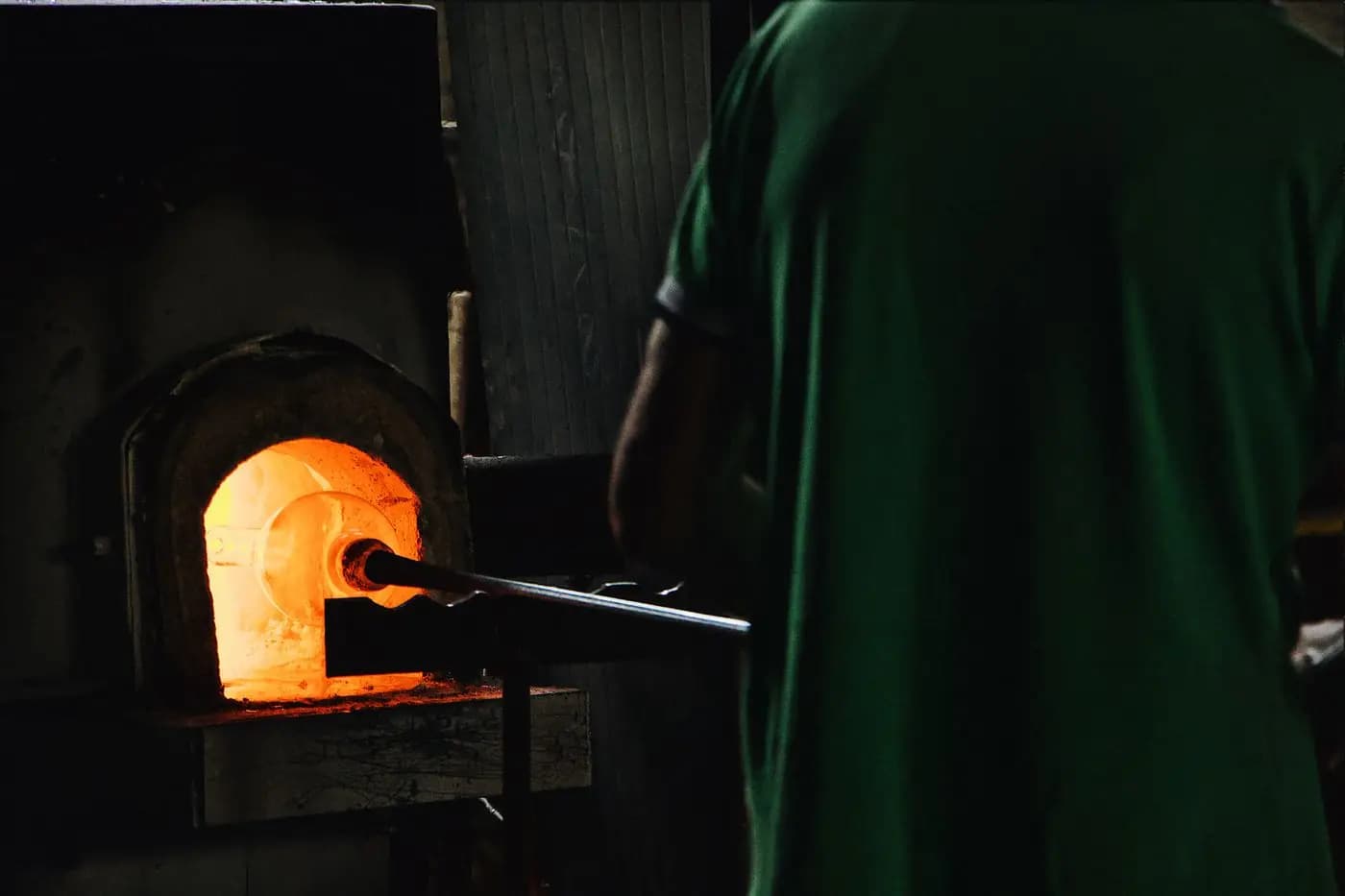
Ryukyu glass is a young craft, born after 1945. Short of raw materials, Okinawan glassmakers melted down the soda and beer bottles thrown away by the US bases. The impure recycled glass produced thick, tinted pieces full of bubbles: what was a flaw became the signature of the style. Today workshops also use new glass but keep the bright colors (ocean blue, green, amber) and the bubbles. Ryukyu glass is recognized as a traditional craft by Okinawa Prefecture.
The Ryukyu Glass Village in Itoman, in the south of the island, is the largest workshop:
- glassblowing: you choose the shape and color, then blow and shape the glass with a craftsman; about 15 to 20 minutes of work, but allow an hour on site with explanations and waiting; from about ¥3,500;
- booking recommended by the day before, online or by phone;
- collection: the piece must cool slowly; it can be collected 7 days later or shipped (¥500 within Okinawa, ¥1,500 elsewhere in Japan);
- other workshops without a furnace (engraving, assembling glass fragments into a candle holder) let you leave with your piece the same day;
- access: 30 to 40 minutes by car from Naha; there is no train.
There are also glass workshops in Naha, Onna and the center of the island, often smaller and easier for 2 to 6 people.
When buying, expect ¥1,500 to ¥3,000 for an ordinary glass and more for signed pieces. Glass travels well in cabin baggage, wrapped in newspaper.
Bingata and Tsuboya: royal dyeing and the potters' street in Naha
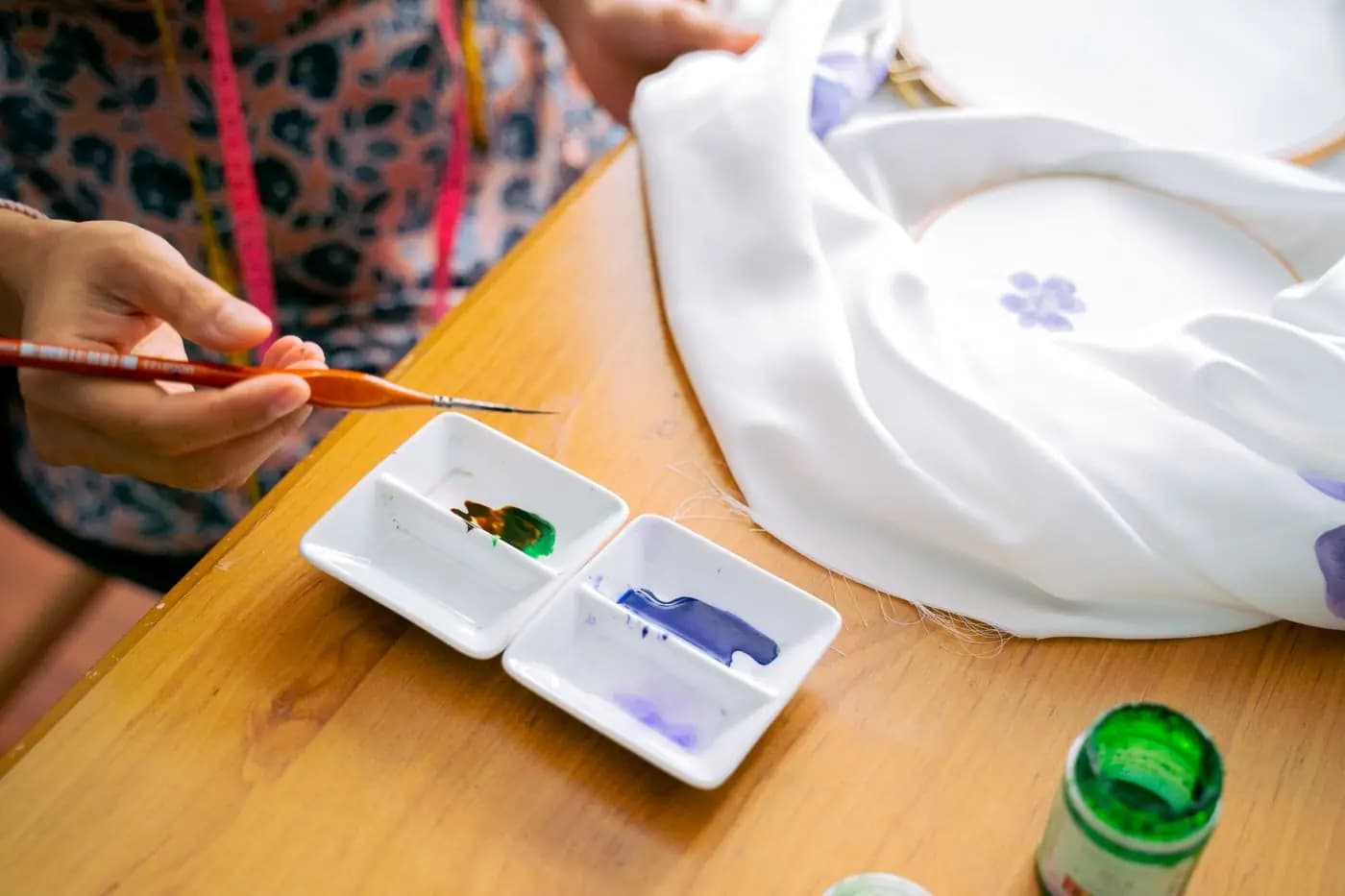
Bingata is the dyeing of the Ryukyu court. On cotton or silk, the craftsman applies rice paste through a stencil (katagami), then paints the uncovered areas with mineral pigments in bold colors: yellow, red, blue, purple. A second, darker color applied as a gradient ("kumadori") gives depth to the flowers, birds and waves. Colors and patterns once indicated the wearer's rank. Bingata has been a national traditional craft since 1984.
Introductory sessions use a handkerchief, tote bag or small panel and a pre-cut stencil: about an hour, usually ¥2,000 to ¥4,000 depending on the workshop and the item. Several workshops in Shuri and Naha offer them, as does the Naha traditional arts center on Kokusai-dori, which also covers weaving, glass and lacquer.
Tsuboya, a 10-minute walk from Kokusai-dori, has been the potters' quarter since 1682, when the royal government brought three production centers together there. The stone-paved Yachimun street ("yachimun" means pottery in Okinawan) lines up workshops and shops over about 400 meters. You will see:
- arayachi, unglazed ware for awamori and water jars;
- joyachi, glazed and decorated tableware;
- shisa, guardian lions placed in pairs on roofs and at gates.
The Aragaki residence, a former potters' house with its climbing kiln, is an Important Cultural Property. A point to note for 2026: the Tsuboya Pottery Museum is closed for works from September 1, 2026 to March 31, 2027; the street and the workshops stay open. Many potters moved in the 1970s to the Yachimun Village in Yomitan, in the center of the island, because of smoke from the kilns: that is the place to go for working kilns.
How much time to allow and how to combine these visits
Everything fits into a day and a half from Naha:
- day 1, morning: Shuri Castle, then the Zuisen distillery (on a weekday) and the stone lanes of Kinjo-cho;
- day 1, afternoon: a bingata workshop in Shuri or Naha, then Yachimun street in Tsuboya and Kokusai-dori;
- day 2, morning: Ryukyu Glass Village in Itoman, combined with the Peace Memorial and Mabuni cliffs in the south;
- option: Yomitan's Yachimun Village, about an hour from Naha, if the group is staying on the west coast.
For Shuri Castle, bear in mind that the reconstruction of the main hall, destroyed by fire in 2019, is due to be completed in autumn 2026; depending on your visit date, part of the site may still be under construction or preparing to reopen.
As for season, the workshops are indoors and run all year. Just avoid typhoon season (especially August–September) for days with a lot of driving, and Golden Week for bookings.
Good to know: in summer, the heat near the glass furnaces is intense. Morning slots are more comfortable, and you need to drink regularly.
Okinawa crafts and awamori for a corporate group
Okinawa hosts many incentive and seminar groups, often focused on the beach. A crafts afternoon adds depth to the program and works well on rainy days.
- Ryukyu glass: the Ryukyu Glass Village can host groups, but glassblowing is done one person at a time. For 30 people, combine glassblowing for part of the group with furnace-free workshops for the others, and arrange shipping of the pieces to the hotel or to participants' homes, since they are only ready after 7 days.
- Awamori: Zuisen welcomes small groups on weekdays; for 20 to 40 people, a private kusu tasting led by a specialist at the hotel, paired with Okinawan dishes, is more comfortable. You can also have a small jar filled in the company's name, to be reopened at a future event.
- Bingata: a workshop that is easy to set up in a seminar room with a craftsman, one hour, for 20 to 40 people in a single session.
- Gifts: Ryukyu glasses, small Tsuboya shisa, bingata scarves. Plan shipping for heavy or fragile items.
- Transport: a coach is essential for Itoman and Yomitan; in Naha, the monorail is enough for a small group.
SHINOGI DMC organizes these workshops and tastings in Okinawa as part of a seminar program, convention or incentive stay, with interpreters and shipping logistics.
Frequently asked questions
What is the difference between awamori and shochu?
Awamori uses Thai long-grain rice entirely turned into black koji (the zen-koji method) and a single distillation. Most shochu add the main ingredient (sweet potato, barley, rice) after a first koji fermentation, often with white koji.
What is kusu?
Awamori aged for at least three years. Since 2015, the term is reserved for products in which 100% of the contents has aged three years or more. It is usually aged in earthenware jars, sometimes using the shitsugi method.
Can you visit an awamori distillery in Naha?
Yes. Zuisen in Shuri (10 minutes' walk from Shuri Station) offers a free tour with tasting on weekdays, 9am–4pm. Shikina accepts a few people by phone reservation.
How much is the glassblowing workshop at the Ryukyu Glass Village?
From about ¥3,500. Blowing takes 15 to 20 minutes, but allow an hour on site. The piece is collected 7 days later or shipped (¥500 within Okinawa, ¥1,500 elsewhere in Japan).
Is the Tsuboya Pottery Museum open?
No, it is closed for works from September 1, 2026 to March 31, 2027, with reopening planned for April 1, 2027. Yachimun street, its workshops and its shops remain open.
Which craft workshop suits a group of 30 in Okinawa?
Bingata is the simplest: a craftsman runs the session in an hour, even in a hotel function room. Glassblowing needs rotations and shipping of the pieces; a private kusu tasting rounds off the afternoon well.
Rédaction SHINOGI DMC · Updated
Sources
- JETRO — Awamori (méthode, ingrédients)
- Agence nationale des impôts — Indication géographique « Ryukyu Awamori » (PDF)
- Ryukyu Shimpo — Distilleries Zuisen et Shikina
- Ryukyu Glass Village — Informations sur les ateliers (PDF)
- Ville de Naha — Fermeture du musée de la poterie de Tsuboya (PDF)
- MLIT — Base de textes multilingues : Tsuboya (PDF)