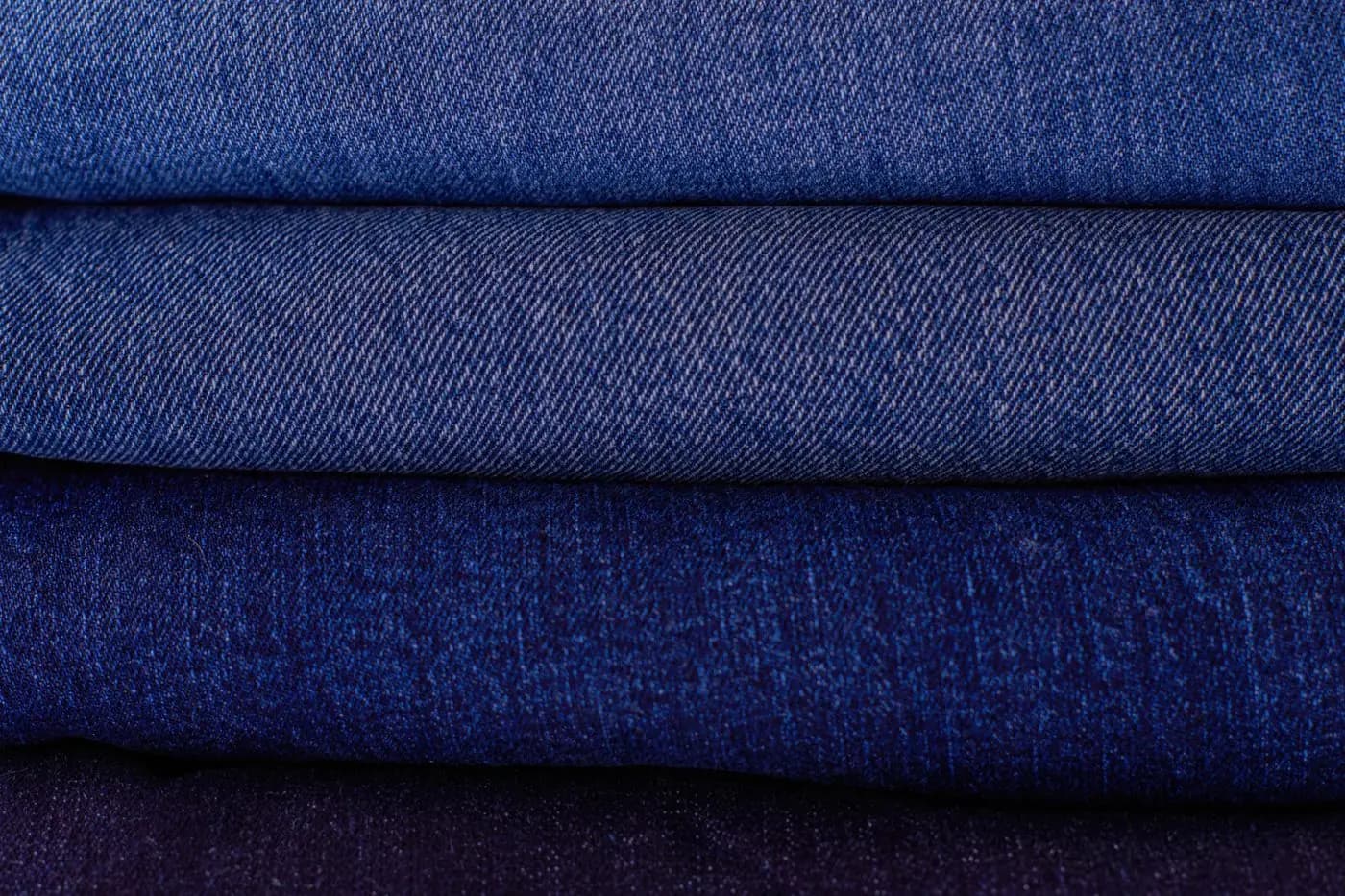
Why Kojima is the capital of Japanese denim
Kojima is a coastal town south of Kurashiki, merged into the city in 1967, facing the Seto Inland Sea and the great bridge to Shikoku. Its textile history began long before jeans. Land reclaimed from the sea, too salty for rice, was planted with cotton in the Edo period. People wove flat cords (sanada-himo) for sword handles, tabi, then sails and workwear.
In the 20th century Kojima became Japan's capital of school uniforms: until the 1950s, much of the stand-collar jackets and pleated skirts worn by Japanese pupils came from its workshops, and it is still a hub of the sector today. When synthetic fabrics shook that market, garment makers looked for another heavy cotton product. It would be jeans, made familiar by American soldiers after the war.
In April 1965, Maruo Clothing (later Big John) released the first jeans made in Japan. Sewing machines, rivets, buttons, zips and even thread had to be imported from the United States. Other brands followed, including Betty Smith (founded in 1962), which launched one of the country's first women's jeans brands. In the 1970s and 1980s, Kojima also developed many of the washing techniques that made Japanese jeans famous.
Today the whole Sanbi region (Bizen and Bitchu in present-day Okayama, Bingo in eastern Hiroshima) is the hub of Japanese denim: spinning, dyeing, weaving, sewing and finishing within an hour's drive of each other. In 2023 it produced about 23.9 million m² of denim, almost 100% of national output; the weaver Kaihara, in Fukuyama, alone holds more than half of the Japanese market. Many European and American luxury brands source there without saying so.
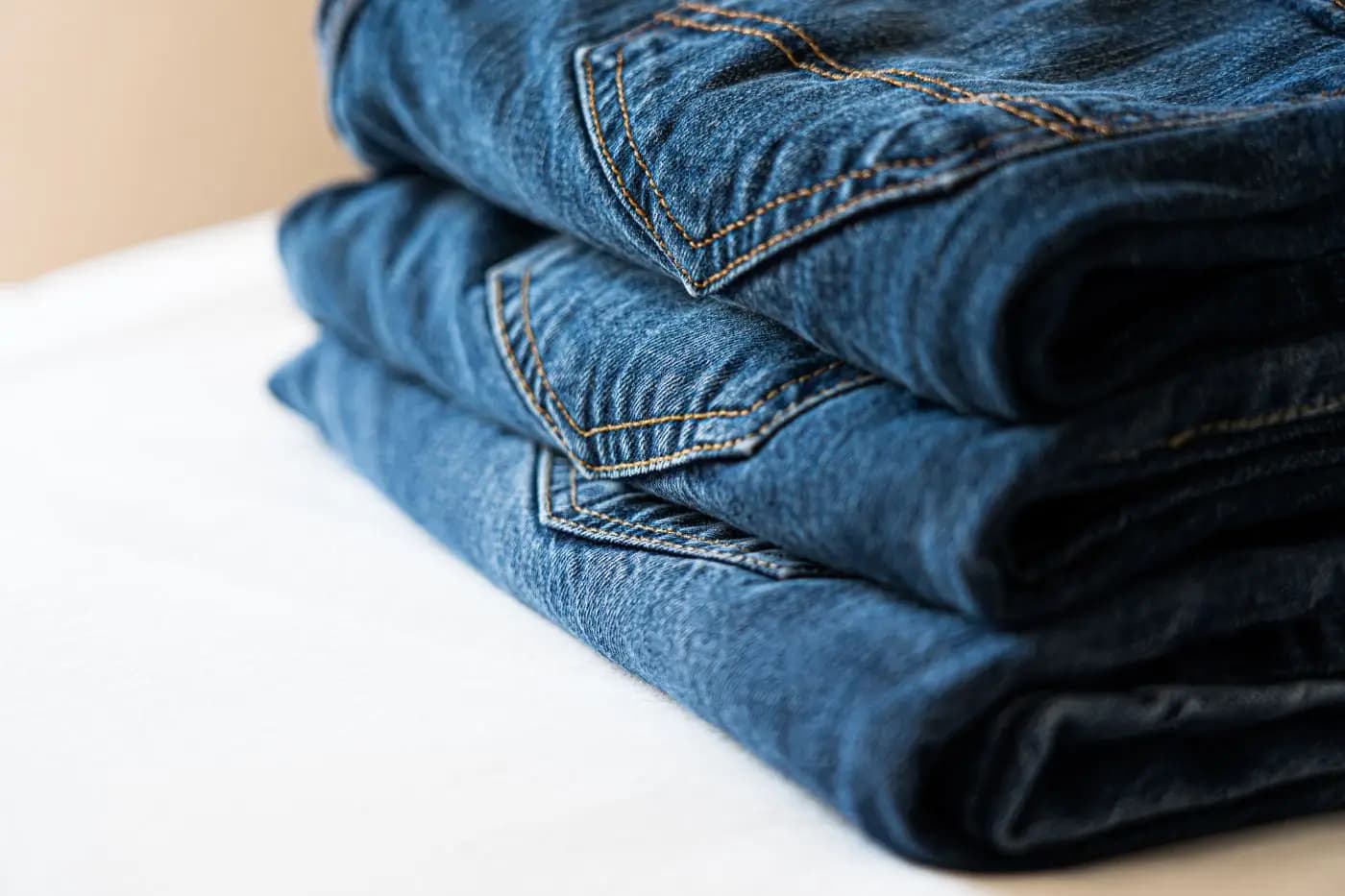
Indigo dyeing and selvedge looms: what makes Japanese denim
What enthusiasts call "Japanese denim" comes down to three stages the region masters particularly well.
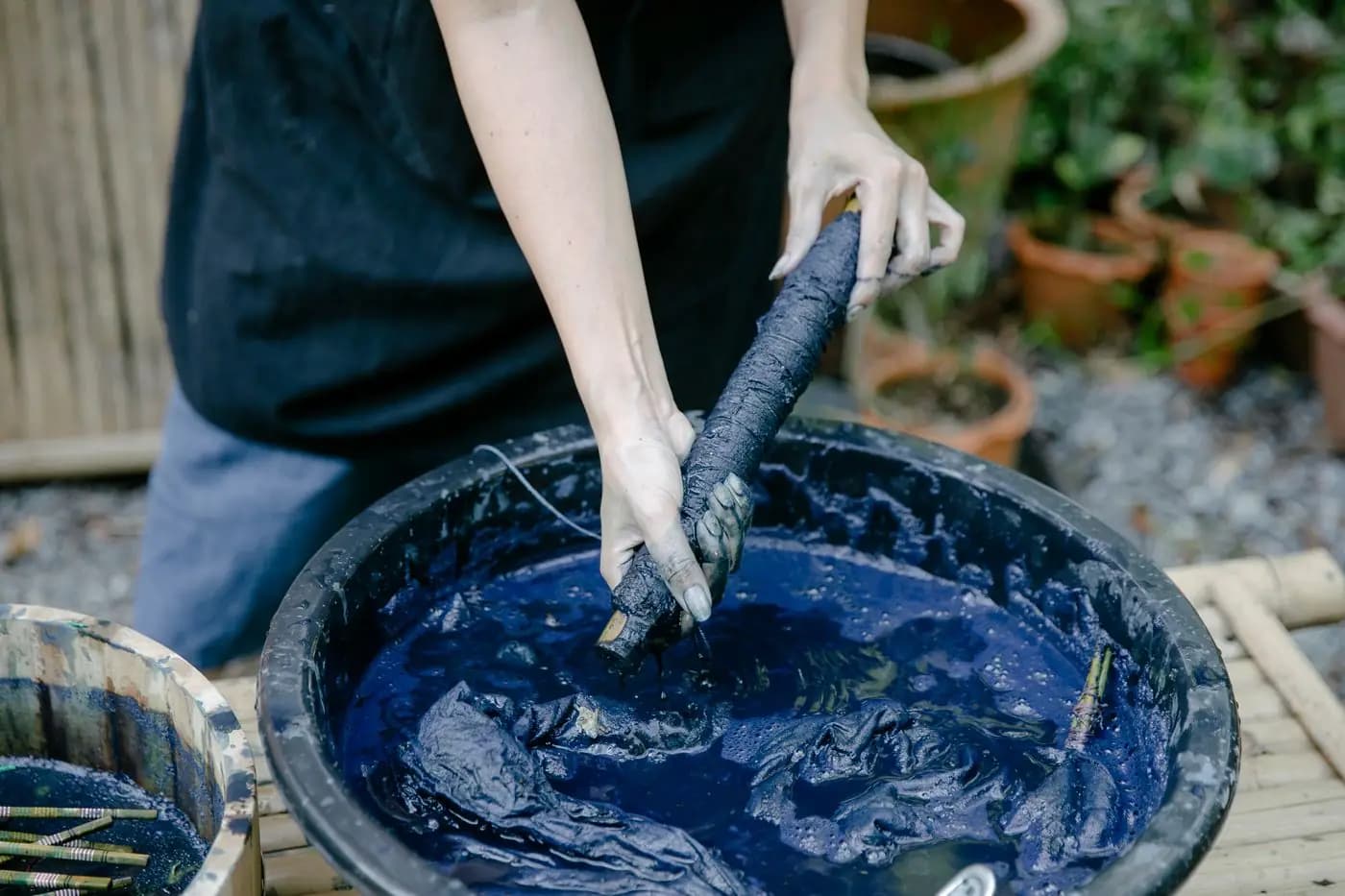
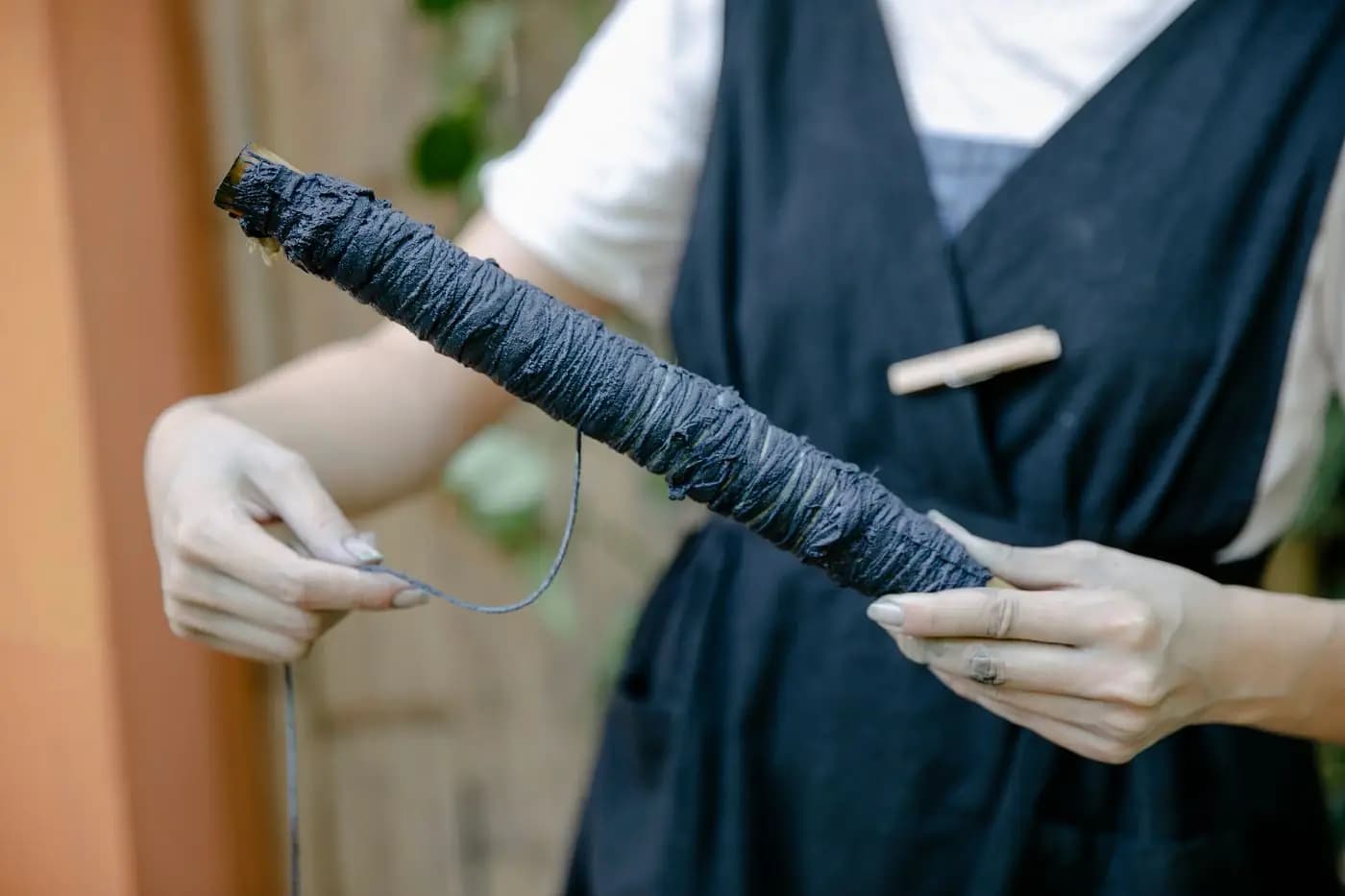
- Rope dyeing: warp yarns, gathered into ropes, are dipped in and pulled out of indigo baths several times, oxidising in the air between dips. Indigo does not penetrate to the core of the yarn, which stays white. This is what lets jeans fade over time and record the wearer's creases. The more dips, the deeper the blue. The Sanbi region has an indigo-dyeing tradition going back centuries, and a few workshops still dye by hand with natural indigo.
- Weaving on shuttle looms: old shuttle looms, narrower and much slower than modern ones, weave cloth about 80 cm wide whose edges close on themselves. This finished edge, often marked with a coloured thread, is the selvedge ("self-edge"). The resulting fabric is irregular, denser, with a texture fast looms cannot imitate. Several weavers in the region maintain dozens of these machines, some recovered from abroad.
- Sewing and washing: chain-stitch seams, rivets, hems, and the full range of washes (stone, enzyme, hand finishing) in which Kojima specialises.
A Kojima brand's selvedge jeans commonly cost ¥20,000 to ¥40,000, more for natural indigo cloth. "Raw" (unwashed) models are stiff at first: you wear them for months before the first wash to develop personal fades. Kojima sellers are happy to advise on sizing, bearing in mind that raw jeans shrink at the first wash (often one or two centimetres in length, depending on the fabric).
To see these stages, the best way in is a workshop or factory visit through a local brand or the tourist office; weavers are not open to the public without prior arrangement.
Kojima Jeans Street: shops, prices and tips
Kojima Jeans Street occupies the old Ajino shopping street, once Kojima's busiest, which shops had deserted. Since 2009 the town and local brands have turned it around: it now has about forty jeans shops, workshops, cafés and galleries along some 400 metres, between the former Nozaki house (a wealthy salt merchant whose residence can be visited) and Kojima's municipal community centre.
The decor is unapologetic: jeans hung above the street, drink machines and benches covered in denim, indigo-blue manhole covers. Behind the staging are mostly local brand stores, often run by the designers themselves, selling their models, archive pieces and sometimes end-of-line items.
Practical tips:
- Access: 15 minutes' walk from JR Kojima station, or by local bus. A "jeans bus" links the station, the street and a few workshops on certain days only (Fridays, weekends and holidays depending on the season).
- Hours: most shops open around 10am and close around 6pm, and many close one weekday: come midday on a weekday or at the weekend.
- Budget: ¥15,000 to ¥40,000 for local-brand jeans, a few thousand yen for accessories (bags, card holders, bandanas, socks). Hemming is often done on the spot, sometimes on a chain-stitch machine, free or for a few hundred yen.
- Tax-free: available in some shops with a passport; Japan's system is moving to an after-purchase refund in late 2026, so ask at the till.
- Time needed: 2 hours for a stroll, half a day for an enthusiast.
Nearby: the Nozaki house, one of Japan's largest merchant residence complexes, and the Mt Washu viewpoint facing the Seto-Ohashi bridge, 20 minutes by car.
Making your own jeans in Kojima: the Betty Smith workshop
The most requested experience in Kojima is leaving with a pair of jeans you put together yourself. The most organised site is the Betty Smith Jeans Museum & Village, away from the centre, which brings together a small jeans museum (free entry), what the company presents as Japan's oldest jeans factory, a shop, a café and a hands-on workshop.
How it works:
- Fitting: choose a model (straight, slim or button-fly for men; slim, bootcut, wide or long skirt for women) and your size.
- Choosing parts: one button, six rivets, a leather label (sheepskin, cowhide, or woven labels from old stock).
- Fixing: you set the button and rivets yourself on a foot-operated press. Wear trainers; you need to press firmly.
- Finishing: staff sew the label and hem the legs while you visit the museum. Allow about an hour in total.
2026 prices: Omiyage Jeans from ¥11,000 including tax, with the ¥2,200 experience fee included; the Denim Works model, in higher-grade Japanese denim, from ¥22,000 before tax (¥24,200 including tax) since September 1, 2026. A private VIP room for a single group is available for an extra ¥3,300 per hour. Book online or by phone (086-473-4460).
Hours: 9am-6pm from March to November, 9:30am-5pm from December to February, lunch break 12-1pm on weekdays, closed at New Year. For those short of time, shorter workshops (a denim key ring or pouch with rivets) are held at the shop, by reservation.
Access: from JR Kojima station, 15 minutes by bus or taxi. From Kurashiki's Bikan quarter several bus lines go there, but the journey takes over an hour; it is better to go via Okayama by train.
Other Kojima brands offer workshop visits, indigo dyeing or sewing classes on request; these offers change often, so check when booking.
Kurashiki Bikan and the Ohara Museum: what to see in Kurashiki
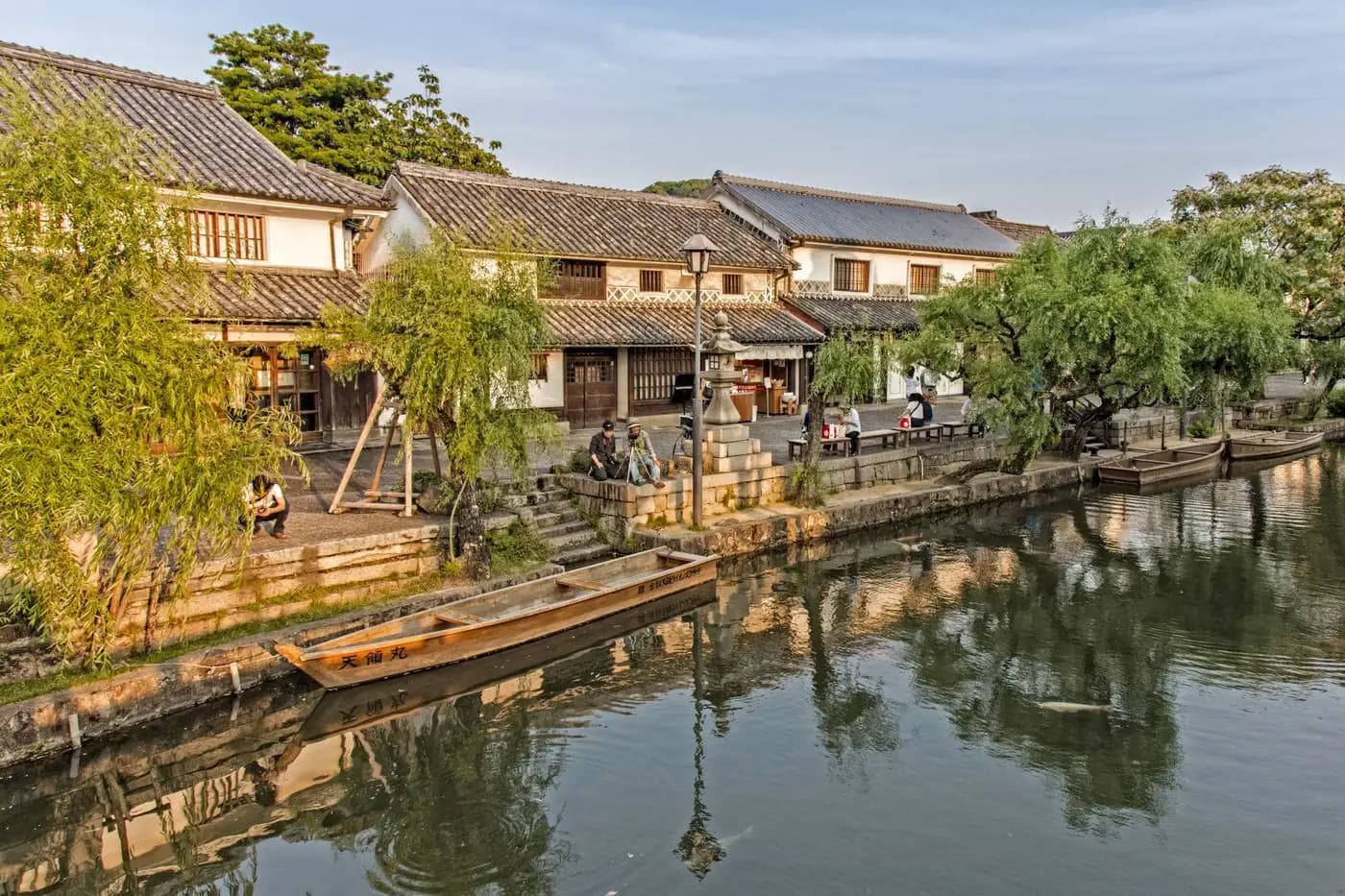
Thirty minutes from Kojima, Kurashiki tells the other half of the story: that of the merchants and spinning mills that enriched the region. The historic Bikan quarter is laid out around a willow-lined canal, white-walled storehouses with black tile lattice (namako-kabe) and Edo-period rice and cotton merchants' houses. Boat rides on the canal, craft shops (Kurashiki canvas, glass, denim again), cafés in old storehouses: you can easily spend half a day.
To see:
- Ohara Museum of Art: founded in 1930 by industrialist Ohara Magosaburo, head of the Kurashiki spinning company, it was Japan's first private museum of Western art. Western paintings (El Greco, Monet, Gauguin and many others), modern Japanese art, crafts and Oriental art. Admission ¥2,000 for adults (¥500 under 18), open 9am-5pm, closed Mondays and for a period in winter. In 2026 El Greco's restored Annunciation is the subject of a special display; some annex buildings are closed for maintenance, so check before coming. No photos in the galleries.
- Kurashiki Ivy Square: the former Kurabo (Kurashiki Boseki) cotton mill, opened in 1889, in ivy-covered brick, now a hotel, museums and shops. The direct link between the region's cotton and its denim.
- The canal at night: buildings are lit at dusk and day visitors have gone. It is the best reason to stay overnight.
For denim fans, the quarter has several shops of Kojima and regional brands, so you can buy in Kurashiki if you have no time for Kojima, with less choice.
How to get to Kurashiki and Kojima from Okayama, and how long to stay
Everything goes through Okayama station on the Sanyo shinkansen: about 45 minutes from Shin-Osaka by Nozomi, about 35 minutes from Hiroshima, and just over 3 hours from Tokyo.
- Okayama → Kurashiki: JR Sanyo line, 15 to 17 minutes. The Bikan quarter is 10-15 minutes' walk from Kurashiki station.
- Okayama → Kojima: JR Seto-Ohashi line (Marine Liner rapid to Takamatsu or trains for Kojima), about 25 minutes. Kojima is the last stop before the bridge to Shikoku.
- Kurashiki ↔ Kojima: direct buses but slow (over an hour); by train, go back via Okayama, allow 45 minutes to an hour with the connection. By car or coach, about 30 minutes.
- JR Pass: covers all these JR train journeys.
How long?
- One day from Osaka or Hiroshima: Kojima in the morning (Jeans Street, workshop), Kurashiki in the afternoon (Bikan, Ohara), back in the evening. Doable, but tight if you do the workshop.
- One night in Kurashiki: the ideal format. Arrive in the afternoon, canal in the evening, Ohara at opening time, then Kojima.
- Two days or more: add Naoshima island and its museums (ferry from Uno port, 50 minutes from Okayama), Koraku-en garden and Okayama Castle, or Shodoshima and its soy sauce breweries.
Seasons: Kurashiki is pleasant all year; just avoid Golden Week and summer weekends in the Bikan quarter, which gets very busy. The Ohara Museum is closed on Mondays: do not schedule Kurashiki on a Monday.
Kojima and Kurashiki with a group: jeans workshop and factory visit
Kojima denim is a very good subject for a corporate group because it combines a hands-on activity, an object you keep and a real industrial story: reinventing a skill (from uniforms to jeans), contract work for major brands, moving upmarket. Formats that work:
- "Make your own jeans" workshop: at Betty Smith, a private room takes one group at a time; for 20 to 40 people, run rotations (fitting, rivets, museum, shop) over two to three hours. The jeans can also be an incentive gift with a personalised leather label.
- Workshop or factory visit: sewing, washing or weaving, in small groups of 10 to 20, arranged in advance through the brand or the tourist office. Workshops are workplaces: closed shoes, no photos without consent.
- Indigo dyeing: a one- to two-hour session to dye a handkerchief or tote bag; bring clothes you do not mind staining, and gloves.
- An evening in Kurashiki: dinner in an old storehouse in the Bikan quarter, a walk along the illuminated canal, a night at Kurashiki Ivy Square or a ryokan in the quarter.
Constraints: many Kojima shops are small (enter in groups of 5 to 8), coach parking is limited on Jeans Street, and the Ohara Museum does not allow photos and closes on Mondays. For sizing, collect participants' measurements before the trip to prepare the models.
SHINOGI DMC can organise this programme from Osaka or Hiroshima, with a private workshop, factory visits, a bilingual guide and transport, and combine it with Naoshima or a night in Kurashiki.
Frequently asked questions
Where were the first Japanese jeans made?
In Kojima, in the city of Kurashiki (Okayama Prefecture), by Maruo Clothing, the future Big John brand, in April 1965.
How much does the make-your-own-jeans workshop in Kojima cost?
At Betty Smith in 2026: from ¥11,000 including tax for Omiyage Jeans and from ¥22,000 before tax (¥24,200 including tax) for the Denim Works model, by reservation. Allow about an hour.
How do you get to Kojima Jeans Street?
By JR train from Okayama to Kojima station (about 25 minutes), then 15 minutes on foot or by bus. By car, from the Kojima exit of the Seto-Chuo expressway.
What is selvedge denim?
Denim woven on old, narrow, slow shuttle looms, whose edges close on themselves ("self-edge"). The fabric is denser and irregular; the edge, often marked with a coloured thread, shows on the turned-up hem.
How much is admission to the Ohara Museum of Art?
¥2,000 for adults and ¥500 for under-18s. The museum is open 9am-5pm and closed on Mondays and for a period in winter.
Can you do Kurashiki and Kojima in one day?
Yes, from Okayama, Osaka or Hiroshima: Kojima in the morning, Kurashiki in the afternoon. With the jeans workshop it is tight; a night in Kurashiki lets you enjoy the canal in the evening and the Ohara Museum at opening time.
Rédaction SHINOGI DMC · Updated
Sources
- Nippon.com — Japanese Jeans Turn Sixty: Visiting Okayama's Denim Capital, Kojima
- JNTO — Create your own indigo denim in Kojima, home of Japanese denim
- Betty Smith — Atelier « fabriquer son jean » (tarifs 2026, horaires, déroulé)
- Betty Smith — Jeans Museum (entrée gratuite, salle VIP, accès)
- Betty Smith — Accès (bus, jeans bus)
- Ville de Kurashiki — Parcours Kojima (rue des jeans)
- Ohara Museum of Art — Informations visiteurs
- Ohara Museum of Art — Site officiel (expositions 2026)
- Museum.or.jp — Ohara Museum of Art (tarifs, jours de fermeture)