- Duration
- 2.5 to 3 hours
- Group size
- 20–200 pax
- Cities
- Okinawa
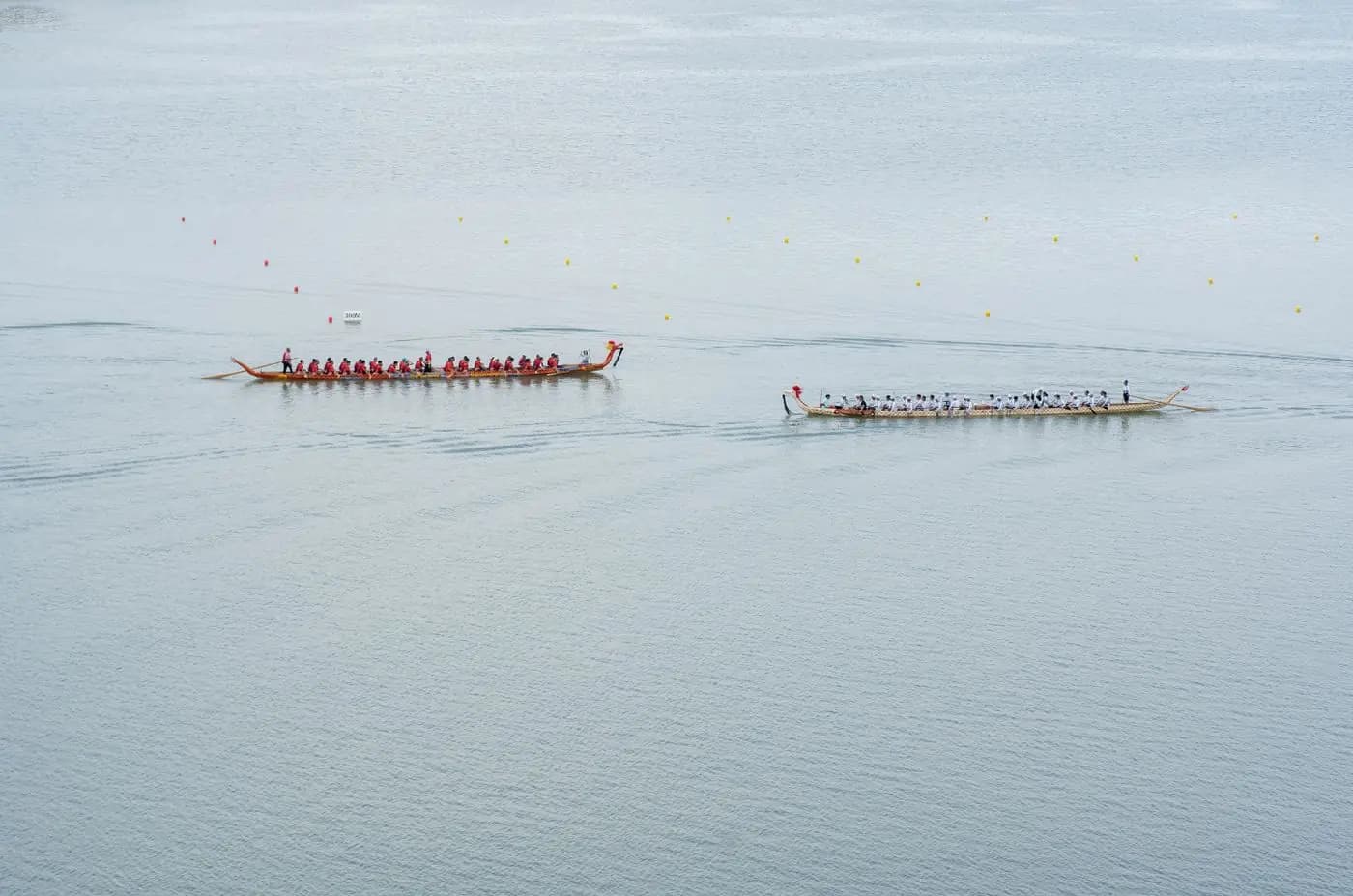
After a safety briefing and life jacket fitting, crews learn the paddle stroke and the rhythm set by the drum or gong on land. They then board with an experienced helmsman, practice in a sheltered area of the harbor and race in short heats, often out and back around a buoy. The number of paddlers per boat depends on the vessel provided by the local partner.
Hārī makes cohesion very visible: if the paddles don't hit the water together, the boat goes nowhere, however strong each individual is. The drummer, who sets the pace, and the helmsman, who sets the direction, naturally illustrate leadership and trust. Mixed crews bringing together several departments work particularly well.
Hārī races (called hārē in some towns) are a tradition of Okinawa's fishing communities, tied to prayers for safety at sea and good catches. The large races in Naha during Golden Week and in Itoman between late May and June, following the lunar calendar, remain very popular festivals. The activity takes place at a partner harbor on the main island, with transfers from your resort.
Objectives
- Make synchronization and collective effort tangible
- Illustrate the roles of leader, rhythm and direction
- Experience an authentic Okinawan tradition
- Create healthy competition between crews
How it works
- 1Coach transfer from the resort to the partner harbor.
- 2Safety briefing, life jackets and crew formation.
- 3Practice on land, then on the water with a local helmsman.
- 4Timed heats and a final between the best crews.
- 5Prize-giving at the harbor, refreshments, then return to the resort.
Good to know
- Clothes that can get wet, water shoes or strapped sandals and a cap; changing rooms and showers depend on the harbor.
- Life jackets are mandatory and provided; a safety boat is on the water throughout.
- Cancelled in strong wind, swell or weather advisories: fallback to a shore-based version (rhythm training, beach games) or postponement.
- Recommended season: April to June and October to November; in summer, early-morning starts because of the heat.
- Not recommended for people uncomfortable in water; instruction in Japanese with an interpreter.
Indicative budget
Indicative: from ~€100 per person (boats, helmsmen, safety, interpreter, prizes), with coach transfers extra depending on the resort's distance.
Frequently asked questions
Do participants need to be athletic for hārī?
No. The effort is real but short, and success depends mainly on synchronization. Normal fitness is enough; anyone who prefers can take the drummer or referee role.
Can we watch the big traditional hārī races?
Yes, if your dates coincide with Naha Hārī (Golden Week) or the races in Itoman and other harbors, which follow the lunar calendar. We check that year's calendar when planning your program.
How much time should we allow including transfers?
Allow half a day: about 3 hours of activity plus the round-trip transfer, which ranges from 20 minutes to over an hour each way depending on where the resort and harbor are.