Tajima-gyu, Tajima beef, Kobe beef: who is who?
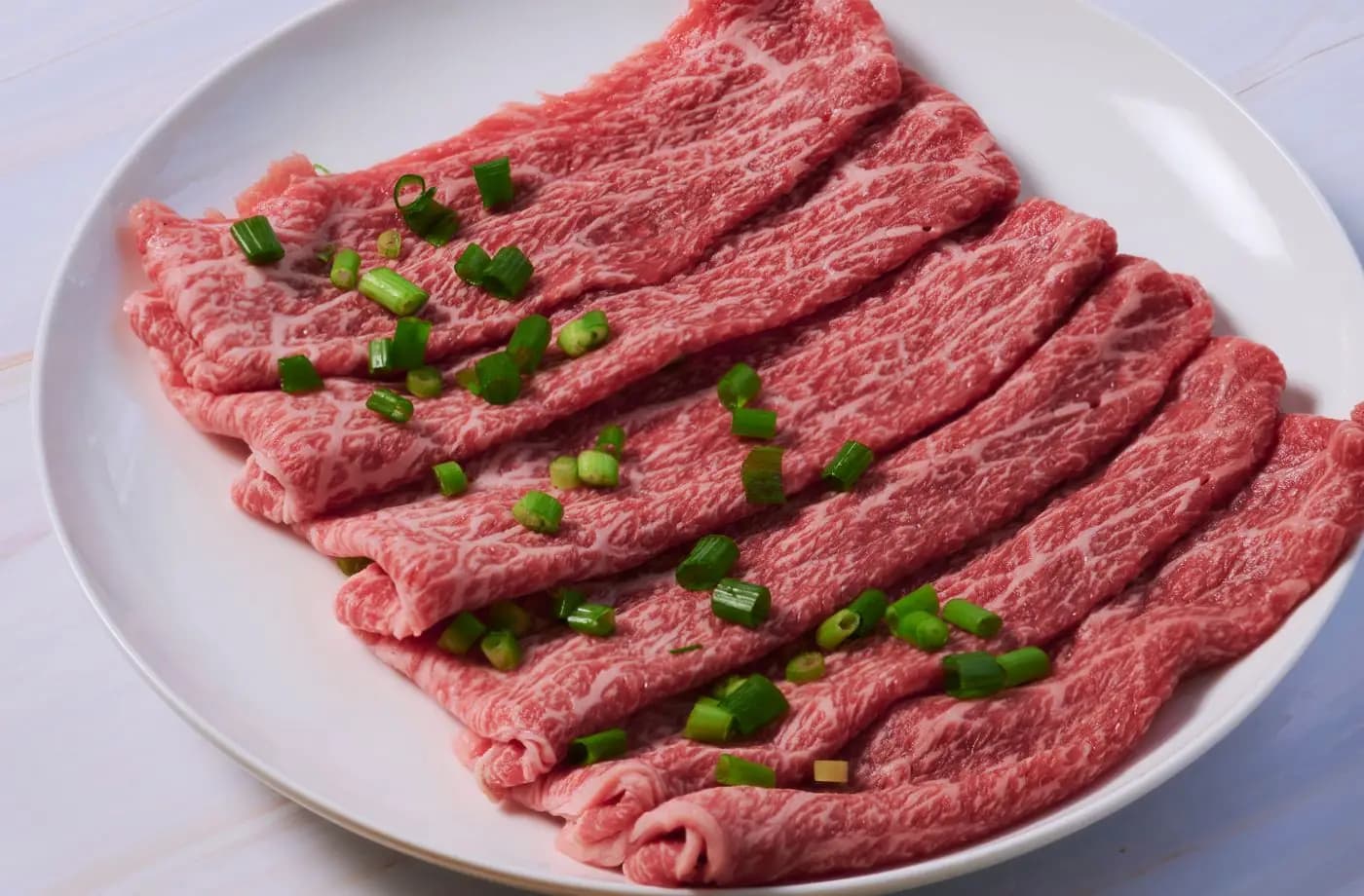
The three names refer to the same lineage at different stages. Tajima-gyu (or Tajima-ushi) is the animal: a line of Japanese Black cattle specific to the Tajima region, the northern third of Hyogo Prefecture, between the Chugoku mountains and the Sea of Japan. When a Tajima animal born in Hyogo, raised by an approved farmer in the prefecture and slaughtered in a Hyogo abattoir passes quality inspection, its meat is sold as Tajima beef. And only part of those carcasses, the ones that meet the strictest criteria, may be called Kobe Beef (Kobe-gyu, Kobe-niku).
Our guide to wagyu and Kobe beef covers A5 grading, the wagyu brands and restaurant prices. Here we go back up the supply chain: where the animal comes from, why it is so particular, and what you can see on the ground.
Why "Kobe" when the cattle are born 150 km away? Because for centuries the Tajima animal was a draught animal, small, sturdy and docile, raised to plough the terraced rice fields of snowy valleys. After the port of Kobe opened to foreigners in the late 1860s, Western residents began buying the meat and made it known under the name of the port it left from. The name stuck, and it is now protected.
Three figures for scale: about 7,000 Tajima cattle reach the market each year, about 5,500 are certified as Kobe Beef, and the whole accounts for less than 0.2% of beef consumption in Japan according to the promotion association. It is a craft-scale production, and what you come to see in Tajima is first of all a farming landscape.
Mikata, the pedigree register and the bull Tajiri
What makes Tajima cattle unique is less a feeding recipe than a closed pedigree. In Hyogo, Tajima cows are bred only with Tajima bulls born in the prefecture: no outside blood for over a century. The fine muscle fibre and very fine distribution of fat (sashi) are the result of this patient selection.
The historic heart of this selection is the Mikata district, today the towns of Kami-cho and Shin'onsen-cho, in the far north-west of Hyogo. Narrow valleys, few rice fields, a lot of snow: families lived from rice, cattle and seasonal work. As early as the Edo period, breeders maintained renowned bloodlines, and around 1897 the area was among the first in Japan to keep a cattle pedigree register (gyuseki-bo), village by village (a calf market is recorded there as early as 1849). Mikata is also the only place in Japan where Japanese Black cattle are improved solely from animals born within the district, which makes it a genetic reserve with no equivalent. Manure feeds the fields, rice straw and grass feed the cattle: this circular system was recognised as a Japanese Agricultural Heritage in 2019, then as a FAO Globally Important Agricultural Heritage System (GIAHS) in July 2023. About 2,000 Tajima breeding cows live in the district.
The most famous figure in this story is a bull. Tajiri (Tajiri-go) was born in 1939 at the farm of Tajiri Matsuzo, in Ojiro village (today the Ojiro district of Kami-cho), and lived until 1954. An exceptional sire, he is considered an ancestor of 99.9% of Japanese Black cows registered in Japan. In other words, almost all of the country's black wagyu, whether called Matsusaka, Omi or Hida, has Tajima blood; part of the calves born in Hyogo are in fact fattened in other prefectures.
For a visitor, this translates into very concrete things: barns of a few dozen head scattered through the valleys, black cows smaller than the national average (a Tajima carcass weighs about 420 kg, some fifty less than average), and a local pride that shows up even on road signs.
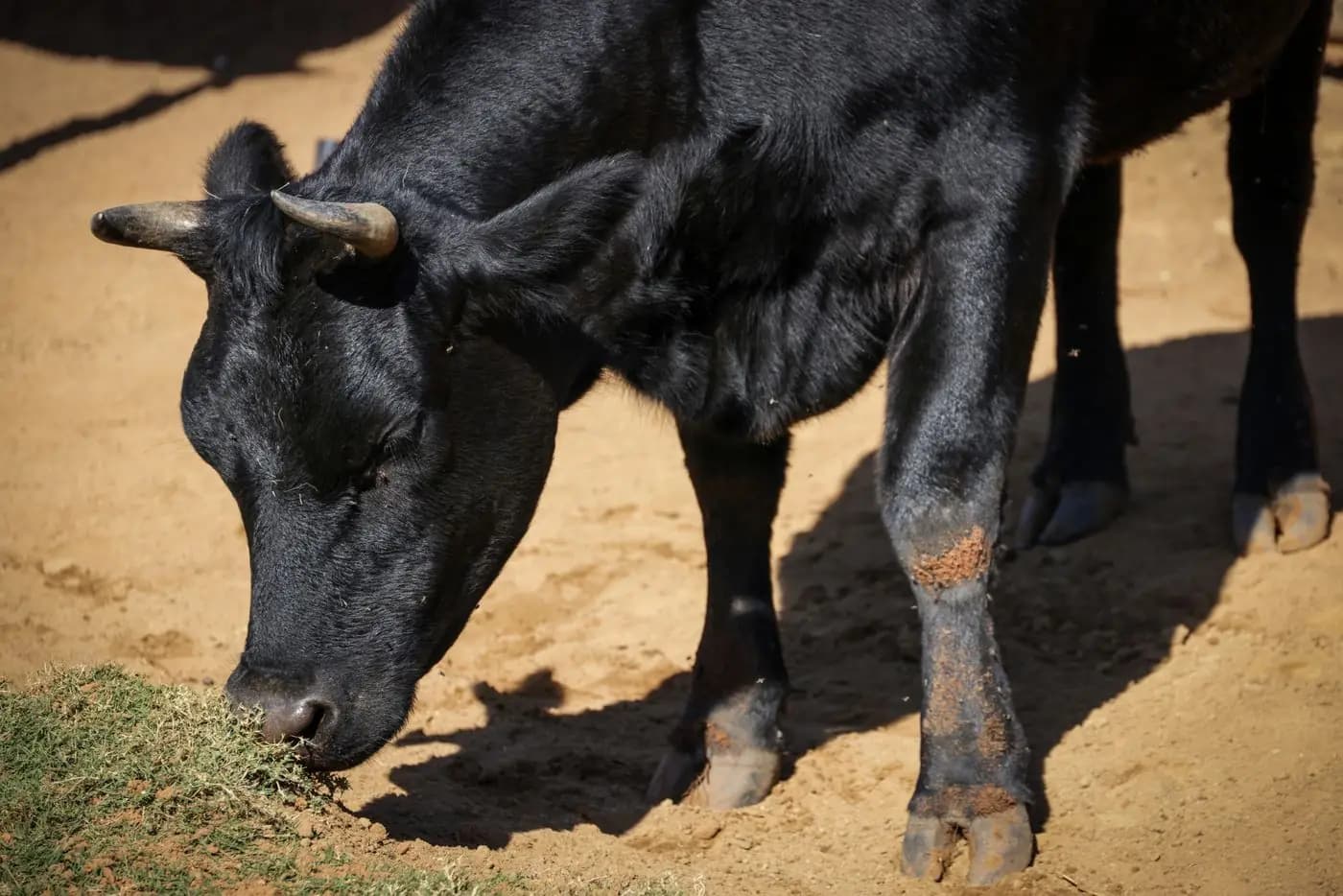
How a Tajima calf becomes Kobe beef
The supply chain has four stages, all in Hyogo.
- Birth at a breeding farm. The breeder chooses matings by bloodline, registers the calf in the pedigree book and fits an ear tag with a 10-digit identification number. The calf stays on the farm until 8 or 9 months.
- Calf auction. Calves go to the Tajima livestock market, run by the JA Tajima agricultural cooperative, at sales held almost every month. Fatteners bid on the basis of bloodline and conformation; in recent years the average has often exceeded half a million yen per calf. These sales are a professional event, not an attraction: you only attend with an introduced guide.
- Fattening at an approved farm for about two years. Rations of rice straw, maize, barley, wheat bran and soybeans, clean water, no grazing. The cattle are slaughtered at 28 months minimum, on average around 30 to 32 months, two to four months longer than most Japanese Black cattle. The stories of beer and massages are mostly legend: the association itself says they are not standard practice and their effect on the meat is unproven.
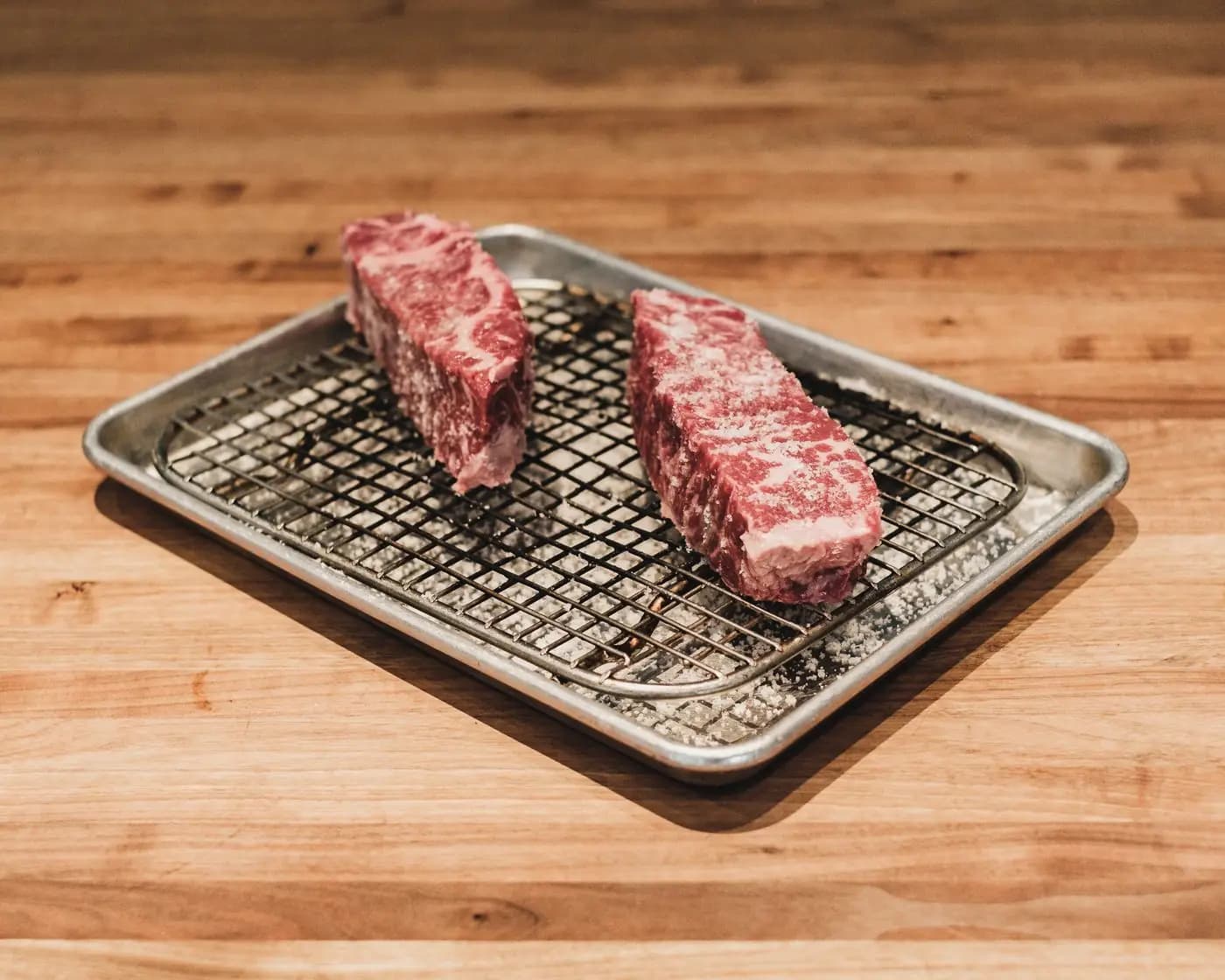
- Slaughter, grading and certification in a Hyogo abattoir. The carcass is graded by the Japan Meat Grading Association. Compliant Tajima cattle are sold as Tajima beef; those (heifers or steers only) achieving BMS 6 or higher marbling, a yield grade of A or B, a carcass of no more than 499.9 kg and fine texture receive the chrysanthemum-shaped stamp (nojigiku, Hyogo's flower) and become Kobe Beef.
The 10-digit number follows the meat to the plate: on the association's certification site, it gives the bloodline, birth farm, market and slaughter date. A serious restaurant shows it without being asked.
The Tajima Beef Museum and Tajima Bokujo Park
To see Tajima cattle without going through a private farm, the starting point is Hyogo Prefectural Tajima Bokujo Park (Hyogo-kenritsu Tajima Bokujo Koen), in Shin'onsen-cho, on high ground about ten minutes by taxi from Yumura Onsen. It is a large livestock park with meadows, visible barns, play areas and a restaurant.
Inside, the Tajima Beef Museum (Tajima-ushi Hakubutsukan), opened in 1994, explains the lineage, the register, the role of cattle in village life and the move to Kobe beef, with panels, models and a few interactive displays. It also hosts temporary exhibitions, sometimes with Hyogo's natural history museum. Texts are mainly in Japanese: with a guide, the visit takes 45 minutes; without, 20 minutes is enough.
Practical information:
- Address: 1033 Tando, Shin'onsen-cho, Mikata-gun (Hyogo).
- Hours: 9am-5pm. Closed Thursdays (the following day if Thursday is a public holiday).
- Park entry: free.
- Experiences by reservation: Tajima beef roast beef workshop (¥6,000) and, depending on the period, grooming the cattle with the keepers.
- Restaurant Furusato, in the park (10am-4:30pm): Tajima beef tasting set at ¥5,880 by reservation, Tajima beef bento at ¥1,800.
Combine it with Yumura Onsen, just below: its Arayu spring gushes out at 98°C, and eggs are boiled in baskets dipped into the water. For history, the Ojiro area (Kami-cho), home village of the bull Tajiri, keeps a monument to him and terraced rice landscapes typical of the Mikata district.
Tip: the park is at altitude and very snowy in winter; from December to February, call before coming (0796-92-2641) and arrange snow tyres for a coach.
Visiting a Tajima cattle farm: what is possible
It is the question almost every enthusiast asks: can you see a real farm? The honest answer is yes, but not by turning up at the gate. Tajima farms are small family operations, and the absolute priority is biosecurity: foot-and-mouth disease, avian flu and other outbreaks have done serious damage in Japan, and every visitor is a potential carrier.
What this means on the ground:
- No visit without an appointment, arranged through a cooperative, a local tourism association or a guide who knows the farmers.
- Shoe disinfection and sometimes overshoes at the entrance; stay behind the barriers and do not touch the animals unless invited.
- One farm per day is the usual precaution, and avoid arriving from a country or region hit by a recent outbreak.
- No visit if a participant has been in contact with livestock in the preceding days (ask in the group questionnaire).
- Photos: ask first, and never publish a farmer's name or address without consent.
What you see: clean barns, cattle hand-fed twice a day, often a family spanning two or three generations, and explanations of bloodline choices, calf prices and the fragile economics of the trade (feed costs, ageing farmers). For participants from food, retail or hospitality, it is often the most memorable moment of the trip.
If farm access is not possible on your dates, the alternative is Tajima Bokujo Park, where the cattle can be seen close up, combined with a meeting with an approved Kobe butcher or chef who explains the certificate and the cuts.
Where to eat Tajima and Kobe beef: locally and in Kobe
In Tajima itself you mostly eat Tajima beef, often more affordable than Kobe Beef at similar quality, and served without theatre:
- At the Tajima Bokujo Park restaurant, for a first comparative tasting at lunchtime.
- In the ryokan of Yumura Onsen and Kinosaki Onsen, which serve kaiseki dinners with a Tajima beef course (shabu-shabu, steak on a hot stone, sukiyaki); in winter they are often paired with Sea of Japan crab.
- In butcher-restaurants in Toyooka, Yabu or Kami-cho, where you choose the cut at the counter.
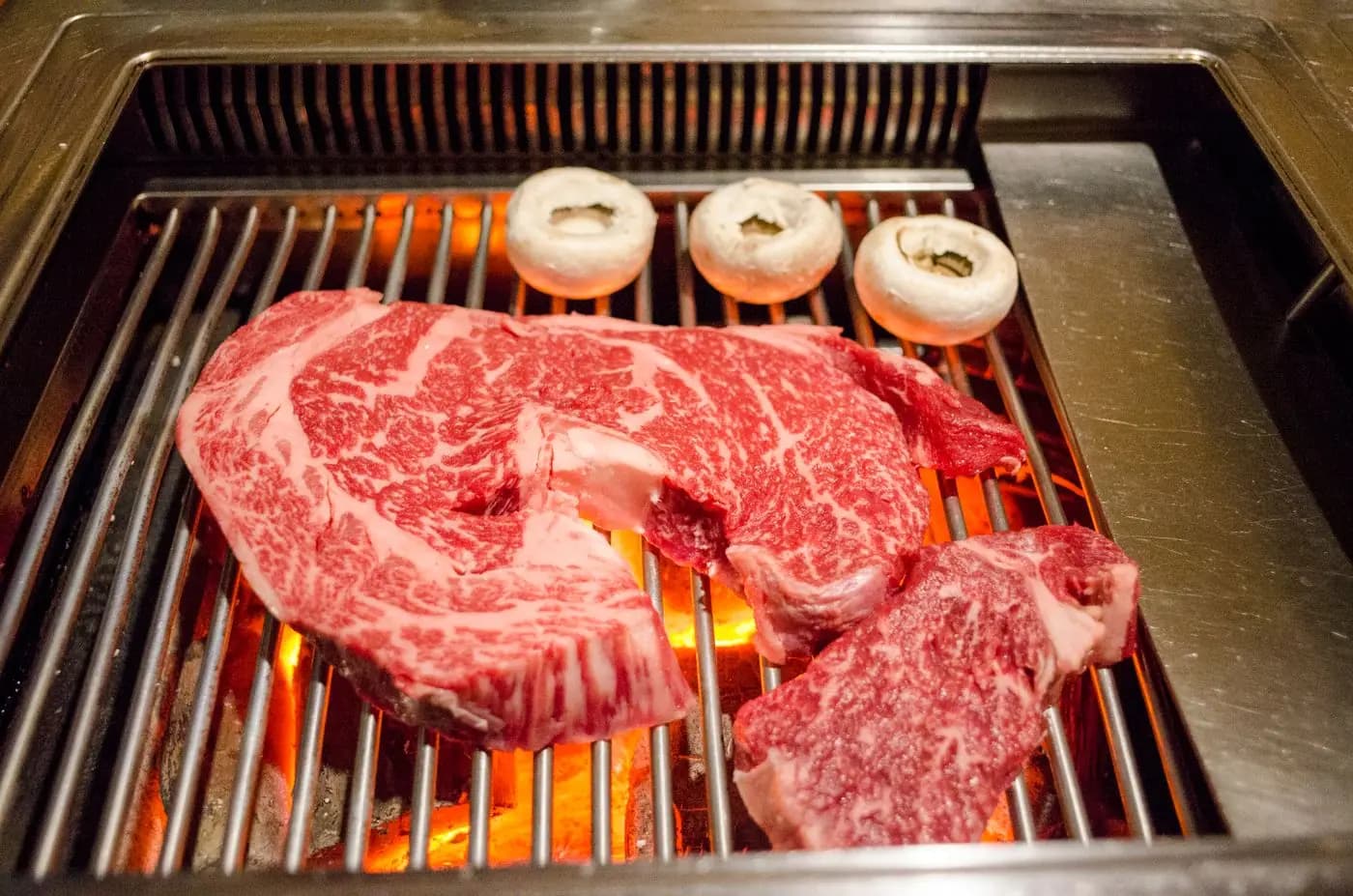
In Kobe, the offer is concentrated around Sannomiya and Motomachi: teppanyaki (the most emblematic format, cooked in front of you), steakhouses, yakiniku and sukiyaki. To avoid "Kobe-style beef" and other vague names, two markers are enough: the bronze statuette of a Tajima bull given by the association to approved establishments, and the certificate with the 10-digit number. Our wagyu and Kobe beef guide gives 2026 price ranges and meal formats; we do not repeat them here.
Three tips that change the experience:
- Lunch costs much less than dinner for the same meat, from the same chefs.
- Tasting side by side a Tajima beef and a Kobe Beef of different BMS is more instructive than a single heavily marbled piece: many visitors prefer BMS 7 or 8 to a richer BMS 11.
- Portions: 100 to 150 g of highly marbled beef is plenty; beyond that, the fat saturates the palate.
For the trip home, fresh beef cannot be brought into the European Union (meat imports are banned for travellers). Possible souvenirs are sauces, stocks and knives, not the meat.
How to get to Tajima and what to combine
The Mikata district is at the far end of Kansai, and that is what protects it. From Osaka, allow about 3 hours by road via the Kitakinki-Toyooka expressway, or take the train:
- Hamakaze express (from Osaka or Kobe-Sannomiya) to Hamasaka, about 3 to 3.5 hours from Osaka, then bus or taxi to Yumura Onsen (about 20 minutes) and the park.
- Kounotori express to Toyooka or Kinosaki Onsen (about 2.5 hours from Osaka), then the San'in line west (Kasumi, Hamasaka) or a car.
- Plane: Osaka-Itami → Tajima airport (35 minutes), 12 km from Kinosaki.
Without a car or coach, connections are infrequent: do not rely on local buses for a tight schedule.
The programme that works best over two days:
- Day 1: Osaka or Kyoto → castle town of Izushi (lunch of soba on small plates) → Kinosaki Onsen for the night, dinner with Tajima beef, bath round.
- Day 2: coastal road west, stopping at Kasumi port (crab in season) and the Amarube viaduct → Tajima Bokujo park and museum → Yumura Onsen → back to Osaka or Kobe, certified Kobe Beef dinner.
For more landscape, the San'in coast is part of a UNESCO Global Geopark, with cliffs and coves seen by boat from April to November. In winter, snow transforms the valleys, but mountain roads need an experienced driver.
A "Tajima beef supply chain" trip for a group
For a group of 15 to 40 people, the format that works is a two-day round trip from Osaka or Kyoto, with a night in a ryokan in Kinosaki or Yumura. It particularly appeals to three profiles: food, restaurant and retail companies (study trip), gastronomy clubs, and incentives looking for a stronger theme than a simple beef dinner.
The elements of a good programme:
- Tajima Bokujo Park and its museum, with a guide-interpreter who adapts the content (genetics for professionals, history and landscape for a general audience).
- A farm, in small groups (10 to 15 people maximum per visit, in two rotations if needed), with the biosecurity precautions described above.
- A workshop: roast beef at the park, or a cutting and tasting session with a butcher.
- A comparative dinner: Tajima beef in Tajima, then certified Kobe Beef in Kobe, with an explanation of the certificate.
- Gifts: local sauces and seasonings, Kansai knives, Tajima sake; no meat to take abroad.
The constraints: a coach is essential (with chains or snow tyres in winter), alternatives for participants who do not eat beef, and the calf auction calendar to check if you want to attend. The market and farms may refuse any visit in case of a disease alert, even the day before: always keep a plan B.
SHINOGI DMC can build this type of programme with a bilingual guide, ryokan and approved restaurant bookings, and coordination with local contacts.
Frequently asked questions
What is the difference between Tajima beef and Kobe beef?
Tajima is the bloodline (and the meat from these cattle born and raised in Hyogo). Kobe Beef is the share of that meat meeting the strictest criteria: BMS 6 or above, yield grade A or B, carcass of no more than 499.9 kg, heifer or steer.
Where are Kobe beef cattle born?
On approved farms in Hyogo Prefecture, mainly in the Tajima region in the north. The Mikata district (Kami-cho and Shin'onsen-cho) is the historic cradle of the lineage.
Can you visit a Kobe beef farm?
Not freely: farms are private and subject to strict biosecurity rules. A visit is arranged through a cooperative, a local association or a guide, in small groups. Hyogo Prefectural Tajima Bokujo Park lets you see cattle without an appointment.
Is there a fee for the Tajima Beef Museum?
Entry to Tajima Bokujo Park, where the museum is located, is free. Open 9am-5pm, closed Thursdays (the next day if a holiday). Workshops (roast beef, ¥6,000) require booking.
Who was the bull Tajiri?
A Tajima bull born in 1939 in Ojiro village (now Kami-cho) who died in 1954. An exceptional sire, he is said to be an ancestor of 99.9% of Japan's Japanese Black cows.
How many Kobe beef cattle are certified each year?
About 5,500 out of some 7,000 Tajima cattle reaching the market each year, according to the Kobe Beef promotion association.
Rédaction SHINOGI DMC · Updated
Sources
- Kobe Beef Marketing & Distribution Promotion Association — Classification (élevage, engraissement, critères)
- Kobe Beef Marketing & Distribution Promotion Association — FAQ (lignée, volumes, poids de carcasse)
- FAO — GIAHS : Integrated Farming System for Harmonizing People and Cattle in the Mikata District
- MAFF — Patrimoine agricole : système du bœuf Tajima de la région de Mikata
- Préfecture de Hyogo — Patrimoine agricole mondial et japonais
- Préfecture de Hyogo — Informations du marché aux bestiaux de Tajima
- Préfecture de Hyogo — Exposition 2025 du musée du bœuf Tajima
- Hyogo Tourism — Shin-onsen, birthplace of Tajima cattle (parc Tajima Bokujo, horaires, expériences)