Greeting and thanking in Japanese: the basics
Good news: Japanese pronunciation is regular. Vowels are pronounced as in Spanish or Italian, and each syllable takes roughly one beat. A line over a vowel (ō, ū) simply means you hold it longer.
Everyday greetings:
- Ohayō gozaimasu: good morning, until about 10 or 11am.
- Konnichiwa: hello, during the day. Used more with strangers than between colleagues.
- Konbanwa: good evening, when arriving at a restaurant or hotel in the evening.
- Oyasumi nasai: good night, when parting in the evening.
- Hajimemashite: nice to meet you, at a first meeting.
- Dōzo yoroshiku onegai shimasu: pleased to meet you, I look forward to working with you; the ritual phrase after introducing yourself.
The courtesy words you really use twenty times a day:
- Arigatō gozaimasu: thank you (polite form). “Dōmo” on its own is a quick thanks for a waiter or driver.
- Sumimasen: excuse me, sorry, and also thank you when someone has gone to some trouble. It is also how you call a waiter.
- Onegai shimasu: please, when asking for something.
- Dōzo: please, go ahead, when letting someone pass or handing something over.
- Hai / iie: yes / no. Note that “hai” often means “I'm listening” rather than “I agree”.
- Daijōbu desu: it's fine, no thank you; very handy for politely declining a bag or help.
On the other hand, forget “sayōnara”, which sounds like a final farewell. To take your leave, “arigatō gozaimashita” (thank you for everything) or “shitsurei shimasu” when leaving an office sounds more natural.
Politeness levels in Japanese: what a traveller needs to know
Japanese adjusts its verb forms to the relationship between people. Broadly, there are three levels:
- plain form (futsūgo), between friends, family or close colleagues: “arigatō”, “iku” (I'm going);
- polite form (teineigo), recognisable by the endings -desu and -masu: “arigatō gozaimasu”, “ikimasu”;
- honorific language (keigo), which raises the other person (sonkeigo) or humbly lowers the speaker (kenjōgo).
For a traveller the rule is simple: use the polite -desu / -masu form everywhere. It will never offend anyone. Keigo is what you will hear from hotel, department store and train staff: “irasshaimase” (welcome), “shōshō omachi kudasai” (please wait a moment), “kashikomarimashita” (certainly, understood). No particular reply is needed: a smile and a “hai” are enough. Nor do you answer “irasshaimase”: it is a welcome, not a question.
A few more pointers:
- address people by their family name followed by -san; never “-san” for yourself;
- avoid “anata” (you), which can sound abrupt; repeat the person's name instead;
- in business, cards and titles matter: a “buchō” (department head) or “shachō” (company president) is often addressed by title;
- Japanese people greatly appreciate the effort: even badly pronounced, a sentence in Japanese often draws a smile and a “nihongo jōzu desu ne!” (your Japanese is good!), to be taken as kindness rather than a diploma.
At the restaurant: ordering, asking, paying
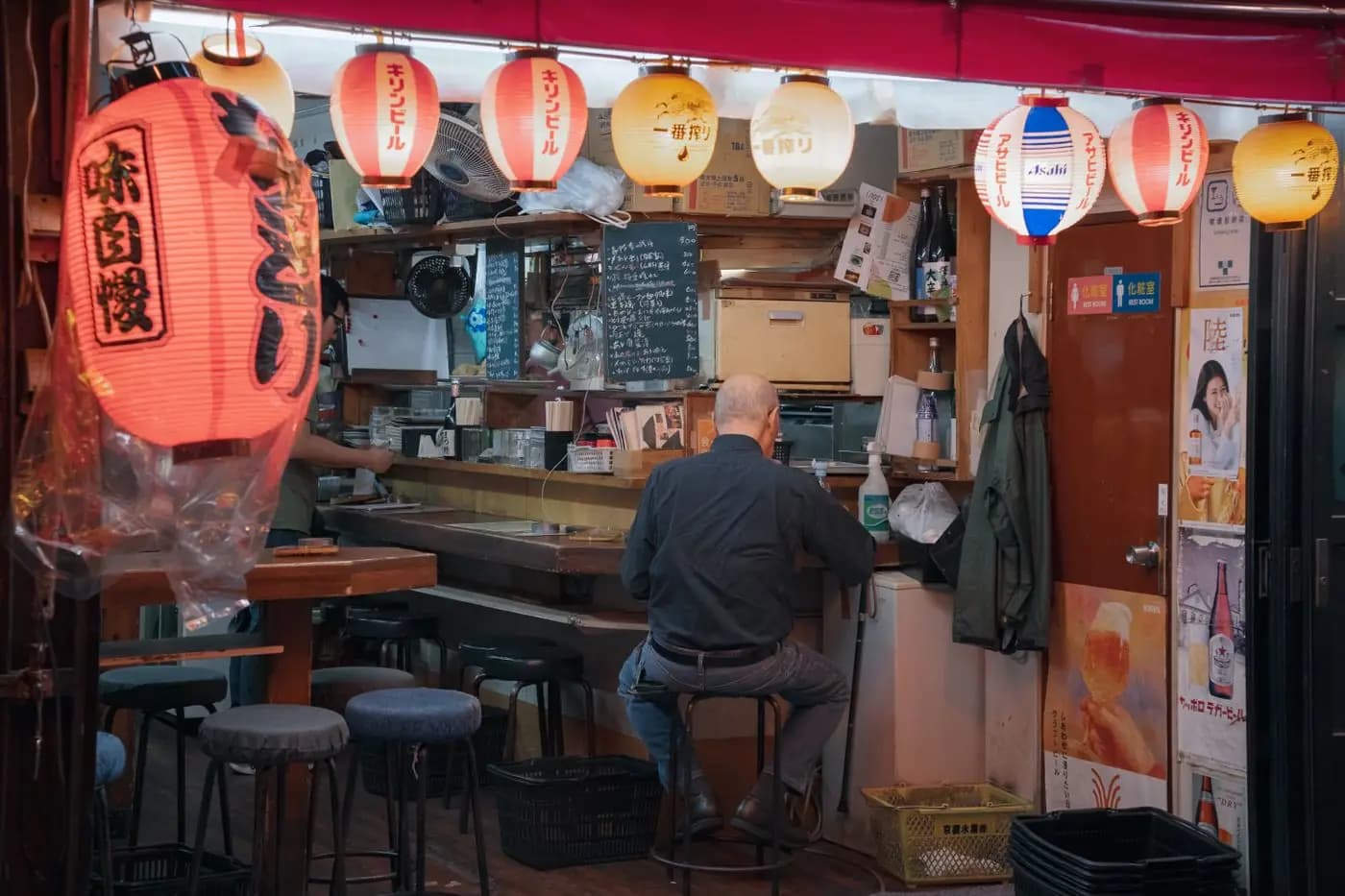
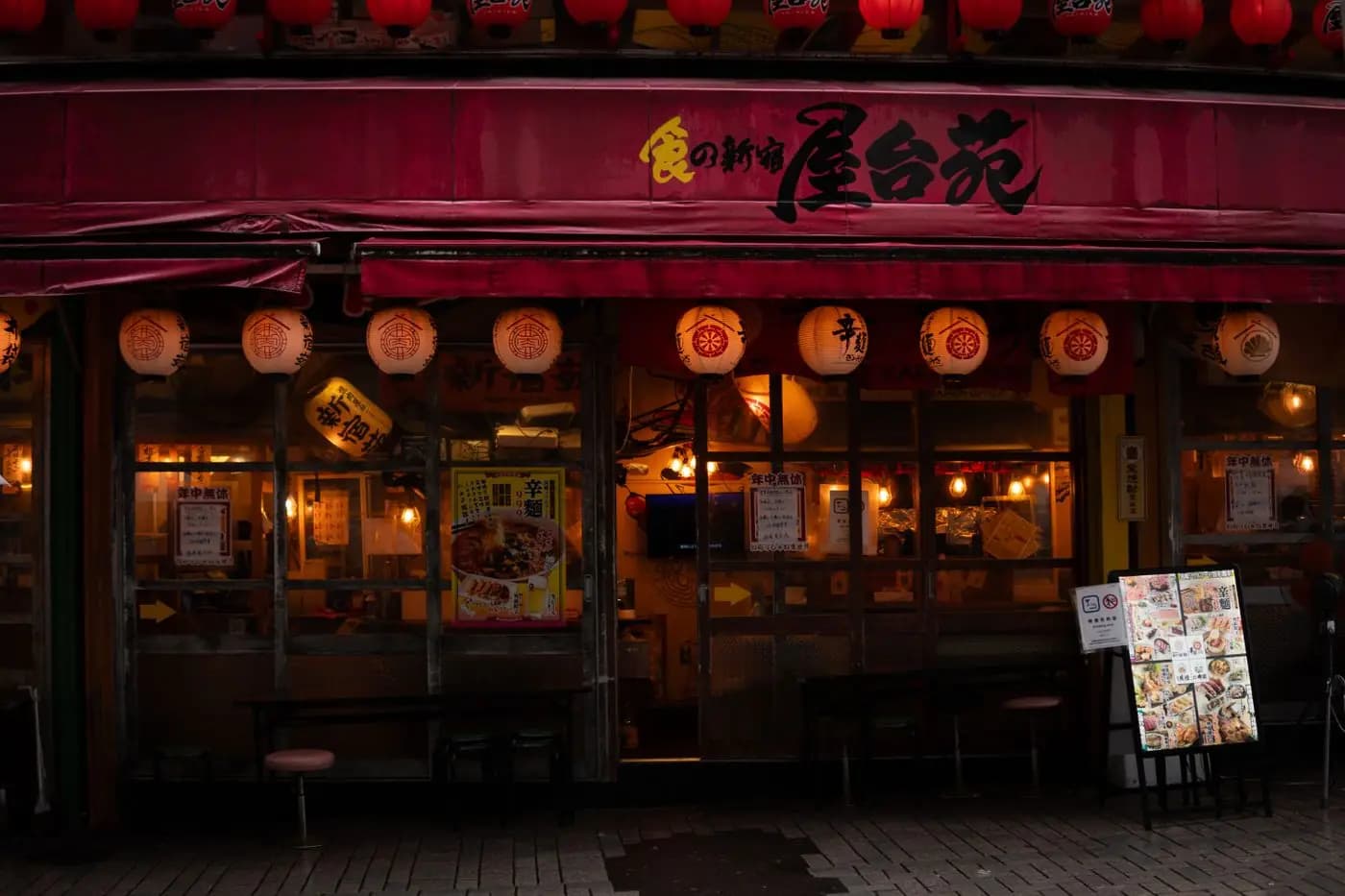
Japanese restaurants follow a very regular script. As you walk in, you are greeted with “irasshaimase!” and asked “nan-mei sama desu ka?” (how many people?).
On arrival:
- Hitori desu / futari desu / sannin desu: just me / two of us / three of us. You can also show the number with your fingers.
- Yoyaku shite imasu, [name] desu: I have a reservation under…
- Eigo no menyū wa arimasu ka?: do you have an English menu?
To order:
- Sumimasen!: to call the waiter, at normal volume, or use the call button on the table.
- Kore o kudasai: this one, please, pointing at the menu or photo.
- Kore o futatsu kudasai: two of these, please (hitotsu, futatsu, mittsu: one, two, three).
- Osusume wa nan desu ka?: what do you recommend?
- Mizu o kudasai: water, please (usually free).
- Nama biiru: draught beer, the most common order to start.
Diets and allergies, best prepared in writing if important:
- [food] arerugī ga arimasu: I am allergic to… (ebi, shrimp; kani, crab; komugi, wheat; tamago, egg; nyūseihin, dairy; pīnattsu, peanuts).
- Niku o tabemasen: I don't eat meat. Note that dashi stock often contains fish: add dashi mo dame desu if needed.
During and after the meal:
- Itadakimasu: before eating.
- Kanpai!: cheers!
- Oishii desu: it's delicious; a compliment that is always welcome.
- Okaikei onegai shimasu: the bill, please. You can also cross your index fingers in an X.
- Betsubetsu de ii desu ka?: can we pay separately? Often refused at busy times.
- Gochisōsama deshita: thank you for the meal, when leaving.
Shopping and paying: prices, tax-free shopping, bags
In shops, staff often speak some English in large chains, rarely in small boutiques. These phrases cover the essentials:
- Ikura desu ka?: how much is it?
- Kore wa arimasu ka?: do you have this? (showing a photo on your phone)
- Miteru dake desu: I'm just looking; useful when a sales assistant follows you around.
- Shichaku shite mo ii desu ka?: may I try it on?
- Motto ōkii / chiisai saizu wa arimasu ka?: do you have a bigger / smaller size?
- Kādo wa tsukaemasu ka?: do you take cards? Most shops now do, but small restaurants, temples and markets are often cash only.
- Genkin de: in cash.
- Fukuro wa irimasen: I don't need a bag. Plastic bags have cost a few yen since 2020.
- Menzei dekimasu ka?: can I shop tax-free?
- Ryōshūsho o kudasai: a receipt, please; essential for expense claims.
At the till, place your money or card on the small tray (karuton) rather than handing it over directly. Change is returned on the tray or into your hand, notes first.
As for tax-free shopping, the rules are changing: Japan plans to switch in November 2026 to a refund-at-departure system instead of tax-free purchases directly in store. Keep your passport with you and check the procedure in force at the time of your trip.
Asking for directions and getting around in Japanese
Japanese stations are well signposted in English, but exits, transfers and taxis can still surprise you. Phrases to keep handy:
- [place] wa doko desu ka?: where is…? With eki (station), toire (toilet), kaisatsu (ticket gates), [name] hoteru.
- Koko wa doko desu ka?: where are we? (showing the map on your phone)
- Aruite nan-pun desu ka?: how many minutes on foot?
- Kono densha wa [Kyōto] ni tomarimasu ka?: does this train stop at Kyoto?
- Nan-ban sen desu ka?: which platform? (sen: track)
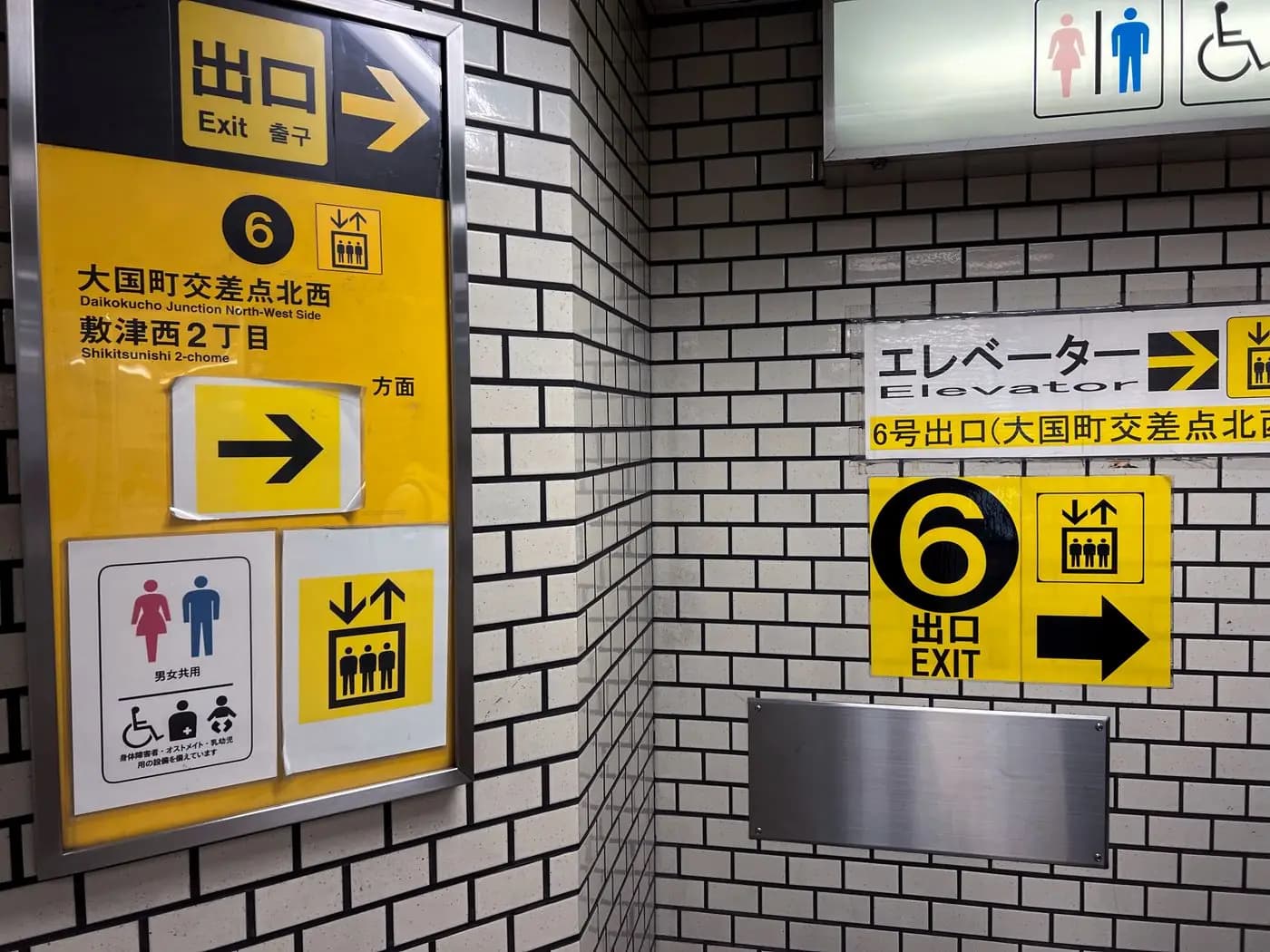
- [name] guchi wa doko desu ka?: where is the… exit? Big stations have north (kita-guchi), south (minami-guchi), east (higashi-guchi) and west (nishi-guchi) exits, sometimes 10 minutes apart.
- Michi ni mayoimashita: I'm lost.
The answers you will hear: migi (right), hidari (left), massugu (straight ahead), chikai (near), tōi (far), tsugi no shingō (the next traffic light).
In a taxi:
- [address] made onegai shimasu: to…, please. Showing the address written in Japanese is far more reliable than saying it.
- Koko de ii desu: here is fine (to stop).
- Toranku o akete kudasai: could you open the boot?
The rear left door opens and closes automatically: don't slam it. And when in doubt at a station, uniformed staff and tourist information offices with the “i” logo are always the best option.
Emergencies and health: phrases and numbers to know
Hopefully you will never need them, but these phrases belong on every participant's card.
The numbers:
- 110: police (keisatsu).
- 119: fire and ambulance (kyūkyūsha). The operator first asks “kaji desu ka, kyūkyū desu ka?”: fire or medical emergency?
- 050-3816-2787: the Japan Visitor Hotline of the Japan National Tourism Organization (JNTO), 24/7, in English, Chinese and Korean, for accidents, illness or natural disasters.
The phrases:
- Tasukete!: help!
- Kyūkyūsha o yonde kudasai: please call an ambulance.
- Keisatsu o yonde kudasai: please call the police.
- Byōin wa doko desu ka?: where is the hospital?
- Kibun ga warui desu: I don't feel well.
- [body part] ga itai desu: my… hurts (atama, head; onaka, stomach; mune, chest).
- Eigo o hanaseru hito wa imasu ka?: is there anyone who speaks English?
- Pasupōto o nakushimashita: I've lost my passport.
- Saifu o nusumaremashita: my wallet has been stolen.
- Jishin desu ka?: is it an earthquake?
For minor problems, pharmacies (yakkyoku or drugstores) sell most common medicines; showing the leaflet or active ingredient name helps a lot. For lost property, Japan is still a country where you very often get your belongings back: the nearest kōban (neighbourhood police box) is the first port of call.
The official Safety tips app, published by JNTO, sends alerts in English for earthquakes, tsunamis and weather warnings, with translated phrases for asking for help. It is worth installing before departure.
Translation apps and phrases for a group: the right approach
Translation apps have transformed travel in Japan. The most useful:
- Google Translate: camera mode instantly translates menus, signs and leaflets; conversation mode works well for simple exchanges. Download the offline Japanese pack before you leave.
- VoiceTra: a free app developed by NICT, a Japanese public research institute, designed for voice translation with travellers; many police officers, drivers and station staff use it.
- DeepL: excellent for translating a longer written message, an email or a specific request to a restaurant.
For machine translation to be understood, a few rules: short sentences, one idea per sentence, no idioms or irony, and always check by reading the back-translation. Showing the screen is often more effective than having the app speak aloud.
For a group, the method that works is deliberately simple:
- a credit-card-sized pocket card with about fifteen key phrases, the hotel address in Japanese, the guide's number and emergency numbers;
- each participant's allergies and diets translated in advance and sent to restaurants, rather than dealt with at the table;
- a five-minute mini-lesson on the coach on day one: arigatō gozaimasu, sumimasen, onegai shimasu, oishii, kanpai. Participants use them throughout the stay, and Japanese staff visibly appreciate it;
- a Japanese-speaking guide or tour leader for anything out of the ordinary.
This is the approach we use at SHINOGI DMC: the card is part of the travel booklet, and our guides take care of the rest.
Frequently asked questions
How do you say thank you in Japanese?
“Arigatō gozaimasu” is the polite form, usable everywhere. “Dōmo” or “dōmo arigatō” are quicker variants. After a service, “arigatō gozaimashita” (past tense) is common.
What does “sumimasen” mean?
It means “excuse me”, “sorry” and also “thank you” when someone has gone to trouble for you. It is also the word for calling a waiter or getting someone's attention.
Can you travel in Japan without speaking Japanese?
Yes. Transport, major hotels and tourist sites are signposted in English, and translation apps cover most situations. A few polite phrases and an address written in Japanese make daily life much easier, though.
What is the emergency number in Japan?
110 for police, 119 for fire and ambulance. JNTO's Japan Visitor Hotline (050-3816-2787) answers 24/7 in English for visitors.
What is the best translation app for Japan?
Google Translate for camera mode (menus, signs) and conversation, VoiceTra (free, developed by the public NICT institute) for voice translation, and DeepL for longer written messages.
How do you ask for the bill in Japanese?
“Okaikei onegai shimasu”. You can also cross your index fingers in an X while looking at the waiter. In many restaurants you pay at the counter near the entrance.
Rédaction SHINOGI DMC · Updated
Sources
- JNTO — Japan Visitor Hotline et conseils de sécurité
- NICT — VoiceTra (application officielle de traduction vocale)
- Agence du tourisme du Japon — Boutiques détaxées et passage au système de remboursement (リファンド方式)
- JNTO — Understanding and Mastering Japanese Manners and Etiquette
- JNTO — Préparer son voyage au Japon (inspiration)