How many days in Okinawa and where to stay
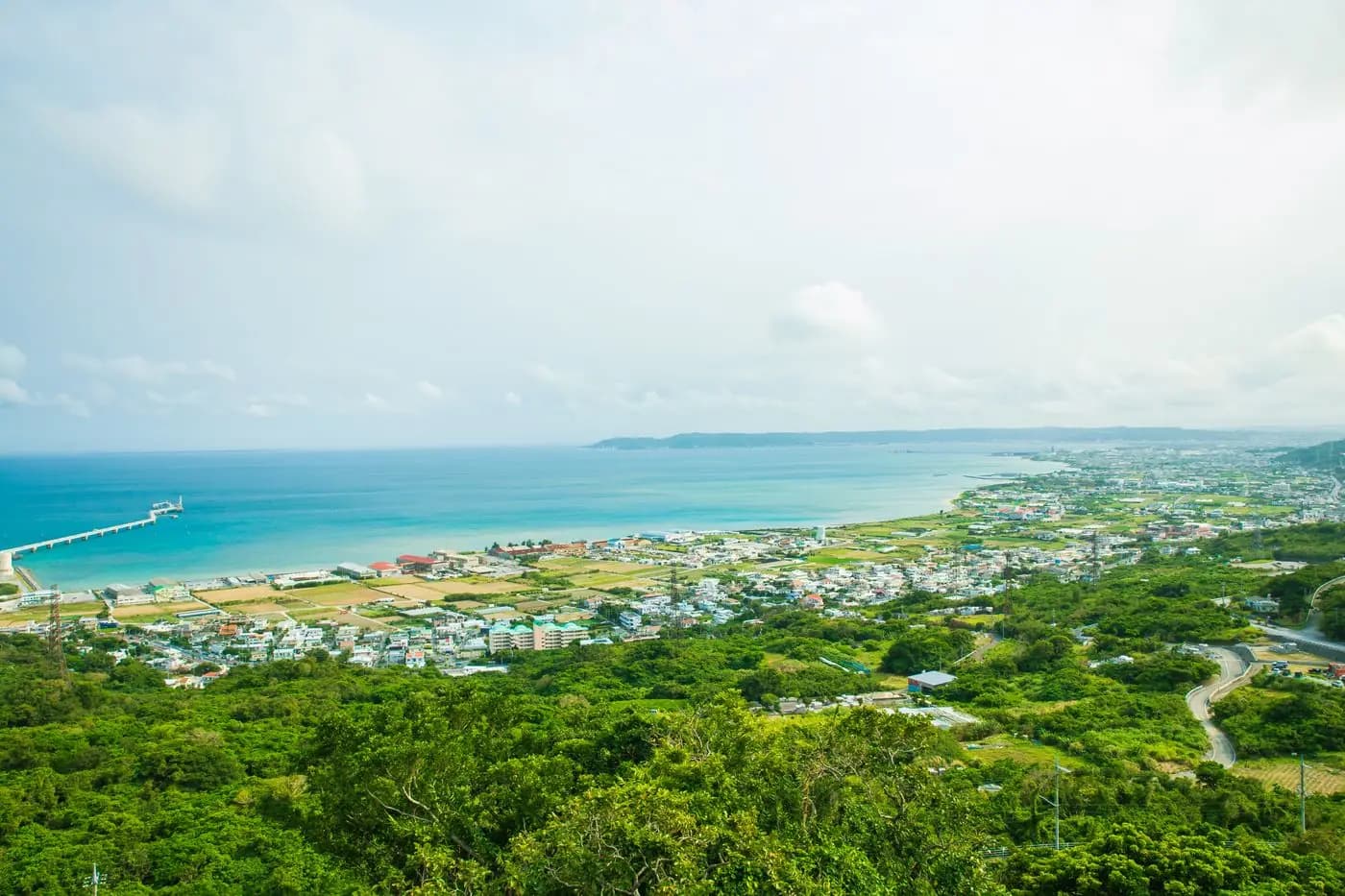
Okinawa's main island is about 100 km from north to south. Naha, the capital, is in the south; Churaumi Aquarium and the Motobu Peninsula in the north-west; the Yanbaru forests in the far north. Distances look short on the map, but traffic is slow: allow about 2 hours' drive between Naha and Motobu.
A balanced stay:
- 4 to 5 days: 1 or 2 nights in Naha (Shuri Castle, Kokusai-dori, the south of the island), 2 nights on the central west coast or in Motobu (aquarium, beaches, Kouri Island), and a day on the Kerama Islands.
- 3 days: Naha, a day north for the aquarium, a beach or snorkelling day on the Keramas.
Where to stay:
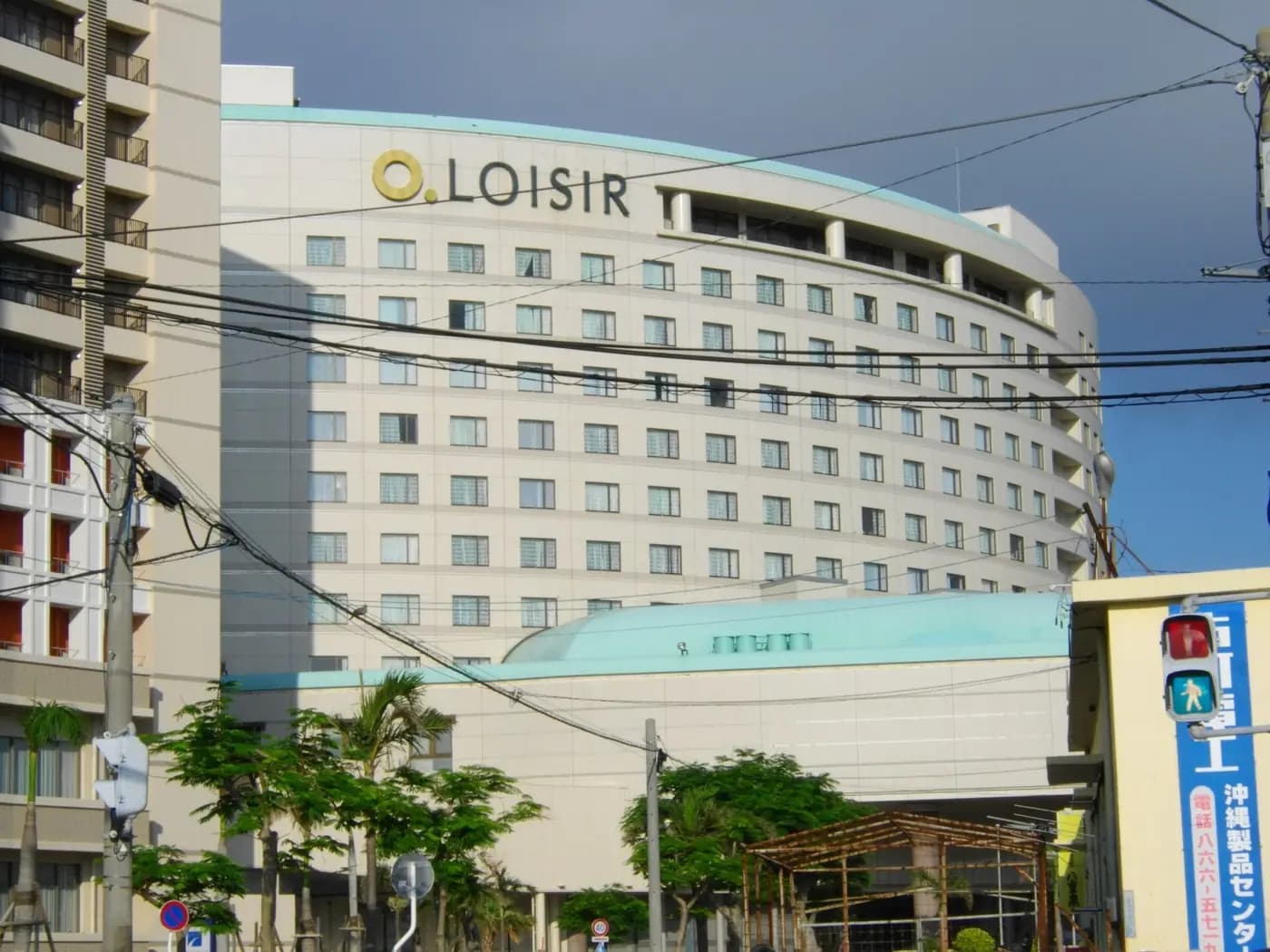
- Naha for nightlife, restaurants and boats to the Keramas.
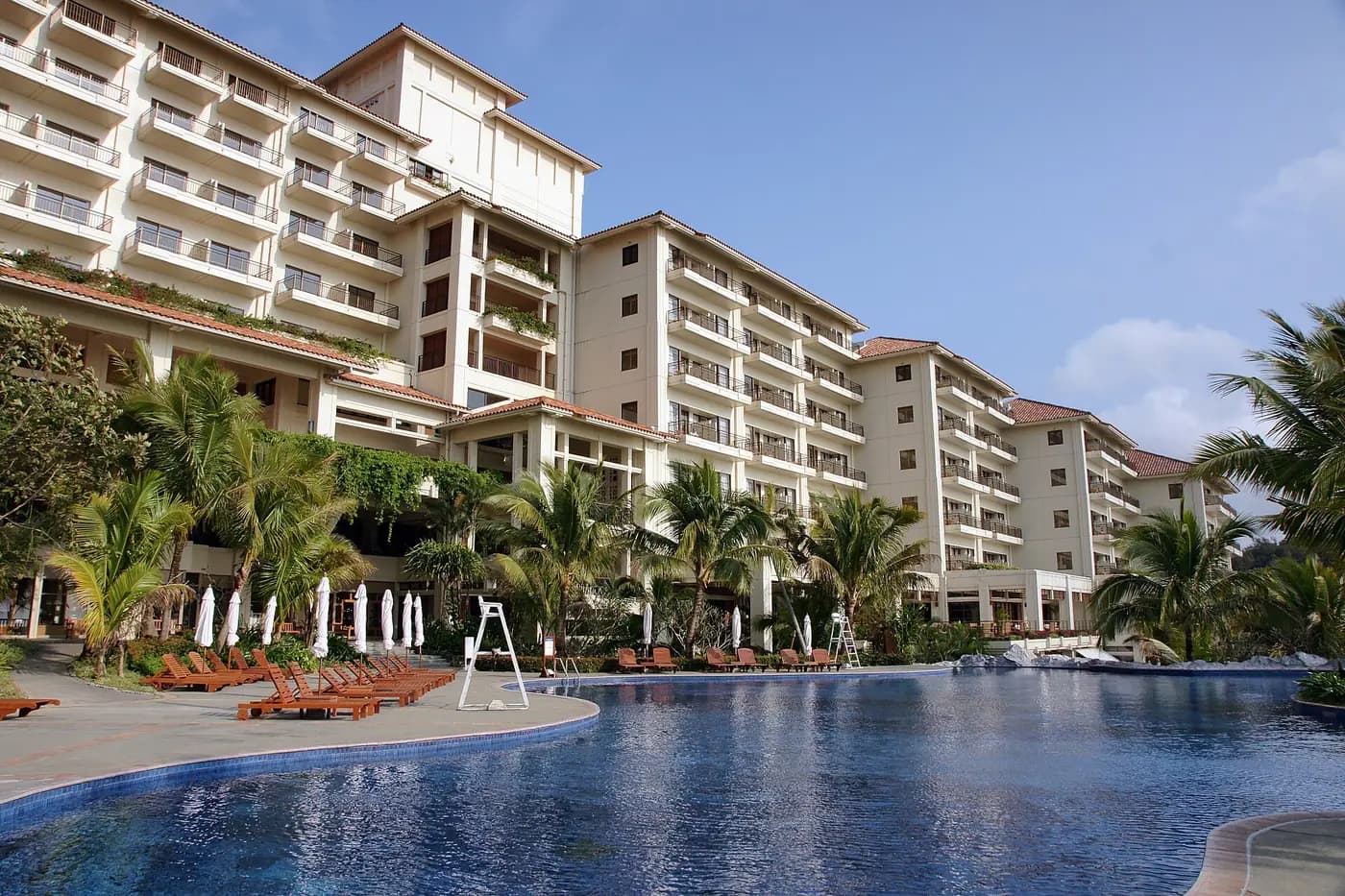
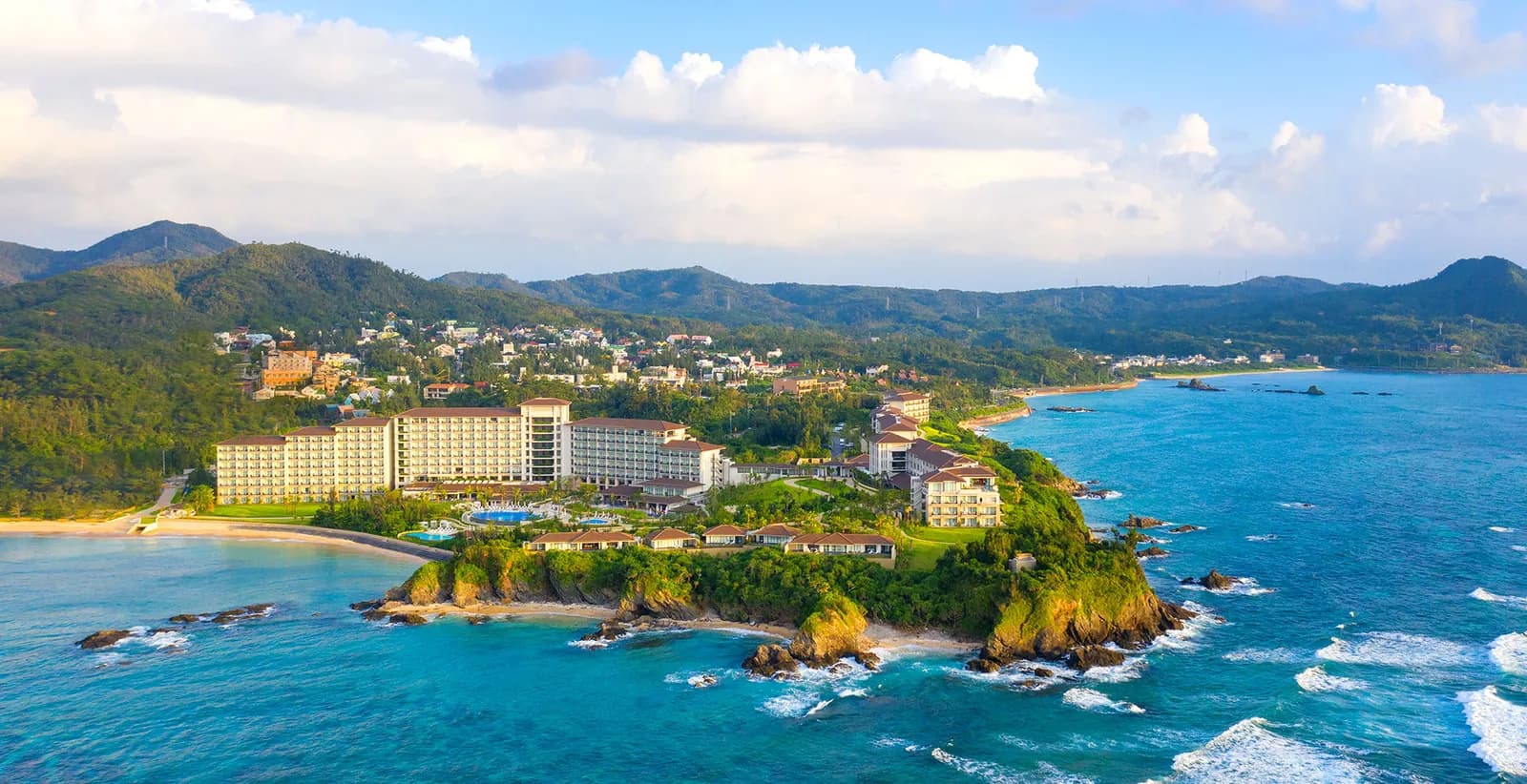
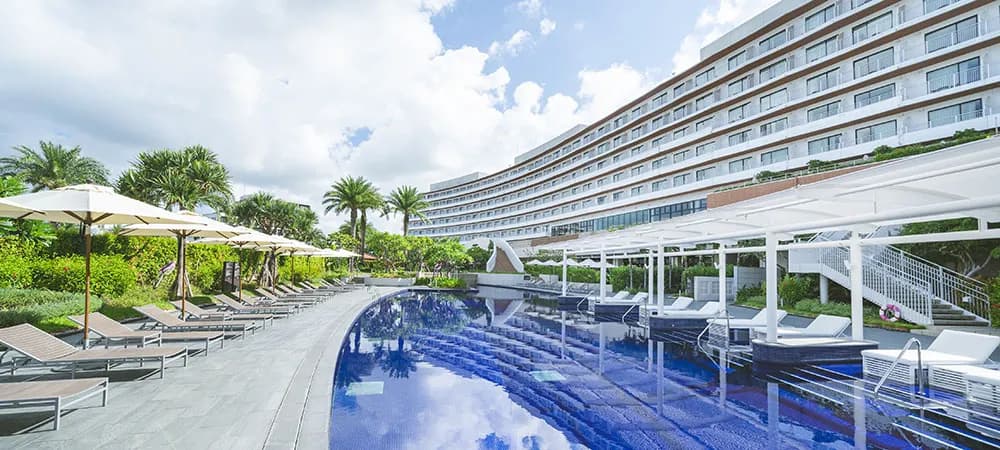
- The central west coast (Onna, Chatan, Yomitan) for beachfront resorts halfway between Naha and the aquarium. Chatan and its American Village are lively in the evening.
- Motobu and Nago in the north to be closest to the aquarium and the clearest beaches on the main island.
Changing hotel once during the stay, rather than driving Naha – Motobu and back in a day, saves a lot of time and fatigue.
Naha and Kokusai-dori: what to do in the capital
Kokusai-dori ("International Street") runs through central Naha for about 1.6 km. Rebuilt after the war, it is now lined with souvenir shops, awamori stores and restaurants, and is pedestrianised on Sunday afternoons. It is fine for a first evening, but the real interest is in the side streets:
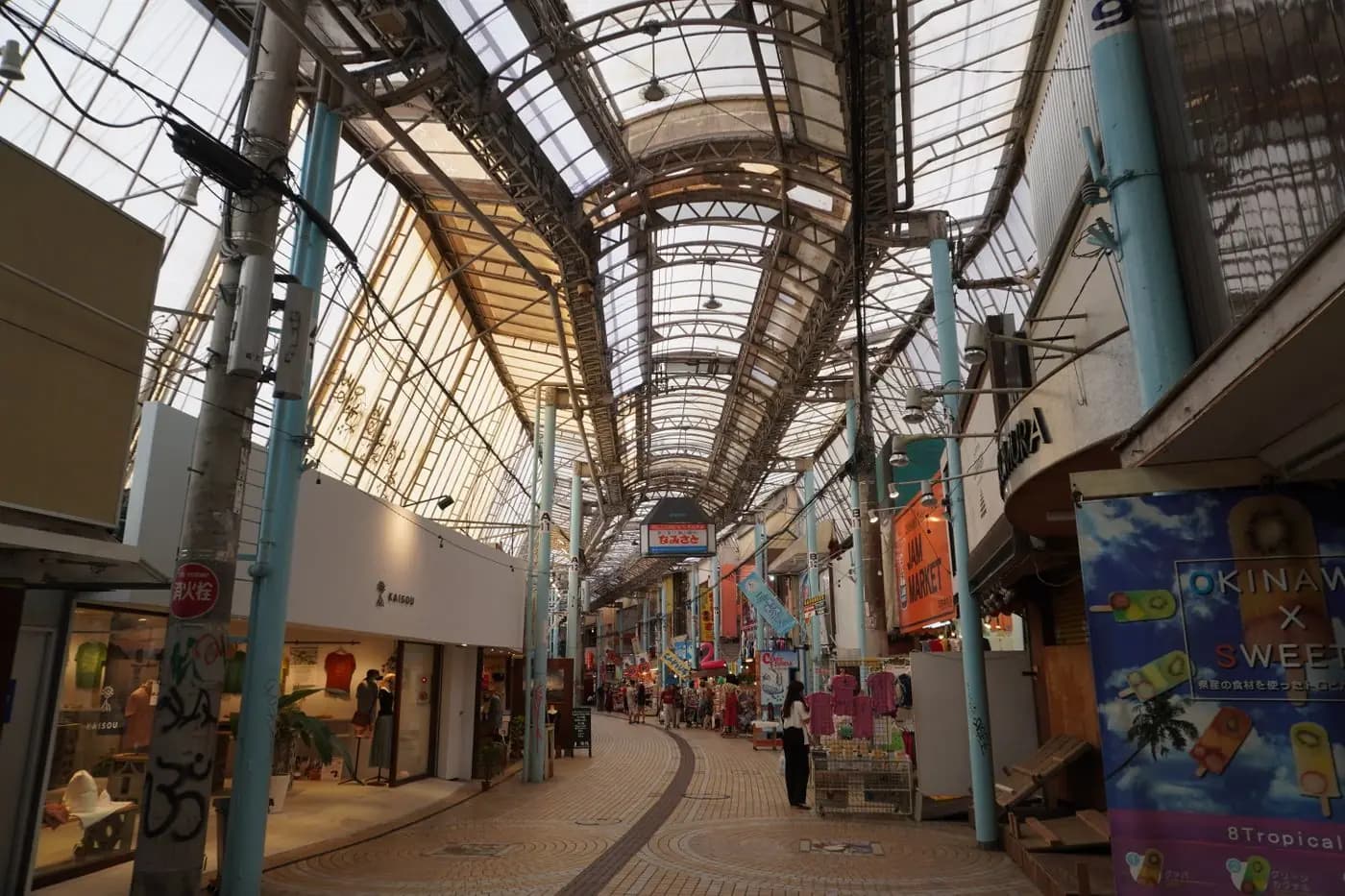
- Makishi Public Market, rebuilt and reopened in 2023: buy fish and seafood on the ground floor and a restaurant upstairs cooks it for a small fee. The tropical fish, blue, red and green, always surprise.
- The covered arcades (Heiwa-dori, Ichiba-hondori) branching off Kokusai-dori: grocers, clothes, small bars.
- Tsuboya pottery street, a 10-minute walk away, with its yachimun ceramic workshops and stone-paved lanes.
What to eat in Naha: Okinawa soba (wheat noodles in a pork and bonito broth), goya champuru (stir-fried bitter melon, tofu and egg), rafute (pork belly braised in brown sugar and awamori) and awamori, the islands' distilled rice spirit. In the evening, izakaya with live sanshin music, the three-stringed instrument covered in snakeskin, are a good introduction to local culture.
To get around, the Yui Rail monorail links the airport with central Naha in just under 20 minutes, then continues to Shuri.
Shuri Castle: where does the reconstruction stand?
Shuri Castle (Shuri-jo) was the seat of the Ryukyu Kingdom for more than 400 years, until its annexation by Japan in 1879. Destroyed in the Battle of Okinawa in 1945 and rebuilt in 1992, it burned again on the night of 31 October 2019: the main hall (Seiden) and several buildings were lost. The castle remains (foundations and walls) have been part of a UNESCO World Heritage Site since 2000, along with the island's other gusuku sites.
Where things stand in 2026 (official park website):
- The rebuilt Seiden opens to the public on 23 November 2026 at noon. The park is closed all day on 22 November and on the morning of the 23rd for the completion ceremony.
- Visits inside the Seiden are by reservation, in 30-minute slots, to limit numbers. Individuals buy tickets online (up to 9 per payment); from January 2027, sales open on the 1st of the month two months before the visit date.
- Prices rise on 23 November 2026: the paid area goes from ¥400 to ¥1,000 per adult (¥800 per person for 20 or more). The price is the same with or without a visit inside the Seiden.
- Hours from July to November: free area 8am–7:30pm, paid area 8:30am–7pm (ticket sales until 6:30pm).
Before the reopening, visitors could watch the reconstruction from walkways; it was a fascinating visit that explained the carpentry techniques and how the red roof tiles are made. Even without the Seiden, the Shureimon and Kankaimon gates, the curving walls and the view over Naha from the Iri-no-Azana are worth the trip. Allow 1 h 30 to 2 hours on site.
Churaumi Aquarium and the north of the island
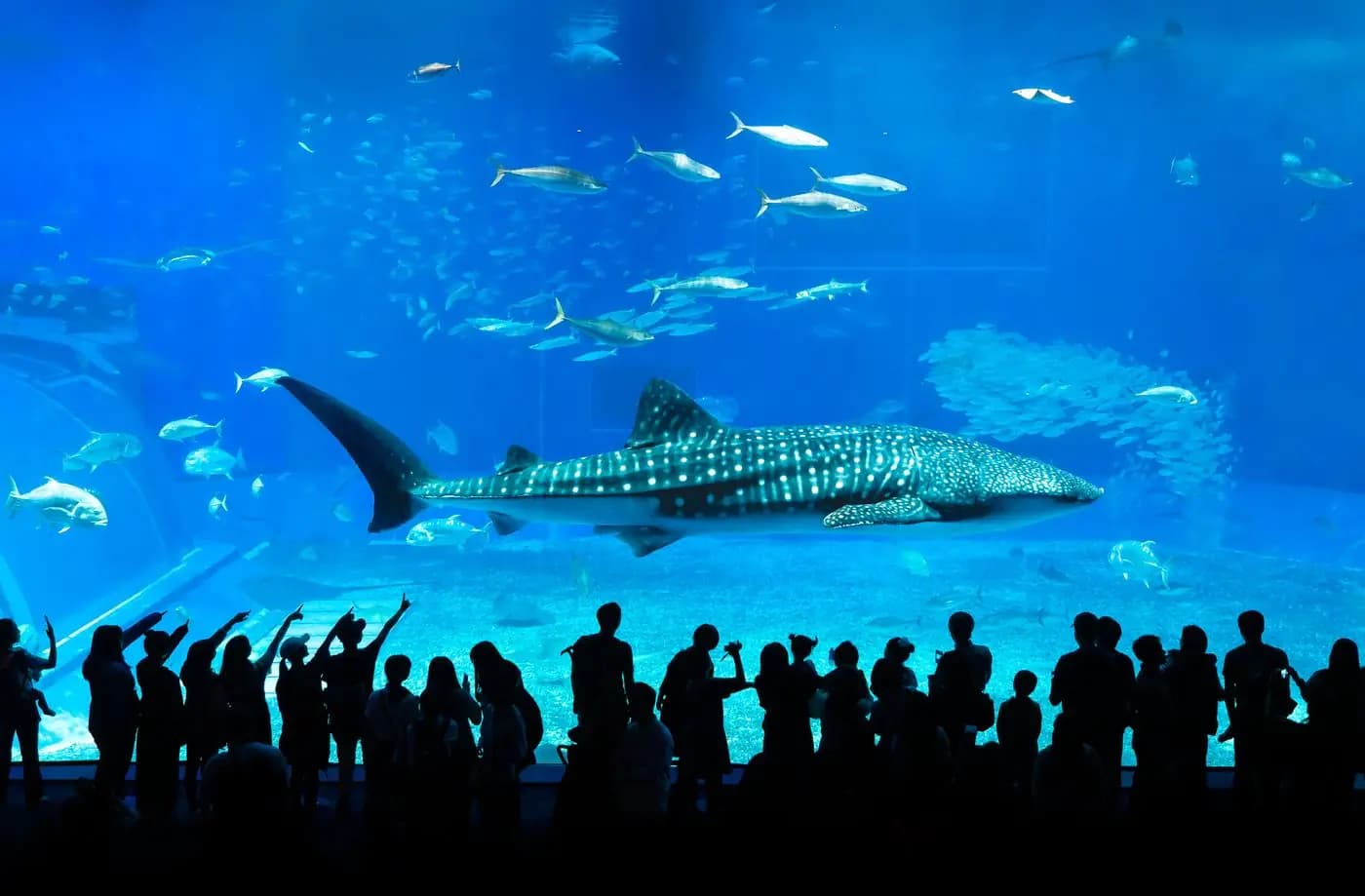
Churaumi Aquarium, in the Ocean Expo Park at Motobu, is the island's most popular sight. Its centrepiece, the Kuroshio Sea tank, holds whale sharks and manta rays behind a giant acrylic panel. The route goes from top to bottom: living coral reef, the Kuroshio current, then the deep sea.
Practical information (official site):
- Fees: ¥2,180 per adult, ¥1,440 for high-school students, ¥710 for primary and junior-high pupils; ¥1,730 per adult for groups of 20 or more.
- Hours: 8:30am–6:30pm, last entry 5:30pm, with extended hours in peak season. Extra closures are possible during typhoons.
- Time needed: 2 hours for the aquarium, more if you add the free dolphin shows at the Okichan Theater and the turtle and manatee pools outside.
- Crowds: 10am–2pm, especially during Japanese holidays. Arrive at opening time or after 4pm.
Nearby: Emerald Beach in the same park, the bridge and island of Kouri (20 minutes' drive), the ruins of Nakijin Castle (a UNESCO-listed gusuku site) and, further north, the subtropical Yanbaru forest, a natural World Heritage Site since 2021.
Without a car, express buses link Naha and the airport with the aquarium in about 2 h 30; day coach tours are a simple alternative.
Beaches and the Kerama Islands: where to swim and snorkel
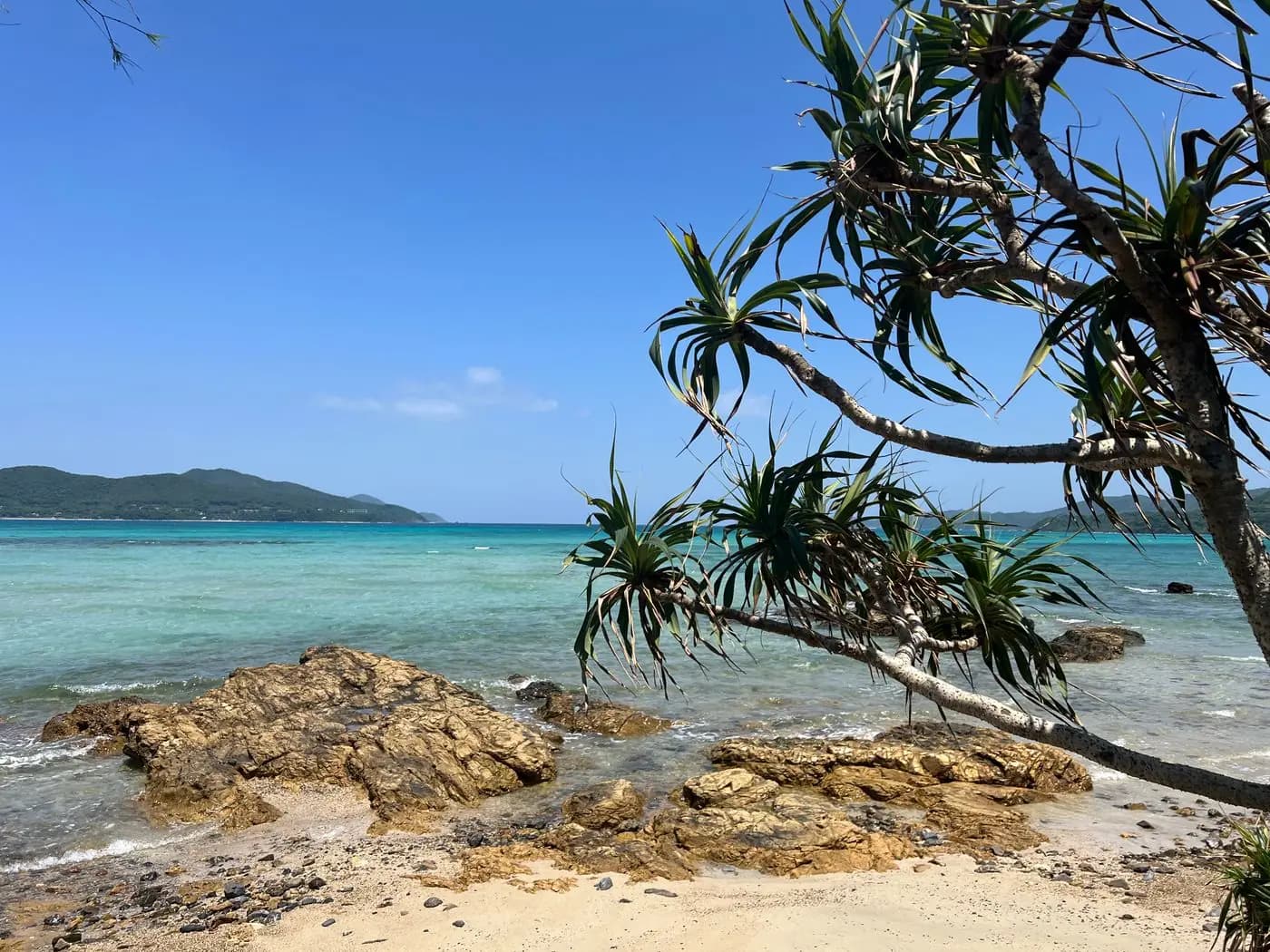
The swimming season runs roughly from April to October. On the main island, the nicest beaches are on the west coast and in the north: Emerald Beach in Motobu, the beaches of Kouri, Sesoko or Minna islands, and those of the Onna resorts.
A few rules that matter in Okinawa:
- Swim in lifeguarded areas, enclosed by nets. The nets keep out box jellyfish (habu-kurage), mostly present from June to September; equipped beaches put up a sign and keep vinegar for first aid.
- Do not walk on coral or take anything; wear water shoes on reefs.
- Currents: on unsupervised "natural" beaches, currents through gaps in the reef can be dangerous.
- Some isolated beaches collect plastic waste brought in by currents; managed beaches are cleaned regularly.
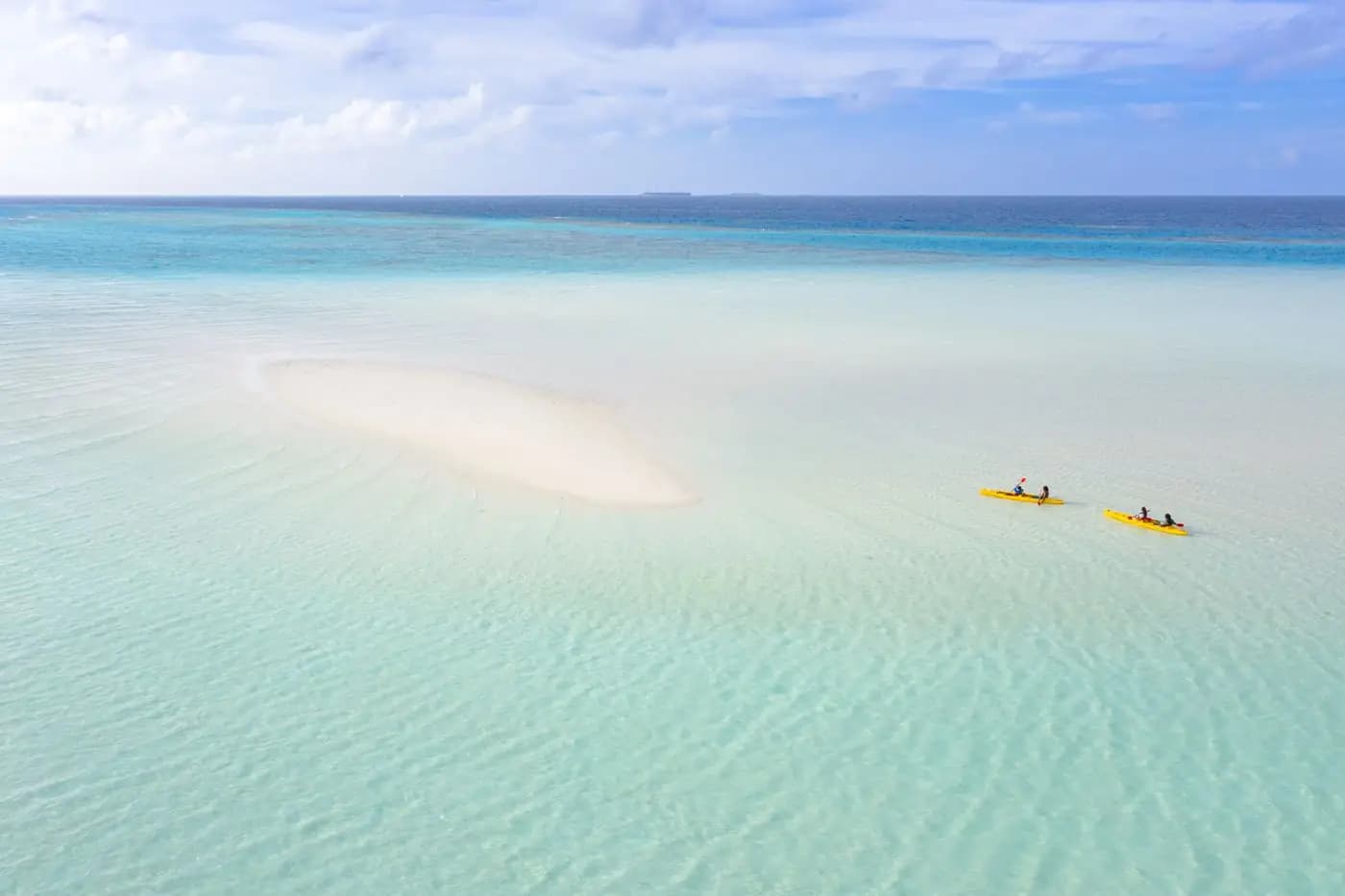
The Kerama Islands, west of Naha, have the clearest water easily reached from the capital. They have been a national park since 2014. From Tomari port, fast boats reach Tokashiki and Zamami in about 35 to 50 minutes, slower ferries in 1 h 30 to 2 hours. On the menu: white-sand beaches (Aharen, Furuzamami), snorkelling with sea turtles and, from January to March, humpback whale watching, as the whales come to calve in these waters. Fast-boat seats are limited: book as soon as your dates are set, especially in summer.
Ryukyu culture, car rental and the best season
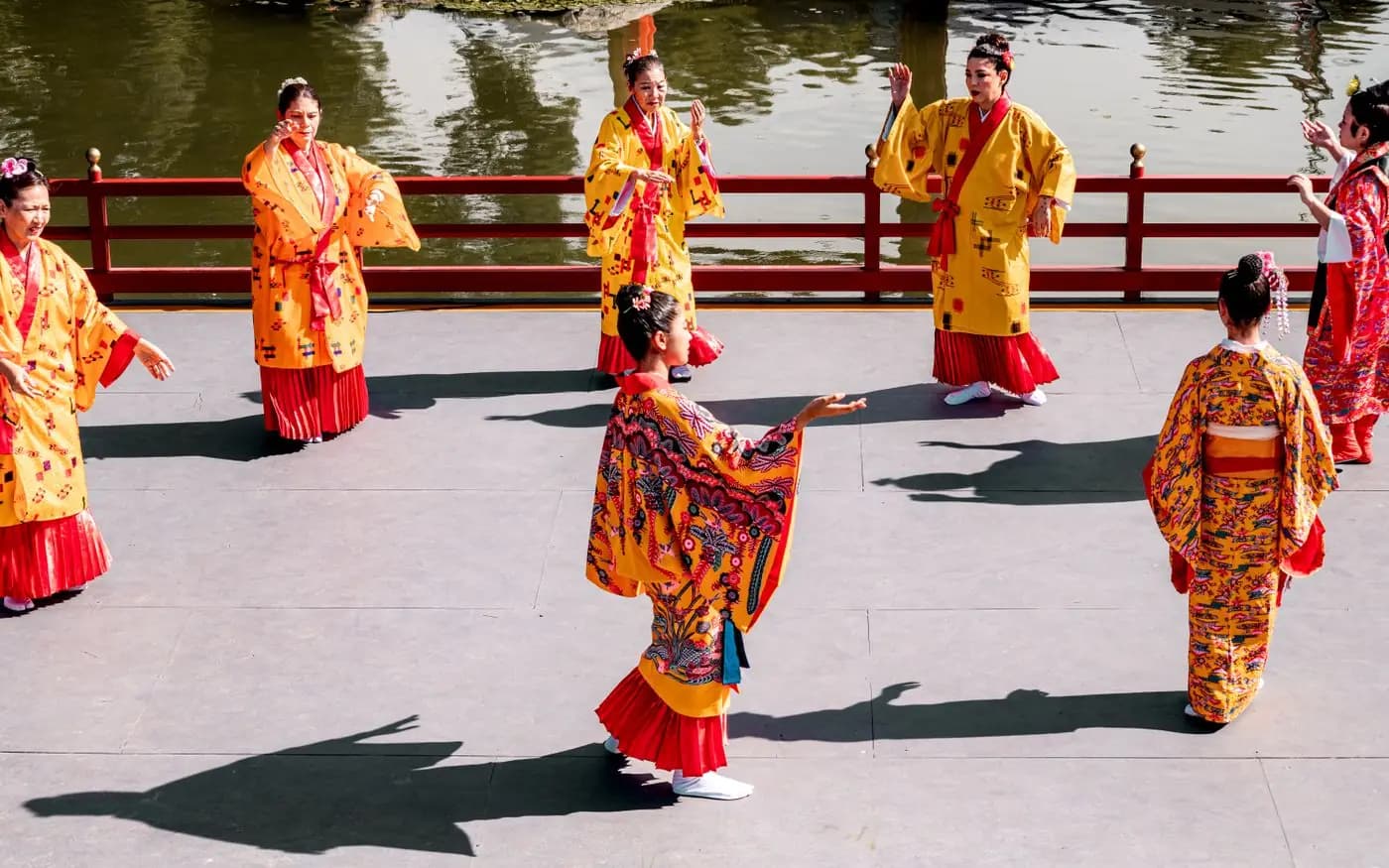
Ryukyu culture. Okinawa only became part of Japan in 1879; before that, the Ryukyu Kingdom traded with China, Korea and South-East Asia. You can see it in the architecture (red-tiled roofs, shisa lions on the rooftops), sanshin music, eisa drum dancing (mostly in summer, around the Bon festival), the food and sacred places such as Sefa-utaki in the south-east, where only women once officiated. The south of the island also keeps the memory of the 1945 Battle of Okinawa: the Peace Memorial Park in Itoman and the Himeyuri Peace Museum deserve the same respect as Hiroshima.
Car rental. Outside Naha, public transport is slow and infrequent. To rent a car:
- an International Driving Permit under the 1949 Geneva Convention, in addition to your national licence;
- traffic drives on the left; the speed limit on the Okinawa Expressway is 80 km/h;
- rush-hour jams in Naha (7:30–9am and 5–7pm) are severe; some lanes are reserved for buses at those times;
- an ETC card (electronic toll) can be rented with the car and makes the expressway easier.
The best season.
- April – early May: warm but not too hot, sea swimmable by late April, before the rainy season (watch out for Golden Week).
- May – June: rainy season, earlier than in the rest of Japan, usually until late June.
- July – September: strong sun and heat, but the peak of typhoon season, which can ground planes and boats for two or three days.
- October – November: pleasant temperatures, sea still warm in October, typhoons increasingly rare.
- December – March: 15 to 20°C, no swimming, but whales in the Keramas and early cherry blossom from late January in the north.
Okinawa with a group: incentives, seminars and logistics
Okinawa is one of the most requested incentive destinations in Japan: direct flights from Tokyo (about 2 h 30) and Osaka (about 2 hours), large resorts with meeting rooms, beaches and water sports. A few rules for a successful group stay:
- A private coach rather than cars. Beyond 8 to 10 people, rental cars multiply the risks (international permits, left-hand driving, parking). A coach with a guide makes everything simpler and lets people enjoy a glass of awamori in the evening.
- Book the aquarium. Churaumi takes group reservations from 180 days to 7 days before the visit, in 15-minute slots between 8:45am and 5pm. A booking does not guarantee no waiting at peak times.
- Shuri Castle. Since the Seiden reopened, groups visit the interior by lottery via a booking form; even without an interior visit, the park asks groups to register in advance. Applications open several months ahead (for example 1–7 October 2026 for visits in February 2027).
- A chartered boat for the Keramas. For 30 people or more, chartering a boat from Naha or a west-coast port avoids fixed timetables and lets you combine snorkelling, a beach and lunch on an island.
- Typhoon plan B. From July to October, set out cancellation terms in the contract and keep an indoor fallback (yachimun pottery workshop, sanshin lesson, awamori distillery visit, Ryukyu dinner show).
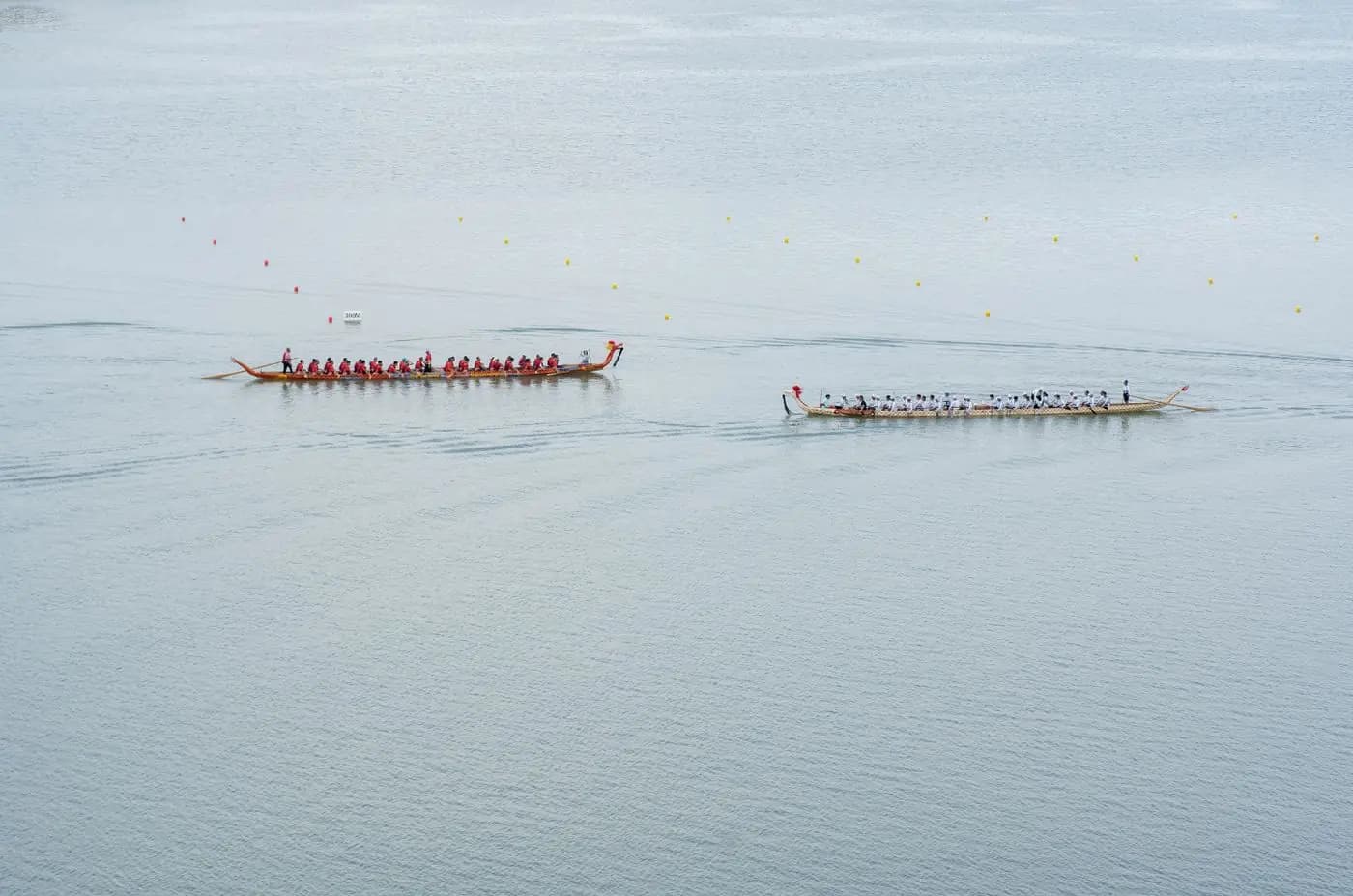
- Team activities. A haari race (traditional dragon boats), kayaking in the mangroves, beach olympics or an introduction to eisa.
SHINOGI DMC organises seminars and incentives in Okinawa, from Naha to the west-coast resorts, coordinating flights, lodging, transport, activities and weather fallback plans.
Frequently asked questions
Is Shuri Castle open in 2026?
Yes. The park and paid area remain open, and the rebuilt main hall (Seiden) reopens to the public on 23 November 2026, with interior visits by reservation in 30-minute slots.
How much does Churaumi Aquarium cost?
¥2,180 per adult, ¥1,440 for a high-school student, ¥710 for primary and junior-high pupils, and ¥1,730 per adult for groups of 20 or more.
Do you need to rent a car in Okinawa?
To get out of Naha, it is almost essential. You need an International Driving Permit (1949 Geneva Convention) and traffic drives on the left. For a group, a private coach is simpler.
When is the best time to visit Okinawa?
April to early May and October–November. The rainy season lasts from May to late June, and typhoons are possible from July to October.
How do you get to the Kerama Islands from Naha?
By boat from Tomari port: about 35 to 50 minutes by fast boat to Tokashiki or Zamami, 1 h 30 to 2 hours by ferry.
Is Okinawa suitable for a company trip?
Yes: direct flights from Tokyo and Osaka, resorts with meeting rooms and plenty of team activities. Plan a typhoon fallback from July to October. SHINOGI DMC can organise the whole stay.
Rédaction SHINOGI DMC · Updated
Sources
- Shuri Castle Park — Révision des tarifs et réservation du Seiden (31/07/2026)
- Shuri Castle Park — Ouverture du Seiden au public le 23 novembre 2026
- Shuri Castle Park — Tarifs d'entrée
- Shuri Castle Park — Site officiel (horaires, actualités)
- Okinawa Churaumi Aquarium — Tarifs (入館料金)
- Okinawa Churaumi Aquarium — Hours
- Okinawa Churaumi Aquarium — Réservations de groupe
- Kanpai — Okinawa (inspiration)