Hanami: how to make the most of cherry blossom season
Hanami, literally flower viewing, is the Japanese tradition of gathering under blossoming cherry trees to picnic, drink and chat. It dates back more than a thousand years to the imperial court; today colleagues, families and students fill the parks for one or two weeks a year.
We cover dates by city in our guide to the best time to visit Japan. Here, the aim is choosing where to go and how to go about it. Three principles guide the choice:
- Day or night. Many spots are lit up in the evening (yozakura). The mood changes completely, and so do the crowds: the Meguro River at 7 p.m. is packed, Maruyama Park at 9 p.m. turns into a big street party.
- Picnic or stroll. Some places are made for sitting (Ueno, Shinjuku Gyoen, Maruyama, Osaka Castle Park); others are streets or paths where you keep walking (Meguro, the Philosopher's Path).
- Crowds. A famous spot on a full-bloom Saturday at 2 p.m. is one continuous queue. The same place on a Tuesday at 7 a.m. is a moment of calm. If you remember one tip, make it this one: go early.
Allow about a week between the first flowers opening and full bloom, then a few days at peak before the petals fall like snow, which has its own charm. One night of wind or rain can cut the season short: keep your programme flexible.
Where to see cherry blossoms in Tokyo: Ueno, Meguro, Shinjuku Gyoen, Chidorigafuchi
Ueno Park. About 800 cherry trees, including a long central avenue lined with lanterns, and a festival with food stalls. This is the big party hanami spot: during the season you can sit on a tarp in designated areas from 5 a.m. to 11 p.m. The rules are precise: no unattended spot-saving, no spot-reservation companies; no fire, tables, chairs, musical instruments or karaoke; take rubbish home. On Saturdays, the best spots are taken at dawn.
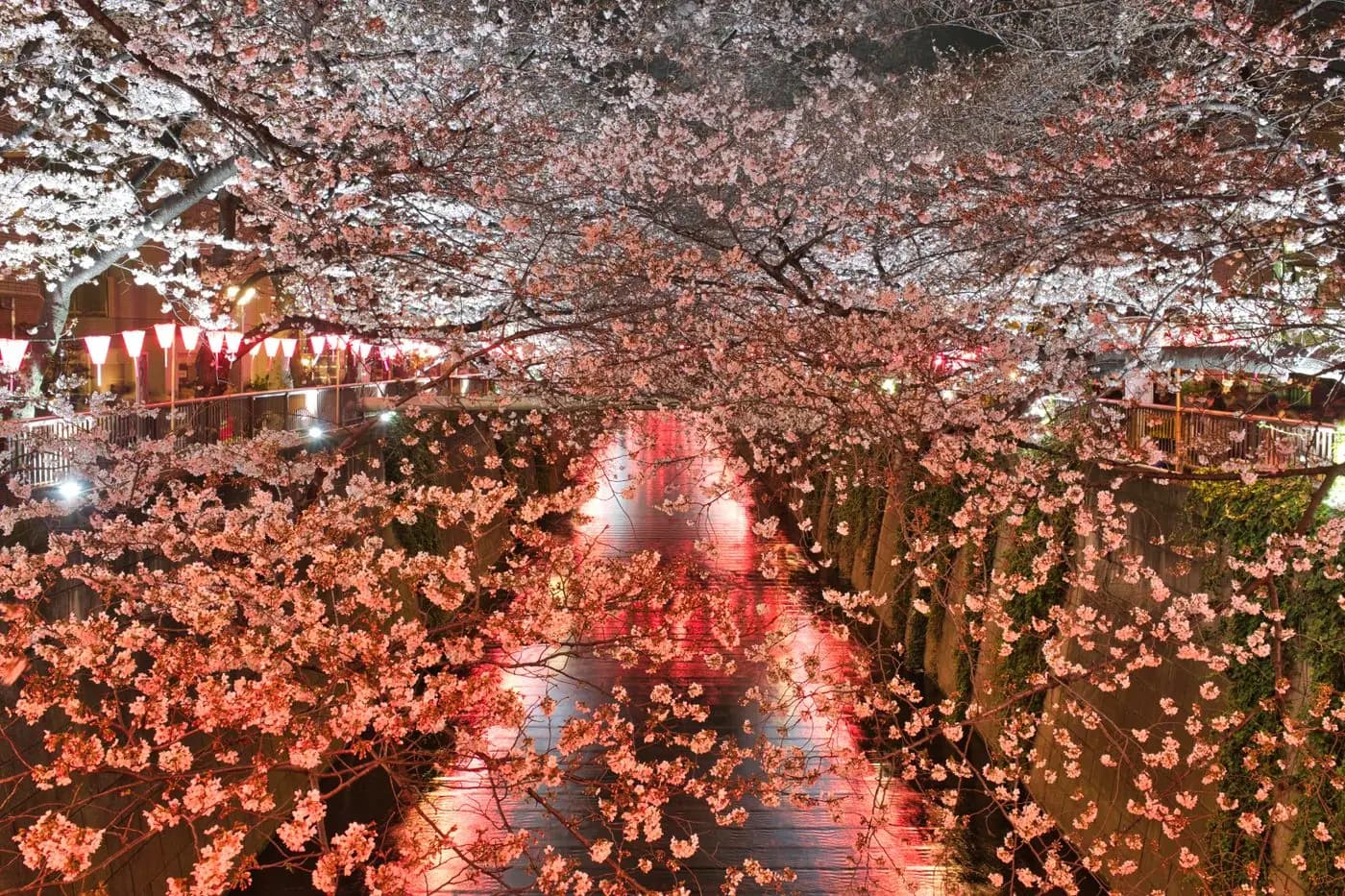
Meguro River (Nakameguro). About 800 trees along 3.8 km of both banks, their branches meeting above the water. The most photographed stretch lies between Nakameguro and Ikejiri-Ohashi stations. No picnics here: it is a walk along a canal, with stalls selling drinks and snacks. The evening illuminations draw huge crowds; come before 8 a.m. to walk freely.
Shinjuku Gyoen. A 58-hectare national garden with more than 1,000 cherry trees of many varieties, early and late, which spreads the bloom over several weeks. Entry 500 yen, open 9 a.m. to 6 p.m. in spring. The rules are strict: alcohol banned, bags checked at the entrance during the season, no play equipment. In recent years, timed advance reservations have been required on full-bloom weekends: check the official website. It is the best place for a quiet picnic with children or colleagues who are not party-minded.
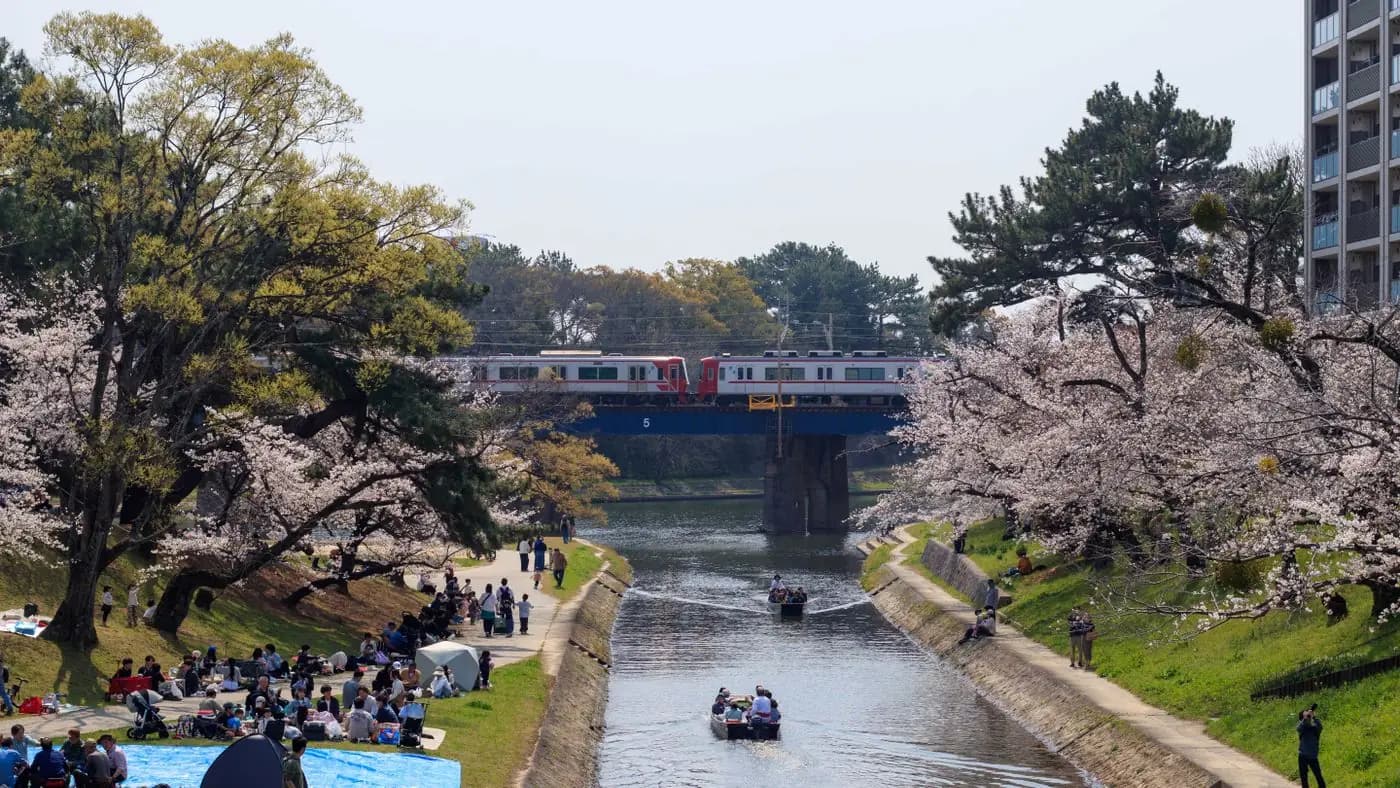
Chidorigafuchi. The north-western moat of the Imperial Palace, lined with cherry trees leaning over the water. You can rent a rowing boat to pass under the branches, with a long wait at peak times. A lovely walk that continues to Kitanomaru Park and Yasukuni Shrine, home to Tokyo's official reference tree.
If time allows: Sumida Park at the foot of the Skytree, and a cruise on a traditional houseboat (yakatabune) on the Sumida River.
Where to see cherry blossoms in Kyoto: Philosopher's Path, Maruyama, Arashiyama, Daigo-ji
Kyoto is the hanami city par excellence, and the busiest. The dawn rule applies here more than anywhere.
The Philosopher's Path. About 2 km along a small canal between Ginkaku-ji and the Nanzen-ji area, lined with about 400 cherry trees. Fallen petals form a pink carpet on the water at the end of the bloom. You walk it in 30 to 40 minutes, ideally north to south, stopping at small cafés and quiet temples. At 7 a.m. it is almost empty; at 11 a.m. you shuffle along.
Maruyama Park. Kyoto's oldest public park, behind Yasaka Shrine, has about 680 cherry trees. Its great weeping cherry, the Gion shidarezakura, is lit up at night. This is Kyoto's party hanami spot: tarps, stalls, groups of colleagues. It combines easily with Gion and the Shirakawa lane, also lined with cherry trees along the water.
Arashiyama. West of the city, the wooded hills fill with wild cherry trees around Togetsukyo Bridge. More perspective, more space, but big crowds in the afternoon. The Sagano Romantic Train or a boat on the Hozu River offer other viewpoints.
Daigo-ji. In the south-east, this large World Heritage temple has been famous since Toyotomi Hideyoshi's lavish hanami there in 1598. Its weeping cherries often bloom a few days before the rest. Paid entry, higher in spring.
Also worth adding: the garden of Heian Shrine with its weeping cherries, the Okazaki canal (boat rides in spring), and Nijo Castle, lit up on some evenings.
Osaka and around: Osaka Castle, Kema Sakuranomiya, Himeji
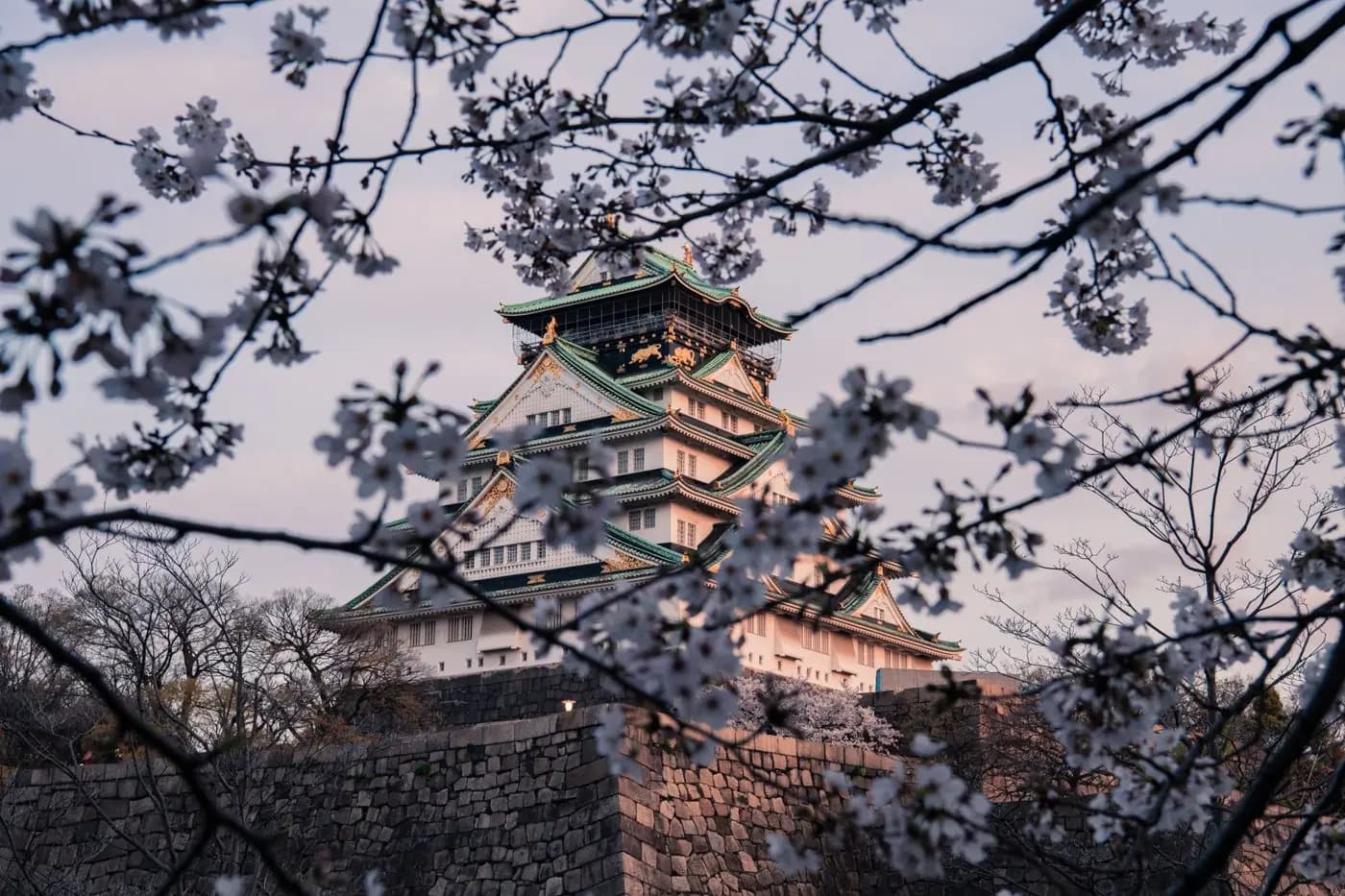
Osaka Castle Park. About 3,000 cherry trees around the keep and moats. The paid Nishinomaru Garden holds about 300 of them, with the best view of the castle; during the season it opens in the evening with illuminations until 9 p.m. It is a favourite with local companies for evening hanami. The rest of the park, free, hosts picnics on large lawns.
Kema Sakuranomiya Park. Along the Okawa River, north of the castle, thousands of cherry trees line both banks for several kilometres. You can walk it, cycle it, or see it from a river cruise boat. Much more space than at the castle, and a good choice for a group walk.
The Japan Mint (Zoheikyoku). Every spring, for about a week, the Mint opens to the public a lane of a few hundred metres planted with more than 100 cherry varieties, often double-flowered and later-blooming. In recent years, entry has required advance registration: check from March.
Expo '70 Commemorative Park. In Suita, north of the city, about 5,500 cherry trees around the Tower of the Sun: plenty of space, ideal for a large-group picnic.
Himeji. Thirty minutes by Shinkansen from Shin-Osaka, the white World Heritage castle of Himeji is surrounded by about 1,000 cherry trees. A half-day trip combining one of Japan's finest castles with hanami.
And Nara, 45 minutes from Osaka, adds the cherry trees of Nara Park, with its deer, and Kofuku-ji temple.
Beyond the big cities: Yoshino, Hirosaki and other legendary spots
Yoshino (Nara Prefecture). Japan's most famous cherry blossom site for centuries: about 30,000 trees, mostly wild cherries, tiered up a sacred mountain in four zones, Shimo Senbon (lower), Naka Senbon, Kami Senbon and Oku Senbon (highest). The bloom climbs gradually from early to late April, which leaves a margin against surprises. Access in 1 h 15 to 1 h 30 from Osaka (Abenobashi station) by Kintetsu train, then ropeway or shuttle. In peak season, roads are closed to private cars and tour coaches must book parking.
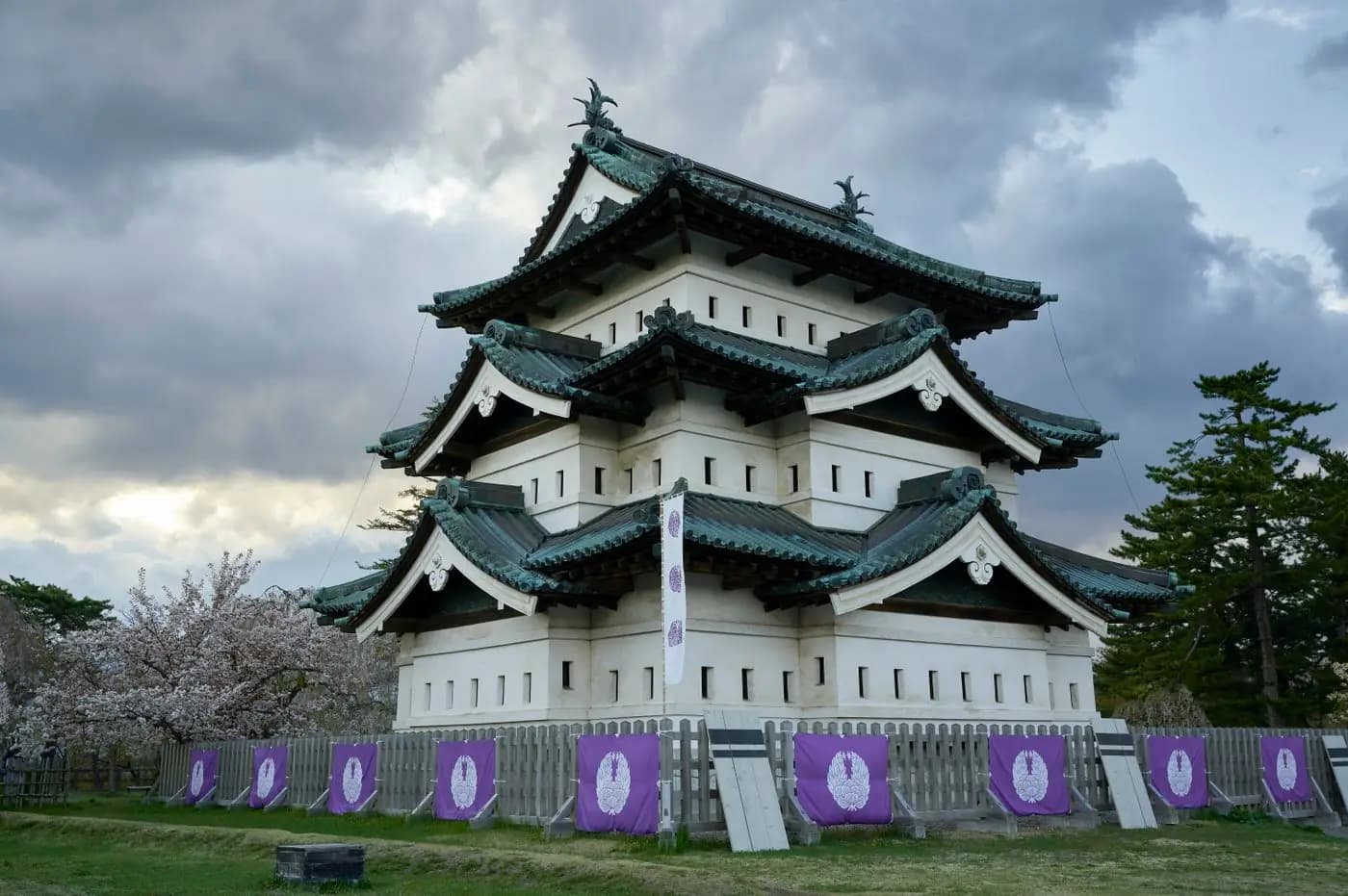
Hirosaki (Aomori Prefecture). In northern Honshu, Hirosaki Castle Park gathers about 2,600 cherry trees of 52 varieties around an original keep and moats where petals form a pink carpet (the famous hanaikada). The bloom runs from mid-April to early May, and the cherry blossom festival draws hundreds of thousands of visitors. In 2026 it was brought forward and held from April 10 to May 5, a sign that early blooms are becoming more common. Allow about 3 h 15 from Tokyo by Shinkansen to Shin-Aomori, then 30 to 40 minutes by train.
Other places worth the journey:
- Takato (Nagano): about 1,500 cherry trees of a deep pink variety around castle ruins.
- Kakunodate (Akita): weeping cherries in front of samurai houses.
- Lake Kawaguchi: cherry blossoms and Mount Fuji, usually mid-April.
- Fukuoka: Maizuru Park around the castle ruins, often in bloom before Tokyo.
- Okinawa: cherries of another species, bright pink, bloom from late January.
If your dates are set long in advance, a route heading north or up into the mountains is the best insurance for seeing flowers.
Hanami etiquette and bloom forecasts
Hanami has its rules, often posted at park entrances, and the Japanese take them seriously. The main ones:
- Don't touch the trees. No shaking or breaking branches, no climbing, no leaning against trunks. Cherry tree roots are fragile: avoid trampling around their base.
- No unattended spot-saving. In many parks, a tarp left alone is removed. Someone must stay at all times.
- No fire. Barbecues and stoves are banned in most parks.
- Take rubbish home, or sort it at designated collection points, depending on the park.
- Alcohol depends on the place: tolerated at Ueno or Maruyama, banned at Shinjuku Gyoen. Keep noise moderate; amplified music is banned.
- Toilets: queues are long at peak. Locate them when you arrive.
- Shoes: take them off before stepping onto the tarp, as in a home.
For forecasts, the Japan Meteorological Agency declares the official opening (kaika) when five or six flowers have opened on each city's reference tree, for example at Yasukuni Shrine in Tokyo, and full bloom (mankai) when about 80% of buds are open. The forecasts themselves are published by private weather companies (Weathernews, the Japan Weather Association via tenki.jp, Japan Meteorological Corporation) from late January and updated weekly. Their maps show bloom stage spot by spot: the tool to check in the days before going out.
Organising a company or group hanami
In Japan, the company hanami is a tradition: in spring, new recruits are often tasked with holding the spot from the morning for the evening picnic. A foreign group can borrow the idea without spending the day sitting on a tarp.
Formats that work:
- An organised picnic in a park where it is allowed (Ueno, Osaka Castle Park, Maruyama, Expo Park): tarps, cushions, bento from a caterer or department store, drinks, with a team on site from the morning. Suitable for up to 30 to 40 people; beyond that, space becomes hard to secure.
- Dinner with a view in a restaurant, a hotel with a garden or a private terrace facing the cherry trees. More comfortable, weather-proof and suited to large groups. Some hotel gardens in Tokyo and Kyoto are famous for their cherry trees; they are often booked a year ahead.
- A cruise on a yakatabune on the Sumida or a boat on the Okawa in Osaka, from 20 to over 100 people, with a meal on board and illuminated cherry trees along the banks.
- Dawn hanami: a guided walk along the Philosopher's Path or the Meguro at 6:30 a.m., followed by breakfast. Few groups think of it, and it is often the moment people remember most.
The real challenge: uncertain dates. A seminar is fixed months ahead; the bloom is decided in a few days. The answer is to plan an indoor venue with a view of cherry trees and a fallback format, to choose sites with early and late varieties (Shinjuku Gyoen, Yoshino, Hirosaki), and to keep a floating half-day in the programme.
For bookings: hotels and restaurants in cherry blossom season are blocked 9 to 12 months ahead in Kyoto and Tokyo. This is the kind of programme SHINOGI DMC puts together each spring for corporate groups, with plan B ready before the first flower opens.
Frequently asked questions
Where are the most beautiful cherry blossoms in Tokyo?
Ueno Park for the festive mood, the Meguro River for a walk under the branches, Shinjuku Gyoen for a quiet picnic (no alcohol), and Chidorigafuchi for cherry trees over the Imperial Palace moat.
Can you drink alcohol at Shinjuku Gyoen during hanami?
No. Alcohol is banned at Shinjuku Gyoen and bags are checked at the entrance during cherry blossom season. Entry costs 500 yen, and timed reservations have been required on some full-bloom weekends.
What is the best place for hanami in Kyoto?
The Philosopher's Path for a walk (about 2 km, 400 cherry trees), Maruyama Park for picnics and the great illuminated weeping cherry, Arashiyama for blossoming hills and Daigo-ji for its historic weeping cherries. Go before 8 a.m.
When do the cherry trees of Yoshino and Hirosaki bloom?
At Yoshino, the bloom climbs the mountain from early to late April. At Hirosaki, it runs from mid-April to early May; the 2026 festival was held from April 10 to May 5.
Where can you find cherry blossom forecasts for Japan?
From private weather companies: Weathernews, the Japan Weather Association (tenki.jp) and Japan Meteorological Corporation, which publish from late January and update weekly. The Meteorological Agency then declares the official opening based on each city's reference tree.
How do you organise a company hanami in Japan?
Up to 30 to 40 people, an organised picnic in a park that allows it; beyond that, a dinner at a venue overlooking cherry trees or a yakatabune cruise. Book 9 to 12 months ahead and plan an indoor backup, as bloom dates vary every year.
Rédaction SHINOGI DMC · Updated
Sources
- Japan Meteorological Agency — Cherry blossom observation (生物季節観測)
- Shinjuku Gyoen National Garden — Official website
- Ueno Park — うえの桜まつり / Ueno Onshi Park
- Meguro City Tourism — 目黒川・桜並木
- Osaka Castle Park — Nishinomaru Garden
- Japan Mint — 桜の通り抜け (cherry blossom passage)
- Hirosaki Park — Hirosaki Cherry Blossom Festival (official)
- Visit Nara — Yoshino
- Kyoto City Official Travel Guide — Cherry blossoms
- Weathernews — Sakura forecast
- Kanpai — Visites au Japon