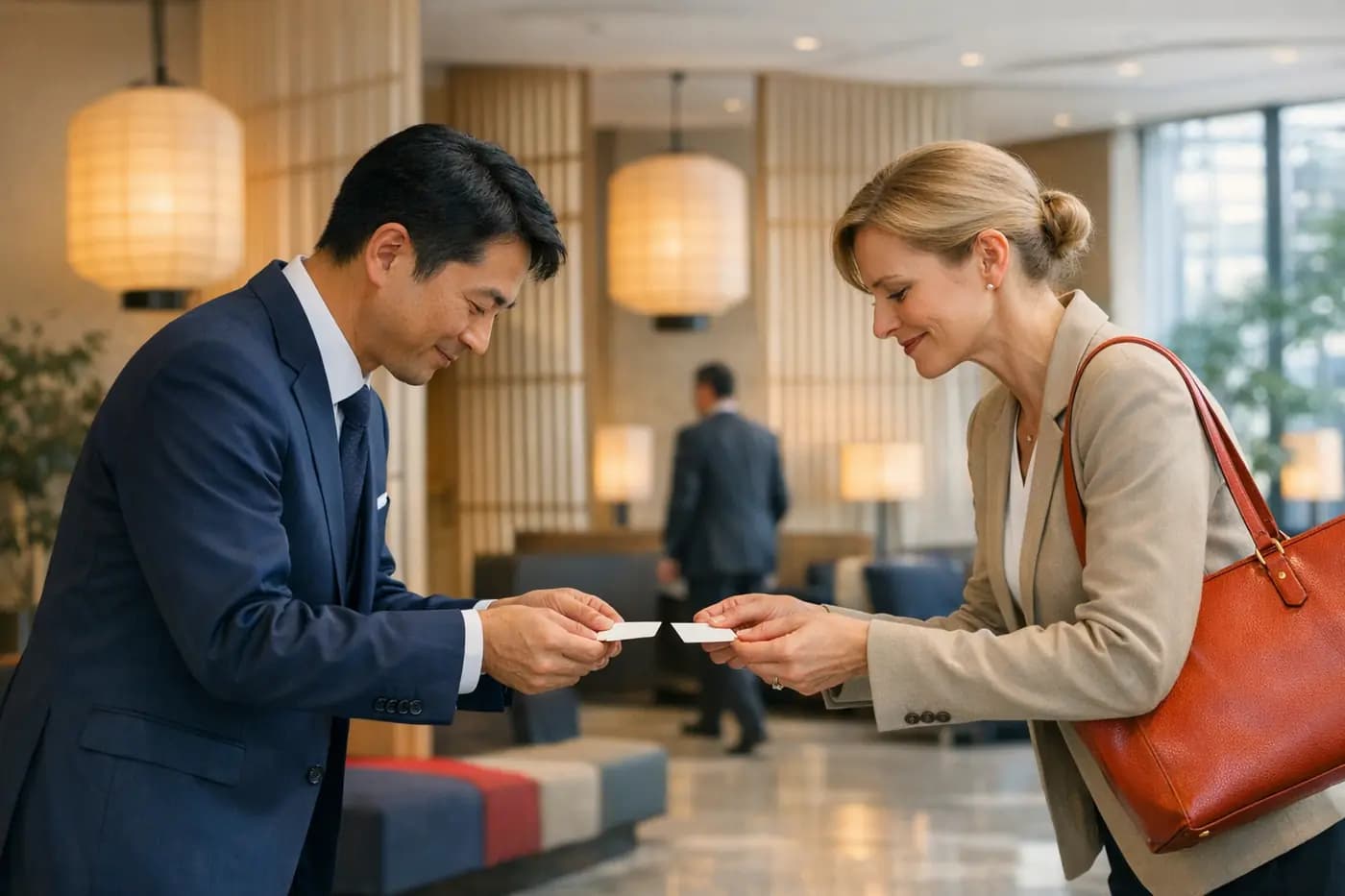
Mistake 1: underestimating lead times
This is the most frequent mistake and the most costly. A European company used to organizing a seminar in Lisbon or Barcelona in four months discovers that Japan works at a different pace.
- Hotels: for groups of more than 50 people, we recommend securing rooms and function space 9 to 12 months ahead. During cherry blossom season (late March–early April) and in autumn, upscale hotels in Kyoto sell out very early.
- Restaurants: the best addresses often seat fewer than twenty guests and open bookings on specific dates. A private dinner is ideally confirmed several months ahead.
- Unique venues: temples, gardens, museums and historic residences require permission requests and approval times that can run to several months.
Planning early does not mean freezing everything: a good timeline secures accommodation and key moments first, then refines the rest.
Mistake 2: importing European habits as is
Several practices common in Europe do not apply in Japan, or apply differently:
- Last-minute changes. Japanese suppliers prepare with great care, from headcounts, seating plans and menus fixed early. Changing numbers the day before often means paying for what has already been prepared. Hotel and restaurant cancellation terms are usually strict.
- The day delegate package. In Japan, meeting rooms are usually rented by time slot, with AV and catering billed separately.
- Flexible timing. A dinner set for 7 p.m. starts at 7 p.m. A restaurant may decline to extend service, and temple visits follow fixed hours.
- Tipping. It is not customary and can cause embarrassment. Upscale hotels, however, often apply a 10–15% service charge.
The right approach is to set clear dates for headcount confirmation and cancellation terms from the outset, and share them with participants.
Another difference is confirmation. A Japanese hotel or restaurant usually expects precise written confirmation, with the organizer’s name, exact timing, dietary requirements and run of show. A vague email such as “around 40 people at about 7 p.m.” will be read as an inquiry, not a booking. We formalize every commitment in writing, in Japanese, and have it confirmed by the supplier.
Finally, the idea of “we will sort it out on site” works poorly. The best Japanese service rests on invisible but highly detailed preparation; the more precise the brief upfront, the more natural the experience feels on the day.
Mistake 3: an overloaded program
Tokyo, Kyoto, Osaka and Hiroshima in four days: the itinerary looks efficient on paper and is exhausting in practice. Japan is well connected, but every stop costs time and energy.
- Distances. Tokyo–Kyoto takes about 2 hours 15 minutes by Shinkansen, plus transfers between stations, hotels and meeting venues.
- Luggage. According to JR Central, luggage whose three dimensions total more than 160 cm requires a reserved seat with an oversized baggage area on the Tokaido, Sanyo and Kyushu lines. For groups, we send suitcases separately by luggage delivery service the day before departure.
- Jet lag. Coming from Europe, day one should stay light: welcome, opening dinner, no 8 a.m. plenary.
- Parking. In some districts such as Ginza, coaches can only stop at designated bays.
Our rule: two cities for a 4- to 5-day program, three at most for a one-week trip. Depth is better than a whistle-stop tour.
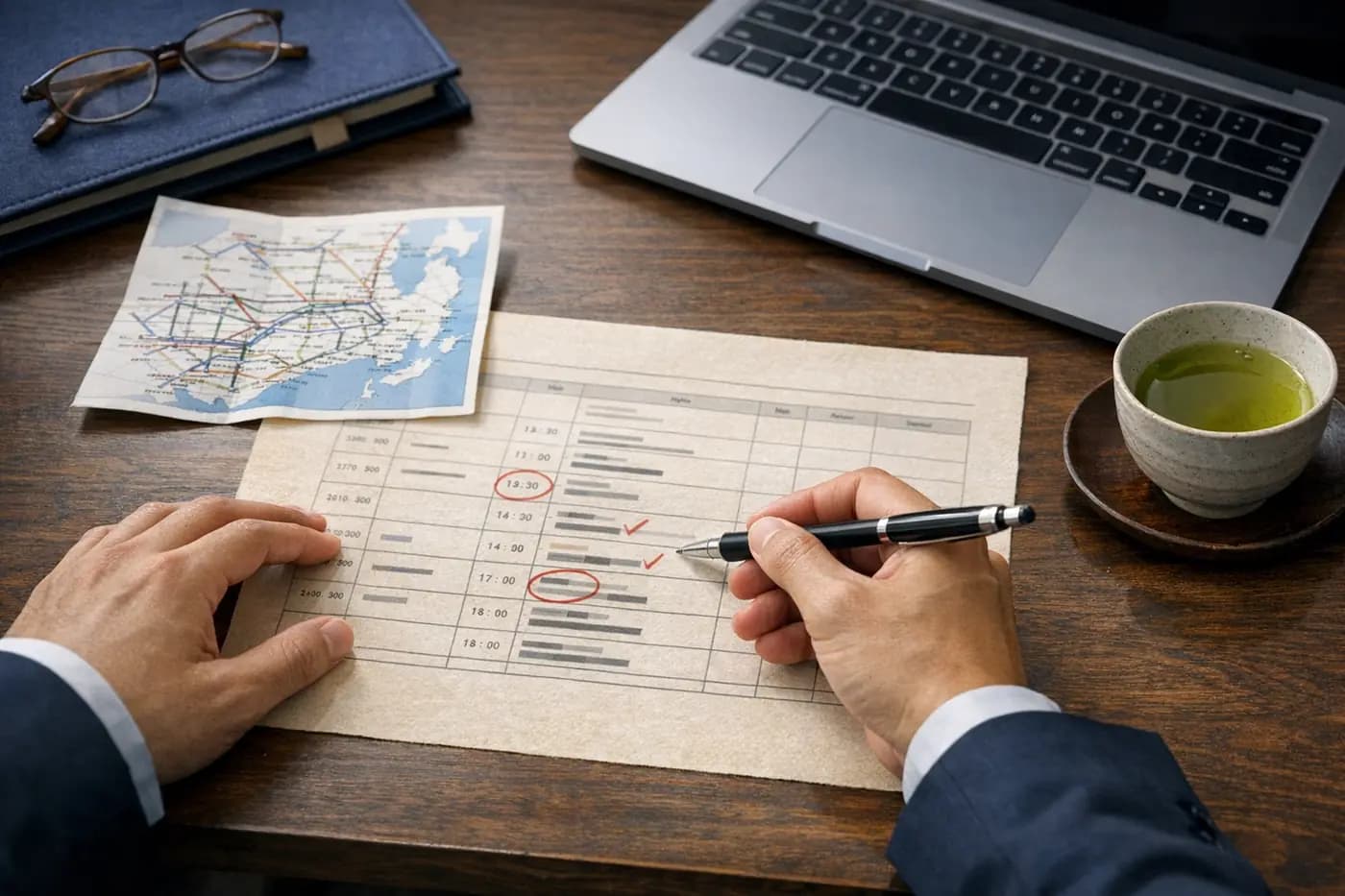
Mistake 4: overlooking language and business etiquette
When a seminar includes meetings with Japanese clients, partners or a local subsidiary, etiquette matters as much as content.
- Punctuality is a sign of respect. Arriving ten minutes early is the norm.
- Business cards (meishi) are exchanged with both hands, read attentively and not put away immediately. Plan bilingual cards for executives.
- Hierarchy shapes interactions: speaking order, seating at the table and in vehicles.
- Decision-making often involves prior consultation; expecting a decision in the meeting itself can create misunderstandings.
- Language. English proficiency varies among suppliers and in restaurants. A professional interpreter is essential for business meetings, and bilingual signage makes life easier for participants.
We always prepare a one-page cultural briefing for participants: it prevents most missteps and reassures first-time visitors to Japan.
One last point that is often underestimated: gifts. When meeting a Japanese partner, a carefully wrapped present that represents your region or company is appreciated. The choice, the presentation and the moment it is offered all matter, and we advise our clients on these details.
Mistake 5: ignoring season, weather and contingencies
The Japanese calendar has its constraints, which should be built in from the moment dates are chosen:
- Demand peaks: cherry blossom season, Golden Week (late April–early May), Obon in mid-August and the year-end holidays. Higher prices, less availability, crowded sites.
- Weather: rainy season from June to mid-July across most of the country (earlier in Okinawa), strong heat in July–August, typhoons mainly in August and September. Every outdoor activity needs an indoor alternative.
- Natural hazards: Japanese hotels follow rigorous earthquake protocols. We give participants the key guidelines and a 24/7 emergency contact.
- Entry formalities: most European nationals can visit Japan visa-free for short stays, but participants of other nationalities must be checked individually, well in advance.
A simple continuity plan, shared with the client, is part of every program we organize.
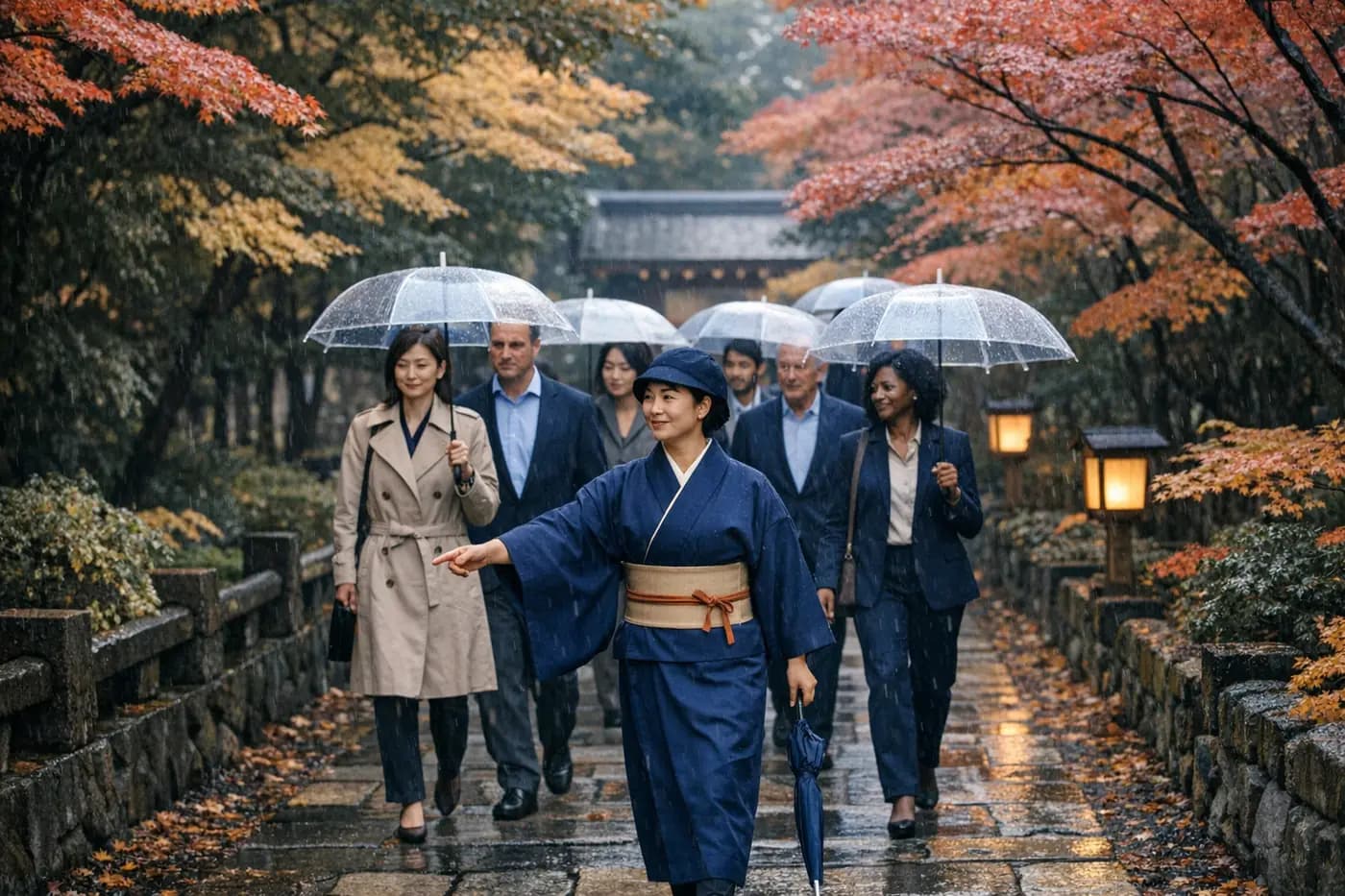
Mistake 6: organizing without a local partner
Some companies try to organize their event from Europe, dealing directly with hotels. For a small group in an international hotel, that can work. Once the program includes several cities, sought-after restaurants, unique venues or cultural activities, the limits quickly appear: communication in Japanese, suppliers who only work with known partners, and a time difference that slows every decision.
A Japan MICE agency, or DMC, provides:
- direct access to restaurants, venues and suppliers, based on long-standing relationships;
- a bilingual team that negotiates, reviews contracts and checks every detail in Japanese;
- on-site presence during the event to handle contingencies in real time;
- working knowledge of convention bureaus, such as JNTO’s Japan Convention Bureau or the Tokyo and Fukuoka bureaus, which offer support services.
Since 2005, SHINOGI DMC has delivered programs for 30 to 500 participants in Tokyo, Kyoto, Osaka, Fukuoka and Okinawa, with a trilingual French, English and Japanese team.
The first conversation is often enough to gauge a partner: the precision of their questions says a great deal about the quality of the delivery to come.
Frequently asked questions
How far in advance should a MICE event in Japan be planned?
For groups of more than 50 people, allow 9 to 12 months to secure hotels and function space, and longer for cherry blossom season or autumn. A committee of 20 to 30 people outside peak season can be organized in 4 to 6 months, subject to availability.
Why use a Japan MICE agency rather than booking directly?
A local agency negotiates in Japanese, accesses restaurants and venues that only work with trusted partners, and handles contingencies on site. For a multi-city program or one with cultural activities, it significantly reduces operational risk.
Do European participants need a visa for a seminar in Japan?
Most European nationals can enter Japan visa-free for a short stay. Rules vary by nationality, however, so we recommend checking each participant’s situation with the Japanese embassy several months before departure.
How many cities should a one-week program include?
We recommend two cities for a 4- to 5-day program and three at most for a week, for example Tokyo, Kyoto and Osaka. Beyond that, transfers take over from content and fatigue weighs on the participant experience.
What happens if a typhoon hits during the event?
Typhoons are forecast several days in advance by the Japan Meteorological Agency. For every summer and early autumn program, we prepare indoor alternatives, monitor forecasts and adjust transfers and activities with the client in real time.
Rédaction SHINOGI DMC · Updated