Real or fake wasabi: what you are actually served
The green paste served with sushi in Europe, and often in Japan's budget chains too, is almost never wasabi. It is usually horseradish (seiyo wasabi, "Western wasabi"), mixed with mustard, starch and green colouring. The taste is sharp, a little burning, and lingers in the mouth.
Real wasabi (hon-wasabi, botanical name Eutrema japonicum, also listed as Wasabia japonica) is a plant native to Japan, in the brassica family. What you eat is its rhizome, a thick knobbly stem growing at water level. Once grated it gives a pale green paste, slightly sweet, with a heat that rises to the nose and then fades quickly. That heat comes from a volatile compound formed when the cells are crushed: it evaporates within about fifteen minutes. Hence the rule at good counters: grate just before serving, in small amounts.
How to recognise the real thing:
- By sight: grainy, moist texture, soft green colour, not a uniform bright green.
- By taste: fresh, vegetal, a brief kick and a hint of sweetness at the end.
- By the service: the chef grates the rhizome in front of you on a sharkskin grater (samegawa oroshi), in circular motions, starting from the leaf end.
- On the label: in Japan, tubes carry terms such as "hon-wasabi shiyo" (made with real wasabi) or "hon-wasabi iri" (contains real wasabi), indicating a larger or smaller share of wasabi; without them, it is horseradish.
Price explains everything: wasabi needs more than a year of growing in very pure water, whereas horseradish grows anywhere. Tasting real wasabi on site, beside its beds, shows in one mouthful why Japanese cooks care about it so much.
How wasabi grows: spring water, shade and patience
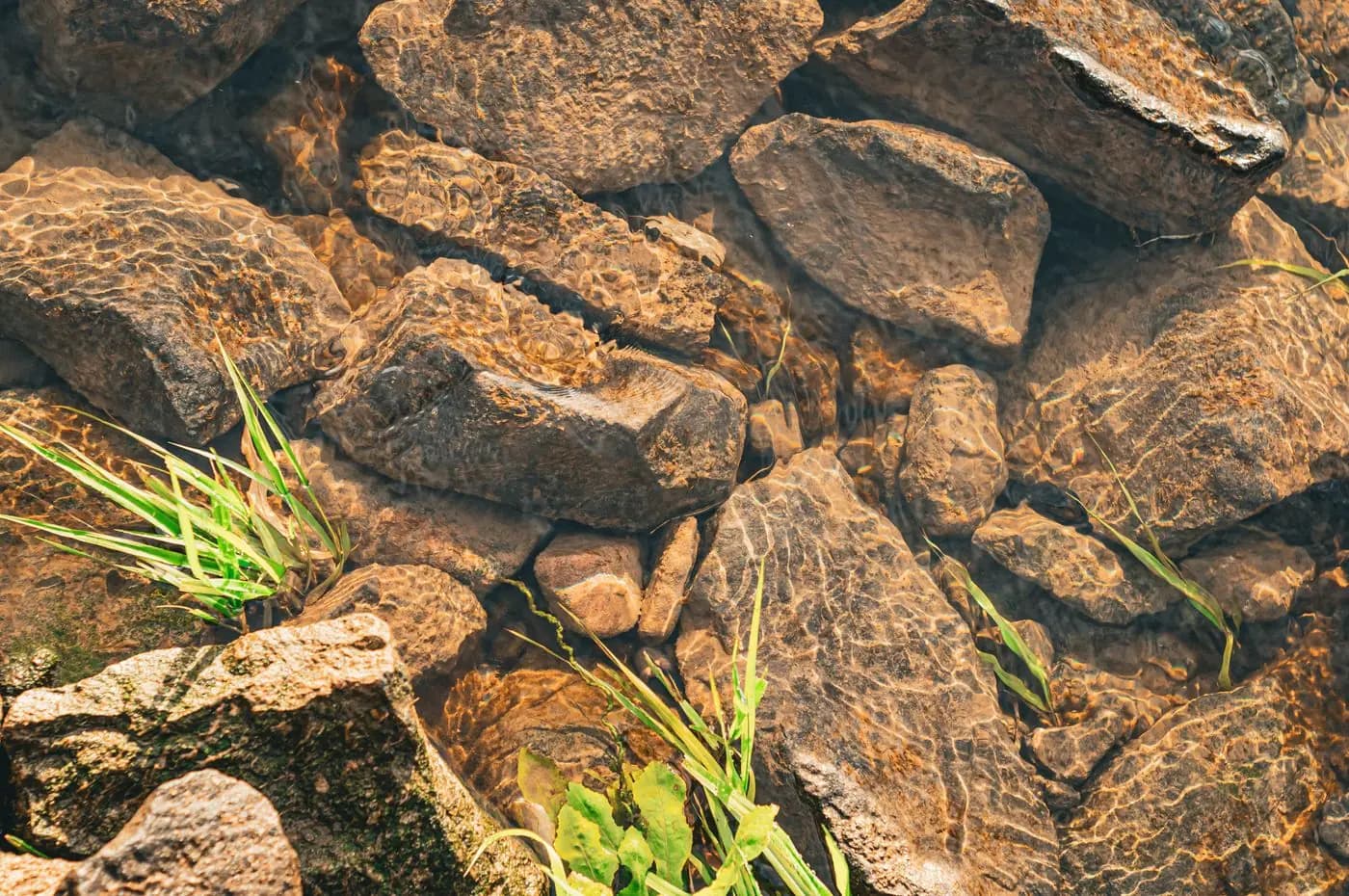
High-quality wasabi, called sawa-wasabi or mizu-wasabi ("water wasabi"), grows in gravel beds with cool, clear spring water flowing through them constantly. There is also field wasabi (hatake-wasabi), grown in forest shade and used mainly for its leaves and stems, but the most prized rhizomes come from water.
The conditions are demanding:
- Cold, stable water, without big temperature swings between summer and winter, and very pure: the plant takes its nutrients from the current, without fertiliser.
- Shade: wasabi dislikes sun and heat. In the Azumino beds, poplars and acacias are planted along the plots and black nets are stretched over them in summer.
- Time: more than a year, often 18 months to two years, between planting and harvest.
At Daio Farm the cycle breaks down into simple, all-manual steps: wash and level the gravel so the water flows well, build ridges angled to the slope, plant seedlings by hand on each side, maintain (clearing channels, removing algae and weeds), then harvest by pulling up each plant by hand.
The whole plant is edible. The leaves, shaped like hollyhock (aoi) leaves, are said to have given the Japanese characters for wasabi (山葵, "mountain hollyhock"). The white flowers appear up to three times a year (around December, March and May); the March bloom covers the beds and is eaten as tempura.
In Shizuoka Prefecture, the tatami-ishi method was developed in the late 19th century: stepped terraces in mountain valleys, with layers of stones of decreasing size that filter the water. It sharply increased yields and remains the benchmark for premium rhizomes.
Shizuoka, the cradle of wasabi: Utogi, Izu and world agricultural heritage
Azumino may have the most visited farm, but Shizuoka is the cradle of wasabi cultivation. According to tradition, it began about 400 years ago in the hamlet of Utogi, in the mountains north of Shizuoka city, where villagers replanted wild plants found higher up the valley beside a spring. The shogun Tokugawa Ieyasu, retired in Sunpu (today's Shizuoka), is said to have liked it so much that he forbade it from leaving the village.
In March 2018 the FAO listed "Traditional Wasabi Cultivation in Shizuoka" as a Globally Important Agricultural Heritage System (GIAHS), after it was recognised as Japanese agricultural heritage in 2017. The site covers Utogi and the valleys of the Izu Peninsula: Izu, Shimoda, Higashi-Izu, Kawazu, Matsuzaki and Nishi-Izu.
Some recent figures (2024 agriculture ministry statistics, cited by the prefecture):
- Shizuoka accounts for about 63% of the value of Japan's wasabi production, ahead of Nagano.
- For water-wasabi rhizomes, Shizuoka produces about 210 tonnes (53% of the total), Nagano about 157 tonnes (nearly 40%).
In practice, for a traveller:
- Azumino (Nagano) offers the large, flat farm, easy to reach and well set up for visitors.
- Izu (Shizuoka) offers stepped mountain terraces, more spectacular but scattered. Around Joren Falls, on the Amagi road, you can see beds from the path and several shops sell fresh rhizomes.
- Utogi, about an hour by bus from central Shizuoka, is the most authentic, but you need a guide to reach the private plots.
The two regions do not combine well on a short trip. Choose Azumino for a Japanese Alps itinerary (Matsumoto, Hakuba) and Izu for a Fuji-Hakone-Izu itinerary.
Daio Wasabi Farm in Azumino: hours, prices and what to see
Daio Wasabi Farm (Daio Wasabi Nojo), in Hotaka in Azumino City, is one of Japan's largest water-wasabi farms and the largest on flat ground. Clearing began in 1917 on former gravel wasteland of about 15 hectares, and it took some twenty years to build the beds. The water feeding them is snowmelt from the Northern Alps, which filters into the alluvial fan and resurfaces as springs; Azumino's springs have been among Japan's "100 Remarkable Waters" since 1985.
Practical information (official website):
- Free admission.
- Hours: March to November, 8am–5pm; December to February, 9am–4pm. Closed on 31 December. No entry outside opening hours.
- Rules: no outside picnic food; dogs on a leash, not allowed in the main shop.
What to see in 1 hr 30 min to 2 hours:
- The beds: paths run between gently sloping plots, covered with black nets in summer. The water is astonishingly clear.
- The three water wheels on the Tade River, Azumino's most photographed view; they appear in Akira Kurosawa's film "Dreams" (1990).
- The clear-bottomed boat, run in season by a partner company: you row upstream towards the mountains and drift back down watching the riverbed. Paid; usually runs 10am to 2pm, weather permitting.
- Daio Shrine and the cave, linked to the legend of Hachimen Daio, a local chief said to have resisted the imperial armies.
- Wasabi field walking, offered on certain days: with a farm guide you enter plots normally closed to the public.
The best time is opening time, 8am, on a weekday. During Golden Week, September's Silver Week and summer weekends, car parks fill up and the shop is packed around noon. In spring the white blossom of March–April is very photogenic; in summer the cool water makes the visit pleasant even in strong heat.
What to taste and take home: soba, ice cream, wasabi-zuke and fresh rhizomes
The visit makes full sense at the table. At Daio and in Azumino's soba restaurants you can taste wasabi in almost every form:
- With soba from the Shinshu (Nagano) region, served cold: grate a piece of rhizome yourself and place it on the noodles rather than dissolving it in the dipping sauce.
- On a bowl of rice (wasabi-don): hot rice, dried bonito flakes, a dash of soy sauce and a generous spoon of freshly grated wasabi. It is the simplest and most telling test.
- As ice cream: wasabi soft-serve is the speciality everyone photographs. The taste is mild, with a little kick at the end.
- As wasabi-zuke: stems and pieces of rhizome marinated in sake lees. Excellent with rice or on fresh cheese.
- Leaves and flowers: pickled, or as tempura in spring.
At the farm, several restaurants and a café serve these dishes; the café uses the spring water for its drinks.
Buying a fresh rhizome: choose one that is firm, clearly green, with tight nodes. It keeps for about two to three weeks in the fridge, wrapped in damp paper changed every couple of days. Always grate from the top (leaf end), in circular motions, just before eating.
For travel abroad, phytosanitary rules on arrival restrict imports of fresh plant produce into the European Union: processed products are a better bet (vacuum-packed wasabi-zuke, real-wasabi pastes and seasonings, wasabi salts), packed in checked luggage if liquid or paste. A sharkskin or copper grater is a useful, light souvenir.
Indicative prices seen on site: an ice cream at a few hundred yen, jars of wasabi-zuke from a few hundred to just over a thousand yen, rhizomes from a few hundred to several thousand yen depending on size.
Getting to Azumino from Matsumoto, Hakuba and Tokyo, and how long to allow
The farm is 2.3 km from JR Hotaka Station (Oito Line): about 10 minutes by taxi, 30 minutes on foot, or a quarter of an hour by bike. Several bike rental shops sit in front of the station, and the flat road between rice fields and wasabi beds is a pleasure. Alternatively, Akashina Station (Shinonoi Line) is 4 km away, 20 minutes by taxi. By car, allow 10 minutes from the Azumino exit of the Nagano Expressway.
Indicative journey times:
- From Matsumoto: about 30 minutes by train to Hotaka on the Oito Line, then taxi or bike.
- From Hakuba: about 1 hour south on the same Oito Line; around 50 minutes by car.
- From Tokyo: Azusa limited express from Shinjuku to Matsumoto (about 2 hr 30 min to 2 hr 45 min), then the Oito Line. Some Azusa trains continue to Hotaka and Hakuba.
How long? Allow 2 hours at the farm, 3 if you have lunch there and take the boat. Azumino is ideally a half-day stop on the way between Matsumoto and Hakuba.
Combine with:
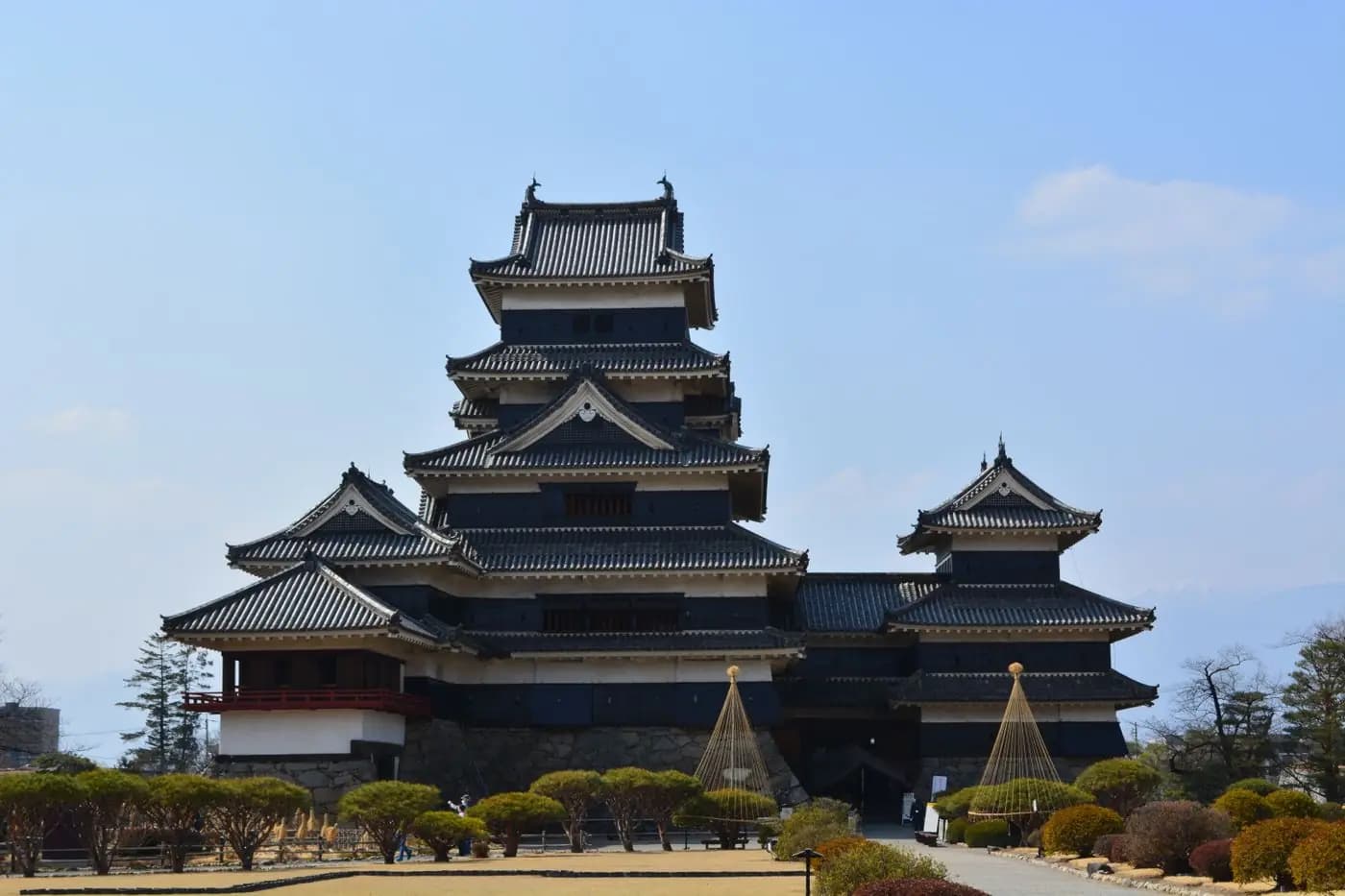
- Matsumoto Castle, an original 16th-century keep and National Treasure, 30 minutes away by train.
- Rokuzan Art Museum, a few minutes' walk from Hotaka Station, devoted to the sculptor Ogiwara Rokuzan.
- Kamikochi in summer and autumn, for an easy hike at the foot of the Alps (bus access from Matsumoto).
- Hakuba, as a mountain base: hiking in summer, skiing in winter.
A typical day: Matsumoto (castle) in the morning, Azumino and Daio Farm in the afternoon with soba for lunch, arriving in Hakuba by evening.
Visiting a wasabi farm with a group: meals, timing and workshops
Daio Farm is used to groups and publishes set menus: bookings from 5 people, no later than 3 days ahead. Advertised options range from ¥1,760 to ¥3,630 per person (a rice bowl where you grate your own wasabi, Azumino trout, soba made with spring water, dessert), with a more elaborate ¥7,700 menu (caviar, Japanese beef, Shinshu salmon, all served with wasabi). Menus vary with the season and the harvest.
Our approach for a group of 20 to 40 people:
- Arrive at opening time (8am from March to November) and do the walk before the midday coaches. The booked lunch follows at around 11:30am.
- Have everyone grate their own wasabi: the rice bowl where you grate your own rhizome is the most memorable activity, and it needs no special logistics.
- Book the clear-bottomed boat in advance for small groups (the boats are small), or offer it as an option during free time.
- Bring a guide-interpreter: signs are mostly in Japanese, and the story of the water, the wheels and the cultivation is what gives the visit depth.
- Combine with Matsumoto Castle in the morning or a night in Hakuba, where mountain hotels host seminars and group dinners.
For a seminar in Hakuba or a Tokyo-Alps programme, Azumino is a 3-hour stop that breaks the rhythm of meetings and leaves a strong impression. SHINOGI DMC arranges these stops (coach, booked lunch, guide and timing) within its Tokyo-Hakuba programmes.
Frequently asked questions
What is the difference between real and fake wasabi?
Real wasabi (hon-wasabi) is the grated rhizome of a Japanese plant grown in spring water, with a brief, slightly sweet heat. The "fake" kind served almost everywhere is horseradish mixed with mustard and green colouring.
Is Daio Wasabi Farm free?
Yes, admission is free. Open 8am–5pm from March to November and 9am–4pm from December to February; closed 31 December. The clear-bottomed boat and meals are paid.
How do you get to Daio Wasabi Farm from Matsumoto?
JR Oito Line to Hotaka Station (about 30 minutes), then 10 minutes by taxi, 15 minutes by rental bike or 30 minutes on foot (2.3 km).
Where does wasabi come from?
In Shizuoka Prefecture, in the hamlet of Utogi, about 400 years ago according to tradition. Traditional wasabi cultivation in Shizuoka (Utogi and the Izu Peninsula) has been an FAO Globally Important Agricultural Heritage System since 2018.
How long does a fresh wasabi rhizome keep?
About two to three weeks in the fridge, wrapped in damp paper changed every couple of days. Once grated, it loses its heat within about fifteen minutes.
Can groups have lunch at Daio Wasabi Farm?
Yes: group menus booked at least 3 days ahead, from 5 people, at ¥1,760 to ¥3,630 per person, plus a ¥7,700 menu. The rice bowl where everyone grates their own wasabi is the favourite.
Rédaction SHINOGI DMC · Updated
Sources
- Daio Wasabi Farm — site officiel (horaires, accès, entrée gratuite)
- Daio Wasabi Farm — À propos du wasabi et de la culture
- Daio Wasabi Farm — Menus de groupe
- Daio Wasabi Farm — Wasabi-da walking
- Azumino Kisen — Clear boat
- MAFF — Culture traditionnelle du wasabi de Shizuoka (GIAHS)
- Préfecture de Shizuoka — Wasabi, premier rang national (statistiques 2024)
- Préfecture de Shizuoka — Plan de conservation du wasabi (Utogi, tatami-ishi)