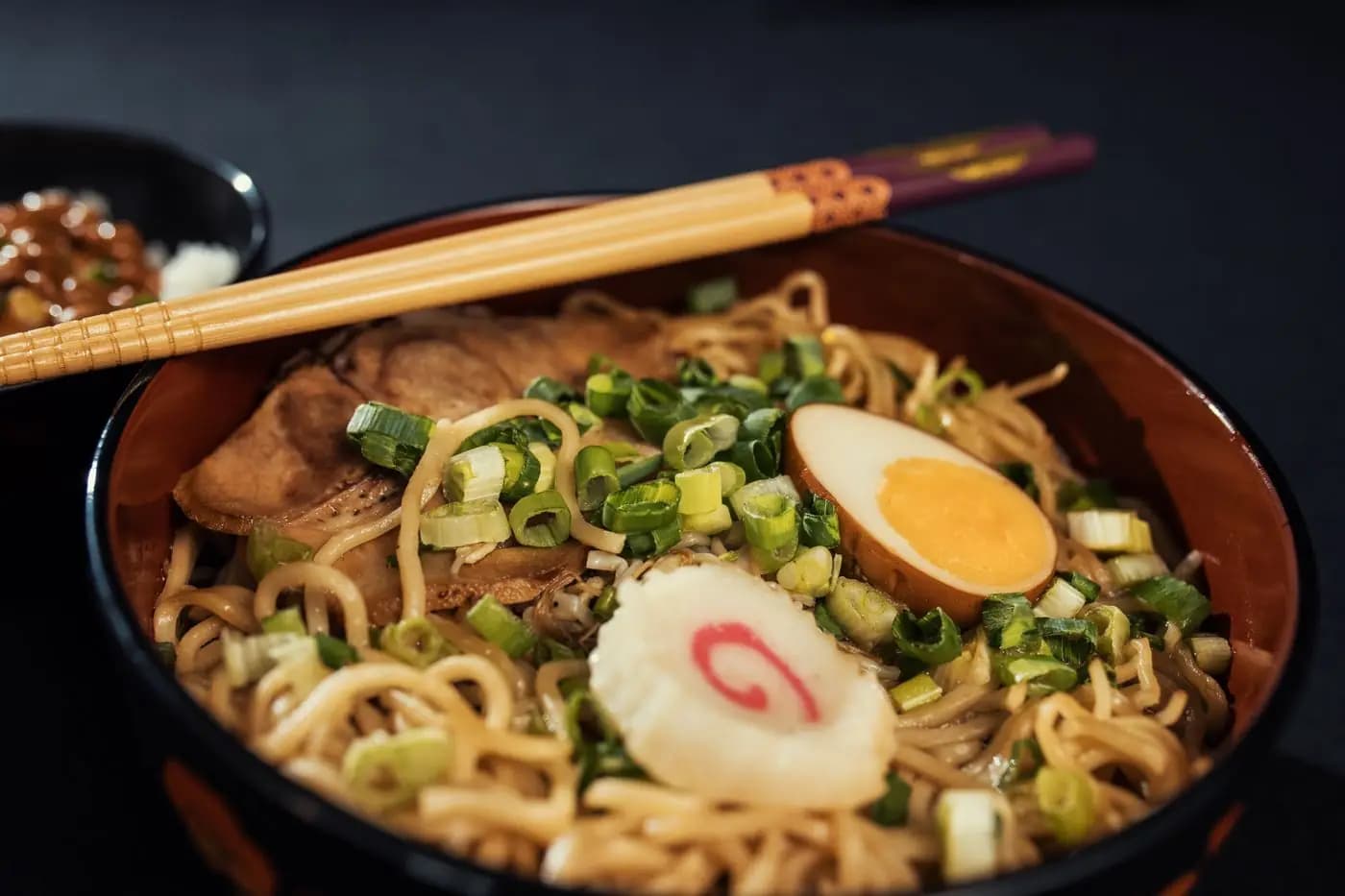
Shoyu, shio, miso, tonkotsu: the four families of ramen
A bowl of ramen breaks down into five elements: the broth (chicken, pork, dried fish or a mix), the tare (the concentrated seasoning at the bottom of the bowl), the aromatic oil, the noodles and the toppings. The names on shop signs refer to either the tare or the broth.
- Shoyu (soy sauce): clear brown broth, often chicken-based, sometimes with dried sardines (niboshi). The most common style and the basis of Tokyo's "old-school" ramen.
- Shio (salt): the clearest and most delicate, often chicken and seafood. It forgives nothing: it is often where a shop's skill is judged. Hakodate, in Hokkaido, made it its speciality.
- Miso: fermented soybean paste, thick and comforting broth, often stir-fried in a wok with vegetables and garlic. Born in Sapporo in the 1950s, it is made for winter.
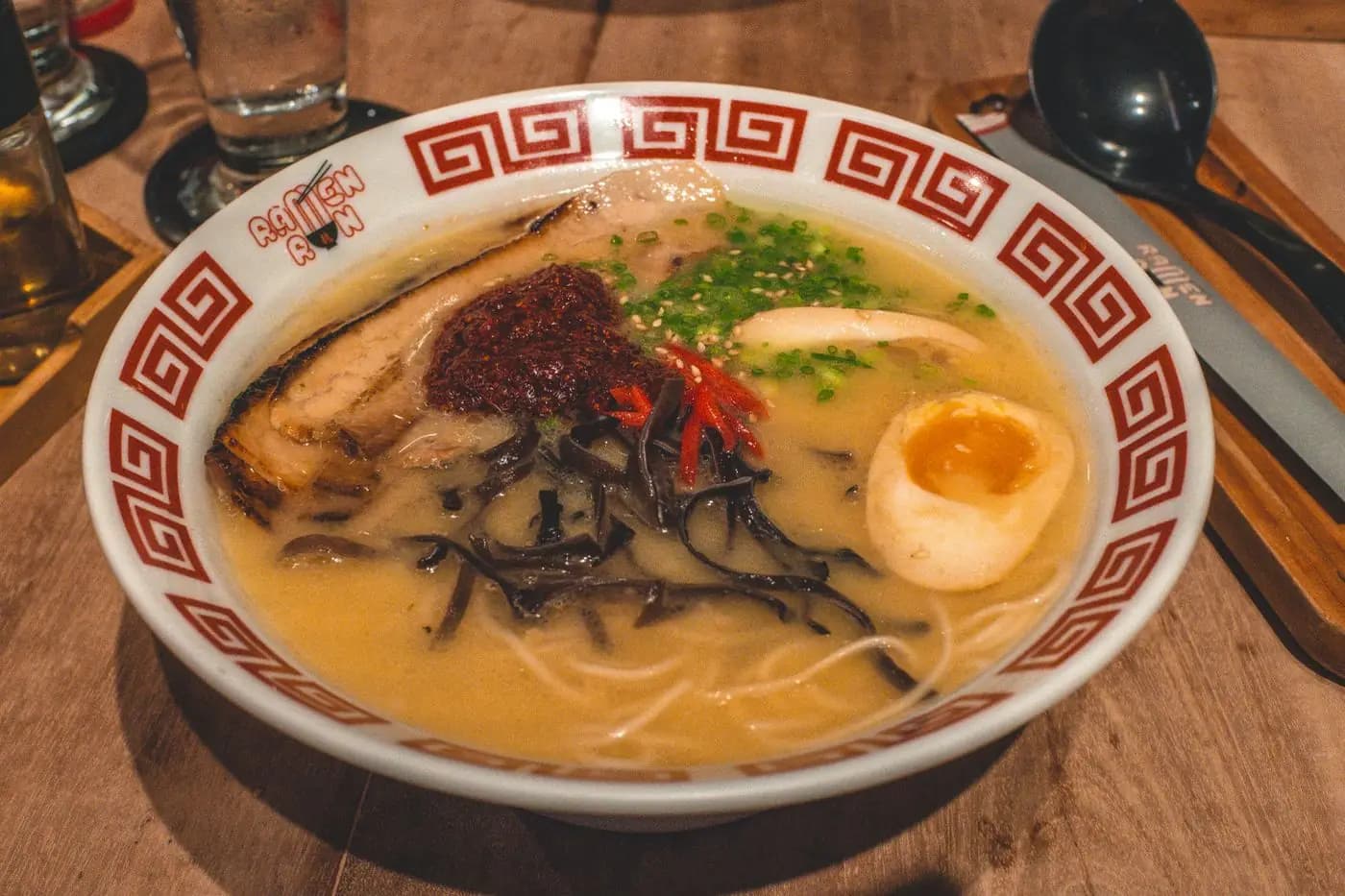
- Tonkotsu: pork-bone broth boiled hard for hours until it turns white and creamy. It is a broth, not a tare, so you find tonkotsu-shoyu (Yokohama, Wakayama). A Kyushu speciality.
Other formats to know:
- Tsukemen: thick noodles served cold or lukewarm next to a concentrated dipping sauce. At the end, ask for light broth (soup-wari) to thin the sauce and drink it.
- Mazesoba / abura soba: no broth; noodles tossed with sauce and toppings at the bottom of the bowl.
- Tantanmen: the Japanese take on Sichuan dan dan noodles, with sesame and chilli.
The classic toppings: braised pork (chashu), soft marinated egg (ajitama), fermented bamboo shoots (menma), nori, spring onion, and sometimes the white-and-pink slice of narutomaki. An "everything" ramen (zenbu-nose or tokusei) adds the lot for ¥300–500 more.
Regional styles: Hakata, Sapporo, Tokyo, Kitakata and more
Almost every region of Japan claims its own ramen. Three cities are traditionally named as the great capitals: Sapporo, Hakata and Kitakata. Here are the styles worth a detour.
- Hakata (Fukuoka): pure tonkotsu, very thin straight noodles, minimal toppings (pork, spring onion, pickled red ginger, sesame seeds). You choose noodle firmness when ordering: barikata (very firm), katamen (firm), futsu (normal), yawa (soft). Because thin noodles cool quickly, portions are small and you order a kaedama (a second serving of noodles, ¥150–200) while broth remains. Bowls cost ¥800–1,200, among the cheapest in Japan. Tonkotsu was born nearby, in Kurume, in 1937.
- Sapporo (Hokkaido): miso, thick yellow wavy noodles, stir-fried vegetables, often butter and corn as options. A layer of lard keeps the bowl scalding for a long time, which is welcome at -10°C. Asahikawa (shoyu, double pork-and-fish broth) and Hakodate (shio) complete Hokkaido's trio.
- Tokyo: chicken shoyu, thin curly noodles, chashu, menma, nori. The Ogikubo district is historically linked to this style. Tokyo also has every other style, the long-queue tsukemen and the best shio.
- Kitakata (Fukushima): clear shoyu based on pork and niboshi, wide, flat, very wavy noodles, hand-made in many shops. The town has around a hundred ramen-ya for fewer than 50,000 inhabitants, and ramen is eaten for breakfast (asa-ra), from 7am in some places.
- Yokohama (iekei): tonkotsu-shoyu, thick straight noodles, spinach, three sheets of nori; you adjust richness, fat and firmness.
- Onomichi (Hiroshima): fish-based shoyu with small pieces of pork back fat floating on top.
- Kumamoto: tonkotsu with black garlic oil (mayu) and fried garlic.
- Wakayama: tonkotsu-shoyu, with pressed mackerel sushi (hayazushi) on the counter, which you declare when paying.
To taste several styles without crossing the country, "ramen streets" gather regional shops: Tokyo Ramen Street beneath Tokyo Station, Ramen Stadium at Fukuoka's Canal City, or the Shin-Yokohama museum.
Ordering from the ticket machine (shokken-ki)
In many ramen-ya you do not order from a server: you buy a ticket from a machine at the entrance before you even sit down. Once understood, the system is reassuring and speeds up service.
How it works:
- Insert money first. The buttons then light up for dishes the amount can buy. Many machines accept ¥1,000 notes and coins, less often ¥5,000 and ¥10,000 notes. Carry change. Newer machines accept IC cards (Suica, ICOCA) and sometimes QR codes, but not always bank cards.
- The top-left button is almost always the house signature. When in doubt, it is a good choice.
- Coloured buttons often distinguish categories: bowls, extra toppings (egg, chashu), rice, gyoza, drinks. One ticket per item.
- Collect your change: the machine does not always return it automatically; you sometimes have to press the "おつり" (otsuri) lever.
- Hand the tickets to the staff or place them on the counter. This is when you specify noodle firmness, amount of garlic or broth richness, if the shop offers it.
Useful words: katame (firm noodles), futsu (normal), yawarakame (soft), koime (richer broth), usume (lighter), ninniku (garlic), oomori (large portion, often extra). When a machine has only kanji, a photo-translation app solves it in ten seconds; some shops also keep an English menu next to the machine.
Machines have one advantage for groups: everyone pays separately, with no sums at the end. The drawback: with 15 people in front of a single machine, allow 10 minutes before everyone is seated.
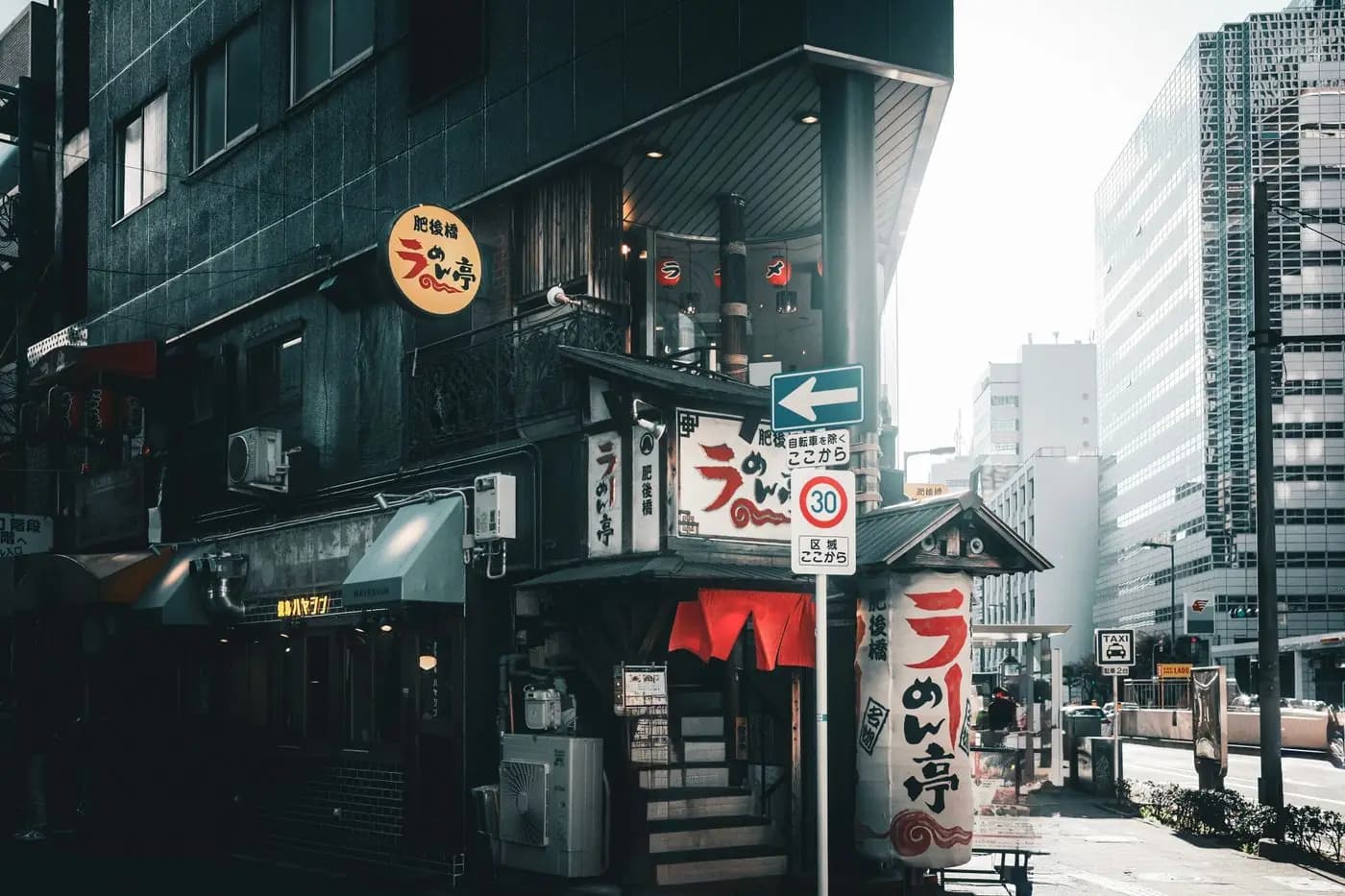
Counter etiquette: slurp, don't linger, and a few unwritten rules
The best-known rule is also the truest: you slurp your noodles loudly. It is not rude: the air cools the scalding noodles and carries the aroma of the broth. Nobody will mind if you eat quietly, but nobody will frown if you make noise.
The other, less visible rules:
- Eat fast. Noodles swell in the broth (they "stretch", nobiru) within minutes. Japanese diners finish a bowl in 10 to 15 minutes, and that is what the chef expects too.
- Don't linger. A ramen-ya often has 10 to 15 seats and a queue outside. Once your bowl is finished, you get up. Long conversations happen elsewhere.
- Queue properly: along the wall, without blocking neighbours' entrances; some shops ask you to buy your ticket before queuing, others hand out numbers. Saving a place for a friend arriving later is frowned upon.
- Don't share a bowl. In many places each customer must order at least one dish; two people sharing one bowl may get a polite refusal.
- Lifting the bowl to drink the broth is fine, as is using the spoon (renge). Finishing the broth is not compulsory: it is very salty and many Japanese leave it.
- Small courtesies: wipe the counter with the paper provided and, in some shops, put the bowl and glass on the raised ledge of the counter as you leave. A "gochisosama deshita" ("thank you for the meal") on the way out is always appreciated.
- Photos: quick, no flash, no filming staff. Some shops forbid it, and say so.
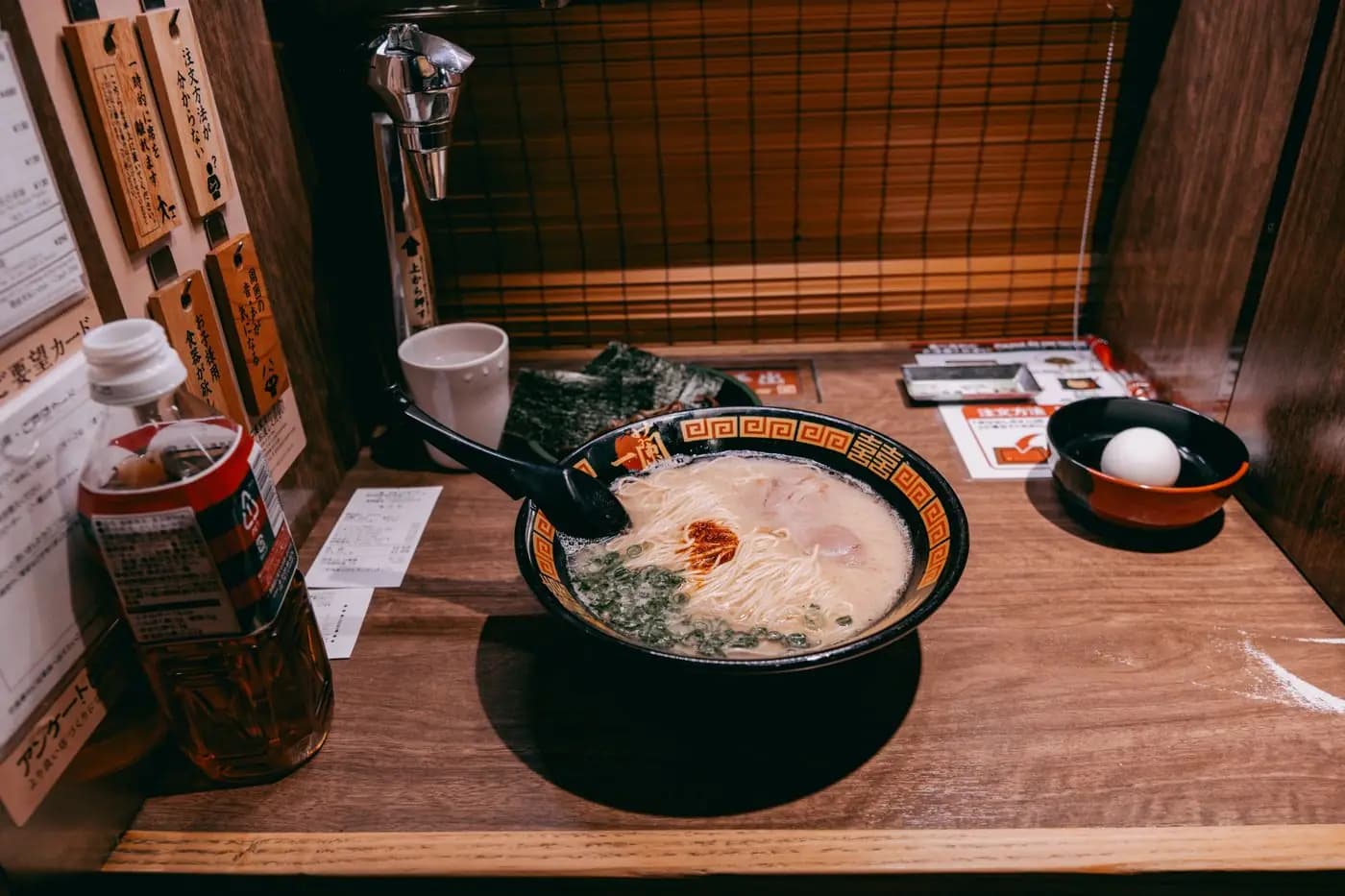
A special case: chains with individual booths (a partition on each side, a curtain in front), designed for concentrating on the taste. You fill in a preference sheet (richness, garlic, chilli, firmness). Handy for solo travellers or the shy.
Ramen museums: Shin-Yokohama, Cupnoodles Yokohama and Osaka Ikeda
Three places to understand (and taste) ramen away from a counter, all less than an hour from Tokyo or Osaka.
Shin-Yokohama Raumen Museum. A 5-minute walk from Shin-Yokohama station (Tokaido Shinkansen, about ten minutes from Shinagawa). The basement recreates a Tokyo street around 1958, with about ten shops from all over Japan (and sometimes abroad) that rotate regularly. Admission ¥450 for adults, ¥100 for school and high-school students, free under 6. Open 11am–9pm on weekdays, 10:30am–9pm on weekends and holidays, closed only on 31 December and 1 January. A rule to know: each visitor must order at least one bowl. Half portions (mini ramen) let you try two or three. At weekend lunchtimes, waits often exceed 30 minutes per shop.
Cupnoodles Museum Yokohama. In the Minato Mirai district, devoted to Momofuku Ando, inventor of instant noodles (1958) and Cup Noodle (1971). Admission ¥500 for adults, free up to high-school age; open 10am–6pm (last entry 5pm), closed on Tuesdays. The My Cupnoodles Factory workshop (paid, with timed tickets) lets you decorate your cup and choose broth and toppings. Allow 1h30 to 2 hours.
Cupnoodles Museum Osaka Ikeda. The original museum, in Ikeda, north of Osaka (Ikeda station, Hankyu Takarazuka line). Free admission, with a replica of the shed where Ando developed Chicken Ramen, and a My Cupnoodles Factory workshop, also paid. Open 9:30am–4:30pm (last entry 3:30pm), closed on Tuesdays; groups over 20 book by phone. Smaller and quieter than Yokohama.
Good to know: noodle-making workshops (Chicken Ramen Factory) must be booked ahead and have limited places; customised cups are allowed in cabin baggage but bulky, so bring a bag.
Ramen with a group: how to organise it
Ramen is the meal everyone wants in Japan and the least group-friendly: 10 to 15 seats, no booking, a queue outside. Taking 40 people to a famous shop at 12:30pm blocks the street for an hour and a half. Here is what works.
- Free sub-groups with a map: hand out a selection of 5 or 6 shops within a 10-minute walk, with style and price range, and everyone lunches in threes or fours. Simple, cheap, and participants love comparing afterwards.
- Ramen streets and museums: Tokyo Ramen Street, Fukuoka's Ramen Stadium or the Shin-Yokohama Raumen Museum let 30 people spread across several shops in one place, with a common meeting point. Some of these venues accept group bookings; ask ahead.
- Privatisation: a few ramen-ya agree to close their room for 15 to 25 people outside peak hours (mid-afternoon or late evening), with a talk by the chef. It must be negotiated weeks ahead, and the lost business paid for.
- Noodle-making workshop: knead and cut your noodles, prepare a broth, then eat your bowl. About 2 hours, ideal for team building with 10 to 40 people, and easy to adapt for vegetarians (vegetable and kombu broth).
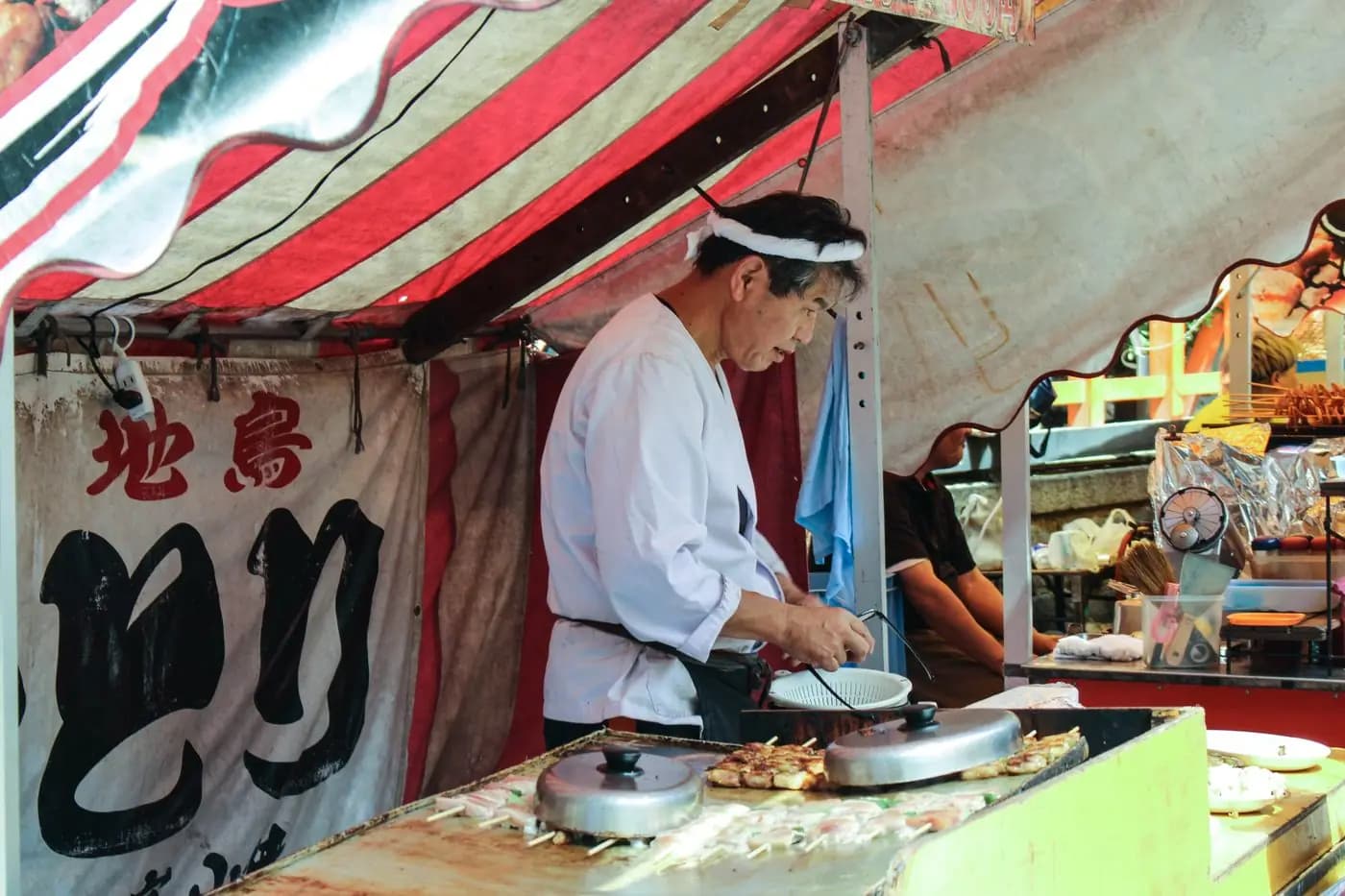
- Late-night ramen: in Fukuoka, ending an evening with a bowl of Hakata ramen at a yatai (street stall, 7 to 10 seats) is a local ritual. With a group, book several neighbouring yatai.
Points to watch: bring change for ticket machines (or loaded IC cards), anticipate diets (almost all broths contain pork, chicken or fish; a few places offer certified vegan or halal ramen), and don't schedule ramen just before a meeting: tonkotsu digests slowly.
For a seminar or incentive, SHINOGI DMC can organise a ramen trail in sub-groups, book a workshop or privatise a shop, checking options in advance for participants who eat no pork or no animal products.
Frequently asked questions
What are the different types of ramen?
Four main families: shoyu (soy sauce), shio (salt), miso and tonkotsu (pork-bone broth). There are also tsukemen (dipping noodles), brothless mazesoba and sesame tantanmen.
Is it rude to slurp ramen in Japan?
No, it is normal: slurping cools the noodles and brings out the aromas. What is frowned upon is lingering after finishing when others are waiting.
How much does a bowl of ramen cost in Japan in 2026?
Between ¥1,000 and ¥1,600 in big cities, slightly less in Fukuoka (¥800–1,200). Extras (egg, chashu) cost ¥100–300, a kaedama ¥150–200.
What is kaedama?
A second serving of noodles ordered while broth remains, typical of Hakata ramen in Fukuoka. It costs ¥150–200 and should be ordered before the broth is finished.
How much is entry to the Shin-Yokohama Raumen Museum?
¥450 for adults, ¥100 for students, free under 6. Each visitor must order at least one bowl; mini portions let you try several.
Are there vegetarian or halal ramen in Japan?
Yes, but they remain rare: most broths contain pork, chicken or fish. A few places in Tokyo, Kyoto and Osaka serve certified vegan or halal ramen; best to locate them before the trip.
Rédaction SHINOGI DMC · Updated