- Duration
- 3 to 4 hours
- Group size
- 12–300 pax
- Cities
- Tokyo
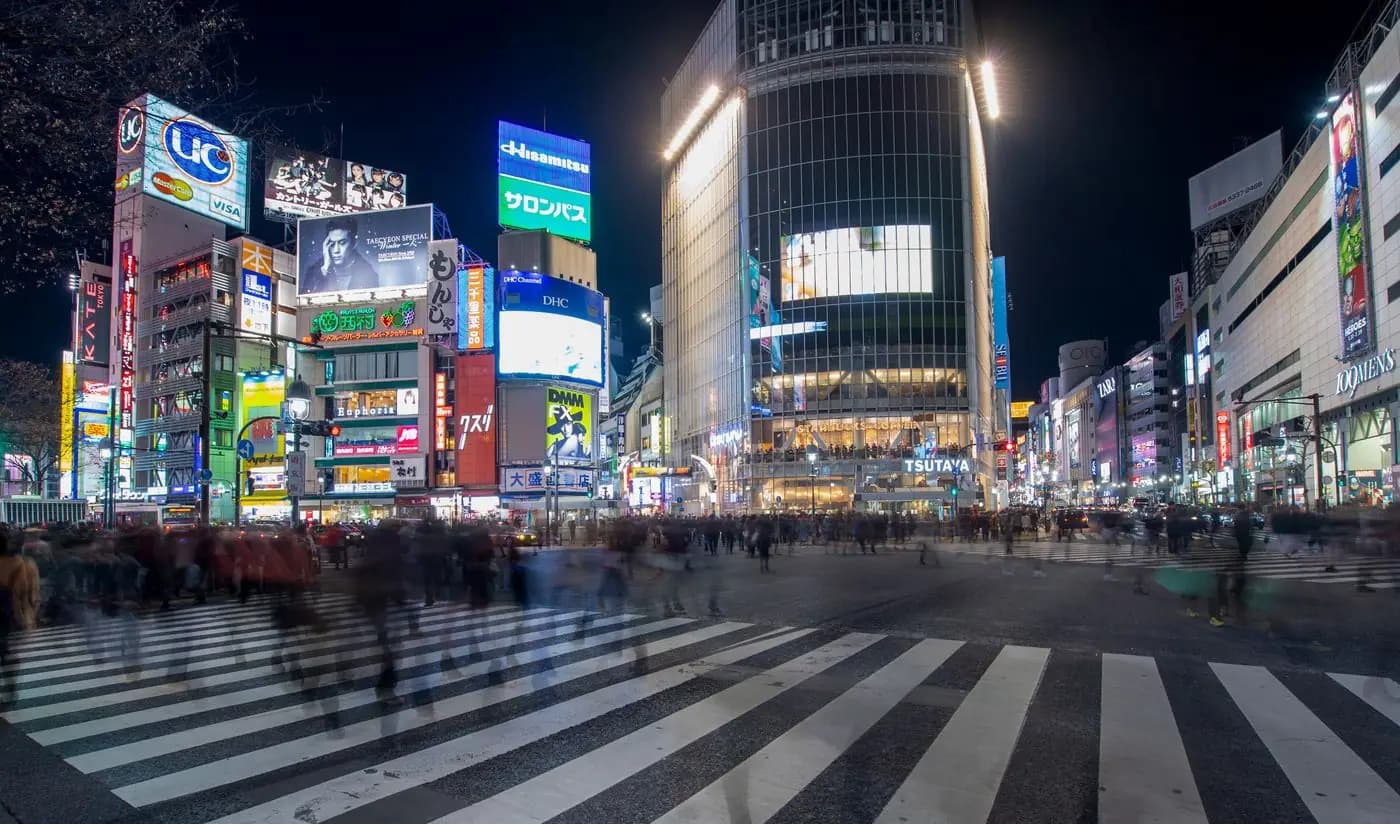
Teams receive a game app, a pre-loaded transit card and a set of missions spread between Shibuya (the crossing, Center Gai, and nearby Meiji Jingu depending on the route) and Ginza (department stores, back streets, galleries). They solve puzzles, gather information from shopkeepers, take set photos and complete a few cultural challenges, such as finding an item in a depachika food hall or learning a polite expression.
The format requires organization: splitting roles, choosing a subway route, managing time and energy. A live leaderboard and a prize-giving at the finish keep the momentum going. Teams deliberately mix people from different departments.
It is also an effective way to make Tokyo readable for first-time visitors: participants come away knowing how to use the subway, read a station map and get around on their own, which makes the rest of the stay easier.
Objectives
- Build coordination and team decision-making
- Connect people across departments and nationalities
- Help participants get around Tokyo independently
- Discover two contrasting sides of the city
How it works
- 1Briefing at the hotel or a room near Shibuya: rules, safety, app.
- 2Teams of 5 to 8 formed and transit cards handed out.
- 3Staggered starts and missions in Shibuya.
- 4Teams make their own way by subway to Ginza for the second set of missions.
- 5Finish at a reserved venue, final ranking and prize-giving.
- 6Option: continue with dinner or drinks in Ginza.
Good to know
- Comfortable walking shoes are essential: expect 5 to 8 km on foot depending on the route.
- Bilingual staff are stationed along the route and reachable by phone.
- In heavy rain, the route focuses on covered arcades and department stores; in summer, starts move to late afternoon with water points planned.
- Avoid weekends for large groups, as Shibuya is very crowded.
- At least one charged smartphone per team; power banks provided.
Indicative budget
Indicative: from ~€90 per person (app, missions, staff, transit cards, prizes), lower per head above 100 participants. Dinner optional.
Frequently asked questions
Does the rally work for people who don't speak Japanese?
Yes. Missions are designed for non-Japanese speakers, subway signage is bilingual and the app provides useful phrases. Staff can be reached at any time.
How do you manage 200 participants in Shibuya?
We build several parallel routes, stagger starts and cap the number of teams per mission point. This avoids crowding and respects local businesses.
Can the rally content be customized?
Yes. We can build in your key messages, products or company quiz questions, and adapt the route to other districts such as Asakusa, Marunouchi or Omotesando.