What to eat in Japan: choose the address before the dish
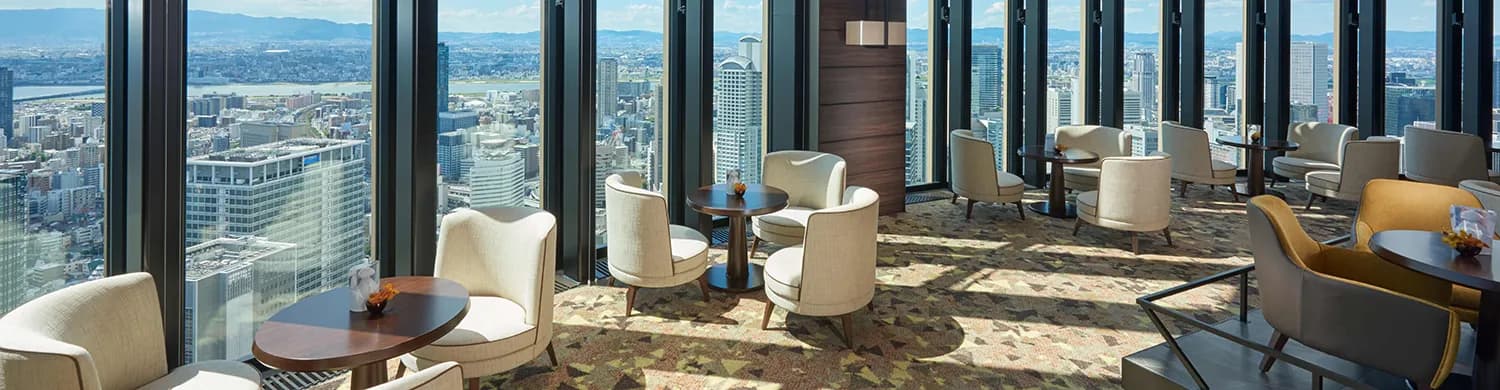
The first thing to understand is that most Japanese restaurants do one thing only, and have done it every day for years. A soba shop does not serve sushi, a tempura counter does not serve ramen. The endless-menu "Japanese restaurants" familiar in Europe mostly exist in station malls and department-store restaurant floors (often the 8th or 9th floor). Handy for an undecided group, rarely the best.
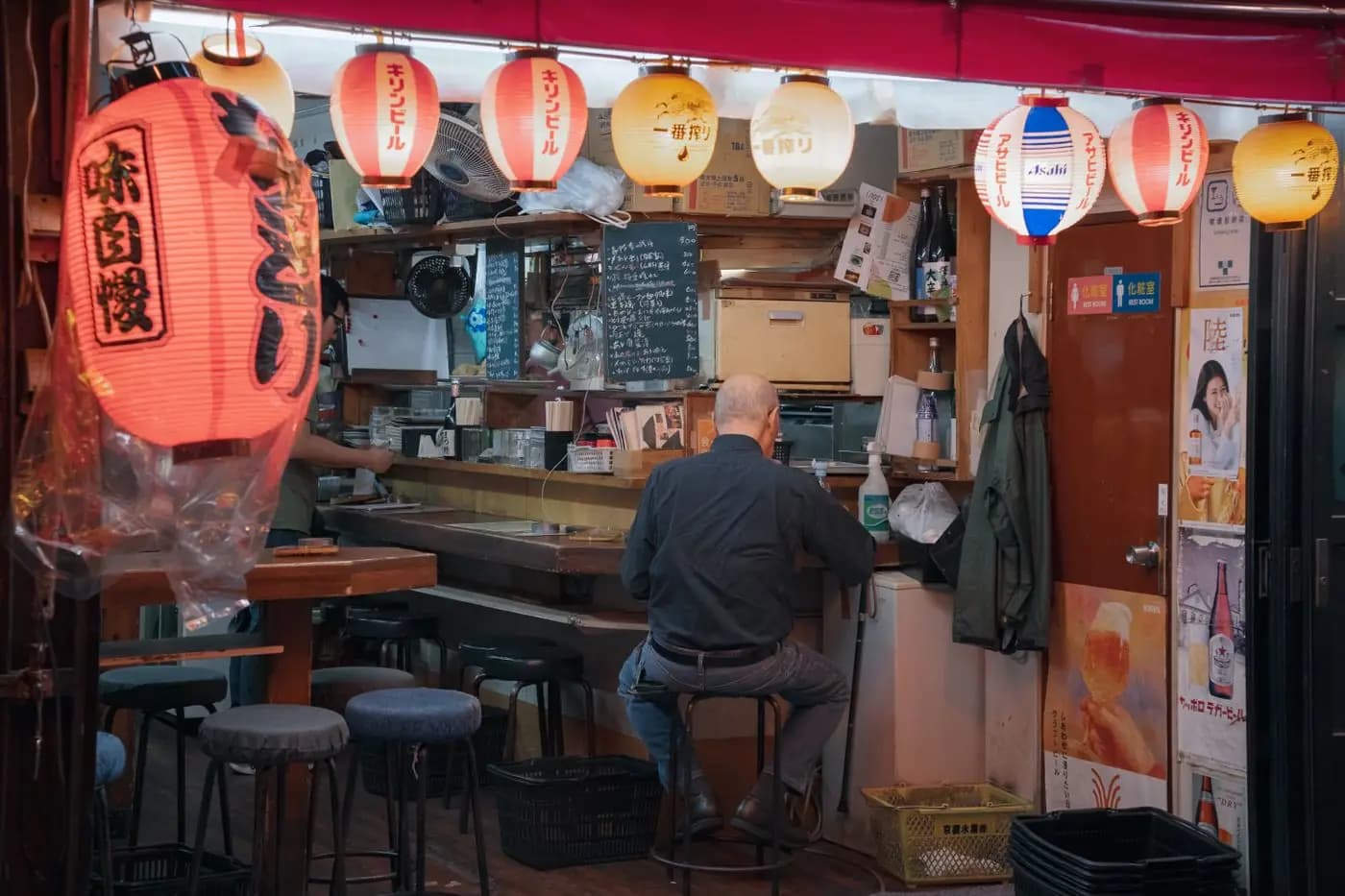
To taste the 20 dishes on this list, think in terms of venue types: the sushi-ya, the tempura-ya, the ryotei (kaiseki), the ramen-ya, the izakaya (a pub where you drink and graze), the street stall and the traditional confectioner. The mental model is simple: one speciality, one address, possibly a queue.
A few benchmarks that avoid bad surprises:
- Hours: lunch is generally served from 11:30am to 2pm, dinner from 5:30pm. Many small places close in between, and kitchens close early (last orders around 9pm in traditional restaurants).
- Lunch, the budget trick: a lunch set (teishoku or "lunch course") is often two to three times cheaper than dinner for the same cooking. A ¥30,000 dinner kaiseki may exist at ¥8,000 at lunch.
- Payment: bank cards are accepted almost everywhere in big cities in 2026, but noodle counters, yatai and street stalls still prefer cash or IC cards (Suica, ICOCA).
- No tipping: it is neither expected nor understood. Some izakaya do charge an otoshi (a compulsory small starter, ¥300–800) that works as a cover charge.
- Booking: essential for counter sushi, high-end tempura and kaiseki; pointless for ramen, where you queue.
One last point: the season matters. Kaiseki menus change every month, eel is mostly eaten in summer (the Day of the Ox, late July), and oden and shabu-shabu are winter dishes. The same trip in April and in November will not put the same plates in front of you.
Sushi, tempura, kaiseki, sukiyaki, shabu-shabu: the dishes you book ahead
These five dishes are the ones you book, sometimes weeks ahead, and the ones that weigh most in a budget.
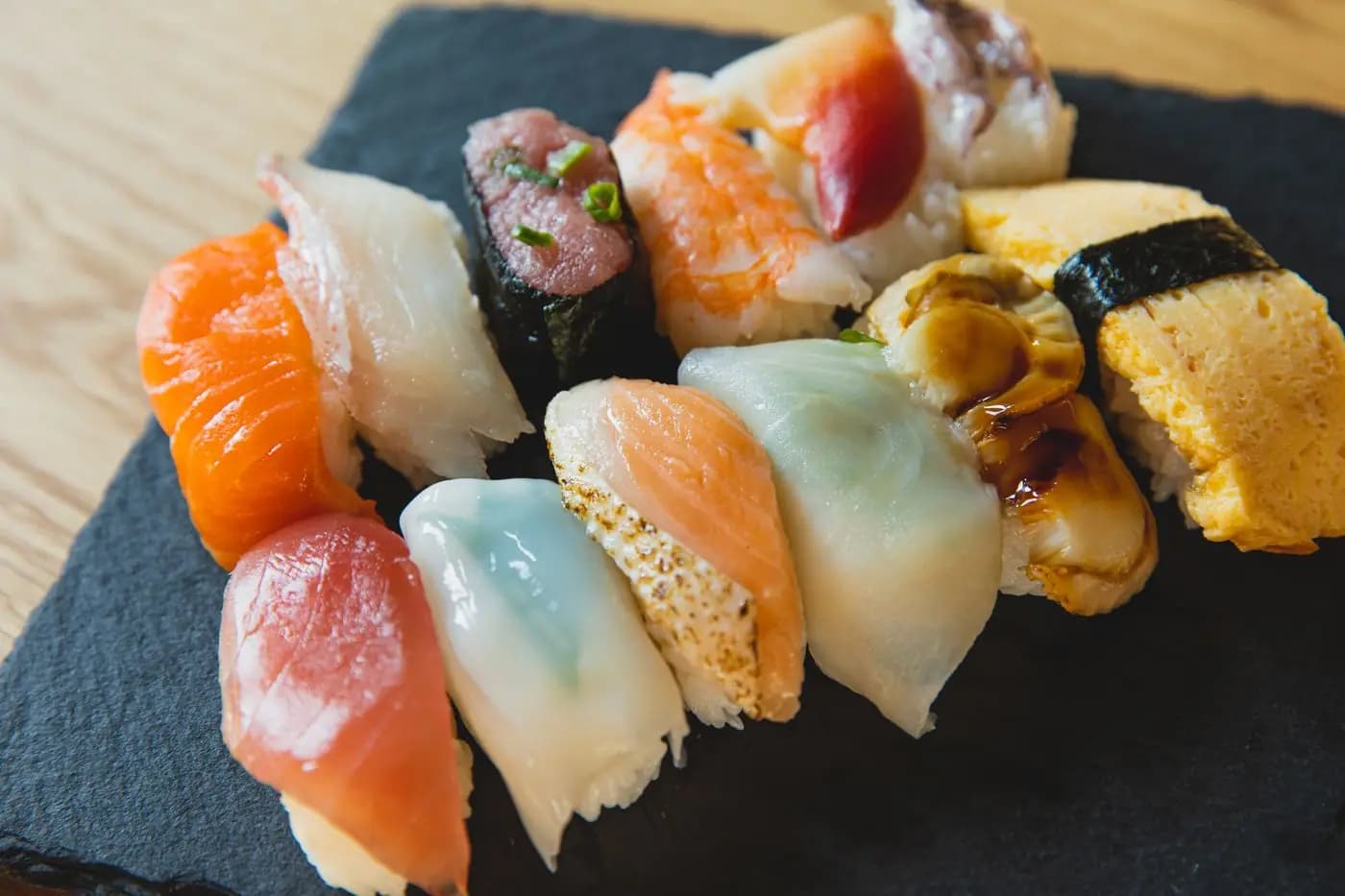
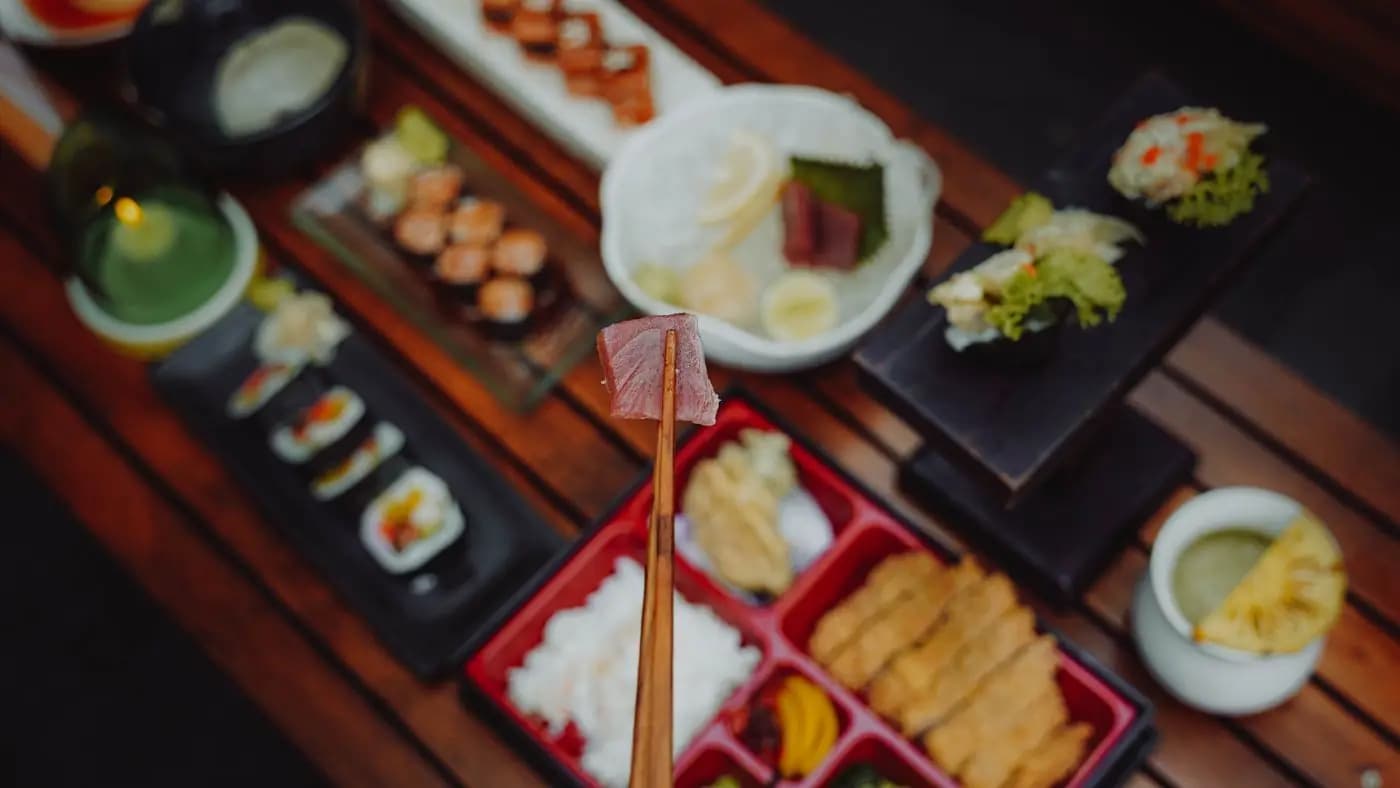
1. Sushi. Three levels to know: kaitenzushi (conveyor belt or tablet ordering, ¥150–500 per two-piece plate), the neighbourhood counter with a fixed lunch menu (¥2,500–5,000), and counter omakase where the chef serves 15 to 20 pieces in a row (¥15,000–50,000 and more in Ginza). The rules of the latter have their own guide on this site.
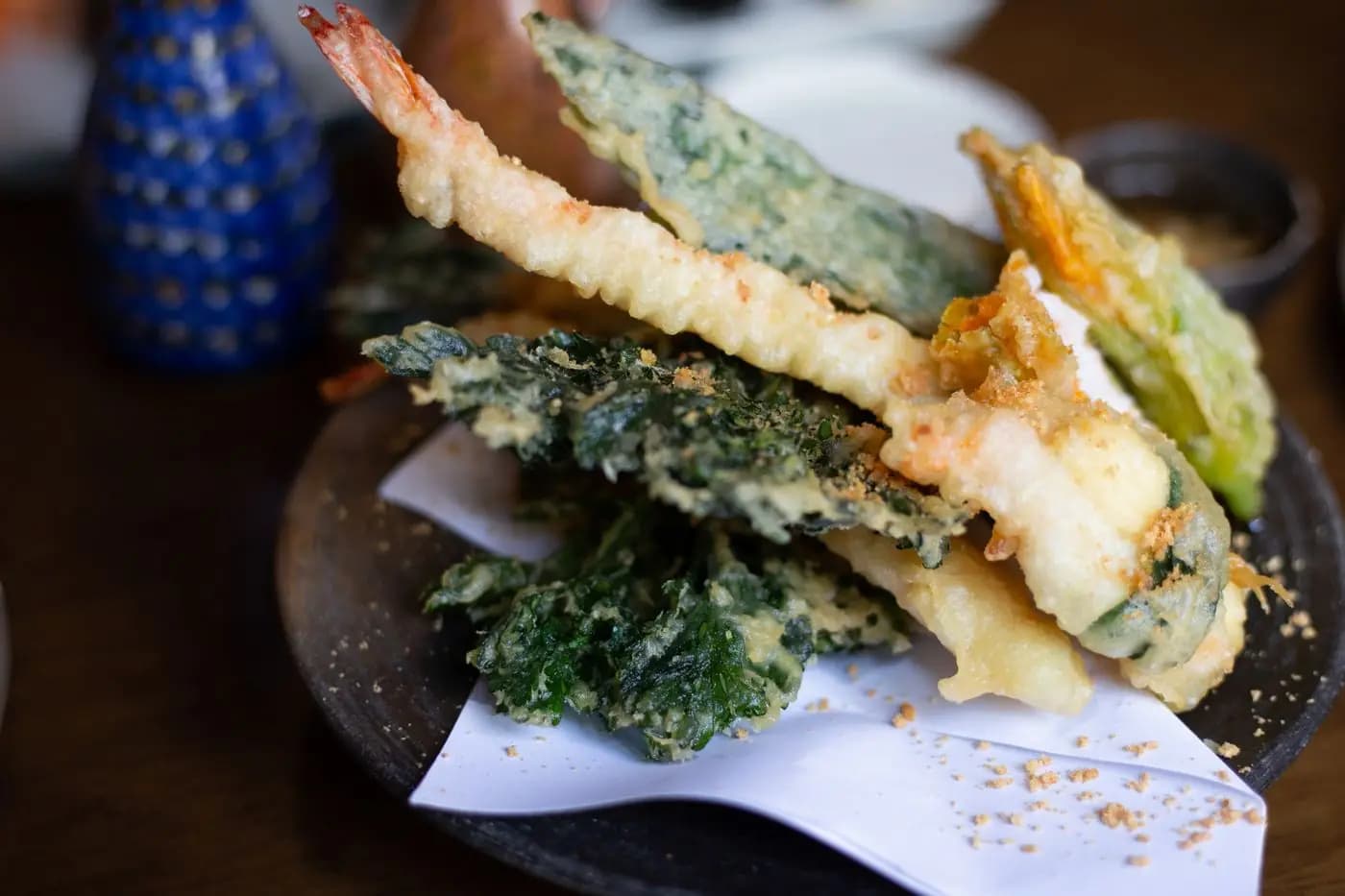
2. Tempura. Forget heavy frying: at the counter, the chef lifts the pieces from the oil one at a time (prawn, kisu whiting, mushrooms, seasonal vegetables) and places them straight in front of you. You eat them at once, with salt or tentsuyu sauce and grated radish. Lunch menu ¥3,000–8,000, dinner ¥10,000–25,000.
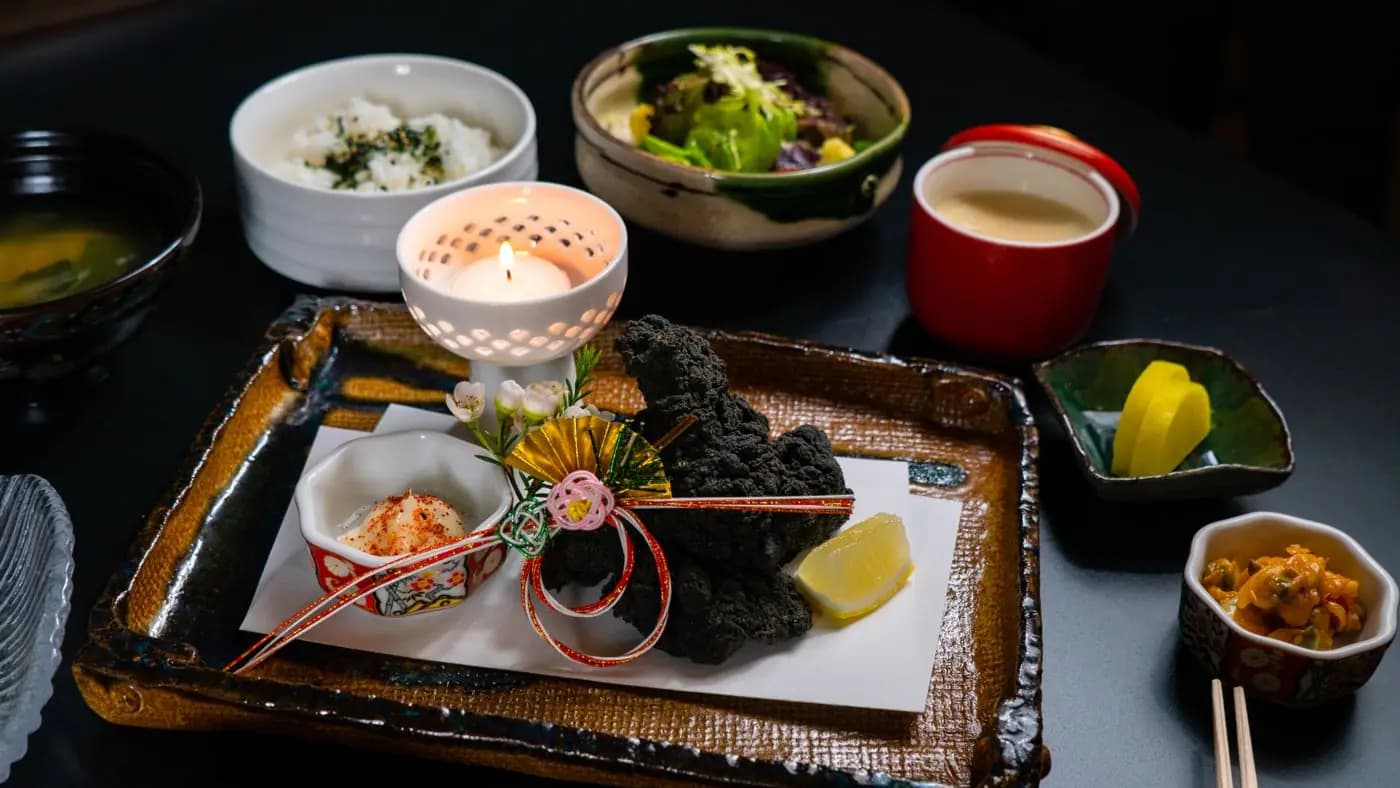
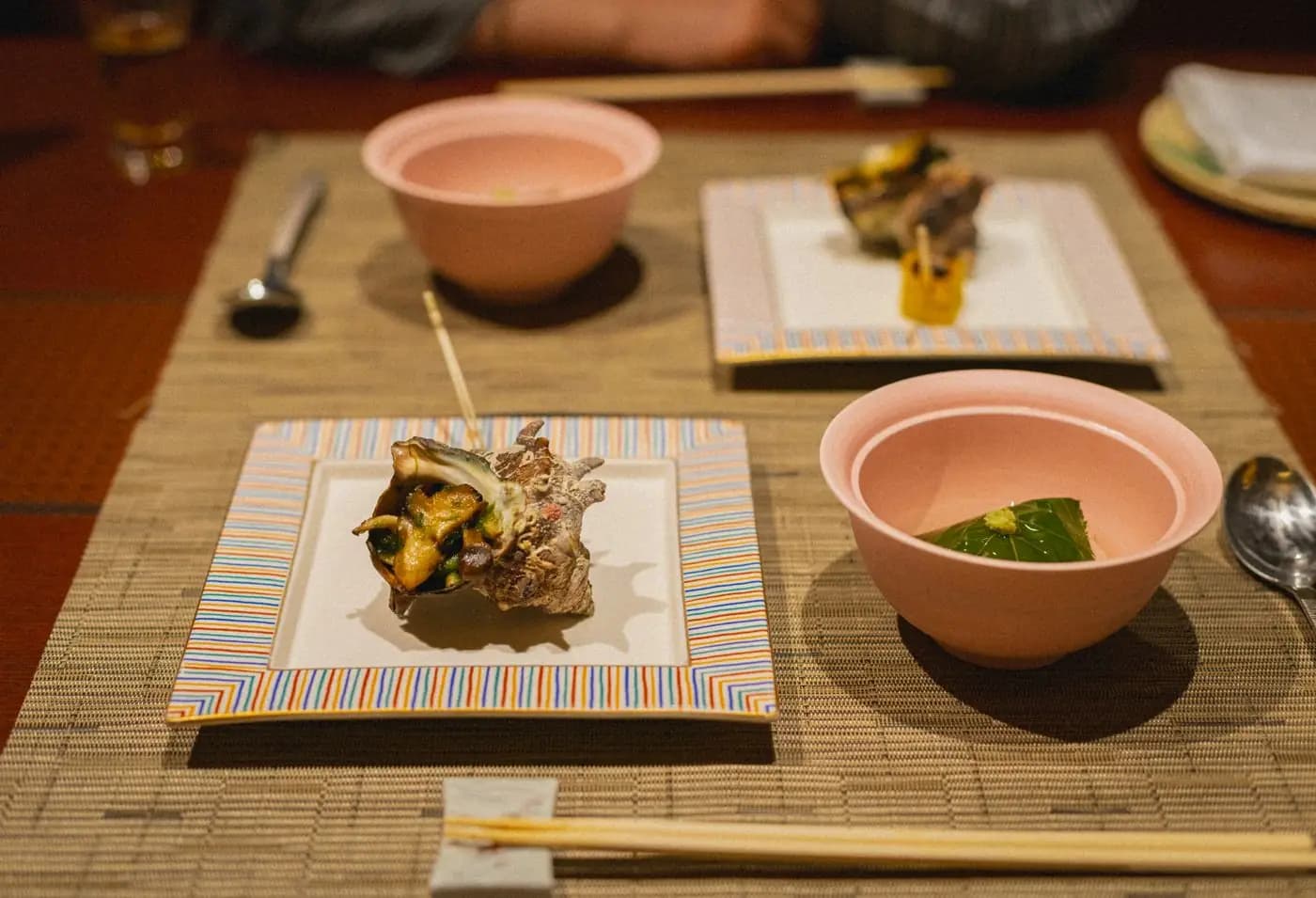
3. Kaiseki. The Japanese tasting meal in 8 to 12 courses: seasonal starter (hassun), sashimi, simmered dish, grilled dish, rice and miso soup, dessert. Kyoto is its capital. Allow ¥15,000–40,000 at dinner in a ryotei, often in a tatami room, and two hours at the table. In a ryokan, dinner is usually a kaiseki included in the room rate.
4. Sukiyaki. Thinly sliced beef cooked at the table in a sweet-salty broth (soy sauce, sugar, mirin), then dipped in beaten raw egg. Kansai style sears the meat with sugar first; Tokyo style uses a ready-made sauce (warishita). With wagyu, ¥8,000–20,000.
5. Shabu-shabu. The same beef (or pork), swished for a few seconds in a light broth, then dipped in sesame or ponzu sauce. Lighter than sukiyaki and easier on jet-lagged stomachs. ¥4,000–15,000 depending on the meat.
Avoid booking a kaiseki on the first evening after a long-haul flight. Two hours kneeling on tatami at 9pm local time is rarely when you best appreciate a meal at that price. Place it mid-trip instead.
Ramen, udon, soba, tonkatsu, curry, onigiri: eating well for under ¥2,000
This is everyday food, what Japanese office workers eat at lunch, and it often leaves the best memories.
6. Ramen. Wheat noodles in a broth (soy, salt, miso or pork bone), ¥1,000–1,600 a bowl in 2026. You often order from a ticket machine at the entrance. Slurping loudly is normal. Our ramen guide covers the regional styles.
7. Udon. Thick, soft, springy wheat noodles, served hot in a clear broth or cold with a dipping sauce. Self-service chains (take your bowl, add tempura and toppings, pay at the end) serve a decent bowl for ¥500–900. Kagawa, on Shikoku, is the benchmark region (sanuki udon).
8. Soba. Buckwheat noodles, ideally as cold zaru soba with a dipping sauce. At the end, you pour the cooking water (sobayu) into the sauce and drink it. ¥800–1,800. Note: buckwheat is one of the most severe allergens, and many restaurants cook soba and udon in the same water.
9. Tonkatsu. Panko-breaded pork cutlet, served with unlimited shredded cabbage, rice, miso soup and a thick sauce. You choose between rosu (loin, fattier) and hire (fillet, leaner). ¥1,500–3,500 for a set.
10. Kare raisu. Japanese curry, thick, mild and slightly sweet, served over rice, often with a breaded cutlet (katsu kare). It reached Japan via the British navy in the late 19th century and is now canteen food. ¥800–1,500.
11. Onigiri. A ball or triangle of rice wrapped in nori, filled with grilled salmon, salted plum (umeboshi), tuna-mayonnaise or cod roe (mentaiko). ¥150–300 at a konbini. Tip: the wrapper opens in three numbered steps (1, 2, 3) so the seaweed stays crisp.
For a quick breakfast, a konbini onigiri and green tea do the job. For lunch, a tonkatsu set or a bowl of cold soba costs less than a sandwich at a Paris railway station.
Okonomiyaki, takoyaki, kushikatsu: Osaka's street food
Osaka is known as the city where you ruin yourself eating (kuidaore). In practice, it is rather the place where you eat a lot for little, standing up or sitting in front of a hotplate.
12. Okonomiyaki. A thick pancake of batter, shredded cabbage and pork (or seafood), cooked on a griddle (teppan) and topped with brown sauce, mayonnaise, bonito flakes and seaweed powder. In many Osaka places, guests cook it themselves on the hotplate built into the table, with a spatula. In Hiroshima, the version is different: the ingredients are stacked in layers with yakisoba noodles, and the cook does the work. ¥1,000–2,000.
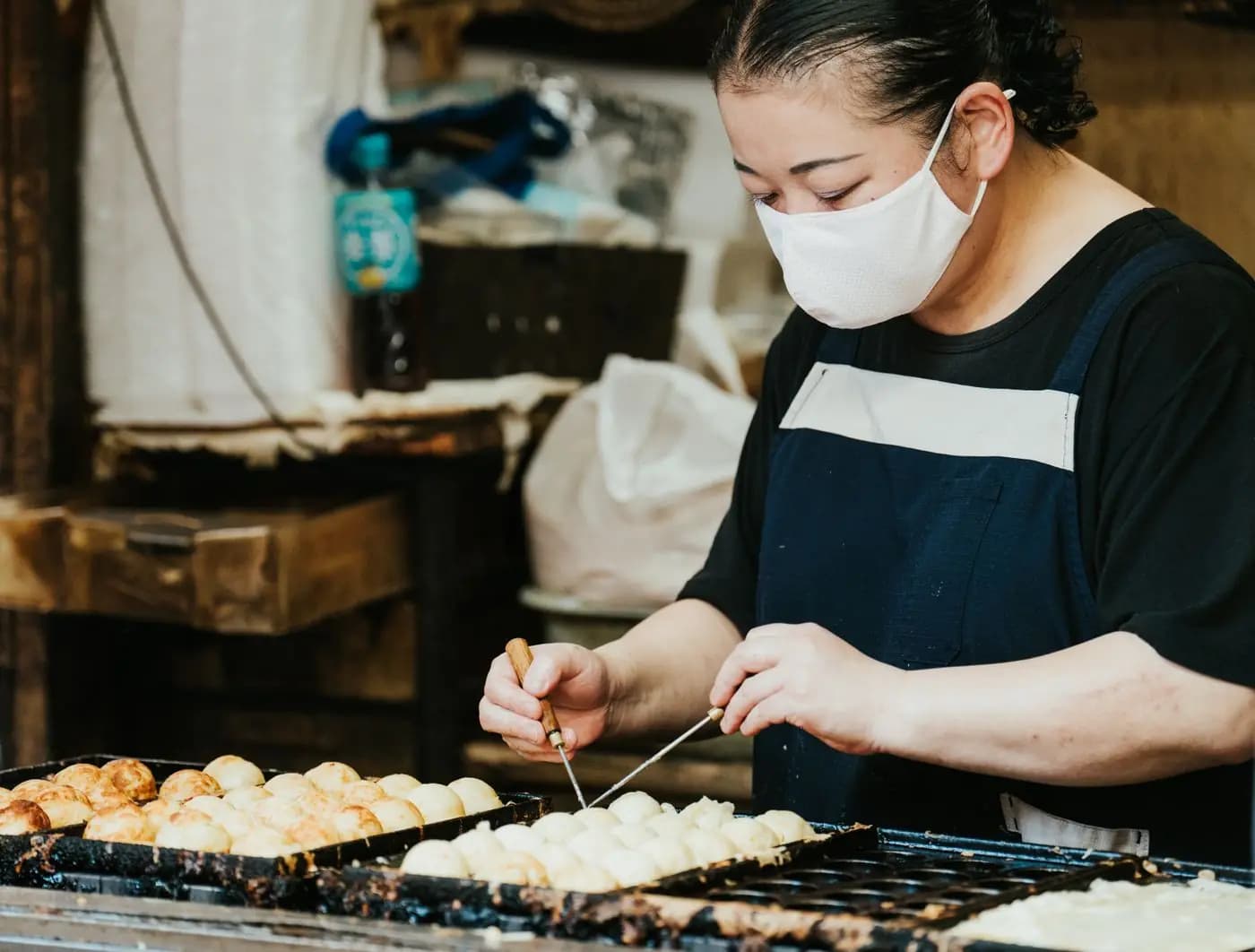
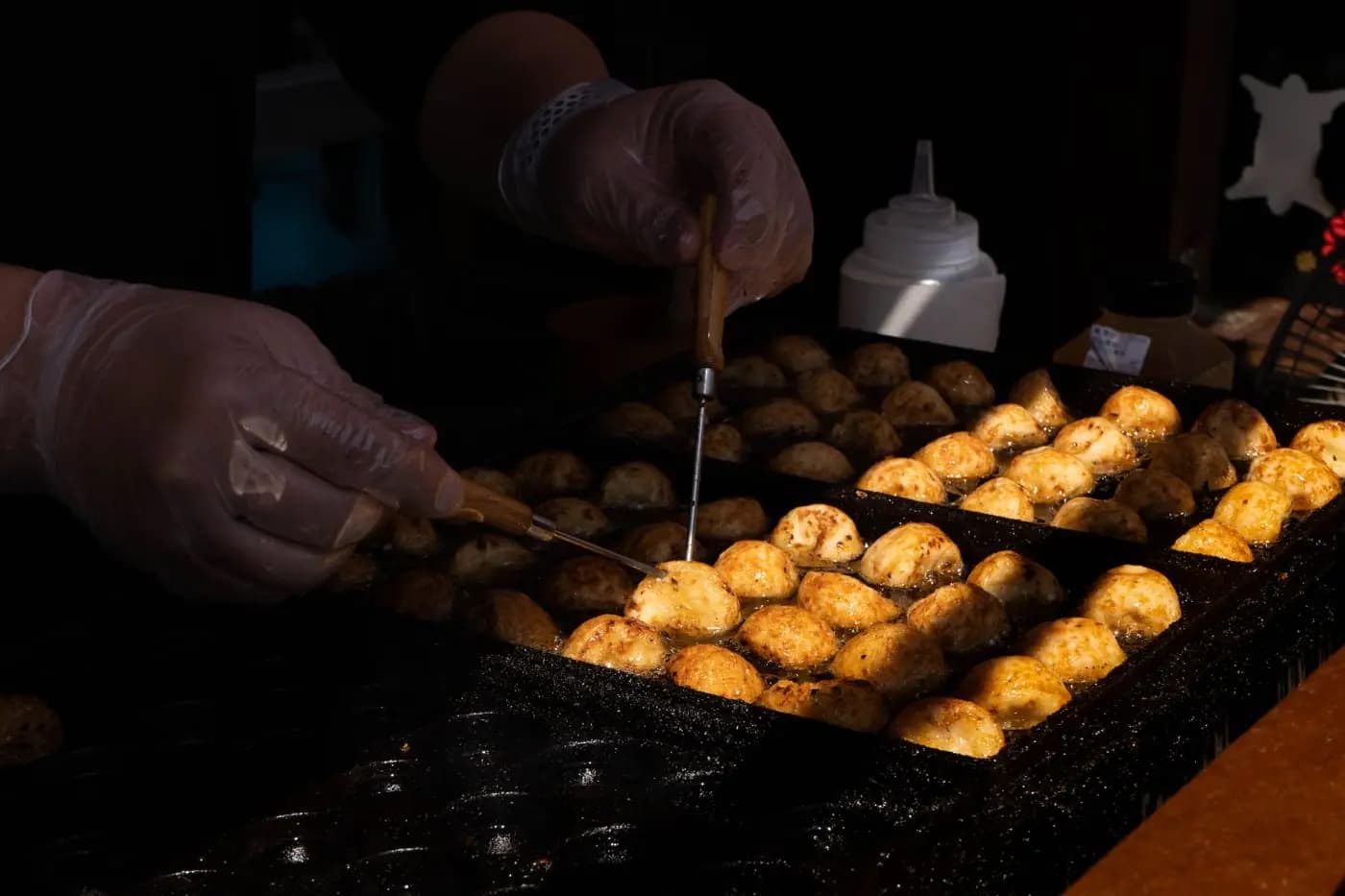
13. Takoyaki. Batter balls with a piece of octopus inside, cooked in a dimpled pan and turned with a pick. Six to eight pieces for ¥500–900. The classic trap: biting in straight away. The inside stays scalding for several minutes. You find them all around Dotonbori and at festival stalls.
14. Kushikatsu. Breaded, deep-fried skewers (beef, pork, prawn, vegetables, cheese), ¥100–300 each, a speciality of the Shinsekai district. The rule posted on every counter: no double dipping in the shared sauce tray. For more sauce, use a leaf of raw cabbage as a spoon.
These dishes suit a relaxed evening after a day of sightseeing: you eat in 45 minutes, talk loudly, and nobody minds. Dotonbori, however, is packed from 6pm to 9pm; Shinsekai or the streets around Tenma are calmer and cheaper.
Yakitori, gyoza, karaage, oden, unagi: evenings at the izakaya and the counter
The izakaya is Japan's most flexible format: you order little by little, share, and drink beer, sake or highballs. It is where you can taste several dishes on this list.
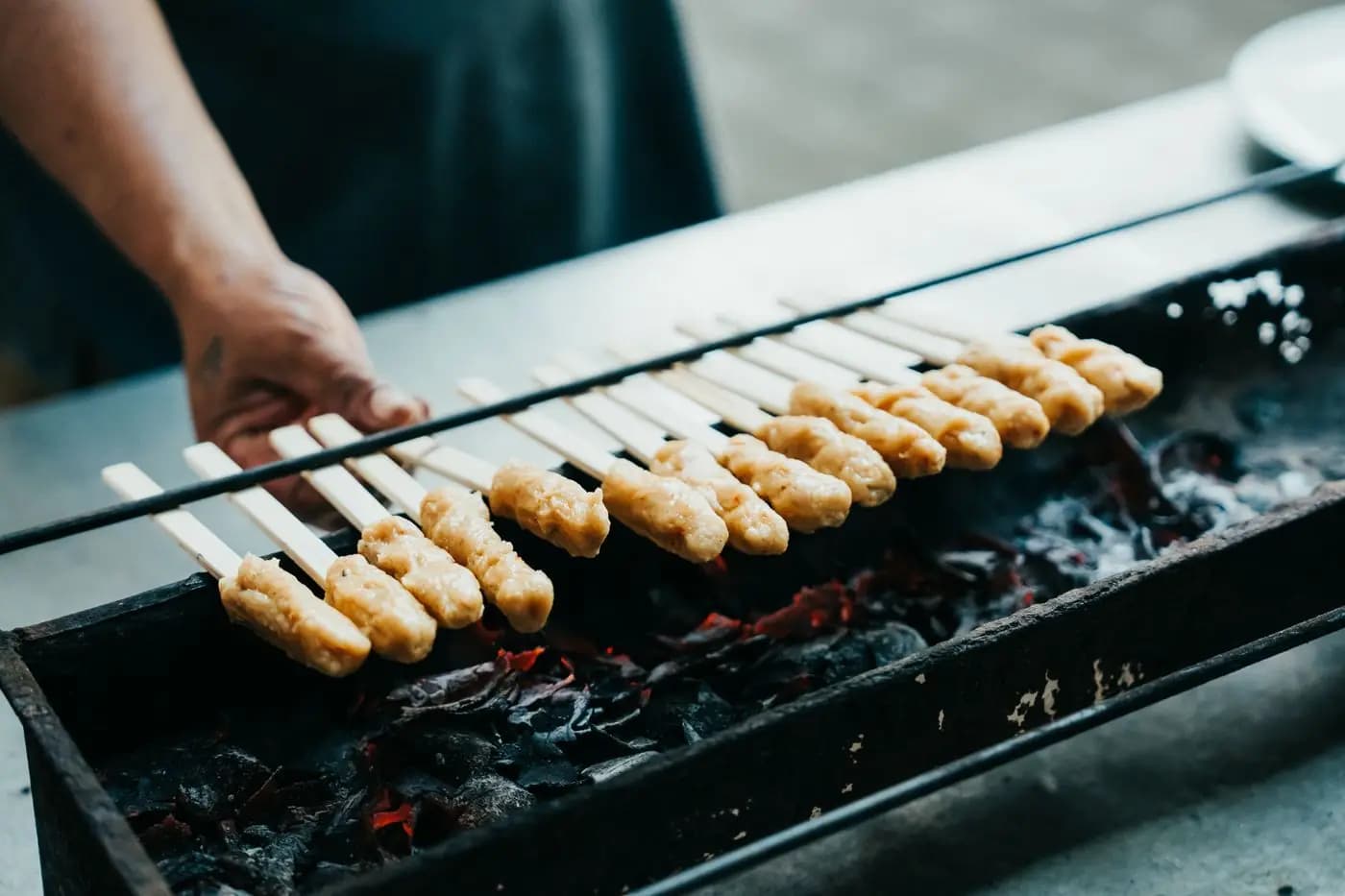
15. Yakitori. Chicken skewers grilled over charcoal (binchotan): thigh (momo), meatballs (tsukune), skin (kawa), heart, gizzard, wing. You choose shio (salt) or tare (sweet soy glaze). ¥150–400 a skewer at an izakaya, omakase menus of ¥6,000–12,000 at specialist places. In Tokyo, the alleys under the tracks at Yurakucho and Omoide Yokocho in Shinjuku are atmospheric but cramped: six to ten seats per stall.
16. Gyoza. Pork and cabbage dumplings, pan-fried on one side and steamed on the other. Utsunomiya and Hamamatsu compete for the title of capital; in Fukuoka they come as bite-sized hitokuchi gyoza. ¥400–700 for six.
17. Karaage. Chicken marinated in soy and ginger, fried in starch. Japanese children's favourite and an izakaya staple, often served with a lemon wedge. Avoid squeezing the lemon over the whole plate without asking the table: it is a real topic of debate in Japan.
18. Oden. A winter stew: daikon radish, eggs, fried tofu, fish cakes and konjac simmered for hours in dashi. You find it in izakaya, yatai and even convenience stores from October to March. ¥100–300 a piece.
19. Unagi. Grilled eel glazed with sauce, served over rice (unadon or unaju). In Nagoya it is eaten as hitsumabushi: the first third plain, the second with condiments, the last with broth poured over. Eel has become expensive: ¥4,000–8,000 a dish at a good restaurant.
Good to know: in chain izakaya, nomihodai (all-you-can-drink for 90 to 120 minutes, ¥1,500–2,500 per person) is often paired with a set menu. It is the format Japanese companies choose for their team evenings.
Wagashi, dango, matcha: Japanese sweets and where to taste them
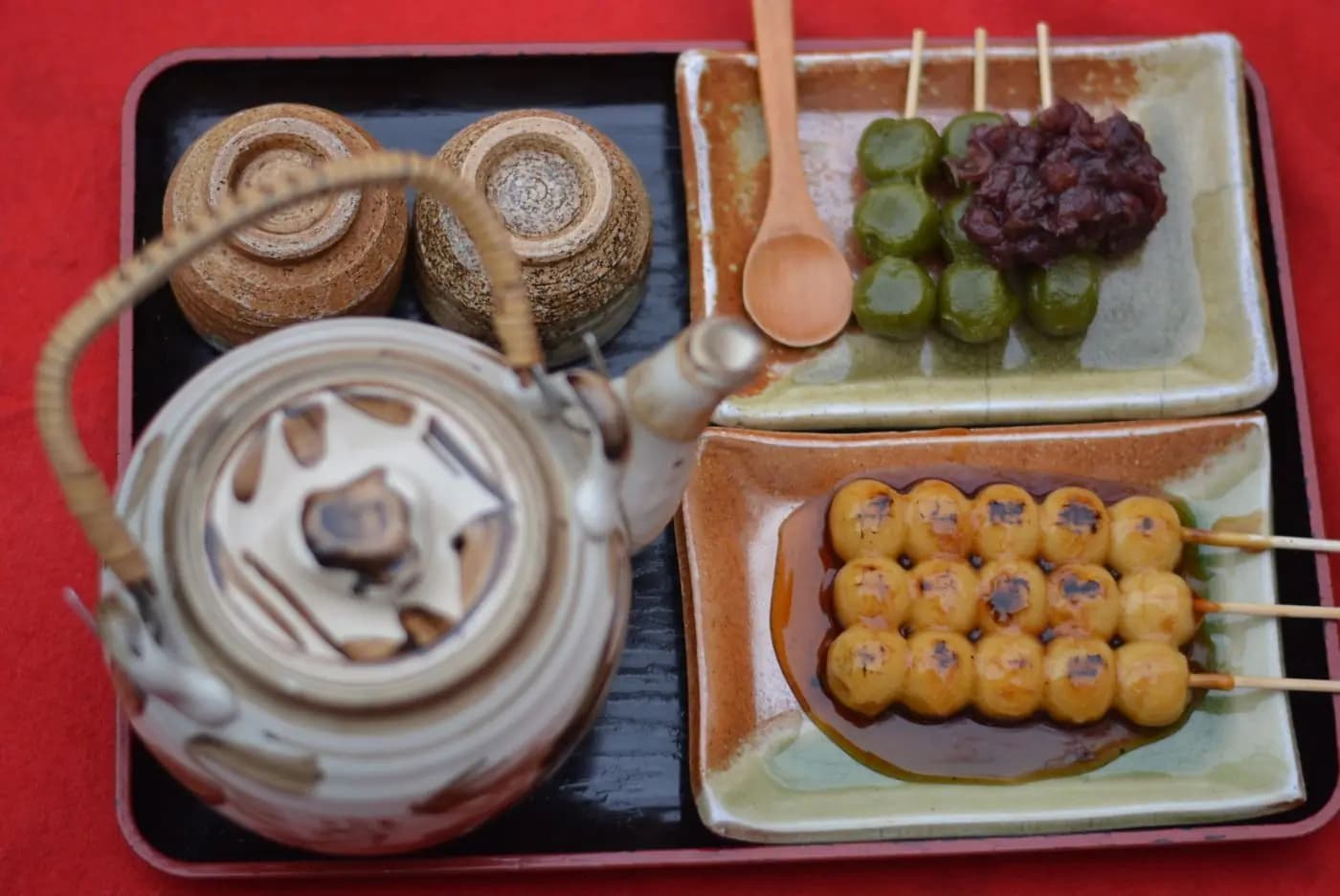
20. Wagashi. Traditional Japanese confectionery is built around red bean paste (anko), glutinous rice (mochi) and agar. It is lightly sweetened by European standards and designed to go with bitter tea.
The main families to know:
- Namagashi ("fresh sweets"): small sculptures of bean paste that change with the season (cherry blossom in spring, maple leaf in autumn). They are served at the tea ceremony and keep for one day. ¥400–800 each at a Kyoto confectioner.
- Dango: glutinous rice balls on a skewer, glazed with sweet soy sauce (mitarashi) or bean paste. ¥150–300.
- Daifuku: mochi filled with bean paste, sometimes with a whole strawberry (ichigo daifuku, in winter and spring).
- Taiyaki: a fish-shaped waffle filled with bean paste or custard. A street snack, ¥200–300.
- Kakigori: shaved ice topped with syrup or matcha, summer only in many shops.
Kyoto has the oldest confectioners, including several houses over 300 years old, and tea rooms where a matcha with a namagashi costs ¥1,000–1,800. In Tokyo, the depachika (department-store food basements) gather dozens of confectioners: handy for comparing and for taking home gift boxes, as long as you check the best-before date, which is often short.
To understand what you are eating, a wagashi-making workshop (about 1h30) says more than any tasting: everyone shapes two or three pieces with the confectioner's tools, then eats them with tea.
Introducing a group to Japanese food: formats and logistics
With 20, 50 or 150 people, the question is no longer "which dish?" but "which format?". Japan's best places are small, and that is the main constraint.
- Counters (sushi, tempura, high-end yakitori): usually 8 to 12 seats. For a group, you privatise the counter for a sitting of 10 to 12, or split the group across three or four places on the same evening, each with a host. Book 4 to 8 weeks ahead; a deposit is common.
- Kaiseki in a private room: Kyoto ryotei and large hotels have tatami rooms for 10 to 60 guests. Ask for low chairs (zaisu) or tables and chairs: many European participants cannot sit on the floor for two hours.
- Okonomiyaki or yakiniku teppan: a great format to get teams talking, with one hotplate for 4 to 6 people. Some Osaka places privatise a whole floor for 40 to 80 guests.
- Guided street food: in groups of 10 to 15 with a guide, over 2h30 to 3h, in Dotonbori, Kuromon or Fukuoka's yatai. The guide pays and orders, which avoids 15 separate queues.
- Privatised izakaya: set menu and free-flow drinks, ¥6,000–12,000 per person depending on the level. The most economical format for an evening of 50 or more.
Three habits avoid bad surprises: collect diets and allergies at registration (Japanese kitchens need time to adapt a menu without dashi), set a drinks budget per person, and plan transfers, because taxis and the subway get complicated for 60 people after 10pm.
For groups who want to taste everything in a short time, SHINOGI DMC builds programmes that alternate a kaiseki dinner, a street-food evening in Osaka and a sushi or wagashi workshop, with restaurants checked for their real capacity and how they handle dietary needs.
Frequently asked questions
Which Japanese dishes should you try on a first trip?
For a first trip: counter sushi, ramen, tempura, okonomiyaki or takoyaki in Osaka, yakitori at an izakaya, a kaiseki in Kyoto and wagashi with matcha. Add udon or soba and a tonkatsu for lunches.
How much does a meal cost in Japan in 2026?
Allow ¥1,000–2,000 for a simple lunch (ramen, udon, tonkatsu), ¥3,000–6,000 for dinner at an izakaya, and ¥15,000–40,000 for a dinner kaiseki or sushi omakase. No tipping.
What is the difference between Osaka and Hiroshima okonomiyaki?
In Osaka the ingredients are mixed into the batter and often cooked by guests at their table. In Hiroshima they are stacked in layers with yakisoba noodles, and the cook makes the pancake.
Do you need to book restaurants in Japan?
Yes for counter sushi, high-end tempura, kaiseki and any group over six, often several weeks ahead. No for ramen, udon, conveyor-belt sushi and street food, where you queue.
What to eat in Osaka in one evening?
Takoyaki and okonomiyaki around Dotonbori or Tenma, then kushikatsu in Shinsekai, without double-dipping in the shared sauce. Budget: ¥3,000–5,000 per person with a drink.
Can a group of 50 have a kaiseki dinner?
Yes, in a ryotei with a large banquet room or in a Kyoto hotel, booking two to three months ahead. Ask for tables or low chairs and send dietary requirements at least three weeks before.
Rédaction SHINOGI DMC · Updated