What is kaiseki?
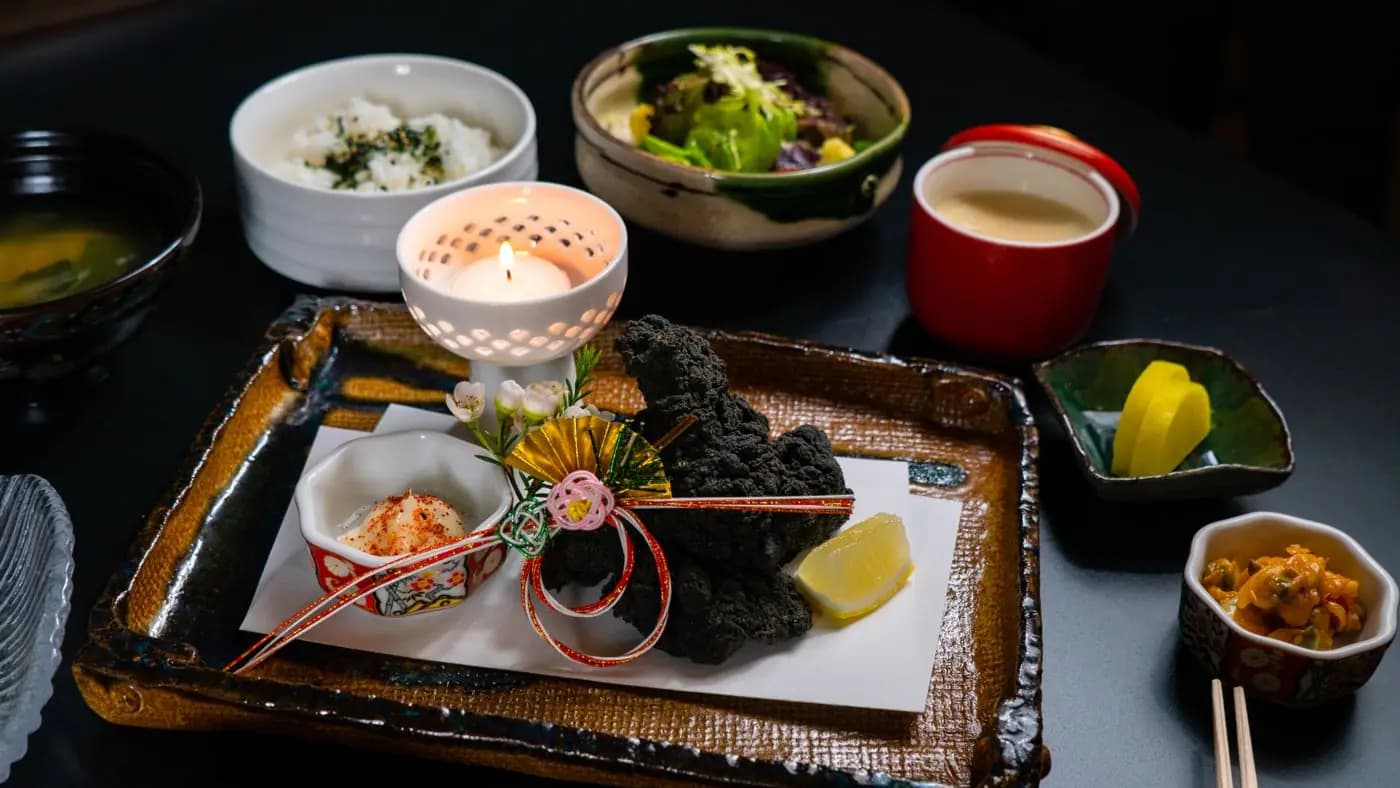
Kaiseki is Japan's great seasonal meal, served as a sequence of 8 to 12 small courses in a set order: an appetiser, a seasonal platter (hassun), sashimi, a clear soup, a grilled dish, a simmered dish, rice with miso soup and pickles, then dessert. It lasts 2 to 3 hours. In 2026, a kaiseki dinner generally costs ¥15,000 to ¥40,000 at a good restaurant, and ¥33,000 to over ¥100,000 at Kyoto's most famous houses, before service charge.
It is not a dish but a way of composing a meal. Kaiseki rests on three ideas:
- The season, even the fortnight. Menus often change every month. Not just the produce but the tableware, the leaves decorating the plate and the scroll hanging in the alcove follow the calendar.
- Progression. Each course prepares the next; flavours move from light to richer, then return to simplicity with the rice.
- Dashi. The kombu and dried bonito stock underpins many dishes. It gives kaiseki its delicacy, and it is also why kaiseki is not vegetarian by default.
Traditional Japanese cuisine (washoku) has been on UNESCO's Intangible Cultural Heritage list since 2013, and kaiseki is its most refined form. For a first overview of Japanese food, our article on Japanese dishes to try casts a wider net.
Kaiseki: 懐石 or 会席, from tea meal to banquet
Two Japanese words are pronounced "kaiseki", and the difference often intrigues travellers.
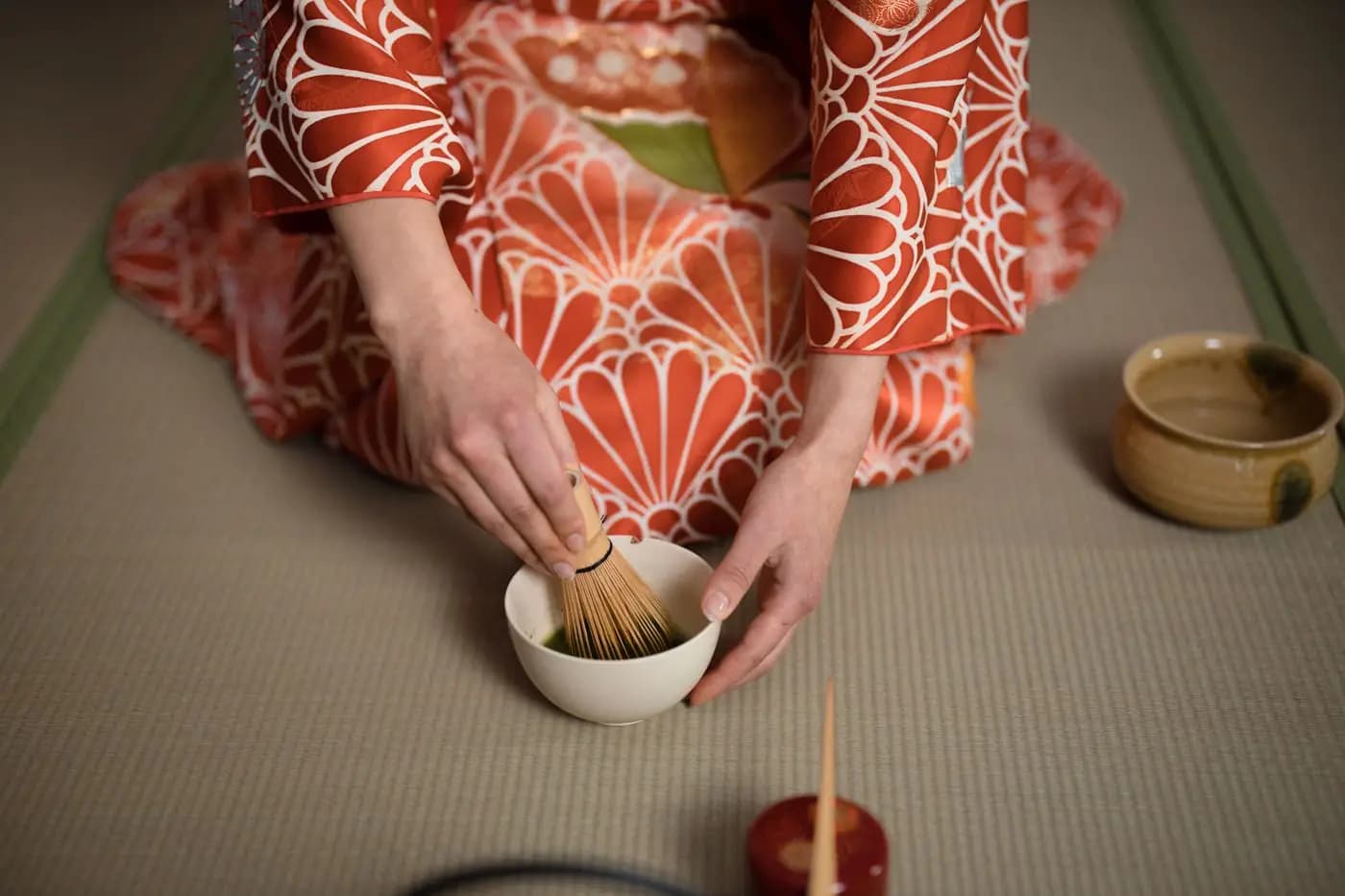
- 懐石 (kaiseki, "stone in the bosom"). The term comes from Zen monks, who kept a warm stone against their stomach to stave off hunger while fasting. It first referred to cha-kaiseki, the light meal served before thick tea at a formal tea ceremony: a few sober dishes, a soup and rice, meant not to overwhelm the tea.
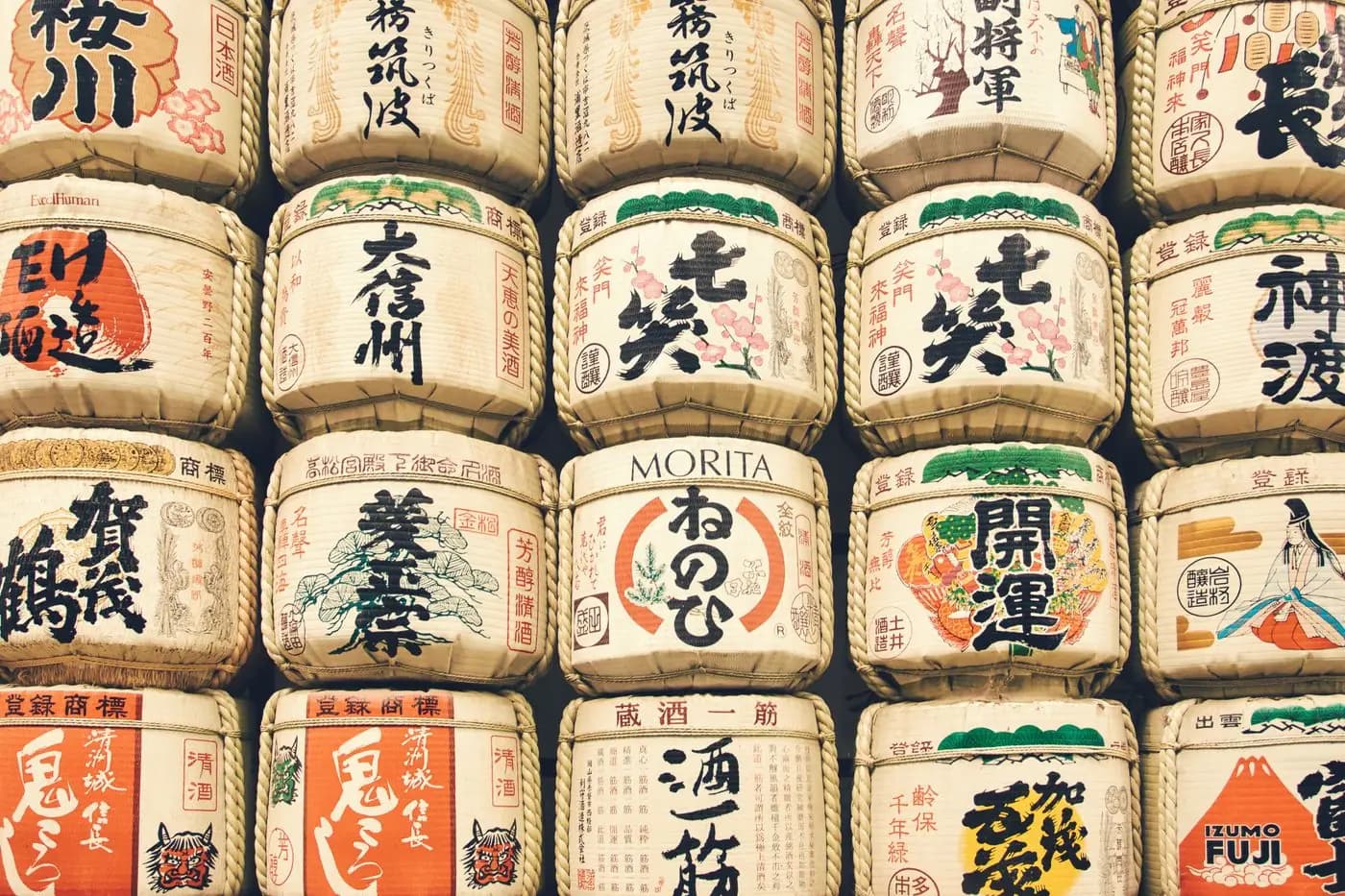
- 会席 (kaiseki, "gathering of guests"). This is banquet cuisine, born in the reception houses of the Edo period, where people ate while drinking sake. More courses, more variety, and the rice comes at the end, after the drinking.
Today, Kyoto's great restaurants readily use 懐石 for their seasonal menus, which are in fact refined banquet meals, while ryokan and hotel banquet rooms often write 会席. For the traveller, the practical difference is slight: either way you eat a seasonal multi-course menu. Places serving true cha-kaiseki, tied to the tea ceremony, say so clearly.
A related word: ryotei, a traditional dining house with a garden and private tatami rooms, where kaiseki is served in its most formal form. Kappo, by contrast, is a counter restaurant where the chef prepares dishes in front of guests, in a more relaxed spirit.
If tea interests you, our article on the tea ceremony explains the sequence of a chaji, the full tea gathering that includes cha-kaiseki.
How a kaiseki meal unfolds, course by course
The order varies by house and season, but a restaurant kaiseki dinner typically follows this outline:
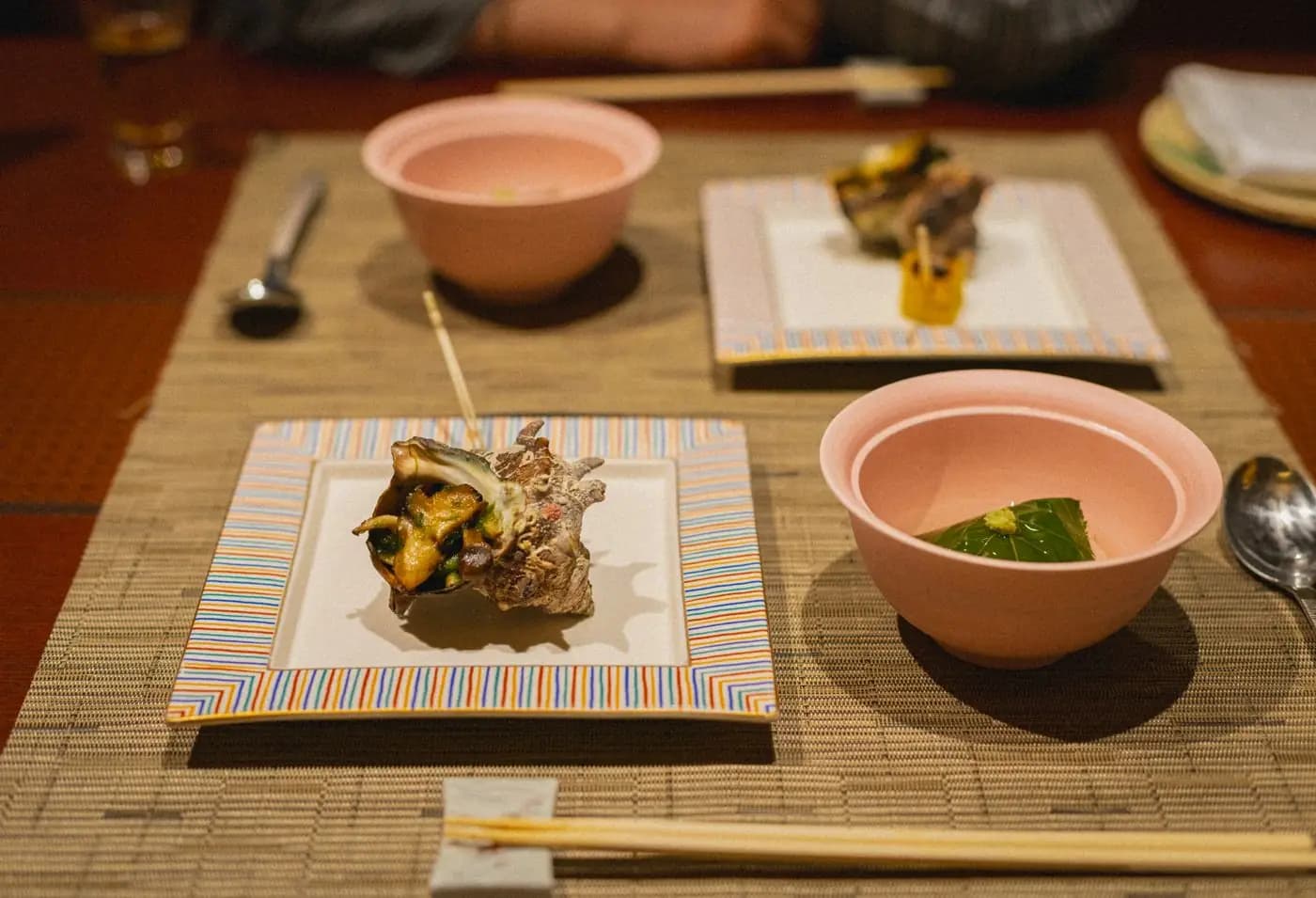
- Sakizuke (先付): the appetiser, one or two bites announcing the season. Often served with a first glass of sake or beer.
- Hassun (八寸): the seasonal assortment on a square tray, five to seven small preparations that sum up the moment: chestnut and maple leaf in autumn, bamboo shoot in spring.
- Mukozuke (向付): sashimi, two or three fish served in tableware chosen for the occasion.
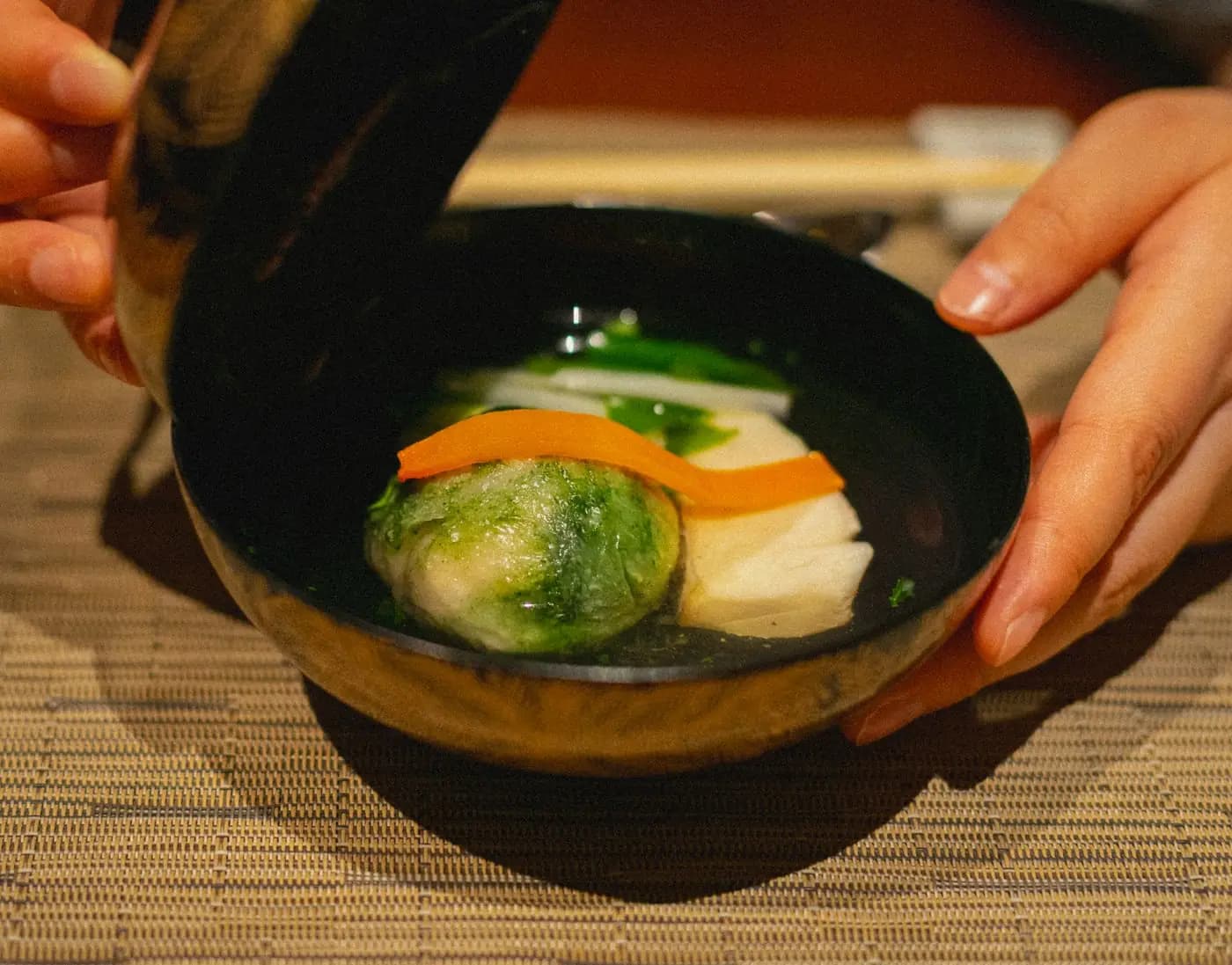
- Owan or wanmono (椀物): clear soup in a lidded lacquer bowl. Chefs see it as the heart of the meal: this is where the quality of the dashi is judged.
- Yakimono (焼物): grilled fish, sometimes wagyu.
- Takiawase or nimono (炊合せ): vegetables, tofu or fish simmered separately and then combined.
- Intermediate courses depending on the menu: a light fried dish (agemono), a vinegared dish (sunomono), a steamed dish.
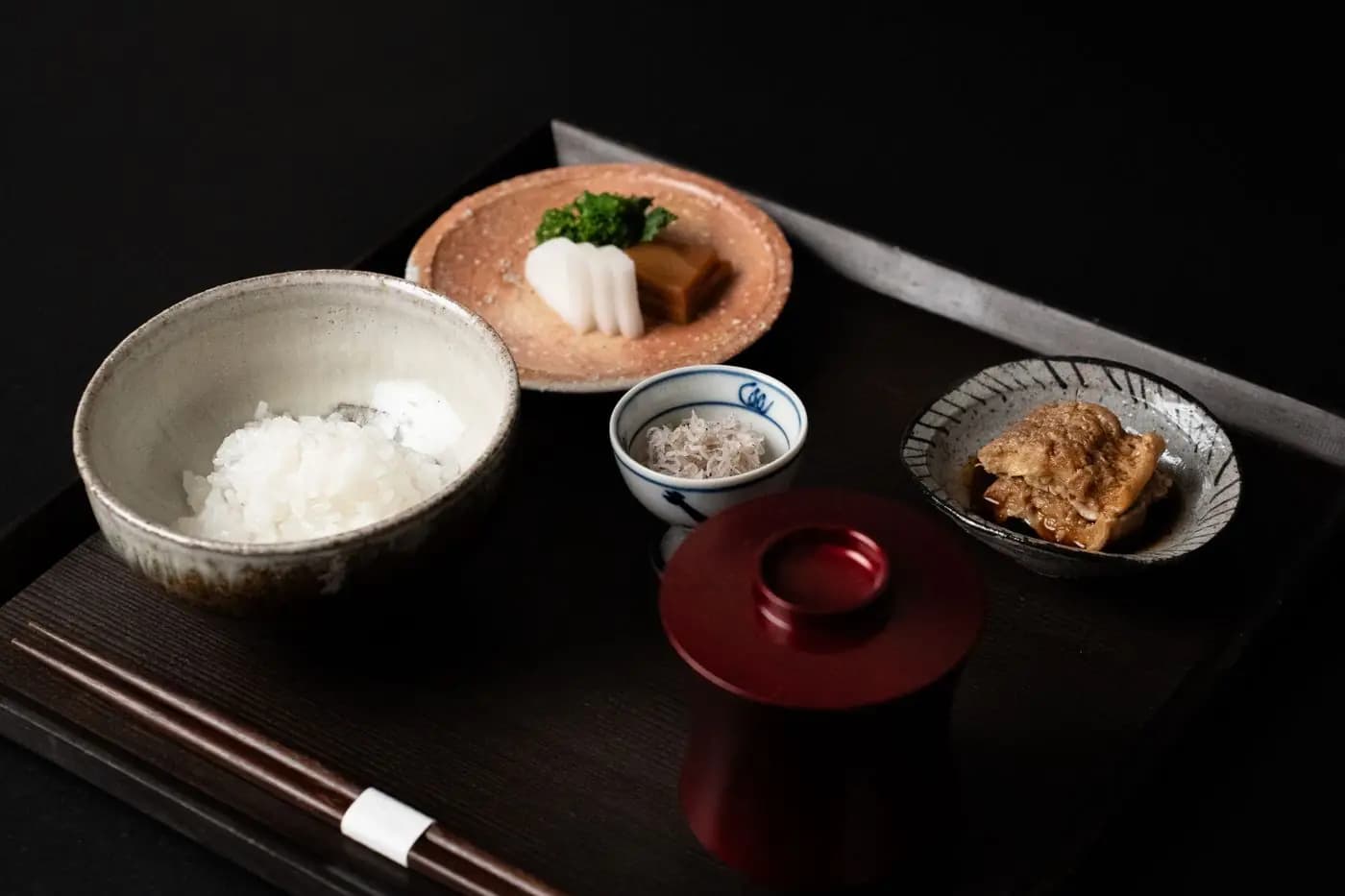
- Gohan, tome-wan and ko-no-mono (ご飯・止椀・香の物): rice (often cooked in a pot with a seasonal ingredient), the miso soup that "closes" the meal, and pickles.
- Mizumono (水物): seasonal fruit or a light dessert, sometimes followed by matcha and a wagashi.
In Kyoto, the service stands out: each course arrives just as you finish the previous one, the tableware changes with every course (lacquer, antique ceramics, glass in summer), and the hostess is happy to explain the month's theme. A full meal takes 2 to 2.5 hours, more if you take your time.
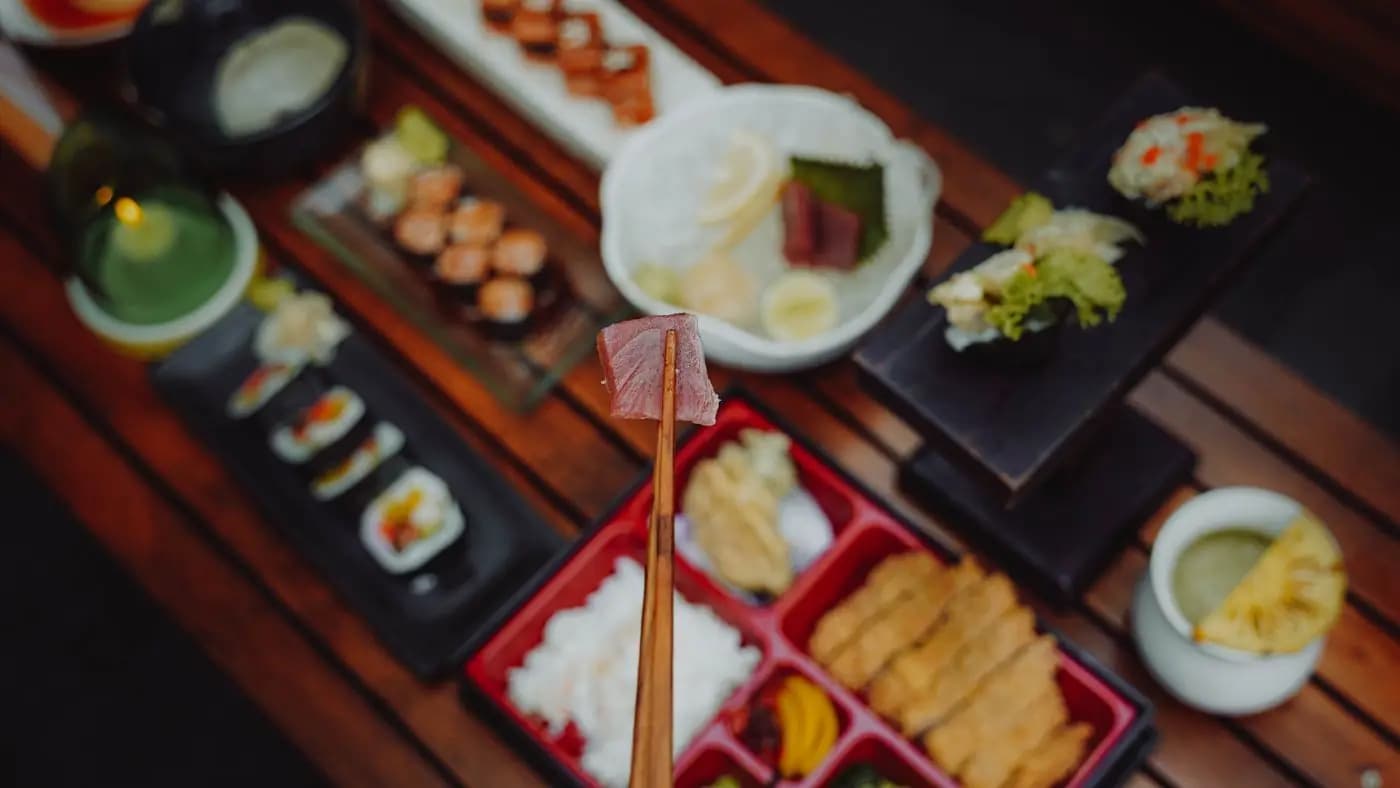
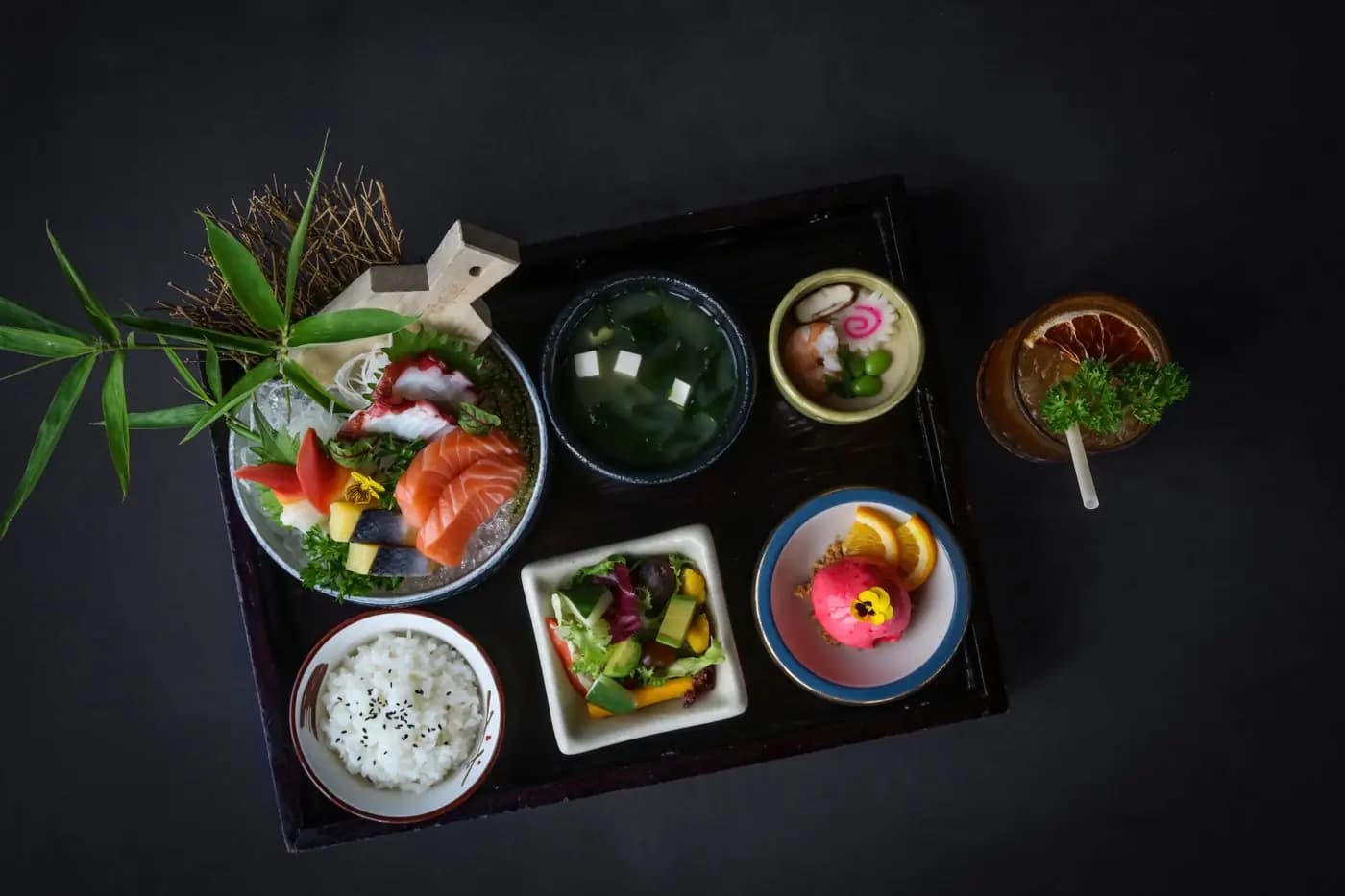
Kaiseki lunches, or shorter bento versions (shokado bento), follow the same logic with fewer courses and cost far less: they are the right way in for a first experience.
Kaiseki prices: how much does a kaiseki meal cost in Kyoto and Tokyo?
Kaiseki prices span a very wide range. 2026 benchmarks, per person, excluding drinks:
- Simplified kaiseki lunch or shokado bento: ¥5,000 to ¥15,000. Example: the shokado bento at Hyotei's annex in Kyoto, ¥7,260 including tax and service.
- Kaiseki dinner at a good restaurant or quality ryokan: about ¥15,000 to ¥30,000. At a ryokan, dinner is often included in the room rate.
- Kyoto's great houses, lunch: Kikunoi Honten from ¥16,500 to ¥110,000 (the ¥16,500 and ¥22,000 menus have fewer courses); Hyotei from ¥31,625 including tax and service.
- Kyoto's great houses, dinner: Kikunoi Honten from ¥33,000 to ¥110,000, plus 15% service; Hyotei from ¥37,950 including tax and service; Kikunoi Roan, the same house's counter restaurant, from ¥22,000 to ¥33,000 plus service.
- Tokyo: Akasaka Kikunoi serves lunch from ¥14,300 to ¥22,000 (plus 10% service) and dinner from ¥33,000 to ¥77,000 (plus 15%, or 20% in a private room).
On top of these:
- Service charges: 10 to 20% at ryotei, sometimes included (as at Hyotei), sometimes not (as at Kikunoi). Look for "税サ込" (tax and service included) or "サービス料別" (service extra).
- Drinks: a sake pairing or a bottle of wine can add ¥5,000 to ¥20,000 per person, more at the top houses.
- Private room charges at some establishments, or a minimum menu to use one (at Akasaka Kikunoi, private rooms require menus from ¥22,000).
Why such a gap? Rare produce (winter crab, matsutake, wild ayu), antique tableware, the size of the kitchen brigade, the setting (historic house and garden) and the service, more than the number of courses. Lunch remains the best deal: at the great houses it often costs half the price of dinner for a comparable experience.
Where to eat kaiseki in Kyoto or Tokyo
Kyoto remains the capital of kaiseki, but Tokyo has excellent tables too, including branches of the great Kyoto houses.
In Kyoto
- Kikunoi Honten, in Higashiyama, on the slopes near Kodai-ji: founded in 1912, with rooms overlooking the garden, one of the world's kaiseki benchmarks. Lunch arrival between 12:00 and 12:30.
- Kikunoi Roan, on the Takase River near Shijo: the counter (kappo) version, more accessible and lively, where you watch the cooks at work. Telephone bookings only, closed on Wednesdays.
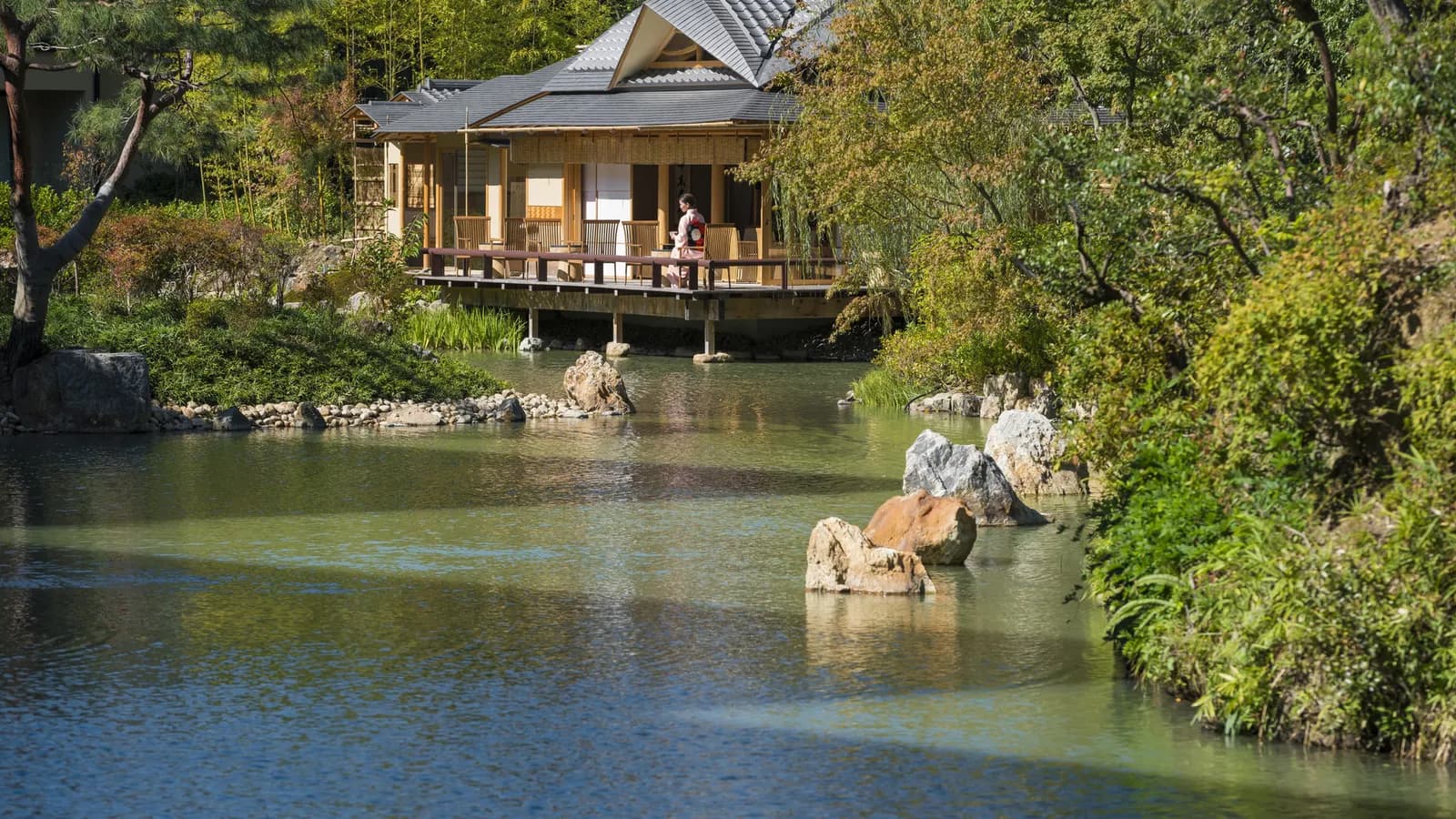
- Hyotei, near Nanzen-ji: more than 400 years of history, independent tea pavilions in the garden, famous for its soft-boiled egg (Hyotei tamago) and its summer rice-porridge breakfast. Bookings from 2 people; the main building is closed on Wednesdays.
- Kitcho Arashiyama, on the Oi River, one of the country's most prestigious houses, and Nanzenji Junsei, more affordable, specialising in tofu (yudofu) kaiseki in a large garden.
- Kyoto's ryokan, which serve kaiseki in the room or a private dining room; our article on staying in a ryokan explains how it works.
In Tokyo
- Akasaka Kikunoi, Kikunoi's Tokyo branch, with a counter, tables and four tatami rooms for 3 to 20 people.
- Hyotei Hibiya, in Tokyo Midtown Hibiya.
- The Japanese restaurants of the major hotels, which offer kaiseki menus and private rooms suited to groups and business meals.
The best tables are booked weeks ahead, and most take reservations in Japanese, by phone. Prepare dietary requirements in advance: a vegetarian (shojin) kaiseki exists but must be requested when booking, as classic dashi contains bonito. Our article on dietary needs and allergies in Japan gives useful wording.
Kaiseki etiquette, and omakase or kaiseki?
No one expects a foreigner to know every rule. A few gestures are enough to feel at ease:
- Lidded bowls: lift the lid, place it upside down beside the bowl, and put it back once the bowl is finished. If it sticks, gently squeeze the sides of the bowl to release the air.
- Lifting small bowls to your mouth is normal (soup, rice); large plates stay on the table.
- Chopsticks: never pass food from chopsticks to chopsticks or stand them upright in rice, two gestures linked to funerals. Rest them on the chopstick rest between bites.
- Perfume: avoid it. It masks delicate aromas and bothers others in a closed room.
- Photos: ask first. Many houses accept one picture of each dish, without flash, but not photos of staff or other guests.
- Dress: smart rather than formal. In a tatami room, shoes come off at the entrance and socks should be impeccable; a long skirt or loose trousers make sitting on the floor easier. Many rooms now have leg wells (horigotatsu) or chairs.
- Timing: the meal starts at the set time, sometimes for all guests at once. Arriving 20 minutes late disrupts the kitchen.
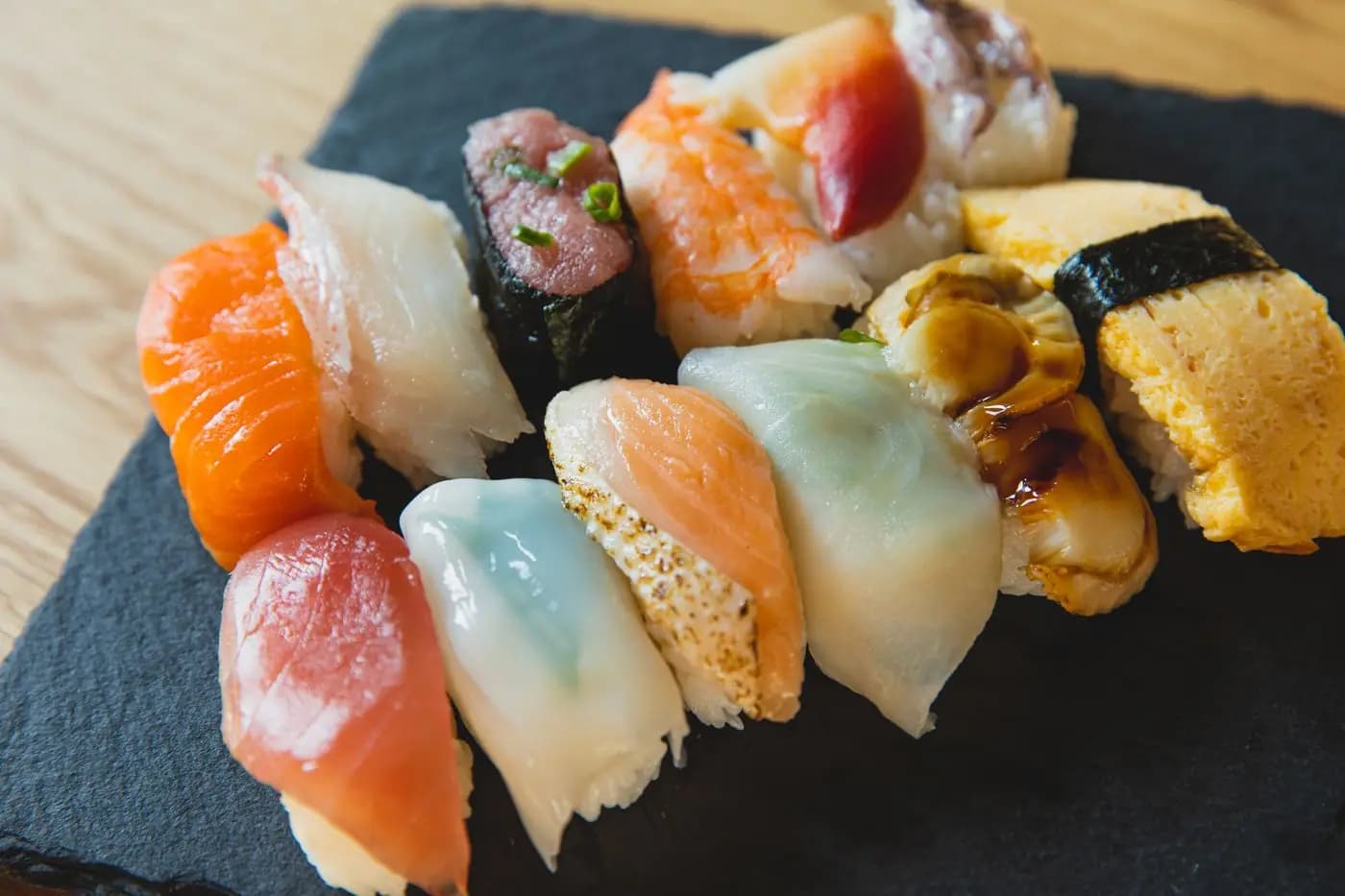
Omakase or kaiseki? Both words mean a set menu, but not the same thing. Omakase ("I leave it to you") is a menu left to the chef's choice, typically at a sushi counter; its content depends on the day's catch. Kaiseki follows a fixed structure from appetiser to rice, built around the season and a variety of techniques. A raw-fish lover will prefer a sushi counter's omakase; to discover the breadth of Japanese cuisine in one meal, kaiseki is more complete. Our sushi guide covers counter etiquette.
Kaiseki for groups: private rooms, numbers and booking
Kaiseki suits small executive groups better than large numbers. The reason is simple: the kitchen serves each course to each guest at the right moment, and a ryotei kitchen is not sized for 80 covers at once.
Benchmarks by group size:
- 2 to 8 people: a kappo counter (such as Kikunoi Roan) or a small room. The ideal format for an executive committee or a client dinner.
- 10 to 20 people: a private tatami room in a ryotei. In Tokyo, Akasaka Kikunoi has four rooms for 3 to 20 people; in Kyoto, most great houses have rooms of this size, subject to date.
- 20 to 60 people: the large hall of a ryotei or a kaiseki restaurant used to banquets, often booked exclusively. Our "private kaiseki dinner in a Kyoto ryotei" activity is designed for these numbers, with an interpreter who translates the explanation of each course.
- Over 60 people: the Japanese banquet rooms of major hotels, which serve kaiseki (often written 会席) to the whole room, or splitting the group across several nearby restaurants.
What to plan:
- Book early: 2 to 3 months for a private room, longer in November in Kyoto (autumn leaves) and in spring.
- A single menu for the group, chosen in advance, plus the list of dietary requirements in Japanese: allergies, vegetarians, no pork, no alcohol. Same-day changes are rarely possible.
- Final numbers a few days ahead (often 3 to 7 days), after which cancellations are charged.
- An interpreter so the hostess or chef can present the dishes: that is what turns a good meal into a memorable moment for foreign guests.
- The full budget: menu, service (10 to 20%), drinks, any room charges, transfer by taxi or coach (Higashiyama's lanes are too narrow for a coach).
SHINOGI DMC books these dinners for seminars, incentives and executive committees in Kyoto and Tokyo: choice of house by group size and budget, menus and dietary needs negotiated in Japanese, interpreter and evening logistics.
Frequently asked questions
What exactly is kaiseki?
A seasonal Japanese meal of 8 to 12 small courses served in a set order (appetiser, seasonal platter, sashimi, soup, grilled dish, simmered dish, rice, dessert), over 2 to 3 hours.
How much does a kaiseki meal cost in Kyoto?
From ¥5,000 to ¥15,000 for a simplified lunch or bento, ¥15,000 to ¥30,000 for dinner at a good restaurant, and ¥33,000 to ¥110,000 plus service at great houses like Kikunoi (2026 prices).
What is the difference between omakase and kaiseki?
Omakase leaves the menu to the chef, often at a sushi counter, depending on the day's catch. Kaiseki follows a fixed structure of varied courses built around the season.
What is the difference between 懐石 and 会席?
懐石 originally refers to the light meal of the tea ceremony; 会席 to banquet cuisine served with sake. Today both, in practice, mean a seasonal multi-course menu.
Can kaiseki be vegetarian?
Yes, if requested when booking (shojin cuisine, of Buddhist origin). Not by default: classic dashi contains dried bonito.
Can a group of 40 have a kaiseki dinner?
Yes, in the large hall of a ryotei used to banquets or a hotel's Japanese banquet room, with a single menu, dietary needs sent in advance and 2 to 3 months' booking lead time.
Rédaction SHINOGI DMC · Updated
Sources
- Kikunoi — Kikunoi Honten, menus et tarifs (site officiel)
- Kikunoi — Roan, menus et tarifs
- Kikunoi — Akasaka Kikunoi (Tokyo), menus, salons et service
- Hyotei — Site officiel (tarifs, horaires, réservation)
- Kyoto Kitcho — Site officiel
- Ministère de l'Agriculture (MAFF) — Washoku, patrimoine culturel immatériel de l'UNESCO