Rice, barley or soybean: types of miso by region in Japan
Every miso starts from the same base: cooked soybeans, salt and koji (a grain or legume inoculated with Aspergillus oryzae, the mould also used for sake and soy sauce). What changes from region to region is what the koji grows on, the proportion of salt and the length of fermentation. Three main families:
- Kome miso (rice miso): rice koji. By far the most produced in Japan, about four misos in five. It ranges from Kyoto's shiro miso, pale, sweet and low in salt, aged a few weeks, to the red, salty Sendai miso of the north, via Nagano's amber Shinshu miso, the "standard" supermarket miso.
- Mugi miso (barley miso): barley koji, typical of Kyushu, Shikoku and western Honshu. Milder, with a toasted-grain aroma.
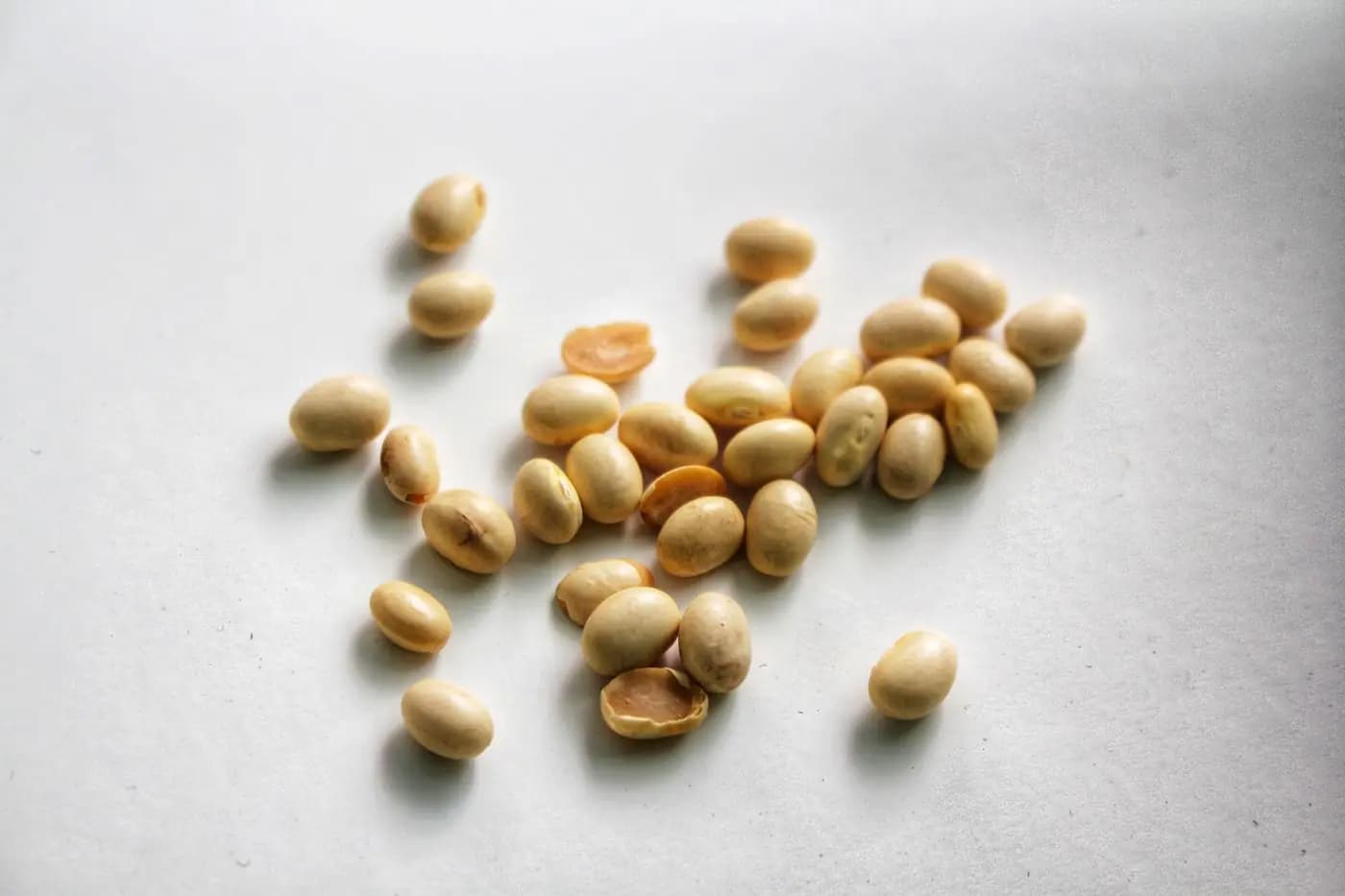
- Mame miso (soybean miso): the koji grows directly on the soybeans. It is the speciality of Tokai, the region of Aichi, Gifu and Mie around Nagoya. Very dark brown, not sweet, rich in umami, slightly astringent and bitter, it withstands long cooking without losing its flavour.
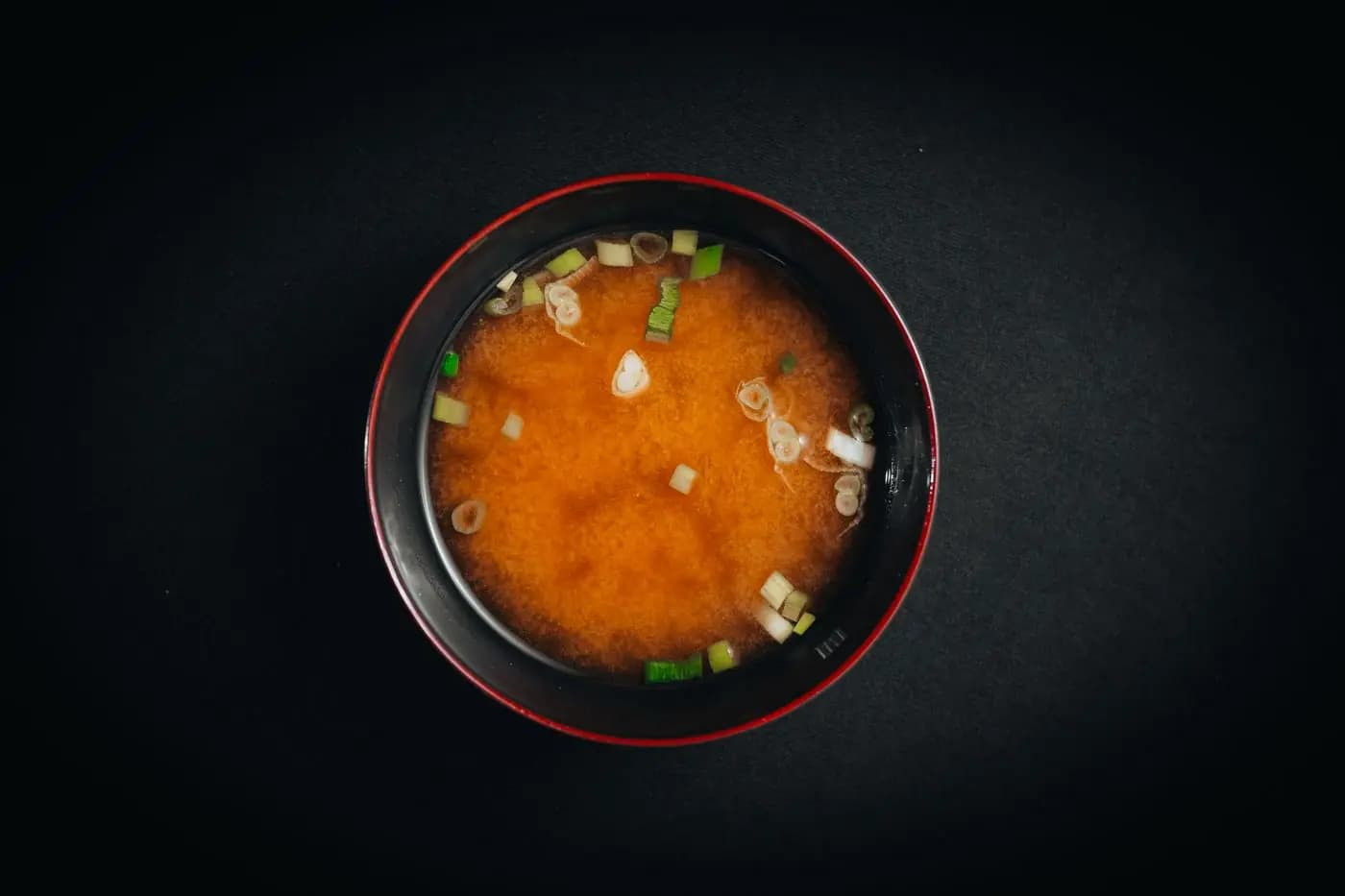
Hatcho miso is the most extreme form of mame miso: only soybeans and salt, very little water, and more than two years of ageing. On its own it is too powerful for an everyday soup; it is often blended with rice miso to make akadashi, the red soup served in sushi and kaiseki restaurants.
How much time to plan on site? Half a day in Okazaki is enough for both houses, with a miso lunch. From Nagoya, it is a 4 to 5 hour excursion.
How Hatcho miso is made: the steps, from soybean to barrel
The name comes from a distance: the village of Hatcho lay eight cho (about 870 metres) west of Okazaki Castle, on the Tokaido road and beside the Yahagi river, by which soybeans and salt arrived. Two families have made miso there since the Edo period. Kakukyu (company name Hatcho Miso, the Hayakawa house) began in 1645 according to its history, founded by a former retainer of the Imagawa clan who changed trade after the battle of Okehazama. Maruya traces its family house back to 1337.
The steps, as both houses describe them:
- Sorting whole soybeans, removing broken or misshapen beans.
- Soaking then steaming the soybeans.
- Shaping balls (tama-nigiri): the cooked soybeans are pressed into large balls, bigger than for ordinary mame miso, whose surface is inoculated with koji.
- Growing the koji in a warm, humid room until the mould covers the balls: these are now mame-koji.
- Filling the barrels: the mame-koji is mixed with salt water and packed into large cedar barrels taller than a person. About 6 tonnes of miso per barrel.
- Placing the stones: about 3 tonnes of river stones, roughly 350, stacked by hand into a cone (see below).
- Natural ageing in unheated storehouses: fermentation moves forward in summer and slows in winter. It takes two summers and two winters, more than two years.
The result is a very firm, almost dry, black-brown miso tasting of bitter cocoa, roasted soybean and soy sauce. It is less salty on the palate than you might think and keeps for a very long time.
The barrels themselves are part of the craft: they last 100 to 150 years, harbour each house's own microorganisms, and the coopers able to make them can be counted on one hand. According to Kakukyu, miso fermented in wooden barrels accounts for less than 1% of Japanese production.
Stones stacked by hand: what makes the method unique
This is the image you take away from the tour: in the half-light of the storehouses, dozens of cedar barrels each topped with a perfect cone of round river stones, as tall as a child. According to Kakukyu, this cone-shaped stacking exists only in the two Hatcho houses, and has done since the early Edo period.
What are the stones for? Hatcho miso is made with very little water. Without weight, the liquid would sink to the bottom of the barrel and the top layer would dry out. The pressure of the stones concentrates the miso and pushes moisture evenly up through the whole mass, for over two years. So far more stones are needed than for ordinary miso: about 3 tonnes for 6 tonnes of miso.
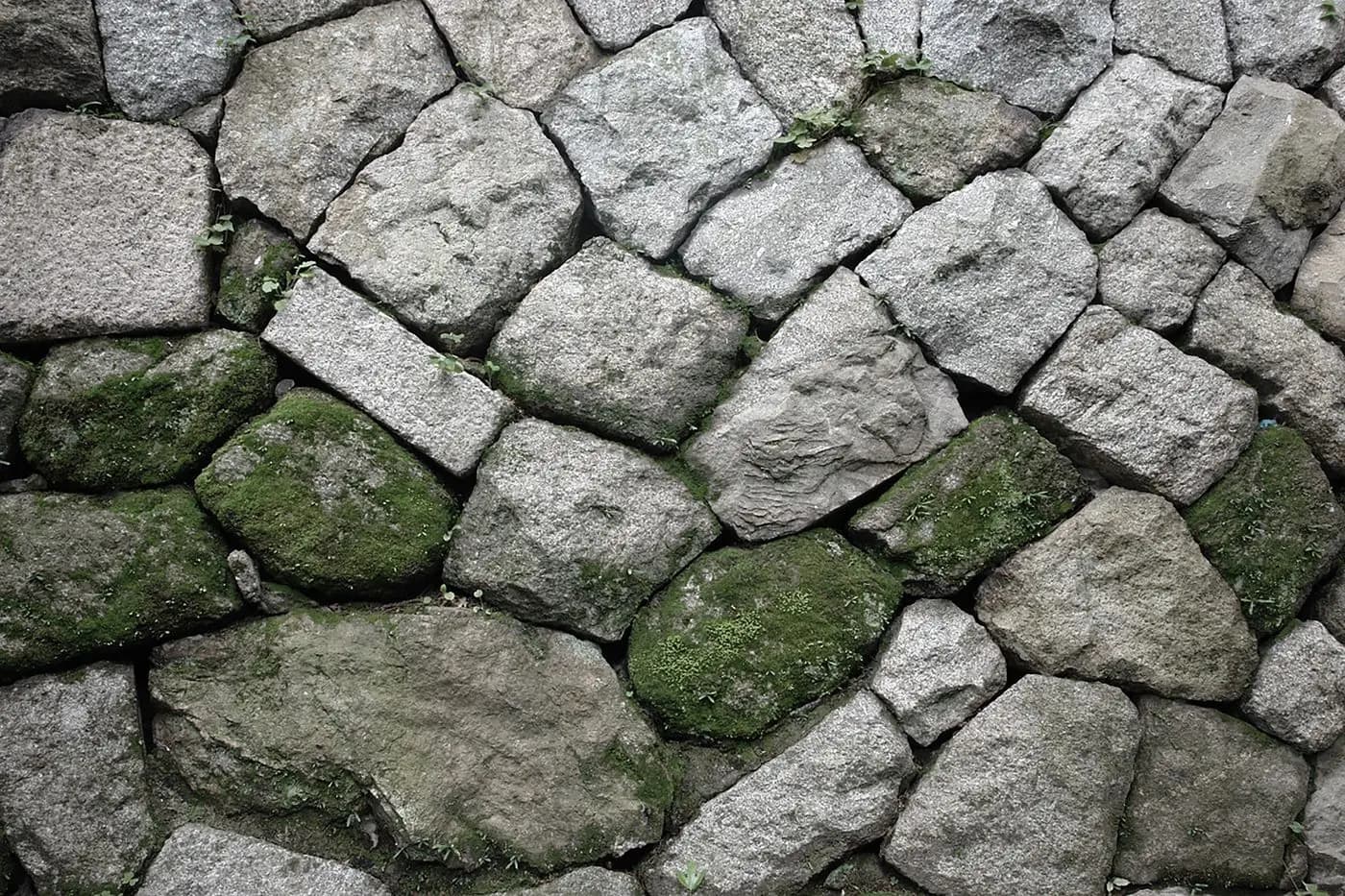
The stacking technique recalls nozura-zumi, the rough-stone masonry of Japanese castle walls: the stones lock together without mortar, and the whole absorbs earthquake tremors without collapsing. Okazaki, birthplace of Tokugawa Ieyasu and a castle town, is also known for its stonemasons; the house sees a link. Most of the stones were brought up from the Yahagi river long ago and have been in use for centuries.
Building a cone that holds for two years takes, according to Kakukyu, more than ten years of training. During the tour you sometimes see the craftsmen dismantling or rebuilding a barrel; that is when you appreciate the precision. Photos are generally allowed in the storehouses (ask the guide), without flash.
Visiting Kakukyu and Maruya: hours, duration and booking
The two houses are about a hundred metres apart, and both tours are free. You can do both in the same half-day; it is in fact the best way to understand that one product can have two characters.
Kakukyu (Hatcho Miso no Sato)
- Guided tours from 10am to 4pm: on weekdays on the hour; at weekends and on public holidays, on the hour and half hour. Up to 50 people per tour. Sign up at the counter; registration closes 5 minutes before departure.
- Route: reception, history museum (the museum and the historic head office are registered tangible cultural properties), ageing storehouse, tasting, shop. You walk outside between buildings.
- Shop: 9am-5pm. Closed December 31 to January 2.
- Groups: booking required. 50-minute route (or 30-40 minutes storehouse only), group meals featuring Hatcho miso for 8 to 60 people by reservation. Parking for 10 coaches.
- Try the miso soft-serve ice cream, which the house compares to salted caramel.
Maruya (Maruya Hatcho Miso)
- Guided tours every 30 minutes, 9am-12pm and 1-4:20pm, no booking needed for individuals. About 30 minutes.
- The tour ends with a tasting of konnyaku dengaku glazed with miso sauce.
- Groups: by reservation, from 1 to 60 people. Parking for 6 coaches. Closed December 31 to January 3.
- The house also uses certified organic soybeans, makes a range with local soybeans and well water, and runs cooking classes.
Tours are in Japanese by default; Kakukyu publishes a brochure in English and French. For foreign visitors, a guide-interpreter makes all the difference, especially for questions about barrels and the fermentation calendar. Allow 45 minutes to an hour per house including the shop.
The Hatcho miso GI: why the name became controversial
Since 2015 Japan has protected regional products through a geographical indication (GI) system similar to the European PGI. In December 2017, the Ministry of Agriculture (MAFF) registered "Hatcho miso" in the name of the Aichi Prefecture miso and tamari manufacturers' cooperative, with a production area covering the whole prefecture. The two historic Okazaki houses, which had sought an area limited to their own district, rejected the criteria and were not part of the registered group.
Years of proceedings followed: a request for administrative review, then a lawsuit, up to the Supreme Court, which rejected their appeal in March 2024. During that time, whether Kakukyu and Maruya would eventually still be free to use the name "Hatcho miso" was widely discussed in Japan and in food circles abroad.
The resolution came another way: on January 24, 2025, MAFF registered the Hatcho Miso Cooperative, formed by the two houses, as a second producer group for the "Hatcho miso" GI. There are therefore now two authorised groups. The most discussed difference between the two approaches concerns ageing: the Okazaki houses insist on natural fermentation of at least two years in wooden barrels under stones, while other producers in the prefecture use shorter methods.
What this means for buyers: the words "Hatcho miso" alone do not tell the whole story. To find the product described in this article, look for the name of the house (Kakukyu or Maruya), the words "tennen jozo" (natural brewing) and the ageing period on the label. For a group of buyers or food professionals, the affair is an excellent case study in protecting appellations, best heard on site.
Eating miso in Nagoya and Okazaki: miso-katsu, miso nikomi and doteni
Nagoya cooking, "Nagoya meshi", is largely mame miso cooking. A few dishes to know before you arrive:
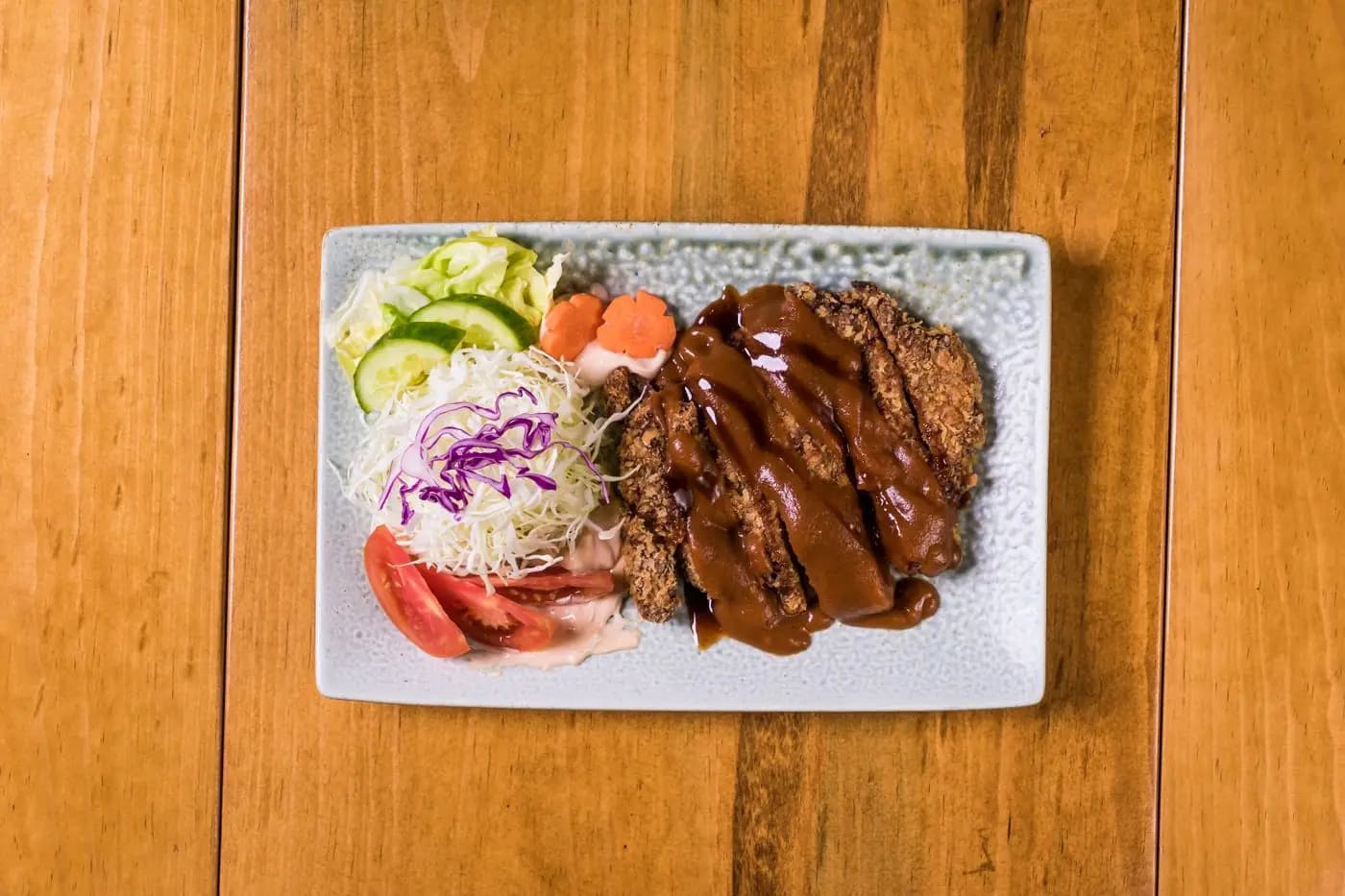
- Miso-katsu: breaded pork cutlet topped with a thick, sweetened soybean miso sauce. Nagoya's most famous version comes on shredded cabbage or rice; the contrast between crisp breadcrumbs and dark sauce is the whole point.
- Miso nikomi udon: thick, deliberately firm udon noodles simmered in a small clay pot in a mame miso broth with chicken, egg and green onion. Scalding: use the lid as a plate. The noodles are harder than elsewhere; this is not undercooking.
- Doteni: beef tendon or offal simmered for hours in miso, the quintessential izakaya dish.
- Miso oden and dengaku: vegetables, tofu or konnyaku served with a sweet miso sauce.
- Akadashi: red mame miso soup, served at the end of a sushi or kaiseki meal.
In Okazaki, both houses serve food: the Okazaki Kakukyu Hatcho-mura food court (miso udon, miso-katsu, miso ice cream) and Maruya's shop for take-home products. It is the simplest option for lunch after the tour. In Nagoya, miso-katsu and miso nikomi specialists cluster around the station and in Sakae; at peak times the queue often exceeds 30 minutes.
What to bring back: a tub of pure Hatcho miso (unopened, it keeps a very long time outside the fridge), sachets of instant miso soup, bottled miso-katsu sauce, miso biscuits and crackers. Allow a few hundred yen for a sauce or sachet, ¥1,000 to ¥3,000 for a tub of long-aged miso or a gift box. Miso is not an animal product: it clears EU customs without difficulty, preferably in checked luggage (over 100 ml it counts as a paste in the cabin).
Getting to Okazaki from Nagoya, and what to combine
Okazaki is about 35 km south-east of Nagoya. The options:
- Meitetsu train: Meitetsu Nagoya main line, limited express to Higashi-Okazaki in about 30 minutes, then one stop on a local train to Okazaki-koen-mae (both houses are 1 to 5 minutes' walk), or 5 minutes by taxi from Higashi-Okazaki. Pay with an IC card (manaca, Suica, ICOCA).
- JR: JR Okazaki station is further away (15 minutes by taxi). From Tokyo by shinkansen, get off at Mikawa-Anjo (30 minutes by taxi) or go via Nagoya.
- Coach: 15 minutes from the Okazaki exit of the Tomei expressway, about 45 minutes to an hour from central Nagoya depending on traffic. Both houses have coach parking.
What to combine in the day:
- Okazaki Castle and park, 10-15 minutes' walk: birthplace of Tokugawa Ieyasu (1542), with a museum devoted to the shogun and the Mikawa warriors.
- Toyota: Toyota city and the group's sites are about 30 to 40 minutes away; miso in the morning, factory in the afternoon works well for industrial study trips.
- Nagoya: castle, Atsuta shrine, industry museums, and a miso dinner.
A typical day from Nagoya: leave at 9am, Maruya at 10am, Kakukyu at 11am, lunch at Hatcho-mura, Okazaki Castle in the early afternoon, back in Nagoya around 4pm. For a longer trip, Okazaki fits between Nagoya and Kyoto, or between Nagoya and the Toyota sites.
Hatcho miso with a group: tours, meals and gifts
It is one of the easiest craft company visits to organise in Japan for a group: free, 30 minutes from a major city, with coach parking and meals on site. A few rules to make it work:
- Book both houses ahead, stating group size and language. Above 50 people at Kakukyu (capacity per tour) or 60 at Maruya, run two rotations and swap the groups between the houses.
- Plan a guide-interpreter who knows the subject: the houses' explanations are rich but in Japanese.
- Meals: Kakukyu's group menus (8 to 60 people, booking required, strict cancellation terms: 50% three days before, 100% on the day) let you taste miso across several dishes. Flag special diets; most sauces contain fish dashi.
- The professional angle: for participants from food, retail or hospitality, request a Q&A session on barrels, quality control and the GI affair.
- Gifts: small tubs of Hatcho miso, tasting boxes or miso sachets, easy to carry and give to clients.
A hands-on workshop (making dengaku sauce, akadashi or miso-katsu) can be held in a kitchen in Nagoya in the afternoon to extend the visit. SHINOGI DMC organises this kind of day with bookings, a bilingual guide, a coach, and a combination with Okazaki Castle or an industrial visit in Toyota.
Frequently asked questions
What is Hatcho miso?
A soybean miso (mame miso) from Okazaki, Aichi Prefecture, made only from soybeans and salt and aged for more than two years in cedar barrels under stones. Dark brown, firm, rich in umami and slightly bitter.
Is there a fee to tour Kakukyu or Maruya?
No, both guided tours are free and include a tasting. Individuals sign up on site; groups must book.
How long does a Hatcho miso factory tour take?
About 30 minutes of guided tour per house, 45 minutes to an hour with the shop. As the houses are neighbours, half a day covers both.
How do you get to Okazaki from Nagoya?
By Meitetsu express to Higashi-Okazaki (about 30 minutes), then one stop by local train to Okazaki-koen-mae or 5 minutes by taxi. By coach, allow 45 minutes to an hour.
What is the difference between red and white miso?
Colour depends mainly on fermentation time and how the soybeans are cooked: white miso (such as Kyoto's shiro miso) ferments briefly and stays sweet, red miso ferments longer and becomes saltier and stronger. Hatcho miso is a long-aged red soybean miso.
Is Hatcho miso protected by a geographical indication?
Yes, by a geographical indication (GI) registered in 2017 for a producer group in Aichi Prefecture. Since January 24, 2025, the cooperative formed by Kakukyu and Maruya is the second registered group.
Rédaction SHINOGI DMC · Updated
Sources
- Kakukyu — Visite de Hatcho Miso no Sato (horaires, capacité, accès)
- Kakukyu — Groupes et agences (durée, repas de groupe 8-60 personnes, parking)
- Kakukyu — Étapes de fabrication du Hatcho miso
- Kakukyu — L'empilement des pierres
- Kakukyu — Les fûts en bois
- Kakukyu — Profil et histoire de l'entreprise
- Aichi Now (site officiel de la préfecture) — Maruya Hatcho Miso
- Maruya Hatcho Miso — Engagements (fûts, fermentation naturelle, soja biologique)
- MAFF, bureau régional du Tokai — Enregistrement de l'Association coopérative du Hatcho miso comme groupement GI (24 janvier 2025)
- Bengo4.com — Contexte du litige sur la GI du Hatcho miso