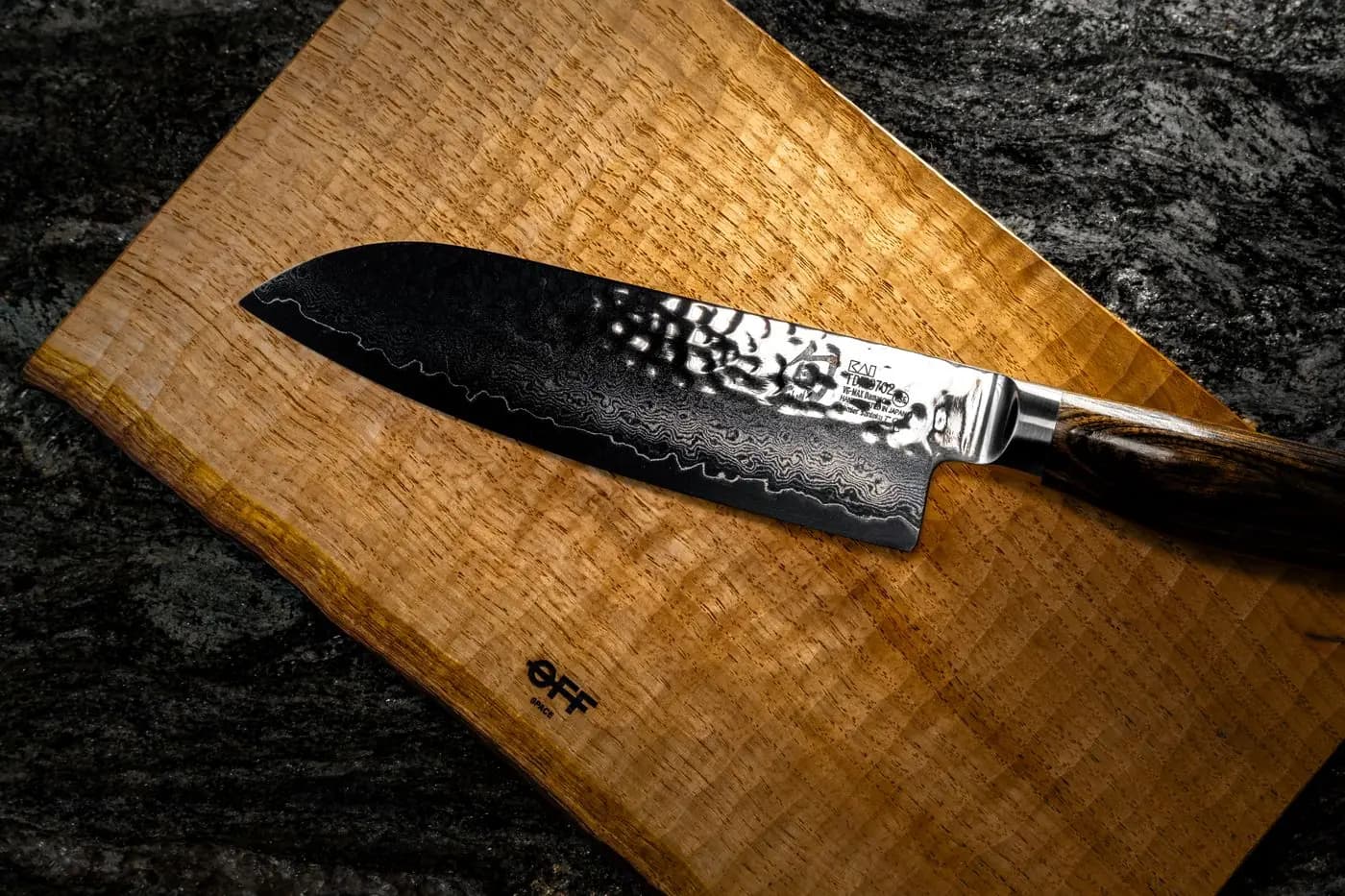
Japanese knives: why Sakai and Seki?
Two towns account for most of the reputation of Japanese knives, and they tell different stories.
Sakai, just south of Osaka, is the town of professional kitchen knives, especially the single-bevel blades used by sushi and Japanese-cuisine chefs. The industry grew in the 16th century, when tobacco brought by the Portuguese created demand for knives to cut the leaves; the Tokugawa shogunate later granted Sakai knives a quality seal that opened up the whole country to them. Sakai uchihamono (Sakai forged blades) have been recognised as a traditional craft by the Ministry of Economy (METI) since 5 March 1982.
Seki, in Gifu Prefecture, an hour from Nagoya, has been a town of swordsmiths for more than 700 years: the water of the Nagara River, charcoal from the mountains and clay suited to hardening drew smiths there in the Kamakura period. The most famous, Kanemoto, known as "Seki no Magoroku", gave his name to a knife brand still sold today. In the 20th century Seki industrialised: kitchen knives, scissors, razors, nail clippers. It is now Japan's largest cutlery centre by volume, with big brands and dozens of small workshops.
In short: Sakai for craft and traditional chef's knives, Seki for sword history, industry and a wide choice of modern kitchen knives. Both are easy to reach from Osaka and Nagoya.
Sakai: the division of labour between smiths, sharpeners and handle makers
What sets Sakai apart is that no one makes a knife from start to finish. The work is split between independent trades:
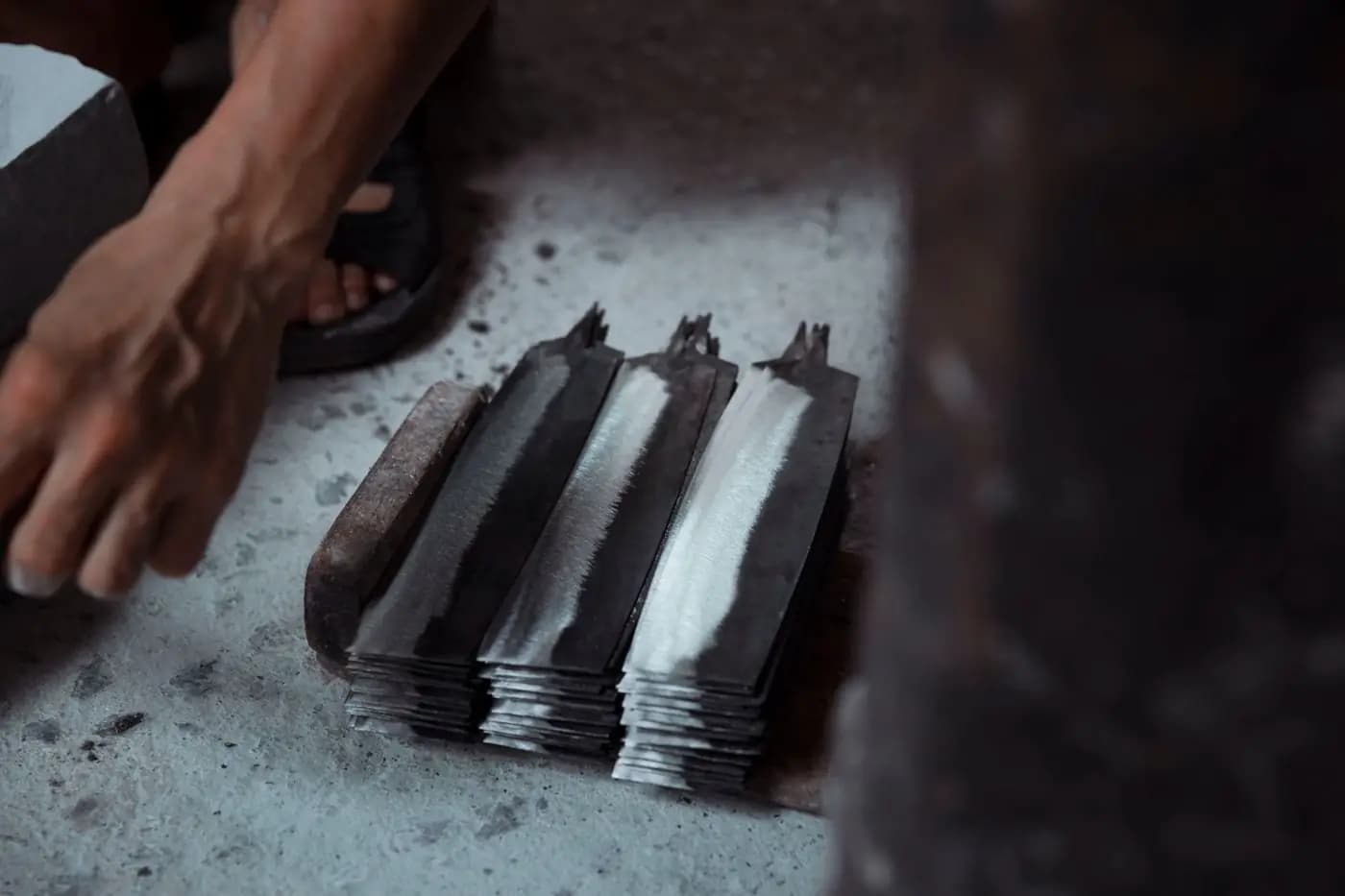
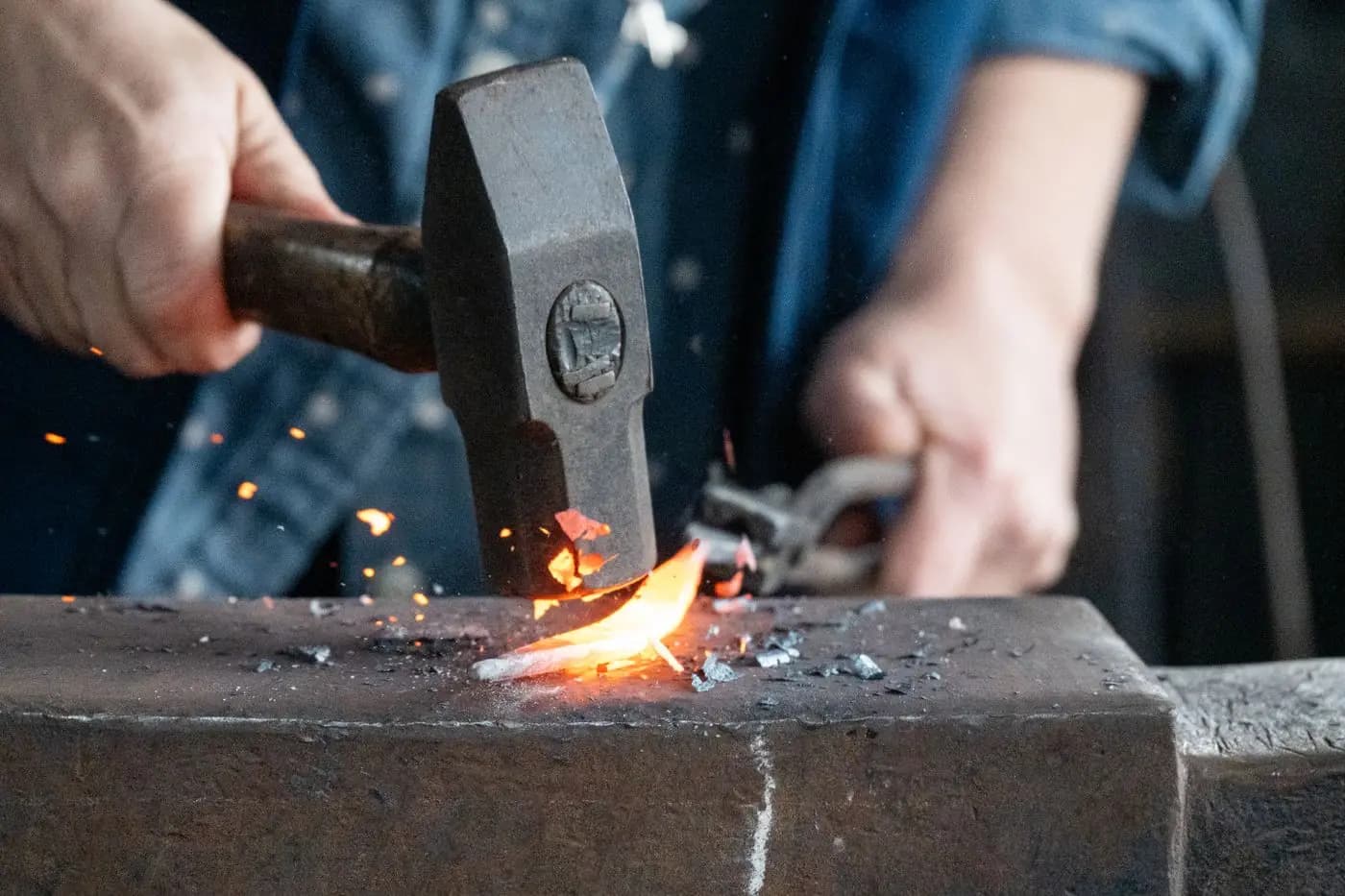
- The smith (kaji) forge-welds a hard steel (hagane), which will form the edge, onto soft iron (jigane), which absorbs shocks. He hammers, shapes, anneals and then hardens the blade. The city reckons it takes ten to fifteen years to master the trade.
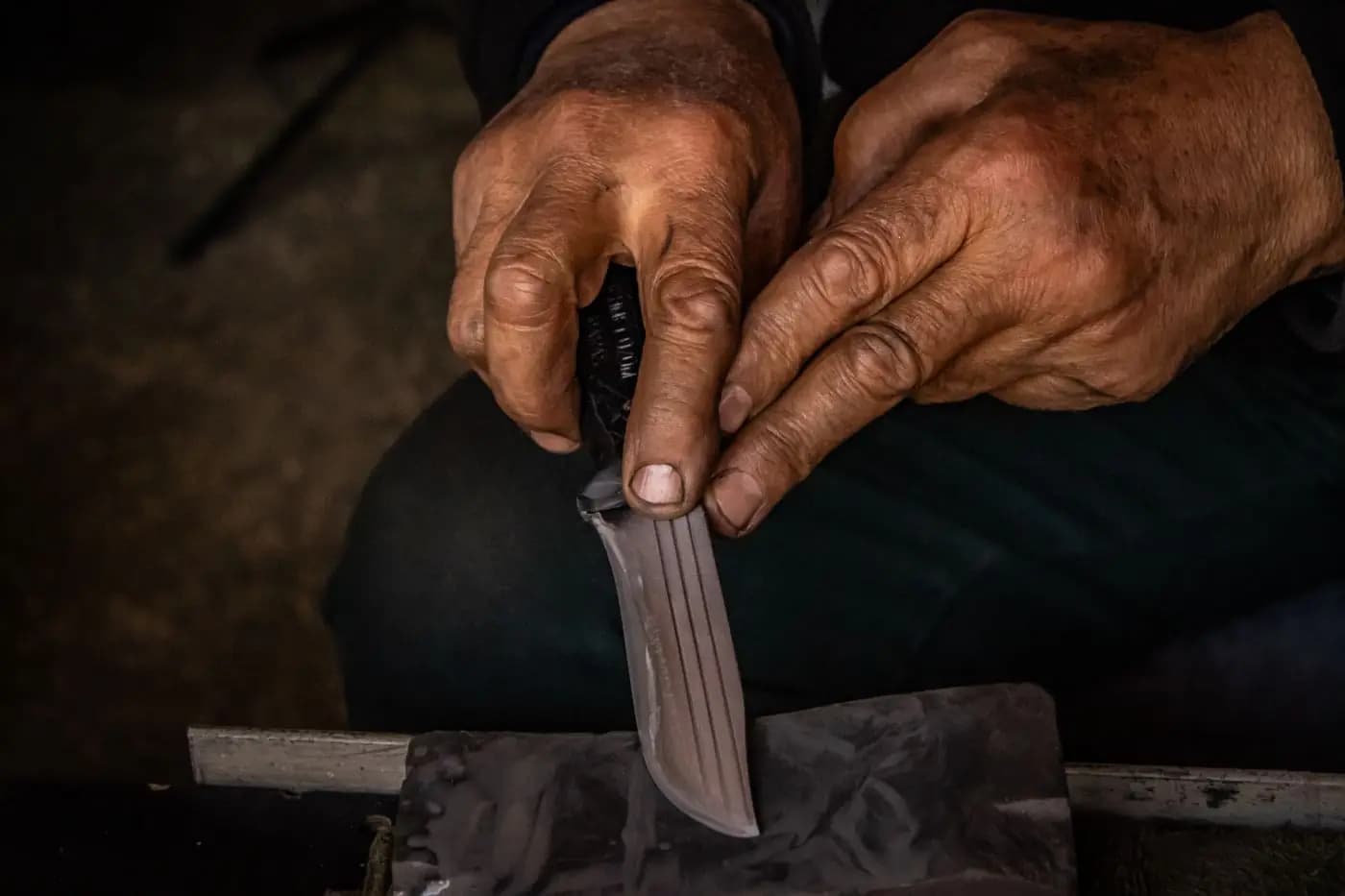
- The sharpener (togishi) takes the rough blade and gives it its geometry and edge on a series of wheels and stones, in more than ten stages. He often gives the knife its character: thickness behind the edge, finish, the slight hollow on the back of single-bevel blades.
- The handle maker (etsuke) fits the handle, usually magnolia (ho) with a buffalo-horn ferrule, driving the tang in vertically and balancing the weight.
- The wholesaler (tonya) orders, inspects, stamps the brand and sells.
This system explains two things visitors quickly notice. First, the same smith may work for several brands: the name on a blade often refers to the wholesaler, not the craftsman. Second, workshops are tiny, scattered through residential streets and rarely open to the public without prior arrangement.
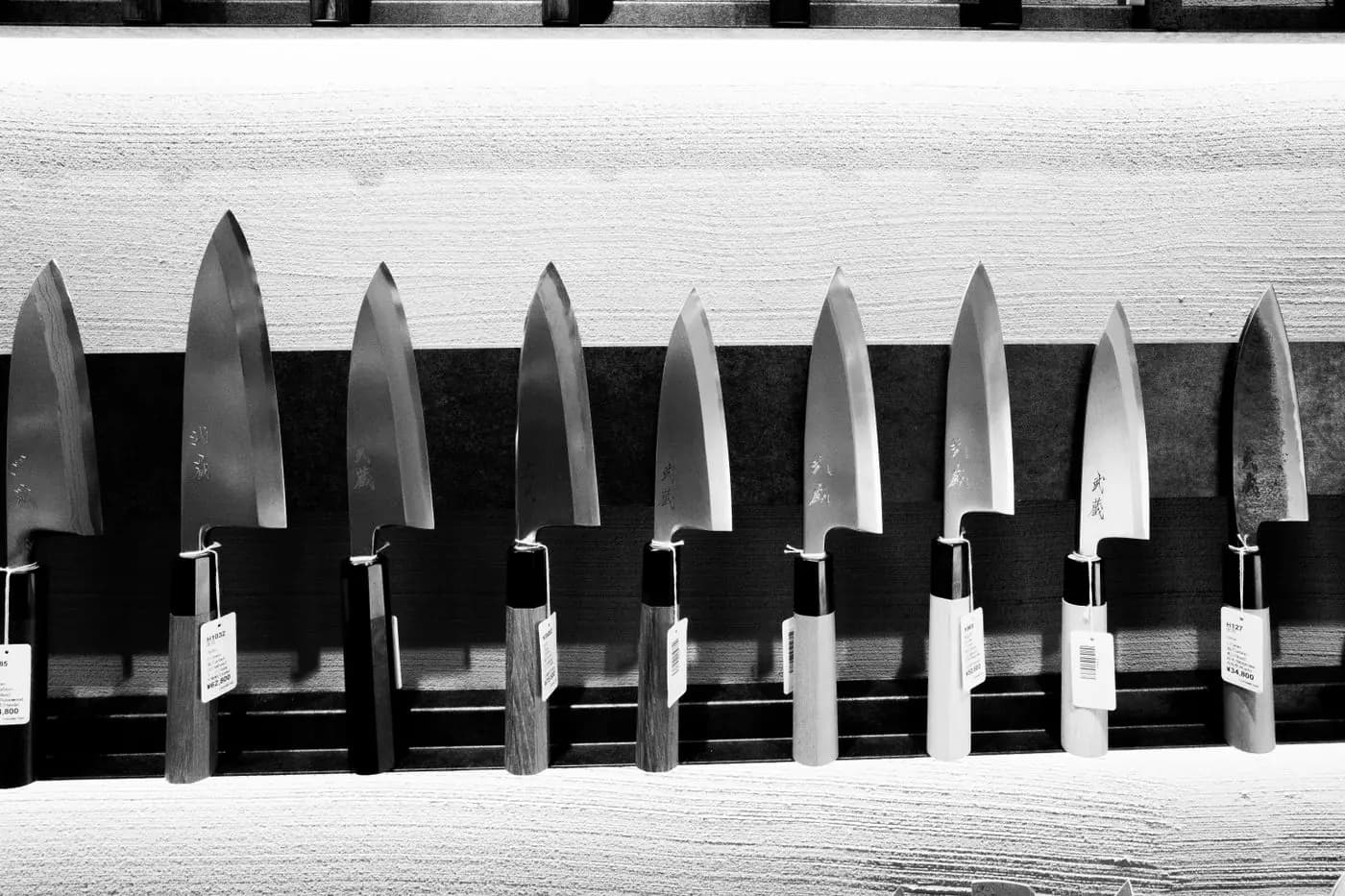
Sakai is best known for single-bevel blades (kataba): deba, yanagiba, usuba. They cut very cleanly but are designed for right-handers; left-handed versions exist, usually made to order and at a higher price.
What to see in Sakai: museum, shops and sharpening workshops
The logical starting point is the Sakai Traditional Crafts Museum (Sakai Denshokan), run by the federation of cutlery cooperatives. Entry is free, open 10am–5pm, closed on the third Tuesday of the month (the following day if it is a holiday) and from 29 December to 3 January.
- On the ground floor, a shop sells knives from many Sakai workshops, with staff used to foreign buyers, plus a second shop for local crafts.
- The Sakai Knife Museum "Cut" explains the history, tools and production stages, with blades shown at each step.
- Upstairs, sharpening classes are held on certain days.
Nearby, several knife houses in the Kitahanada area and the old town (Shukuin, Kanmon) have shopfronts; some will engrave the buyer's name in kanji or katakana in a few minutes. Workshops offer sharpening or handle-fitting experiences, usually 1.5 to 2.5 hours, in very small groups (often 2 to 6 people), from about ¥12,000 with the knife to take home. Booking is required, sometimes two weeks ahead.
Getting there: Namba to Sakai or Sakaihigashi on the Nankai line, 10 to 15 minutes. The museum is served by the Hankai tram (Myokokuji-mae stop) and by bus from Sakai Station. Half a day is enough; add the Emperor Nintoku kofun (World Heritage) or the Sakai Plaza of Rikyu and Akiko to fill the day.
Seki: the Swordsmith Museum and sword-forging demonstrations
In Seki, the visit centres on the Seki Kaji Denshokan (Seki Traditional Swordsmith Museum), a 3-minute walk from Sekiterasu-mae Station on the Nagara River Railway. It displays Seki-school swords, the tools of smiths, polishers and scabbard makers, and a forge where the demonstrations take place.
Important for autumn 2026: the museum is closed for renovation from 7 September 2026 to 31 March 2027. According to Gifu's official tourism site, the forge remains in use during the works; check before travelling that the scheduled demonstration is going ahead. Normally: 9am–4:30pm, closed Tuesdays and the day after public holidays, ¥300 per adult (¥50 off for 20 people or more).
Traditional sword-forging demonstrations (koshiki nihontō tanren), with polishing and mounting, take place:
- on the first Sunday of February to September, November and December, at 10:30am and 1:30pm;
- on 2 January for the first forging ceremony of the year (10am only, free entry);
- during the Seki Cutlery Festival (Hamono Matsuri), 10–11 October 2026, at 10:30am, 1:30pm and 3pm.
Upcoming dates after this article's publication: 10–11 October, 1 November and 6 December 2026, 2 January 2027. The festival is worth the trip: around forty cutlers sell at reduced prices along the Honmachi shopping street, a large outdoor knife show runs alongside, and entry is free.
The demonstration is striking: three or four smiths strike a red-hot bar of tamahagane steel in rhythm, in a shower of sparks. Stay behind the rope and avoid synthetic clothing in the front row.
Gyuto, santoku, deba, yanagiba: which Japanese knife to choose?
Before walking into a shop, it helps to know what you are after. The four types you will be shown first:
- Gyuto: the double-bevel chef's knife, based on the Western model, usually 180 to 240 mm. Versatile, it is the best choice for a European kitchen.
- Santoku: shorter (165 to 180 mm), with a tall blade and rounded tip, designed for meat, fish and vegetables. Ideal for a small kitchen or as a first Japanese knife.
- Deba: a thick single-bevel blade for filleting fish and cutting through bones. Only useful if you regularly prepare whole fish.
- Yanagiba: a long, thin single-bevel blade (240 to 300 mm) for slicing sashimi in a single pulling stroke. It is the signature tool of sushi chefs and the most demanding to sharpen.
You will also see the nakiri (vegetables, double bevel) and the usuba (vegetables, single bevel, typical of Sakai).
The second choice is the steel. Carbon steels (often called "white paper" and "blue paper", shirogami and aogami) take a remarkable edge but rust if left wet; wipe them immediately and accept that they will patinate. Stainless steels and laminated stainless blades, very common in Seki, need less care. For a gift or a first purchase, stainless is the safer bet.
Finally, no Japanese knife goes in the dishwasher or on a glass or marble board. Get a water stone (1000/6000 grit to start): most shops sell them and are happy to show you how.
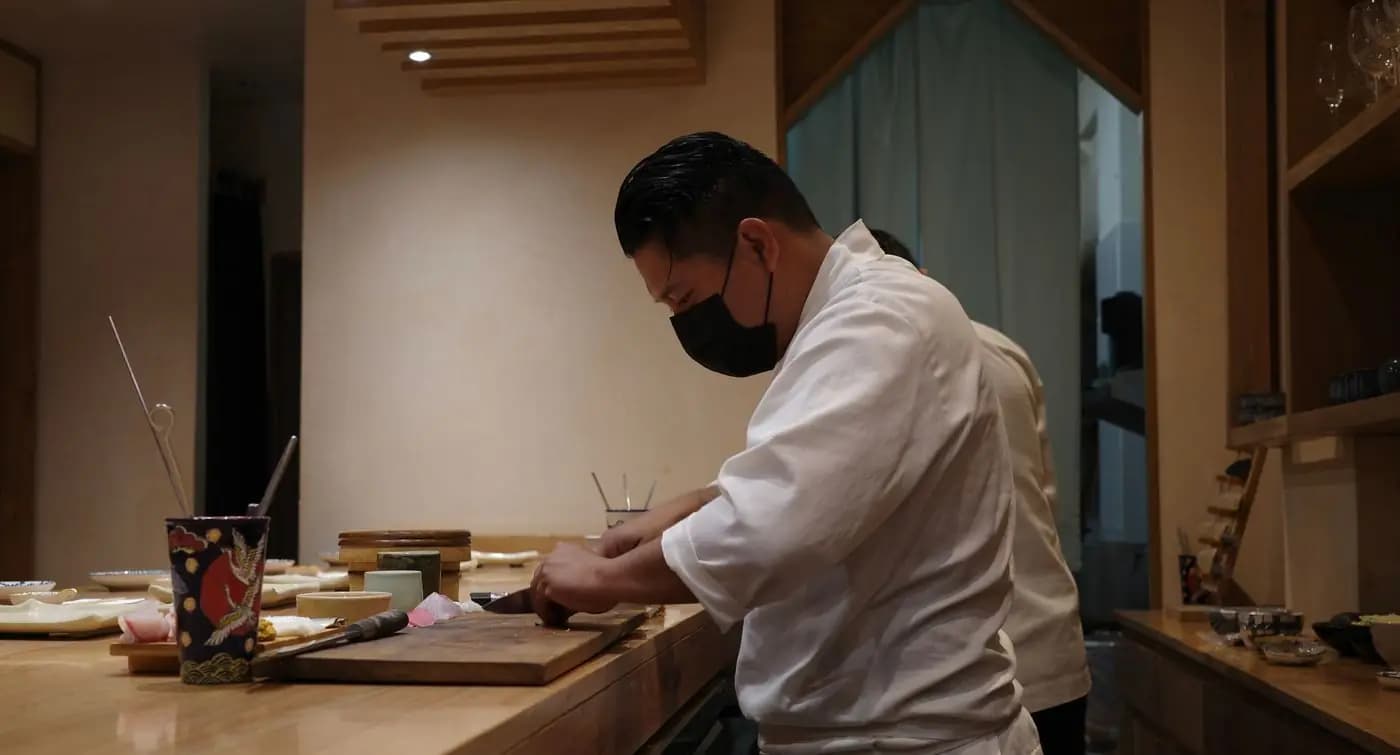
Buying a Japanese knife: prices, engraving and care
Price ranges seen in Sakai and Seki shops:
- Branded stainless santoku or gyuto: about ¥8,000–25,000.
- Hand-forged gyuto, carbon steel or laminated blade: about ¥20,000–60,000.
- Sakai-forged yanagiba or deba: about ¥25,000 for an entry model, ¥100,000 and more for a master's blade in "blue paper" steel with an ebony handle.
- Water stone: ¥3,000–8,000 for a decent double-sided stone.
Name engraving is often free or costs a few hundred yen; allow 10 to 30 minutes. Also ask for final sharpening in the shop (hon-hazuke) if the knife is sold "unfinished", which is common for traditional blades.
Tax-free: knives qualify for foreign visitors' tax exemption from ¥5,000 before tax spent in the same shop on the same day, on presentation of a passport. Note that from 1 November 2026 Japan switches to a refund system: you pay the 10% consumption tax in store and claim it back when leaving the country.
Buying tips:
- Hold the knife, check the balance and the blade height relative to your knuckles on the board.
- If you are left-handed, say so straight away: a standard yanagiba will not suit you.
- Be wary of very cheap "Damascus" blades sold in tourist districts: the pattern may be no more than surface etching.
Carrying a knife in Japan and bringing it home: the rules
It is the question everyone asks at the till, and it deserves a precise answer.
In Japan: the Firearms and Swords Control Law (jūtōhō) prohibits carrying, without a legitimate reason, a knife with a blade longer than 6 cm. Buying a knife is a legitimate reason; the problem is keeping it accessible. Leave it in its original box, wrapped, at the bottom of your bag, and take it straight back to the hotel. Do not open it on the train to show it off, and do not keep it in a backpack pocket for the rest of the day: police checks happen and tourists are not exempt.
On planes: knives are banned from the cabin on both domestic and international flights. They travel in checked luggage, packed so the blade cannot pierce the bag (the box plus a blade guard is enough). If you travel with cabin baggage only, have the shop ship the knife: many offer international delivery.
On arrival in Europe: a kitchen knife can be imported for personal use without special formalities; only the customs allowance on the value of goods applies (€430 per air traveller in the EU). Once home, local rules on carrying bladed items apply as for any knife.
Real swords: a nihontō is not an ordinary souvenir. It must come with its registration certificate, and taking it out of Japan involves procedures that a specialist dealer knows. Decorative replicas sold in Seki are not covered by this regime but must also travel in the hold.
Organising a group cutlery visit in Sakai or Seki
For a team, Japanese knives tick many boxes: visible craftsmanship, a story about precision and passing skills on, and a useful object to take home. Some pointers for a group of 20 to 40:
- Seki, demonstration format: time the visit for a first Sunday or the October festival, then follow with an eel lunch (a local speciality) and a stop at a cutler's shop. The museum has 2 coach parking spaces; plan for drop-off at the entrance. From Nagoya, allow about an hour by coach.
- Sakai, workshop format: sharpening or handle workshops rarely take more than 6 to 10 people at once. For 30, either split the group across several workshops in parallel or book a private session with a craftsman at the museum or in a function room. One demonstrator and two assistants keep everyone busy.
- Outside official dates: a private forging demonstration can sometimes be arranged with a smith; it is expensive and booked months ahead.
- Gifts: a small paring knife or a santoku engraved with each participant's name is a well-received classic; arrange engraving in advance (list of names in katakana) and group shipping to the hotel so no one carries a knife all day.
- Safety: brief the group on the 6 cm rule and on checked luggage; keep the knives in a single box until departure.
SHINOGI DMC can combine Sakai with an Osaka or Kyoto programme, and Seki with Nagoya and Gifu, handling workshops, interpreters, engraving and knife logistics.
Frequently asked questions
What is the difference between Sakai and Seki knives?
Sakai specialises in traditional chef's knives, often single-bevel, made by specialised craftsmen (forging, sharpening, handle fitting). Seki, a former sword town, mainly produces modern kitchen knives, often stainless, on a larger scale.
When can you see a sword-forging demonstration in Seki?
On the first Sunday of February to September, November and December (10:30am and 1:30pm), on 2 January and during the Cutlery Festival on 10–11 October 2026. The museum is closed for works until 31 March 2027, so check the demonstration is going ahead.
Can you take a Japanese knife in cabin baggage?
No. Knives travel only in checked luggage, well packed. Without checked baggage, have the shop ship the knife.
Is it legal to walk around with a knife bought in Japan?
Carrying a blade over 6 cm without a legitimate reason is prohibited. Keep it wrapped in its box at the bottom of your bag and take it straight to the hotel.
How much does a good Japanese knife cost?
Allow about ¥8,000–25,000 for a quality stainless santoku or gyuto, ¥20,000–60,000 for a hand-forged gyuto, and ¥25,000 to over ¥100,000 for a Sakai yanagiba.
Which Japanese knife suits a European kitchen?
A 210 mm gyuto or a 165–180 mm double-bevel santoku, preferably stainless for a first purchase. Deba and yanagiba are specialised fish tools.
Rédaction SHINOGI DMC · Updated
Sources
- Ville de Sakai — Sakai uchihamono (histoire, fabrication, désignation)
- Sakai Tourist Bureau — Sakai Traditional Crafts Museum (Sakai Denshokan)
- Osaka Info (OCTB) — Atelier d'affûtage et de montage à Sakai
- Gifu tourisme officiel — Seki Kaji Denshokan (horaires, tarifs, fermeture 2026-2027)
- Gifu tourisme officiel — Seki Cutlery Festival 2026
- e-Gov — Loi sur le contrôle des armes à feu et des sabres (art. 22)
- Agence du tourisme du Japon — Détaxe pour les visiteurs
- Japan-guide — Réforme de la détaxe au 1er novembre 2026