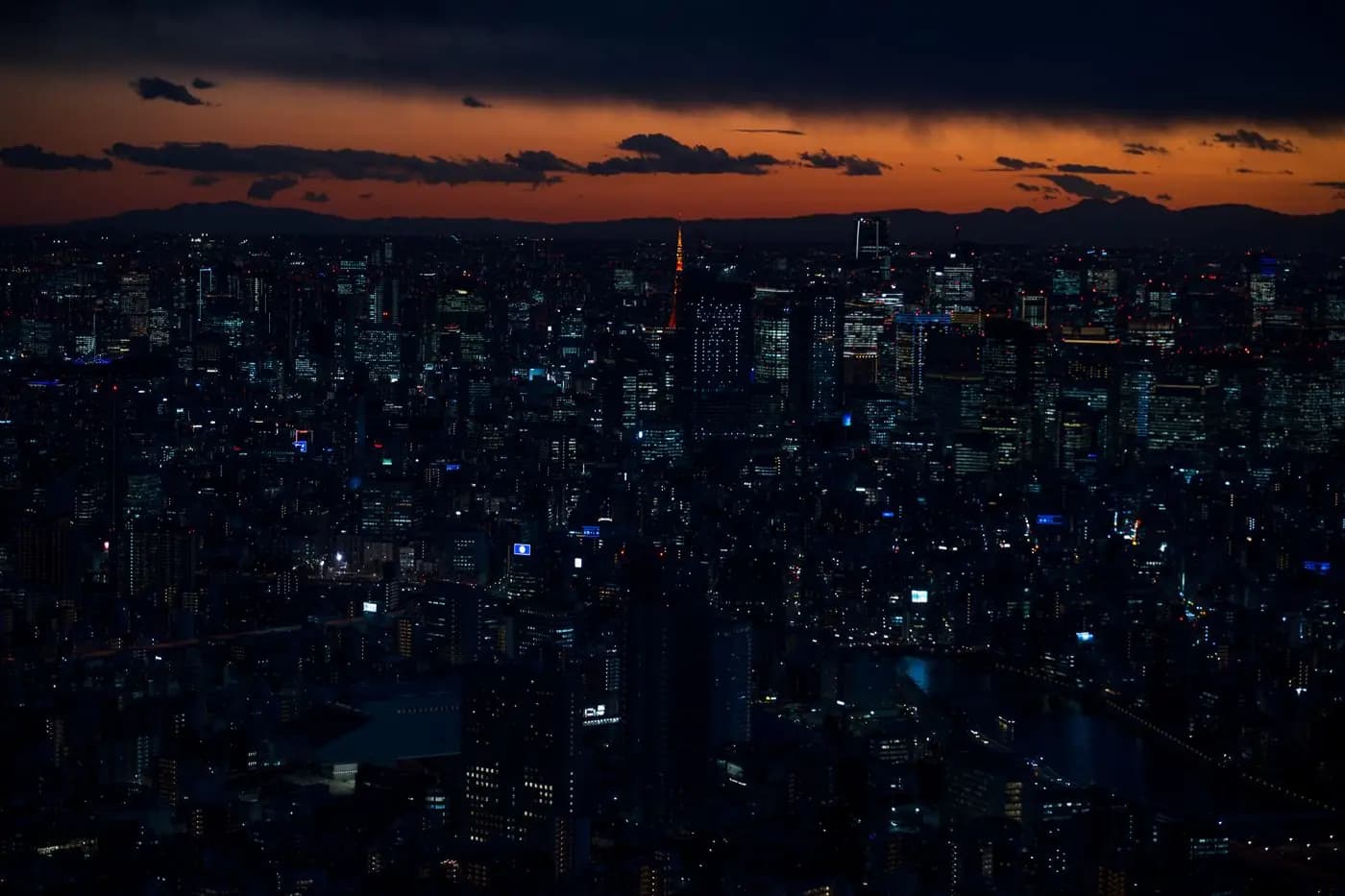
Why hold a customer advisory board in Tokyo?
A customer advisory board in Tokyo makes sense when your senior customers are split between the United States and Asia-Pacific. Tokyo sits between the two: one nonstop flight from more than a dozen US airports, and a short or medium flight from most Asia-Pacific business capitals, with little or no jet lag for those guests.
For a group of 12 to 40 executives, the city answers the brief on four points:
- Access: Haneda airport is 20 to 30 minutes from the city center, so a customer can land in the afternoon and be at the welcome dinner
- Time zones: Seoul is on the same time as Tokyo, Singapore and Hong Kong are one hour behind, and Sydney is one or two hours ahead
- Standards: five-star hotels with boardrooms, professional conference interpreters, and service that runs to the minute
- Appeal: Tokyo gives a busy executive a reason to say yes to three days away from the office
The cost falls on the US side. American guests and your own team fly 11 to 14 hours and should land two days before the first session.
Format: two working days inside a longer stay
Asia-Pacific customers can come for two or three nights. US customers need five. Build the agenda so that both fit:
- Two days before: US guests and the host team land. Private transfers from the airport, quiet evening
- The day before: optional morning visit for early arrivals, rehearsal for the host team in the afternoon. Asia-Pacific guests land. Welcome dinner in a private room
- Session day 1: 9 am to 4:30 pm. Company direction and roadmap first, then discussions led by customers. Hosted dinner outside the hotel
- Session day 2: 9 am to 12:30 pm. Working groups, readout, commitments. Lunch, then departures for Asia-Pacific guests
- The day after: optional cultural day for those who stay, or one-to-one meetings with your executives
- Last day: US guests fly home and land the same calendar day
Three rules hold for this format. Put the content in the mornings, when travelers from US time zones are at their best. Let customers speak for most of the time. And keep one conversation per table: above about 20 customers, split into two groups for the discussion blocks.
Meeting room standards and interpretation
A customer advisory board is judged on the room. Send these requirements with the first brief:
- Layout: a hollow square or U-shape, so that every customer sees every other. For 12 to 40 people this takes a larger room than the headcount suggests. Natural light helps on a jet-lagged morning
- One building: bedrooms, meeting room, breakfast and the first dinner in the same hotel, with no transfer before 9 am
- Sound and screens: a table microphone for every two seats, two screens, and recording only with the customers' consent
- Second row: seats behind the table for note-takers and product leads, so that the table stays with the customers
- Breakouts: two smaller rooms on the same floor for the working groups
Sessions normally run in English. If some customers are more at ease in Japanese, plan interpretation from the start:
- Simultaneous: interpreters in a booth, headsets at the table. The conversation keeps its pace
- Consecutive: no equipment, but each exchange takes roughly twice as long. Suitable for a dinner toast, not for a full day
Simultaneous interpreters work in pairs and need the slides and a glossary of your product terms in advance.
Hosted dinners and gift etiquette
Dinners do as much work as the sessions. Three points make them succeed in Tokyo:
- Private rooms: book a private room, not a corner of the restaurant. Good rooms for 12 to 40 are few, and they go early in December, the season of year-end parties
- Seating: prepare a seating plan. By Japanese custom the guest of honor sits furthest from the door and the host nearest to it
- Food: send dietary needs two to three weeks ahead. Japanese kitchens plan menus in advance and handle late requests badly
The evening opens with a short toast, and nobody drinks before it. Tipping is not customary, so there is nothing to leave on the table.
On gifts and business cards, a few general rules:
- Business cards: bring more than you think you need and exchange them at the first meeting
- Presentation: a modest, well-wrapped gift is better received than an expensive one. Offer it with both hands, at the end of the meeting or the dinner
- Numbers: avoid sets of four, a number associated with bad luck in Japan
Many companies and public bodies limit what their people may accept. Check your own gift and hospitality policy and each customer's with your legal or compliance team before you choose gifts or venues.
Budget references
The ground programme is quoted per person, separately from international flights. Three published programmes on this site frame the range, excluding flights:
- From €2,500 per person: tech seminar in Tokyo for 20 to 80 participants
- From €2,400 per person: three-day seminar in Tokyo for 40 to 120 participants
- From €7,900 per person: luxury programme in Tokyo, Kyoto and Osaka for 10 to 40, a reference for hosting at the top level
A customer advisory board for 12 to 40 people sits between these figures. Several costs are fixed per event, not per person, and weigh more on a small group:
- Interpretation: a pair of interpreters, a booth and headsets
- Private dinners: room hire or a minimum spend
- Vehicles: private airport transfers at different times, one per guest or per pair
The host usually pays the ground costs for customers. Who pays the flights is a matter for your policy and theirs. Prices are quoted in yen locally, with 10 % consumption tax and no tipping, and the figures on this site are in euros. SHINOGI DMC sends a first proposal within 48 business hours.
Timeline, dates and entry formalities
For fewer than 30 people outside peak weeks, three to six months is enough to secure the hotel and the venues. Senior calendars are the real constraint, so most hosts start earlier:
- 6 to 9 months: dates, hotel and meeting room held; save-the-date to customers
- 4 months: formal invitations, dinner venues, interpreters
- 2 months: agenda sent to customers, flight details collected, gifts chosen
- 2 to 3 weeks: dietary needs, seating plans, slides and glossary to the interpreters
Dates to work around:
- Holidays: Golden Week (April 29 to May 5), Obon in mid-August and the New Year period, when Japanese customers are away
- Fiscal year-end: most Japanese companies close their year on March 31, a hard month for their executives to travel
- Best value: January and February, late May to June, early December
US passport holders need no visa for a short stay of up to 90 days. For Asia-Pacific guests the rule depends on nationality: point them to Japan's visa exemption list well before the invitation deadline. All guests can pre-fill immigration and customs forms online on Visit Japan Web. Flight information here was checked in November 2026 and changes every season.
Frequently asked questions
Is Tokyo a good location for a customer advisory board with APAC customers?
Yes. Asia-Pacific customers arrive with little or no jet lag, US customers fly nonstop from more than a dozen airports, and Haneda airport is 20 to 30 minutes from the city center.
How long should a customer advisory board in Tokyo last?
One and a half working days, with a welcome dinner the evening before. US guests should plan five nights on the ground; Asia-Pacific guests can come for two or three.
Do we need interpreters for a customer advisory board in Tokyo?
Only if some customers are more at ease in Japanese or another language than in English. In that case use simultaneous interpretation with a booth and headsets, and send the slides in advance.
Which Tokyo airport is best for customers flying in?
Haneda, when the schedule allows: it is 20 to 30 minutes from central Tokyo, against about an hour for Narita. Plan a private transfer for each arrival.
What does a customer advisory board in Tokyo cost?
As a reference, published Tokyo programmes start from €2,400 to €2,500 per person, excluding international flights. Interpretation, private dinners and individual transfers are added per event.
Rédaction SHINOGI DMC · Updated