Arita and Imari: where does Japan's first porcelain come from?
It all began in 1616 in the hills of Arita, a small town in Saga Prefecture. A Korean potter, Ri Sampei (Yi Sam-pyeong), who came to Japan after Hideyoshi's campaigns in Korea, found a white stone on Mount Izumiyama that could make porcelain. That marked the birth of Japanese porcelain; the town celebrated its 400th anniversary in 2016.
Why is it also called Imari? Because Arita's pieces were shipped from the port of Imari, about fifteen kilometres away. From the mid-17th century, when war-torn China could no longer supply, the Dutch East India Company bought Japanese porcelain in bulk for Europe. European buyers called it "Imari" after the port, and the name stuck. European courts were so taken with it that the Meissen factory in Saxony copied Kakiemon designs in the early 18th century.
Today Arita and Imari porcelain is recognised as a traditional craft by the Ministry of Economy (METI) under the name Imari-Arita-yaki, since 1977. On the ground you will find:
- Arita, the town of kilns, the great houses (Kakiemon, Imaemon, Fukagawa, Koransha) and the regional museum;
- Okawachiyama in Imari, the village of the former Nabeshima clan kilns;
- Arita Station, about 1h20 from Hakata by limited express, which makes it a day trip from Fukuoka.
Kakiemon, Iro-Nabeshima, Ko-Imari: recognising the Arita styles
You do not need to be a collector to enjoy a visit, but knowing three styles changes how you look at the display cases.
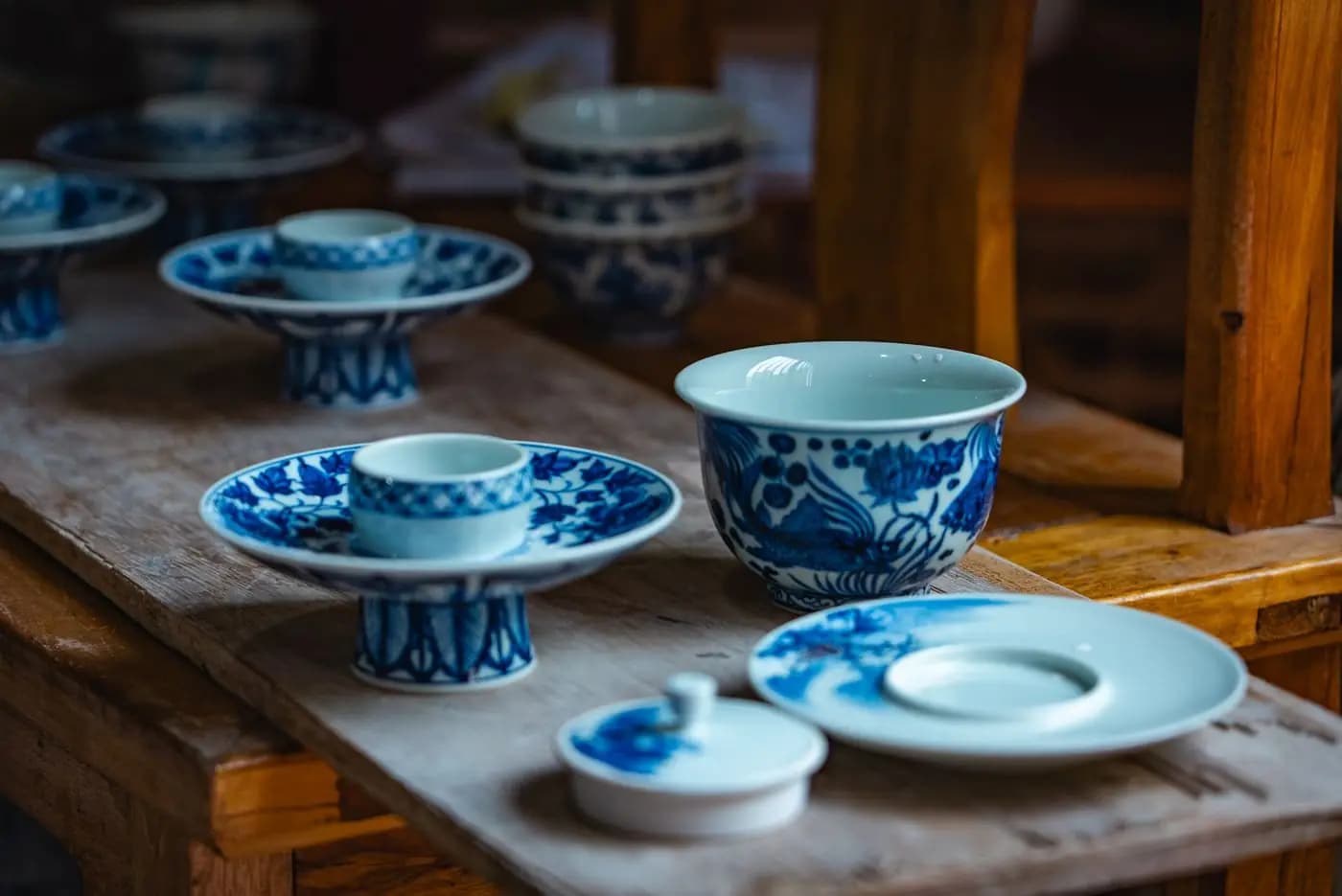
- Ko-Imari (old Imari): the early production for the domestic market and export. First underglaze blue (sometsuke), then busy designs in red, green and gold (the kinrande style) much prized in Europe. Large dishes, lidded jars, patterns covering almost the whole surface.
- Kakiemon: a milky-white body called nigoshide, left largely empty, on which sit asymmetric designs in red, green, blue and yellow enamels: quails, millet, plum blossom, tiger and bamboo. The Sakaida Kakiemon family has carried on the style since the 17th century; the nigoshide technique is protected as an Important Intangible Cultural Property.
- Iro-Nabeshima: made in the Nabeshima clan kilns at Okawachiyama as gifts for the shogun and daimyo, never sold during the Edo period. High-footed dishes, outlines drawn in blue then filled with enamels, carefully drawn motifs, a regular comb pattern painted on the foot. An almost graphic perfection.
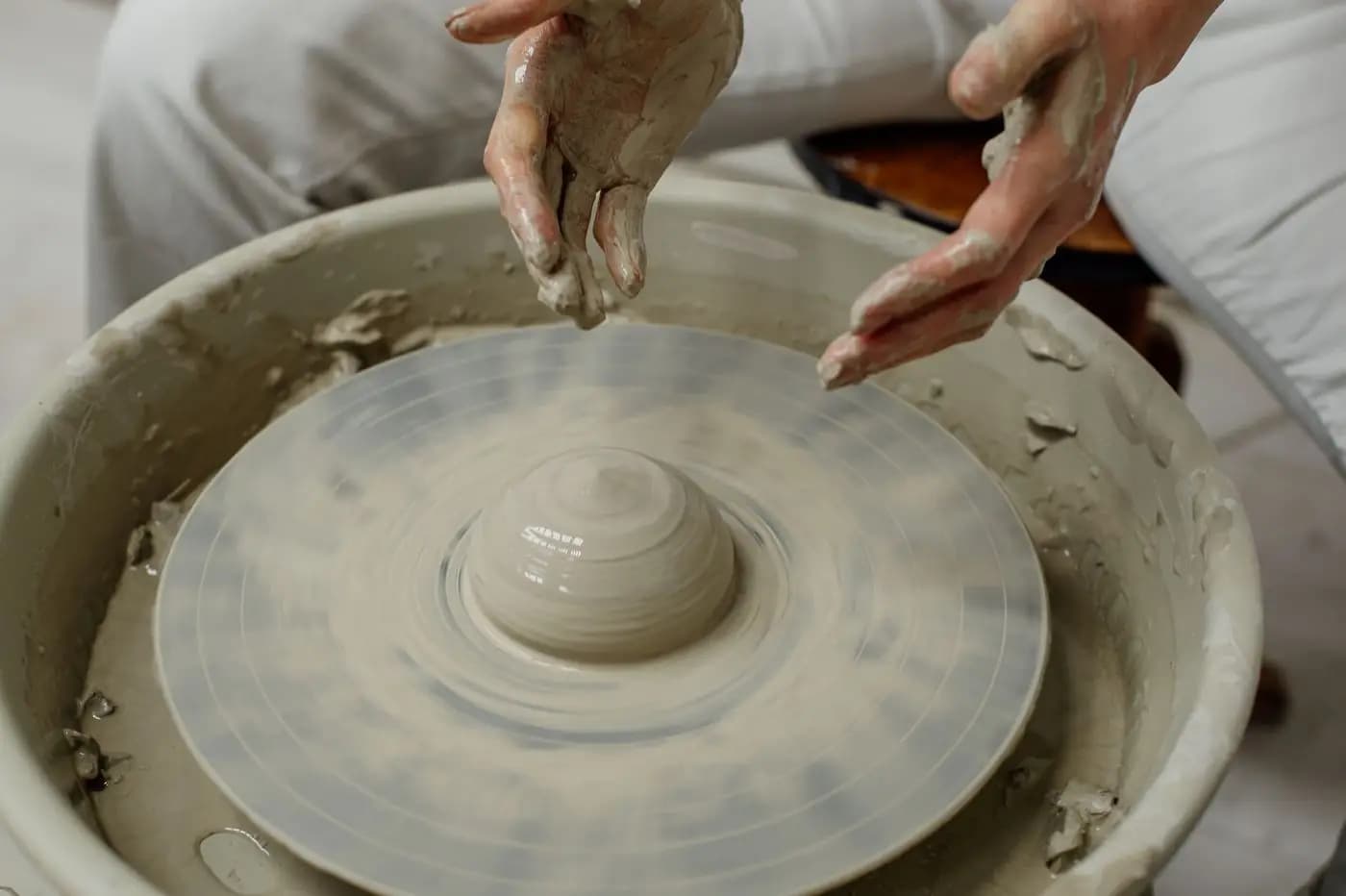
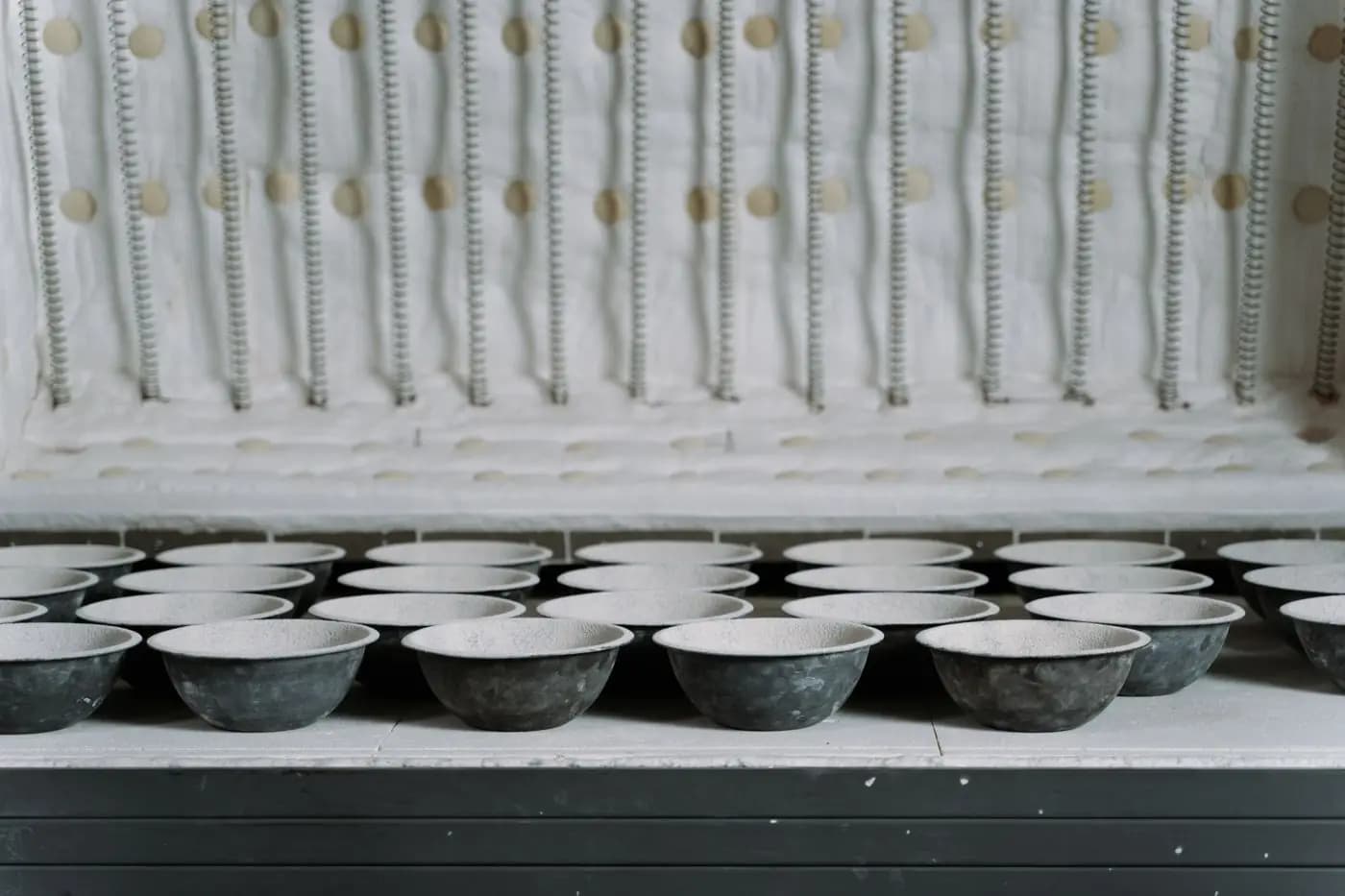
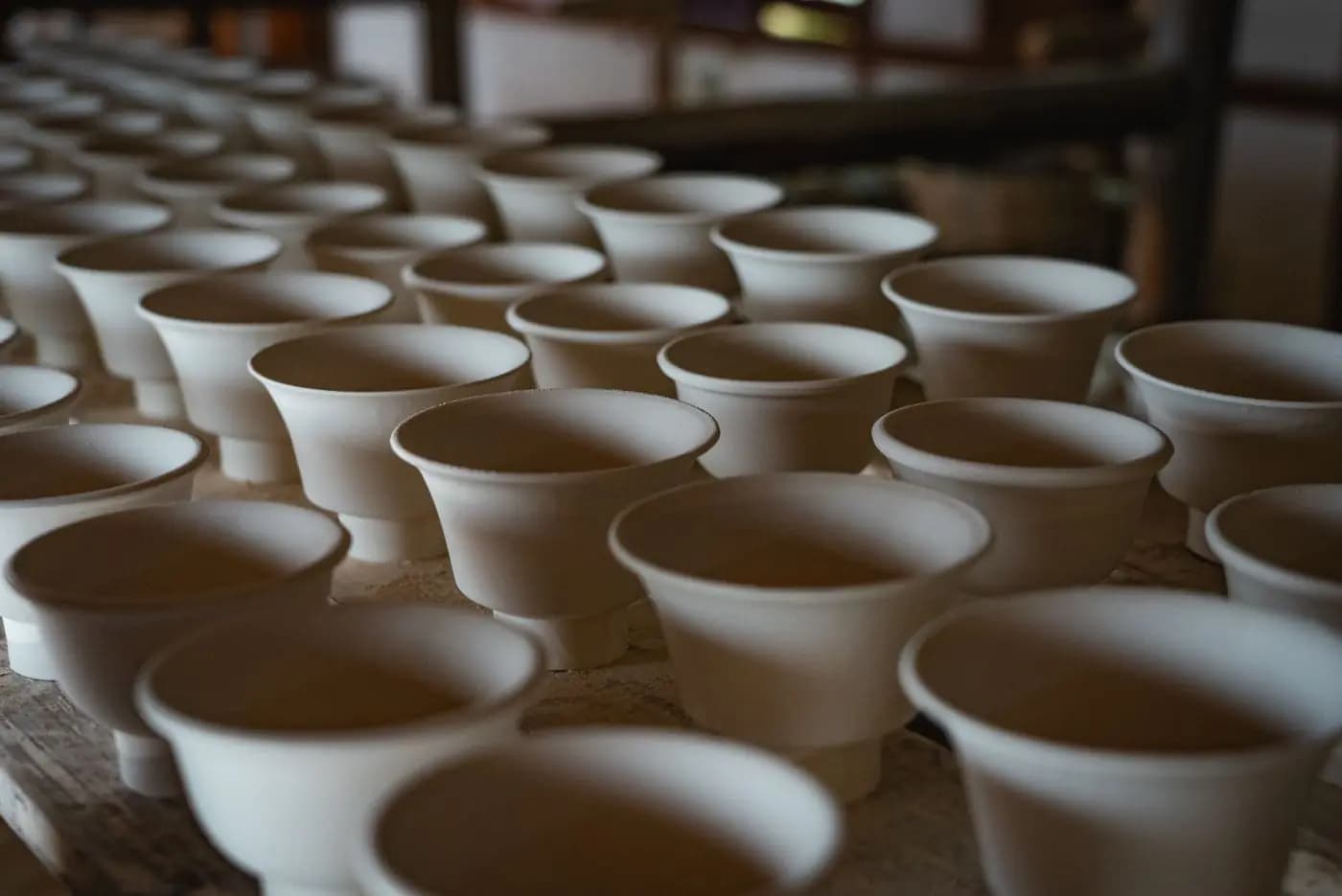
The process is broadly unchanged: porcelain stone is crushed and kneaded, pieces are thrown or moulded, dried, biscuit-fired at about 900°C, painted in cobalt blue (gosu), glazed, fired at around 1,300°C, then, for coloured designs, painted with enamels and refired at a lower temperature. In the big houses the painting itself is often split: one painter draws the outlines, another fills the areas with a loaded brush, a technique called dami.
What to see in Arita: museum, kilns and brick lanes
Arita stretches 4 to 5 km along a valley, between Arita Station in the west and Kami-Arita in the east. The historic core, Uchiyama, is on the Kami-Arita side.
- Kyushu Ceramic Museum: the prefectural museum, about ten minutes' walk from Arita Station. The permanent collection is free (including the Shibata collection of Arita porcelain), temporary exhibitions are paid. Open 9am–5pm (last entry 4:30pm), closed Mondays (the next day after a holiday) and 29 December–3 January. Until 6 December 2026, the exhibition "Kakiemon and Meissen" sets Arita pieces side by side with their Saxon copies.
- Kakiemon and Imaemon kilns: both houses have showrooms where pieces are sold; Kakiemon also shows older pieces from its collection. Look but do not touch, and photography is often not allowed inside.
- Tonbai-bei: in the Uchiyama district, walls built from old kiln bricks and shards along quiet lanes. It is the town's most photogenic setting.
- Tozan Shrine: its torii, lanterns and even its railings are porcelain. Above it, a monument to Ri Sampei overlooks the valley.
- Izumiyama quarry: the cut hillside where the stone was discovered, visible from a viewpoint.
The simplest way round is to get off at Kami-Arita and walk west towards Arita Station, using a taxi for the museum and the outlying kilns. Allow a full day to see the essentials without rushing.
Okawachiyama (Imari): the village of the Nabeshima secret kilns
About twenty minutes by bus from JR Imari Station, at the end of a valley closed off by rocky peaks, Okawachiyama housed the official kilns of the Nabeshima clan. The site was chosen for a simple reason: the terrain and a guardhouse at the valley entrance kept techniques and craftsmen secret, and the craftsmen could not leave freely. Hence its nickname, "village of secret kilns" (hiyō no sato).
Today about thirty workshops still operate in the village, making underglaze blue, Iro-Nabeshima and celadon. The visit is on foot and takes an hour and a half to two hours:
- the sloping main street lined with workshop-shops and brick chimneys;
- the bridge decorated with porcelain tiles at the village entrance;
- the cemetery of nameless potters, with its stones and a mound of shards;
- reconstructed climbing kilns (noborigama) and the viewpoint over the workshop roofs;
- porcelain fairs in spring and autumn, and in summer porcelain wind chimes hanging in the lanes.
Shop prices are often gentler than at the big Arita houses: a small sake cup or chopstick rest from a few thousand yen, a hand-painted plate for roughly ¥5,000–20,000.
Getting there: from Arita Station, the Matsuura Railway to Imari (about 25 minutes), then a Saihi bus to the Okawachiyama terminus (about 20 minutes). By coach from Arita, allow around thirty minutes.
Arita Ceramic Fair: the big Golden Week market
Every year from 29 April to 5 May, Arita turns into a huge porcelain market. 2026 was the 122nd edition; organisers counted about 1.14 million visitors in 2025. Hundreds of stalls line the roughly 4 km main street between Arita and Kami-Arita stations: big houses, small workshops, clearance of seconds, everyday tableware at low prices.
What to know before going:
- The crowds are real: packed trains from Hakata (JR adds extra services), temporary car parks full by morning, a dense pedestrian street at midday. Arrive before 9am or after 3pm.
- Accommodation is booked months ahead in Arita, Takeo Onsen or Ureshino Onsen. Staying in Fukuoka and doing the round trip by train is often easier.
- Bring cash: many stalls do not take cards, although this is improving.
- Packing: sellers wrap carefully, but porcelain is heavy. Many offer home delivery within Japan; for overseas, ask case by case or ship from your hotel.
Outside Golden Week, a quieter autumn fair (the Arita Autumn Festival, usually in November) and Okawachiyama's porcelain fairs offer the prices without the crush.
Porcelain painting workshops and shopping: prices and tips
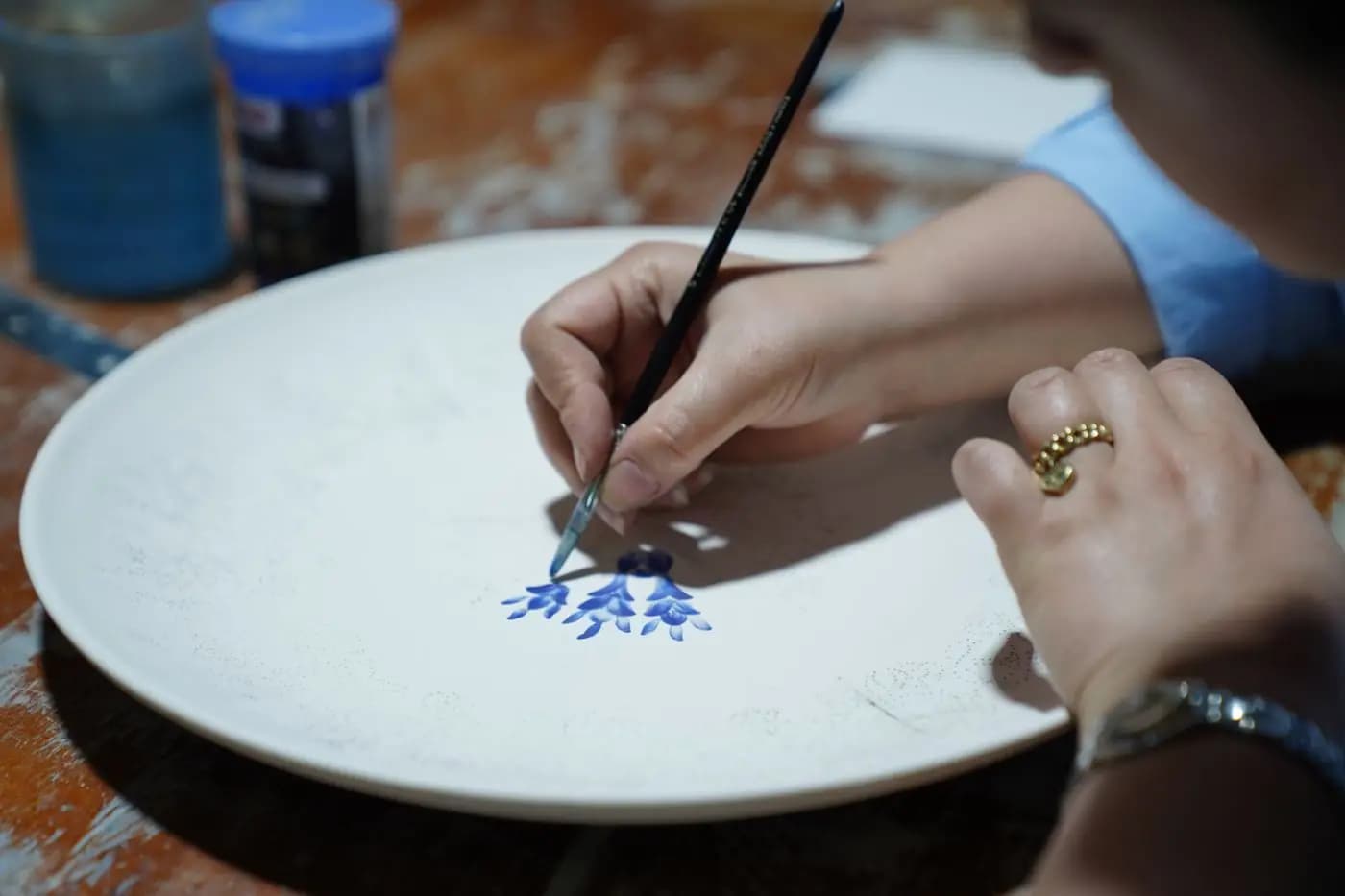
The most accessible experience is porcelain painting (etsuke): you decorate a biscuit-fired plate, cup or bowl in cobalt blue, and the workshop glazes and fires it. Several places offer it in Arita and Imari; prices range from about ¥900 for a small piece in 30 minutes to ¥2,000–3,000 for a cup or wind chime. Some practical points:
- You do not take the piece home the same day: firing and cooling take time, and delivery comes one to two months later. Shipping within Japan is easy; overseas it is not always possible or costs more than the piece. Foreign travellers can have it sent to a friend in Japan or choose a workshop that ships internationally.
- Cobalt blue looks grey-black before firing, so you paint "blind"; that is normal.
- A simple design comes out better than an overloaded one. Traditional motifs (waves, karakusa scrolls, peonies) are often provided as templates.
For shopping, a few price markers:
- teacup or small workshop bowl: about ¥1,500–5,000;
- hand-painted plate from a recognised house: ¥10,000–50,000 and more;
- a signed Kakiemon or Imaemon piece: art-object prices, from several tens of thousands of yen for the smallest.
Seconds (B-hin), at the fair or in factory shops, have a small firing or colour flaw for 30 to 50% less: ideal for everyday tableware.
Getting there from Fukuoka and how long to stay
By train: from Hakata, the Midori limited express (towards Sasebo) reaches Arita in about 1h20; it is covered by the JR Pass and the Northern Kyushu pass. From Takeo-Onsen, the terminus of the Nishi-Kyushu shinkansen, Arita is a quarter of an hour by train, handy if you are coming from Nagasaki. For Imari, take the Matsuura Railway from Arita (about 25 minutes, a private line not covered by the JR Pass).
By car or coach: allow about 1h15 from Fukuoka via the Nagasaki Expressway to the Hasami-Arita exit. It is the most flexible way to combine Arita, Okawachiyama and an onsen.
Recommended length:
- A day from Fukuoka: Arita only (museum, Uchiyama, one kiln, a painting workshop), back in the evening.
- Two days: Arita on day one, a night in Takeo Onsen or Ureshino Onsen (known for its "beauty" water and green tea), Okawachiyama and Imari the next morning.
- Three days: add Karatsu (Karatsu-yaki ceramics, seaside castle) or Hasami, another everyday-porcelain town on the Nagasaki side.
Avoid arriving on a Monday counting on the museum, or in late December and early January, when many kilns close.
Arita for groups: private visits and workshops for 20 to 40 people
Arita works very well for a seminar or incentive based in Fukuoka: the day is easy to follow (history, craftsmanship, personal creation) and every participant leaves with a piece they decorated.
Organisational points:
- The museum welcomes groups by reservation and has a dedicated group-use page; bring a guide-interpreter, as on-site explanations are mostly in Japanese.
- Painting workshop for 20 to 40 people: several workshops can host groups of this size, often in a large hall with a craftsman for the demonstration. Book one to two months ahead and arrange group shipping of the fired pieces to the company's offices or to a participant in Japan.
- Private kiln visit: some houses agree, on request, to a presentation of the workshop or collection by a family member or craftsman. It is the most memorable moment of the day and must be requested very early.
- Transport: a private coach from Fukuoka (1h15) makes everything simpler; at Okawachiyama coaches park at the bottom of the village and the visit is on foot, up a sloping street.
- Timing: avoid Golden Week (crowds, full hotels) unless the fair is the goal; autumn, with the Kakiemon-Meissen exhibition until 6 December 2026, is a good window.
- Gifts: a set of sake cups or small plates from one kiln, engraved or with a note on its style, makes an elegant, easy-to-carry corporate gift.
SHINOGI DMC organises these days from Fukuoka: kiln and workshop bookings, interpreters, transport and a ryokan night in Takeo or Ureshino.
Frequently asked questions
What is the difference between Arita and Imari porcelain?
Historically it is the same porcelain: made in Arita and shipped from the port of Imari, hence the name "Imari" in Europe. Today Arita-yaki refers to Arita's production and Imari-yaki to Imari's, notably Okawachiyama.
When is the Arita Ceramic Fair?
Every year from 29 April to 5 May, during Golden Week. The 2026 edition was the 122nd; about 1.14 million people attended in 2025.
How do you get to Arita from Fukuoka?
By Midori limited express from Hakata, about 1h20, covered by the JR Pass. By car or coach, about 1h15 via the Nagasaki Expressway.
Is the Kyushu Ceramic Museum free?
Yes for the permanent collections; temporary exhibitions are paid. Open 9am–5pm, closed Mondays and 29 December–3 January.
Can you take home the piece you painted in a workshop?
Not on the same day: the piece has to be glazed and fired, then it is shipped one to two months later. Overseas shipping is not always available, so check when booking.
What is Okawachiyama village?
The Imari village that housed the Nabeshima clan's official kilns, which made the Iro-Nabeshima porcelain presented to the shogun. About thirty workshops still operate there; it is 20 minutes by bus from Imari Station.
Rédaction SHINOGI DMC · Updated
Sources
- Saga Prefectural Kyushu Ceramic Museum — Site officiel (horaires, tarifs, expositions)
- Toretabi (JR) — 122e Arita Ceramic Fair, 29 avril-5 mai 2026
- Préfecture de Saga — Document touristique sur Okawachiyama (Imari)
- METI Kyushu — Artisanats traditionnels de Kyushu (Imari-Arita-yaki, désignation 1977)
- Rurubu — Imari-Arita-yaki Traditional Industry Hall (atelier de peinture)