How is Japanese soy sauce (shoyu) made?
Japanese shoyu is made with four ingredients: soybeans, wheat, salt and water, plus the koji that transforms them. Wheat is the big difference from many Chinese or Korean soy sauces: it brings aroma and a slight sweetness. The steps, as traditional breweries describe them:
- Soybeans: washed, soaked, then steamed under pressure.
- Wheat: roasted, then cracked into two or three pieces.
- Koji: soybeans and wheat are mixed and inoculated with koji spores, then kept three to four days in a warm, humid room and turned several times until the mould covers everything.
- Moromi: the koji is mixed with brine and put into vats. This mash, called moromi, ferments through the action of yeasts and lactic bacteria. It is stirred regularly for one to one and a half years in natural fermentation; fermentation peaks in June-July.
- Pressing: the moromi is wrapped in cloths and pressed. The liquid obtained is kiage, a raw, still-living soy sauce.
- Heating (hi-ire): the kiage is settled and then heated, which stabilises the sauce, sets the colour and develops the aroma. At Kadocho it is still heated for half a day in a Japanese cauldron over a pine-wood fire.
- Bottling.
The whole difference between an industrial and a craft soy sauce lies in the moromi. Industry controls temperature in steel tanks and produces sauce in a few months; traditional breweries let the moromi age with the seasons, often in cedar barrels whose wood harbours each house's own microorganisms. Barrel-fermented shoyu now accounts for less than 1% of Japanese production.
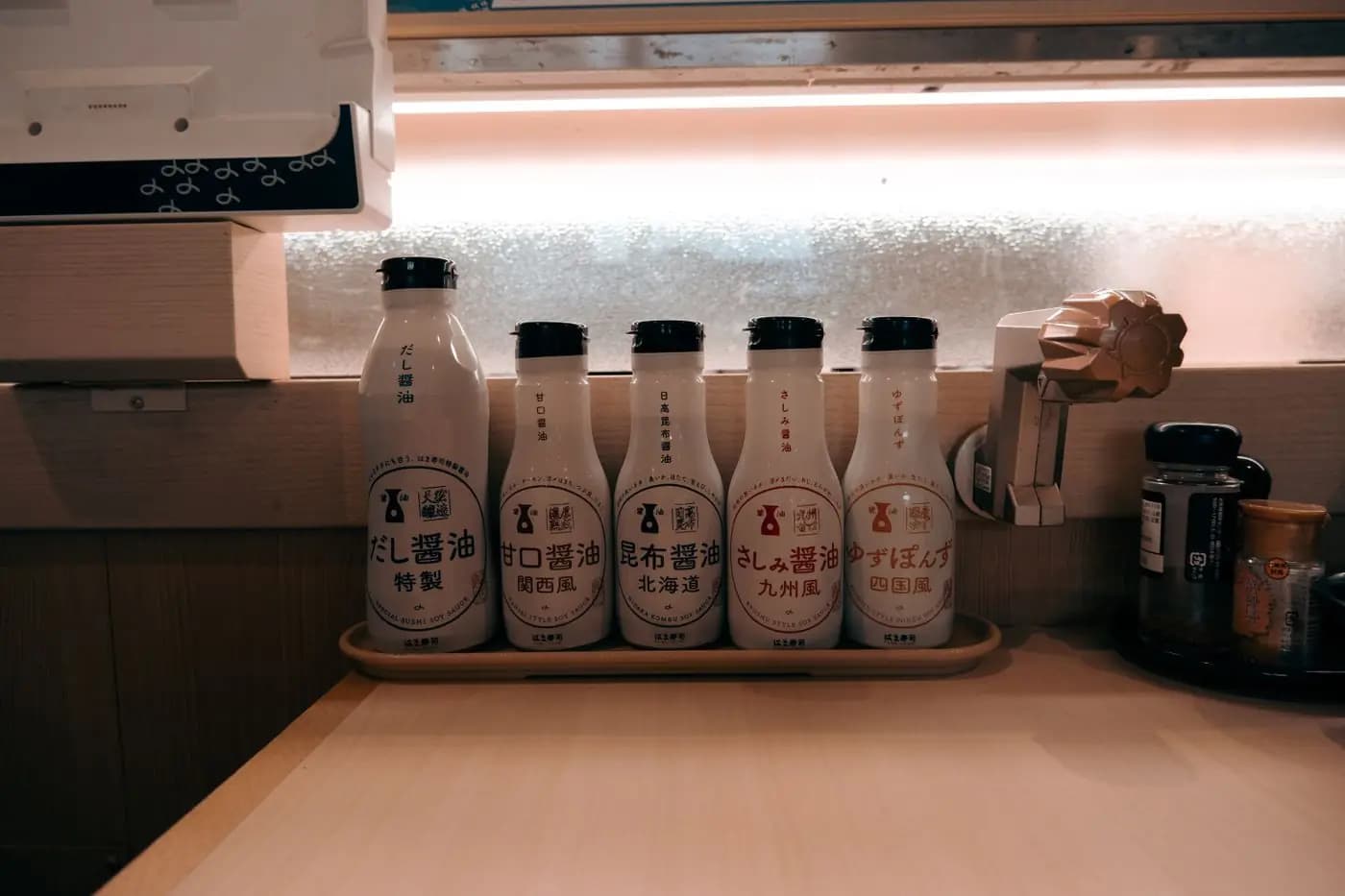
Koikuchi, usukuchi, tamari… the five types of soy sauce
The Japanese standard (JAS) distinguishes five types of shoyu. Knowing them avoids many mistakes in the kitchen, and it is the basis of any tasting.
- Koikuchi ("strong taste"): the standard soy sauce, soybeans and wheat in roughly equal parts. It accounts for the vast majority of Japanese consumption, around 80%. Versatile: seasoning, marinade, cooking, dipping.
- Usukuchi ("light taste"): paler but saltier than koikuchi, despite what its name suggests. A Kansai speciality, notably from Tatsuno (Hyogo). It seasons without colouring: broths, vegetables, Kyoto cooking.
- Tamari: almost entirely soybean, little or no wheat. Thick, dark, rich in umami. Typical of the Nagoya region (Aichi, Gifu, Mie), where it is a cousin of soybean miso. For sashimi, glazed grills and senbei.
- Saishikomi ("brewed twice"): the koji is mixed not with brine but with finished soy sauce. Very dense, almost syrupy, reserved for dipping. Originally from Yanai (Yamaguchi); Shodoshima's long-aged sauces are often of this type.
- Shiro ("white"): mainly wheat, very little soybean, pale amber. A speciality of Hekinan (Aichi). For chawanmushi and dishes where colour matters.
Three useful words on labels:
- Marudaizu: made with whole soybeans, not defatted soybean meal (cheaper and widely used industrially).
- Tennen jozo: natural fermentation, not accelerated by temperature.
- Nama: unpasteurised, more aromatic but fragile; keep refrigerated.
On the palate, a craft koikuchi shows a complex aroma (dried fruit, coffee, caramel), less aggressive salt and a finish that lingers. The best way to check is to taste an industrial sauce and a barrel-brewed one side by side, on a piece of plain tofu.
Yuasa, birthplace of shoyu: history and the brewery district
Yuasa is a small town on the west coast of Wakayama Prefecture, south of Osaka. Its story begins with a monk. In the 13th century, in the Kamakura period, the Zen monk Kakushin (later Hotto Kokushi) returned from Song China with the recipe for Kinzanji miso, a soybean and barley miso mixed with chopped vegetables. While making it, people noticed that the liquid pooling at the bottom of the vats was delicious. Refined over generations, and helped by the quality of the local water, this "tamari" became shoyu. That is why the word tamari, "what accumulates", also means soy sauce in general in the area.
Yuasa had up to 92 breweries at its peak, and its sauces were shipped to Osaka and Edo. Only a handful remain today. The historic district, about 400 metres east to west and 280 north to south, has been a preservation district for traditional buildings since 2006: merchant houses, brewing storehouses, narrow lanes, small canals where barrels were loaded. In 2017 the whole was recognised as Japan Heritage under the title "The First Drop: Kishu Yuasa, birthplace of shoyu brewing". The Kumano Kodo pilgrimage route also passes through the town.
The district takes one to two hours on foot. What to do:
- Wander the lanes and spot the signs of breweries and Kinzanji miso makers, eaten as a side dish with rice.
- Visit Kadocho and its museum (see below).
- Do a workshop: the Yuasa Shoyu company offers factory tours and workshops where you make your own soy sauce.
- Lunch on shirasu (whitebait), another coastal speciality.
The town takes an interesting approach: presenting the whole district as an open-air museum, with small exhibits in old houses. It is not a theme park; families live here, so be discreet with the camera in front of occupied houses.
Visiting Kadocho: the museum of handmade shoyu
Kadocho, founded in 1841 (year 12 of the Tenpo era), is Yuasa's oldest active brewery and the only one still brewing by hand in its Edo-period storehouses. After the war, some twenty breweries remained in town; by 1970 Kadocho was the last to follow the old methods. The house has never rebuilt its brewing storehouse: it believes the yeasts living there since the start make the taste of its sauce.
What sets Kadocho apart:
- Winter-only brewing (kan-jikomi): cold water limits unwanted bacteria and the koji is easier to control.
- Yoshino cedar barrels.
- Whole soybeans from Okayama and wheat from Gifu, no GMOs, no preservatives.
- Heating over a pine-wood fire in a Japanese cauldron for half a day, as in the Edo period.
- Its sauce is called "Yuasa tamari", but technically it is a koikuchi (equal soybean and wheat): "tamari" is the historic name here.
The visit covers two buildings. The Shokunin-gura is an 80 m² brewing storehouse built in 1866, displaying tools actually used by the craftsmen: a foot-powered wheat mill, presses, barrels, a merchant's counter. The more recent soy sauce museum explains production with models and panels.
Practical information:
- Free entry and parking.
- Hours: 9am-12pm and 1-5pm, open all year (occasional closures).
- Guided tour: about 40 minutes, by reservation by phone (0737-62-2035). Capacity: 50 people; parking for 2 coaches.
- Shops: the main house (in the historic district) and a shop on National Route 42, both 9am-5pm.
- Access: 15 minutes' walk from JR Yuasa station.
To buy: the house sauce in bottles or small flasks (from a few hundred to a few thousand yen depending on size), the unfiltered nigori-hishio if you can keep it cool, and Kinzanji miso from another shop in the district. Kadocho does not ship abroad: whatever you want to bring home, you carry.
Shodoshima: the island of soy sauce barrels and the Yamaroku brewery
Shodoshima, the second-largest island in the Seto Inland Sea, is known in Japan for its olive trees, and among food lovers for its breweries. Shoyu production began here in the Edo period, built on salt from local saltpans and sea trade. The breweries are concentrated in the south-east of the island, in the area nicknamed Hishio no Sato ("land of hishio", an old name for fermented condiments), between the ports of Uchinomi and Sakate. When the wind blows, you can smell soy sauce in the streets.
The island keeps about 1,000 wooden brewing barrels, roughly half of those still in use in Japan. Several breweries have a small museum or café, and some offer guided tours. The largest, Marukin, has a soy sauce museum in an old wooden brewing building (paid entry, around ¥500 per adult).
Yamaroku, some 150 years old and in its fifth generation, is the best known among enthusiasts. Its owner, Yamamoto Yasuo, launched a project in 2011 to save wooden barrels: in 2009 he had ordered nine new barrels from one of the country's last coopers, who told him it was the first order from a shoyu brewer since the war. In 2012 he went with two island carpenters to learn the trade from that cooper; their first barrel, in Yoshino cedar bound with bamboo, was finished on September 20, 2013. Since then, craftspeople and brewers from all over Japan have come every January to build barrels on the island.
Visiting Yamaroku:
- Free and no booking needed, even if you turn up unannounced. You enter the natural moromi storehouse, where you see the barrels and the moromi crust on the surface.
- One rule: do not eat natto before the visit. The natto bacillus is fearsome for the yeasts and bacteria of the moromi; the rule is an old one in breweries.
- Yamaroku Chaya, under the eaves, 9am-5pm daily: ice cream to drizzle with Tsuru-bishio soy sauce, soy sauce pudding (weekends), coffee (¥440 each).
- Tsuru-bishio, the flagship sauce, ages for about 4 years: a very dense saishikomi, best tasted on the ice cream before you judge.
- Access: at the foot of the road up to Kankakei gorge, in the south-east of the island. Narrow road, 4 to 5 parking spaces: a coach parks lower down and the group finishes on foot.
Tastings, shopping and access: planning the visit
How to taste soy sauce: a few drops on a white spoon or small dish for colour and aroma, then on cold tofu, a piece of raw fish and plain rice. Always compare at least two sauces, ideally an industrial koikuchi and a barrel-brewed one. Several breweries in Shodoshima and Yuasa offer tastings at the counter; for a group, request a guided tasting in advance.
What to buy: 100 to 300 ml bottles, easier to carry (from a few hundred to around ¥1,500 at a craft brewery), tasting sets, ponzu, sashimi sauces, and on Shodoshima, local olive oil and tsukudani (food simmered in soy sauce), another island speciality. Soy sauce travels fine in checked luggage; wrap glass bottles well.
Getting to Yuasa:
- From Osaka: Kuroshio limited express from Tennoji to Wakayama (about 1 hour), then a local Kisei Line train to Yuasa (about 30 minutes). From the station, 15 minutes' walk to the historic district.
- By coach: Arida exit of the Hanwa expressway, then National Route 42.
- Combine with Wakayama (castle), Mt Koya or the start of the Kumano Kodo.
Getting to Shodoshima (no bridge, boat only):
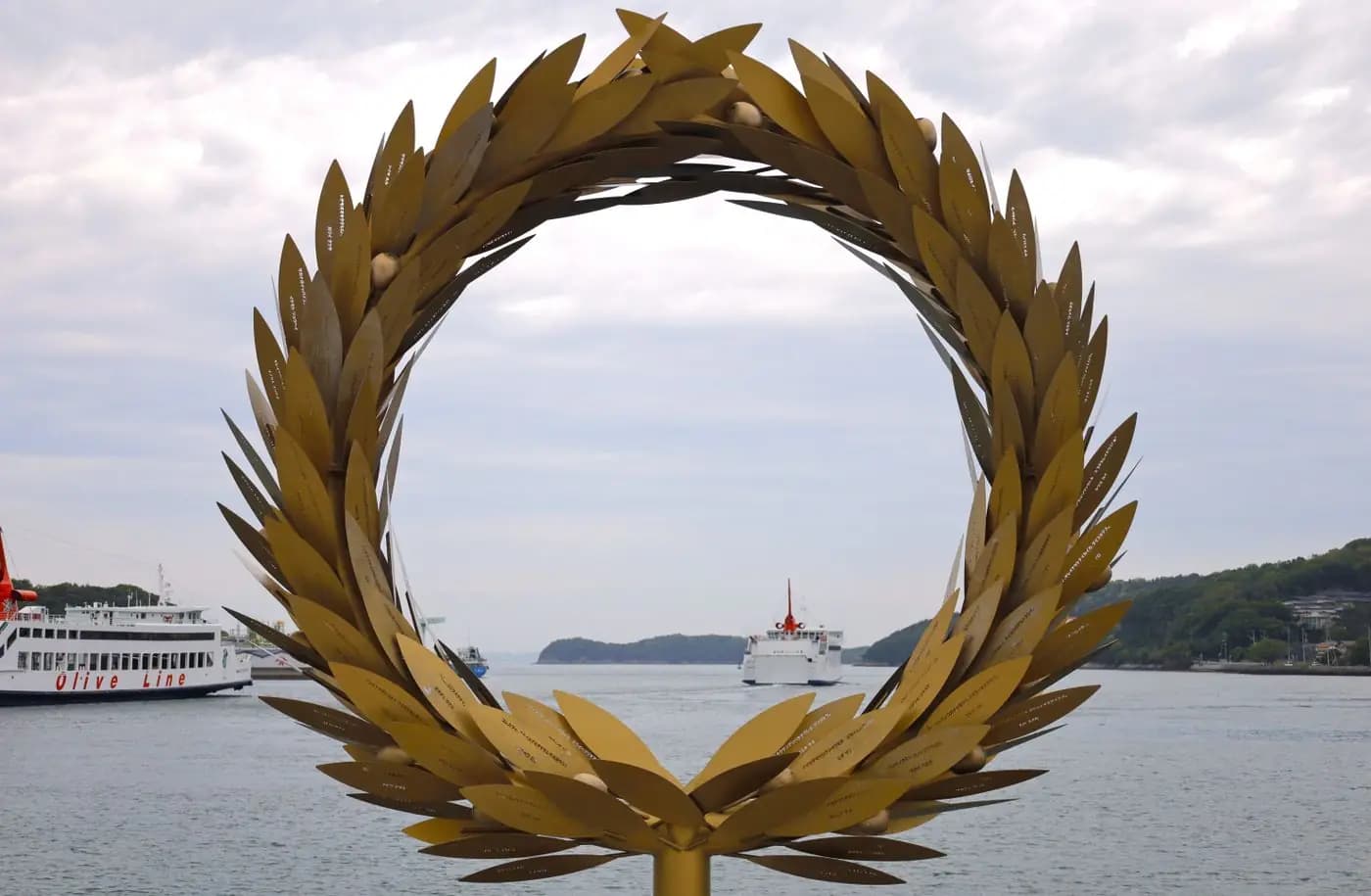
- From Takamatsu (Shikoku): ferry to Tonosho in 60 minutes or fast boat in 35 minutes; ferries to Ikeda (60 minutes) and Sakate (75 minutes), the latter closest to the breweries.
- From Kansai: Kobe → Sakate ferry (about 3h10), Himeji → Fukuda (1h40).
- From Okayama: Shin-Okayama → Tonosho (70 minutes), Hinase → Obe (60 minutes).
- On the island, Olive buses are infrequent: plan a car, taxi or a coach taken on the ferry.
How long? Yuasa takes half a day from Osaka or Wakayama. Shodoshima deserves one night: breweries in the morning, Kankakei gorge, Angel Road at low tide, and sunset over the Inland Sea. With a JR Pass, Shodoshima combines well with Okayama, Kurashiki or the art islands of Naoshima.
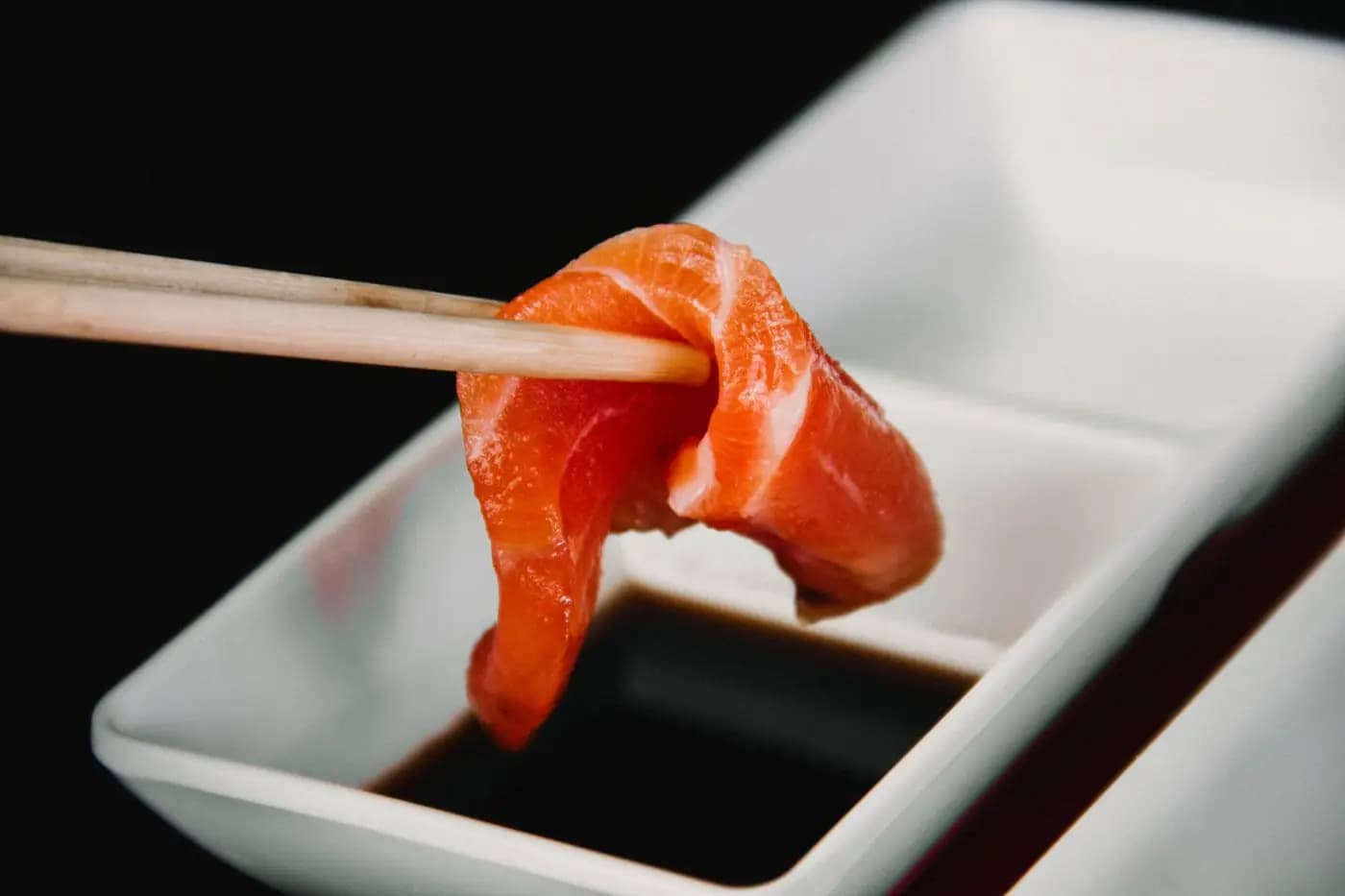
A soy sauce trip for a group
Soy sauce is an easy theme for a group because it speaks to everyone: each person has a bottle at home, and the difference with a craft brewery's sauce can be tasted in a second. Two formats work:
- Half a day in Yuasa from Osaka: guided tour of Kadocho (up to 50 people, by reservation), a walk through the listed district, a "make your own soy sauce" workshop in sub-groups, a shirasu lunch. Back in Osaka for the evening.
- Two days on Shodoshima: ferry crossing (the coach comes aboard), two or three breweries including Yamaroku, a guided tasting, lunch around tsukudani and olive oil, a night in a seafront hotel. Can be combined with Naoshima and its museums for an art-and-food programme.
Points to watch:
- Sub-group size: brewing storehouses are narrow; 15 to 25 people per visit is the right format, rotating sub-groups between the brewery, the shop and a walk.
- Brewery hygiene rules: no natto before the visit, no touching the moromi, no food in the storehouses.
- Language: tours are in Japanese; a guide-interpreter who understands fermentation makes the visit twice as rich.
- Weather and ferries: in strong winds, fast boats are cancelled; keep a margin on the last ferry.
- Gifts: small personalised bottles of barrel-brewed shoyu or tasting sets, which travel well and recall the visit.
For participants from food or hospitality, the trip lends itself to a more technical angle: meeting a brewer, comparing industrial and traditional processes, discussing the future of wooden barrels. SHINOGI DMC organises these days with brewery bookings, ferries, the coach and a bilingual guide.
Frequently asked questions
Where was Japanese soy sauce born?
In Yuasa, Wakayama Prefecture, according to tradition: the liquid pooling at the bottom of Kinzanji miso, brought from China by the monk Kakushin in the 13th century, is said to be its origin. Yuasa has been recognised as Japan Heritage since 2017.
What is the difference between koikuchi and usukuchi?
Koikuchi is the standard dark, all-purpose soy sauce. Usukuchi is paler but saltier; it seasons without colouring, especially in Kansai cooking.
Can you visit a soy sauce brewery in Japan?
Yes. In Yuasa, Kadocho opens its museum free of charge (guided tour of about 40 minutes by reservation). On Shodoshima, Yamaroku can be visited free without booking, and other breweries have a museum or shop.
Why should you not eat natto before visiting a brewery?
The natto bacillus is very hardy and can contaminate the moromi, whose yeasts and lactic bacteria tolerate it poorly. It is an old rule in soy sauce and sake breweries.
How do you get to Shodoshima?
By boat only: from Takamatsu (35 to 75 minutes depending on port and boat type), Shin-Okayama (70 minutes), Himeji (1h40) or Kobe (about 3h10). Sakate port is closest to the breweries.
What share of Japanese soy sauce is fermented in wooden barrels?
Less than 1% of production. Shodoshima holds about 1,000 barrels, nearly half of those still in use in Japan.
Rédaction SHINOGI DMC · Updated
Sources
- Kadocho — Histoire du shoyu de Yuasa et présentation
- Kadocho — Musée (horaires, réservation, capacité, accès)
- Kadocho — Étapes de fabrication
- Kadocho — FAQ (brassage d'hiver, matières premières, autocars)
- Kadocho — Boutiques et informations sur l'entreprise
- JNTO — Japan's Essential Seasoning: the 1,200-year history of soy sauce (Yuasa)
- Yamaroku Shoyu — Visite et accès (ferries, bus, consigne natto)
- Yamaroku Shoyu — Projet de renaissance des fûts en bois
- Yamaroku Shoyu — Yamaroku Chaya (horaires, carte)
- MLIT (base multilingue) — Shodoshima Soy Sauce: An Aromatic Tradition