Greeting in Japan: bow, shake hands, or both?
The basic Japanese greeting is a bow from the waist with a straight back, hands at the sides for men and resting one on the other in front for women. There are three degrees that Japanese employees learn in their first job:
- Eshaku, about 15°: the everyday greeting for a colleague in the corridor, a receptionist, a driver.
- Keirei, about 30°: the polite bow used to welcome a client or introduce yourself.
- Saikeirei, about 45°: sincere apologies or deep thanks. Visitors almost never need it.
In practice, a traveller does perfectly well with a simple nod and a smile. What feels wrong is overdoing it: repeated bowing, hands pressed together as in prayer (a Buddhist gesture, not a greeting), or a bow copied from a samurai film.
In business, handshakes have become common with foreigners, often combined with a slight bow. Let your Japanese counterpart lead: if they offer a hand, shake it without crushing; if they bow, bow back. Hugs and cheek kisses are out, even after three days of seminar together.
Another point that surprises visitors: people are addressed by their family name followed by -san (Tanaka-san), never by their first name unless explicitly invited. And you never add “-san” to your own name.
Shoes, tatami and slippers: when do you take your shoes off in Japan?
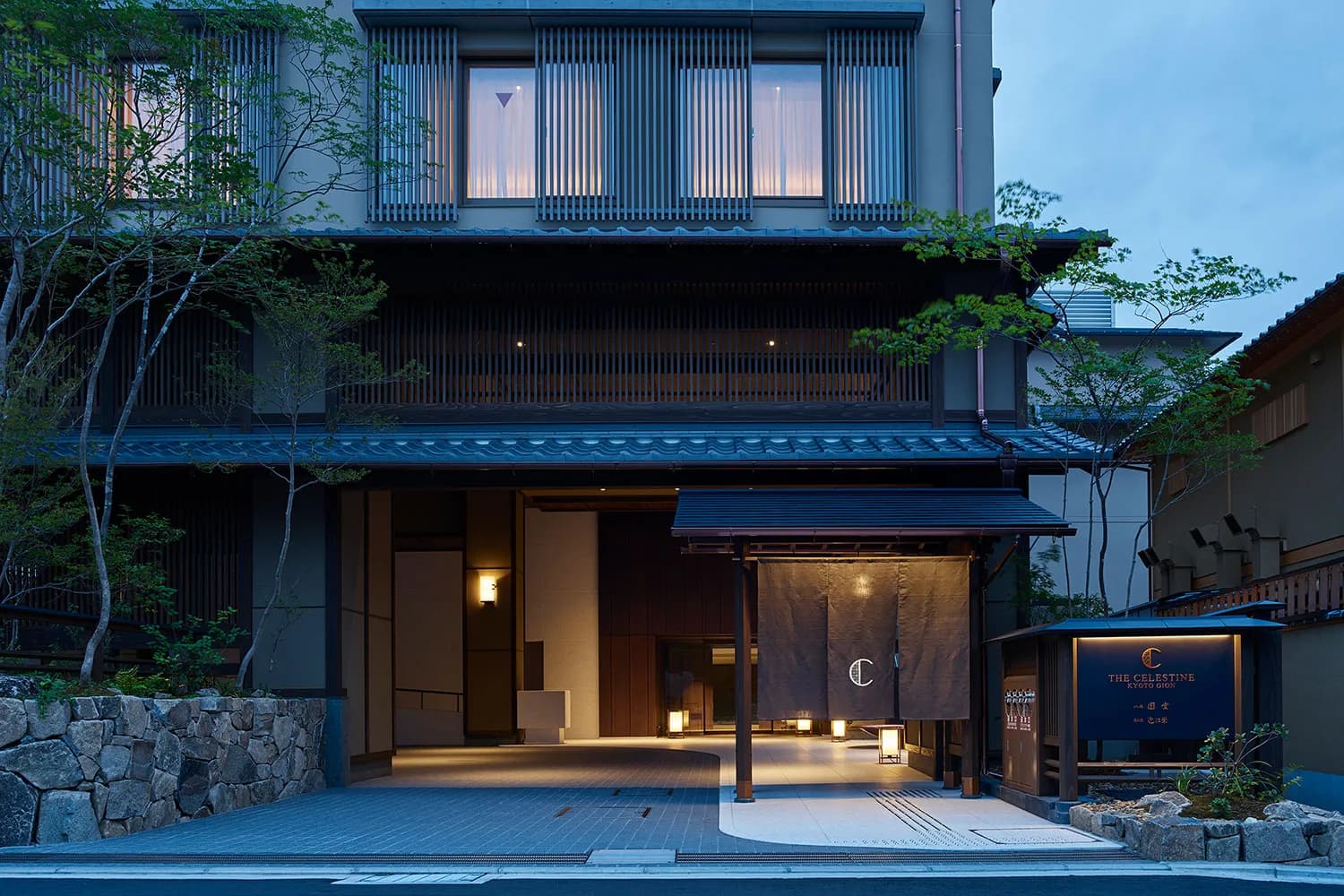
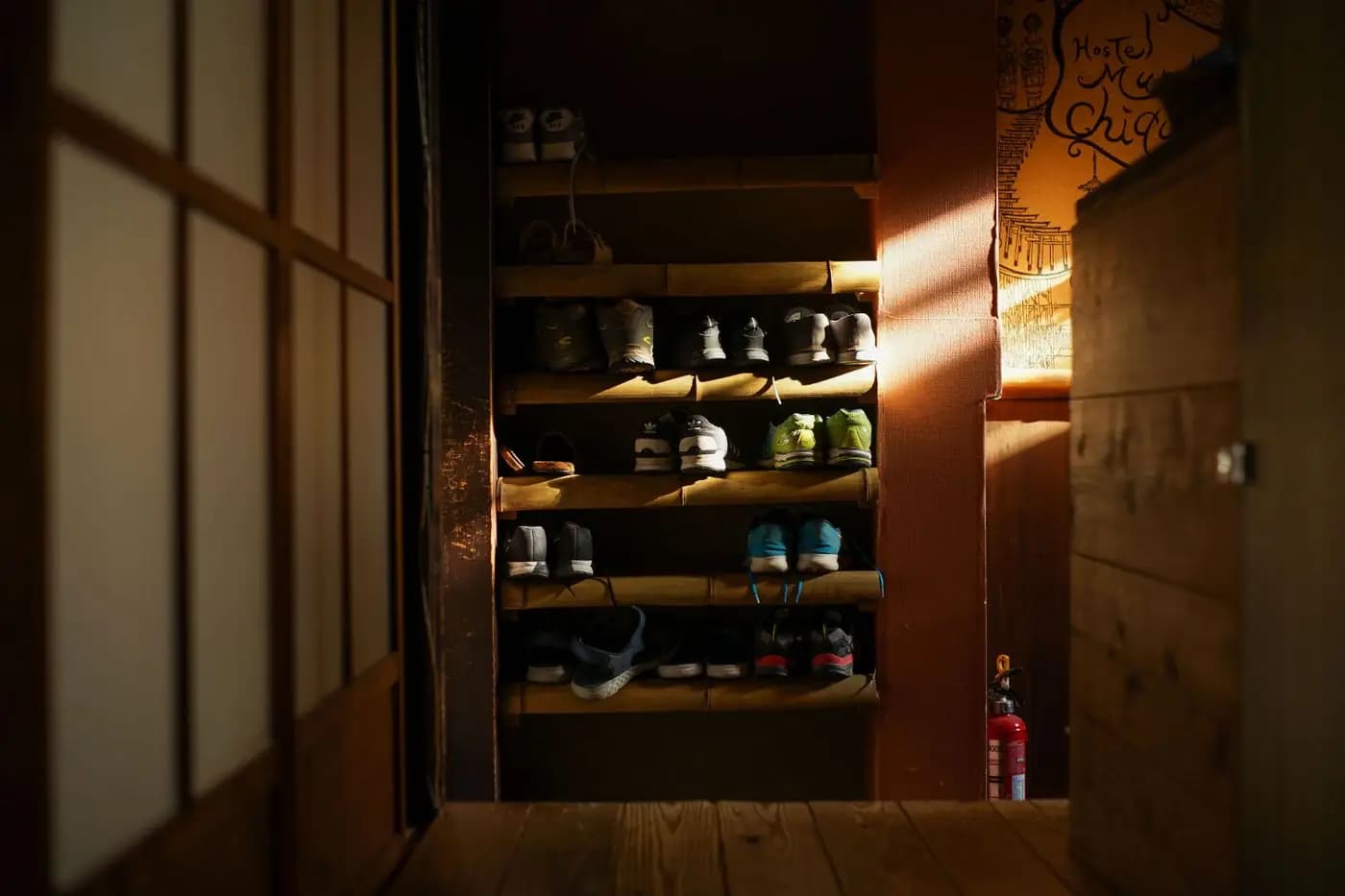
The rule fits in one image: the genkan, the small sunken entrance found in homes, ryokan, some restaurants and temple halls. As long as you are at genkan level, you are “outside”. Once you step up, you are “inside”, and your shoes stay below, ideally with the toes pointing towards the door.
You take your shoes off in these situations:
- traditional inns (ryokan, minshuku) and private homes;
- the inner halls of temples, usually signposted or marked by shoe racks; some sites hand out plastic bags so you can carry them;
- restaurants with tatami or zashiki rooms, and some izakaya;
- shop fitting rooms (leave your shoes outside the curtain);
- a few schools, clinics and old-style offices.
Two traps come up again and again. First, slippers never go on tatami: take them off at the edge of the mat and continue in socks. Second, toilets often have their own slippers, which stay there when you leave. Walking back down the corridor in the “WC” slippers is the most common traveller's blunder, and it makes the whole staff smile.
A very down-to-earth tip: wear shoes you can slip off without sitting down (avoid high lace-ups and boots) and socks without holes. On a day in Kyoto you may take your shoes off ten times.
At a ryokan, the yukata is wrapped left side over right. The reverse is for the deceased, and it is the detail staff most often correct on foreign guests.
Chopsticks and meals: the taboo gestures at a Japanese table
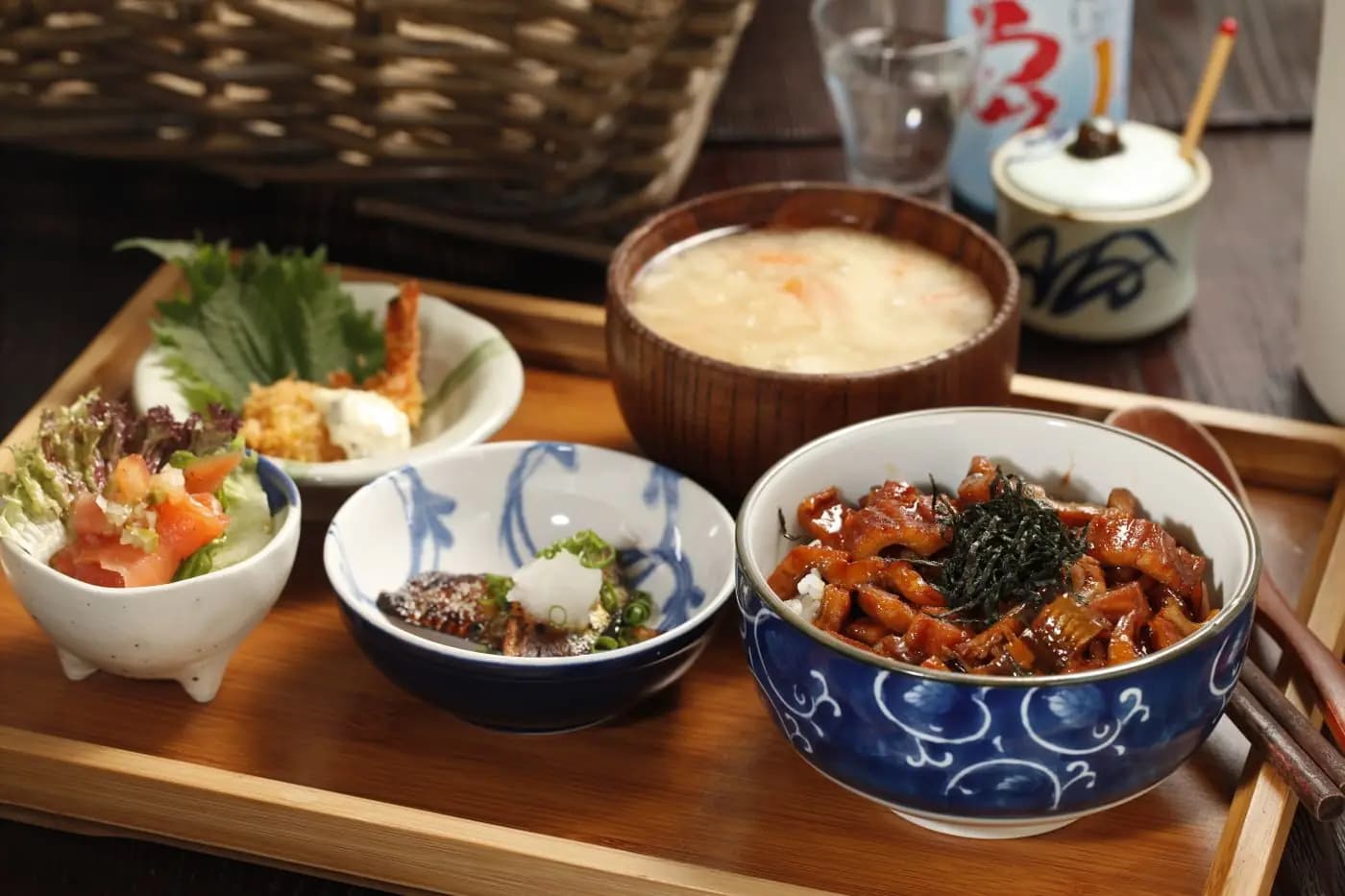
Nobody will blame you for holding your chopsticks awkwardly. Some gestures, however, carry strong symbolism, and two of them point directly to Buddhist funerals:
- Tate-bashi: sticking chopsticks upright in rice. This is how a bowl of rice is offered to the deceased.
- Hashi-watashi: passing food from your chopsticks to someone else's. It recalls the moment when relatives pass the bones to one another after cremation.
Then come the ordinary bad manners: spearing food like a fork (sashi-bashi), hovering indecisively over dishes (mayoi-bashi), licking your chopsticks, pulling a dish towards you with them, or using them to point. Between bites, rest them on the chopstick rest (hashioki) or, failing that, on the folded paper sleeve.
For shared dishes, ask for serving utensils if there are none; some people turn their chopsticks around to serve themselves, a practice that is tolerated but debated.
A few more pointers:
- wait for the “kanpai” toast before your first sip;
- pour for others and let others fill your glass; holding your glass with both hands when someone pours is appreciated;
- slurping noodles is normal, blowing your nose at the table is not (step out of the room);
- say “itadakimasu” before eating and “gochisōsama deshita” on leaving, to staff and host alike;
- no tipping: service is included and the bill is usually paid at the counter by the entrance.
One last point that is often ignored: eating while walking is frowned upon in many tourist districts. At Nishiki Market in Kyoto or on Kamakura's shopping streets, signs ask you to eat on the spot, in front of the stall.
Trains, phones and queues: the rules on Japanese public transport
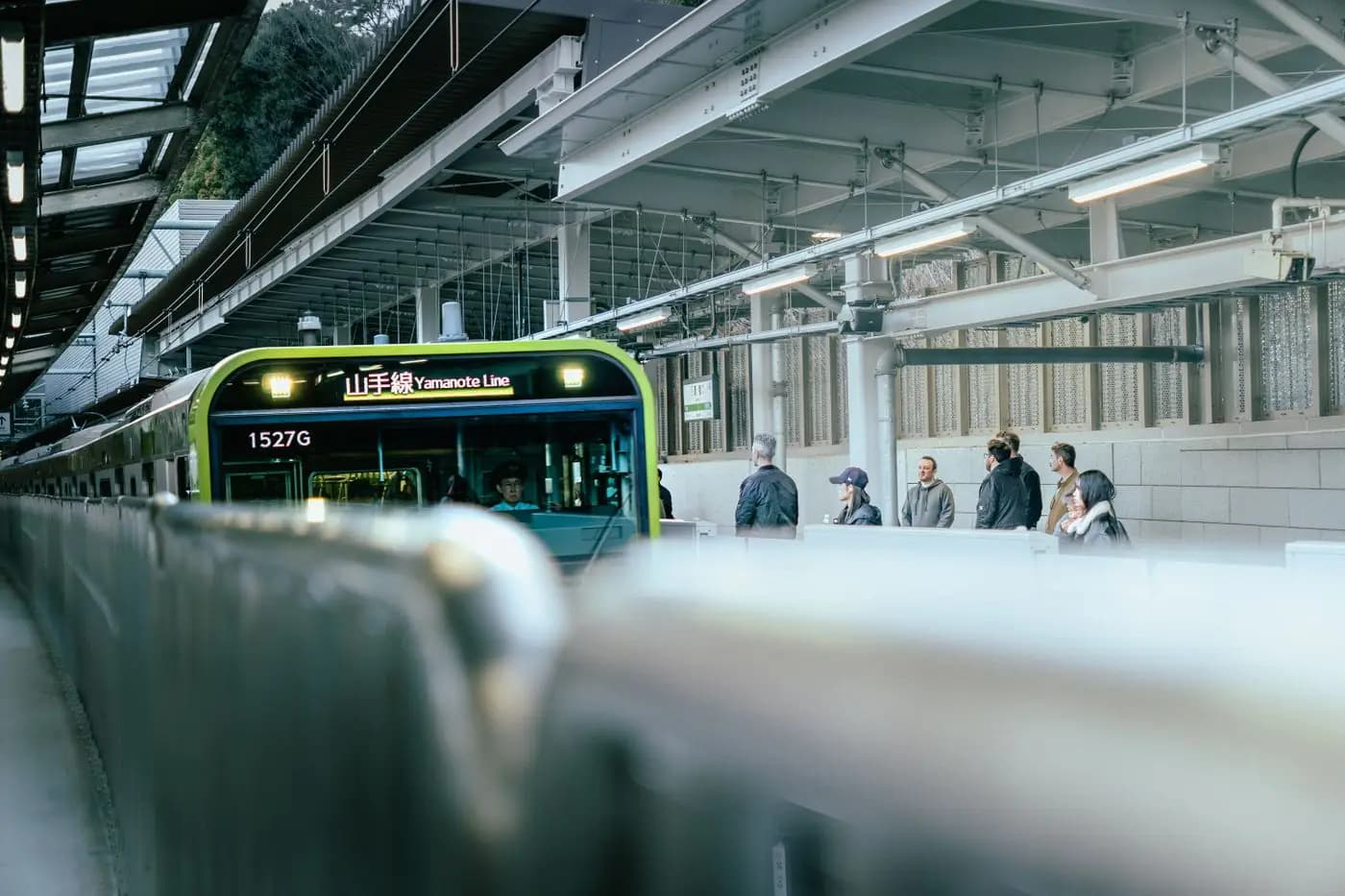
Japanese trains are quiet, and that quiet is a collective rule more than a habit. Announcements repeat it on every journey: phones on silent (manner mode), no calls on board. If a call is urgent, get off at the next station or step into the vestibule between cars on the Shinkansen. Conversations are kept low; a group of fifteen laughing loudly in a metro car at 8am is noticed immediately.
On the platform, you queue. Floor markings show where the doors will stop, and people line up in two rows on either side, leaving the middle free for passengers getting off. Nobody pushes in, even at rush hour.
On board:
- backpacks are worn on the front or put on the luggage rack;
- priority seats (yūsenseki), at the ends of cars, are left for elderly, pregnant or disabled passengers;
- some lines have women-only cars at rush hour, marked in pink on the platform;
- people rarely eat on the metro or commuter trains, whereas on the Shinkansen the bentō is an institution.
On escalators, people stand on the left in Tokyo and on the right in Osaka, which confuses visitors every time they switch cities. Saitama Prefecture and Nagoya have even adopted ordinances asking people to stand still on both sides.
For suitcases, watch out on the Shinkansen: on the Tokaido, Sanyo and Kyushu lines, any bag whose three dimensions add up to more than 160 cm requires a reserved seat with an oversized-luggage area. For groups, the simplest solution is still to send suitcases from hotel to hotel (takkyūbin), usually delivered the next day.
Rubbish, smoking and cleanliness: why there are almost no bins in Japan
Japanese streets are clean and almost free of bins. The two facts are linked: many public bins were removed after the 1995 sarin attack on the Tokyo subway, and people got used to taking their rubbish home or back to their hotel.
In practice, for a traveller:
- keep a small plastic bag in your daypack;
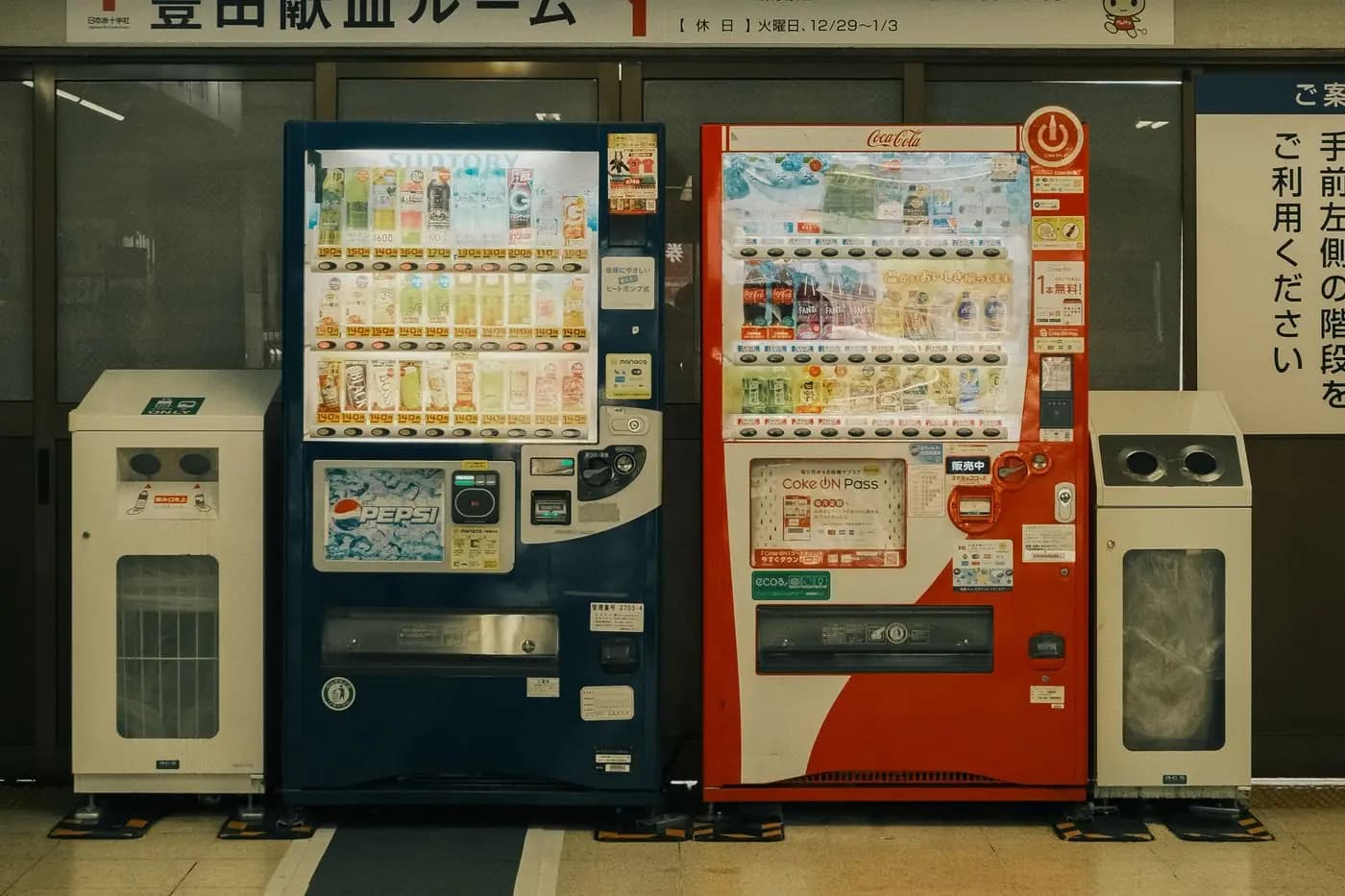
- bottles and cans go in the bins placed next to vending machines;
- konbini (7-Eleven, Lawson, FamilyMart) often have bins at the entrance, with sorting instructions, in principle for products bought there;
- stations still have bins on platforms or near the ticket gates;
- sorting is taken seriously: burnable waste, plastic, PET bottles, cans and glass rarely go in the same place.
Smoking follows a similar logic. Smoking while walking is banned in many Tokyo wards, with fines enforced by municipal patrols, and Osaka extended its street-smoking ban to the whole city in 2025. People smoke in designated smoking areas, sometimes simple marked zones outside stations. In restaurants, the 2020 law made most dining rooms non-smoking, but some small izakaya and bars still allow it: check the sign at the door if the group includes non-smokers.
Finally, loudly blowing your nose in public or spitting goes down very badly, while wearing a mask when you have a cold is seen as consideration for others.
Giving gifts in Japan: omiyage, wrapping and numbers to avoid
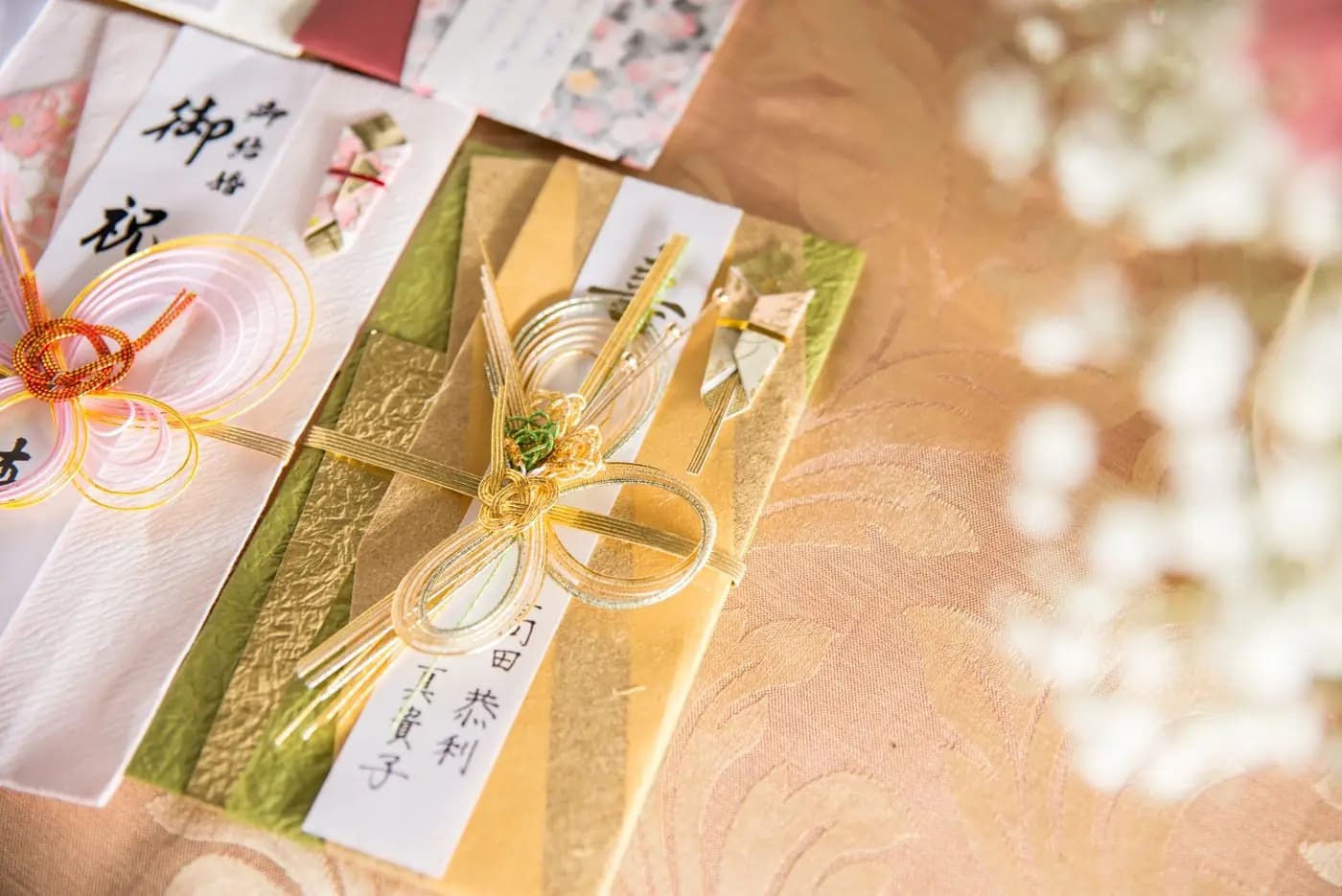
Omiyage are the souvenirs you bring back from a trip for colleagues, family or hosts. They are not for yourself; they are a social gesture. In Japan, they are most often a box of regional sweets wrapped individually, easy to hand out at the office.
If your group is meeting Japanese partners, bringing a gift from your country is appreciated. A few pointers:
- choose a product typical of your region and easy to share: biscuits, chocolates, jam, a good wine for an executive;
- presentation matters as much as the content: neat wrapping, and a shop bag to carry it;
- avoid sets of 4 (shi, pronounced like “death”) and 9 (ku, close to “suffering”);
- avoid knives and sharp objects (cutting ties), chrysanthemums and white flowers (funerals);
- give with both hands, at the end of the meeting rather than the start, with a simple sentence such as “a small souvenir from Lyon”.
Do not be surprised if the gift is not opened in front of you: that is the custom. If you receive one, take it with both hands, say thank you, and wait until you are alone to open it, unless your host invites you to.
For gifts received during the stay, the return-gift rule (okaeshi) applies: a gesture in return is expected, of lesser value. In a business setting, the organiser usually takes care of it for the whole group.
Exchanging business cards (meishi): the ritual of a business meeting
In Japan, a business card is not a scrap of cardboard: it is an extension of the person and their company. The exchange happens standing, at the start of the meeting, and follows a precise order.
To give your card:
- hold it with both hands by the corners, text facing the other person;
- state your company and then your name, with a slight bow;
- the visitor presents first, and you start with the most senior person.
To receive a card:
- take it with both hands, with a “dōzo yoroshiku onegai shimasu” or a simple thank you;
- actually read it for a few seconds, name and title;
- place it on the table in front of you, in the order people are seated, and leave it there until the end of the meeting; the most senior person's card goes on top of your card case;
- do not fold it, write on it in front of the person, or slip it into a trouser pocket.
Bring plenty: a participant meeting three companies in a day can hand out forty cards. Double-sided printing with a Japanese side (name in katakana, translated title) is a real plus, and a printer in Japan can produce them in a few days.
In meetings, the guest of honour sits at the kamiza, the seat farthest from the door; the host sits near the entrance. In a taxi, the seat of honour is behind the driver. In a lift, it is at the back. These rules matter mostly for executives: a visiting executive committee benefits from knowing them.
Group travel to Japan: how to brief participants on etiquette
A group of 40 people does not have the same impact as a couple of travellers. In a temple, a train or a small restaurant, every slip is multiplied. Experience shows, however, that participants follow the rules very well when they are explained with their reasons, not as a list of bans.
What works:
- a one-page sheet sent one or two weeks before departure, with ten rules at most: shoes, chopsticks, phones on trains, rubbish, tipping, photos in temples, punctuality;
- a five-minute briefing on the coach on arrival, by the guide, when the rules become concrete;
- targeted reminders just before each situation: before the first ryokan, before a temple visit, before a dinner on tatami;
- a demonstration of the meishi exchange for delegations meeting Japanese companies.
A few logistical adjustments prevent most slip-ups: sub-groups of 15 to 20 on public transport, suitcases sent from hotel to hotel, private rooms for dinners so the noise level bothers nobody, and tables with chairs rather than tatami for participants who cannot sit on the floor.
Punctuality deserves a special mention: in Japan, a coach leaves at the announced time and a restaurant expects the group to the minute. Announcing realistic meeting times, with five minutes' margin, is part of good manners. At SHINOGI DMC, we include this briefing in the travel documents and have our guides relay it on site.
Frequently asked questions
Should you tip in Japan?
No. Service is included in prices and a tip left on the table is usually returned to you. Only some upmarket ryokan accept a discreet envelope (kokorozuke), with no obligation.
Can you make phone calls on Japanese trains?
No, avoid it. Phones go on silent and calls are made off the train or, on the Shinkansen, in the vestibule between cars. Texting and browsing are fine.
What should you never do with chopsticks in Japan?
The two major taboos are sticking chopsticks upright in rice and passing food from one pair of chopsticks to another, both linked to funerals. Also avoid spearing food, licking chopsticks or pointing with them.
Do you have to take your shoes off in Japanese temples?
Yes, to enter the inner halls, marked by a step, shoe racks or a sign. You keep your shoes on in courtyards and gardens. Some temples provide a bag to carry your shoes.
How do you exchange business cards in Japan?
Standing, with both hands, text facing the other person, stating your company and name. Read the card you receive and keep it on the table until the end of the meeting. The visitor and the most senior person go first.
Where do you throw rubbish away in Japan if there are no bins?
Keep your rubbish in a small bag until you get back to the hotel. Bottles and cans go in the bins next to vending machines, and stations and some konbini still have sorted bins.
Rédaction SHINOGI DMC · Updated