Which Shinkansen lines matter on a first trip to Japan?
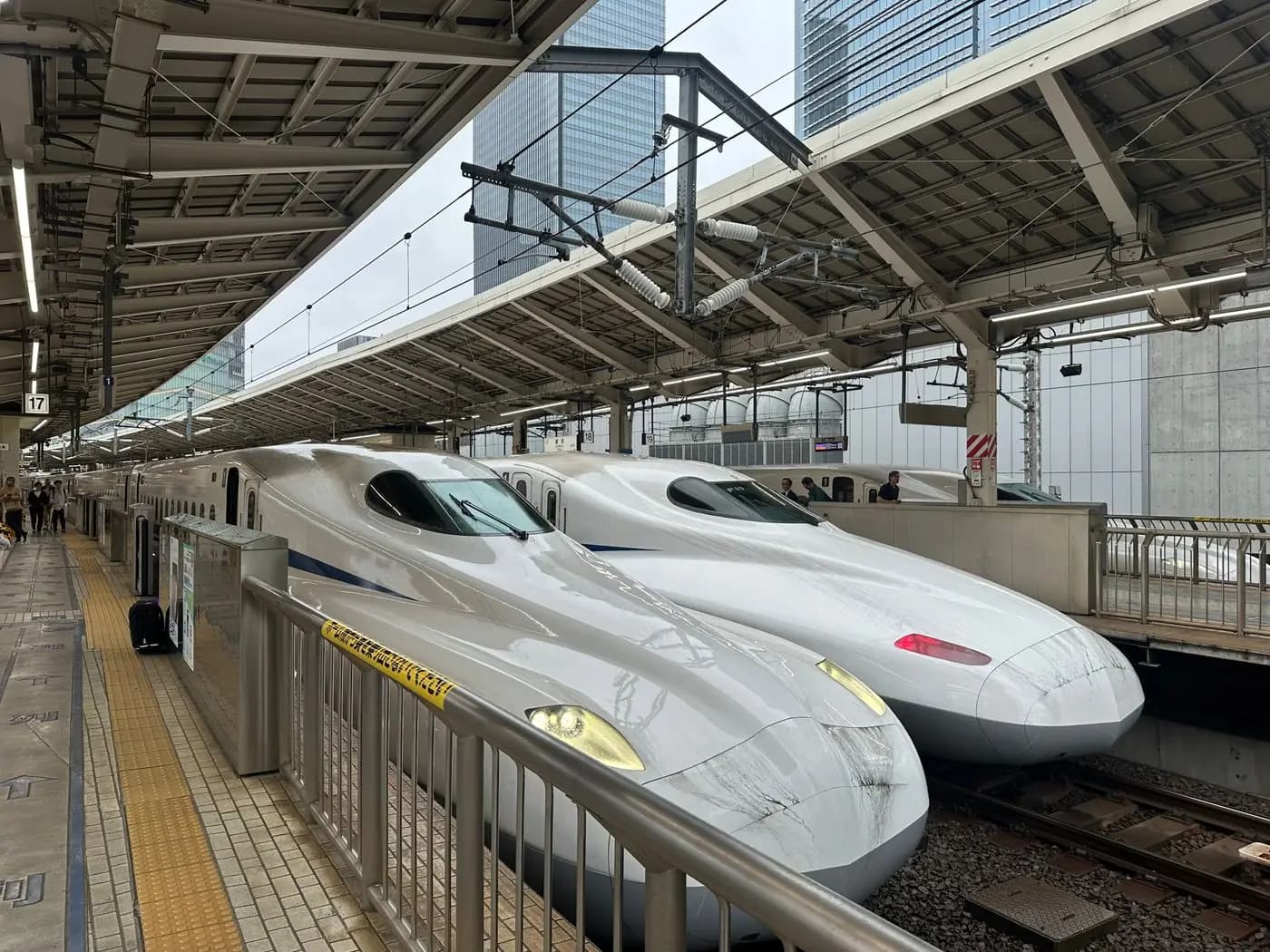
The network has around ten lines, but a first trip rarely uses more than one or two. By far the busiest is the Tokaido Shinkansen: Tokyo, Shinagawa, Shin-Yokohama, Nagoya, Kyoto, Shin-Osaka. It is run by JR Central and continues without a change of train as the Sanyo Shinkansen (JR West) to Kobe, Okayama, Hiroshima and Hakata in Fukuoka. Beyond that, the Kyushu Shinkansen runs on to Kagoshima.
Heading north from Tokyo, JR East takes over: the Tohoku Shinkansen (Sendai, then Hokkaido through the Seikan Tunnel), the Joetsu Shinkansen (Niigata and the Yuzawa ski resorts) and the Hokuriku Shinkansen, which serves Nagano and Kanazawa before reaching Tsuruga.
Why does this matter? Because tickets, apps and some rules differ from one company to the next. A Tokyo–Kyoto trip is booked on smartEX; Tokyo–Kanazawa goes through JR East's system. And there is no direct Shinkansen between Kyoto and Kanazawa: you take the Thunderbird limited express to Tsuruga, then the Shinkansen.
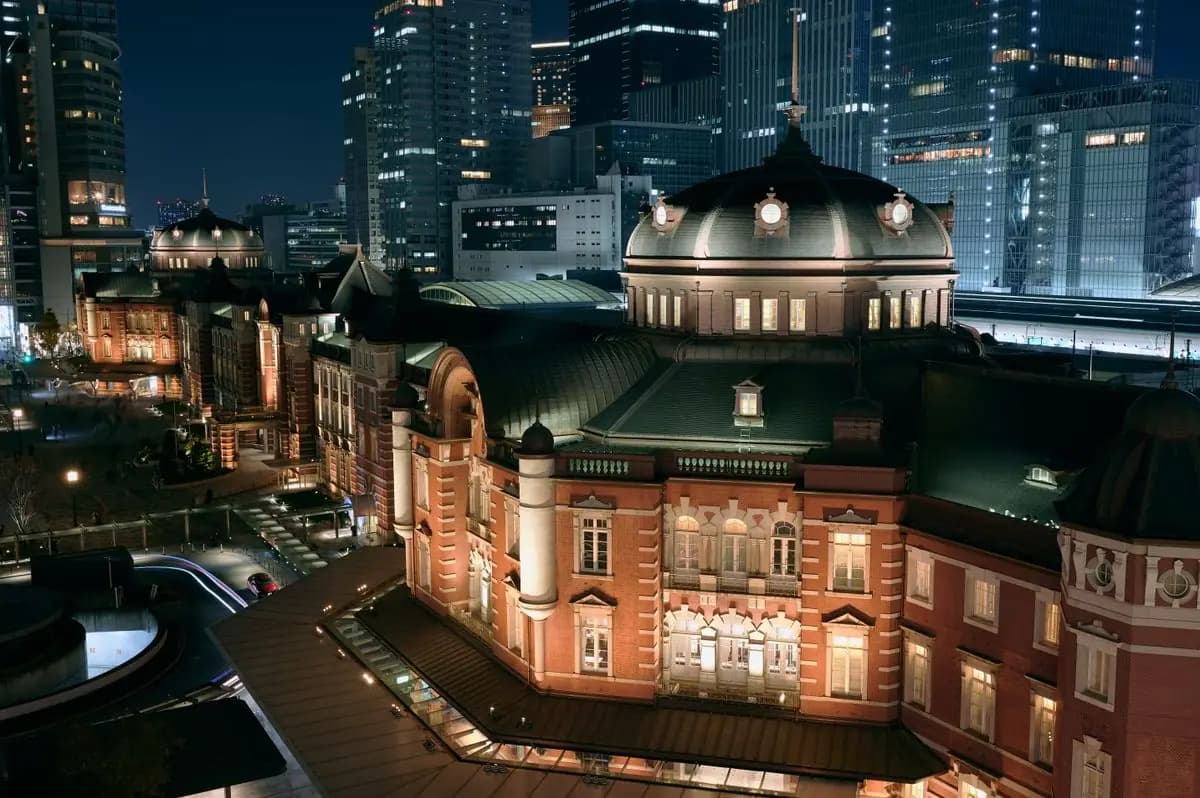
One last pointer: in Tokyo every line leaves from Tokyo Station, but the Tokaido also stops at Shinagawa. If your hotel is near Shibuya, Roppongi or Shinagawa, boarding at Shinagawa often saves 20 minutes and spares you the maze of the main station.
Nozomi, Hikari or Kodama: which train should you take?
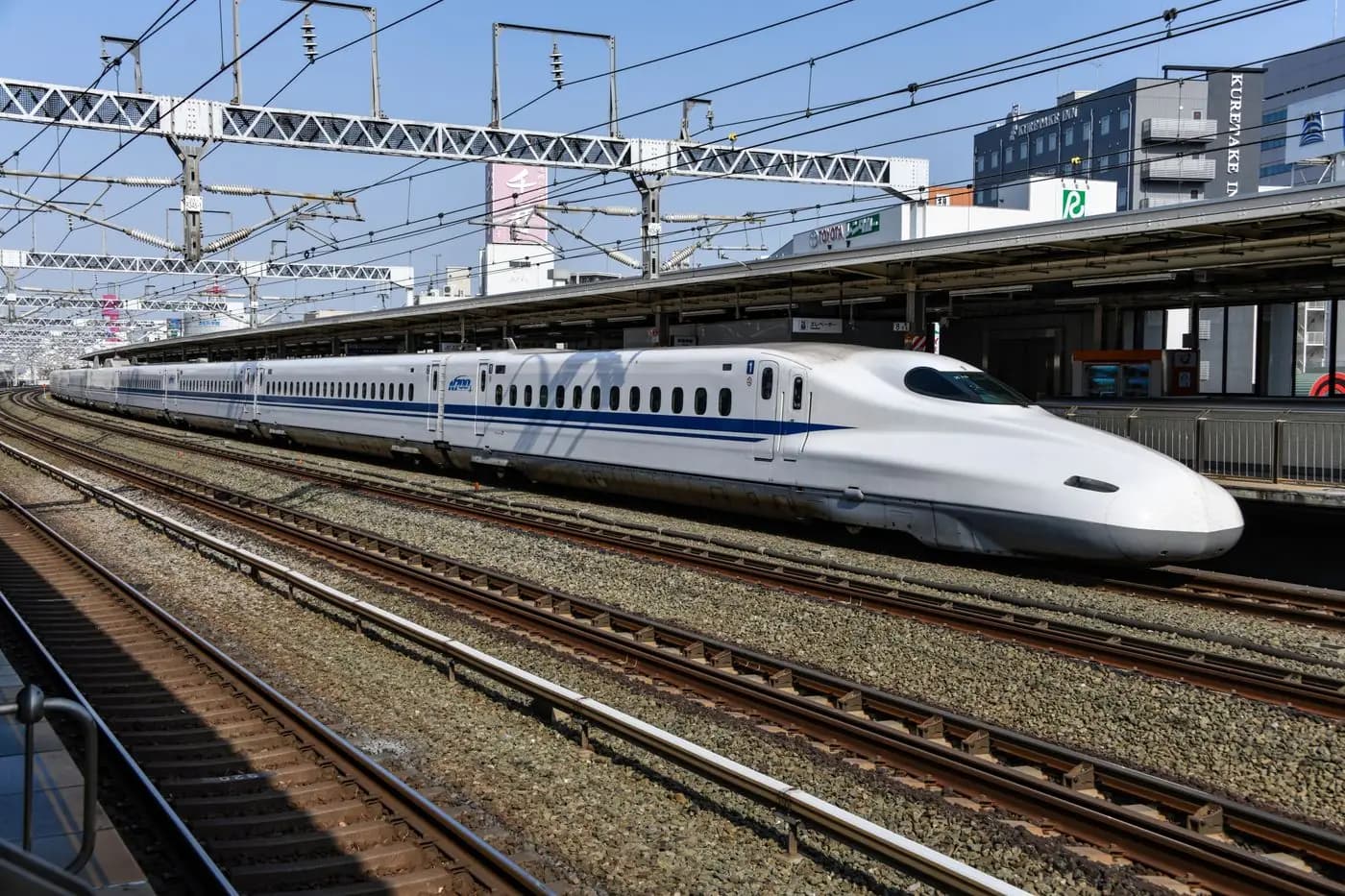
On the Tokaido line, three train types share the same tracks and the same N700 rolling stock. What changes is the number of stops.
- Nozomi: the fastest, stopping only at major stations (Shinagawa, Shin-Yokohama, Nagoya, Kyoto). At peak times there are up to a dozen departures an hour from Tokyo. This is the default choice.
- Hikari: a few more stops (often Odawara, Shizuoka, Hamamatsu or Maibara depending on the train). Tokyo–Kyoto takes about 2 h 40 min. Useful for Odawara, the gateway to Hakone.
- Kodama: the all-stations train. You take it for Atami, Mishima or Shin-Fuji, or by choice when time is not an issue.
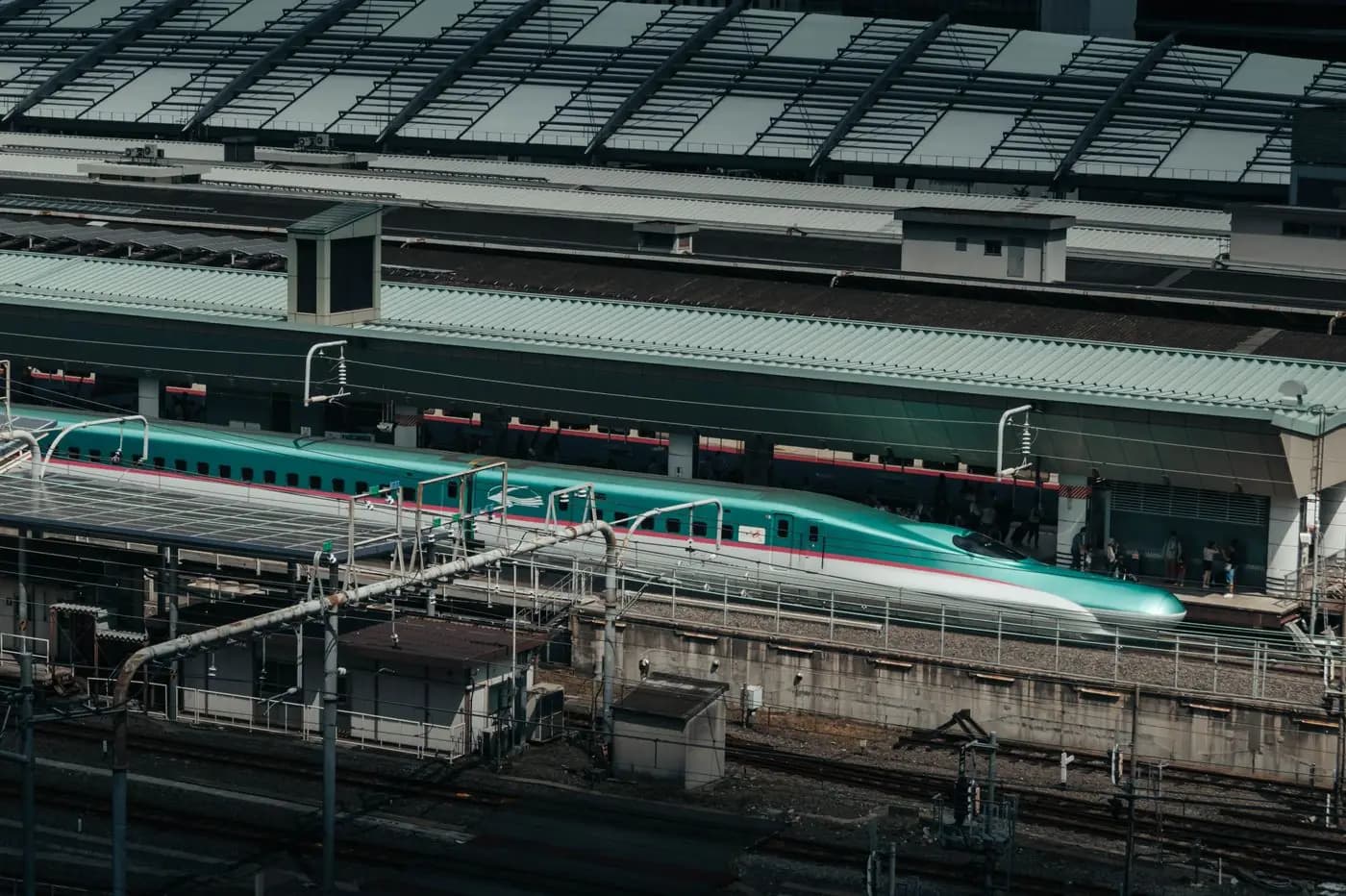
West of Osaka the names change: Mizuho and Sakura link Shin-Osaka with Kagoshima and are the fastest to Kyushu. North of Tokyo, the Nozomi equivalent is called Hayabusa (Tohoku) or Kagayaki (Hokuriku).
The Japan Rail Pass needs a word of explanation. Since the October 2023 price rise (¥50,000 for 7 days in ordinary class), the pass still does not cover the Nozomi or Mizuho, but you can board them by paying a supplement: ¥4,960 between Tokyo and Shin-Osaka. Without it, you take the Hikari. For a simple Tokyo–Kyoto return, the pass no longer pays off; it only does for long distances packed into one week.
Our advice: take the Nozomi for long trips, the Hikari for Odawara, and only ride the Kodama on purpose. Between Tokyo and Shin-Osaka the gap between Nozomi and Kodama is more than 1 h 15 min.
Reserved, non-reserved or Green Car: how does it work?
A Shinkansen ticket combines two things: the basic fare (the journey) and the express supplement, which depends on the type of seat.
- Non-reserved (jiyuseki): on the Nozomi, usually cars 1 to 3. You sit wherever there is space. Between Tokyo and Shin-Osaka the saving is about ¥850 compared with a reserved seat. Note that during Golden Week, Obon (mid-August) and New Year, Nozomi trains become all-reserved.
- Reserved (shiteiseki): most of the cars. The price varies by season: a little more in peak periods, about ¥200 less off-peak.
- Green Car: first class, cars 8 to 10 on the Nozomi. Seats are 2+2 instead of 3+2, with more room and a quieter atmosphere. Expect about ¥5,000 extra between Tokyo and Kyoto.
- Supreme Class: since 1 October 2026, some Nozomi trains offer a class above the Green Car, with private cabins and semi-private seats bookable on smartEX. Capacity is limited to a handful of places per train.
Luggage is the real thing to watch. A suitcase whose three dimensions add up to more than 160 cm (and up to 250 cm) may only travel with a seat with an oversized baggage area, reserved when you buy the ticket: it is the last row of the car, with the space behind the seat kept for your bag. Without a reservation, JR Central charges ¥1,000 on board and asks you to move the case. A cabin-size suitcase fits in the overhead rack.
In practice, for a couple or a family, a reserved seat is almost always the right call: it costs little more and removes the stress of queuing.
Buying tickets: counters, machines, smartEX and apps
Three ways to buy, from the simplest to the most flexible.
Station machines. The machines in major stations (Tokyo, Shinagawa, Kyoto, Shin-Osaka) have an English menu, take Visa and Mastercard, and show a car map so you can choose your seat. They usually issue two magnetic tickets (basic fare and supplement): feed them into the gate together and take them back, except at your final exit.
Midori no madoguchi ticket offices. Useful for a complicated route, exchanging a Japan Rail Pass or asking a question. There are far fewer of them than a few years ago, and waits can exceed 30 minutes in peak season. Avoid them just before a departure.
smartEX (Tokaido, Sanyo, Kyushu). The app and website are in English and registration with a credit card is free. Key strengths:
- one booking covers 1 to 6 travellers;
- you pick your seat on the map;
- you board with a QR code on your phone (or a registered IC card);
- changes are free and unlimited up to 4 minutes before departure, as long as you have not gone through the gate;
- sales open one year ahead, with the train and seat confirmed one month before departure;
- EX Hayatoku 21 fares, booked at least 21 days ahead, give a discount on some Nozomi trains (not in peak periods, no changes).
For JR East lines (Tohoku, Hokuriku, Joetsu), the equivalent service is JR-EAST Train Reservation (eki-net), with tickets collected at the station.
One last point: tickets are sold for a specific train, not a day. If you miss your reserved Nozomi, the ticket stays valid the same day, but only in a non-reserved car.
The Mount Fuji side and other seat-choice tips
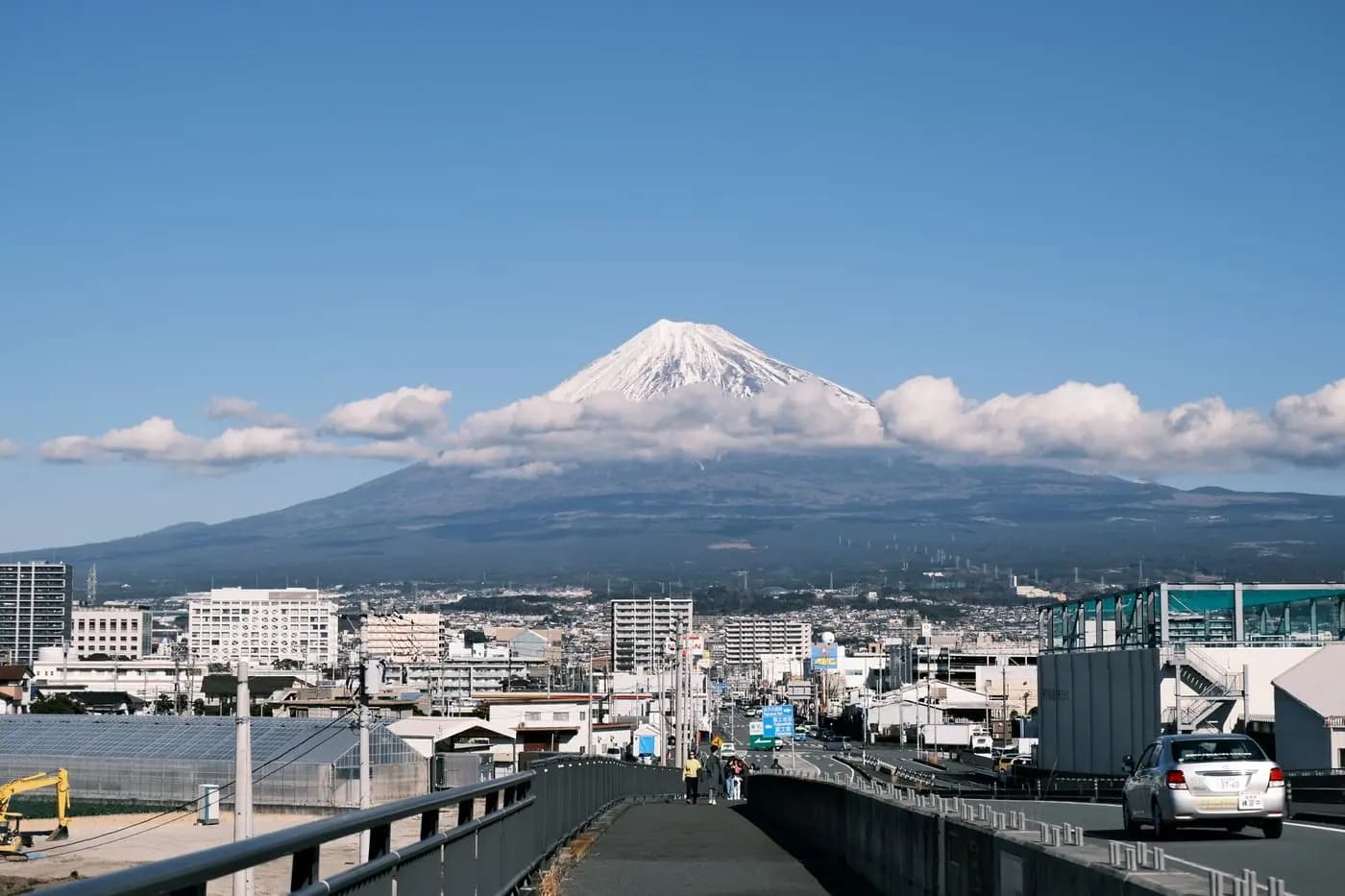
In ordinary class, rows are laid out A-B-C | D-E. Travelling from Tokyo towards Kyoto and Osaka, the E side is on the right, facing the sea and then Mount Fuji; in the other direction, it is the A side.
Mount Fuji. It appears on the right (E seats in ordinary class, D in the Green Car) between Mishima and Shin-Fuji, about 40 to 45 minutes after leaving Tokyo on a Nozomi. The best view, as the train crosses the Fuji plain, lasts only a few minutes: have your camera ready after Odawara. The mountain shows itself mostly from November to February, on cold, dry mornings. In summer it is often hidden by haze.
More tips, learned over many trips:
- A and E window seats have a wall socket on older trains; on the N700S every seat has its own socket in the armrest.
- The B seat, in the middle, is slightly wider than the others: give it to the tallest person in the group.
- The last row has space behind the seatback, but it is often reserved for oversized luggage.
- Cars near the escalators on the platform (towards the middle of the train) are quicker to leave on arrival.
- Seats rotate: in a party of four or six, you can turn a row round to face each other. Turn it back when you leave.
Etiquette: phone on silent, calls in the vestibule between cars, no loud conversation. Smoking rooms disappeared from the Tokaido line in March 2024: the train is entirely non-smoking.
Ekiben and life on board: eating, working, resting
Ekiben, the station bento, is part of the journey. At Tokyo Station, the Ekibenya Matsuri shop inside the gates gathers boxes from all over the country: Yonezawa beef, Hokkaido salmon and roe, Sendai beef tongue, pressed sushi. Expect ¥1,000 to ¥2,500. Choosing is quick in the morning; the queue grows at lunchtime. Platform shops in Kyoto and Shin-Osaka also offer a good, smaller selection.
Eating on board is perfectly acceptable in Japan, as long as you avoid strong-smelling food. Keep your rubbish in the bento bag and drop it in the sorted bins in the vestibule. Note that the trolley service ended on the Tokaido line at the end of October 2023. Buy food and drinks before boarding; in the Green Car, a QR-code ordering service brings coffee and snacks to your seat.
For work, free Wi-Fi runs along the whole Tokaido line, fine for e-mail but patchy in tunnels. Tray tables are small: a 13-inch laptop fits, a 16-inch one with a mouse does not.
For comfort, Western-style toilets are usually in the vestibule of every other car, and the N700 has rooms for changing or nursing. Services are so punctual that the average annual delay is counted in tens of seconds: you can plan a 15-minute connection with little risk, except during typhoons or heavy rain, which can suspend services for hours.
Shinkansen travel times between major cities
Indicative times with the fastest train available on each route, without changes:
- Tokyo – Shin-Yokohama: 18 minutes (Nozomi)
- Tokyo – Odawara (Hakone): 35 minutes (Hikari)
- Tokyo – Nagoya: about 1 h 35 min (Nozomi)
- Tokyo – Kyoto: 2 h 10 to 2 h 15 min (Nozomi)
- Tokyo – Shin-Osaka: 2 h 25 to 2 h 30 min (Nozomi)
- Kyoto – Shin-Osaka: 14 minutes
- Shin-Osaka – Hiroshima: about 1 h 25 min (Nozomi)
- Tokyo – Hiroshima: 3 h 50 min to 4 h (direct Nozomi)
- Shin-Osaka – Hakata (Fukuoka): about 2 h 25 min (Mizuho)
- Tokyo – Hakata: about 5 hours (direct Nozomi)
- Tokyo – Sendai: about 1 h 30 min (Hayabusa)
- Tokyo – Kanazawa: about 2 h 30 min (Kagayaki)
- Tokyo – Nagano: about 1 h 20 min (Kagayaki)
Beyond 4 hours by train, flying looks competitive on paper. For Tokyo–Fukuoka it often wins; for Tokyo–Hiroshima it is close; for Tokyo–Osaka the train nearly always wins once you count airport transfers and boarding. The Shinkansen leaves from the city centre, has no security screening and lets you work for the whole trip.
For an exact journey with connections, route planners (Jorudan, Navitime, Google Maps) show the day's timetable and which platform to use.
Taking the Shinkansen as a group: group tickets and platform logistics
From 8 travellers on the same journey, JR offers a group ticket (dantai joshaken). The discount applies to the basic fare: 15% in normal periods, 10% in busy periods (early January, March to May, July–August, October and late December). For ordinary groups of at least 31 adults, one place is free up to 50 people, then one more for every additional 50. Applications are generally made between 9 months and 14 days before departure, through an agency or at a ticket office, with a list of names and a headcount that can be adjusted within limits.
What we have learned from organising many transfers:
- Book blocks of seats in one or two neighbouring cars rather than seats scattered along the train. Above 60 people, groups are often split across two Nozomi trains 10 minutes apart.
- Intermediate stops are short: one to two minutes at Kyoto or Nagoya. The group must be at the right door before the train arrives. Car numbers and queuing lines are painted on the platform floor.
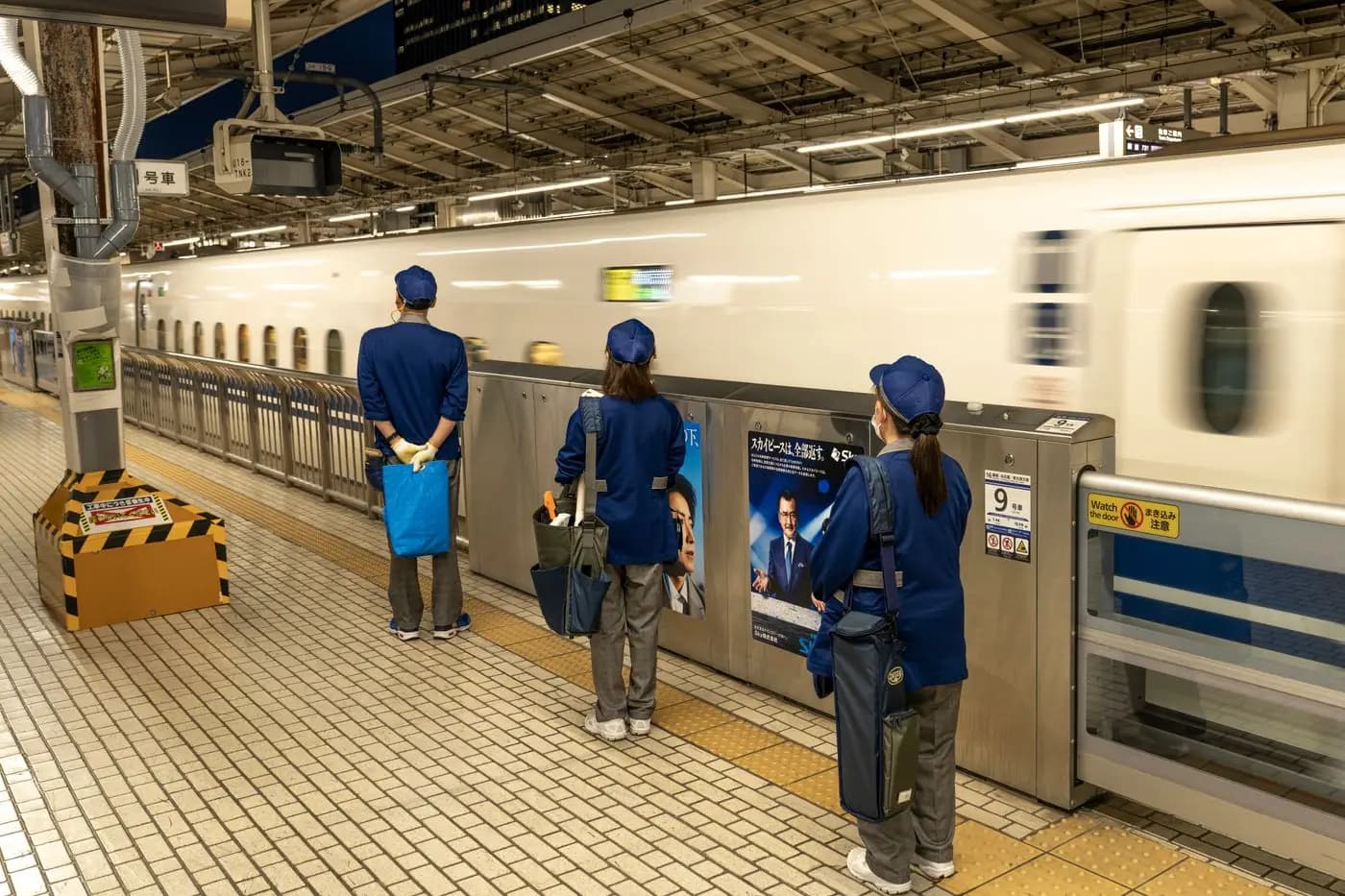
- At Tokyo, a terminus, the train is cleaned in about 7 minutes and boarding only starts afterwards. Aim to be on the platform 15 minutes before departure, not earlier, so as not to block the way.
- Luggage travels better separately: the takkyubin delivery service takes it from hotel to hotel in one day (two for long distances). Bags must be handed in the evening before.
- Ekiben can be pre-ordered for the whole group and collected at the station, which avoids thirty people scattered across shops 10 minutes before departure.
For a seminar or incentive trip, these details (seat blocks, luggage delivery, an escort on the platform) make the difference between a calm transfer and a scramble. This is the kind of logistics SHINOGI DMC coordinates between Tokyo, Kyoto, Osaka and Hiroshima.
Frequently asked questions
Do you need to book the Shinkansen in advance?
In normal times you can almost always find a reserved seat on the day. During Golden Week, Obon, New Year and cherry blossom or autumn leaf weekends, book several days ahead; Nozomi trains are then all-reserved.
How much is a Shinkansen ticket from Tokyo to Kyoto?
About ¥14,170 for a reserved Nozomi seat in the regular season, a little less non-reserved or on the Hikari, and about ¥5,000 more in the Green Car. smartEX's EX Hayatoku 21 fares are cheaper if you book at least 21 days ahead.
Which side should you sit on to see Mount Fuji from the Shinkansen?
The right-hand side when travelling from Tokyo towards Kyoto and Osaka: seat E in ordinary class, D in the Green Car. The left-hand side (seat A) in the other direction. The mountain appears between Mishima and Shin-Fuji.
Can you ride the Nozomi with a Japan Rail Pass?
Not with the pass alone. Since October 2023 you can buy a dedicated supplementary ticket (¥4,960 between Tokyo and Shin-Osaka) to board a Nozomi or Mizuho. Otherwise you take the Hikari or Kodama.
Can you take a large suitcase on the Shinkansen?
Yes, up to 250 cm (length + width + height). Between 161 and 250 cm you must reserve a seat with an oversized baggage area on the Tokaido, Sanyo and Kyushu Shinkansen, or pay a ¥1,000 fee. Anything over 250 cm is not allowed.
Is there a group discount on the Shinkansen?
Yes, from 8 people on the same journey: 10 to 15% off the basic fare depending on the period, and one free place for 31 to 50 adults. Apply up to 14 days before departure, ideally much earlier to get seats together.
Rédaction SHINOGI DMC · Updated
Sources
- Central Japan Railway — Luggage information (bagages surdimensionnés)
- smartEX — smartEX Service (conditions, 1 à 6 personnes, vente 1 an à l'avance)
- smartEX — EX Hayatoku 21
- JR Central — Billets de groupe (団体割引乗車券) : conditions et réductions
- JR Group — Billets de groupe (団体割引乗車券のご案内)
- Japan Rail Pass — Site officiel (tarifs et billets supplémentaires Nozomi)
- JR East — Shinkansen et réservation en ligne (JR-EAST Train Reservation)
- Travel Voice — Supreme Class sur le Tokaido Shinkansen à partir du 1er octobre 2026
- JNTO — Guide pratique pour préparer un voyage au Japon