Nara in one day: itinerary and access from Kyoto or Osaka
Nara was Japan's capital in the 8th century, before Kyoto. What remains of it is concentrated in a surprisingly compact area: Nara Park, on the east side of the city, brings together Todai-ji, Kofuku-ji, Kasuga Taisha, the National Museum and Isuien Garden, all linked on foot. One day is enough for the essentials, provided you start early.
The itinerary we recommend (about 8 km on foot in total):
- 9am: arrive at Kintetsu-Nara, walk up to Kofuku-ji (10 minutes), then cross the park among the deer.
- 9:45–11:30am: Todai-ji, Nandaimon gate then the Daibutsuden. If you have the energy, climb up to Nigatsu-do hall for the view.
- 11:30am–12:30pm: Isuien Garden, 5 minutes from Todai-ji's gate.
- 12:30–1:30pm: lunch.
- 2–3:30pm: Kasuga Taisha along the lantern-lined path through the forest.
- 3:30–5pm: back towards Kofuku-ji and its museum, then Naramachi in the late afternoon.
Access:
- From Kyoto: Kintetsu Kyoto Line to Kintetsu-Nara, about 35 minutes by limited express (reserved supplement) or 45 minutes by ordinary express. The JR Nara Line (Miyakoji Rapid) takes about 45 minutes and arrives at JR Nara Station, a 20-minute walk from the park.
- From Osaka: Kintetsu from Osaka-Namba, about 40 minutes by rapid express, no reservation needed. JR from Osaka runs via Tennoji and also arrives at the JR station.
So Kintetsu is the better choice, as its station opens directly onto Sanjo-dori and the park. The Japan Rail Pass does not cover Kintetsu; without a pass it makes no difference, fares are modest and IC cards work on both networks.
Avoid: arriving around 11am on a spring or autumn Saturday. That is when school and tour coaches unload at Todai-ji, and the wait to enter the Daibutsuden can exceed 20 minutes.
Nara Park's deer: rules, shika senbei and precautions
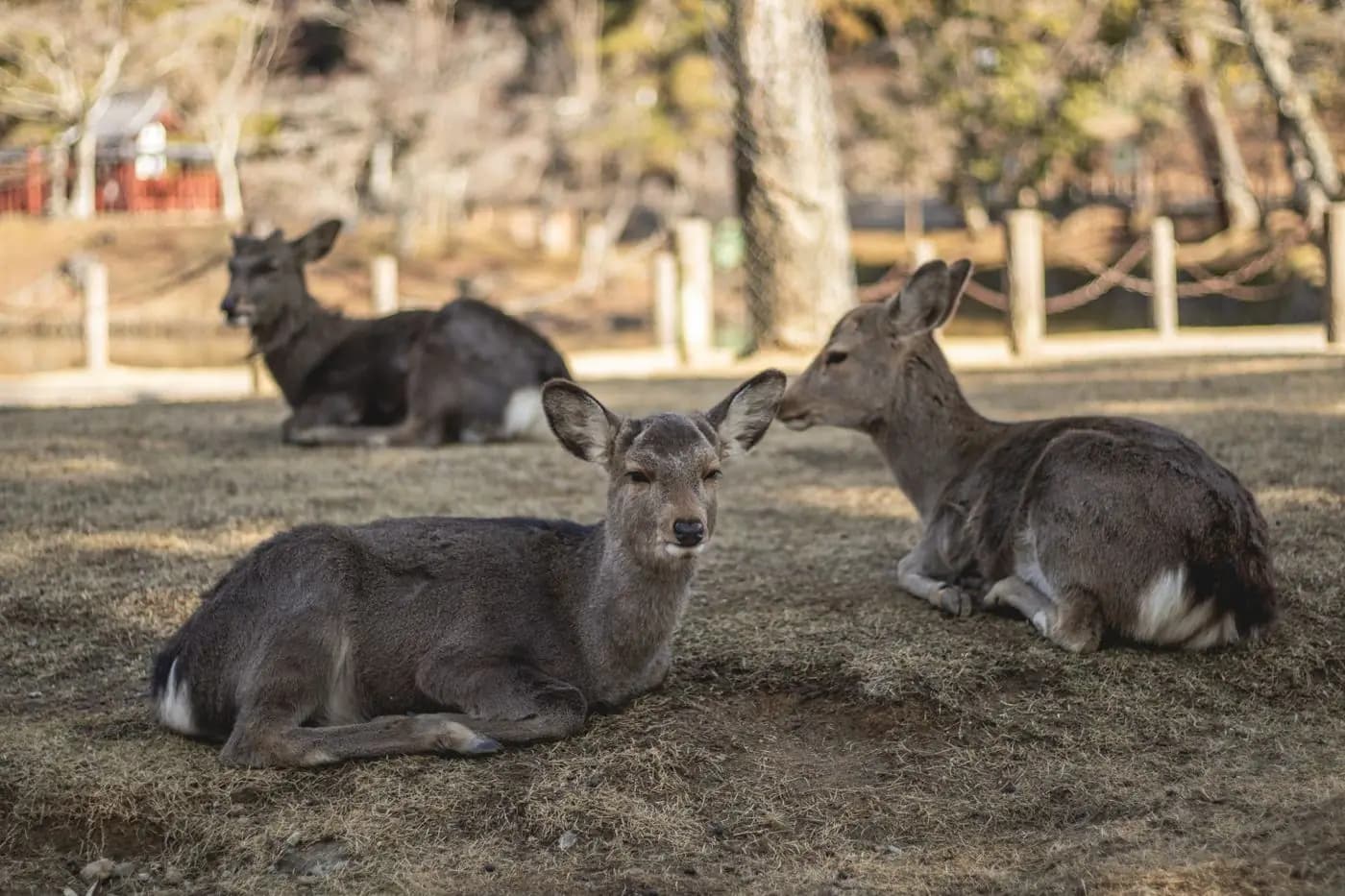
More than a thousand sika deer roam freely in Nara Park. They are regarded as messengers of the deities of Kasuga Taisha and are protected as a national natural monument. They are neither pets nor zoo animals: they move freely, cross roads and sleep on the lawns.
Shika senbei, unsweetened crackers made from rice bran and wheat flour, are the only food allowed. You buy them from the small stalls in the park, ¥200 a pack of about ten; the proceeds go towards protecting the animals. Any other food (bread, fruit, snacks) is forbidden: it makes the deer ill.
Common-sense rules that prevent most incidents:
- Do not tease a deer by showing it a cracker without giving it. That is when bites and headbutts happen.
- Hand out the crackers one by one, then show your empty hands: the deer understand there is nothing left.
- Never leave a map, ticket or plastic bag sticking out of a pocket: they eat paper and plastic, which can kill them. Plastic bags are the leading cause of death by ingestion in the park.
- In autumn (September to November), stags are in rut and more aggressive; their antlers are cut every October, but keep your distance. From May to July, does protect their fawns: do not approach the young.
- Keep an eye on children: a herd of hungry deer around a child holding a pack of crackers is a guaranteed scrum.
Some deer "bow" by nodding their heads: it is learned behaviour to ask for a cracker. Bowing back is part of the game.
The park is always open and free. Deer are most numerous and insistent near Kintetsu Station, around Kofuku-ji and in front of the Nandaimon. To see them calmly, without crowds, head to the Tobihino lawn between Todai-ji and Kasuga Taisha, or to the foot of Mount Wakakusa late in the day.
Todai-ji and the Great Buddha: hours, fees and what to see
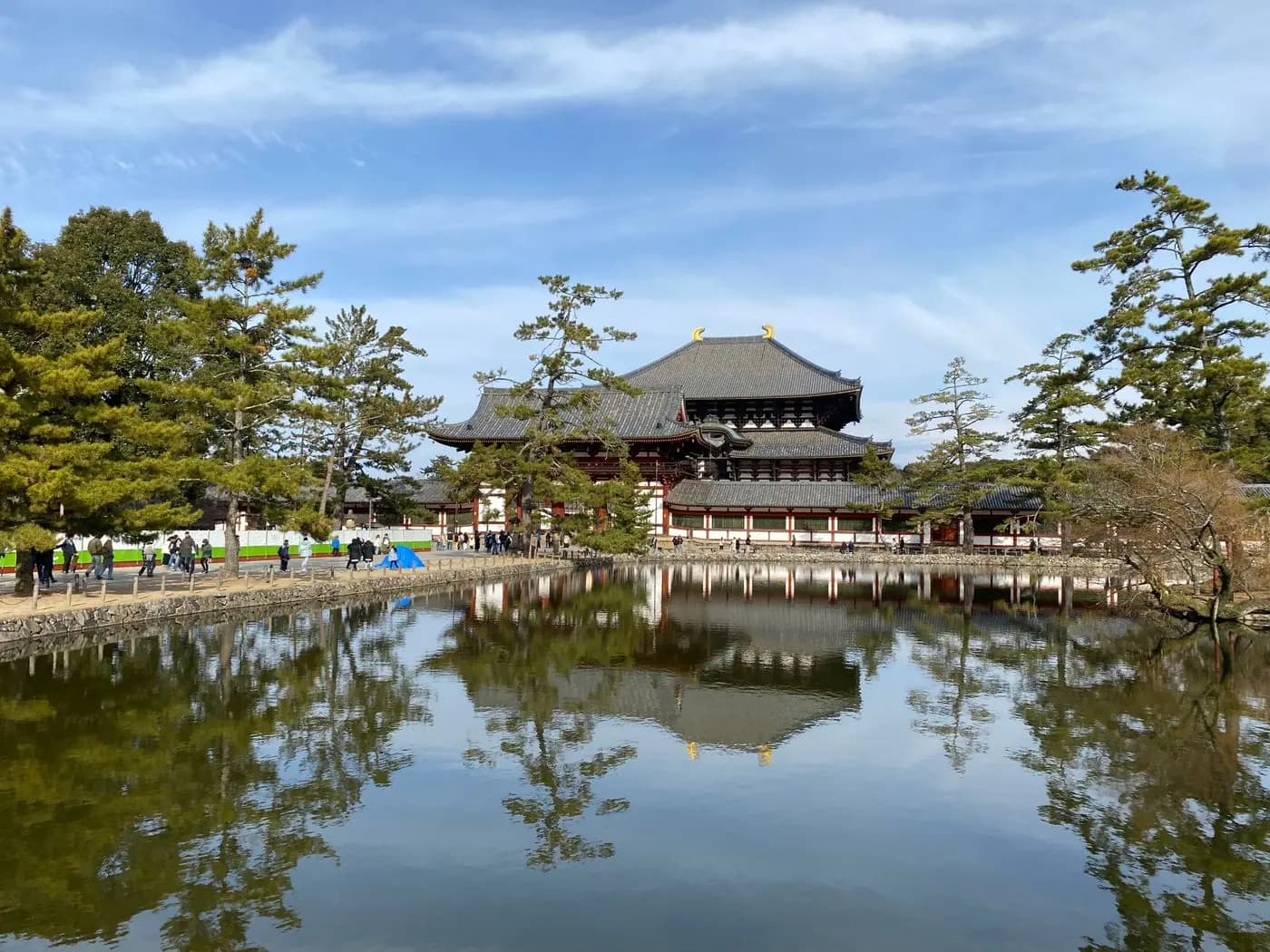
Todai-ji alone justifies the trip. The temple was founded in the 8th century by Emperor Shomu, and its main hall houses a seated bronze Vairocana Buddha about 15 metres tall. The current building, rebuilt in the early 18th century, is a third smaller than the original and remains one of the largest wooden buildings in the world.
The approach matters as much as the hall:
- The Nandaimon gate, free to enter, houses two wooden Nio guardians over 8 metres tall, carved in 1203 by the workshop of Unkei and Kaikei. Take time to look at them closely, left and right: one has its mouth open, the other closed.
- The path to the central gate, then the head-on view of the Daibutsuden through the gateway: this is the classic photo, best in the morning when the sun lights the facade.
The Daibutsuden (Great Buddha Hall):
- Fee: ¥800 per adult, ¥400 for children; combined ticket with the Todai-ji Museum ¥1,200. Cash is the safest option.
- Hours: 7:30am–5:30pm from April to October, 8am–5pm from November to March.
- Time needed: 30 to 45 minutes.
Behind the statue, a wooden pillar has a hole the size of the Buddha's nostril. Squeezing through is said to bring luck; children manage easily, adults much less so, and the queue can be long. You can skip it.
Not to miss if you have 45 minutes more: Nigatsu-do, on the hill to the east, reached for free via a covered staircase. Its wooden terrace overlooks the roofs of Todai-ji and the city, and it is much quieter. Hokke-do (Sangatsu-do), right next door, is one of the temple's oldest buildings.
Photos in the hall are allowed, without flash or tripod. Avoid blocking the busy central aisle.
Kasuga Taisha: the lantern path and the sacred forest
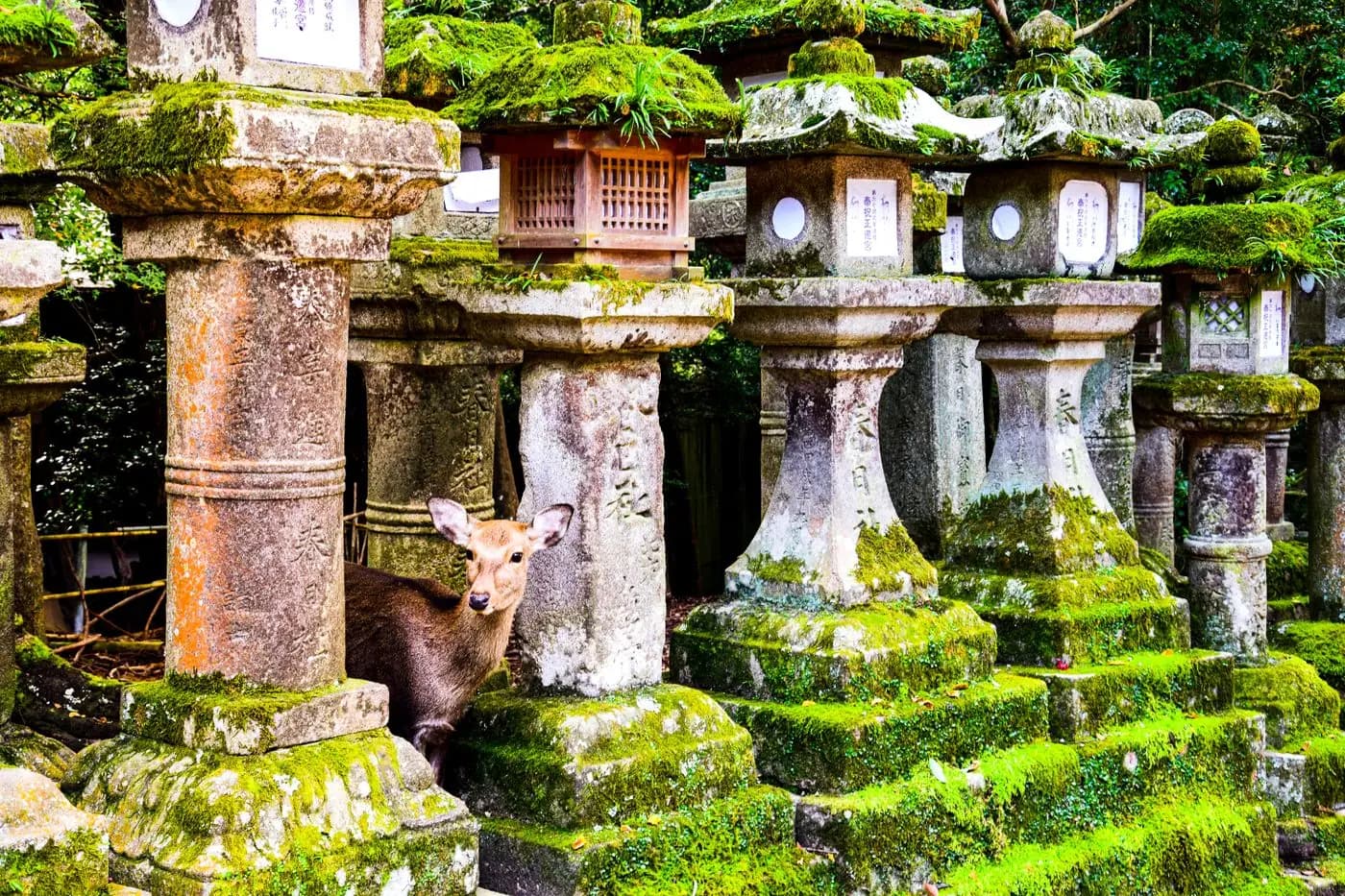
From Todai-ji, it is a 20 to 25-minute walk to Kasuga Taisha, across the Tobihino lawn and then along the long avenue lined with moss-covered stone lanterns. The shrine has about 3,000 of them, stone ones along the paths and bronze ones hanging from the galleries. They were donated by worshippers over the centuries; the carved inscriptions give the donor and the year.
Founded in 768 for the Fujiwara family, the shrine backs onto the Kasugayama primeval forest, protected for more than a thousand years and listed with it as a World Heritage site. The vermilion buildings, rebuilt identically at regular intervals according to tradition, stand out against the dark green of the cedars.
Practical details:
- Access to the outer shrine and paths: free, from early morning to late afternoon (longer hours in spring and summer).
- Inner precinct (the area around the main sanctuaries): ¥700, open during the day, roughly 9am to 4pm.
- Time needed: 45 minutes to 1 hour including the avenue.
The highlight of the year is Mantoro, two evenings when all the lanterns are lit: at the Setsubun festival in early February and on August 14–15. On those evenings the shrine is very busy; check hours and access conditions on the official site before building them into a programme. The rest of the year, a small dark room inside the precinct recreates the effect of the lit lanterns.
To return to town, rather than taking the main avenue again, you can walk down the forest path past Wakamiya shrine and rejoin the park from the south. It is a 15-minute detour, often deserted.
Those with time to spare can climb Mount Wakakusa (paid entry, open March to December) for a view over the whole Nara basin. Allow an hour there and back from the foot; it is not a priority on a day trip.
Kofuku-ji, Naramachi and Isuien Garden
Kofuku-ji is the first temple you come across when leaving Kintetsu Station. The Fujiwara clan temple once had more than 150 buildings. Its five-storey pagoda, the second tallest in Japan, is currently completely enclosed by a restoration structure: the works, the most extensive in over a century, are expected to last until the early 2030s. So do not count on a photo of the pagoda.
What makes the visit worthwhile is the National Treasure Museum (Kokuhokan), ¥900, home to the famous Ashura statue with three faces and six arms, in 8th-century dry lacquer, along with many listed Buddhist statues. The Chukondo, the central hall rebuilt in 2018, and the Tokondo are charged separately (¥500 each); a combined ticket covers all three for ¥1,600. Tickets sold from 9am to 4pm, cash only.
Naramachi, just south of Sarusawa Pond, is the old merchant quarter. Its lanes of latticed wooden townhouses (machiya) hold cafés, craft shops and a few small free museums, such as the Naramachi Koshi-no-ie model house, which shows the interior of a machiya. Gango-ji temple, in the heart of the district, is a World Heritage site and keeps some of the oldest roof tiles in Japan. Spend an hour there in the late afternoon, when the park empties.
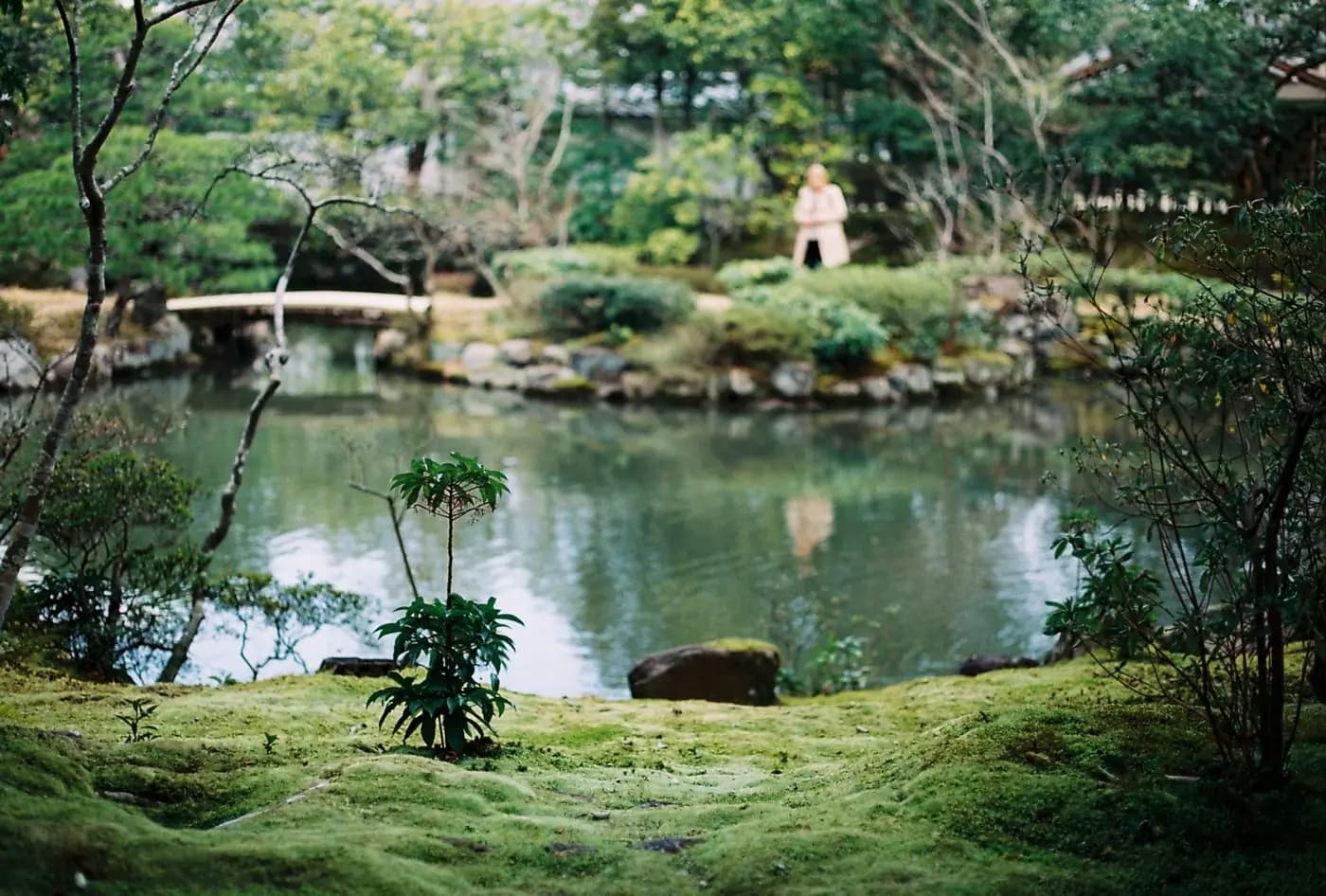
Isuien Garden, near Todai-ji's west gate, is the city's great garden: two parts, one from the Edo period, the other from the Meiji era, with a central pond and, in the background, the roof of the Nandaimon and Mount Wakakusa built into the view (the "borrowed scenery" technique). Admission ¥1,200, including the small Neiraku Museum (Chinese and Korean ceramics and bronzes). Open 9:30am to 4:30pm (last entry 4pm); check the weekly closing day before going. The garden's tea room serves matcha and, at lunchtime, a simple meal.
The Nara National Museum, halfway between Kofuku-ji and Todai-ji, is worth a visit on a rainy day, particularly for its gallery of Buddhist sculpture. Every autumn, the Shoso-in treasures exhibition draws queues lasting several hours.
Where to eat in Nara and when to go
Nara does not have the food scene of Kyoto or Osaka, but a few specialities are worth stopping for:
- Kakinoha-zushi: small pieces of mackerel or salmon sushi wrapped in a persimmon leaf, which perfumes them. They are sold in boxes, handy for a quick lunch.
- Miwa somen: thin wheat noodles served cold in summer, hot (nyumen) in winter.
- Yomogi mochi: the Nakatanidou stall, on the shopping street near Sanjo-dori, is known for its high-speed mochi pounding, a demonstration that always draws a crowd.
- Narazuke: vegetables pickled in sake lees, with a strong flavour; better bought as a gift than discovered in large quantities.
For a sit-down lunch, the streets between Kintetsu Station and Naramachi offer the most choice. At midday, restaurants near Todai-ji are full between 12 and 1pm; shifting to 11:30am or 1:30pm avoids the queue.
When to go:
- Spring (late March to early April): cherry blossoms in the park and around Kofuku-ji, peak crowds.
- May to June: fawns are born, lush greenery, moderate crowds outside Golden Week. Heat and humidity from late June.
- Summer: hot and humid; start very early. The Nara Tokae lantern festival in August lights up the park in the evening.
- Autumn (late October to late November): maples, beautiful light, many school trips on weekdays.
- Winter: dry cold, few visitors, clear skies. The Wakakusa Yamayaki grass-burning festival takes place in late January.
Most temples close between 4:30 and 5:30pm: Nara is a daytime destination. In the evening the park is dark and the deer are asleep; it is better to head back to Kyoto or Osaka for dinner, or stay overnight in Nara to visit the sites as soon as they open the next day.
Visiting Nara with a group: logistics and tips
Nara is one of the easiest excursions to organise for a group from Kyoto or Osaka, provided you plan a few points ahead:
- Transport: by private coach, allow about 1 hour from Kyoto or Osaka without traffic. Coaches drop the group near Todai-ji and park in the park's coach car parks; set the pick-up time and place in advance, because drop-off zones are saturated in high season. By train, Kintetsu works for up to 30 to 40 people, avoiding rush hours.
- Sub-groups: above 25 people, split into groups of 20 with one guide each, and reverse the routes (one group starts with Todai-ji, the other with Kasuga Taisha). This avoids crowding the Daibutsuden and keeping everyone waiting.
- Timing: be at Todai-ji before 9:30am. In spring and autumn, school coaches arrive en masse from 10am.
- Deer: brief the group before leaving the coach (one cracker at a time, no visible plastic bags, no games with stags in autumn). For a group photo with deer, the Tobihino lawn is calmer than the area around the Nandaimon.
- Lunch: restaurants able to seat 40 or more at once are rare near the park. Book weeks in advance, or plan a private meal, possibly in two sittings. Kakinoha-zushi bento delivered to a rest stop is an alternative.
- Accessibility: the main route is flat and easy; Nigatsu-do and Mount Wakakusa involve steps.
For a half day, keep Todai-ji, the deer and Kasuga Taisha, then return to Kyoto or Osaka for lunch. For a full day, add Kofuku-ji, Isuien and a cultural activity, such as a calligraphy session or temple meditation. SHINOGI DMC organises this type of excursion for seminars and incentive trips in Kansai, often combining Nara with Uji or Kyoto on the same stay.
Frequently asked questions
Is one day enough to visit Nara?
Yes for the essentials: Todai-ji, the park's deer, Kasuga Taisha, Kofuku-ji and Naramachi fit into a day on foot if you arrive around 9am. A night on site lets you add the National Museum, Isuien at leisure and the sites early in the morning.
How do I get to Nara from Kyoto?
The most practical option is the Kintetsu train from Kyoto Station to Kintetsu-Nara: about 35 minutes by limited express or 45 minutes by express. JR (Nara Line) takes about 45 minutes but arrives further from the park.
How much are the deer crackers in Nara?
Shika senbei cost ¥200 for a pack of about ten, sold at stalls in the park. They are the only food allowed for the deer.
Are Nara's deer dangerous?
They are used to people but remain wild animals. Bites and headbutts mainly happen when you tease them with a cracker, with stags in autumn and with does protecting fawns from May to July.
What is the entrance fee for Todai-ji?
¥800 for the Great Buddha Hall (Daibutsuden), ¥1,200 with the Todai-ji Museum. The Nandaimon gate and Nigatsu-do are free.
Can a group of 50 people visit Nara?
Yes, by private coach with drop-off near Todai-ji, in two guided sub-groups following reversed routes, and with lunch booked well in advance. SHINOGI DMC can organise the whole day from Kyoto or Osaka.
Rédaction SHINOGI DMC · Updated
Sources
- Todai-ji — site officiel (horaires et tarifs)
- Office du tourisme de la ville de Nara — Todai-ji
- Kofuku-ji — informations de visite (拝観情報)
- Kasuga Taisha — site officiel
- Official Nara Travel Guide (préfecture de Nara) — Isuien Garden
- Official Nara Travel Guide — Kasugataisha Shrine
- Nara Deer Preservation Foundation (奈良の鹿愛護会)
- Kintetsu Railway — accès Kyoto / Osaka-Namba – Nara
- JNTO — Nara
- Kanpai — Visites au Japon (inspiration)