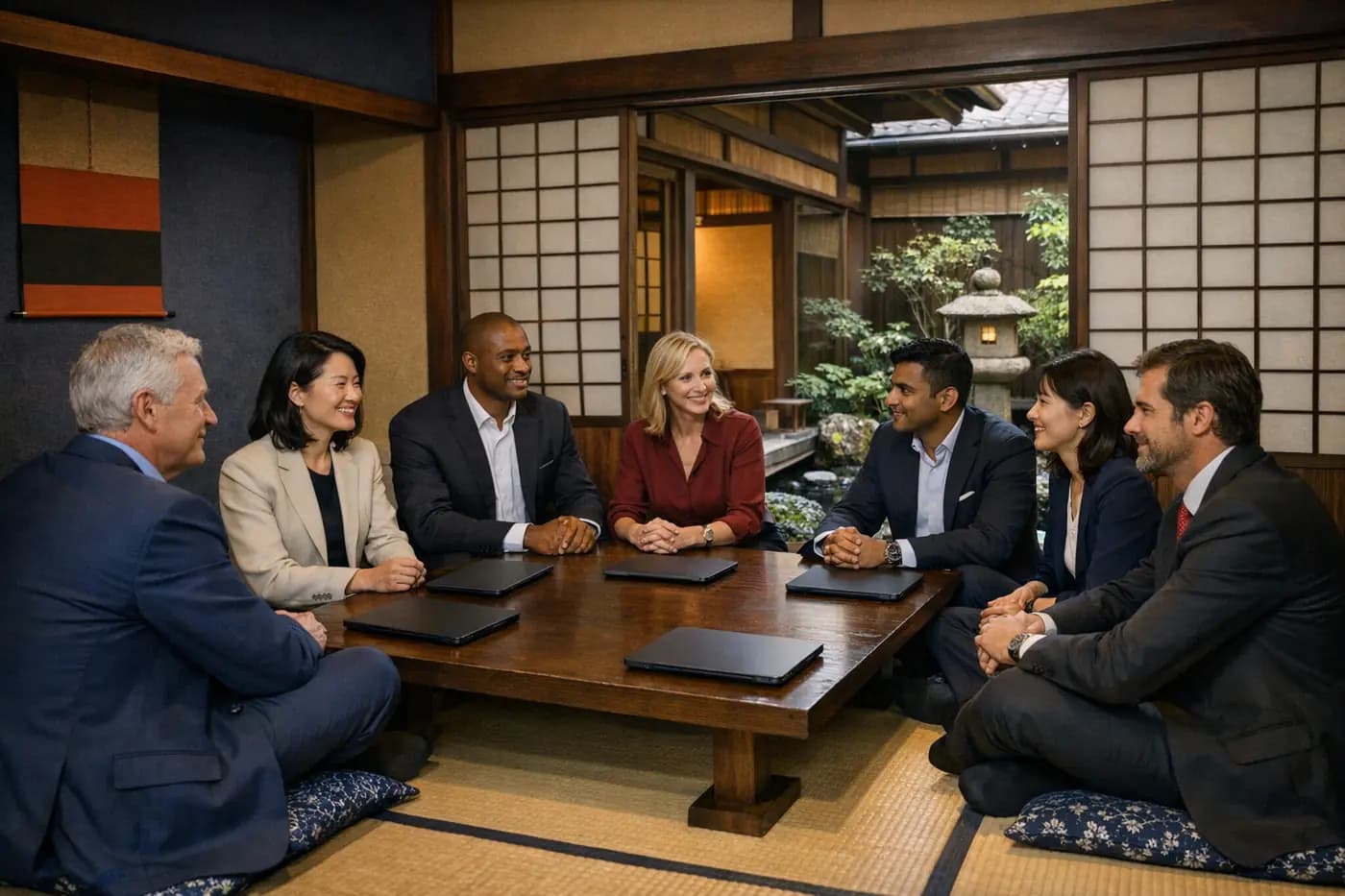
Why Kyoto works for executive committees
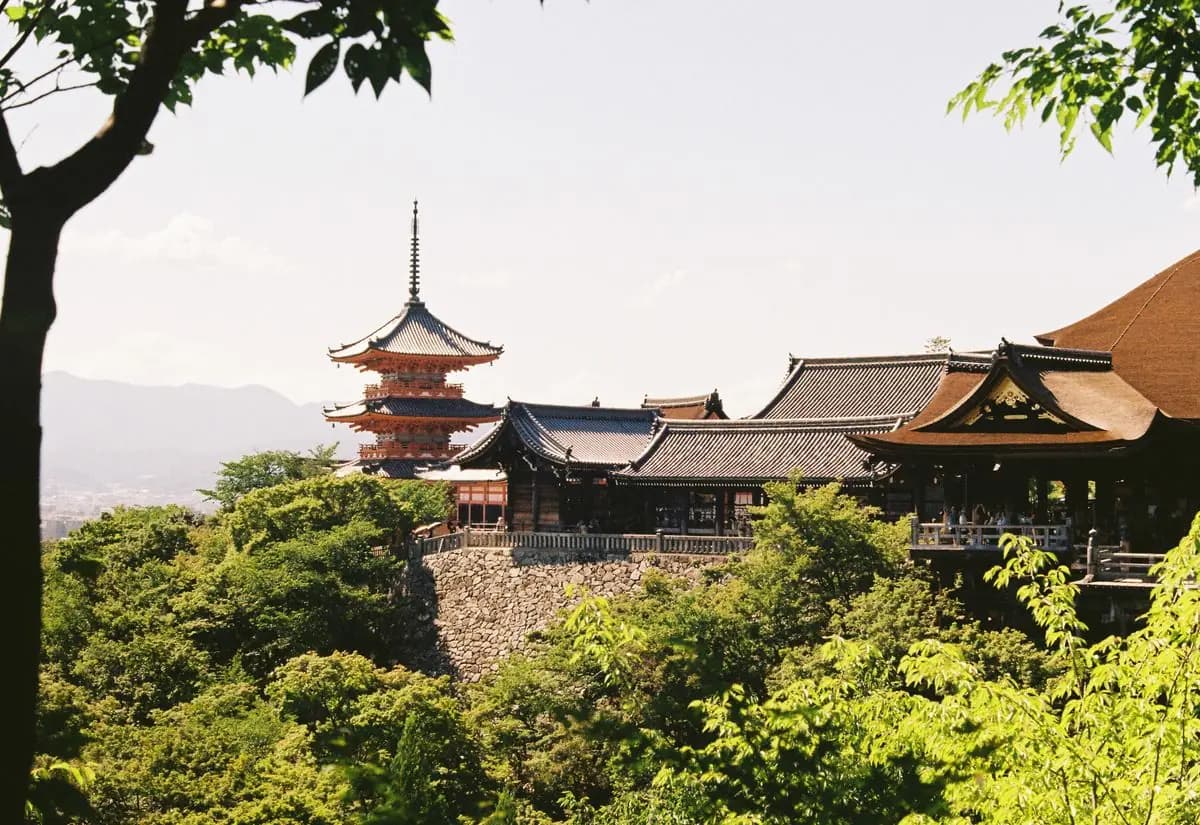
An executive committee does not need a 500-seat hall. It needs time, calm and a setting that helps people step back. Kyoto offers all three. The imperial capital for more than a thousand years, the city is home to the Historic Monuments of Ancient Kyoto, a UNESCO World Heritage Site, gardens designed for contemplation and a remarkably refined tradition of hospitality.
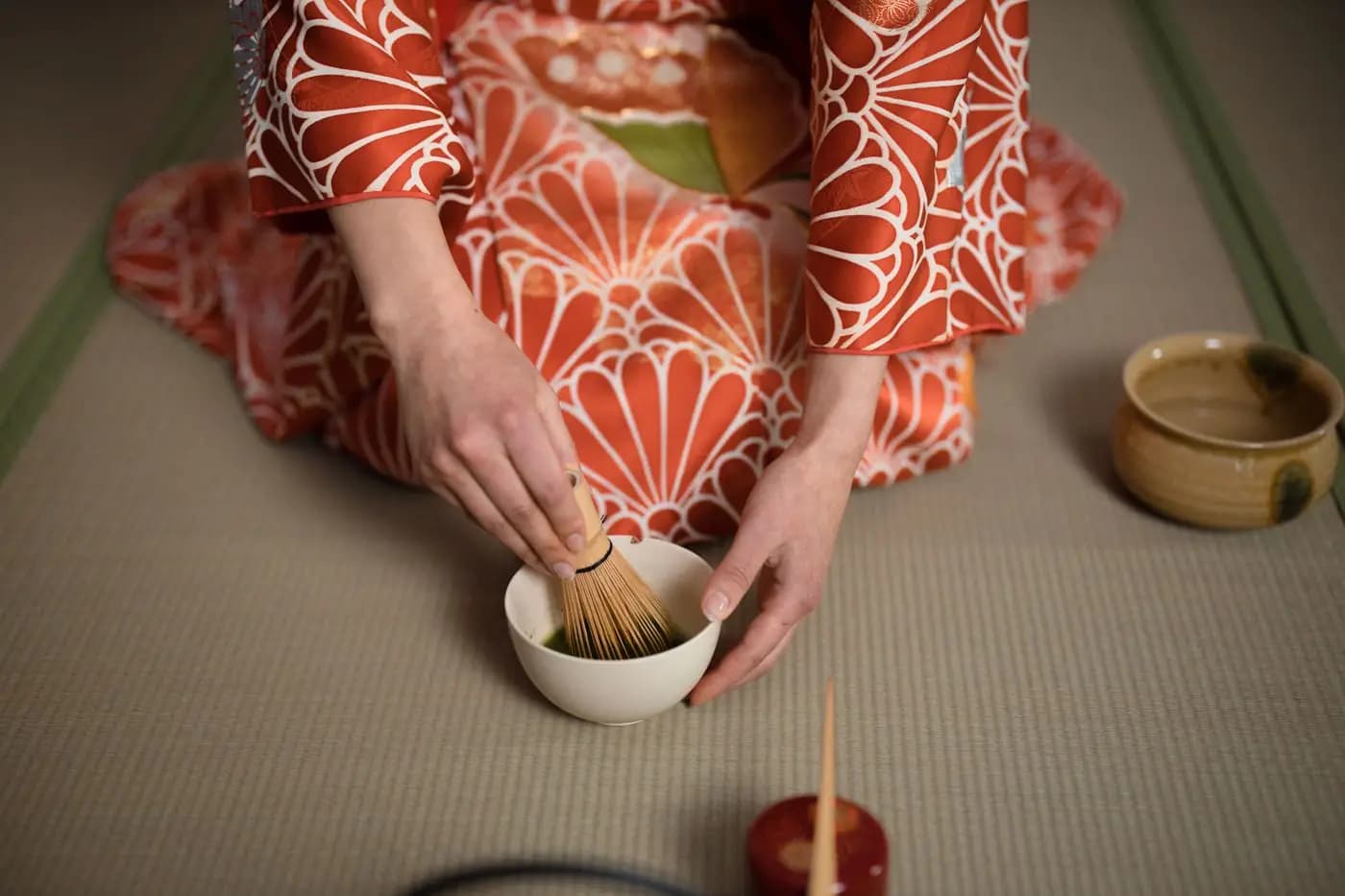
Above all, a Kyoto executive retreat offers a change of pace. After a morning working session, a walk through a temple garden or a tea ceremony for a small group creates the kind of conversation that meeting rooms rarely produce. Several of our clients hold their annual strategy sessions in Kyoto, with a format that alternates working sessions in the morning and carefully chosen experiences in the afternoon.
That quality comes at a price. Kyoto is a very busy city whose infrastructure was not designed for large groups. The challenge is to protect the committee's calm amid that flow of visitors, which starts with the right hotel, the right vehicles and the right timing.
Access and getting around
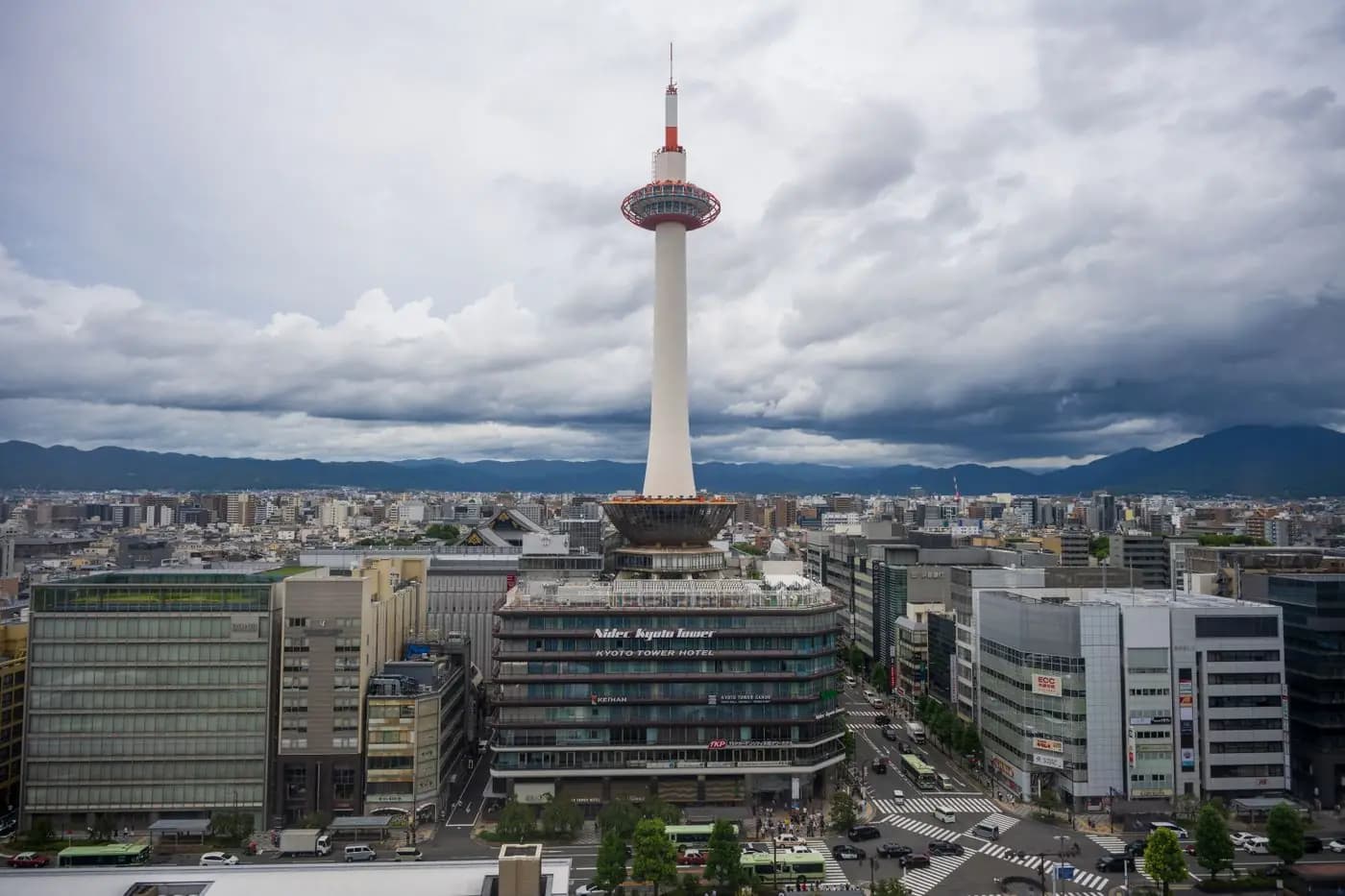
From Tokyo, the Nozomi Shinkansen reaches Kyoto Station in about 2h15. We reserve grouped Green Car (first class) seats and send luggage ahead the day before, so executives travel without suitcases.
From abroad, Kansai International Airport (KIX) is the natural gateway. The Haruka express reaches Kyoto in about 1h15 to 1h20; a private car transfer usually takes 1h15 to 1h30 depending on traffic. For executives arriving on different flights, a private vehicle with a named meet-and-greet remains the most comfortable solution.
On the ground, three rules apply:
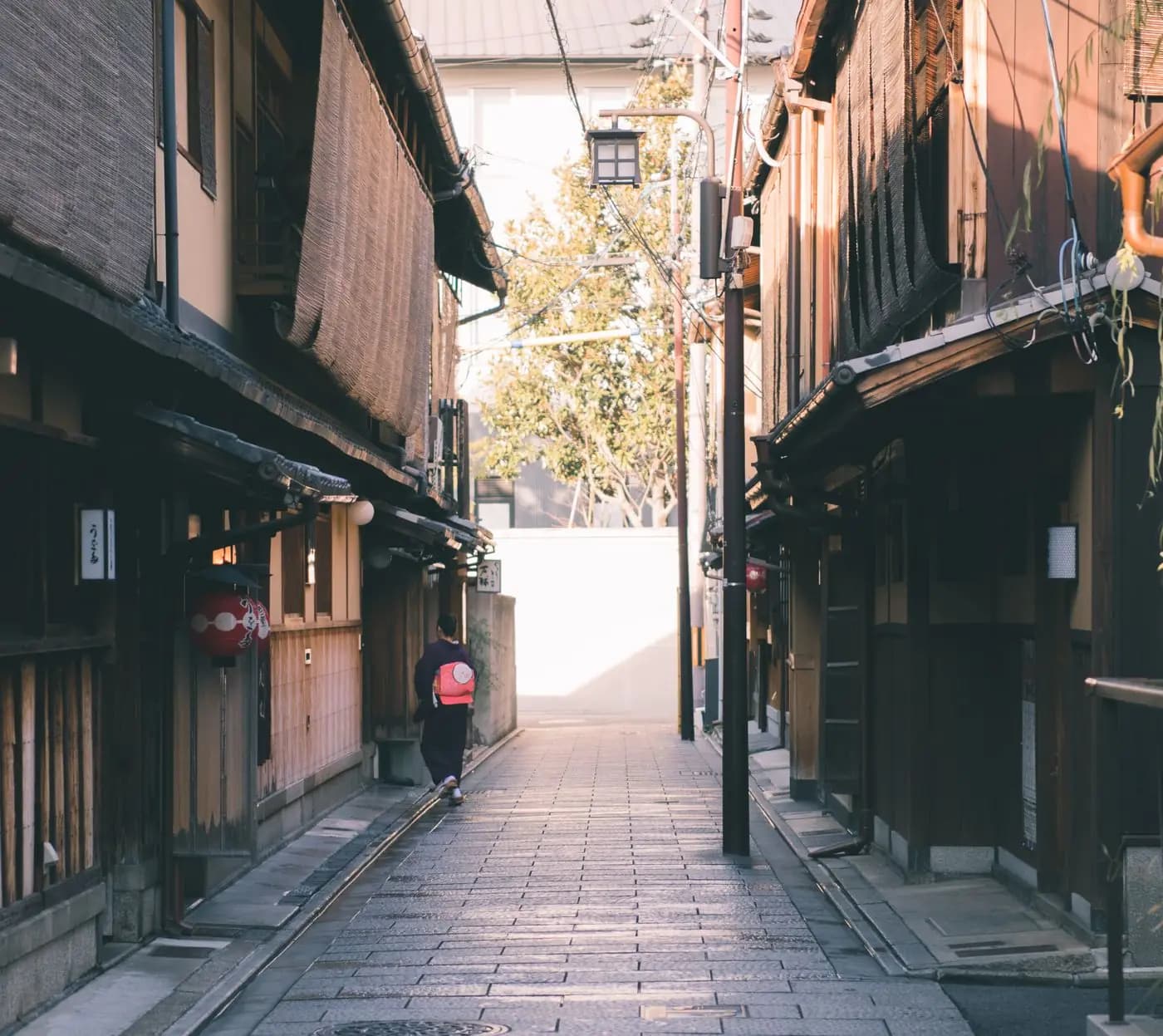
- Forget coaches for city-center moves: the streets of Higashiyama and Gion are narrow, parking is scarce and some areas are closed to large vehicles.
- Use private vans of 6 to 9 seats with a driver, on standby with the group throughout the day.
- Do not rely on taxis at peak hours or in high season: waits near major sites can exceed 30 minutes.
These choices cost a little more than a coach, but they protect the committee's time, which is by far its scarcest resource.
Choosing where to stay
For an executive committee, the hotel is also the main workplace. We recommend a property with at least one private meeting salon with natural light and a restaurant able to host a private dinner.
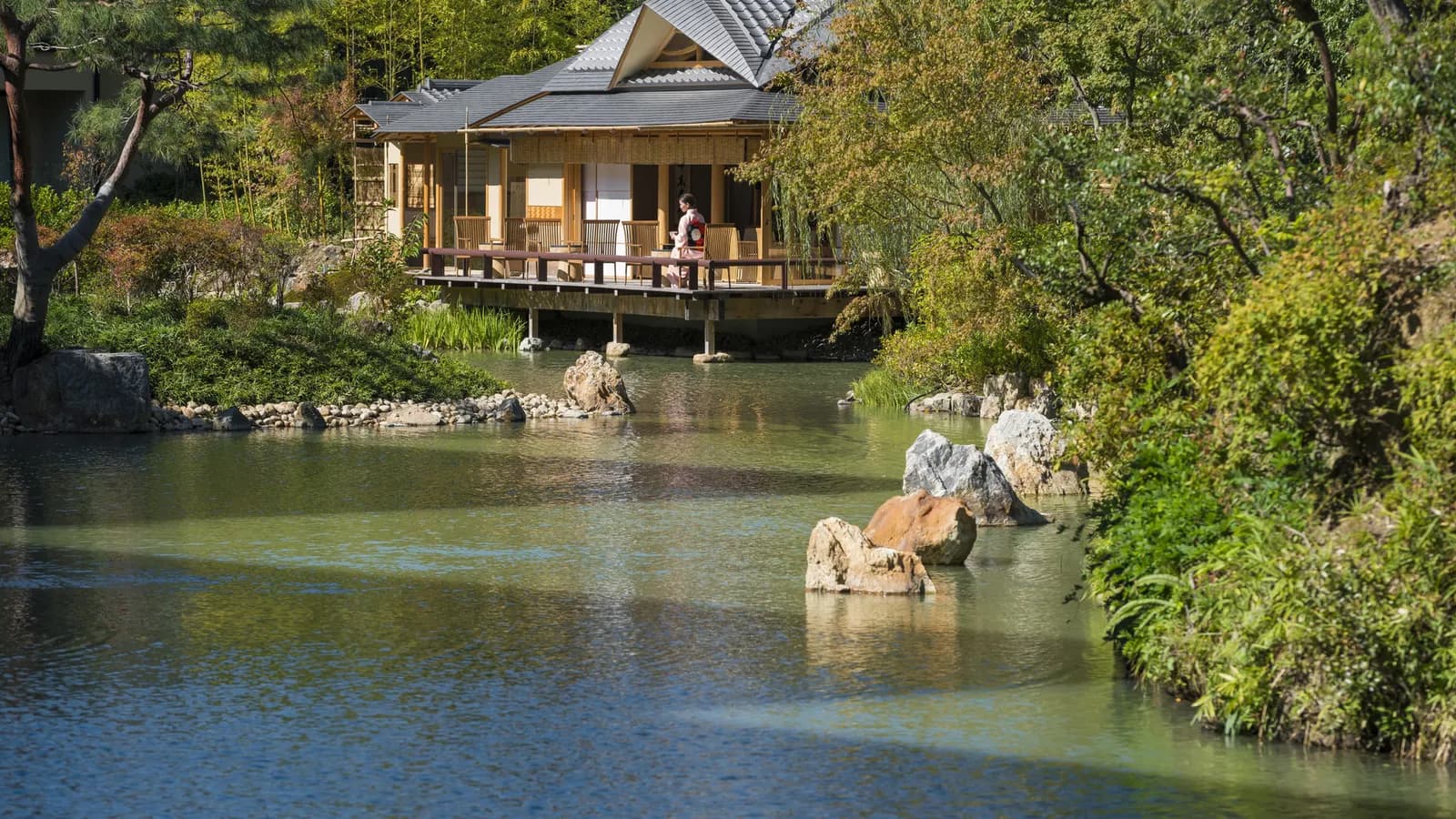
- Four Seasons Hotel Kyoto (Higashiyama): historic garden and great discretion, ideal for a committee of 10 to 20.
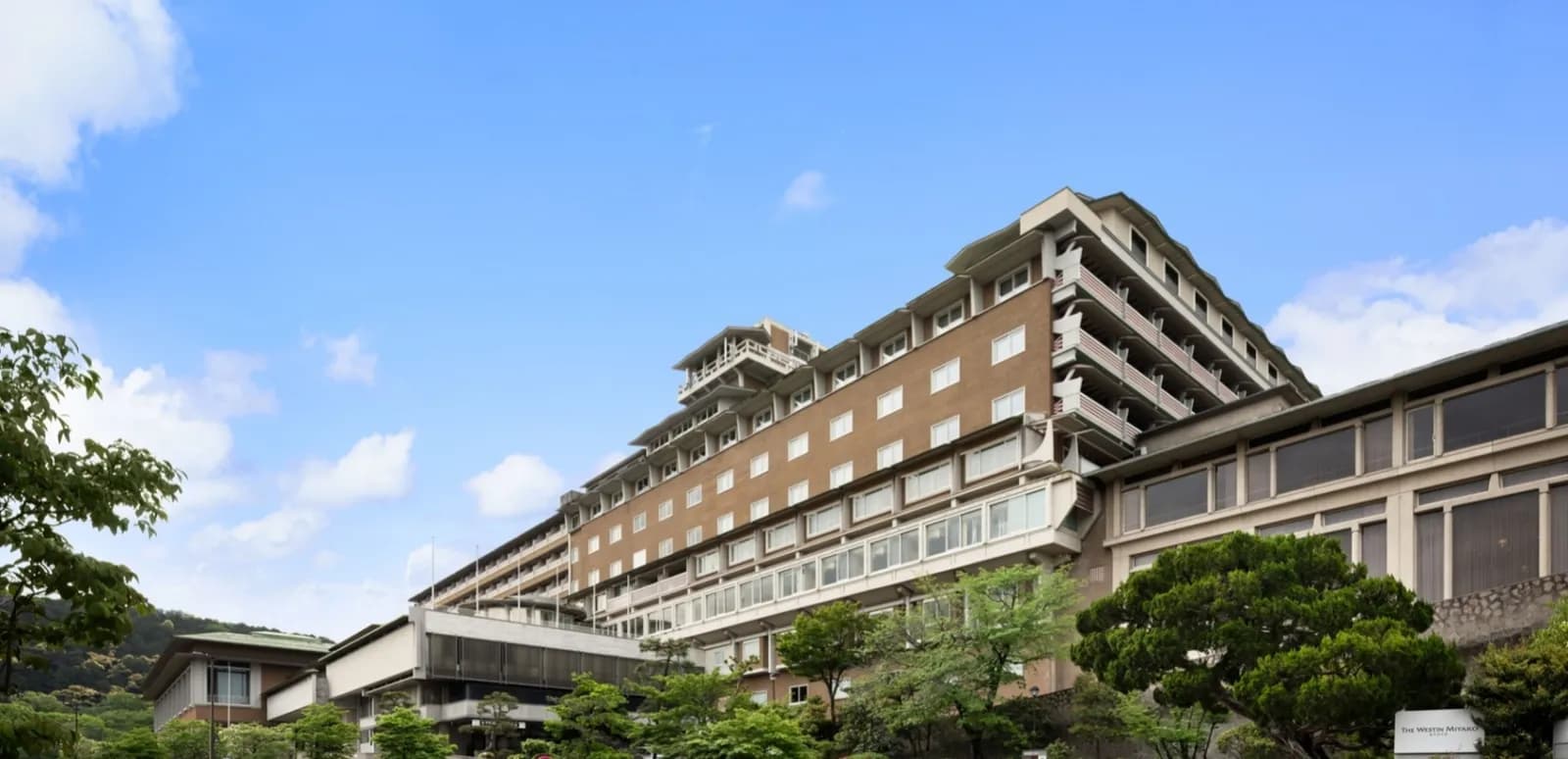
- The Westin Miyako Kyoto (Keage, near Nanzen-ji): the widest choice of meeting rooms among the city's prestige hotels.
- Hyatt Regency Kyoto (Higashiyama Shichijo): an excellent balance of international comfort, functional rooms and access to the station.
- The Thousand Kyoto: steps from Kyoto Station, convenient for a program that combines Shinkansen travel and meetings.
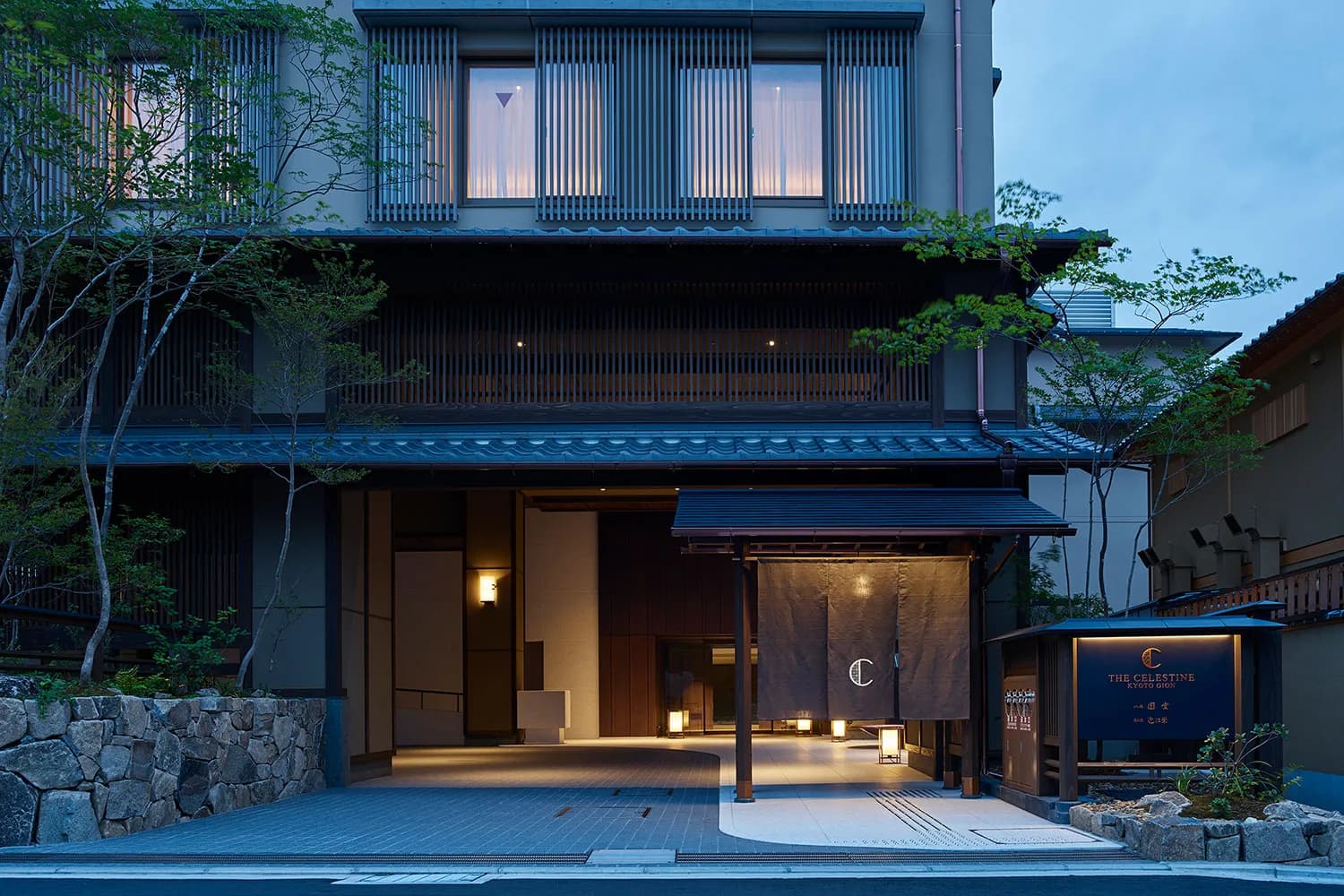
- Hotel The Celestine Kyoto Gion: for a small group that wants to experience Gion day to day.
A privately booked ryokan is an attractive but demanding option: capacity is often limited to around fifteen rooms, bathrooms may be shared and meal times are fixed. It is best reserved for committees familiar with the codes, or for a single night at the end of the program.
Where to meet: from hotel salons to exceptional venues
Most working sessions are held at the hotel for a simple reason: technology, confidentiality and service are under control. We recommend a boardroom or U-shaped setup, with a screen, a videoconference link tested the day before and a separate area for breaks.
For a memorable session, Kyoto offers alternatives:
- A private machiya: a restored traditional townhouse, suitable for 8 to 15 people for a strategy workshop.
- A space within a temple: some temples agree, on request and under strict conditions, to welcome a small group for guided meditation or a conversation with a monk. This is never a standard rental.
- ICC Kyoto (Kyoto International Conference Center, Takaragaike): the historic venue for international conferences, relevant if the committee is part of a larger event.
In every case, plan a site inspection, a rain backup and a dedicated on-site logistics lead. In a traditional venue, also check heating, seating (chairs rather than floor cushions) and Wi-Fi in advance.
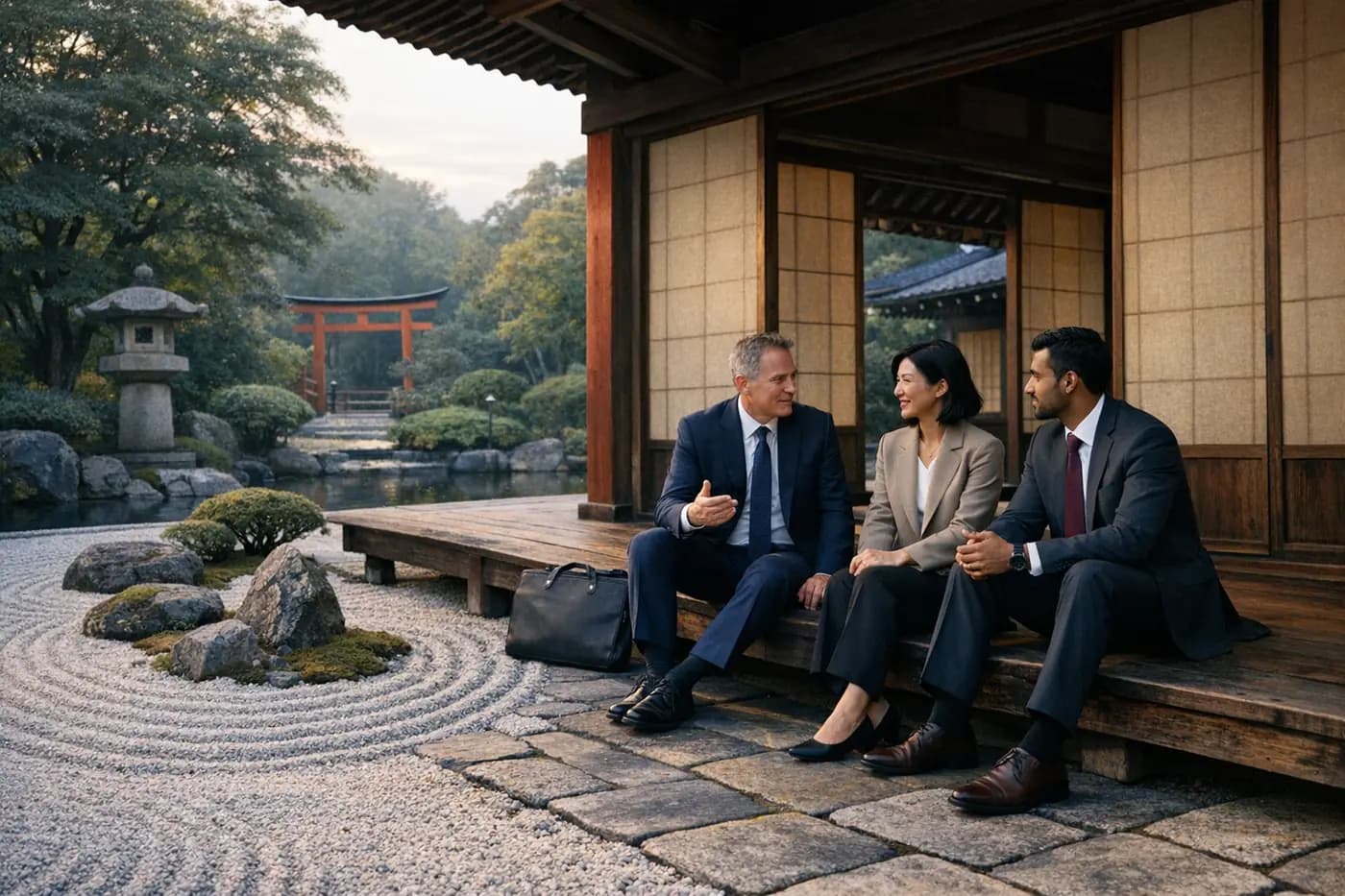
Timing: avoiding crowds, choosing the light
Kyoto's two signature seasons, cherry blossom (late March to early April) and autumn colors (mid-November to early December), are also the most expensive and the busiest. For an executive committee, they are not the most relevant.
- Mid-January to early March: dry cold, often clear skies, quiet sites and better hotel availability. Ideal for an early-year strategy session.
- Mid-May to mid-June: lush greenery and pleasant temperatures before the rainy season.
- Early December: the last autumn leaves without November's peak crowds.
- July: the Gion Matsuri festival fills the city all month; spectacular, but the heat is intense and hotels are in high demand around the parades.
- August: humid heat and the Obon holiday; best avoided for a working format.
In high season, we schedule visits to major sites at opening time, or arrange private access where possible.
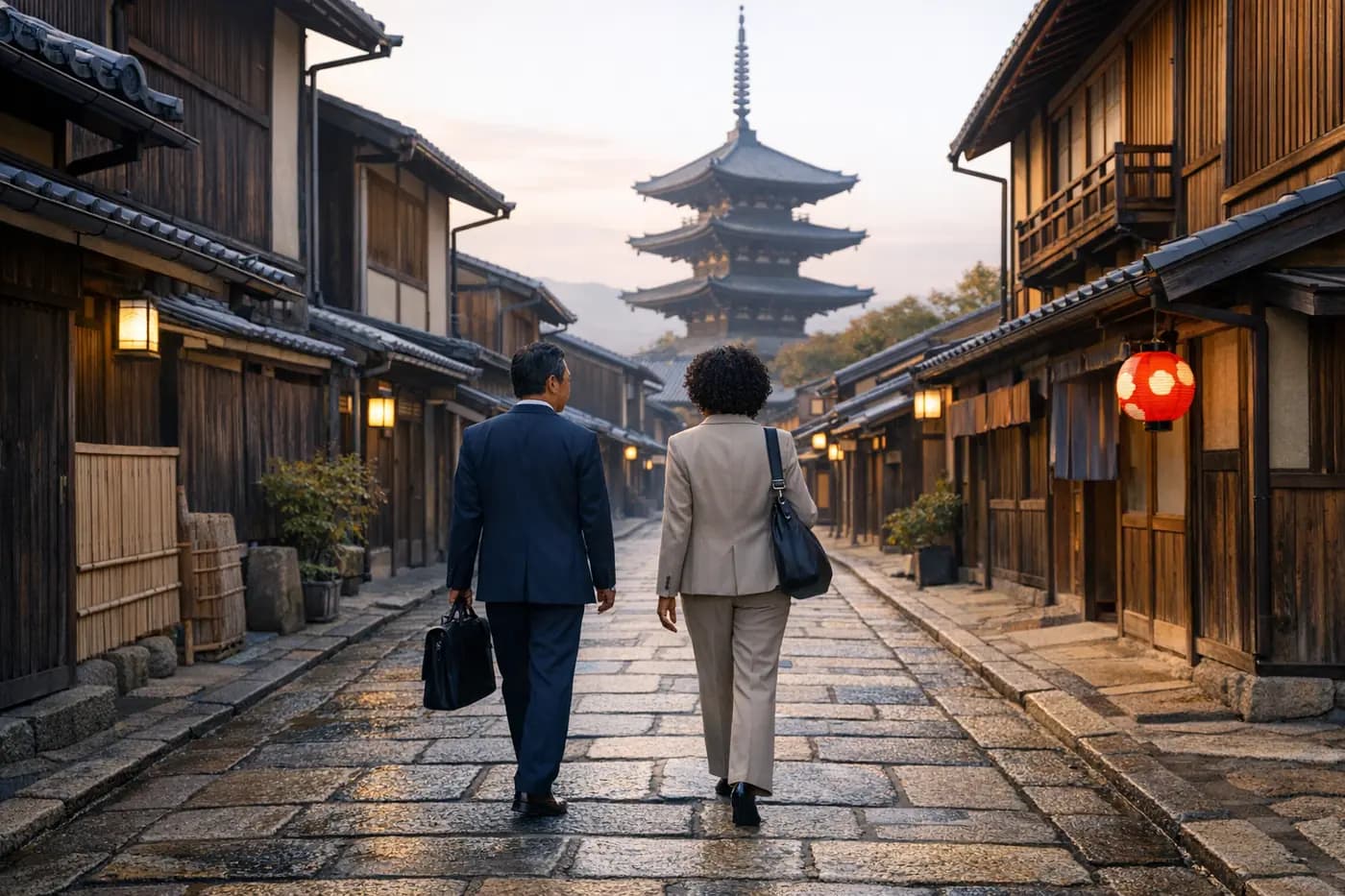
Etiquette, protocol and budget
A few simple rules avoid missteps and reinforce the committee's image:
- Shoes come off in temples, ryokan and many traditional restaurants. Plan for shoes that are easy to remove.
- Photography is now banned in some of Gion's private lanes; in temples, rules vary from one site to another.
- Meetings with Japanese partners: bring plenty of business cards (meishi) and present them with both hands; an understated corporate gift is appreciated.
- Tipping is not customary in Japan; service quality is included.
On budget, and purely as an indication, luxury hotel rooms in Kyoto often range from ¥80,000 to ¥250,000 per night depending on season and room category. Since March 1, 2026, Kyoto's lodging tax adds ¥4,000 per person, per night for rooms from ¥50,000 to ¥99,999, and ¥10,000 for rooms at ¥100,000 or more. For a committee of 20 over three nights, the tax alone can reach several hundred thousand yen. We always include it in our quotes.
A typical three-day format
The format we most often propose for a Kyoto executive retreat fits into three days:
- Day 1: arrival by Shinkansen or from Kansai, check-in, and a private dinner at the hotel to set the tone.
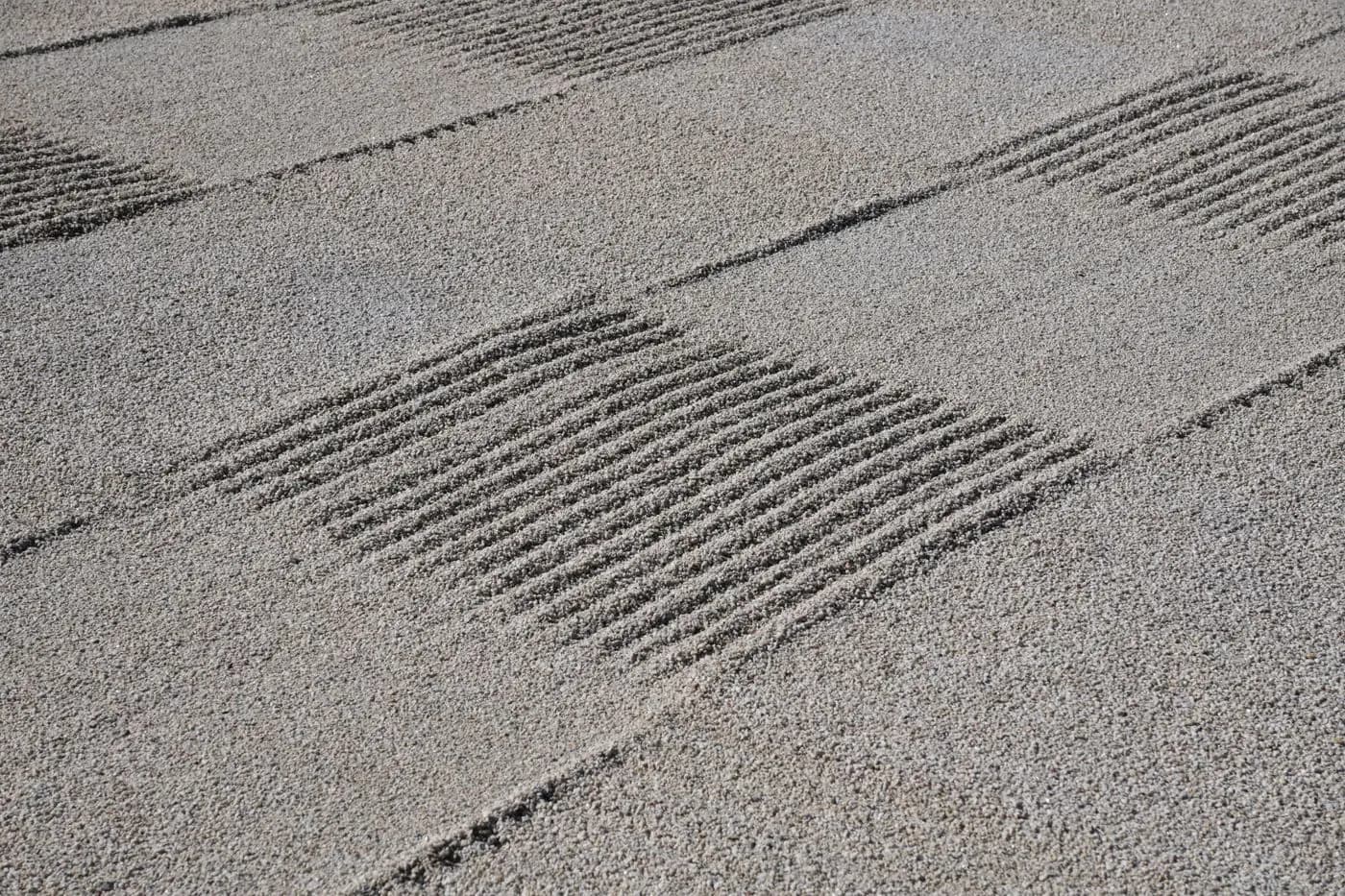
- Day 2: working session in the morning, kaiseki lunch, then a tea ceremony or a Zen garden workshop; dinner at a traditional restaurant reserved for the group.
- Day 3: synthesis and decisions in the morning, a private temple visit late morning, departure in the afternoon.
This rhythm provides about nine hours of productive working time while leaving breathing space that enriches the discussion. It extends easily with an additional day in Tokyo or Osaka.
Frequently asked questions
What group size suits an executive committee in Kyoto?
Kyoto is ideal for 8 to 30 people: the best hotel salons, machiya and private experiences are sized for these numbers. Beyond 50 guests, we recommend a conference hotel such as The Westin Miyako Kyoto or a program combined with Osaka.
How far ahead should we book?
Outside peak season, 4 to 6 months is usually enough for a committee of 10 to 20. For cherry blossom or autumn, allow 9 to 12 months, especially for luxury hotels and private temple experiences.
How do we get to Kyoto from the airport?
From Kansai International Airport, the Haruka express takes about 1h15 to 1h20; a private car transfer usually takes 1h15 to 1h30. From Tokyo, the Shinkansen reaches Kyoto in about 2h15.
Is Kyoto's lodging tax included in room rates?
No. It is added to the rate and charged per person, per night, based on the room price. Since March 1, 2026, it ranges from ¥200 to ¥10,000. We always show it separately in our quotes.
Can a temple be booked privately for a meeting?
Not as a standard rental. Some temples will, on request and depending on their calendar, welcome a small group for guided meditation, a private visit or a conversation with a monk. The working session itself is best held at the hotel or in a machiya.
Rédaction SHINOGI DMC · Updated