- Duration
- About 3 hours
- Group size
- 10–200 pax
- Cities
- Kyoto
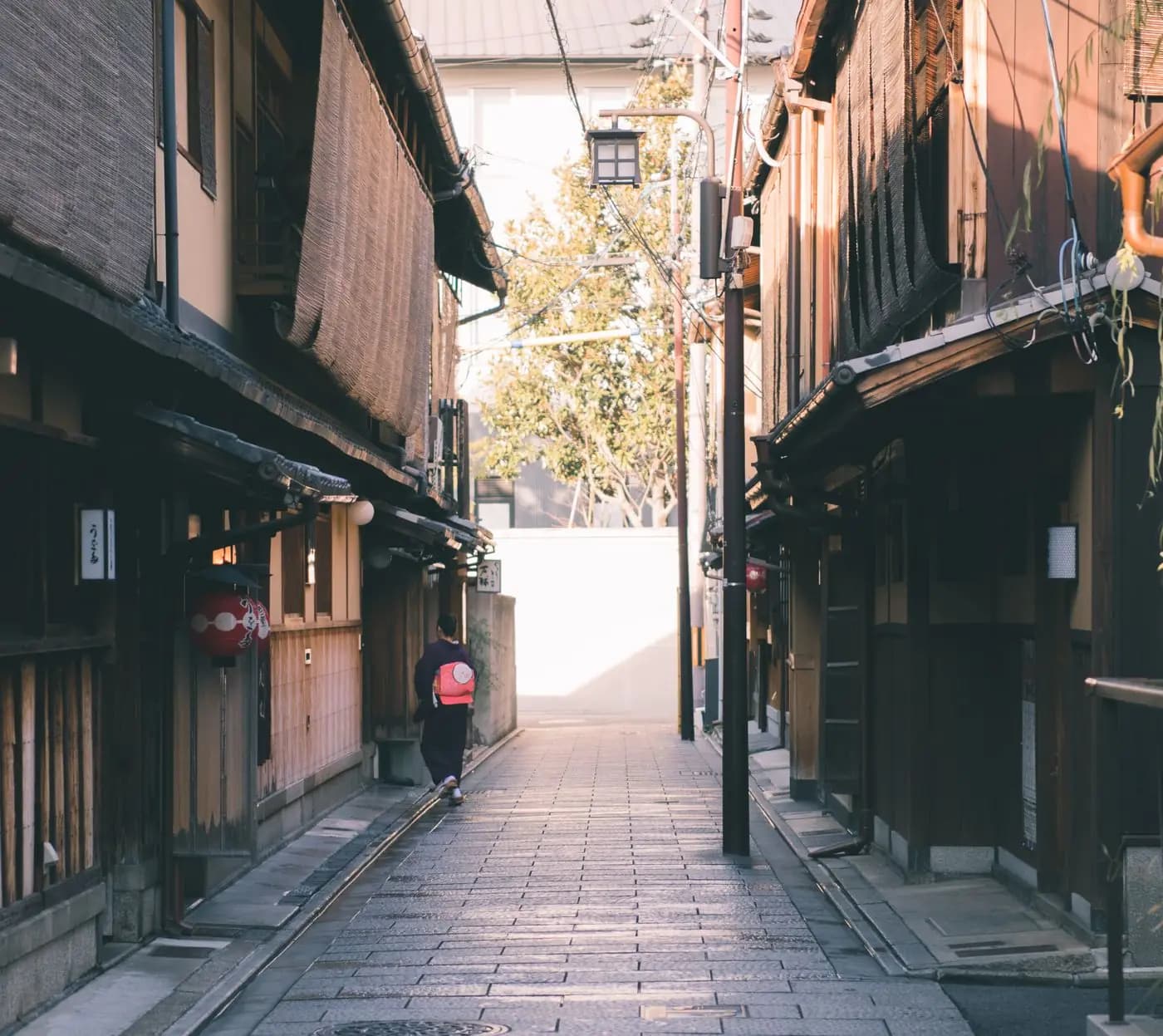
Teams set off with a roadbook or app and follow clues between Kiyomizu-dera, the Sannenzaka and Ninenzaka slopes, the Gion district and the banks of the Shirakawa canal. Each stop hides a history question, an architectural detail to spot, a word to learn or a short challenge at a partner artisan's shop (fans, incense, confectionery).
The game requires teams to organize in a busy setting, share information and decide quickly, while respecting the calm of the area. We stress this in the briefing: no running, no shouting, respect for residents and maiko. It is a useful lesson in adapting to context, which matters when working in Japan.
Kyoto was the imperial capital for more than a thousand years. The treasure hunt brings that history to life without a conventional guided tour, and ends at a private venue for the prize-giving, tea or dinner.
Objectives
- Encourage team collaboration and communication
- Discover Kyoto's history in an active way
- Learn to adapt to local codes of behavior
- Build strong shared memories
How it works
- 1Coach transfer to Higashiyama and briefing (including conduct rules).
- 2Teams of 5 to 8, each with a roadbook or app.
- 3Roughly 2.5-hour route via Kiyomizu-dera, Sannenzaka, Gion and Shirakawa.
- 4Challenges at artisan shops and checkpoints staffed by our team.
- 5Finish at a private venue in Gion, ranking and prize-giving.
Good to know
- Sloped, cobbled route: comfortable shoes are a must.
- Higashiyama is very busy in spring and autumn; early-morning or late-afternoon starts are recommended.
- Photographing maiko and geiko without consent is banned on some Gion streets; we remind teams of these rules.
- Rain plan: a shorter route with more covered stops, or an indoor version in a private machiya.
- English- or French-speaking staff at checkpoints.
Indicative budget
Indicative: from ~€100 per person (design, materials, staff, artisan challenges, prizes), excluding coach transfers and meals.
Frequently asked questions
When is the best time for a Kyoto treasure hunt?
Spring and autumn are the most pleasant but also the busiest. Winter (December to February) brings quieter streets; in summer, we schedule the activity late in the day because of the heat.
Can a temple visit be included?
Yes. Entry to Kiyomizu-dera or another temple can be part of the route. We can also end with a tea ceremony or a Zen session.
How do you avoid disturbing residents?
Teams are small, starts are staggered, sensitive residential lanes are left off the route and a briefing explains local rules. Our staff make sure these are followed.