What to see in Kyoto in 2 days: how the itinerary works
Two days are not enough to "do" Kyoto, but they are plenty to see the essentials without rushing, as long as you accept one simple rule: one half of the city per day. Day one covers the south and east (Fushimi Inari, Kiyomizu-dera, Higashiyama, Gion, Nishiki). Day two starts in the west (Arashiyama, Tenryu-ji), heads north-west to Kinkaku-ji, then crosses town to finish at Ginkaku-ji and the Philosopher's Path. Mixing both sides on the same day costs you an hour and a half on buses.
The second principle is timing. The most photographed sites are packed between 10am and 4pm, especially at weekends. Fushimi Inari and the Arashiyama bamboo grove are open at all hours and free, so they go early in the morning, before the tour coaches arrive. Temples with fixed hours (Kinkaku-ji opens at 9am, Tenryu-ji at 8:30am) come next.
A few transport benchmarks:
- City bus: ¥230 per ride within the flat-fare zone, paid by IC card (Suica, ICOCA) or cash. Lines 100, 206 and 205 are often full; avoid them with a suitcase.
- Subway & Bus 1-Day Pass: ¥1,100. It also covers the EX100 and EX101 sightseeing express buses (¥500 without a pass), which run only on weekends and public holidays towards Kiyomizu and Ginkaku-ji.
- Trains: JR and Keihan are more reliable than buses at peak times. Kyoto Station → Inari in 5 minutes (JR Nara Line), Kyoto Station → Saga-Arashiyama in about 15 minutes (JR Sagano Line).
- Taxi: worth it for three or four people on cross-town links (Arashiyama → Kinkaku-ji, Kinkaku-ji → Ginkaku-ji), where it saves 15 to 20 minutes over the bus.
Note that the city is preparing a two-tier bus fare for fiscal 2027, higher for non-residents (around ¥360 under the plan being discussed). For a trip in 2026, the ¥230 fare still applies.
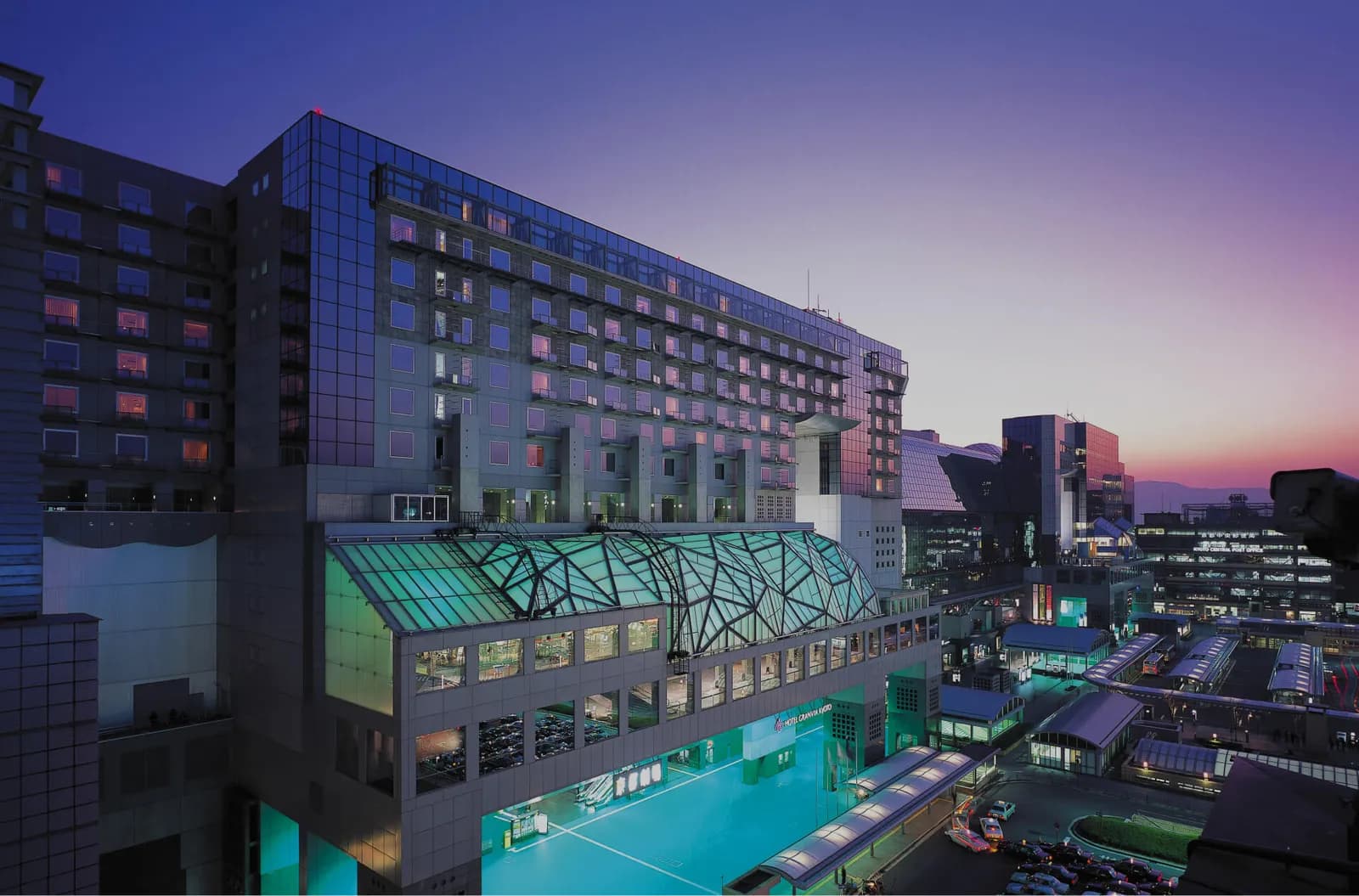
For accommodation, the Kyoto Station area is the most practical base for this itinerary: the JR Nara and JR Sagano lines start there, and transfers to Osaka or Tokyo are direct. Gion and Higashiyama are more atmospheric in the evening, but further from Arashiyama.
Day 1, morning: Fushimi Inari at dawn, then Kiyomizu-dera
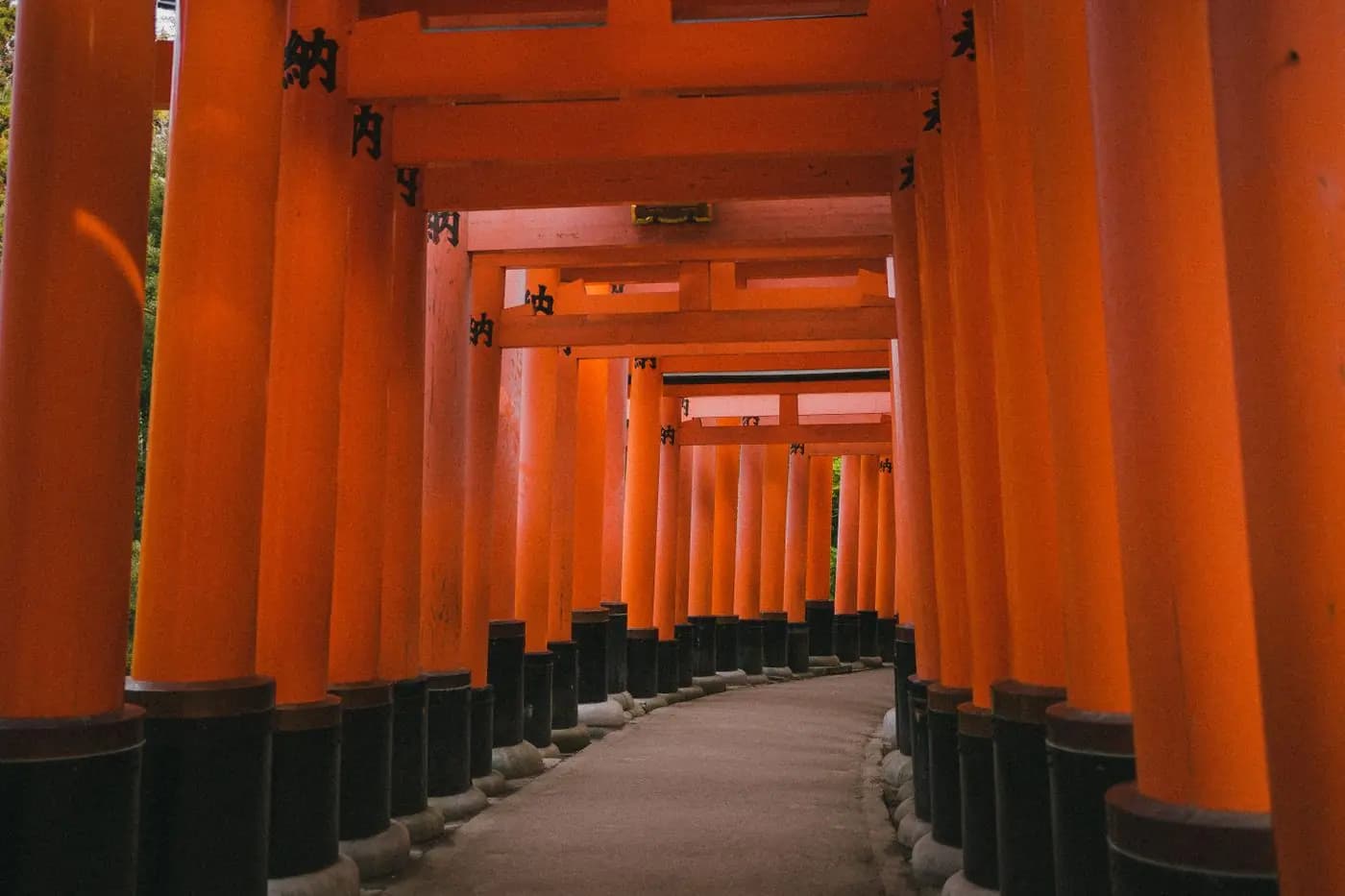
6:30–8:45am: Fushimi Inari Taisha. The shrine is free and never closes. At 6:30am the famous Senbon Torii (the two tight rows of gates just behind the main shrine) are almost empty; by 10am you are shoulder to shoulder. JR Inari Station is 5 minutes from Kyoto Station, and the entrance gate is right across the street.
Should you climb to the top of Mount Inari (233 m)? The full loop takes 2 to 3 hours. On a two-day trip, we suggest stopping at the Yotsutsuji crossroads, about 45 minutes' walk from the entrance: the view over southern Kyoto is open, the crowd has already thinned out and the way down takes 30 minutes. Wear proper shoes; there are a lot of steps.
8:45–9:30am: transfer. Keihan train from Fushimi-Inari to Kiyomizu-Gojo (about 10 minutes), then a 20 to 25-minute walk uphill via Gojozaka. A taxi from the shrine takes about 15 minutes.
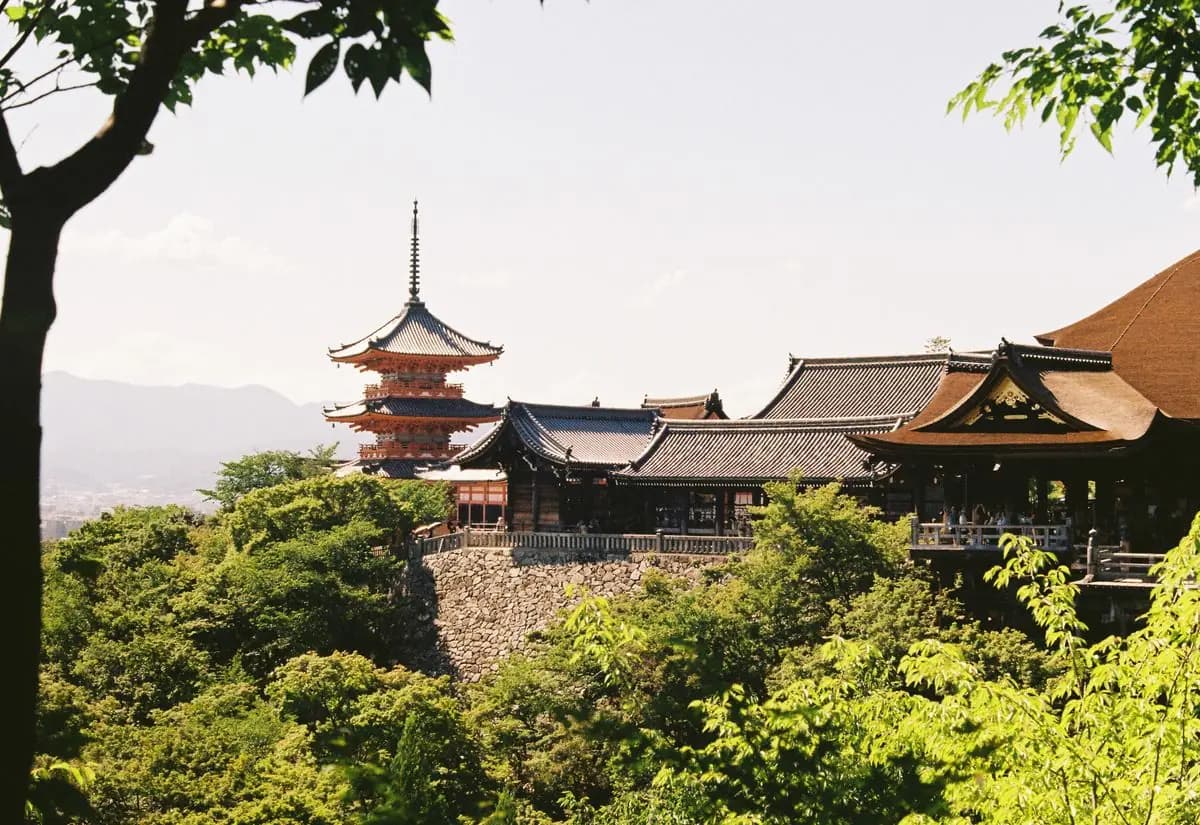
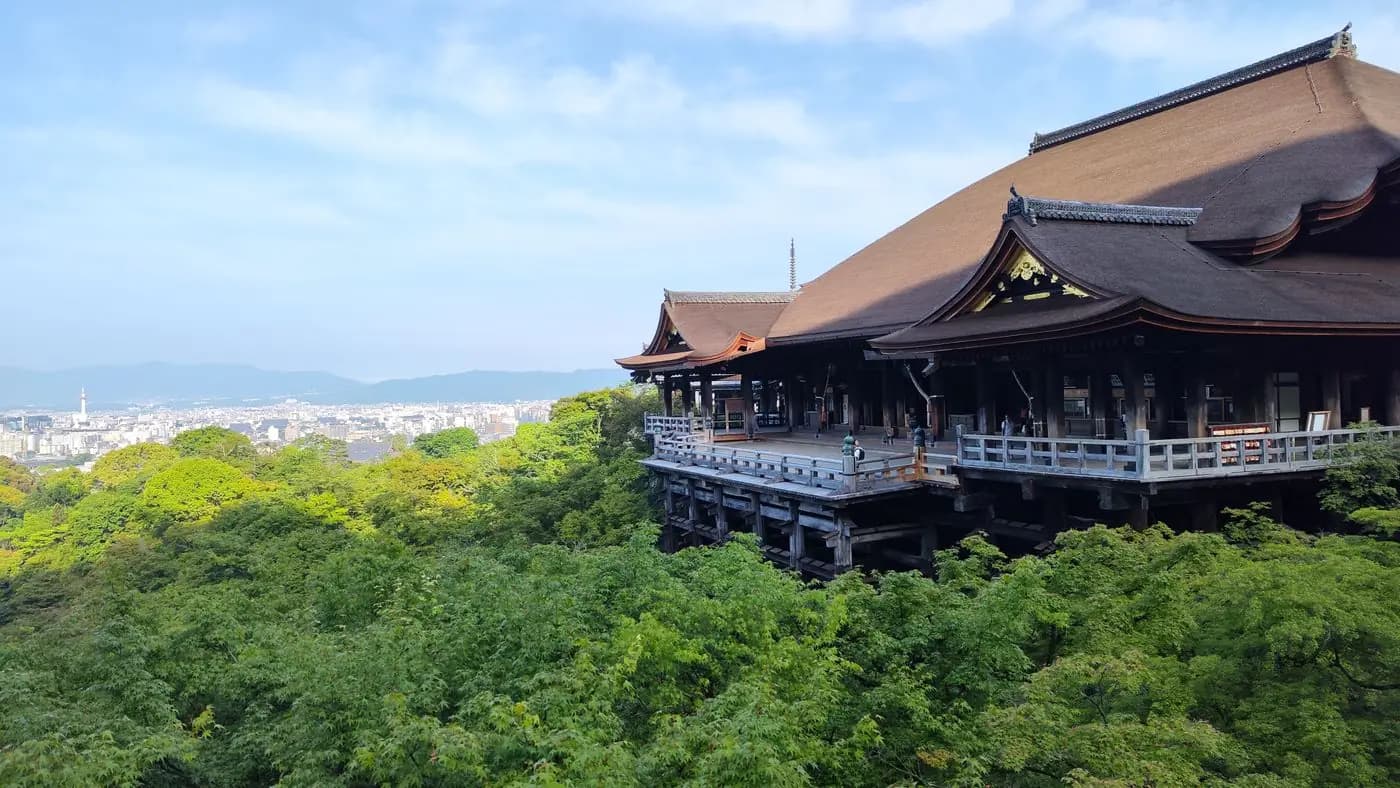
9:30–11am: Kiyomizu-dera. The temple opens at 6am; it closes at 6pm most of the year, 6:30pm in July and August, and 9:30pm during night openings (late March to early April, mid-August, and November 21–30 in 2026). Admission is ¥500 for adults, cash only. The great wooden stage of the main hall, built on pillars over the hillside, is best seen from the Okuno-in hall a little further along the route. On the way down, the Otowa waterfall and its three streams draw a queue that often exceeds 20 minutes at midday: do it straight away or skip it.
If you are an early riser and really dislike crowds, swap the order: Kiyomizu-dera at 6am, then Fushimi Inari around 8:30am. The torii will be a little busier, but you will have the temple almost to yourself.
Day 1, afternoon and evening: Sannenzaka, Ninenzaka, Nishiki and Gion
11am–12:30pm: Sannenzaka and Ninenzaka. Leaving Kiyomizu-dera, walk down Kiyomizu-zaka and then the two stone-paved lanes of Sannenzaka and Ninenzaka, lined with wooden houses, pottery shops and tea rooms. The Yasaka Pagoda (Hokan-ji) appears at the end of Yasaka-dori: the best angle is from the bottom of the street looking up. The route continues along Nene-no-michi, past Kodai-ji (if time allows) and through Maruyama Park to Yasaka Shrine. Allow 30 minutes of walking without stops, more like an hour and a half if you browse.
12:30–2pm: lunch. Higashiyama's streets are expensive and often packed at noon. It is better to head down towards Shijo-dori or book a soba or yudofu lunch.
2–3:30pm: Nishiki Market. Ten minutes' walk from Gion along Shijo-dori, this covered street of about 390 meters gathers fishmongers and sellers of tsukemono pickles, tamagoyaki and kitchen tools. One rule to respect: the market association asks visitors not to eat while walking; eat in front of or inside the shop where you bought the food. Most stalls open around 10am and close around 5 or 6pm, and some close on Wednesdays or Sundays. Going in the afternoon avoids the late-morning peak.
3:30–5pm: break. Back to the hotel, or Kennin-ji temple next to Gion, often calmer than its neighbors.
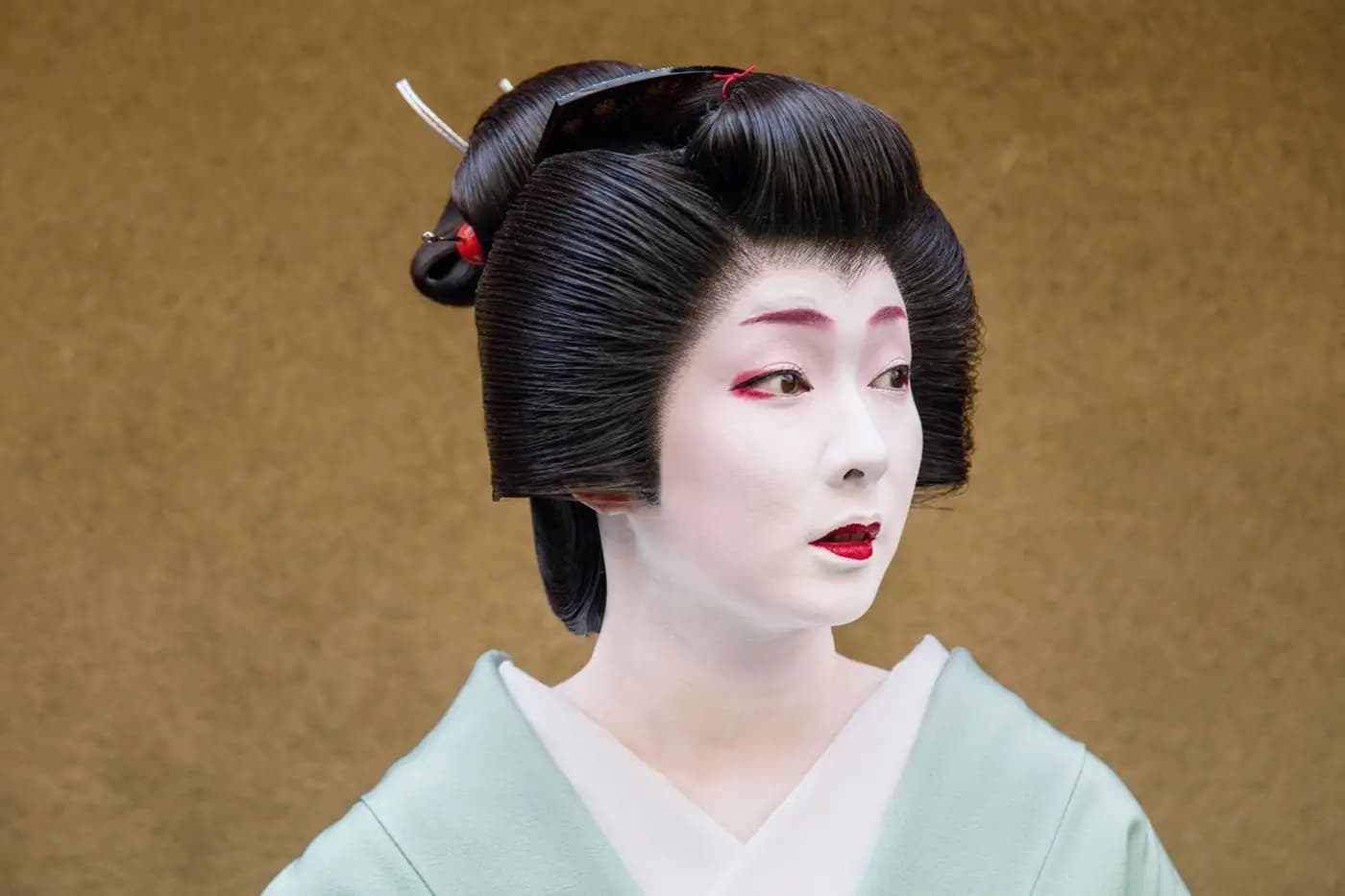
5–7pm: Gion at dusk. Hanamikoji-dori, Shirakawa and its willows, Tatsumi Bridge: this is when the lanterns come on and some geiko and maiko head to their appointments. Since April 2024, the private alleys branching off Hanamikoji-dori are off limits to visitors; signs warn of a ¥10,000 fine. Photography is fine on the main street, but never follow, stop or photograph a maiko at close range without her consent. They are working; this is not a street show.
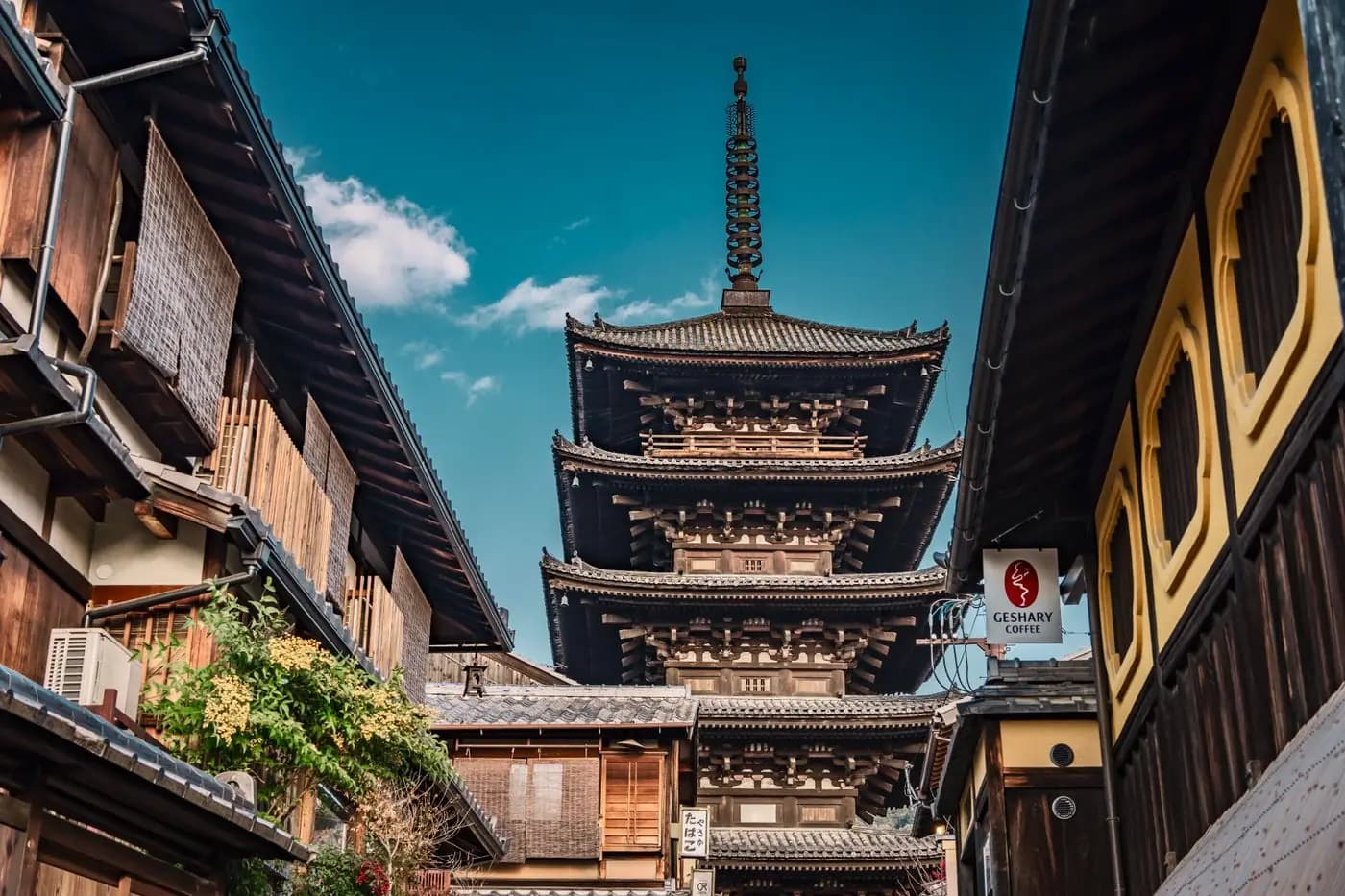
Day 2, morning: Arashiyama bamboo grove and Tenryu-ji
7–8:30am: Arashiyama bamboo grove. JR Sagano Line from Kyoto Station to Saga-Arashiyama (about 15 minutes), then a 10-minute walk. The bamboo path is free and always open. It is short (a few hundred meters), which is exactly why it fills up fast: from 9:30am the flow is constant. Before 8am you can hear the stalks creaking, which is the whole point of the place. At the end of the path, Okochi Sanso villa (paid entry, tea included) offers a view of the valley that few visitors bother to look for.
8:30–10am: Tenryu-ji. This Zen temple, a World Heritage Site, opens at 8:30am (last entry 4:50pm, closing 5pm). The garden alone costs ¥500; access to the buildings adds ¥300. The Sogen-chi garden, with its pond set against the hills, takes about 45 minutes. The garden's north exit leads straight into the bamboo grove: if you arrive after 8:30am, do it the other way round, temple first, then bamboo. From November 14 to 30, 2026, the garden opens early at 7:30am for the autumn leaves.
The dragon painted on the ceiling of the Hatto (Dharma Hall) costs an extra ¥500 and is shown mainly at weekends and on public holidays, as well as during special spring and autumn openings (September 19 to December 6 in 2026).
10–10:30am: Togetsukyo Bridge. Five minutes' walk from Tenryu-ji. The view over the Katsura River and wooded hills is at its best in November. Skip the Saga-Arashiyama shopping streets after 10:30am if you are short on time.
10:30–11am: transfer to Kinkaku-ji. This is the leg where a taxi makes sense: about 20 to 25 minutes, against 40 to 50 minutes by bus with a change.
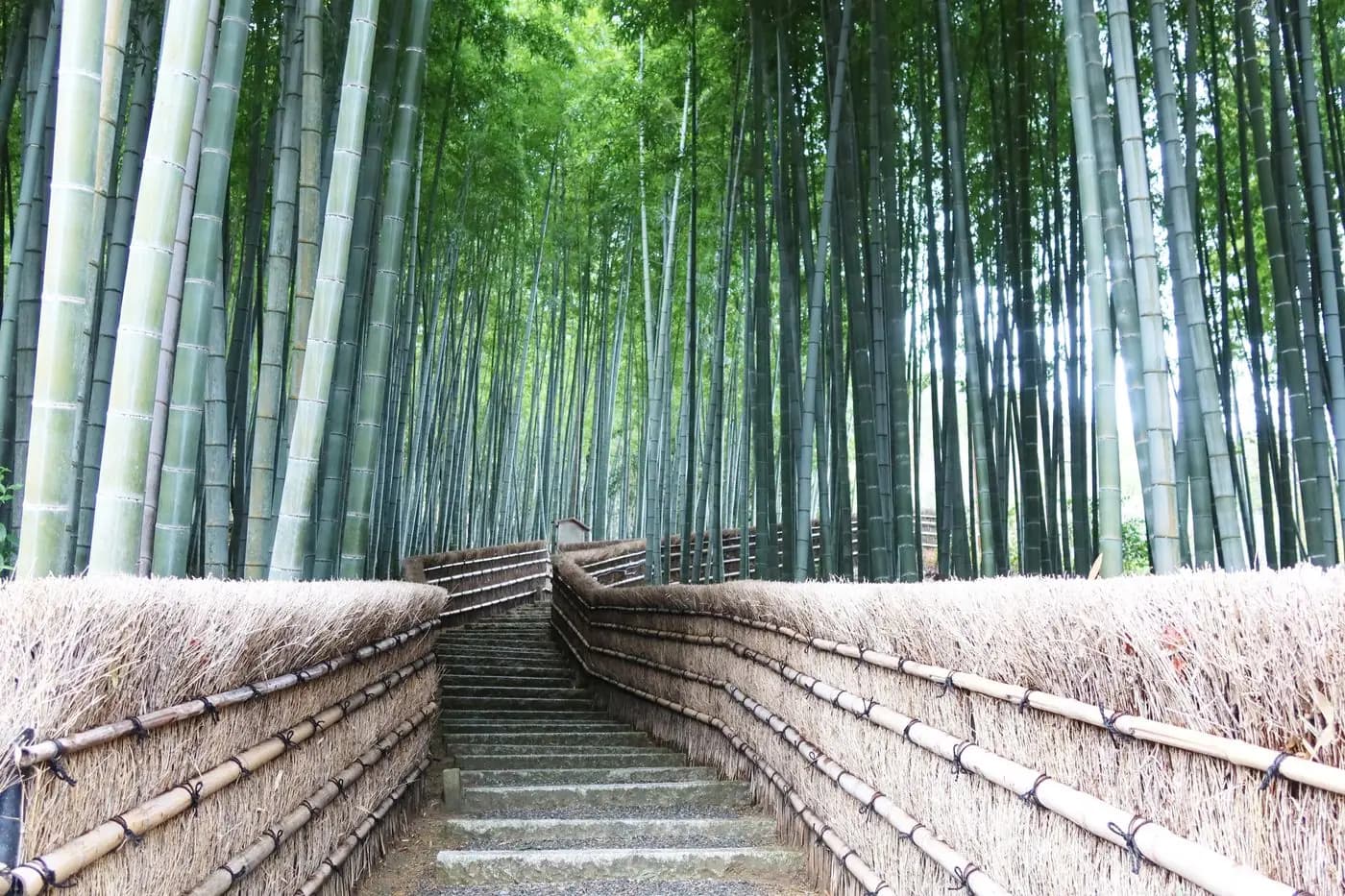
Day 2, afternoon: Kinkaku-ji, Ginkaku-ji and the Philosopher's Path
11am–12pm: Kinkaku-ji (Golden Pavilion). Open daily from 9am to 5pm, admission ¥500. The route is one-way and takes about 40 minutes: you cannot enter the pavilion, you view it from the edge of the Kyoko-chi pond. The classic front-on photo is taken in the first few meters, which is where everyone stops; walk a few steps further along the left side for a clearer view. Late morning brings many school groups, especially in May–June and October–November.
12–1:30pm: lunch around Kinkaku-ji or in Kitano (the area around Kitano Tenmangu Shrine is quieter).
1:30–2:15pm: transfer east. Bus 102 or 204 to Ginkakuji-michi (about 40 minutes), or a taxi in 25 to 30 minutes depending on traffic.
2:30–3:30pm: Ginkaku-ji (Silver Pavilion). Watch out for two recent changes: admission is now ¥1,000 for adults, and opening hours vary with the season, 8:30am to 5pm from March 1 to November 30, 9am to 4:30pm from December to February. The pavilion was never covered in silver; what stands out here is the sand garden (the Ginshadan and its Kogetsudai cone) and the path climbing through moss to a viewpoint over the city.
3:30–5pm: Philosopher's Path. The path follows a canal for about 2 kilometers south from Ginkaku-ji, lined with cherry and maple trees. Allow 30 to 40 minutes of walking without stops. It ends near Eikan-do and Nanzen-ji, whose brick aqueduct (Suirokaku) is free to visit. From there, take the Tozai subway line from Keage back to your hotel.
If energy runs low, leave the Philosopher's Path halfway, at Honen-in: this small temple with a thatched gate has a free garden and is almost always quiet.
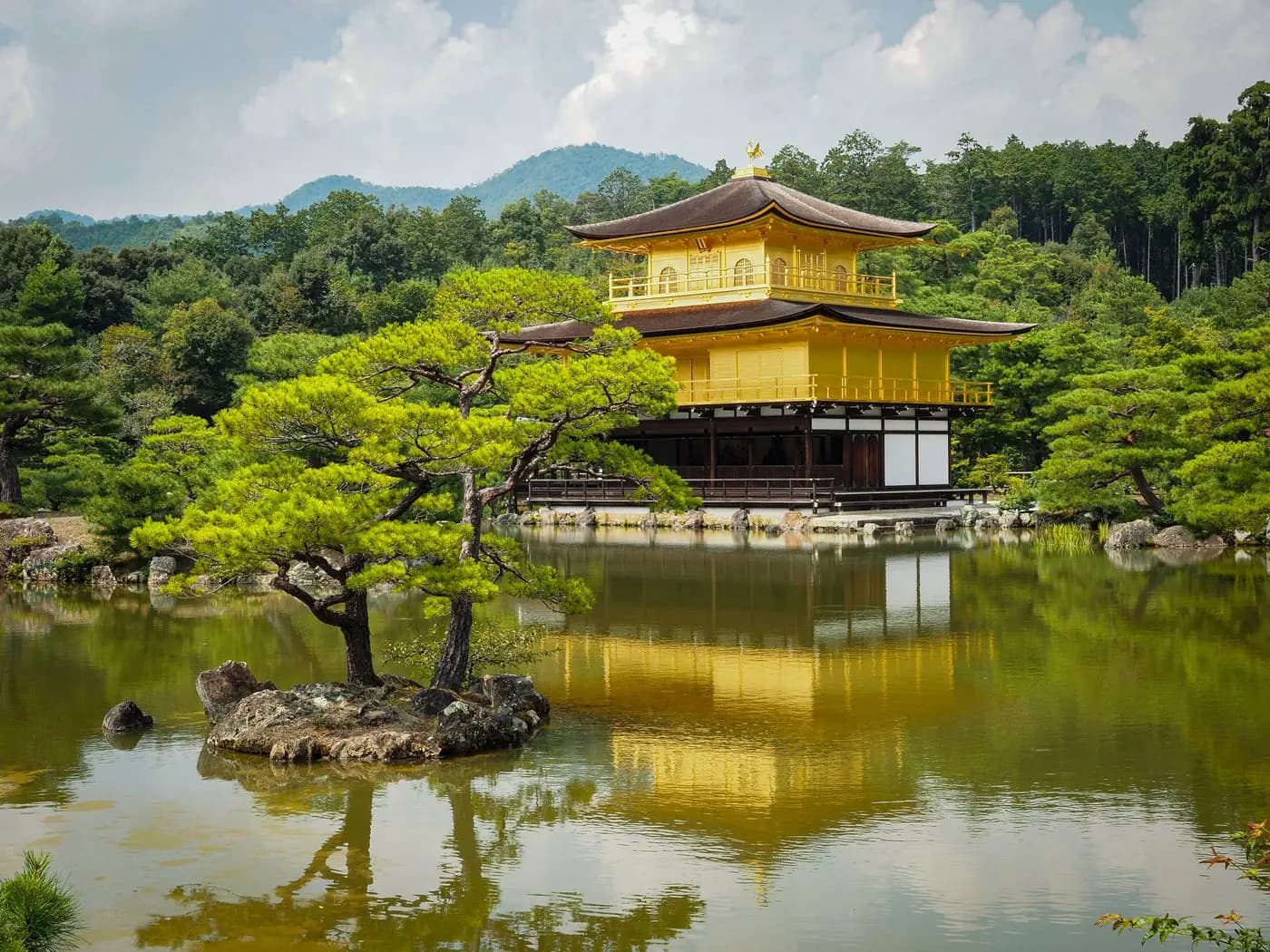
Where to eat and how to behave in Kyoto's temples
When it comes to food, Kyoto rewards those who book. A few ideas depending on the time of day:
- Breakfast: few places open before 8am; the convenience stores near Inari and Saga-Arashiyama stations will do before an early visit.
- Lunch: soba and udon in Higashiyama, yudofu (simmered tofu, a local specialty) around Nanzen-ji and Arashiyama, Zen vegetarian cuisine (shojin ryori) at Shigetsu, inside Tenryu-ji, by reservation.
- Dinner: the lanes of Pontocho and the Kiyamachi area for izakaya and skewers; Gion's kaiseki restaurants need booking several weeks ahead, and many decline guests without an introduction.
As for etiquette, this is what is expected in temples and shrines:
- Keep quiet and slow down in worship halls, and take your shoes off where indicated (clean socks spare a lot of embarrassment).
- Do not photograph inside halls where signs say so, which is common. Tripods, monopods and drones are banned at Kiyomizu-dera, as are wedding or cosplay photo shoots.
- At a shrine (Fushimi Inari, Yasaka): rinse your hands and mouth at the water pavilion, then, if you wish, make an offering, bow twice, clap twice and bow once.
- Stay on the paths: moss and gardens are fragile, and the wardens step in quickly.
- Carry cash: several temples, including Kiyomizu-dera, accept neither cards nor mobile payment at the ticket office.
- Do not block the way for a group photo; at Kiyomizu-dera, they are only allowed in designated spots.
Visiting Kyoto in 2 days with a group: what changes
The same itinerary works for a corporate group, but not at the same pace. With 20, 40 or 80 people, each stop takes 30 to 50% longer, and some constraints change the game.
- Coach or vans? Coaches can park at Kinkaku-ji (car park with bus spaces), at Tenryu-ji (¥1,000 per hour for a coach, no reservations) and near Ginkaku-ji, but not in the lanes of Higashiyama or Gion. The coach drops the group at the coach park near Kiyomizu-dera and the rest is on foot, with a pick-up at the bottom of Ninenzaka or near Yasaka Shrine. For Arashiyama at dawn, the JR Sagano train is often faster than a coach.
- Guides and sub-groups. Above 20 people, split the group into teams of 15 to 20, each with its own French- or English-speaking guide and earpieces. In the bamboo grove or on the Kiyomizu-dera stage, a group of 40 moving as a block stops everyone; two groups staggered by 15 minutes pass through without trouble.
- Tickets and group rules. Kinkaku-ji, Ginkaku-ji and Kiyomizu-dera offer no group rates. At Kinkaku-ji, parties of more than 30 are asked to enter as a group. At Kiyomizu-dera, group photos are allowed only in designated spots, after permission from the photo office in front of the Nio-mon gate.
- Meals. A 40-person lunch in Higashiyama needs booking weeks ahead; a private dinner in a Gion teahouse with maiko is arranged months in advance. Also plan for dietary needs (vegetarian, no pork, allergies), which are still often misunderstood locally.
- Seasons. In late March to early April (cherry blossom) and the second half of November (autumn leaves), everything is full and travel times double. July, with the Gion Matsuri, and August, at 35°C, call for air-conditioned breaks and plenty of water. December to February and June are calmer.
- Luggage. Forwarding suitcases from hotel to hotel (takkyubin service) keeps coaches and trains clear.
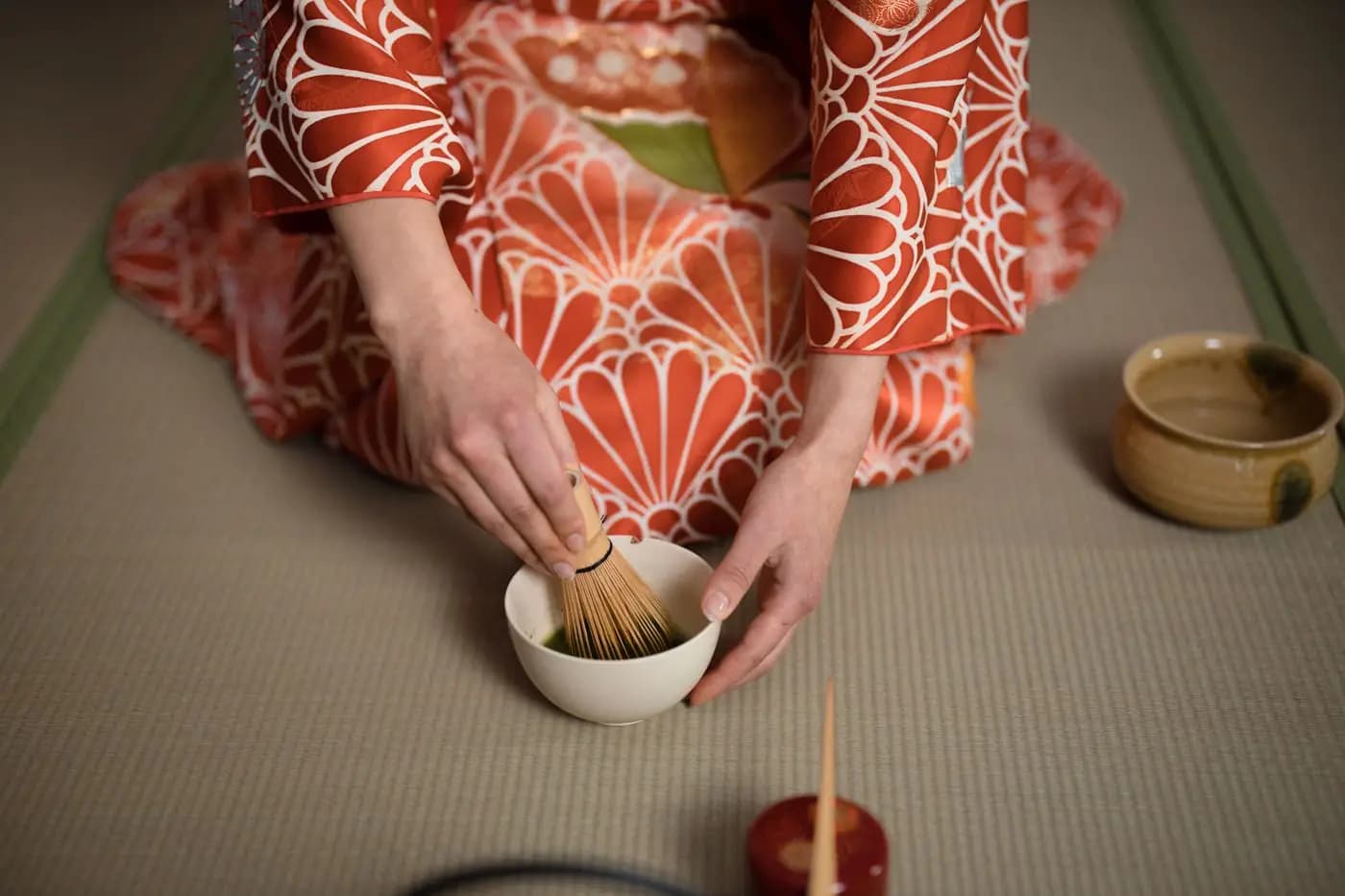
For groups, we often recommend keeping just one early "crowd" visit per day and adding a booked experience: meditation in a sub-temple, a tea ceremony, a craft workshop. This is the kind of program SHINOGI DMC runs in Kyoto, with guides, transport and bookings coordinated.
Frequently asked questions
What should I prioritize in Kyoto in 2 days?
Day 1: Fushimi Inari early, Kiyomizu-dera, Sannenzaka and Ninenzaka, Nishiki Market, then Gion in the evening. Day 2: Arashiyama bamboo grove and Tenryu-ji, Kinkaku-ji, then Ginkaku-ji and the Philosopher's Path.
What time should I go to Fushimi Inari to avoid crowds?
Before 8am. The shrine is free and open at all hours; at 6:30am the Senbon Torii are almost empty, whereas from 10am it becomes hard to move.
How much are Kyoto temple entrance fees?
For an adult: Kiyomizu-dera ¥500 (cash only), Kinkaku-ji ¥500, Ginkaku-ji ¥1,000, Tenryu-ji garden ¥500 (+¥300 for the buildings). Fushimi Inari and the Arashiyama bamboo grove are free.
Can you photograph geisha in Gion?
On public streets such as Hanamikoji-dori, street photography is tolerated, but you must not follow, stop or photograph a maiko at close range without her consent. The neighboring private alleys have been off limits to visitors since April 2024, with a posted ¥10,000 fine.
Should I take the bus or a taxi in Kyoto?
The bus (¥230, or the ¥1,100 Subway & Bus 1-Day Pass) works for one or two people outside rush hours. JR and Keihan trains are more reliable for Fushimi Inari and Arashiyama. For three or four people, taxis make sense on cross-town legs such as Arashiyama → Kinkaku-ji.
How do you organize a Kyoto visit for a group of 40?
Use a coach for the major sites with car parks (Kinkaku-ji, Tenryu-ji, Kiyomizu-dera) and walk in Higashiyama and Gion, split the group in two with a guide each, stagger the sub-groups by 15 minutes and book meals and experiences weeks or even months ahead.
Rédaction SHINOGI DMC · Updated
Sources
- Kiyomizu-dera — Horaires 2026 et accès (site officiel)
- Kiyomizu-dera — FAQ (groupes, photos de groupe)
- Shokoku-ji — Kinkaku-ji, horaires, tarifs et parking
- Shokoku-ji — Ginkaku-ji, horaires et tarifs
- Tenryu-ji — Admission and Access (site officiel)
- Tenryu-ji — Announcements 2026
- Fushimi Inari Taisha — Access (site officiel)
- JNTO — Fushimi Inari Taisha Shrine
- Kyoto City Official Travel Guide — Getting around Kyoto by bus
- Kyoto City Official Travel Guide — Limited express buses for sightseeing
- Kyoto City Bus & Subway — How to take the bus
- Marché de Nishiki — Site officiel de l'association
- Nikkei — Tarif de bus «市民優先価格 » prévu pour l'exercice 2027
- Kanpai — Visites au Japon (inspiration)