Which museums to visit in Tokyo, and in what order to book
Tokyo has several hundred museums, but for a four to six-day stay the shortlist comes quickly. Five places cover most interests: the digital art of teamLab (two separate venues), the Ghibli Museum in Mitaka, the Tokyo National Museum in Ueno, the Edo-Tokyo Museum in Ryogoku and the Mori Art Museum in Roppongi. The first two need booking; the other three can almost be improvised.
So the real challenge is not choosing, it is getting tickets. We suggest this order:
- Ghibli Museum: as soon as sales open, on the 10th of the month before your visit. No ticket, no entry, and weekends sell out within minutes in high season.
- teamLab: two to four weeks ahead, especially for a Saturday or during Japanese holidays (Golden Week in early May, Obon in mid-August, the year-end break).
- Special exhibitions at the National Museum or the Mori Art Museum: online a few days ahead, when a high-profile show is announced with timed slots.
- Permanent collections (National Museum, Edo-Tokyo): on the spot, no booking.
For scheduling, remember one simple rule: many public museums close on Mondays (National Museum, Edo-Tokyo), the Ghibli Museum closes on Tuesdays, and the Mori Art Museum shortens its hours on Tuesdays. Monday is therefore a good day for teamLab, which opens daily. When a Monday is a public holiday, public museums open and close the next day instead: check each venue's calendar before locking a schedule.
Then there are distances. Ueno and Ryogoku are close (15 minutes on the JR Sobu Line or by taxi), Roppongi and Azabudai Hills are neighbours (10 minutes on foot), Toyosu is on the bay, and Mitaka is in the west, 20 minutes from Shinjuku on the JR Chuo Rapid Line. Group by area: half a day for Ueno and Ryogoku, an evening in Roppongi and Azabudai, Toyosu with Odaiba or Toyosu Market, and Mitaka with Inokashira Park.
teamLab Planets or teamLab Borderless: which one, prices and tips
People often mix up the two. They are two different venues offering two different experiences.
teamLab Planets (Toyosu, one minute from Shin-Toyosu Station on the Yurikamome line) is a guided, linear route. You do it barefoot, and part of it is waded through knee-deep water with glowing koi projected on the surface. There is also a mirror-floored room where you sink into giant cushions, and a garden of hanging orchids. Allow 1.5 to 2 hours. Practical tips: trousers that roll up easily above the knee or shorts (shorts are lent on site), and avoid short skirts because of the mirrored floors. Free lockers for shoes and bags.
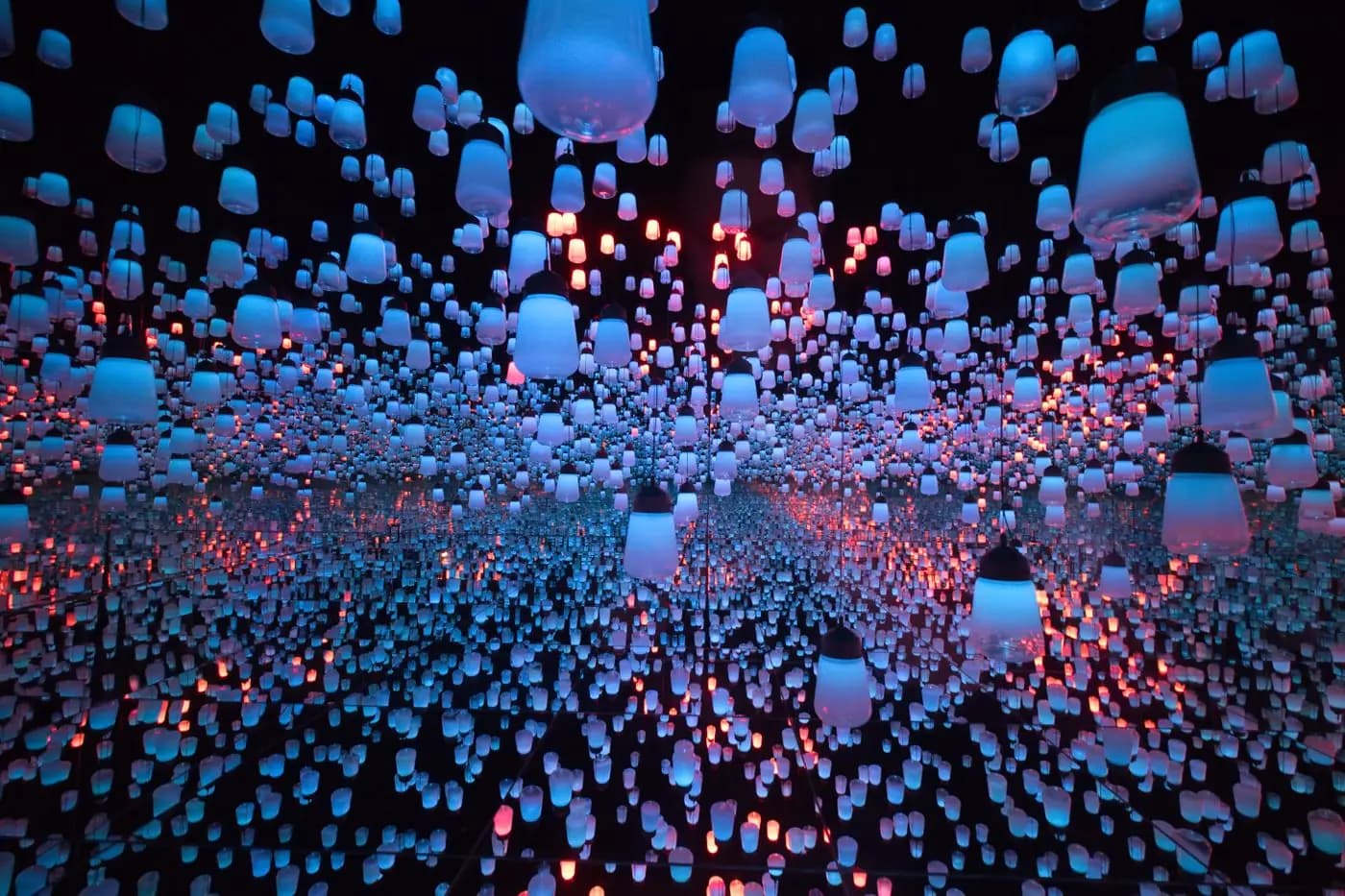
teamLab Borderless (Azabudai Hills, a few minutes from Kamiyacho Station on the Hibiya subway line) reopened in February 2024 in this new district after leaving Odaiba. There is no set route here: works move from room to room, and you deliberately get lost in a dark maze. The room of lamps that light up in sequence and the space of light bubbles are the most photographed. Allow 2 to 3 hours. The in-house tea room, where a digital flower blooms in your bowl, costs extra.
Which one? For a first encounter, or with participants who are uneasy in the dark, Planets is easier to follow. For curious visitors who like exploring without instructions, Borderless is richer. Doing both on the same day is possible but tiring; keep them apart.
Prices: both venues use dynamic pricing. For an adult in 2026, expect around ¥3,600 to ¥5,600 depending on venue and date (higher at weekends and during holidays), plus a surcharge if you buy on site. Tickets are tied to a time slot; arriving more than 30 minutes late can cost you entry. The first slot of the morning and the last of the evening are the quietest. Pushchairs and large bags are a nuisance at both: leave them at the hotel.
Ghibli Museum: booking rules, access and what to know
The Ghibli Museum in Mitaka is not a theme park: it is a modest-sized museum house designed by Hayao Miyazaki, devoted to animation and the studio's techniques. Inside are recreated workshops, sketches, a room on the principles of animation and an exclusive short film screened in the small Saturn Theater. On the roof, the robot soldier from *Castle in the Sky* stands guard in a garden. Allow 1.5 to 2 hours.
The booking rules are strict, and this is where many people fail:
- Sold online only through Lawson Ticket (English version available), on the 10th of each month at 10am Japan time, for the whole of the following month. 10am in Japan is 2am in London in summer, 1am in winter.
- Price: ¥1,000 per adult, ¥700 for ages 13 to 18, less for children.
- Fixed entry slots during the day; you must arrive within half an hour of the time chosen, then stay as long as you like.
- Named tickets: the holder's name is checked against ID at the entrance. Tickets resold by third parties are refused.
- Closed on Tuesdays, and during maintenance periods announced in advance.
We recommend creating your Lawson account and saving your card the day before, then logging in a few minutes before 10am. Weekend slots disappear in under fifteen minutes in high season; weekdays last longer.
Inside, photography is forbidden in the building (allowed outside, on the terrace and roof). The rule is respected and enforced.
Access: JR Mitaka Station (Chuo Line), then the yellow community bus in about 5 minutes, or a 15-minute walk along the Tamagawa Josui canal. You can also arrive through Inokashira Park from Kichijoji Station, a walk of around twenty minutes that makes a pleasant stroll before or after the visit.
Not to be confused: Ghibli Park is a different site, in Aichi Prefecture near Nagoya, with its own ticketing.
Tokyo National Museum in Ueno: what to see in two hours
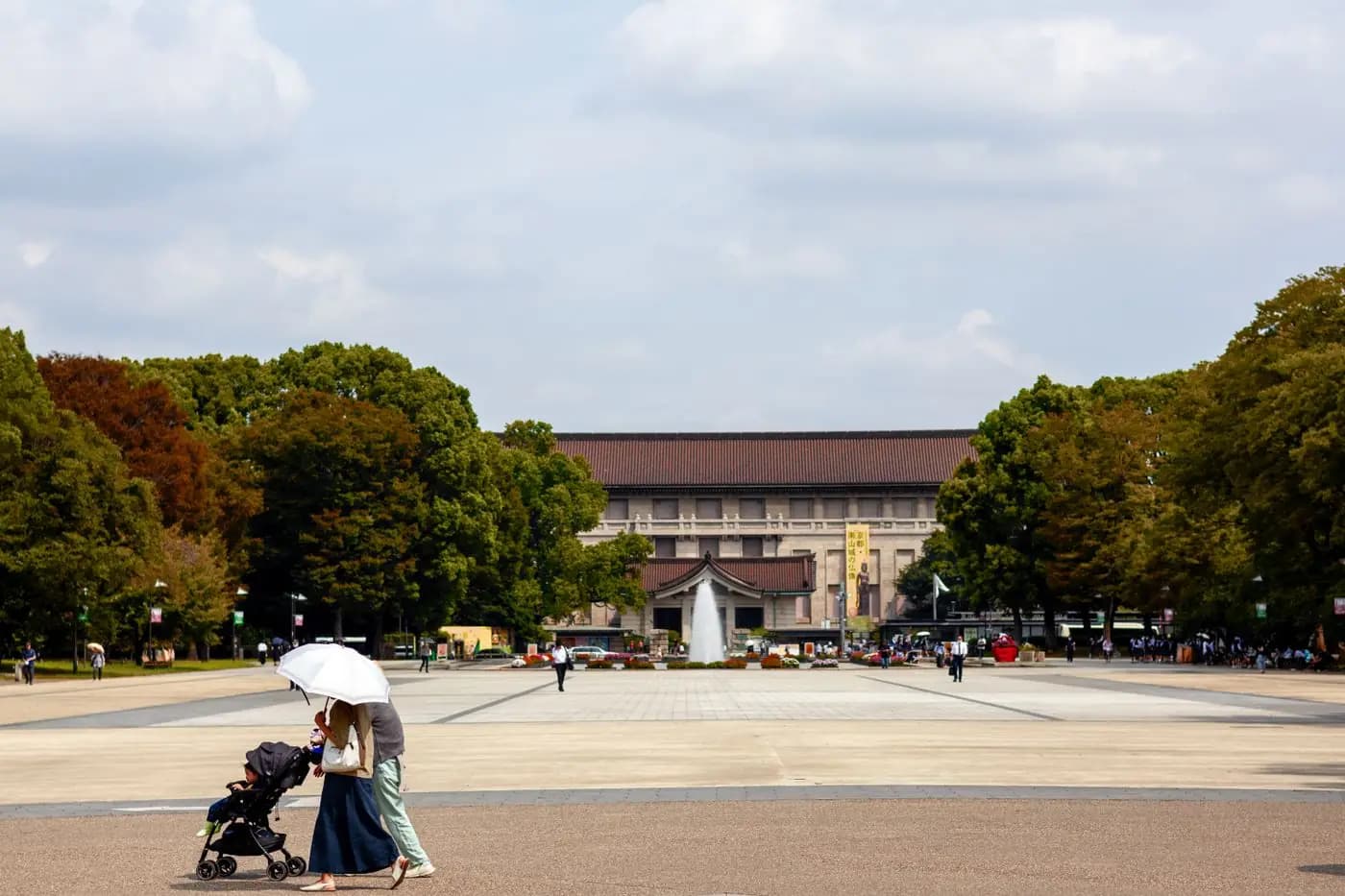
Japan's oldest museum (founded in 1872) sits at the back of Ueno Park, a 10-minute walk from JR Ueno Station. It is made up of several buildings; you cannot see everything in one visit, and that is not the point.
In two hours, we suggest this route:
- Honkan (main building, Japanese Gallery): a chronological loop on the 2nd floor from prehistory to the Edo period, with swords, samurai armour, painted screens, kimonos and ceramics. Fragile works rotate regularly, so what is on display changes from season to season.
- Gallery of Horyuji Treasures: a quiet modern building with dozens of small 7th-century Buddhist statues lined up in dark showcases. Few visitors, strong effect.
- If time allows, the Toyokan (Asian art outside Japan) or a break at the café overlooking the garden.
Fees and hours: ¥1,000 for the permanent collections, ¥500 for university students, free for under-18s and over-70s (with proof of age). Open 9:30am to 5pm, until 8pm on Fridays and Saturdays; closed on Mondays (or the following day if the Monday is a holiday). Major special exhibitions, often in the Heiseikan building, have their own, pricier tickets and sometimes timed slots.
Ueno Park groups other museums a few minutes away: the National Museum of Western Art (a Le Corbusier building on the UNESCO list, with its Rodin collection and French painters), the Tokyo Metropolitan Art Museum and the National Museum of Nature and Science. European visitors enjoy the Matsukata collection at the Western Art museum, but Ueno is first and foremost about Japanese art.
Avoid: chaining three Ueno museums in one day. After four hours of galleries, attention drops, especially in a group.
Edo-Tokyo Museum: 2026 reopening and visiting Ryogoku
Closed since April 2022 for a complete renovation, the Edo-Tokyo Museum in Ryogoku reopened on March 31, 2026. That is good news, because it is the museum that best explains how a fishing village became, in four centuries, the world's largest metropolis.
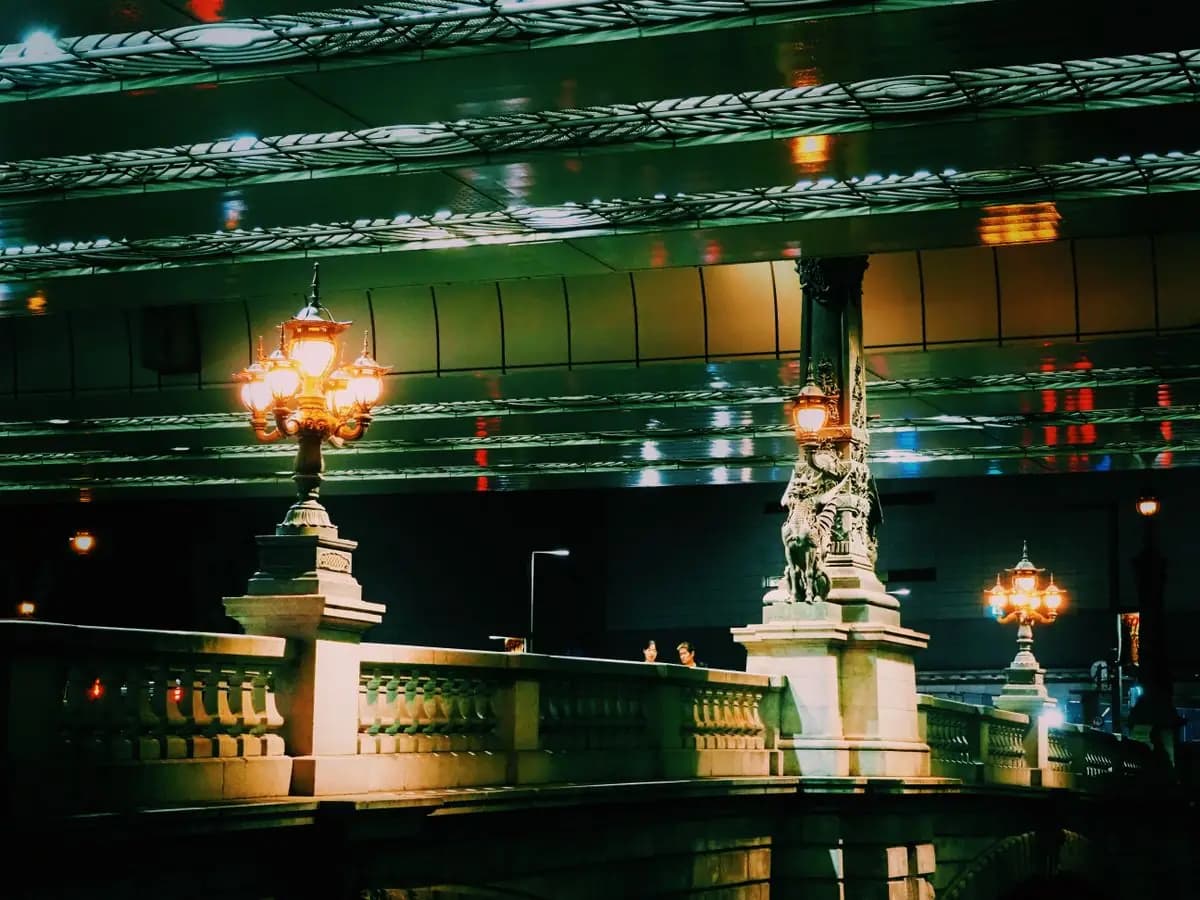
The building, recognisable by its raised silhouette right next to the Kokugikan (the sumo hall), houses a permanent exhibition on two levels. You enter by crossing a full-size replica of half of the Nihonbashi bridge, then discover the city of Edo through highly detailed models (samurai districts, merchant streets, kabuki theatre), before moving on to Tokyo: the Meiji era, the Great Kanto Earthquake of 1923, the war, the 1964 Olympics. The renovation modernised the lighting, multilingual explanations and accessibility.
Practical details:
- Fee: ¥800 for the permanent exhibition (adult) since the reopening; special exhibitions are charged separately.
- Hours: 9:30am–5:30pm, until 7:30pm on Saturdays; closed on Mondays.
- Access: JR Ryogoku Station (Sobu Line), west exit, 3 minutes away, or Ryogoku Station on the Oedo subway line, directly connected.
- Time needed: 1.5 to 2 hours for the permanent exhibition.
Hours and fees changed with the reopening; check the official page before visiting, particularly during the large opening exhibitions.
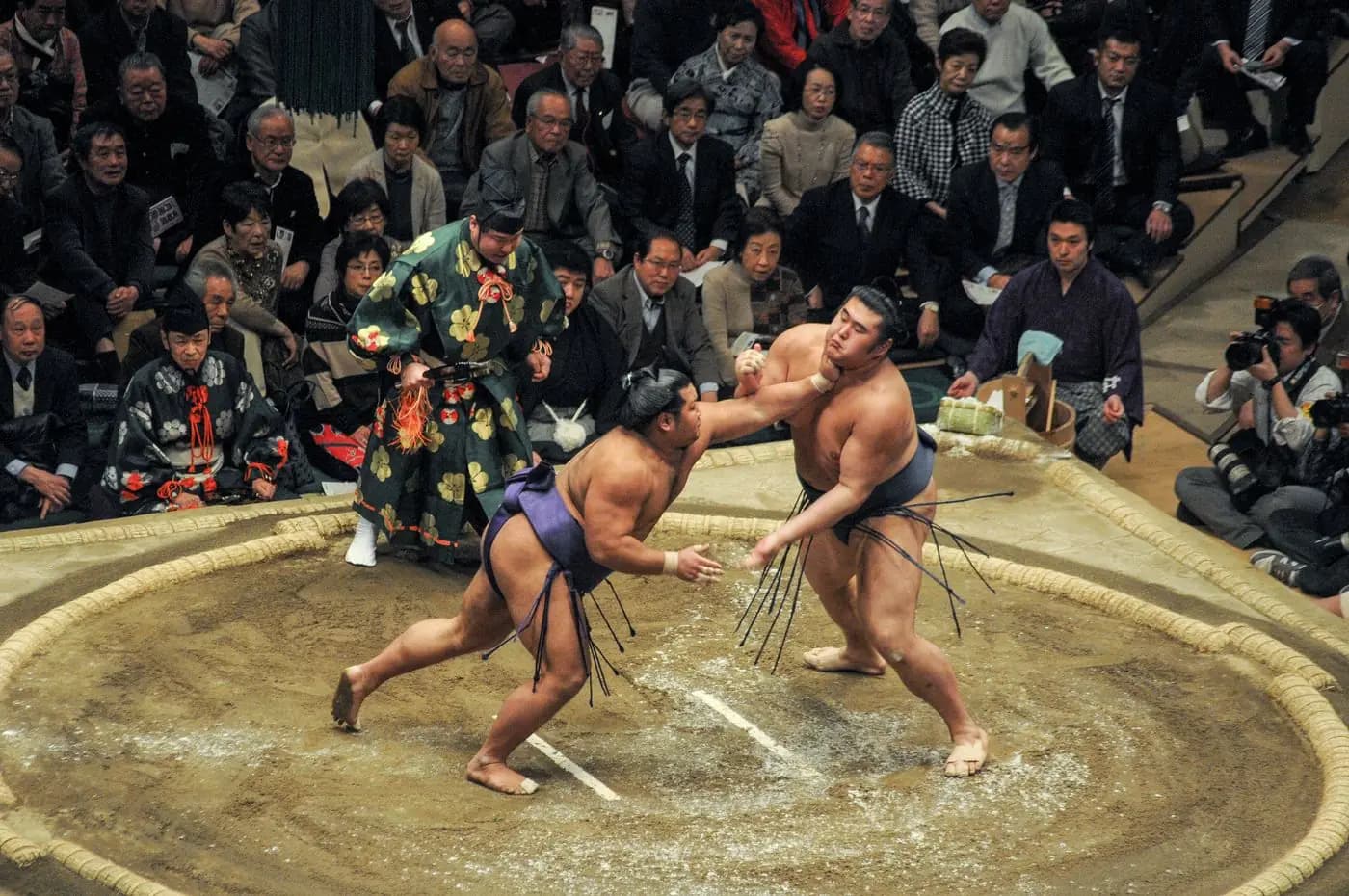
The visit combines easily: the Sumida Hokusai Museum is 10 minutes on foot, and if your stay coincides with a Tokyo sumo tournament (January, May and September), the Kokugikan is next door. Outside tournaments, the area is a good place for a lunch of chanko-nabe, the wrestlers' stew.
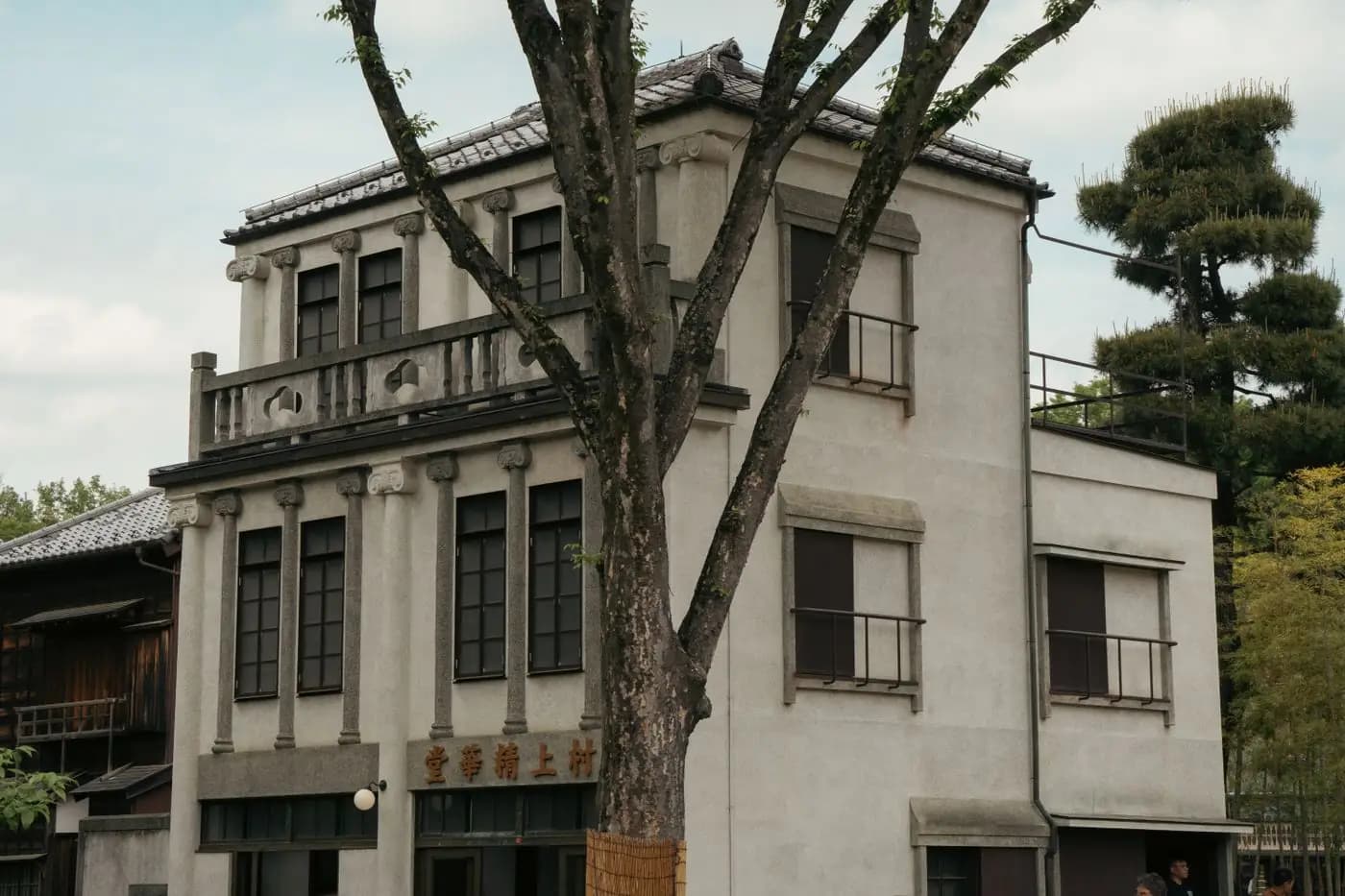
Those interested in architecture can also head to the Edo-Tokyo Open Air Architectural Museum, the annex in Koganei, western Tokyo: some thirty old buildings rebuilt in a park, including houses, shops and a public bath. It is further out, but very evocative.
Mori Art Museum and other contemporary art venues in Tokyo
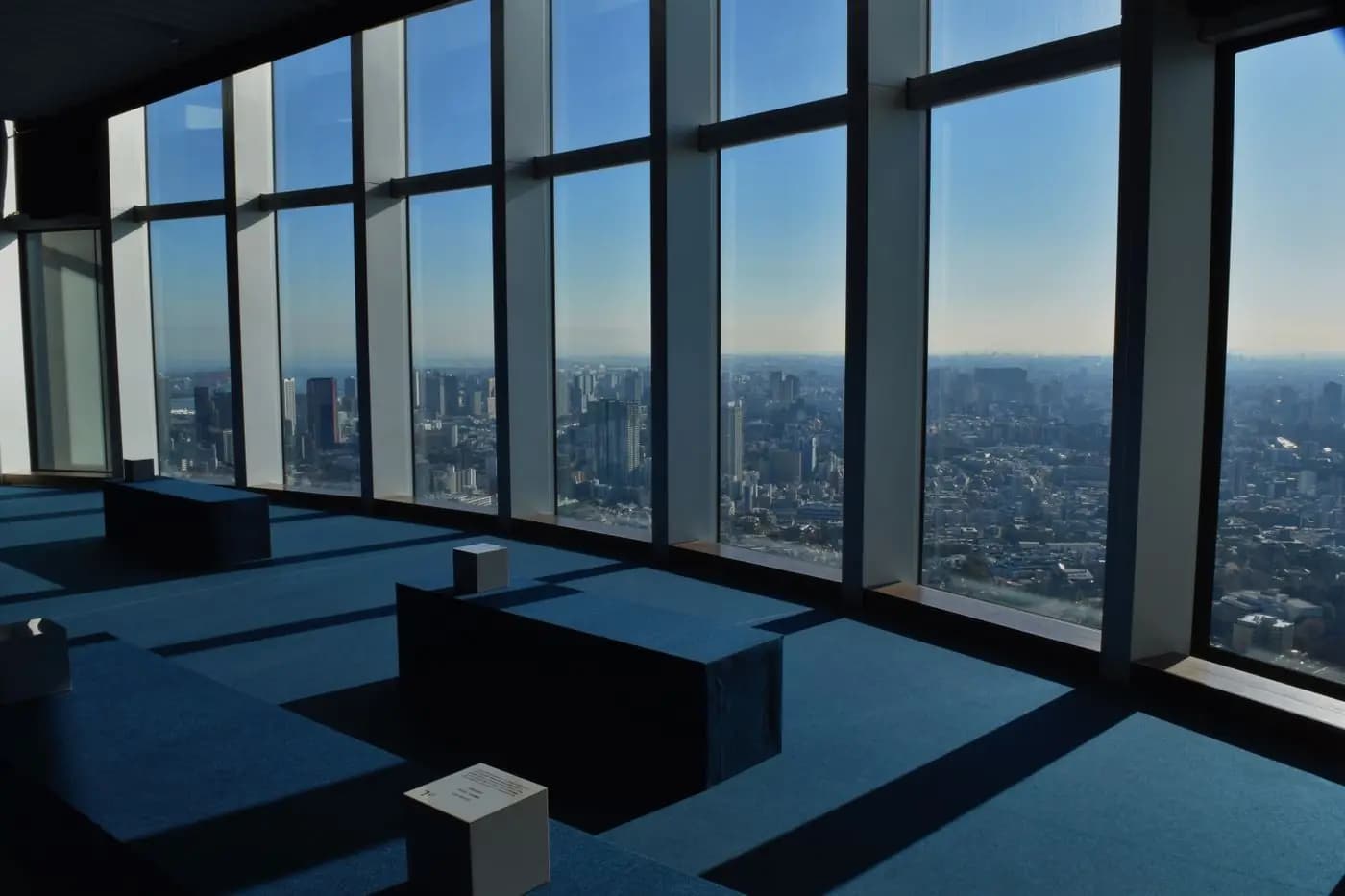
The Mori Art Museum occupies the 53rd floor of Mori Tower in Roppongi Hills. It has no permanent collection on continuous display: it runs a sequence of major contemporary art exhibitions, often Asian, lasting three to four months each. Its big advantage is the timetable: open until 10pm most days (earlier closing on Tuesdays). The ticket usually includes the Tokyo City View observation deck on the 52nd floor, with a 360° view over the city and Tokyo Tower.
Expect around ¥2,000 to ¥2,500 depending on the exhibition and day, a little less when booked online. A supplement gives access, weather permitting, to the open-air rooftop deck. We suggest arriving around 7pm: the afternoon crowds have left, the city lights up, and you can continue with dinner in Roppongi or Azabudai Hills. Blockbuster exhibitions sometimes have timed slots; buy the day before to be safe.
In the same area, less than 15 minutes on foot:
- The National Art Center, Tokyo: a large undulating building by Kisho Kurokawa, with no permanent collection and major temporary exhibitions. The building alone is worth the detour.
- Suntory Museum of Art (Tokyo Midtown): Japanese decorative arts, lacquer, glass and ceramics, in a very calm setting.
- 21_21 Design Sight: a small design venue by Tadao Ando, ideal for an hour between meetings.
Together with the Mori, these three museums form what Tokyo calls the "Art Triangle Roppongi". For corporate groups it is the simplest area: hotels, restaurants and reception venues are within walking distance, with no need to get back on a coach.
For digital art beyond teamLab, the scene changes fast: temporary immersive exhibitions, installations in large shopping complexes, winter light-projection festivals. Check the programme a month before departure rather than relying on last year's lists.
How much time and budget for Tokyo's museums
To give concrete benchmarks, here is what each visit costs and takes, including transport from central Tokyo (Tokyo Station, Ginza or Shinjuku):
- teamLab Planets: 3 hours in total (1.5 to 2 hours on site + travel). Around ¥3,600 to ¥4,500 depending on the date.
- teamLab Borderless: 3.5 hours in total. Up to ¥5,600 on high-demand days.
- Ghibli Museum: half a day with Inokashira Park. ¥1,000, plus around ¥400 to ¥600 return by train from Shinjuku.
- Tokyo National Museum: 2 to 3 hours. ¥1,000, more for a special exhibition.
- Edo-Tokyo Museum: 2 hours, plus Ryogoku. ¥800.
- Mori Art Museum + Tokyo City View: 1.5 to 2 hours in the evening. Around ¥2,000 to ¥2,500.
For a five-day stay, a realistic plan includes three or four of these, not six. A balanced example: teamLab on Monday, Ueno and Edo-Tokyo on Tuesday, Ghibli on Wednesday morning, the Mori Art Museum on a free evening.
A few tips to limit fatigue:
- IC card (Suica or Pasmo, also on your phone) for every journey: no queuing at ticket machines.
- Lockers: big stations have coin lockers, but those at teamLab and the museums are for same-day visitors. Avoid turning up with suitcases.
- Meals: museum cafés are small and packed at noon. Eat at 11:30am or after 1:30pm.
- Passes: some Tokyo sightseeing passes include museums. They only pay off if you visit many paid sites in a few days; do the maths with the exact list of included venues before buying.
Worth knowing for families: under-18s get in free at the National Museum and several public museums, whereas teamLab and Ghibli charge child fares from age 4.
Visiting Tokyo's museums with a group: organisation and bookings
With 20, 50 or 150 people, the same museums require different logistics. What really matters:
- teamLab has a dedicated group ticket desk and offers corporate buyouts outside public opening hours. It is one of the few cultural activities in Tokyo that works as well with 30 people as with 200, provided arrivals are staggered in waves 15 to 20 minutes apart. Bring towels and set a clear meeting point at the Planets exit (people come out with wet feet).
- The Ghibli Museum is not designed for groups: named tickets bought online, small rooms, no guided tours. Beyond 10 to 15 people, offer it as a free option for fans, with coordinated individual purchases on the day sales open.
- Tokyo National Museum accepts groups at a reduced rate from 20 people. A private guide makes a real difference in the Honkan: without context, swords and screens remain silent. Some buildings can be hired in the evening for receptions, on request well in advance.
- Mori Art Museum: easy in the evening, with the option of moving on to a cocktail in the event spaces of Roppongi Hills.
As for transport, tour coaches park easily in Toyosu and Ueno, far less so in Roppongi or Mitaka, where it is better to drop the group off and send the coach away. The subway remains the fastest option for accompanied sub-groups of 15.
The best advice: do not impose the same museum on everyone. Offering two options the same afternoon, one immersive (teamLab), the other cultural (Ueno with a guide), then bringing the group together for dinner, gets far better feedback than a single visit for 80 people. This is the kind of à la carte programme SHINOGI DMC builds for seminars and incentive trips in Tokyo, with coordinated ticketing, guides and transfers.
Frequently asked questions
How do I get tickets for the Ghibli Museum?
Only online through Lawson Ticket, on the 10th of each month at 10am Japan time, for the following month. ¥1,000 per adult, named ticket, ID checked at the entrance. There are no sales on site.
teamLab Planets or Borderless, which is better?
Planets (Toyosu) is a linear barefoot route, partly through water, lasting about 1.5 hours; Borderless (Azabudai Hills) is a maze with no fixed route, richer, taking 2 to 3 hours. For a first visit or a group, Planets is simpler.
How much does teamLab cost in Tokyo in 2026?
Prices are dynamic: around ¥3,600 to ¥5,600 per adult depending on venue and date, higher at weekends and in holidays, with a surcharge for buying on site.
Is the Edo-Tokyo Museum open?
Yes. It reopened on March 31, 2026 after works that began in 2022. The permanent exhibition costs ¥800; the museum is closed on Mondays.
Which Tokyo museums are open on Mondays?
teamLab Planets and Borderless open daily, as does the Mori Art Museum. The Ghibli Museum opens on Mondays (it closes on Tuesdays). The National Museum and the Edo-Tokyo Museum close on Mondays, except on public holidays.
Can a large corporate group visit teamLab?
Yes. teamLab has group ticketing and accepts buyouts outside public hours. With more than 50 people, entries are staggered in waves 15 to 20 minutes apart; SHINOGI DMC can coordinate tickets, transfers and on-site hosting.
Rédaction SHINOGI DMC · Updated
Sources
- teamLab Planets TOKYO — site officiel (billets, conseils)
- teamLab Borderless TOKYO, Azabudai Hills — site officiel
- Ghibli Museum, Mitaka — site officiel (tickets)
- Lawson Ticket — Ghibli Museum (vente en ligne)
- Tokyo National Museum — FAQ, horaires et tarifs
- Tokyo Metropolitan Government — Edo-Tokyo Museum reopening on March 31, 2026
- Edo-Tokyo Museum — site officiel
- Mori Art Museum — site officiel
- GO TOKYO (office du tourisme de Tokyo) — Edo-Tokyo Museum
- JNTO — Japan Travel (préparer son voyage)