- Duration
- 2 to 2.5 hours
- Group size
- 4–40 pax
- Cities
- Tokyo
- Indicative budget
- From ¥34,500 per person
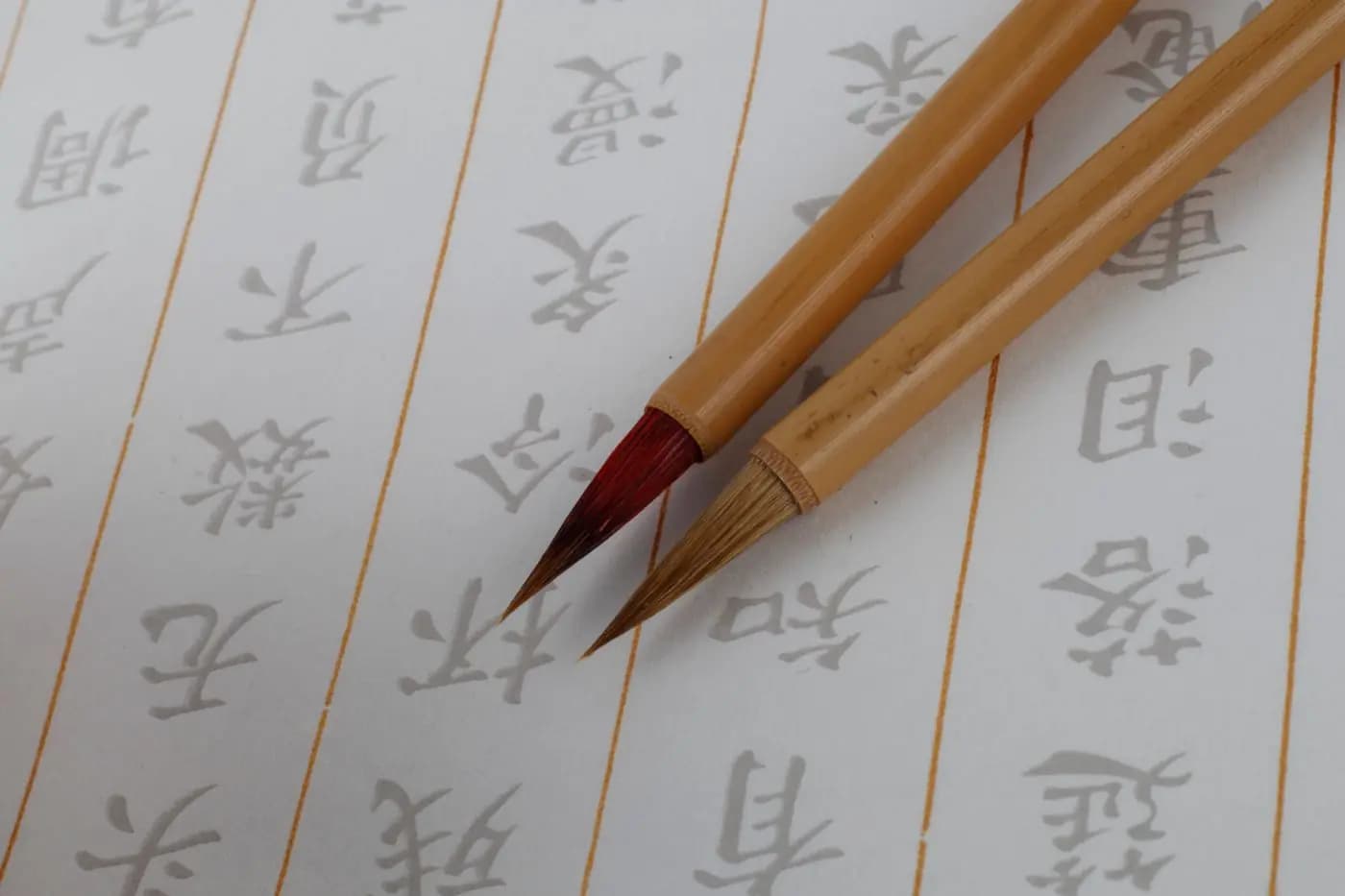
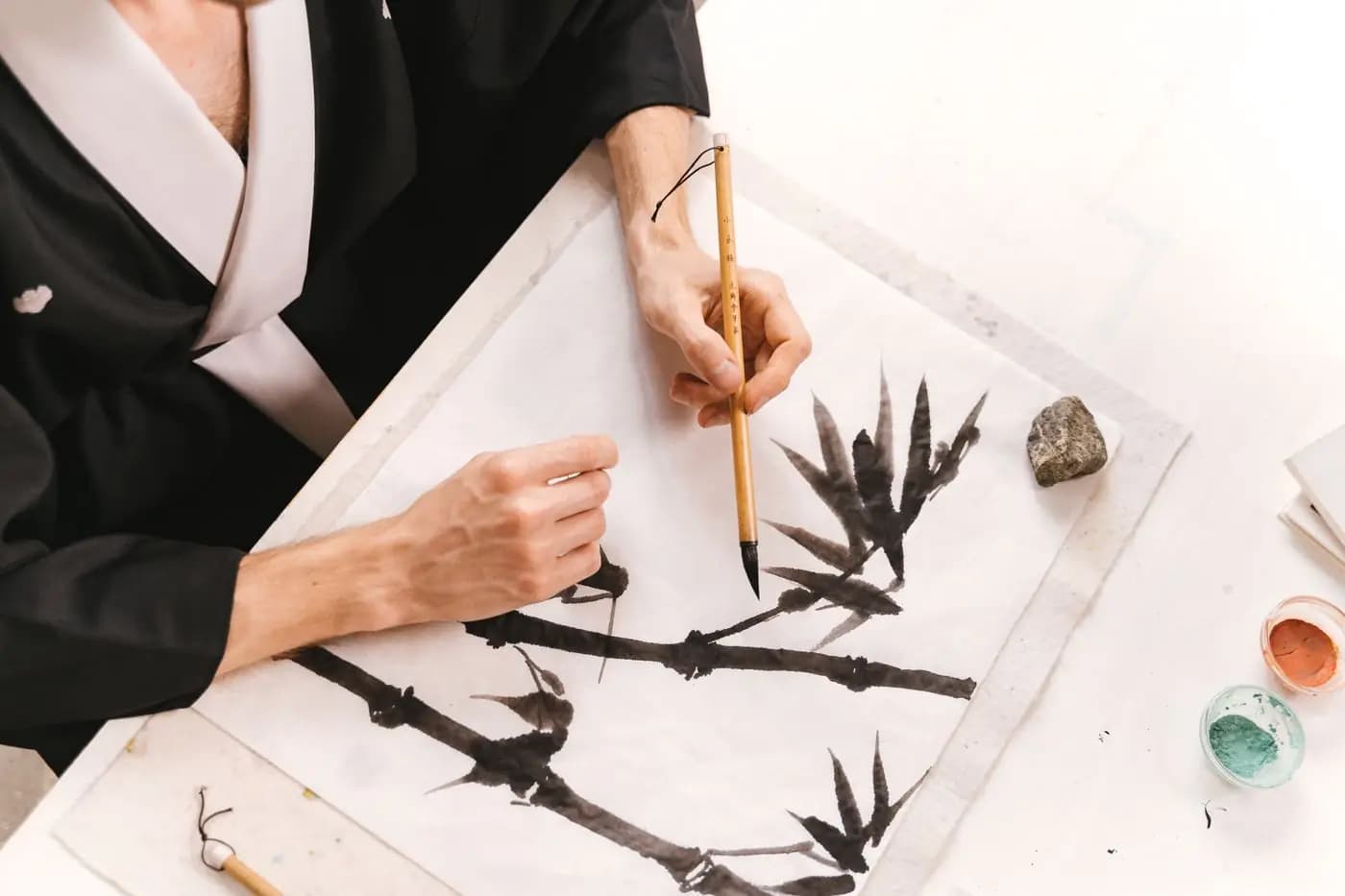
The artist introduces the materials (brushes, ink stick, inkstone, washi paper) and shows how a single brush can produce several shades of gray by balancing water and ink. Participants practice the classical sumi-e motifs: bamboo stems and leaves, orchid, plum branch, chrysanthemum. Each then chooses a subject, often linked to the season, and paints a finished piece on quality board (shikishi), which they can sign with a seal. The artist moves from table to table to correct brush grip and composition. An interpreter translates throughout.
Sumi-e forces you to look before you paint and to accept the first stroke: once the paper absorbs the ink, it cannot be reworked. For a team, this leads to a practical debrief on preparation, economy of means and dealing with the unexpected. As an option, we offer a collective piece: a large landscape in which each sub-group paints one plane, distant mountains, pines, a river in the foreground, coordinating ink intensity so the whole holds together. The finished panel can be framed and shipped to the company's offices.
Ink painting came to Japan from China with Zen monks and flourished in the 14th and 15th centuries, particularly in monasteries. It shares its tools with calligraphy but aims to depict a subject in a few strokes rather than write characters. Seated and with no prerequisites, the workshop fits into a seminar afternoon or a partner program.
Objectives
- Build observation and focus before taking action
- Practice team coordination through the collective painting
- Leave with a personal, signed piece ready to display
How it works
- 1Room set-up before the group arrives: protected tables and a full kit for each participant.
- 2Introduction to the materials and demonstration of ink shading by the artist, with interpretation.
- 3Practice on the classical motifs: bamboo, orchid, plum, chrysanthemum.
- 4A personal painting on shikishi board, signed with a seal.
- 5Optional: a large collective landscape painted by sub-groups, framed and shipped to the company.
Good to know
- Ink stains clothing, so wear something simple; aprons are provided.
- About 15 to 20 participants per artist; larger groups use several artists in one room or rotations.
- Seated at tables, in a hotel function room, meeting room or private Japanese-style space.
- Shikishi boards are rigid and travel easily in the protective card sleeve provided.
- Customizable theme: a motif linked to the seminar location, the season or a company value.
Indicative budget
From ¥34,500 per person (private session, small-group basis). Lower group rates quoted according to numbers; framed collective piece, interpreter and transfers optional.
Frequently asked questions
Do participants need to know how to draw?
No. Sumi-e relies on a few repeated brush movements, which the artist breaks down step by step. Classical motifs such as bamboo are chosen precisely because they are quick to learn and give a clear result in a first session.
How is it different from a calligraphy workshop?
The tools are the same, but sumi-e means painting a subject (plant, landscape, animal) using shades of ink, whereas calligraphy writes characters. The two combine well: a calligraphed kanji can accompany a painting.
How does the collective painting work?
The artist sketches the layout of a large landscape and assigns one plane to each sub-group. Teams agree on ink intensity and transitions, then paint in turn. The piece can be framed and shipped to the company's offices.
How much time should we allow in the program?
Two hours for the individual workshop, two and a half with the collective piece. Add fifteen minutes for set-up, which can take place during a work session in a neighboring room.