What is Edo kiriko, Tokyo's cut glass?
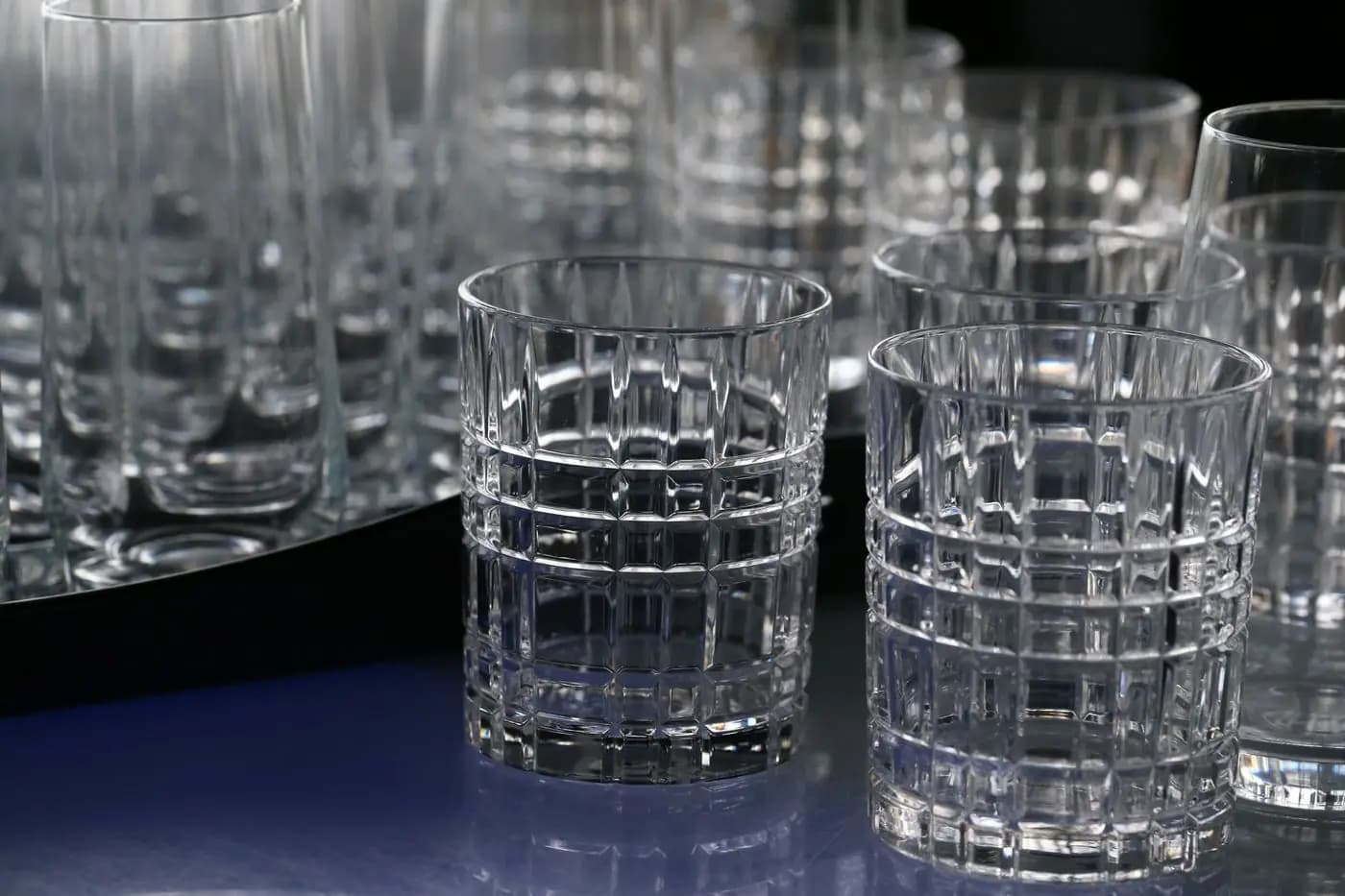
Edo kiriko is wheel-cut glass decorated with geometric patterns. Its official history starts in 1834, when Kagaya Kyubei, a glassware merchant in Edo's Odenmacho district, engraved the surface of a glass with emery. In the Meiji era, in 1881, the government brought in an English cutter, Emanuel Hauptmann, to train Japanese craftsmen in European techniques: wheel cutting took hold, and workshops settled in the eastern districts of Tokyo along the Sumida River.
Do not confuse it with Satsuma kiriko from Kagoshima, born around the same time: Satsuma uses a thick color layer cut into a gradient ("bokashi"), whereas Edo kiriko plays on a thin color layer and sharp, high-contrast edges.
The patterns are named after everyday life:
- nanako ("fish roe"): a tight grid that makes the surface sparkle;
- kiku-tsunagi (linked chrysanthemums);
- kagome (basket weave), yarai (bamboo fence), asanoha (hemp leaf).
Edo kiriko has been recognized as a traditional craft by Tokyo since 1985 and by the national government (Ministry of Economy) since 2002. "Edo kiriko" is also a regional collective trademark managed by the craftsmen's cooperative, which guarantees that a piece was cut by hand in the Tokyo area.
How an Edo kiriko glass is cut: the steps
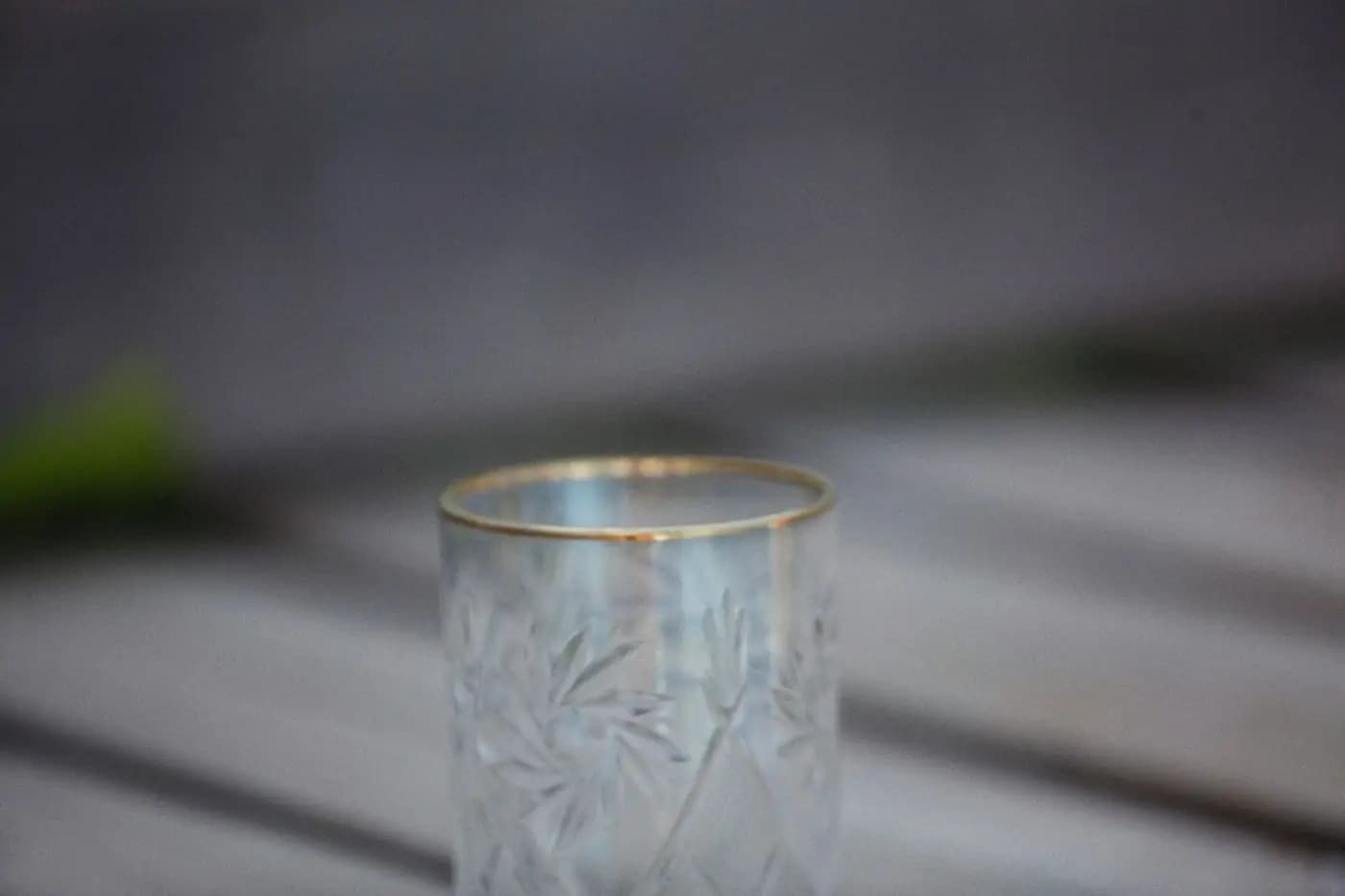
The starting blank is often cased glass ("iro-kise"): a thin layer of colored glass, most often cobalt blue or copper red, over clear glass. Cutting through the colored layer reveals the clear glass beneath, which creates the typical contrast. The craftsman works without a template, from just a few guide lines.
- Warituke (marking): horizontal and vertical lines are drawn in marker to divide the surface.
- Arazuri (rough cutting): with a water-cooled diamond wheel, the main cuts are made. This step decides the pattern: a mistake cannot be undone.
- Sanbangake and ishikake: finer and finer wheels smooth the cuts and add detail.
- Migaki (polishing): with a wooden wheel, brushes and polishing powder, the cut areas regain their transparency. Some workshops use acid polishing, which is faster; fully manual polishing gives crisper edges, and you can tell from the price.
A sake glass by a certified craftsman takes several hours of work. Prices for craftsman pieces run from about ¥10,000 to ¥50,000, with large bowls and award-winning pieces going well beyond. "Kiriko-style" glasses at a few thousand yen are often machine-cut or imported: look for the cooperative's label and the craftsman's name.
Where to do an Edo kiriko workshop in Tokyo: prices and booking
An introductory session always follows the same pattern: choose a glass (often blue or red cased glass), mark the lines, then cut with a water-cooled diamond wheel while a craftsman guides your hand. There is no full polishing; the glass comes out slightly frosted in the cuts, which is normal. It takes 60 to 90 minutes and usually costs between ¥3,500 and ¥6,000, glass included.
The main addresses, by district:
- Sumida (Kinshicho, Oshiage): the Sumida Edo Kiriko Kan, a workshop-shop 6 minutes' walk from Kinshicho Station, open 10am–5pm, with a free gallery and workshops by reservation (¥4,950 for the introductory session). Note that it closes on Mondays, Sundays and public holidays.
- Taito (Asakusa): several workshops a few minutes from Sensoji offer 60 to 90-minute classes, some in the evening and at weekends, easy to combine with a temple visit.
- Koto (Kameido) and Edogawa (Hirai): more low-key craftsmen's workshops, often working with 2 to 6 people at a time.
Good to know:
- most workshops have 8 to 15 stations; beyond that, you must split the group;
- the minimum age is around 8 to 10 depending on the workshop;
- you wear an apron and water splashes: avoid silk and suede shoes;
- online booking is the norm, often with prepayment; late cancellations are charged.
Sumida: the craftsmen's "small museums" and the monozukuri spirit
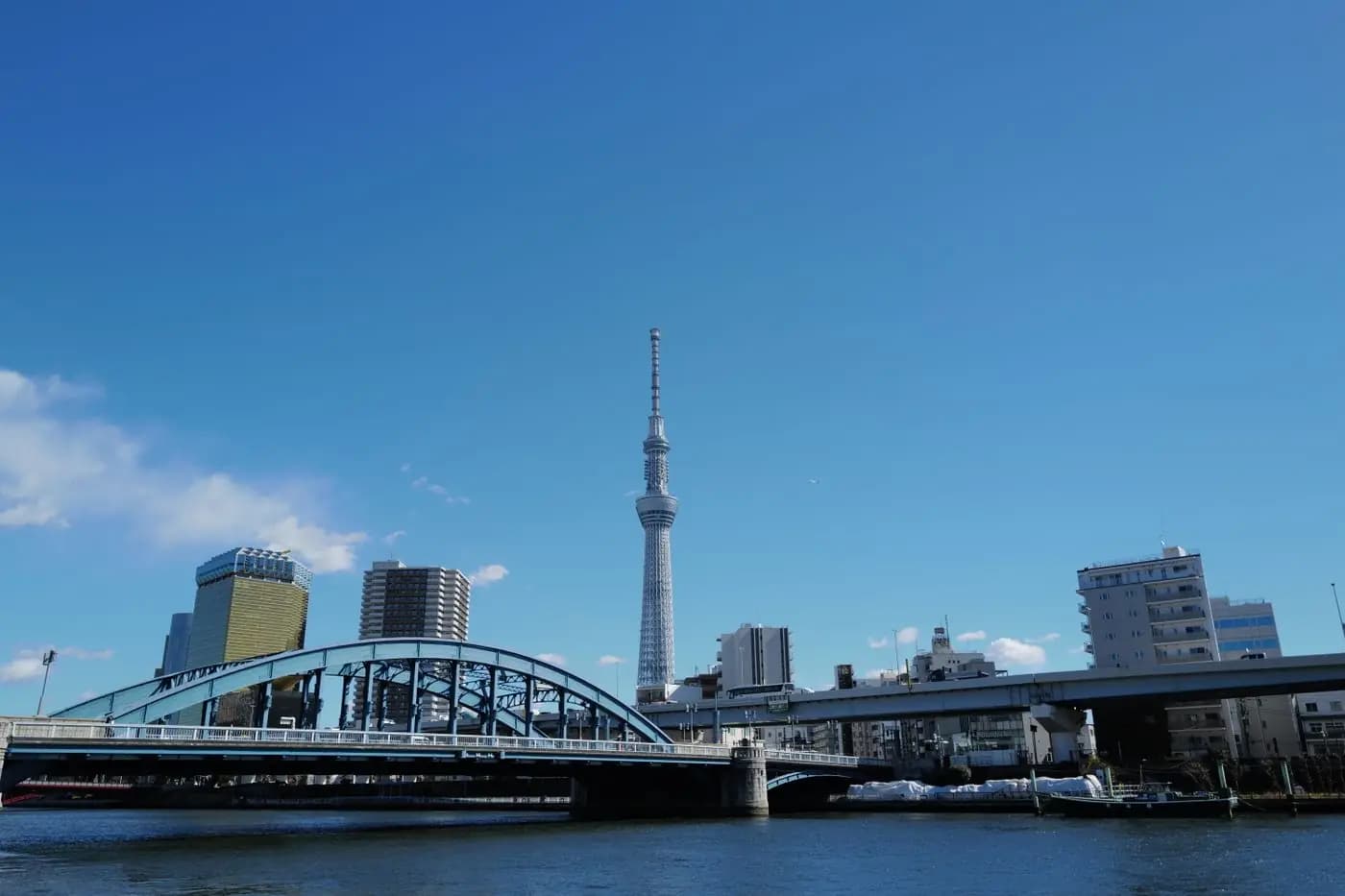
Sumida ward, at the foot of the Tokyo Skytree, is the historic heart of Tokyo's small factories: glass, soap, shoes, textiles, folding screens, lanterns. In 1985 the ward launched the "3M" movement: Museum (small museums opened in workshops or craftsmen's homes), Meister (recognized master craftsmen) and Manufacturing shop (workshop-stores where you watch the work and buy).
There are about twenty Sumida Small Museums today. Each fits in one room, sometimes two: a tabi (Japanese split-toe socks) museum, collections of traditional cake molds, printing type, tin toys, folding screens. Opening hours follow the workshop's and are often irregular: many open only on certain days, and it is polite to call ahead before coming with a group.
To combine nearby:
- the Sumida Hokusai Museum in Ryogoku, dedicated to the painter born in the ward;
- the Ryogoku area and its sumo stables;
- a Sumida River cruise between Asakusa and Hama-rikyu;
- a stop in Mukojima, a district of teahouses and traditional confectioners.
For a corporate group, Sumida tells a powerful story: that of a network of small firms that survived the 1945 bombings, offshoring and the lack of successors by opening up to the public.
Kappabashi, fans and tenugui: Edo crafts in Taito
Across the Sumida, Taito ward (Ueno, Asakusa) is where the shops are. Three stops are worth the detour.
Kappabashi Dougu-gai. Between Ueno and Asakusa, this street of about 800 meters gathers some 170 shops for restaurant professionals: knives, ceramics, lacquerware, red lanterns, shop signs and the famous replica food displays (sampuru). Several knife shops offer sharpening and engraving of your name in kanji, and a few sampuru workshops run one-hour introductory sessions. Most shops open around 9 or 10am and close around 5pm; many are closed on Sundays. In early October, around the 9th ("tool day"), the district holds its annual festival with special offers: October 6–12 in 2026.
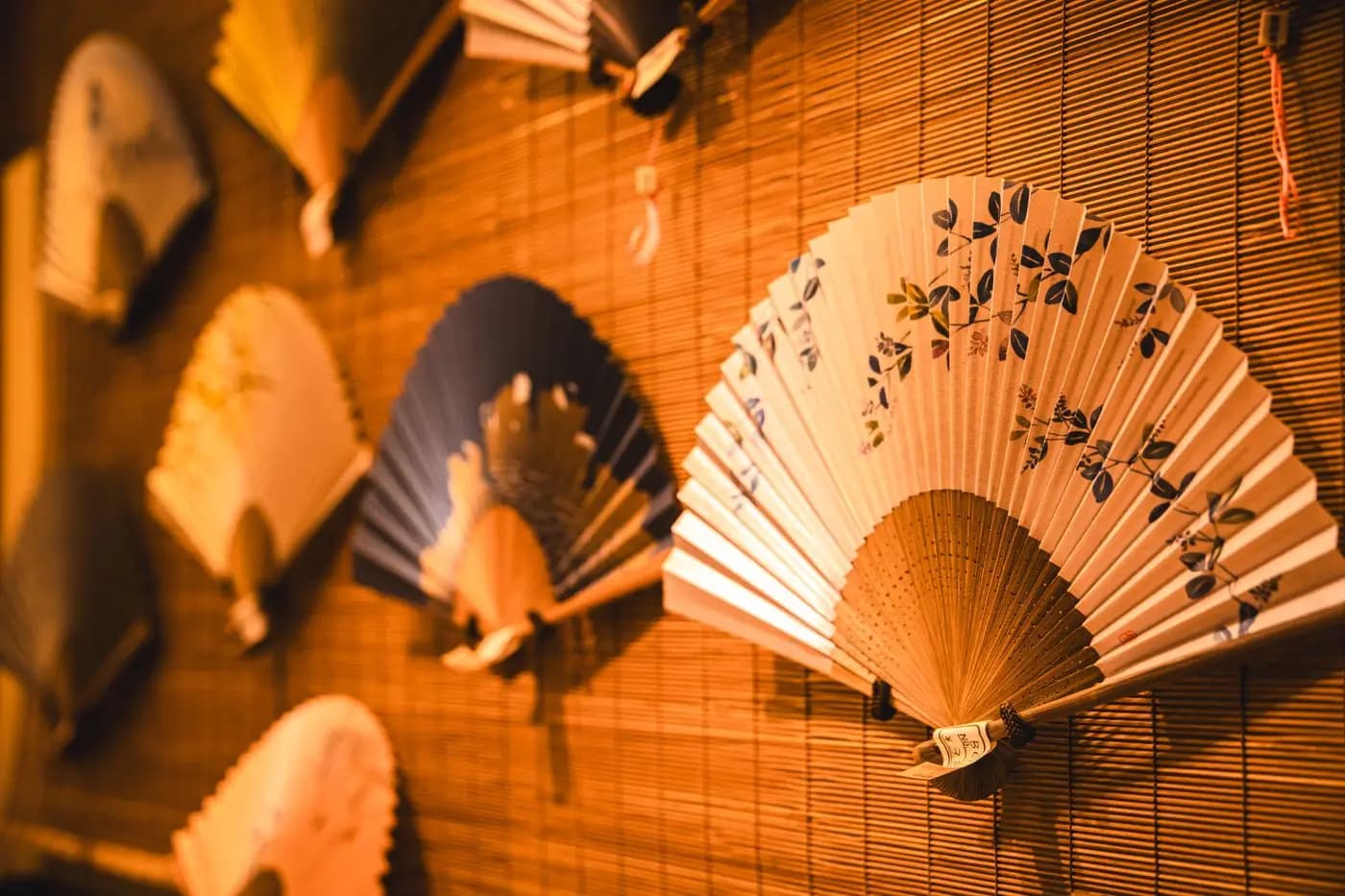
Edo fans (Edo sensu). On Nakamise street in front of Sensoji, fan makers established since the Meiji era sell hand-painted sensu, from a few thousand to several tens of thousands of yen. An Edo fan is recognizable by its small number of ribs and its understated elegance.
Tenugui. These cotton cloths of about 90 × 35 cm are dyed with the chusen technique, in which dye passes through a stack of folded fabric: both sides have the same color. Asakusa has several specialist shops; expect ¥1,000 to ¥2,500 each. They are the ideal light gift.
To see all the Edo crafts in one place, the Edo Taito Traditional Crafts Center, a few minutes from Sensoji, displays about 250 pieces from nearly 50 crafts (bamboo blinds, paulownia chests, fine joinery) free of charge, and hosts craftsmen's demonstrations, occasionally or by reservation for groups; open 10am–6pm, closed on the 2nd and 4th Tuesdays of the month.
What does an "Edo crafts" day in Tokyo look like, and when should you go?
It all fits into one day, as long as you avoid Sunday (Kappabashi) and Monday (several workshops and small museums).
- 9:30–11am: Kappabashi, before the crowds. One stop at a knife shop, another at a ceramics dealer.
- 11:15am–noon: Edo Taito Traditional Crafts Center, then Nakamise street for fans and tenugui.
- Noon–1:15pm: lunch in Asakusa (tempura, soba or unagi, the local specialties).
- 1:30–3pm: Edo kiriko workshop in Asakusa or, across the Sumida, in Kinshicho.
- 3:30–5pm: one or two Sumida Small Museums, then the Hokusai Museum or the Skytree at sunset.
As for season, everything is indoors, so any weather works. The most pleasant times for walking are March to May and October to November. During Golden Week and the year-end holidays, workshops are overrun and some close.
To go further into Tokyo crafts, kintsugi, chopstick making and Edo woodwork (sashimono) are also taught in 90-minute to 2-hour workshops, often in the same districts.
A Tokyo craft workshop for a group of 20 to 40 people
Edo kiriko is one of the most popular workshops with corporate groups: the technique is spectacular, everyone leaves with a useful object, and you can cut a pattern or initials that recall the event. But workshop capacity calls for precise organization.
- Split up: beyond 15 people, divide the group between two or three nearby workshops, or alternate the workshop with a visit (Kappabashi, Sumida) in half-groups.
- Book early: one to two months ahead for a private session, longer in spring and autumn.
- Interpret: craftsmen rarely speak English; one interpreter per workshop makes the experience far richer (history, patterns, questions).
- Plan gifts: craftsman-made glasses engraved with the company logo should be ordered two to three months ahead, with a paulownia wood box. Custom tenugui require a minimum order.
- Handle transport: Asakusa and Kinshicho are well served by the subway, but a coach simplifies transfers between workshops for a large group; parking is difficult around Kappabashi.
SHINOGI DMC organizes these workshops in Tokyo for groups of 10 to 80, with allocation across workshops, interpreters, personalized gifts and dinner in the neighborhood.
Frequently asked questions
How much is an Edo kiriko workshop in Tokyo?
Usually ¥3,500 to ¥6,000 per person for 60 to 90 minutes, glass included. You take your glass home the same day.
What is the difference between Edo kiriko and Satsuma kiriko?
Edo kiriko (Tokyo, since 1834) cuts a thin colored layer with crisp, high-contrast edges. Satsuma kiriko (Kagoshima) uses a thick colored layer cut into a gradient called bokashi.
Is Kappabashi open on Sundays?
Only partly: many shops, which serve professionals, close on Sundays and public holidays. It is better to go on a weekday or Saturday, between 10am and 5pm.
What are the Sumida Small Museums?
About twenty small museums set up in workshops or craftsmen's homes in Sumida ward, created from 1985 as part of the "3M" movement. Opening hours are irregular: call before coming with a group.
How can you recognize a genuine Edo kiriko glass?
Look for the Edo Kiriko cooperative's label and the craftsman's name. A piece cut and polished by hand usually costs from ¥10,000; "kiriko-style" glasses at a few thousand yen are often machine-cut or imported.
Can you organize an Edo kiriko workshop for 40 people?
Yes, by splitting the group between two or three workshops or rotating with a visit, as most workshops have 8 to 15 stations. Book one to two months ahead and plan one interpreter per workshop.
Rédaction SHINOGI DMC · Updated
Sources
- Edo Kiriko Cooperative (江戸切子協同組合)
- GO TOKYO — Atelier d'Edo kiriko au Sumida Edo Kiriko Kan
- Arrondissement de Sumida — Mouvement 3M et petits musées (PDF)
- GO TOKYO — Kappabashi Dougu-gai
- Kappabashi Dougu-gai — Site officiel de l'association
- Rurubu — Edo Taito Traditional Crafts Center (horaires, fermeture)
- METI — Artisanats traditionnels (伝統的工芸品)