How much does a small group trip to Japan cost?
A 10-day small group tour of Japan in 4-star hotels with a licensed guide costs, in 2026, roughly €3,000–4,500 per person excluding flights for 10 travellers, and €2,600–3,900 for 20. These ranges are indicative: there is no official price, and the final amount depends mainly on dates, hotel category, the number of meals included and group size.
Why do advertised prices vary so much? Because they do not contain the same things. One “all-inclusive” tour may include two meals a day and a tour leader from home; another only breakfasts and a local guide on three days out of ten. Before comparing, bring every offer back to the same cost lines:
- Accommodation: 40–50% of the land budget.
- Guide (licensed) and any tour leader: 10–20%, highly variable with group size.
- Transport: Shinkansen, local trains, coach or minibus, airport transfers: 10–15%.
- Included meals: 10–20%.
- Visits and activities: 5–10%.
- The organiser's margin, insurance and admin fees.
Flights come on top: a return economy ticket from Europe to Tokyo is often in the €900–1,500 range depending on season and booking date, more during cherry blossom season or school holidays.
Euro conversions in this article are rounded and depend on the exchange rate of the day: check it when you get a quote, since a 10% move in the yen passes almost straight through to the land price. Another trend to factor in: hotel prices in Tokyo and Kyoto have risen sharply since 2023.
What an “all-inclusive” Japan tour includes, and what it doesn't
“All-inclusive” has no precise definition. Here is what to check line by line in a quote or brochure.
Usually included:
- hotel nights, with or without breakfast;
- airport transfers;
- Shinkansen and coach journeys in the itinerary;
- entry fees for sites visited with the guide;
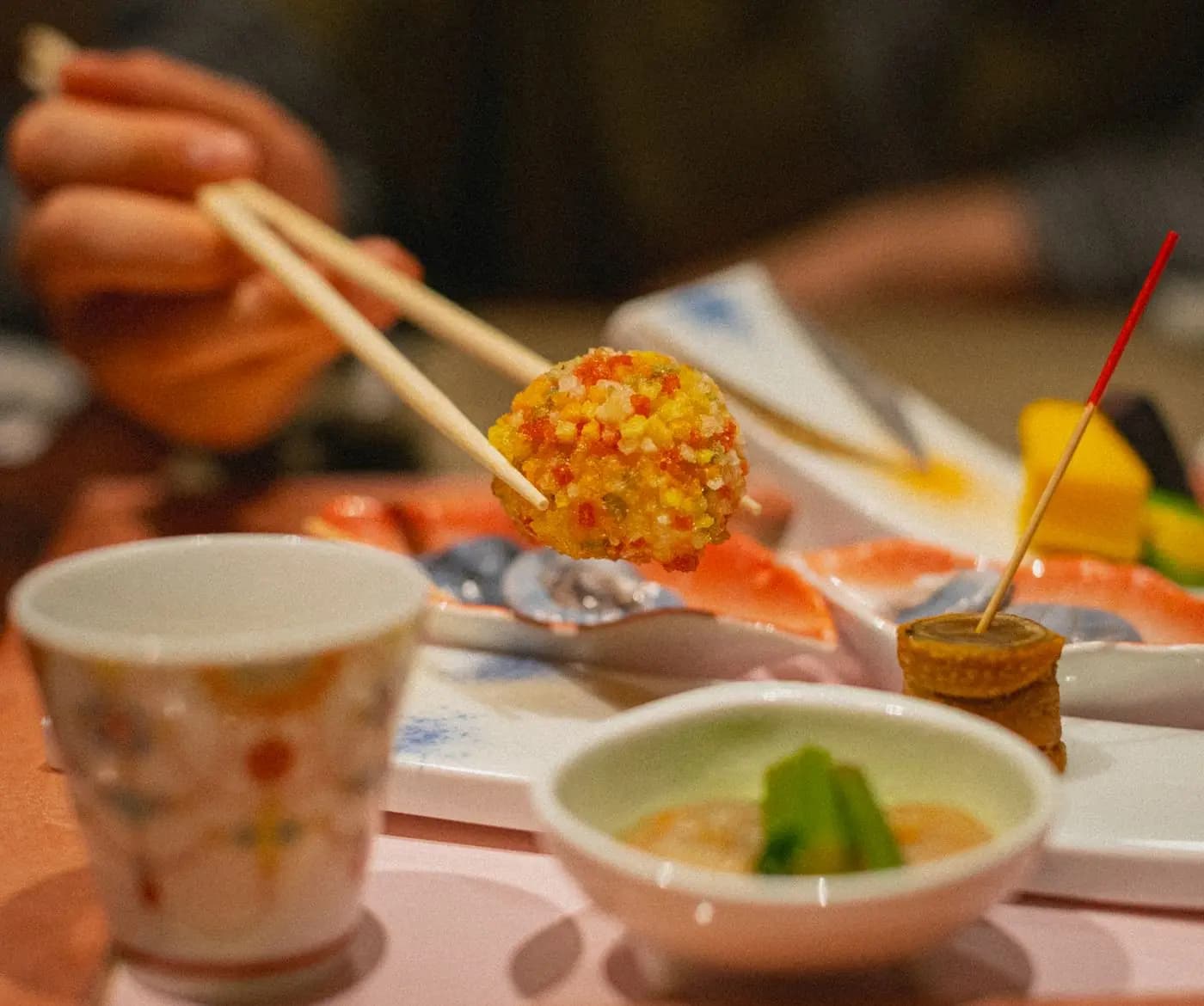
- some meals (often one or two speciality dinners, such as kaiseki at a ryokan).
Often excluded, and worth costing yourself:
- international flights and Japan's departure tax, raised from ¥1,000 to ¥3,000 per person on 1 July 2026 and included in the air fare;
- accommodation tax, paid at the hotel: in Kyoto it ranges from ¥200 to ¥10,000 per person per night depending on the room rate since 1 March 2026;
- lunches and some dinners: allow ¥1,000–1,800 for a simple lunch and ¥3,500–6,000 for an izakaya dinner;
- transport on free days (subway, buses);
- the single supplement, high in Japan where rooms are small and often priced per room;
- cancellation and assistance insurance.
No tips to budget for, though: tipping is not customary in Japan, including for guides and drivers.
The guide: why the price per person falls as the group grows
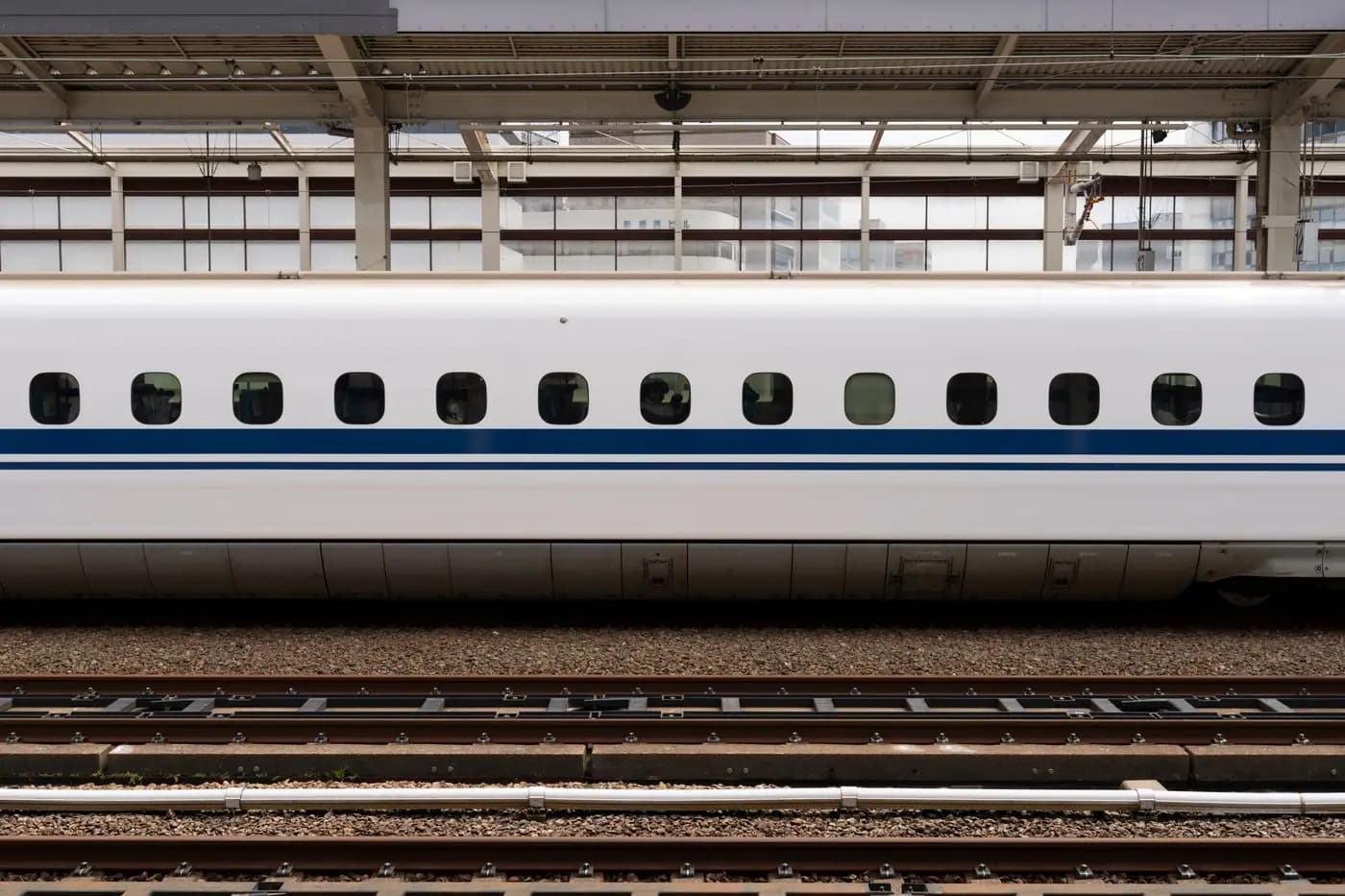
The guide is the best example of a fixed cost: the fee is the same for 8 or 20 people.
In Japan, the best guides generally hold the national guide-interpreter licence (zenkoku tsuyaku annaishi), which exists in many languages. It has not been compulsory for paid guiding since 2018, but it remains the most reliable proof of competence: ask for it. Guides in less common languages are far fewer than English-speaking ones and must be booked early, especially for April and November.
There is no public rate. As a guide, a day with a licensed guide is often negotiated between ¥35,000 and ¥60,000, plus expenses (transport, hotel and meals when the guide stays with the group for several days). On a 10-day tour, the guide line therefore commonly comes to ¥500,000–850,000.
Per person, that means:
- 10 travellers: ¥50,000–85,000 each, about €280–470.
- 20 travellers: ¥25,000–42,500 each, about €140–240.
- 40 travellers: two guides are needed, bringing the cost per person back to the level of a group of 20.
The same logic applies to a tour leader travelling from home, whose flight and hotel are shared among the participants.
Above 20 people, one guide is no longer enough: nobody can hear the explanations in a temple, and a group of 30 moving as a block jams narrow passages. The group is split into two sub-groups with radio headsets. One guide or tour leader per 20–25 travellers is a realistic ratio.
Transport: coach, minibus or train depending on group size
Transport is the other major fixed cost, and the choice of vehicle depends directly on numbers.
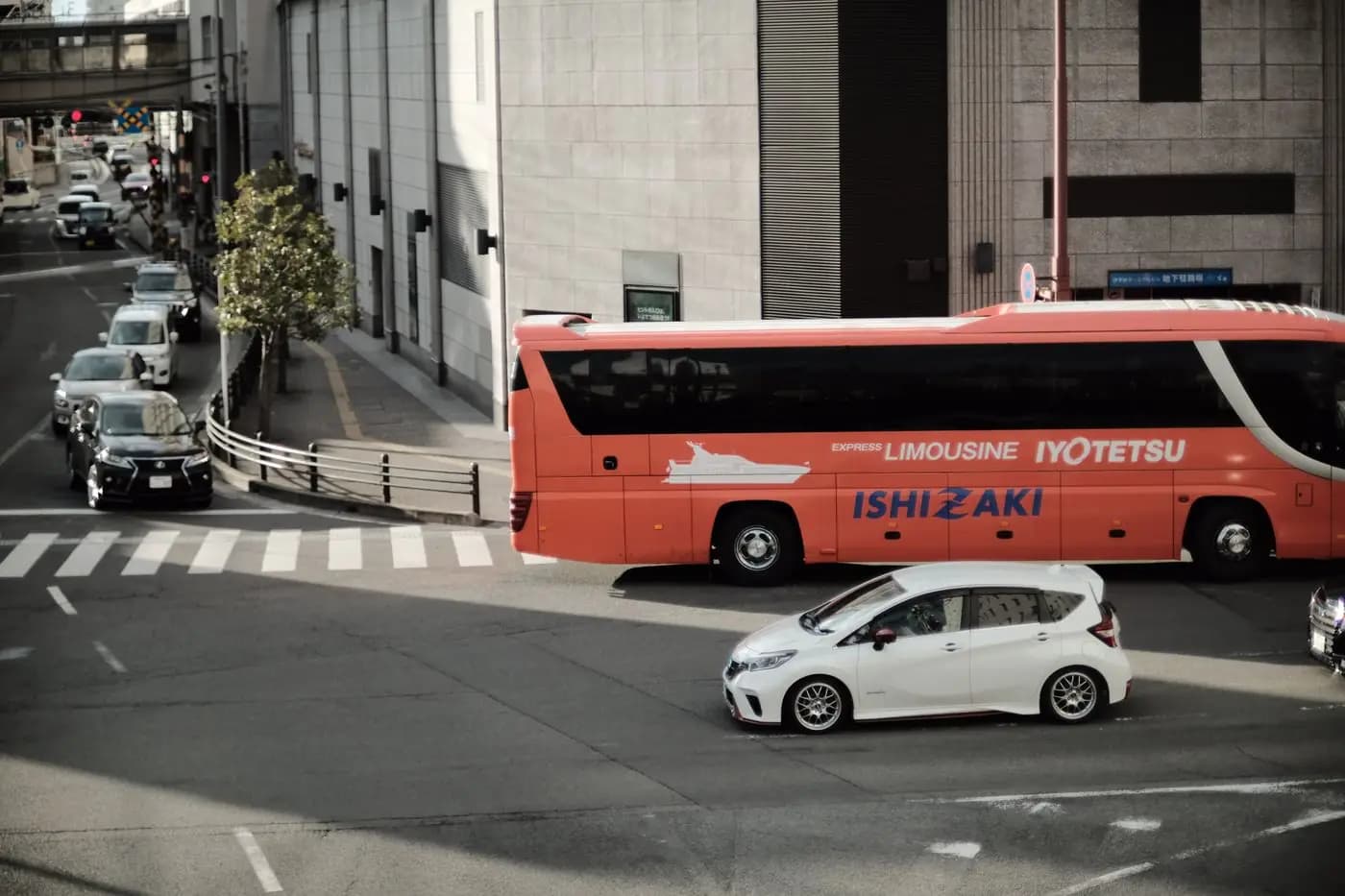
Private coach. Charter rates in Japan are regulated: each regional transport bureau publishes reference rates based on time (including an hour of preparation before and after service) and distance. For the Kansai region, the rates applicable since November 2025 for a large coach are ¥8,040 per hour and ¥170 per km. A day of 8 hours' service and 150 km thus comes to about ¥106,000 before tolls, parking and any driver accommodation. In practice, a coach day often costs ¥120,000–200,000 depending on region, season and extras.
Common sizes:
- Van or minibus (up to 9 passengers in a van, 15–20 in a minibus): suited to groups of 10.
- Medium coach: about 25 seats, for 15–20 people with luggage.
- Large coach: about 45 seats, but no more than 40 people with suitcases.
Driving-time rules tightened in April 2024 limit a driver's daily working hours: an overly long day may require a second driver or a split schedule.
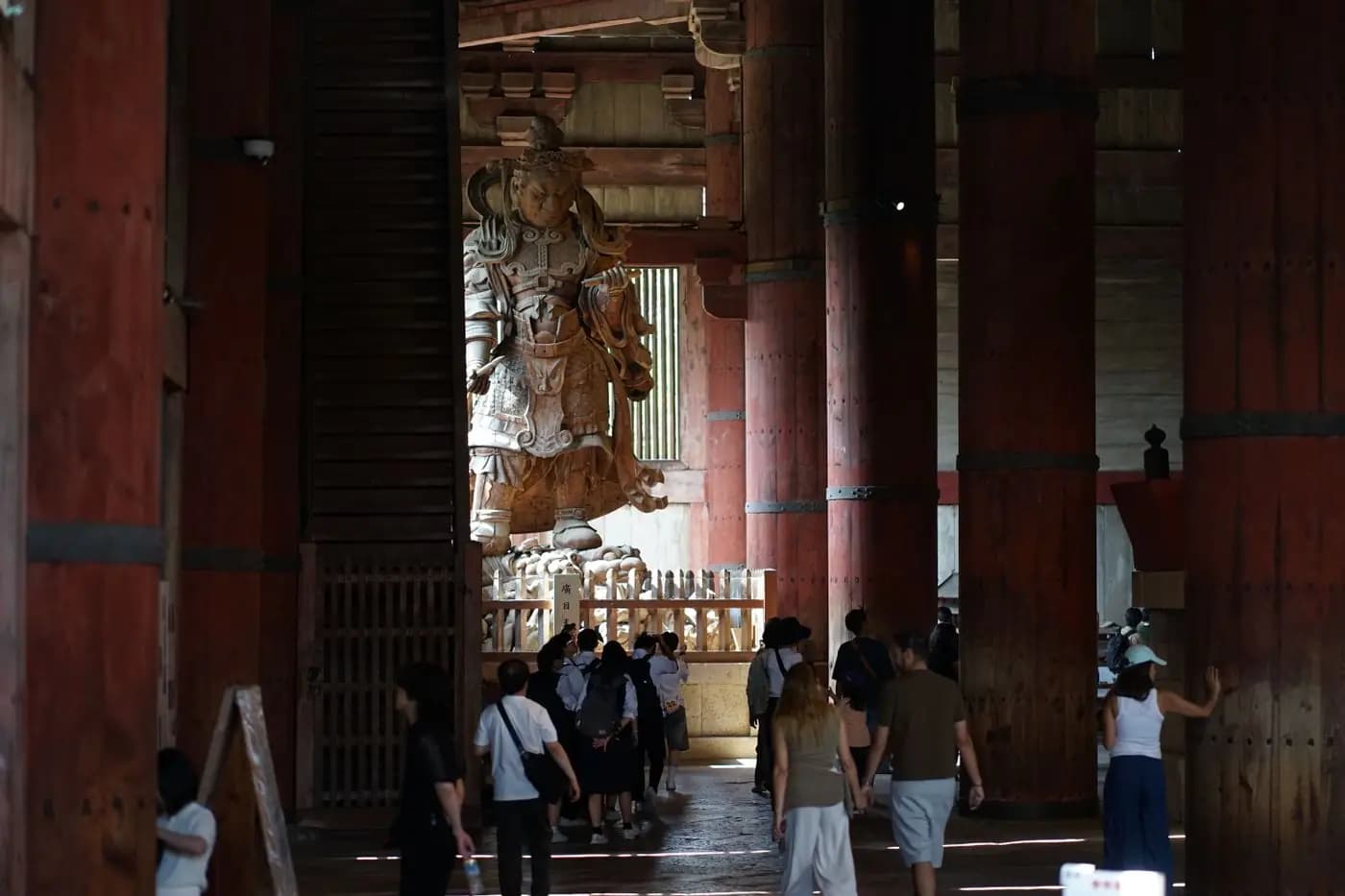
Train. Between Tokyo and Kyoto, the Shinkansen beats any coach (about 2 h 15 by Nozomi). Group fares apply from 8 travellers, with 10–15% off depending on the season (on the base fare only, not the Shinkansen express supplement) and one free place from 31 people; they are requested between 9 months and 14 days before travel. Suitcases travel separately by luggage forwarding (takkyubin), for roughly ¥2,000–4,000 per bag.
For a group of 10, trains plus taxis or a van are often cheaper than a coach. At 20, a medium coach becomes worthwhile. At 40, a large coach is the cheapest per person.
Hotels and meals: what changes between 10, 20 and 40 people
With 10 people, you can stay anywhere: small boutique hotels, ryokan with only a few rooms, machiya townhouses in Kyoto. Restaurants accept a table of 10 without difficulty, often in a private room. This is the group size with the most choice.
With 20 people, you need a block of 10–12 rooms. Small ryokan are not always enough, and the most sought-after restaurants in Kyoto or Tokyo have no room for 20: choose places used to groups or split the table.
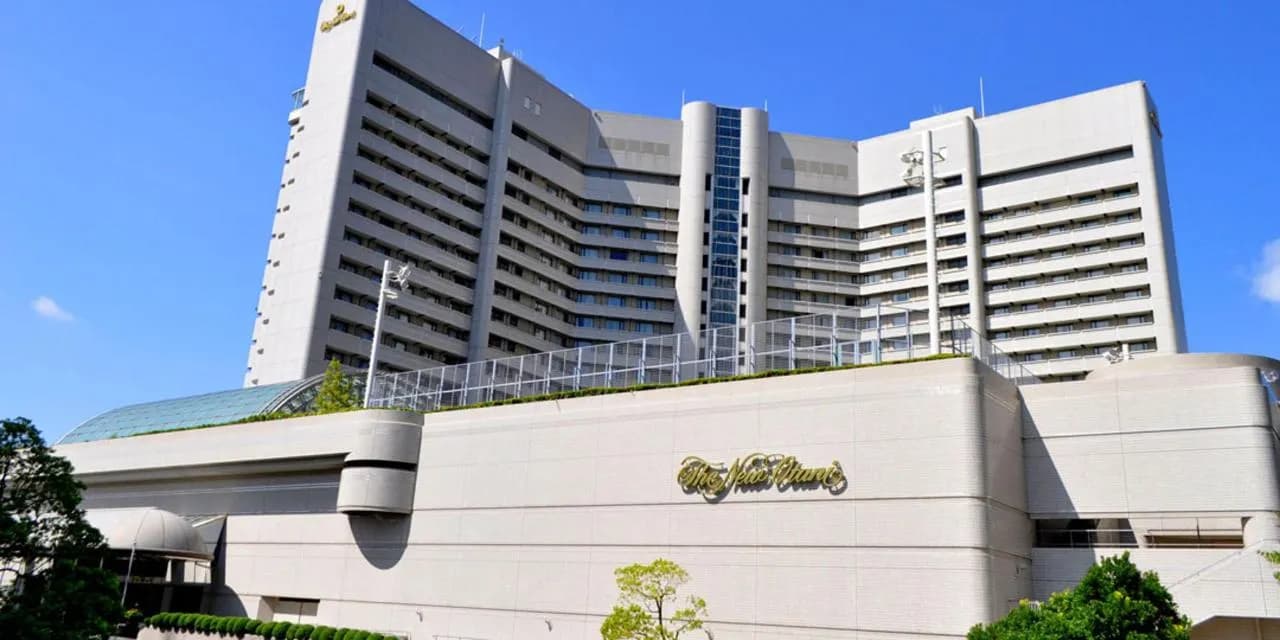
With 40 people, accommodation becomes the main constraint. Few boutique hotels have 20 free rooms on the same dates in peak season; the answer is large city hotels, more standardised but logistically simple (coach access, breakfast room, luggage storage). Dinners are held in a private room or a privatised restaurant.
Indicative price benchmarks, varying with the season:
- Double room in a business hotel in Tokyo: ¥14,000–25,000 a night.
- Double room in a 4-star hotel: ¥35,000–70,000, often double in Kyoto during cherry blossom and autumn leaf season.
- Ryokan with kaiseki dinner and breakfast: from ¥25,000 to over ¥60,000 per person.
Japanese hotels often charge per room and offer few true single rooms in higher categories: the single supplement weighs heavily on a solo traveller's budget. A rooming list sent early avoids unpleasant surprises.
Small group tour, tailor-made trip or scheduled departure: the comparison
Three formats dominate organised travel to Japan for individuals, associations, works councils and clubs.
Scheduled small group tour (fixed departure dates, 10–20 travellers who do not know each other):
- Pros: contained price per person, nothing to organise, guide and tour leader included.
- Cons: fixed dates, fixed itinerary, the group's pace, risk of cancellation if the minimum number is not reached.
Tailor-made trip for an existing group (extended family, friends, association or company group of 10–40):
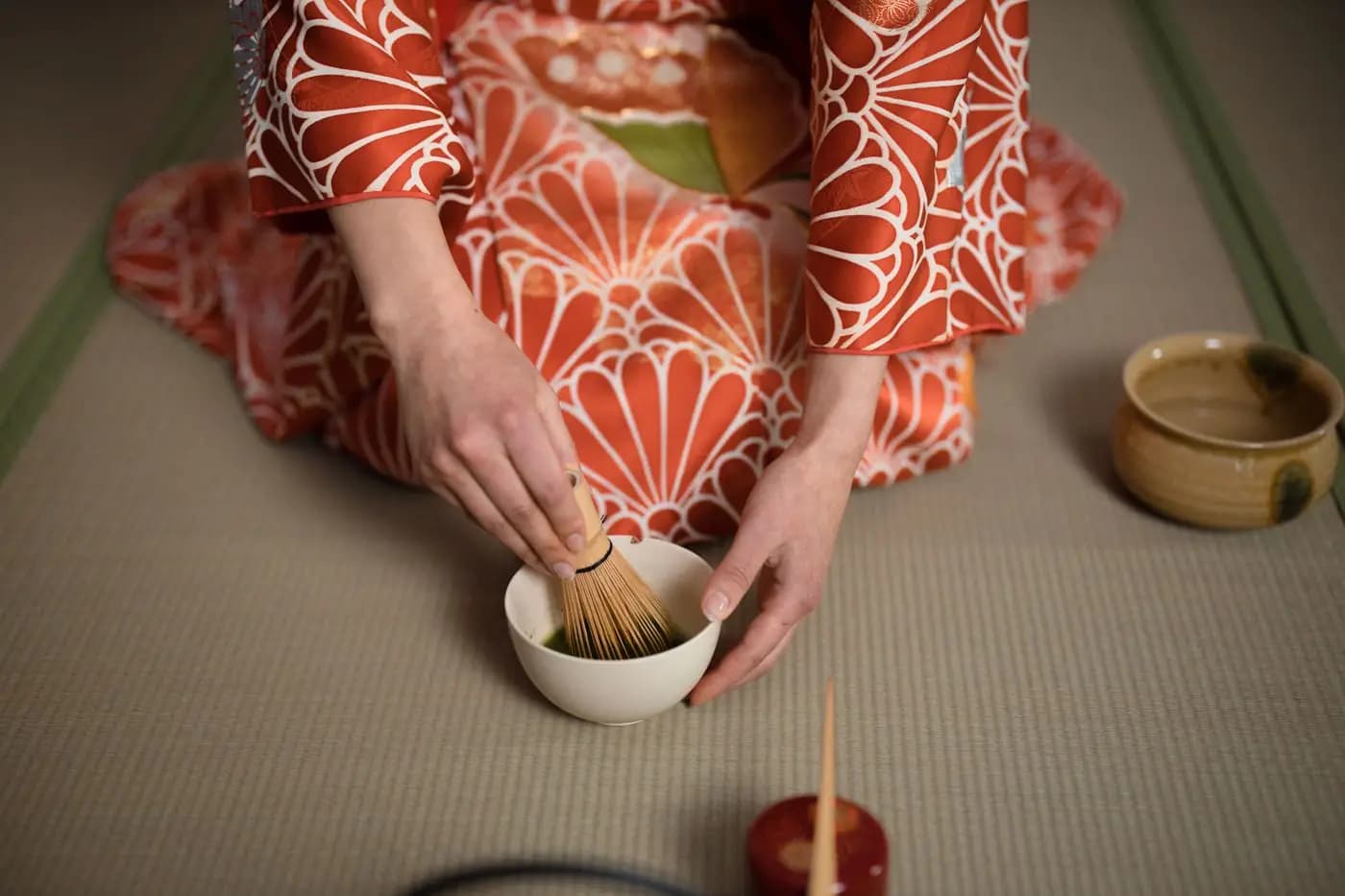
- Pros: your dates, itinerary, hotels and activities; pace adapted to the group; option to privatise an experience (tea ceremony, workshop, dinner).
- Cons: higher price than a scheduled tour at 10 people; needs 9–12 months' lead time.
Organised independent trip (2–6 people, bookings by an agency, guide on some days):
- Pros: complete freedom, a guide only where it really adds value (Kyoto, Nikko, Nara).
- Cons: high cost per person on guided days, logistics on your own the rest of the time.
In short: a scheduled tour suits a solo traveller or couple who want to delegate everything; tailor-made becomes attractive once an existing group reaches 10–12 people; above 20, it is almost always better value than buying seats on scheduled tours. Our guide to organising a group trip to Japan sets out the month-by-month timeline, and our Japan travel budget article gives everyday prices.
Choosing a tour organiser for Japan: questions to ask
Before signing, a few questions help you compare truly comparable offers and avoid surprises.
- Is the price a package or itemised? Ask for a breakdown (accommodation, guide, transport, meals, activities) and the number of travellers the price is based on. What happens if the group drops from 20 to 16?
- Who guides, and in which language? A licensed guide for the whole trip, local guides city by city, or a tour leader who does not guide? How many guides above 20 people?
- Which hotels, by name? “4-star hotel or similar” leaves a lot of room. Ask for names and locations (near a station, or on the outskirts).
- Which meals? How many lunches and dinners, and of what type? Are special diets (vegetarian, no pork, allergies) handled?
- What are the cancellation and payment terms? Deposits, deadlines, fees depending on the cancellation date.
- What protection? In the EU, package holidays fall under the Package Travel Directive: the organiser must be properly registered and hold insolvency protection; in the UK, check for ATOL protection when flights are included.
- Who handles problems on site? An emergency number reachable 24 hours a day, in Japan and in your language.
For an association, club or company group, add the question of room allocation and the single supplement, often a source of friction at sign-up.
SHINOGI DMC, a destination management company based in Tokyo, builds tailor-made trips for existing groups and companies, with guides, hotels, transport and activities coordinated on the ground.
Frequently asked questions
How much is a group tour of Japan?
For 10 days in 4-star hotels with a licensed guide, allow roughly €3,000–4,500 per person excluding flights with 10 travellers, and €2,600–3,900 with 20 (indicative). Add about €900–1,500 for a return economy flight from Europe.
Why does a small group trip cost more per person?
Because the guide, vehicle and tour leader are fixed costs shared among fewer travellers. With 10 people, the guide costs about €280–470 per person over 10 days; with 20, about half that.
How many people do you need for a group trip to Japan?
JR group fares apply from 8 travellers and airlines offer group fares from 10 passengers. A tailor-made trip becomes attractive from 10–12 people.
Do you need a guide in Japan?
It is not compulsory, but very useful in temples and museums and for logistics. Licensed guides in languages other than English are scarce: book months ahead, especially for April and November.
What is not included in a Japan group tour?
Often: flights, some meals, accommodation tax (up to ¥10,000 a night in Kyoto), transport on free days, the single supplement and insurance. No tipping is expected in Japan.
How far ahead should you book a group trip to Japan?
Nine to twelve months for a group of 20–40, twelve months or more for cherry blossom season and the second half of November.
Rédaction SHINOGI DMC · Updated
Sources
- Bureau des transports du Kinki (MLIT) — Barème de référence des autocars affrétés, applicable au 1er novembre 2025
- Ministère de la Santé et du Travail — Règles de temps de travail des chauffeurs (avril 2024)
- JR Central — 団体割引乗車券 (règles des billets de groupe)
- Japan Tourism Agency — 国際観光旅客税 (taxe de départ à 3 000 ¥ au 1er juillet 2026)
- Ville de Kyoto — Taxe de séjour (宿泊税)
- JNTO — Examen national de guide-interprète (全国通訳案内士), réforme de 2018
- Atout France — Registre des opérateurs de voyages et de séjours
- JNTO — Préparer son voyage au Japon