What daily budget do you need for Japan in 2026?
Japan has a reputation for being expensive. In 2026 the picture is more nuanced: the yen remains weak against the euro (about ¥180 to €1 in September 2026), and meals, transport or temple tickets often cost less than in Paris. On the other hand, hotels in the big cities have risen sharply since 2023, and several taxes have been added.
Here are the three profiles we use to advise travelers. Amounts are per person per day, based on two people sharing a room, excluding international flights and long Shinkansen journeys:
- Tight budget: ¥12,000 to ¥18,000 (€70 to €100). Hostel or capsule hotel, convenience stores and chain restaurants, subway, free temples or ones under ¥1,000.
- Mid-range: ¥25,000 to ¥40,000 (€140 to €220). Well-located business hotel or 3-star, restaurant lunches, one good dinner a day, two or three paid sights, a few taxis.
- High-end: ¥60,000 and up (€330 and up). 5-star hotel or ryokan with dinner, renowned restaurants, private guide on some days, Green Car.
On top of this daily budget come flights (€900 to €1,400 in economy from Paris depending on the season, much more during cherry blossom season and summer) and long train journeys. A solo traveler pays more, because the hotel is half the spend and does not split: allow 30 to 40% extra.
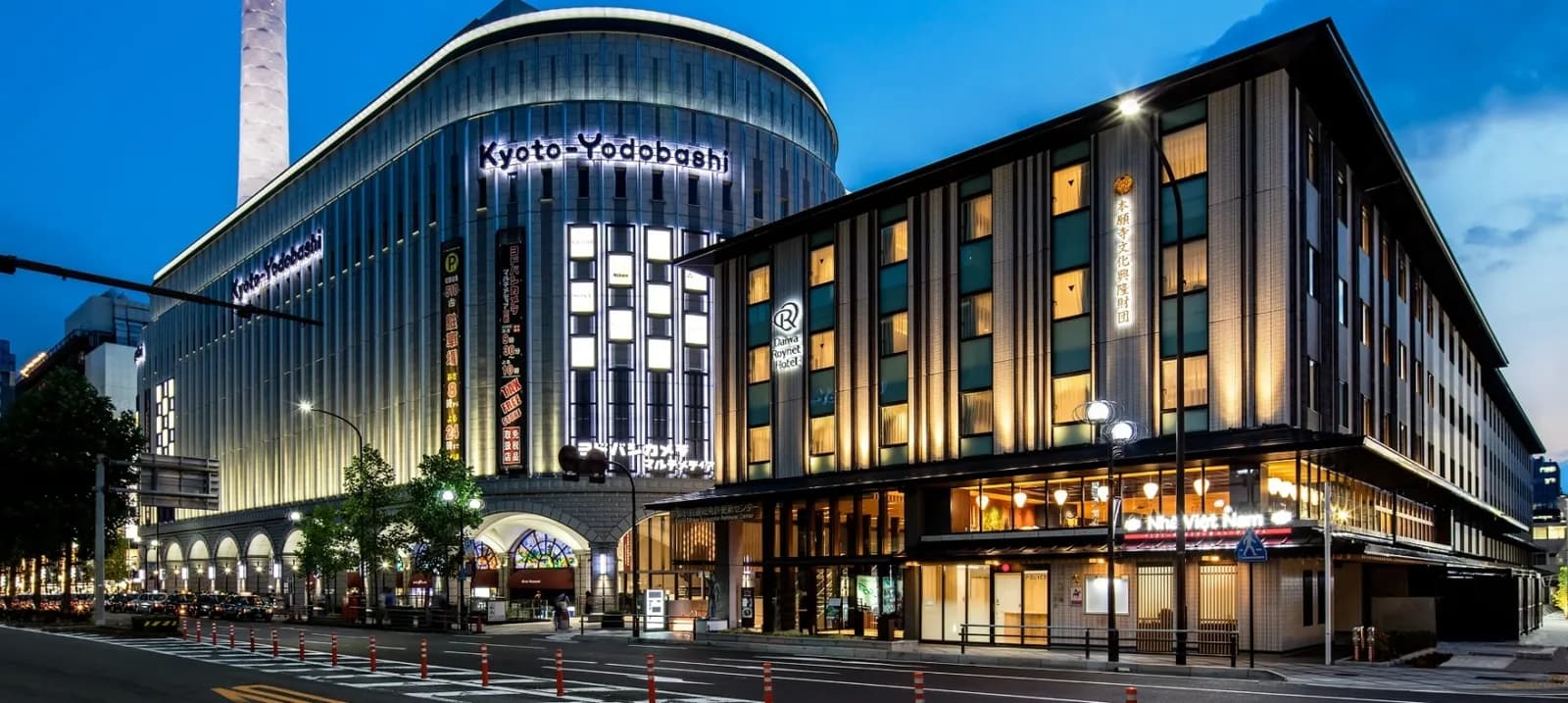
Accommodation in Japan: hotel and ryokan prices, accommodation taxes
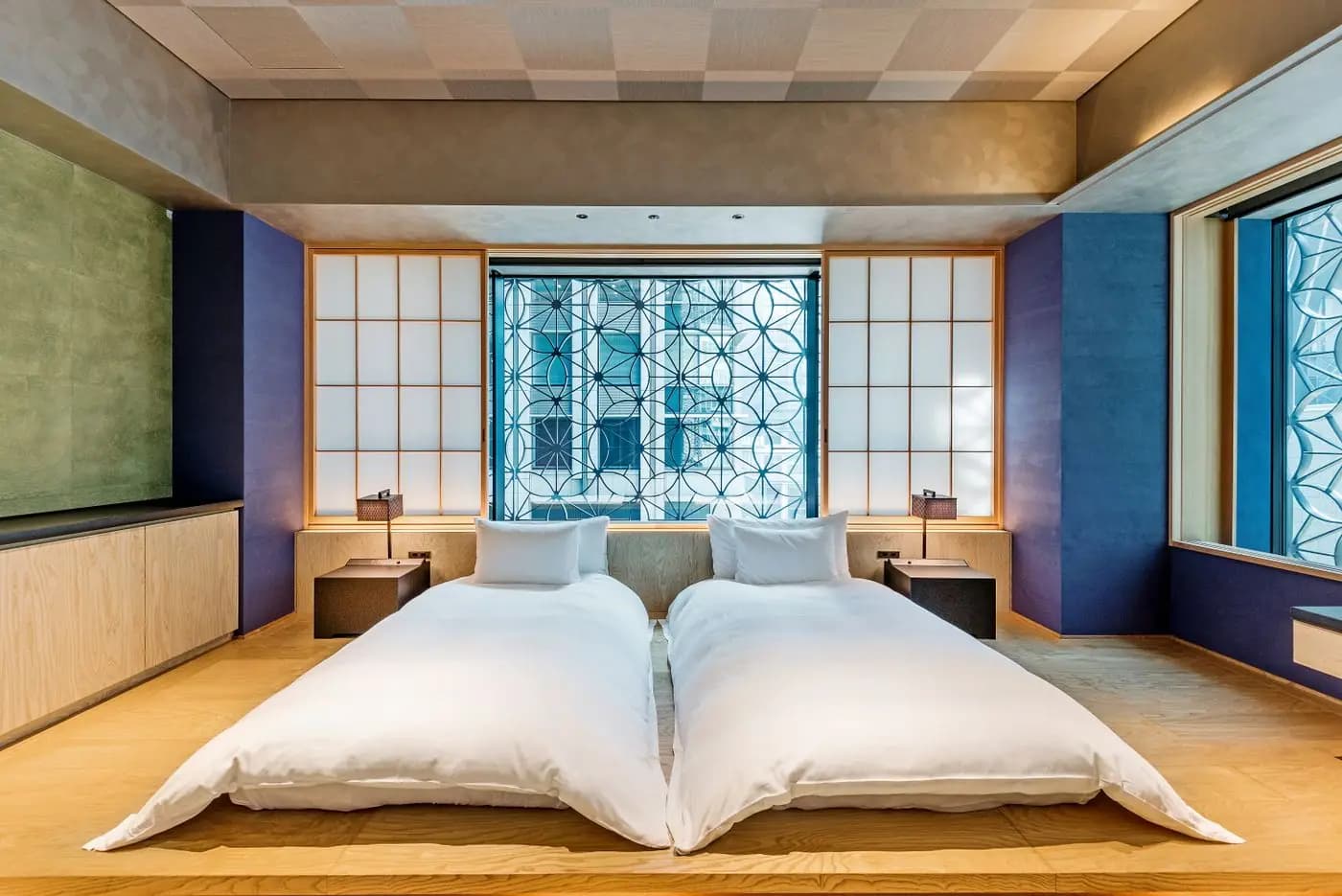
The hotel typically takes 40 to 50% of the budget. Prices vary threefold depending on the season and day of the week: a Friday night in April in Kyoto has nothing in common with a Tuesday in February.
Ranges observed in 2026 for a double room, per night, taxes included:
- Hostel dorm or capsule: ¥4,000 to ¥7,000 per person.
- Business hotel (Toyoko Inn, APA, Dormy Inn, Sotetsu Fresa): ¥14,000 to ¥25,000 in Tokyo and Osaka, slightly less in Fukuoka or Nagoya. Rooms of 12 to 18 m², clean and well equipped.
- 4-star hotel: ¥35,000 to ¥70,000.
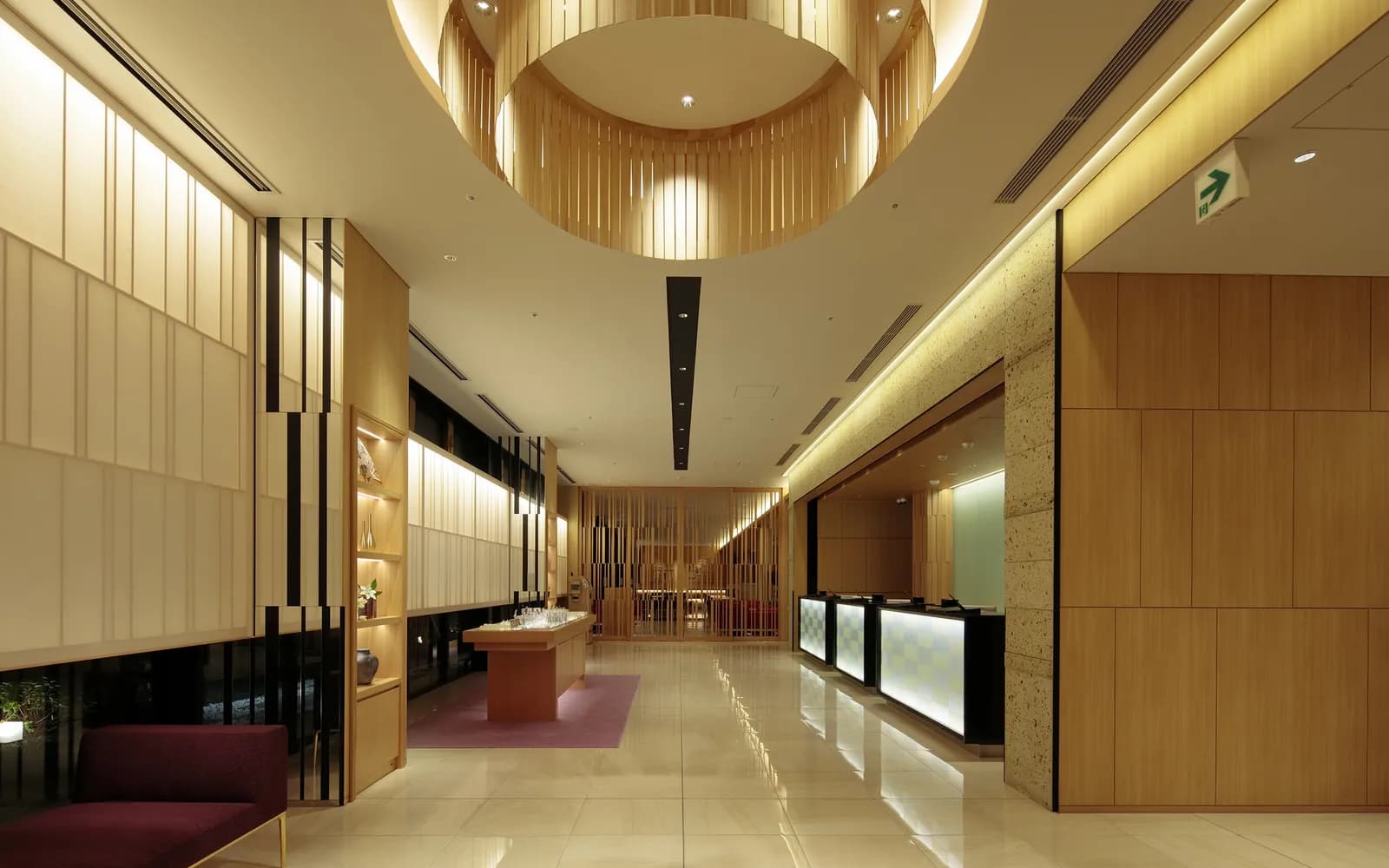
- International luxury hotel: ¥100,000 to ¥250,000, more for suites.
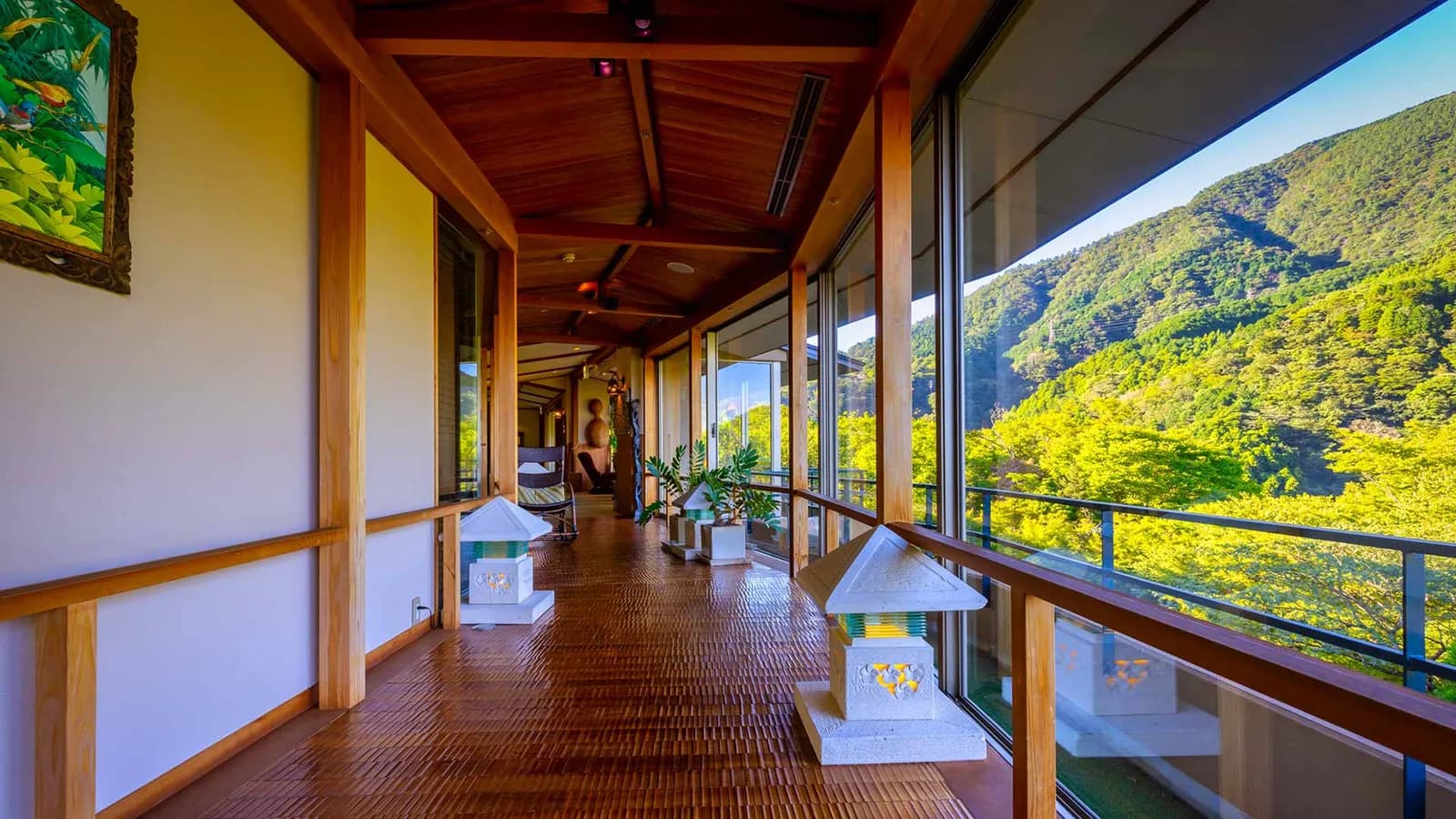
- Ryokan with kaiseki dinner and breakfast: ¥25,000 to ¥60,000 per person, much more at prestige addresses.
Kyoto is the tightest market: during cherry blossom season and the second half of November, rates often double and good hotels are full months ahead.
Another line not to forget is the accommodation tax, charged per person per night. In Kyoto, since March 1, 2026, it ranges from ¥200 (room under ¥6,000) to ¥400 (¥6,000 to ¥20,000), ¥1,000 (¥20,000 to ¥50,000), ¥4,000 (¥50,000 to ¥100,000) and ¥10,000 above ¥100,000. Tokyo, Osaka, Fukuoka and other cities have their own, lighter scales, in the range of ¥100 to ¥500.
To save without sacrificing comfort, we suggest sleeping in Osaka and visiting Kyoto by train (30 minutes), or choosing a slightly less central but well-connected Tokyo district such as Ueno, Kanda or Ningyocho rather than Shibuya or Ginza.
How much does a meal cost in Japan? From konbini to kaiseki
This is where Japan is most affordable for Europeans. You can eat very well for little, provided you follow the local rhythm: a substantial lunch and a more flexible dinner.
Price benchmarks in 2026, per person:
- Convenience-store breakfast (onigiri, sandwich, coffee): ¥500 to ¥800. Business-hotel breakfast buffet: ¥1,200 to ¥2,000 if not included.
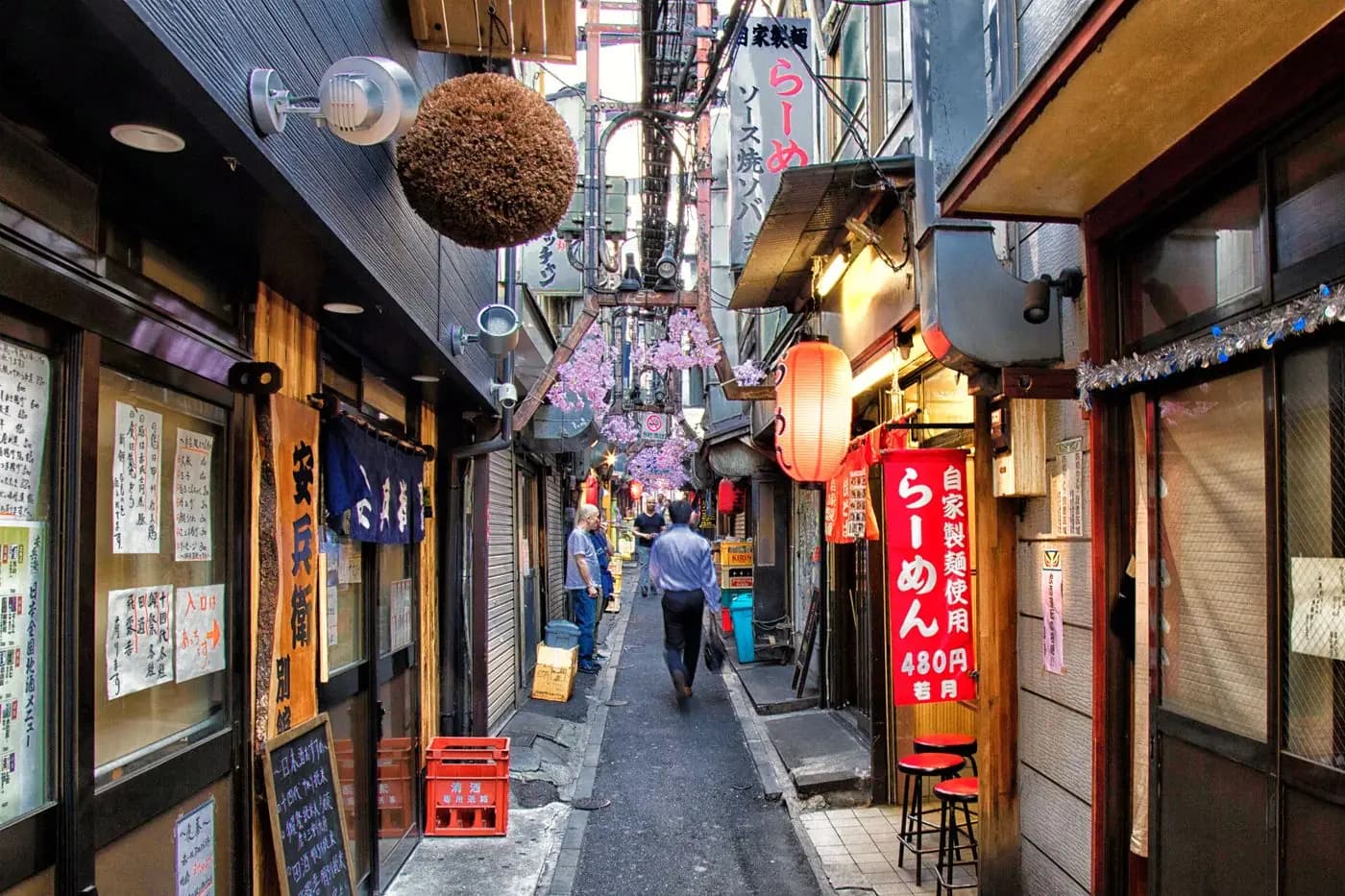
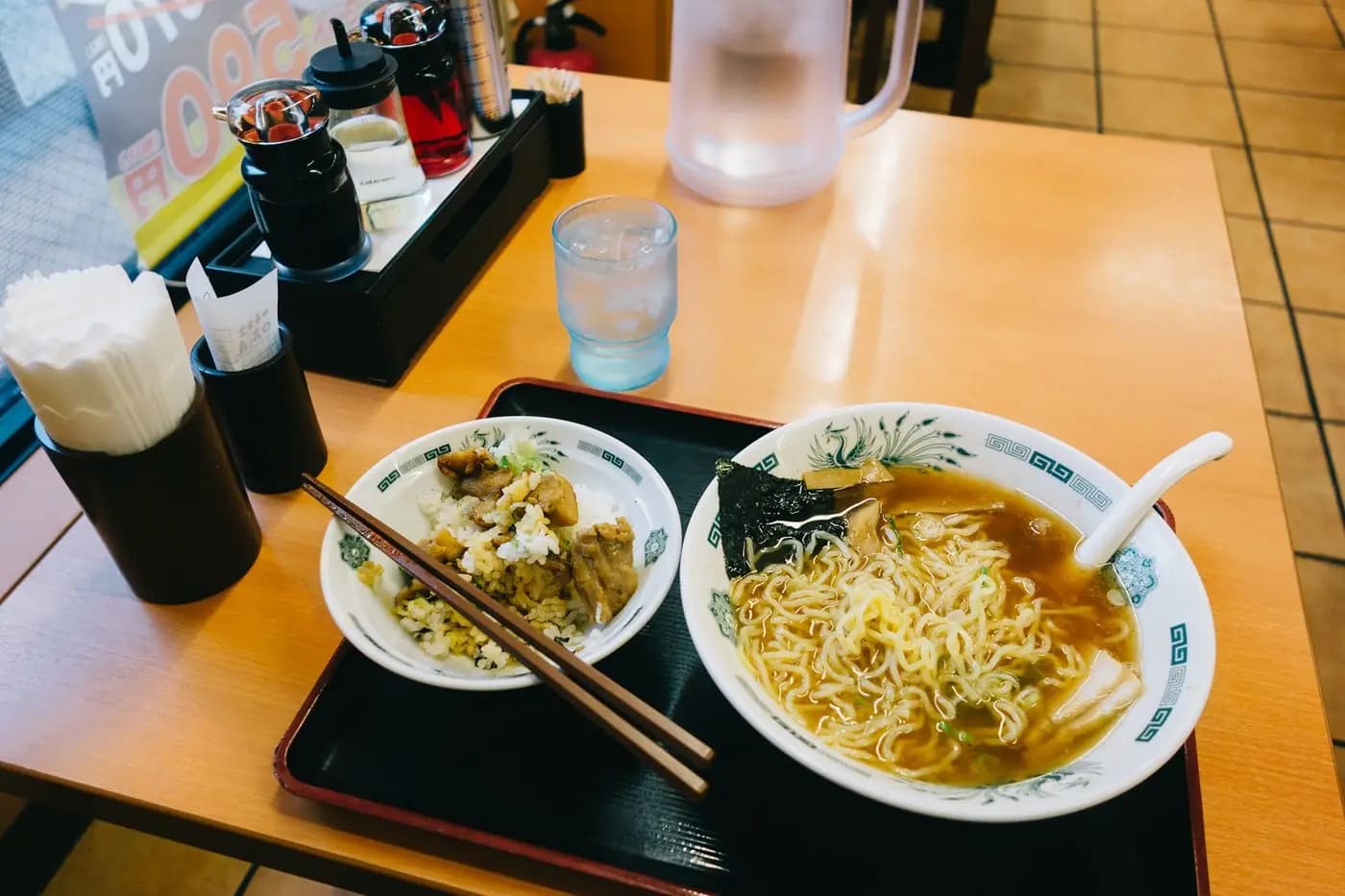
- Lunch: ¥1,000 to ¥1,800 for a teishoku (main dish, rice, miso soup, vegetables), a bowl of ramen or a soba set. Department-store and station restaurants offer sets at ¥1,500–2,500.
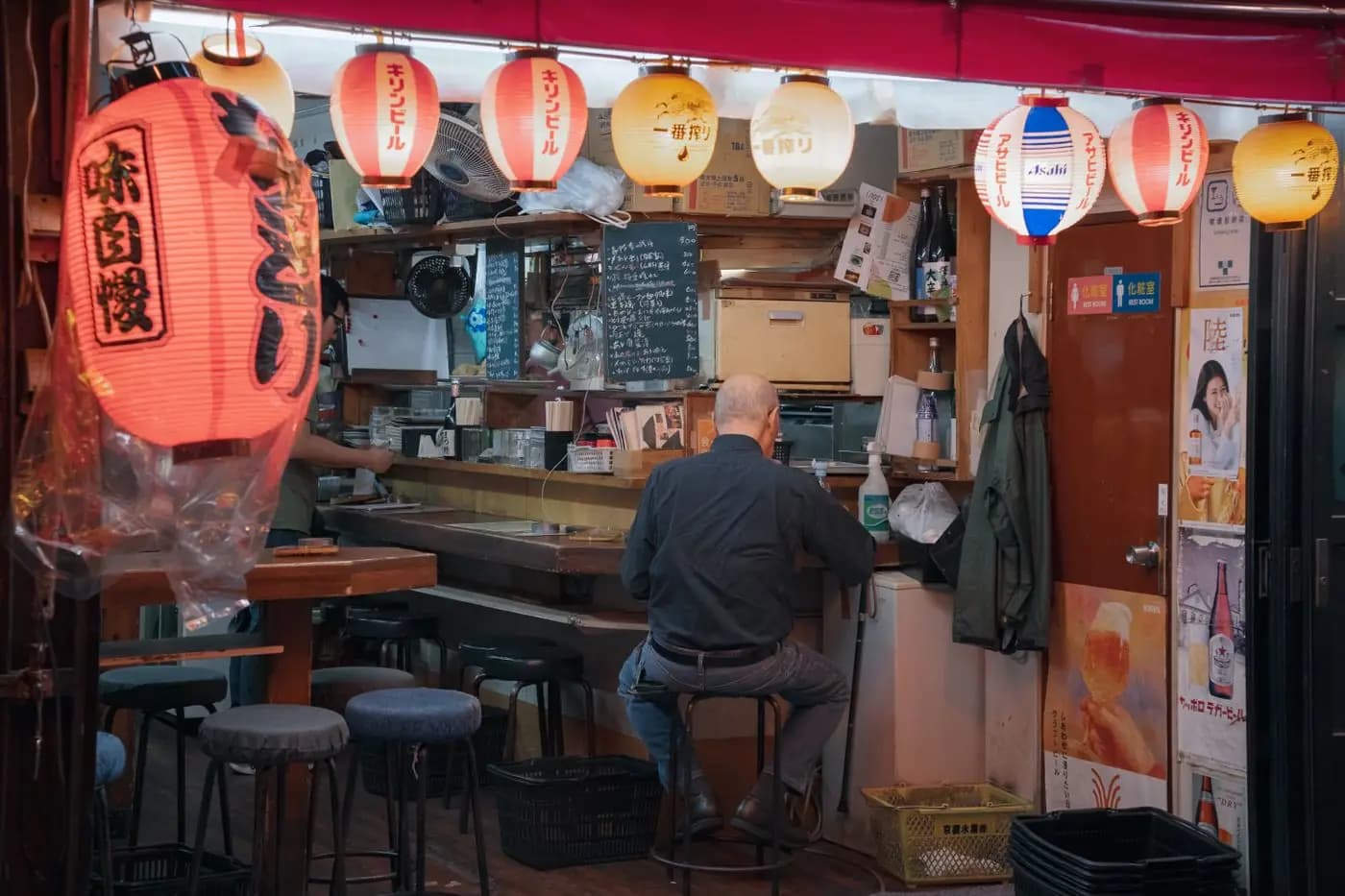
- Izakaya dinner with two or three drinks: ¥3,500 to ¥6,000.
- Sushi: ¥2,000 to ¥4,000 at a decent conveyor-belt restaurant, ¥15,000 to ¥40,000 for counter omakase.
- Kaiseki: ¥15,000 to ¥30,000 in the evening, often half price at lunch for a shorter menu.
- Draft beer: ¥500 to ¥800; coffee: ¥400 to ¥700; bottle of water from a vending machine: ¥120 to ¥160.
A 10% consumption tax applies (8% for takeaway). Displayed prices now almost always include it, but check for 税込 (tax included) or 税抜 (tax excluded). Some izakayas charge an "otoshi" of ¥300 to ¥600, a small starter served automatically that acts as a cover charge.
Our budget tip: make lunch your gourmet meal of the day. The same Michelin-starred or renowned restaurants often offer lunch menus two to three times cheaper than in the evening.
Transport and sights: the other budget items
City transport. In Tokyo, a subway ride costs ¥180 to ¥330; a busy day comes to ¥800 to ¥1,500 with an IC card. The Tokyo Subway Ticket (24, 48 or 72 hours) becomes worthwhile from five or six rides a day. Taxis start at around ¥500 in Tokyo, and a 15-minute ride costs ¥2,000 to ¥3,000.
Airports. From Haneda to central Tokyo: ¥300 to ¥700 by train or monorail. From Narita: ¥1,300 to ¥1,500 by bus or slow train, about ¥2,500 to ¥3,300 by express (Skyliner, Narita Express). From Kansai Airport to Osaka or Kyoto: ¥1,000 to ¥3,600 depending on the train.
Long distances. Tokyo–Kyoto by Nozomi: ¥14,170 in a reserved seat. Tokyo–Hiroshima: ¥19,760. For Fukuoka, Sapporo or Okinawa, domestic flights are often cheaper if booked early. The Japan Rail Pass (¥50,000 for 7 days) only pays off with several long trips close together.
Sights. Japan's pleasant surprise: many major places are free or cheap.
- Free: Fushimi Inari, Meiji Shrine, Senso-ji, Nishiki Market, most historic districts.
- ¥300 to ¥1,000: most Kyoto temples (Kinkaku-ji, Kiyomizu-dera), municipal museums, gardens.
- ¥1,500 to ¥4,000: Tokyo observation decks, major private museums, immersive exhibitions, Himeji Castle (¥2,500 for non-residents since March 2026).
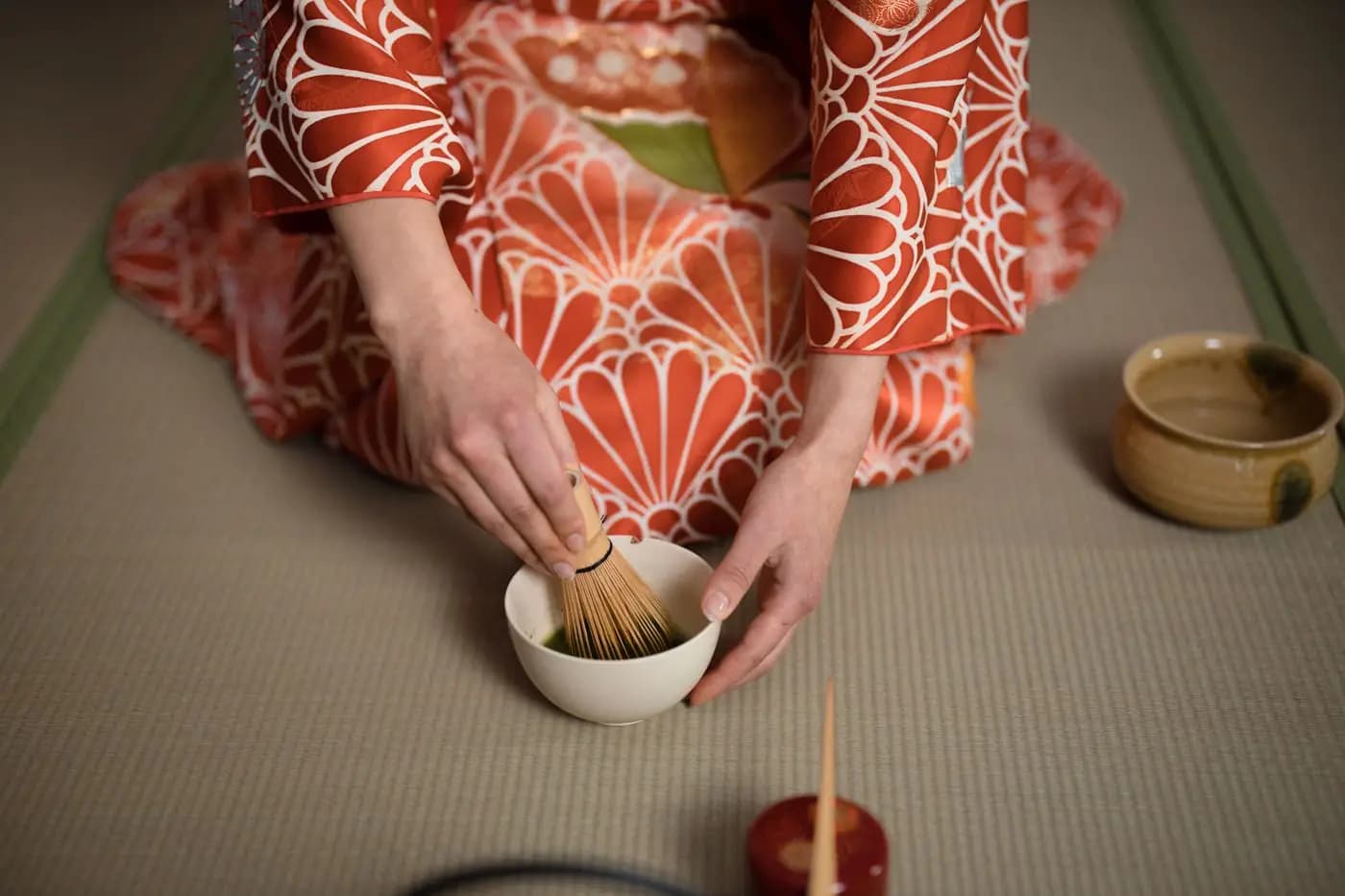
- Experiences: tea ceremony, cooking or calligraphy class, ¥5,000 to ¥15,000 per person.
Finally, allow ¥1,000 to ¥2,000 a week for luggage lockers and ¥3,000 to ¥6,000 for an eSIM.
Example: budget for two weeks in Japan for two people
Take a couple on a mid-range budget, 14 nights in October: 5 nights in Tokyo, 1 night in a ryokan in Hakone, 5 nights in Kyoto, 3 nights in Osaka. Amounts for two, rounded.
- Paris–Tokyo return flights: €2,000 to €2,800.
- Accommodation: 13 nights in an upper business hotel or 3-star at an average of ¥22,000, plus one ryokan night with dinner at ¥70,000 for two: about ¥356,000.
- Accommodation taxes: about ¥6,000.
- Meals: ¥10,000 a day for two, plus two nicer dinners at ¥25,000: about ¥190,000.
- Long-distance transport: Tokyo–Odawara, Hakone–Kyoto, Kyoto–Osaka and back to Tokyo by Shinkansen, plus the Hakone Freepass: about ¥75,000.
- City and airport transport: about ¥30,000.
- Sights and activities: about ¥45,000, including a tea ceremony and a workshop.
- Miscellaneous (eSIM, lockers, luggage forwarding, coffee): about ¥25,000.
Total in Japan: about ¥727,000, a little over €4,000 for two. With flights, the trip comes to €3,000 to €3,400 per person. On a tight budget it drops to about €2,000 per person; at the high end it quickly exceeds €7,000.
These are benchmarks, not a quote: a November weekend in Kyoto or Golden Week can push the accommodation line up by 50%.
How to travel Japan for less: our tips
A few habits make a real difference over two weeks:
- Choose your dates: mid-January to late February, June and early December are noticeably cheaper than cherry blossom season, Golden Week or November. On weekdays, hotels often cost 20 to 30% less than on Fridays and Saturdays.
- Book Kyoto hotels early: four to six months ahead for autumn and spring. For Tokyo and Osaka, two to three months is enough outside peak periods.
- Do the JR Pass math before buying, and compare with regional passes (Kansai-Hiroshima Area Pass at ¥17,000 for 5 days) and smartEX.
- Eat lunch out, dinner light: lunch sets are the best value in the country.
- Use depachika (department-store food halls) at the end of the day: bento and sushi are often discounted by 20 to 50% after 7 p.m.
- Refill your water bottle: tap water is drinkable everywhere.
- Pay in yen, never in euros: decline the dynamic currency conversion offered by card terminals and ATMs, which often adds 3 to 7%.
- Use tax-free shopping from ¥5,000 of purchases before tax in the same store on the same day (refund system from November 1, 2026).
Conversely, two savings to avoid: a very remote hotel that costs you an hour a day in transport, and skipping travel insurance. A hospital stay in Japan is charged at full price to a non-resident foreigner.
Per-person budget for a group trip or seminar in Japan
For a group, the logic changes: you no longer think in terms of getting by, but in terms of guaranteed services. Some items drop thanks to volume (hotels, trains), others appear (private coach, guide, meeting rooms, on-site staff).
Indicative ranges per person per day, sharing a double or twin room, excluding international flights:
- Independent mid-range trip (for comparison): ¥25,000 to ¥40,000.
- Organized group tour, 3–4-star hotels: ¥40,000 to ¥60,000, with a guide, coach, most meals and sightseeing.
- Seminar in a 4-star hotel with a meeting room: ¥60,000 to ¥90,000, with plenary session, coffee breaks, group dinners and a team-building activity.
- High-end incentive trip: ¥120,000 and up, with 5-star hotels, an exclusive-use ryokan, a gala dinner and private experiences.
Why the gap with independent travel? A group does not just pay for what it consumes; it pays for the guarantee that everything works: a coach waiting at the temple exit, a guide managing 40 people at Nishiki Market, restaurants able to serve everyone at once, fallback plans in case of a typhoon.
Two levers weigh most on a group budget: the season (moving from early April to mid-May can cut the hotel line by 30%) and the number of hotel changes, each costing half a day of logistics and a luggage transfer.
For a seminar or company trip, SHINOGI DMC builds the budget in yen, line by line, with these ranges adjusted to your dates, headcount and expectations.
Frequently asked questions
What budget do you need for 2 weeks in Japan?
For a mid-range trip for two, allow about €3,000 to €3,400 per person including flights: €1,000 to €1,400 for the flight and about €2,000 in Japan. On a tight budget, about €2,000 per person all in.
Is Japan more expensive than France?
Not for everything. With the euro at around ¥180, meals, public transport and sights often cost less than in France. Big-city hotels, however, are as expensive or more so in peak season.
How much does a hotel night cost in Japan?
In 2026, allow ¥14,000 to ¥25,000 for a double room in a business hotel in Tokyo or Osaka, ¥35,000 to ¥70,000 in a 4-star and ¥100,000 and up in a luxury hotel, excluding accommodation tax.
How much does a restaurant meal cost in Japan?
¥1,000 to ¥1,800 for lunch (ramen, teishoku, soba), ¥3,500 to ¥6,000 for an izakaya dinner with drinks, ¥15,000 and up for kaiseki or sushi omakase.
Should you tip in Japan?
No. Tipping is not customary and can cause embarrassment. High-end hotels often add a 10 to 15% service charge to the bill, which takes its place.
What per-person budget for a seminar in Japan?
Roughly ¥60,000 to ¥90,000 per person per day in a 4-star hotel, including meeting room, group meals, transfers and one activity, excluding flights. A high-end incentive exceeds ¥120,000.
Rédaction SHINOGI DMC · Updated
Sources
- Kyoto City — Accommodation tax revision from March 1, 2026 (Kyoto Kanko Navi)
- National Tax Agency — Consumption tax (standard and reduced rates)
- JNTO — Japan's International Tourist Tax is increasing
- JAPAN RAIL PASS (official) — Types and prices
- JR West — Kansai-Hiroshima Area Pass
- Japan Tourism Agency — Tax-free shopping, refund method from November 1, 2026
- Himeji Castle — Official website (admission fees)
- JNTO — Préparer son voyage au Japon