Japan DMC: what exactly is it?
A Japan DMC (destination management company, also called a ground handler or inbound agency) is a company based in the country that designs, books and runs a visiting group's programme: hotels, meeting rooms, restaurants, transport, activities, guides and coordination during the stay. A foreign company or event agency hands over a brief; the DMC turns it into a costed programme, signs contracts with Japanese suppliers and remains responsible for delivery on the ground.
Three things set it apart from an ordinary travel agency. A DMC almost always works bespoke, for defined groups (seminar, incentive, convention, study tour, executive committee). It negotiates each service locally, often in Japanese and according to practices suppliers only follow with partners they know. And it is physically present during the event, with a team reachable at any hour.
Several terms describe the same role:
- Ground handler or inbound agency: the general travel-trade terms.
- DMC: the term used in MICE (meetings, incentives, conferences, exhibitions).
- Land operator (ランドオペレーター): in Japan, mainly the supplier that books on behalf of foreign agencies, which has had a specific legal status since 2018.
Why use a DMC in Japan rather than booking everything from London, New York or Sydney? Because a large share of suppliers only deal in Japanese, ask for name lists early, apply strict cancellation terms and prefer a responsible local counterpart. Ten independent travellers can manage without one. From 25 or 30 people, with private dinners, coaches and a reputation at stake, the saving in time and risk becomes clear.
What does a DMC actually do for a company?
A DMC's work is barely visible when everything runs smoothly. Here is what it covers in practice, from the first exchange to the participants' return.
- Sourcing: hotels able to block 40 or 200 rooms on the right dates, plenary and breakout rooms, restaurants that take a group in a private room, unusual venues (temples, gardens, museums) that only rent to partners they know.
- Contracts in Japanese: option terms, deposit schedules, rooming list deadlines, cancellation penalties. The DMC reads and negotiates these clauses, then translates them into a clear proposal for the client.
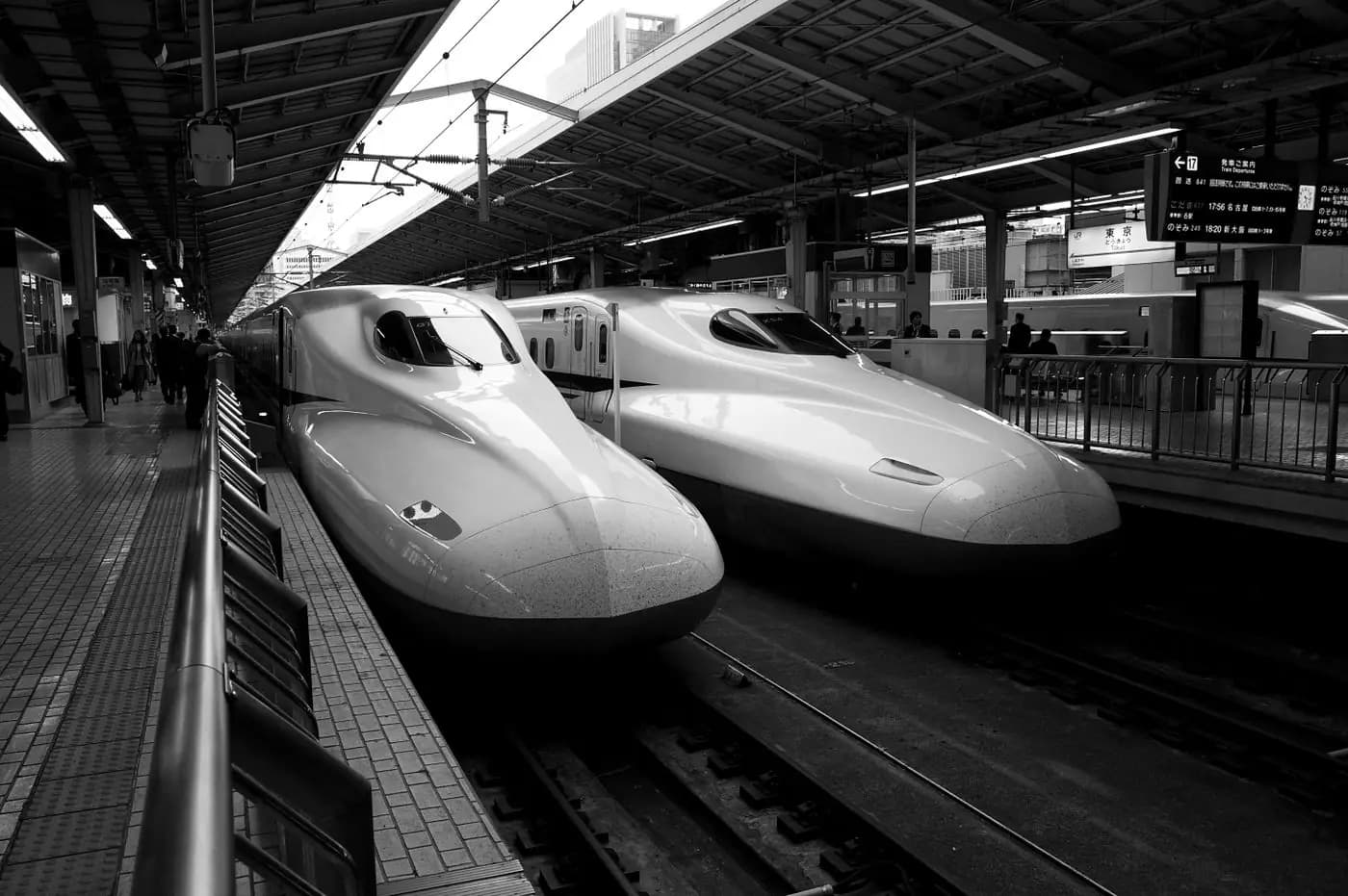
- Transport: group bookings on the Shinkansen, private coaches with drivers, transfers from Haneda, Narita or Kansai, luggage forwarded hotel to hotel the day before a transfer.
- Content: guided visits, workshops, team building, speakers, consecutive or simultaneous interpreters.
- On-site team: airport welcome, group leaders, hostesses, evening event management, coordination reachable day and night.
- Risk management: fallback plans for typhoons, earthquakes or strikes, monitoring of Japan Meteorological Agency alerts, medical procedure, professional liability insurance.
A DMC also brings cultural judgement: how to introduce an executive to a Japanese partner, which gift to prepare, why a restaurant refuses to change its menu, why a temple imposes a dress code. None of this is in a contract, yet it decides whether a corporate trip works.
What it does not do: it does not replace your communications agency, it does not set your learning objectives and it cannot guarantee access to a site that refuses groups. A good DMC says so in the first conversation.
DMC vs event agency: who does what?
Buyers often ask whether they need a DMC, an event agency, or both. The two jobs complement each other more than they compete.
- The event agency (in your country) owns the relationship with the client company, the concept, internal communications, staging, sometimes audiovisual production and participant registration.
- The DMC (in Japan) owns everything that is booked, negotiated and run on site, with local suppliers and in the local language.
In the most common set-up, the event agency subcontracts ground handling to the DMC, which works white label: its staff introduce themselves to participants under the agency's name. A company can also go straight to a DMC, especially for a leadership offsite or a study tour where staging matters less than logistics.
Three signs that you need a DMC in addition to your agency:
- the programme covers several cities, Shinkansen journeys and coach transfers;
- you want venues or experiences that cannot be booked online;
- nobody on your team reads Japanese.
Conversely, if your event is a single plenary in an international hotel in Tokyo, the hotel and a good agency may be enough. The value of a DMC grows with the number of suppliers to coordinate.
Travel agency licences in Japan: what the law says
This is the point foreign buyers know least about, and the easiest to check. In Japan, the Travel Agency Act (旅行業法) requires anyone who organises or sells travel for a fee to be registered. There are four agency categories, plus two related statuses.
- Type 1 (第1種旅行業): registered with the Commissioner of the Japan Tourism Agency (観光庁). Can do everything, including package tours abroad. Minimum business guarantee deposit of ¥70 million and net assets of at least ¥30 million.
- Type 2 (第2種): registered with the governor of the prefecture where the head office is. Minimum deposit ¥11 million, assets of at least ¥7 million.
- Type 3 (第3種): also prefectural. Minimum deposit ¥3 million, assets of at least ¥3 million; the ready-made packages it may sell are geographically limited.
- Regional-limited (地域限定): prefectural, activity confined to a defined area. Minimum deposit ¥150,000, assets of at least ¥1 million.
- Agency agent (旅行業者代理業): sells on behalf of a single registered agency.
- Land operator (旅行サービス手配業): a status created by the amendment that took effect on 4 January 2018. It books hotels, coaches, guides or restaurants on behalf of travel agencies, Japanese or foreign, and must appoint a qualified manager in each office.
The deposits are minimums that rise with turnover. An agency belonging to an industry association (JATA or ANTA) can instead pay one fifth of that amount into the association's guarantee fund. Each office must also employ at least one certified travel service manager (旅行業務取扱管理者).
What this means for you: a bespoke programme ordered by a company falls under "custom-ordered planned travel" (受注型企画旅行), which Type 1, 2 and 3 agencies may all sell. The category therefore tells you mainly about the size of the financial guarantee, not about quality. A land operator works for travel agencies: if you are a foreign event agency, it is a possible partner; if you are a company contracting directly, ask for a travel agency registration number.
How to check: the Japan Tourism Agency publishes the list of Type 1 agencies with their registration numbers, and each prefecture keeps the register for the others. A serious DMC displays its number (for example "東京都知事登録旅行業第2-xxxx号") on its website and quotes.

How to choose a DMC in Japan: the 8 criteria that matter
Comparing three DMCs on the same brief is still the best method. For the comparison to mean something, score each one against the same criteria.
- 1. Verifiable legal status: travel agency or land operator registration number, Japanese company name, office address. Check it in the public register.
- 2. Financial guarantees and insurance: membership of an association with a guarantee fund, professional liability insurance, supplier payment terms.
- 3. Comparable references: a 150-person incentive has nothing in common with a 12-person executive committee. Ask for two or three cases close to yours (size, season, cities) and, if possible, a client contact.
- 4. Real working languages: who will write the quotes, who will answer the phone at 11pm, who will accompany participants? A bilingual salesperson is not enough if the field team only speaks Japanese.
- 5. Local presence: an office in Tokyo only, or regular partners in Kyoto, Osaka, Fukuoka or Okinawa? Ask who will physically be in each city.
- 6. Responsiveness: response time to the first brief and the quality of the questions asked. A DMC that asks nothing about your objectives will only make bookings.
- 7. Quote transparency: line-by-line prices, tax and service included or not, management fees shown, each supplier's cancellation terms carried into the quote.
- 8. Crisis management: typhoon plan, earthquake procedure, emergency number, concrete lessons from a past incident.
One last, more subjective criterion: candour. A partner who tells you "this restaurant will not take a group of 40 on a Saturday" or "Kyoto will be saturated that day" saves you more than one who says yes to everything.
Questions to ask and red flags before signing
Before confirming a DMC, a 45-minute meeting built around these questions is usually enough to form a view.
- What is your registration number, and in which category?
- Who will be my single point of contact, and who will be on site each day?
- Which suppliers have you used for a group of this size in this season?
- Which options have you placed, and until when are they valid?
- How are your fees calculated, and what happens if the number of participants drops by 20%?
- What is your plan if a typhoon cancels the most important day of the programme?
- Can you send us the hotels' and venues' cancellation terms as they appear in their contracts?
The most common red flags:
- a lump-sum price with no breakdown, or large "miscellaneous" lines;
- no mention of supplier cancellation terms;
- promises of access to places that officially do not receive groups or commercial tours;
- a large deposit requested before any written confirmation from the hotels;
- no registration number, or one that cannot be found in the registers;
- a team that is hard to reach during the proposal stage, which predicts the same during the event.
One last reflex: ask to see an anonymised roadbook or production schedule from a past event. The level of detail in a working document tells you more than any sales presentation.
Typical timeline and DMC fee models
Indicative timeline for a corporate group in Japan:
- 12 to 9 months before: brief, consultation of two or three DMCs, first hotel options. Essential for an incentive or convention of 100+ people in cherry blossom season (late March to early April) or autumn leaves season (November).
- 9 to 6 months before: choice of DMC, contract, options turned into confirmations, possible site inspection.
- 6 to 3 months before: detailed programme, restaurants, activities, transport bookings. For a 30–60 person seminar outside peak season, starting at this stage is still possible.
- 2 months to 3 weeks before: rooming list, name lists, dietary requirements, roadbook.
- During: on-site team, daily check-in with the client.
- After: debrief, final invoice with justified variances.
Fee models (indicative ranges, to compare across quotes):
- Built-in margin: the DMC invoices each service at a price that includes its margin. Easy to read, hard to compare.
- Net prices plus management fee: services are recharged at cost and the DMC adds a fee, often expressed as a percentage of the total (10 to 20% is a common range in events; it depends on group size, number of cities and complexity).
- Flat fee per participant or per production day: common for small, demanding groups or coordination-only assignments.
Deposits usually mirror those that hotels and venues impose on the DMC, which explains payment schedules that are sometimes tighter than in Europe or North America. Remember the lines foreign quotes often leave out: accommodation tax (varies by city), a 10 to 15% service charge in hotels, and a ¥3,000 departure tax per traveller for departures from 1 July 2026. Our article on seminar budgets in Japan details these items.
For a first conversation, SHINOGI DMC, based in Tokyo since 2005 and working in English, French and Japanese, answers briefs within 48 business hours with a costed proposal in ranges.
Frequently asked questions
What is a DMC in Japan?
A destination management company, or local ground handler, that designs, books and runs a visiting group's programme on site: hotels, meeting rooms, restaurants, transport, activities, guides and coordination during the stay.
What is the difference between a DMC and an event agency?
The event agency owns the client relationship, concept and communications in your country; the DMC books, negotiates and runs everything that happens in Japan. They often work together, with the DMC operating white label.
Does a Japanese DMC need a licence?
Yes. Any business that organises or sells travel in Japan must be registered under the Travel Agency Act (Type 1, 2, 3 or regional-limited), and land operators booking for agencies have also had to register since 4 January 2018.
How much does a DMC in Japan cost?
There is no official rate. Depending on the model, the fee is built into prices, charged as a management fee (often 10 to 20% of the total, as an indication) or as a flat fee per participant. Group size, number of cities and season drive the cost.
How far ahead should you contact a DMC for Japan?
Ideally 6 to 12 months ahead for 100+ people in spring or autumn, 3 to 6 months for a 30–60 person seminar. Later is still possible, with less choice of hotels and restaurants.
How can you check that a Japanese DMC is reliable?
Check its registration number in the Japan Tourism Agency's or the prefecture's register, ask for references of comparable size and season, an itemised quote with supplier cancellation terms and its typhoon plan.
Rédaction SHINOGI DMC · Updated
Sources
- Japan Tourism Agency (観光庁) — 旅行業法 : registre et liste des agences de 1re catégorie
- Préfecture de Kyoto — 旅行業の登録 (catégories, actifs minimaux, gestionnaires, 旅行サービス手配業)
- Préfecture de Tottori — 旅行業の登録 (montants des dépôts de garantie)
- JNTO — Japan Meeting & Event Guide (MICE)
- JNTO — Japan's International Tourist Tax is increasing