Imabari, Japan's towel capital
Imabari is a port town in the north of Ehime Prefecture, on the island of Shikoku, facing the islands of the Seto Inland Sea. Two industries keep it going: towels and shipbuilding. Every Japanese person knows the first; shipping professionals worldwide know the second.
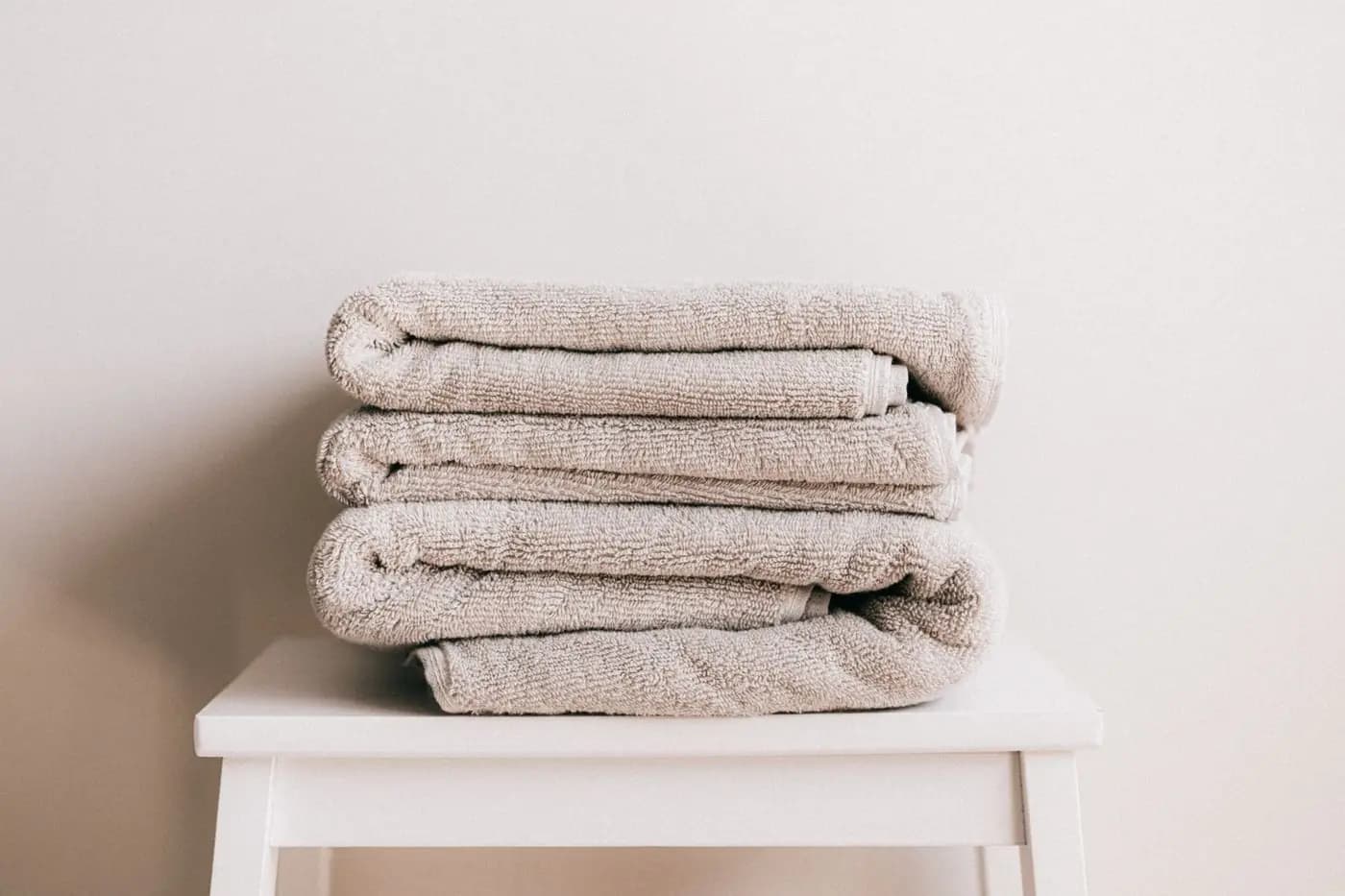
Towel weaving has been established here for more than 130 years, after an earlier specialisation in cotton. According to the manufacturers' association (Imabari Towel Industrial Association), the area has nearly 200 factories linked to the industry (spinning and twisting, dyeing, weaving, finishing) and, as of September 2026, 72 towel makers with 1,174 looms between them. It is Japan's leading towel-producing area.
Why here? Makers point to three reasons:
- The water: the aquifer fed by the Soja River gives soft, low-mineral water, ideal for bleaching and dyeing without hardening the fibres. The result is clean colours and a supple feel.
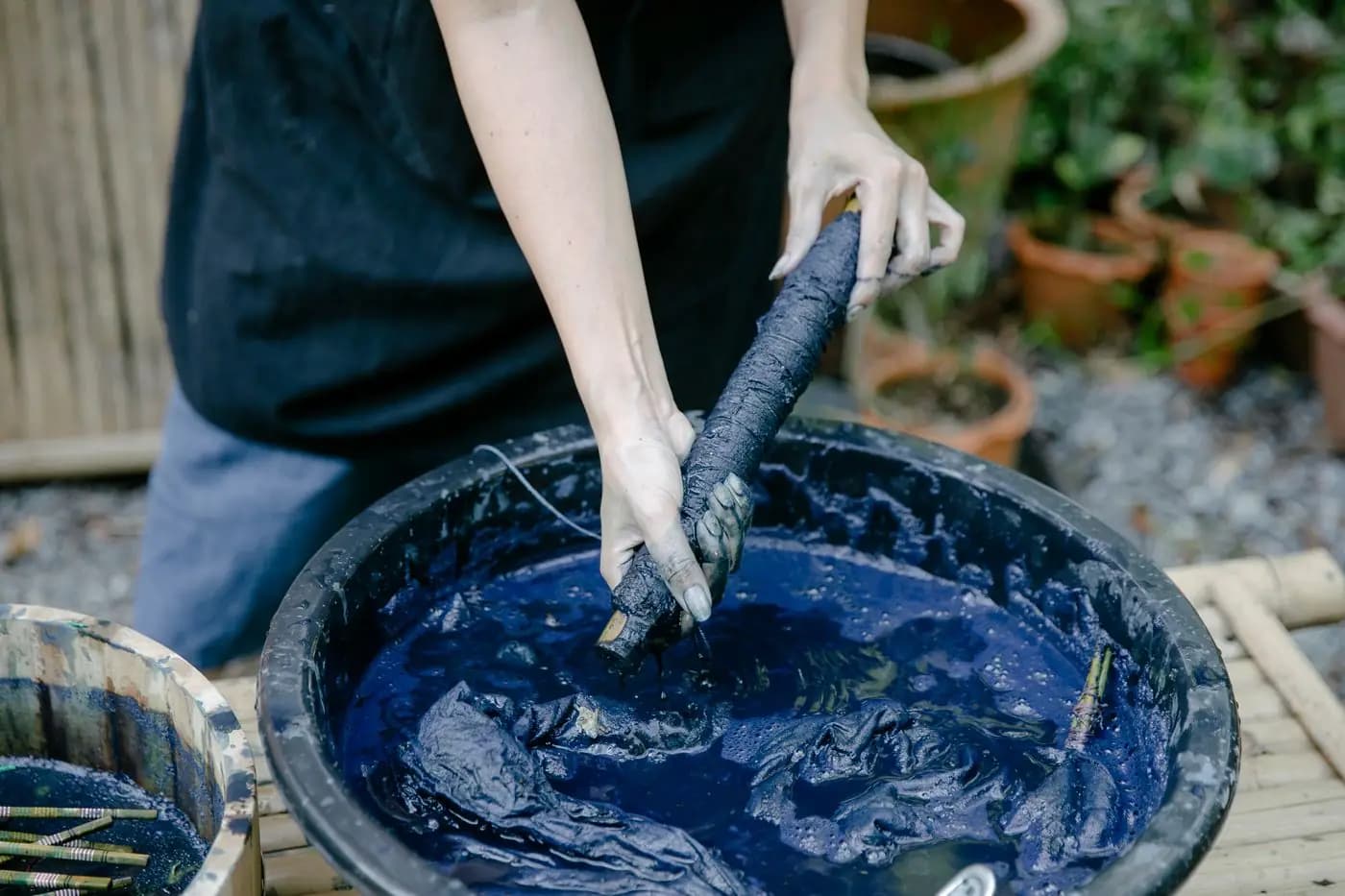
- Bleaching and dyeing the yarn before weaving (sakizarashi, sakizome), which allows woven patterns and precise colours, whereas many producers dye the finished cloth.
- A complete chain on site, from yarn to finished product, with specialist workshops at each stage.
In the early 2000s the industry was suffering from cheap imports. The revival came through a collective brand, launched in 2006 with creative director Kashiwa Sato, and strict quality standards. That brand, with its small red, white and blue logo, is what you look for in shops today.
The Imabari Towel brand and the 5-second rule
Not every towel made in Imabari may carry the logo. To become a certified Imabari Towel product, each model must pass a series of tests set by the association. The best known is the 5-second rule: a small square of towel is placed on the surface of water and must start to sink within 5 seconds (the sinking method of the JIS L1907 standard). The test is done twice, on an unwashed new sample and after three washes, and both must pass.
The other, less famous criteria matter just as much in use:
- lint loss limited to 0.2% after washing;
- pile retention, measured as pull-out force;
- colour fastness to light, washing, sweat and rubbing;
- tensile and bursting strength, and dimensional stability in the wash (±7%);
- no free formaldehyde above the regulatory threshold.
A new towel often absorbs poorly because of finishing agents; not so a certified one, which must absorb from first use. On the label the logo comes with a certification number specific to the model: the simplest way to tell a genuine brand product from a towel that is merely "made in Imabari" or from a copy.
The association also trains "towel sommeliers", a certification created in 2007 that held its 21st exam session in 2026. In shops, they are the ones who ask whether you prefer a soft, firm or highly absorbent towel, and for what use.
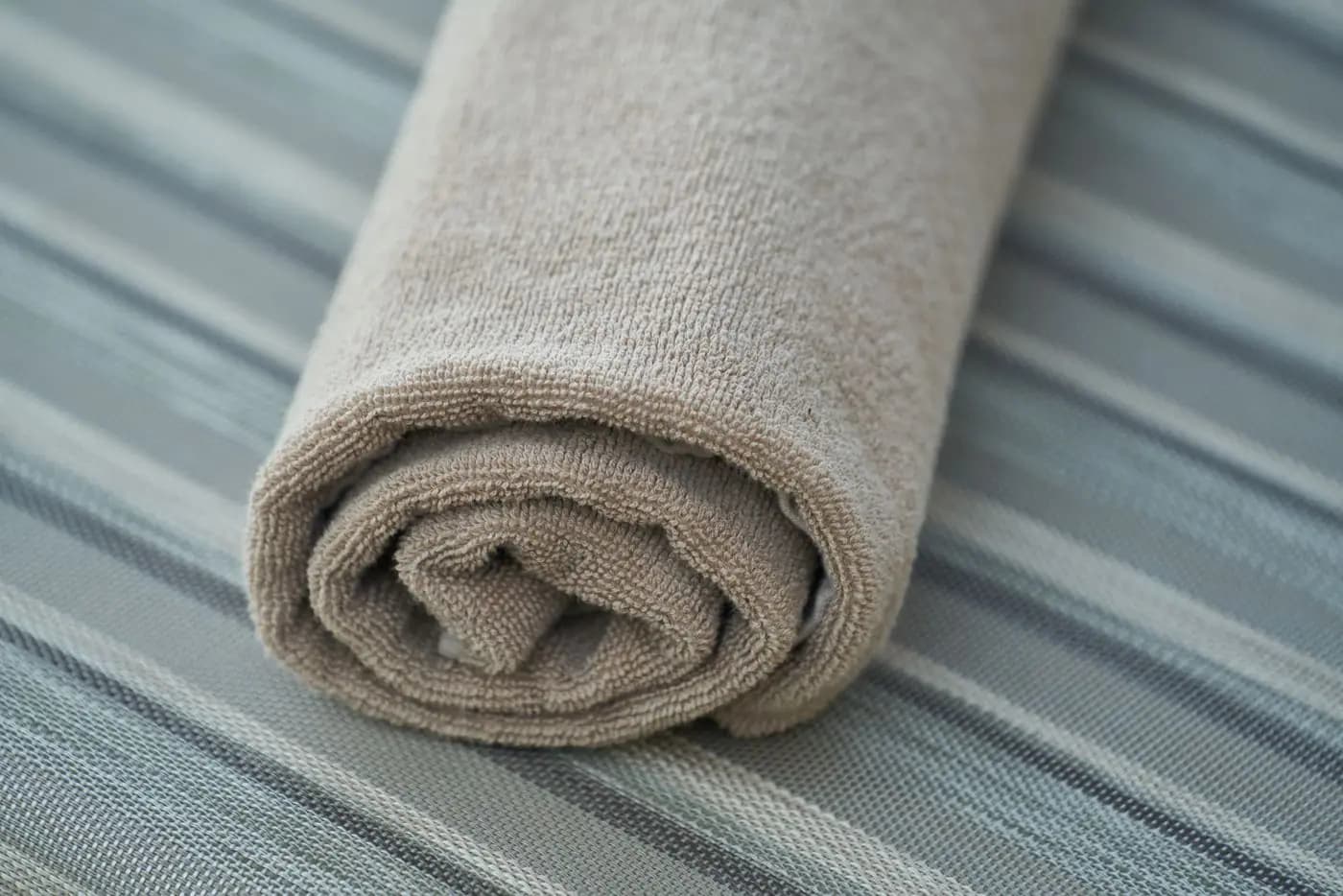
Where to see and buy towels in Imabari: flagship store, LAB and Towel Museum
Towel factories are industrial sites rarely open to the public without an appointment. Three places, however, let you understand and buy without formalities.
Imabari Towel Honten (the brand's flagship store), in the Higashimon-cho district, about 10 minutes by taxi from JR Imabari Station. Open 9:30am–6pm every day except New Year, with a café attached. It stocks models from many makers, sorted by feel and use, with sommeliers on hand.
Imabari Towel LAB, right next door (9am–6pm, same opening days, free entry). This is the place to try the 5-second test yourself: certified and non-certified towel squares, a water tray and a stopwatch; the difference is obvious at once. You can also see a replica of Japan's first towel loom, a treadle loom and a power loom, sometimes with staff who explain and let you try. A film follows the production stages (dyeing, warping, weaving, washing, hemming).
Towel Museum (Taoru Bijutsukan), in Asakura, in the countryside south of Imabari. A frequent question: it is indeed open in 2026, 9:30am–6pm year round, with a few announced closing days (14 and 19 January 2027). It is not the collective brand's museum but that of one maker, the Ichihiro group. Gallery entry costs ¥1,000 per adult (¥900 for 15 people or more, ¥700 for 30 or more); shops, restaurants and gardens need no ticket. It covers the production stages from cotton to weaving, textile art exhibitions and a very large shop. A paid factory tour is offered. Allow 20 to 25 minutes by car from central Imabari, about an hour from Dogo Onsen (Matsuyama).
Prices: a certified face towel costs around ¥1,000–2,500, a bath towel roughly ¥3,000–8,000, more for long-staple cotton or gauze weaves.
Imabari and shipbuilding: the town of shipyards and shipowners
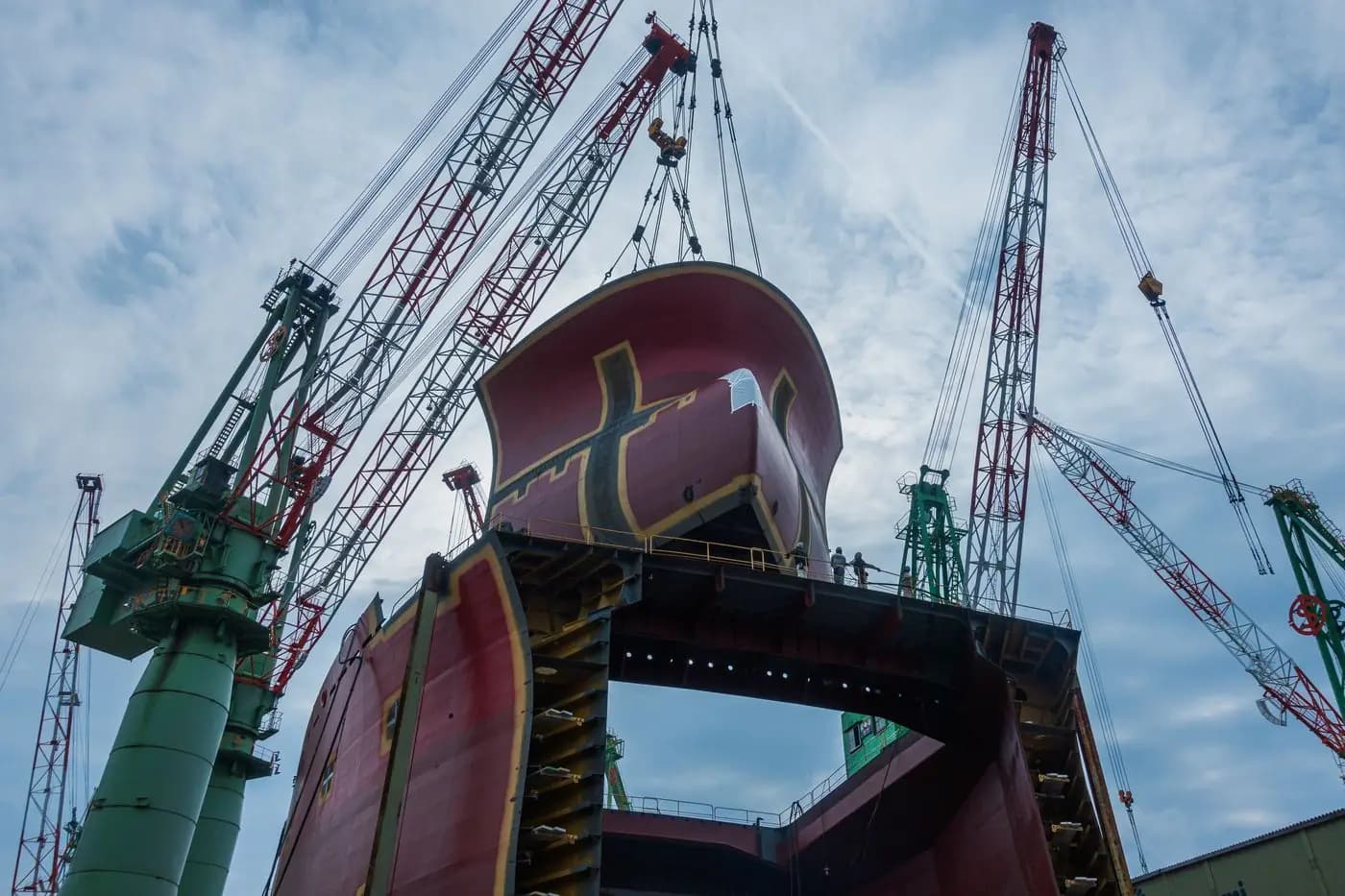
Imabari's other face is visible from the coast road and the bridges: cranes, hulls under construction, shipyards on almost every island. The town calls itself Japan's leading "maritime city": shipyards (including the headquarters of Imabari Shipbuilding, the country's largest shipbuilder), equipment suppliers and above all a high concentration of shipowners, known in the shipping world as the "Imabari owners".
For an independent visitor, shipbuilding is mostly seen from outside:
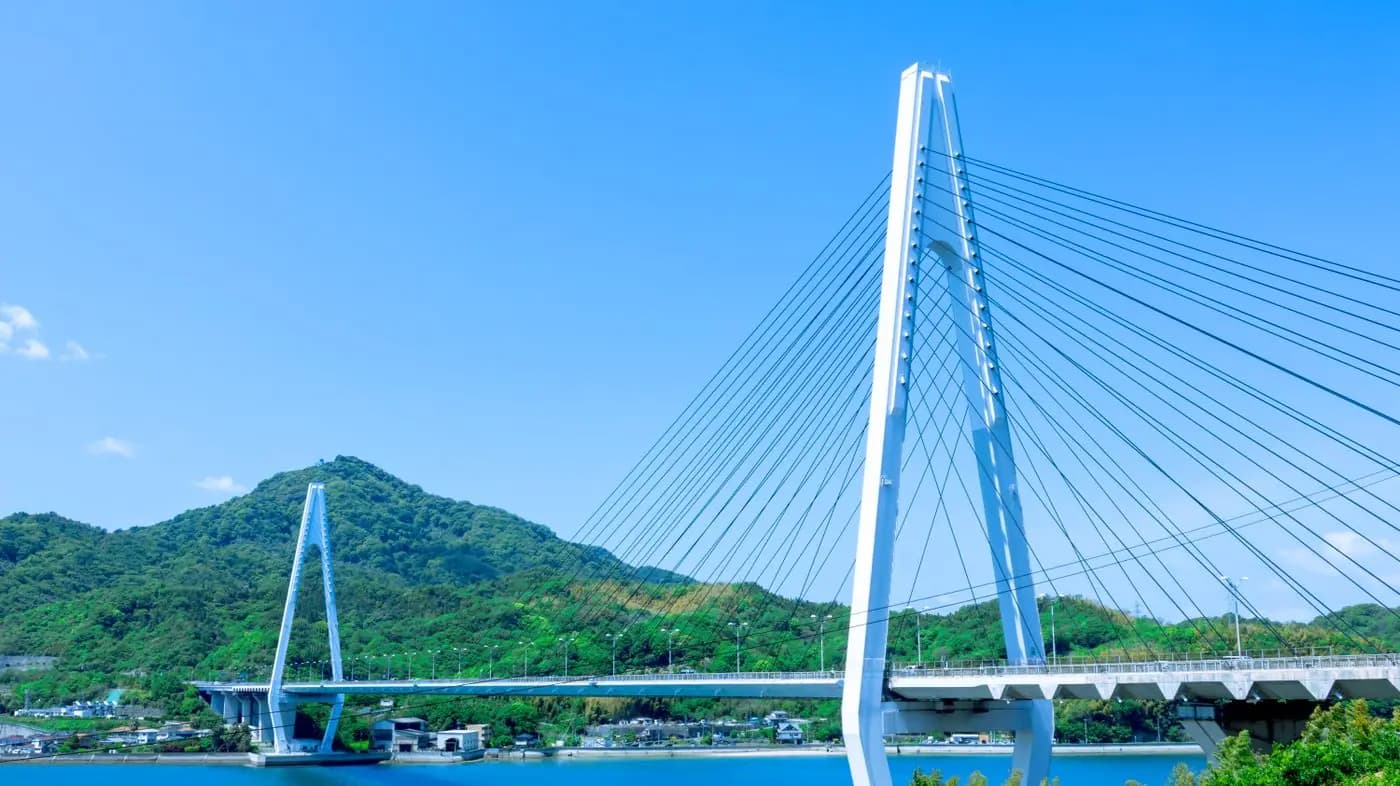
- from the Shimanami Kaido bridges and viewpoints (Kirosan on Oshima Island), overlooking slipways and hull blocks;
- at launch ceremonies, sometimes open to the public when announced by the city or yards, an impressive sight;
- at the international maritime exhibition Bari-Ship, held every two years in Imabari; the next edition is scheduled for 20–22 May 2027 at Texport Imabari, with the final day open to the general public.
For a professional group (industry, logistics, ship finance, engineering), a shipyard visit can sometimes be arranged on request and well in advance, with strict rules: safety equipment, no photos in many areas, limited numbers. It is typically the kind of access negotiated through contacts, not an online form.
In town, Imabari Castle, built in the early 17th century, is one of the few castles in Japan whose moat is filled with seawater.
Cycling the Shimanami Kaido: combining towels and an island crossing
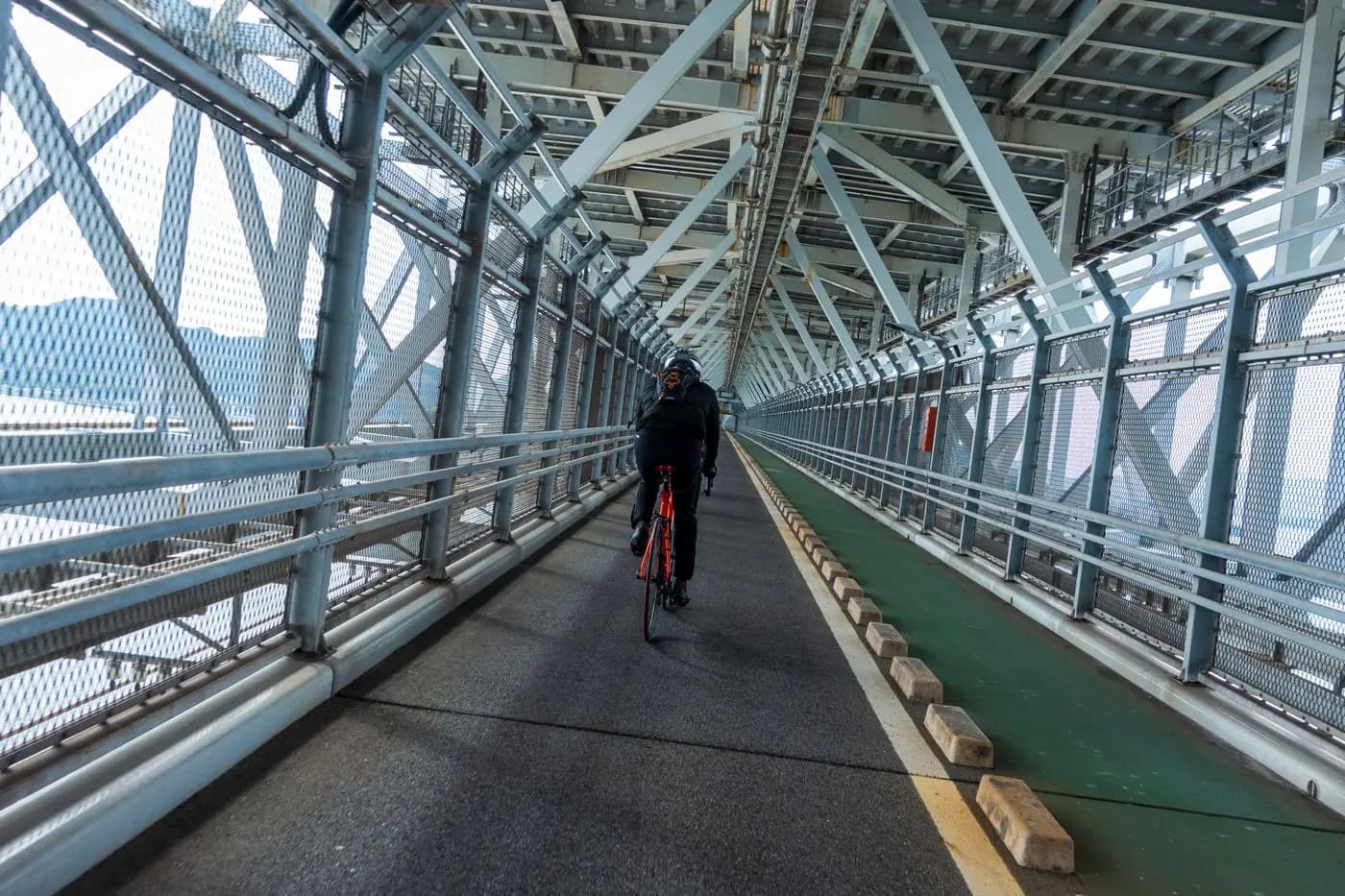
Imabari is one of the two ends of the Shimanami Kaido, the route linking Onomichi (Hiroshima) to Imabari across six islands and a series of bridges, about 70 km in all. A continuous cycle path, marked by a blue line on the road, makes it one of Japan's best-known cycling routes.
Useful information:
- Crossing the bridges is free for bicycles until 31 March 2028 (the "Shimanami Cycling Free" scheme, extended in 2026), with no formalities.
- Rental: rental terminals are spread along the route, including Sunrise Itoyama at the foot of the Kurushima-Kaikyo Bridge on the Imabari side. Allow roughly ¥2,000–4,000 a day depending on the model, plus a deposit; electric bikes must be returned to their starting terminal, while standard bikes can often be dropped at another one.
- Time: the full 70 km takes a day for a regular cyclist (6 to 8 hours with stops). For a group or occasional riders, better to do a section: Imabari to Oshima Island to Hakata-jima, then back by coach or boat.
- Climbs: the route is flat, but each bridge is reached by a winding ramp of about 2 to 3 km.
The most pleasant sequence for towel enthusiasts: morning in Imabari (flagship store and LAB), afternoon cycling to the Kirosan viewpoint or beyond, night on an island or in Onomichi. Alternatively, start in Onomichi and finish in Imabari with the shops as a reward.
Spring (April–May) and autumn (October–November) give ideal conditions; in summer, heat and humidity make the full crossing hard work. In strong wind or typhoons, the bridges may close to bicycles.
Getting to Imabari and how long to stay
Imabari is not on the shinkansen line, so you need to pick your way in:
- Via Matsuyama: Matsuyama Airport (flights from Tokyo, Osaka and other cities), then about 70 minutes by car to central Imabari; or a JR limited express from Matsuyama to Imabari, about 35 to 40 minutes.
- Via Hiroshima and Onomichi: shinkansen to Fukuyama or Shin-Onomichi, then an express bus along the Shimanami Kaido to Imabari (about 1h30 from Onomichi), or by bike for the keen.
- Via Okayama: limited express towards Matsuyama over the Seto Bridge, getting off at Imabari, about 2 hours.
How long to stay?
- Half a day: flagship store and LAB in town, Imabari Castle.
- A day: add the Towel Museum in Asakura (car or taxi essential) and a viewpoint over the Kurushima Strait.
- Two days: one day for towels and the town, one day on the Shimanami Kaido by bike or coach with island stops (Oyamazumi Shrine on Omishima, the art museums of Ikuchijima).
Boat trips into the currents of the Kurushima Strait, among the strongest in Japan, make a good one-hour add-on from Oshima Island.
Imabari for groups: visits, workshops and corporate gifts
For a seminar or incentive in western Japan, Imabari offers a rare combination: a quality industry that is easy to grasp, an accessible physical activity (cycling over the bridges) and a useful gift for every participant.
Some pointers for a group of 20 to 40:
- Towel Museum: it has a group booking form, with or without a meal, and reduced rates from 15 and 30 people. Coaches park easily and parking is free. The restaurant can host a group lunch.
- Flagship store and LAB: in small groups of 10 to 15, otherwise the space fills up fast; the 5-second test works very well as a team activity (who can spot the certified towel?).
- Factory visit: apart from the Towel Museum's paid tour, a visit to a maker must be requested well ahead; some accept groups on weekdays when the looms are running.
- Cycling: book electric bikes in advance, a support vehicle, and a route of about twenty kilometres rather than the full crossing.
- Gifts: certified towels embroidered with the company or event name are a classic business gift in Japan. Custom orders go through the makers or the Minami-Aoyama store in Tokyo, which handles corporate requests; allow several weeks.
SHINOGI DMC builds these stops in Imabari and along the Shimanami Kaido, with group bookings, bikes and support vehicle, interpreters and embroidered gifts for participants.
Frequently asked questions
What is the Imabari towel 5-second rule?
A square of towel placed on water must start to sink within 5 seconds, both new and after three washes. It is one of the criteria for the Imabari Towel logo.
Is the Imabari Towel Museum open?
Yes, in 2026 it is open year round, 9:30am–6pm. Gallery entry costs ¥1,000 per adult; shops and restaurants are free to enter.
Where can you try the 5-second test in Imabari?
At the Imabari Towel LAB, next to the Imabari Towel Honten flagship store, open 9am–6pm, free entry.
How do you recognise a genuine Imabari Towel?
Look for the label with the red, white and blue logo and a certification number. A towel merely made in Imabari has not necessarily passed the brand tests.
Can you cycle the Shimanami Kaido for free?
Yes, bridge tolls are free for bicycles until 31 March 2028. Only bike rental costs money, roughly ¥2,000–4,000 a day.
How much does an Imabari Towel cost?
Allow about ¥1,000–2,500 for a face towel and ¥3,000–8,000 for a certified bath towel, more for premium cottons.
Rédaction SHINOGI DMC · Updated
Sources
- Imabari Towel (site officiel de la marque) — 5 secondes, eau, savoir-faire
- Imabari Towel — Liste des boutiques (Honten, LAB, horaires)
- Imabari Towel — Imabari Towel LAB
- Imabari Towel Industrial Association — Critères de qualité de la marque
- Imabari Towel Industrial Association — Données (entreprises, métiers à tisser)
- Towel Museum (Taoru Bijutsukan) — Informations pratiques et tarifs
- Préfecture de Hiroshima — Shimanami Cycling Free
- Bari-Ship — Salon maritime international d'Imabari