Why it is harder in Japan
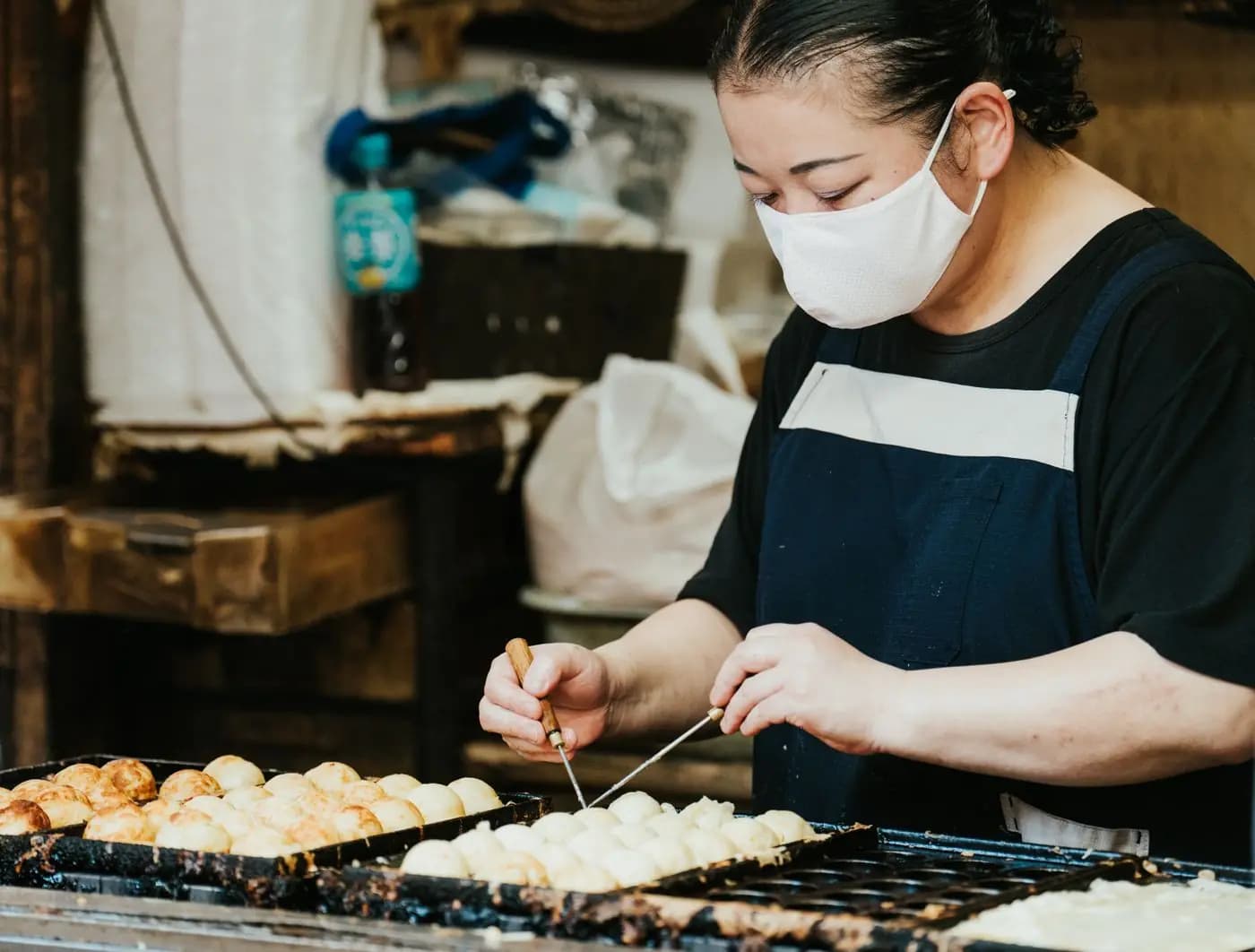
Booking group restaurants in Japan is nothing like booking in Paris or London. Many of the most sought-after addresses are small counters of 6 to 12 seats run by one chef and a small team. The meal follows a single menu (omakase or kaiseki), served at a fixed time, sometimes in two seatings per evening.
Several constraints come on top of that:
- Language: many restaurants only take reservations in Japanese, by phone or through local platforms.
- Trust: some restaurants favor guests introduced by a regular, a hotel or a known partner.
- No-show risk: Japanese restaurants buy ingredients for an exact number of covers. A late cancellation is expensive for them, hence strict terms.
As Eater notes in its guide to Tokyo's best restaurants, a few places remain almost impossible to book without an introduction, yet the city offers more than enough to host a group at a high standard. The key is choosing the right format.
Matching the format to the group size
The golden rule is not to squeeze 40 people into a 10-seat counter. Each group size has its natural format.
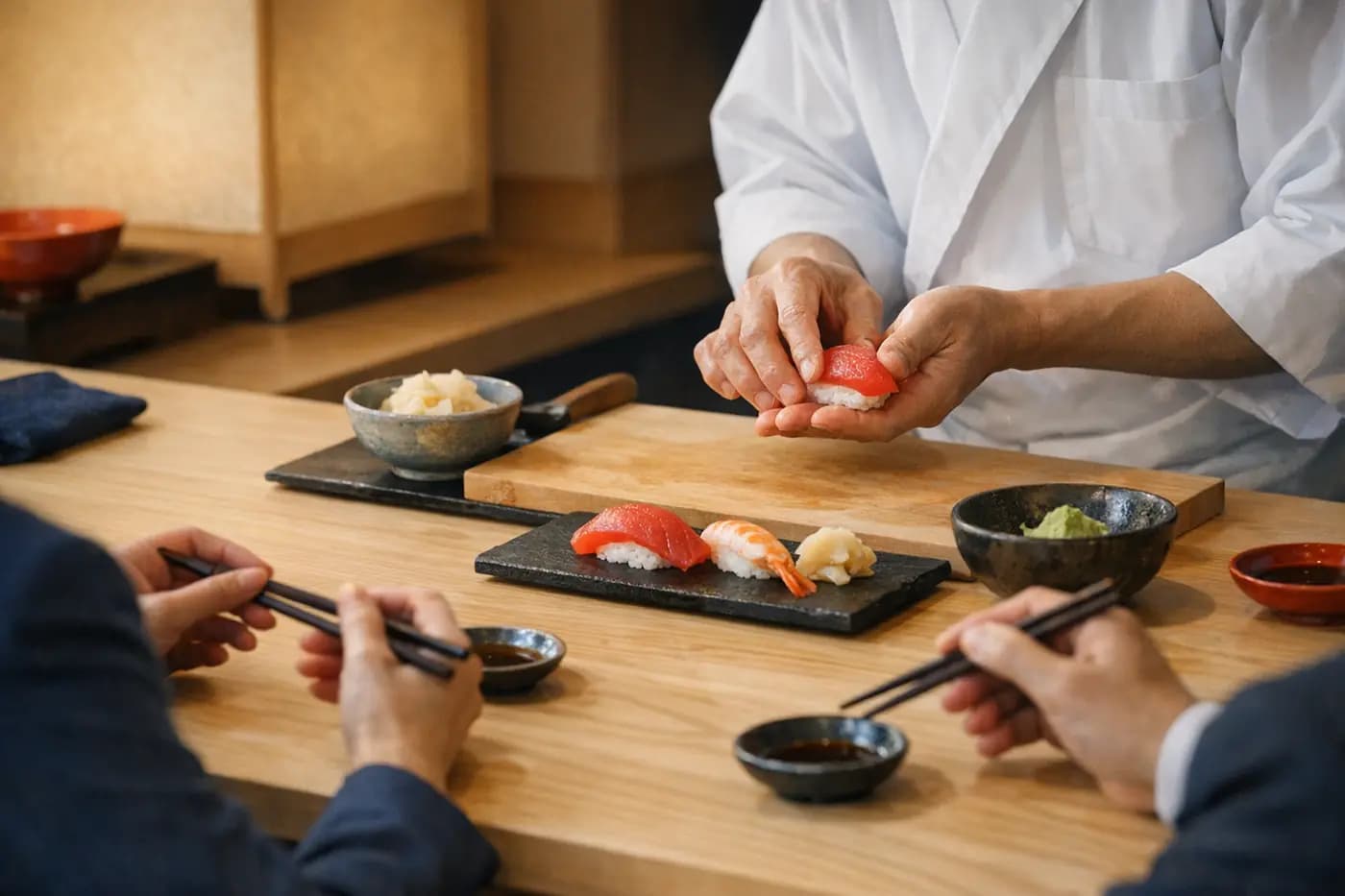
- 2 to 8 guests (executives, VIPs): a sushi, tempura or kaiseki counter. This is the format of the great starred restaurants, approached on request and subject to availability.
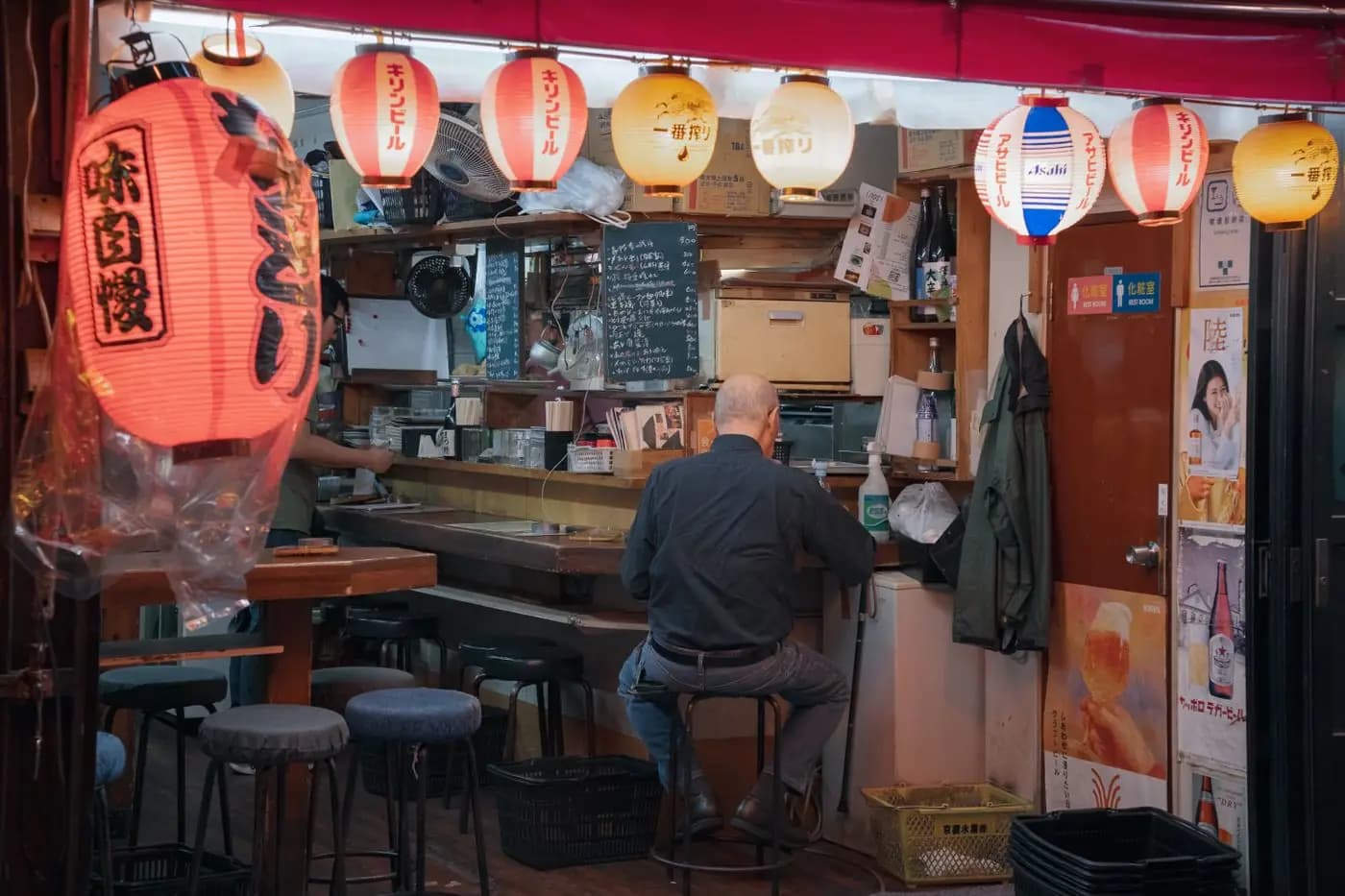
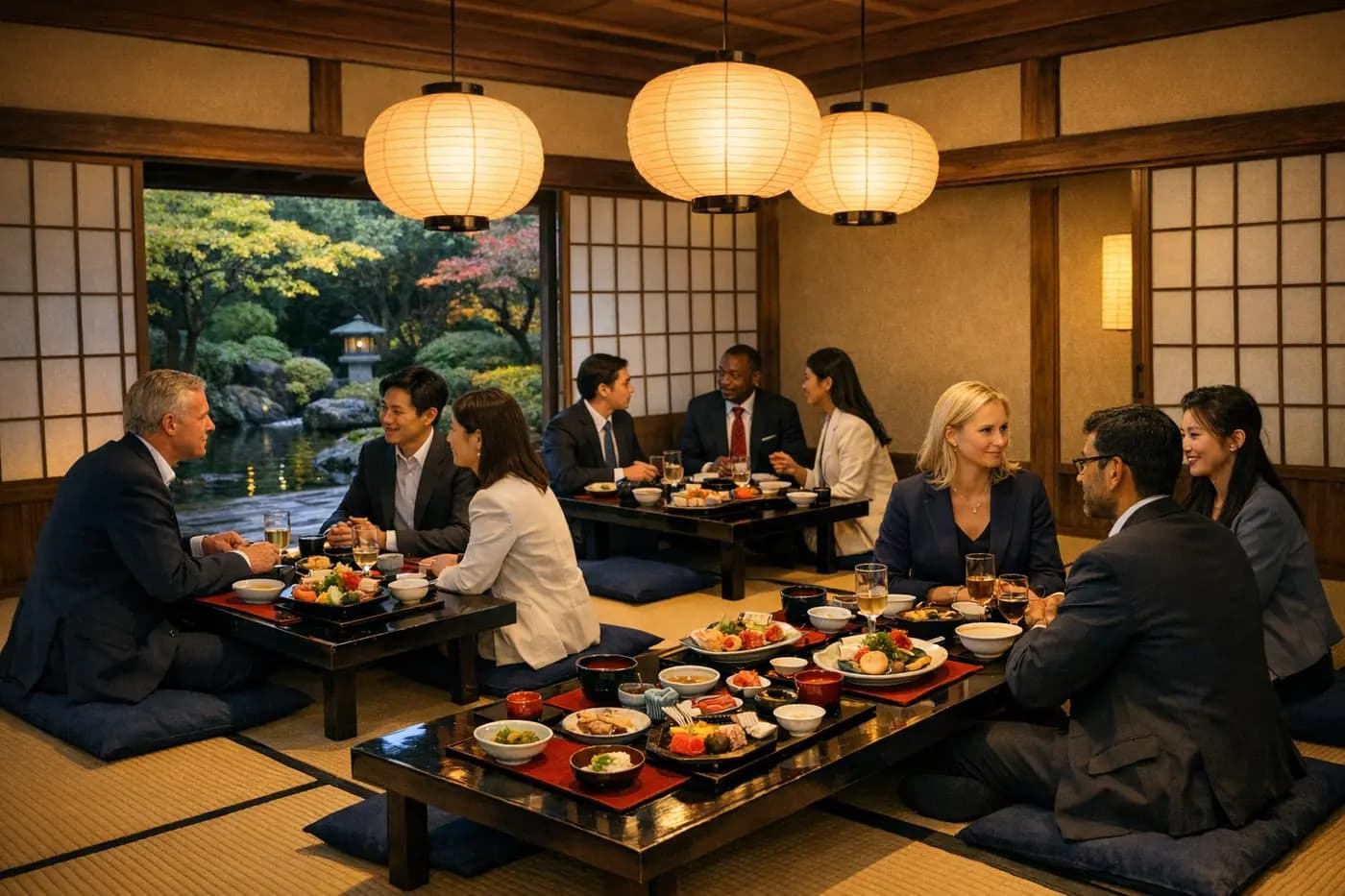
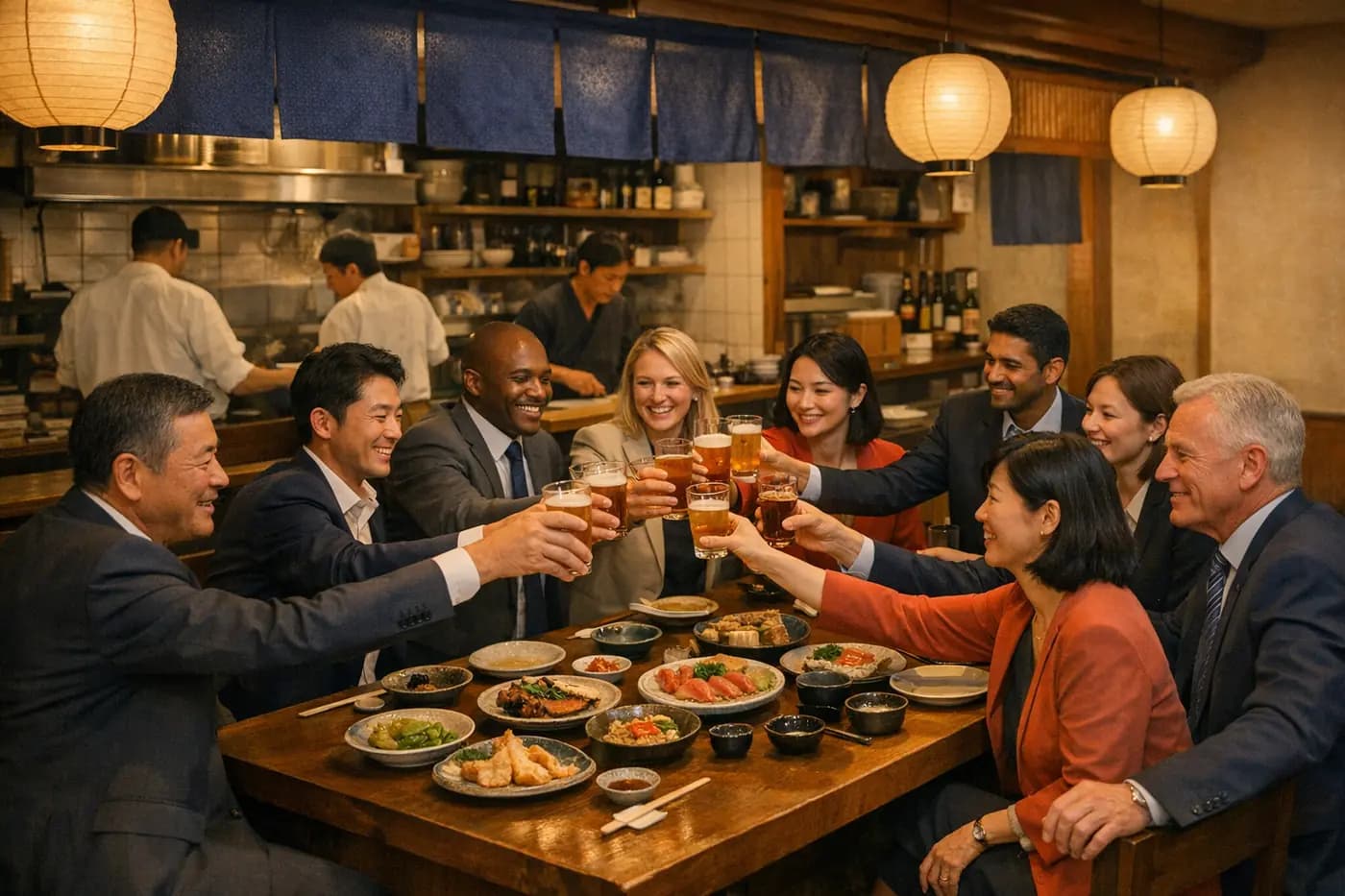
- 10 to 30 guests: a private room (koshitsu) in a kaiseki restaurant, a ryotei or a yakitori restaurant; a private floor in a quality izakaya.
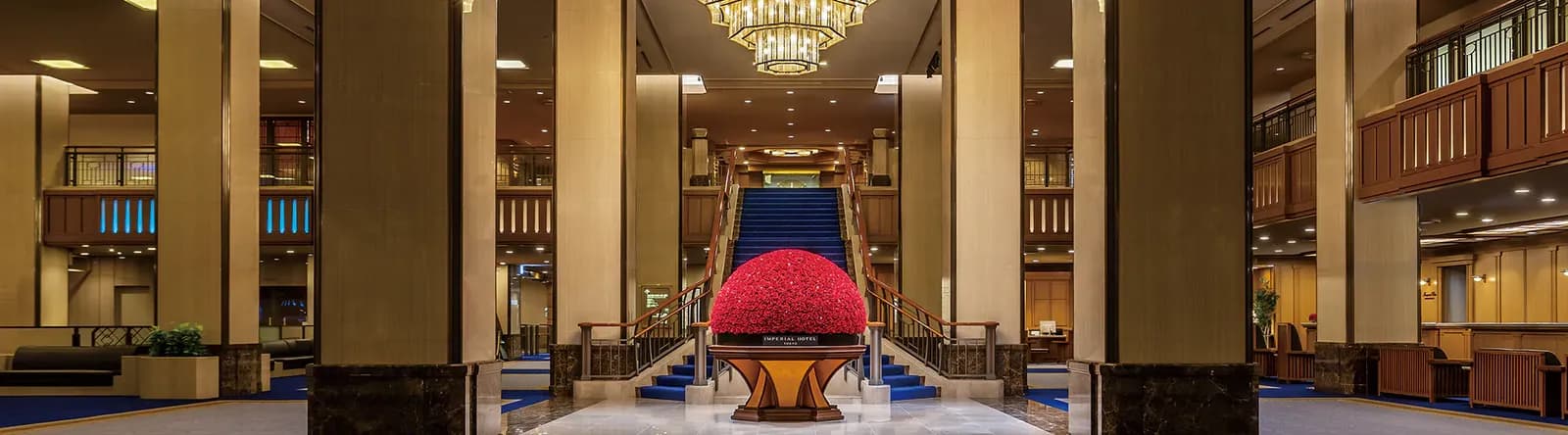
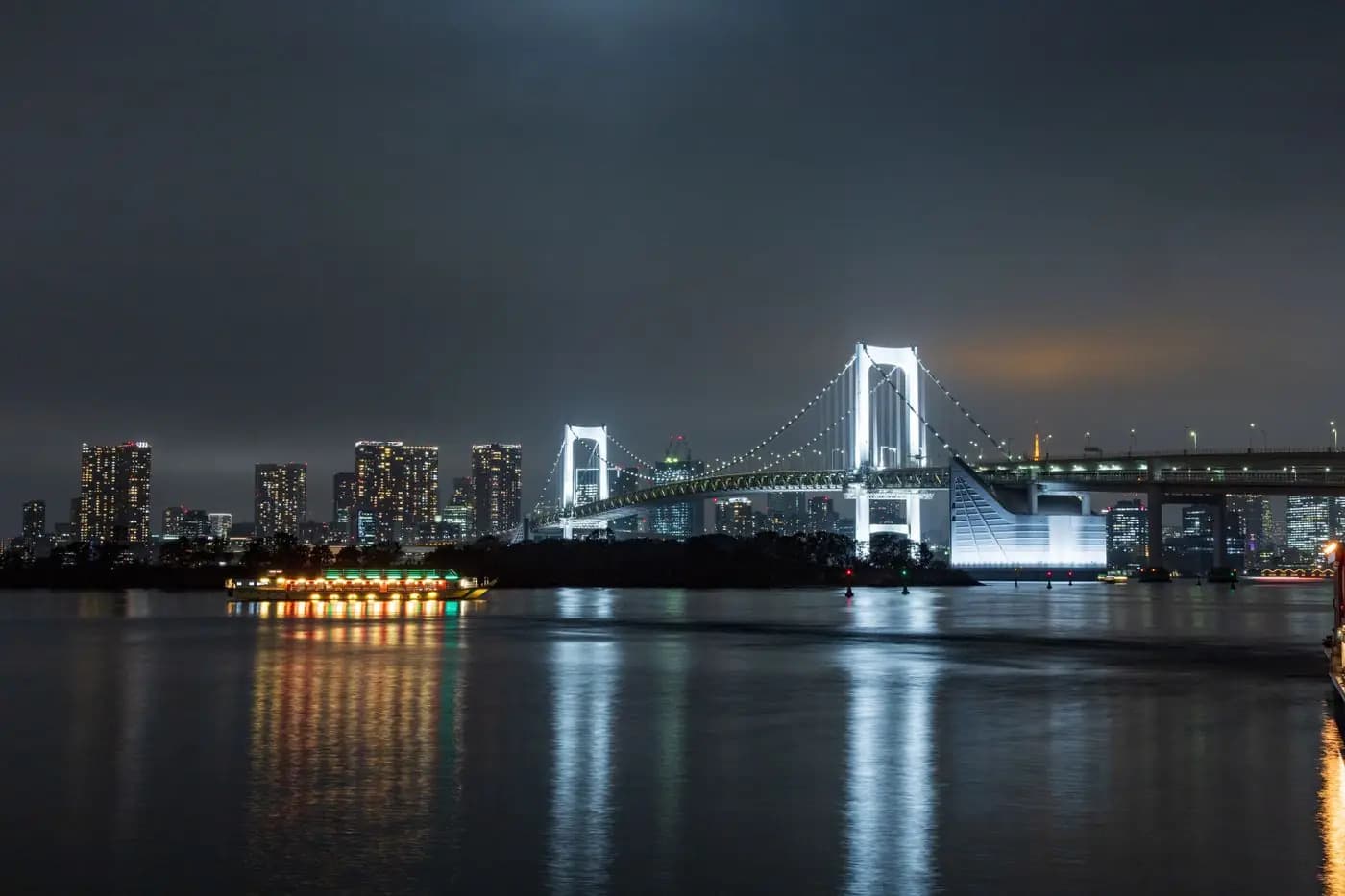
- 30 to 150 guests: a full restaurant buyout, a yakatabune dinner cruise on the Sumida River or Tokyo Bay, or hotel banquet rooms.
- More than 150 guests: a hotel ballroom with Japanese food stations (sushi, tempura, teppanyaki) prepared in front of guests, or an event venue with a caterer.
For a group of 60 that wants a counter experience, we often split guests across several neighboring restaurants, with a shared meeting point afterward for drinks. This preserves authenticity without diluting the experience. It also gives each table its own conversation with the chef, which is the heart of counter dining. A bilingual host at each restaurant keeps the service flowing and handles questions about the dishes.
Booking lead times and calendar
Lead times depend on the type of restaurant. As an indication:
- Renowned counter or starred restaurant: many open reservations 1 to 2 months ahead, sometimes at a precise date and time. Seats go very quickly.
- Private room for 10 to 30: 2 to 3 months, longer in high season.
- Full buyout or yakatabune: 4 to 6 months.
- Hotel banquet: book at the same time as rooms and meeting space.
Some periods are especially tight. December is bonenkai season, when Japanese companies hold year-end dinners, and private rooms and izakaya are fully booked. Cherry blossom season, Golden Week and autumn in Kyoto also complicate reservations. January and February, by contrast, often offer more flexibility.
Distinctions at the top end change every year. The Michelin Guide Tokyo 2026, for instance, promoted Myojaku to three stars and Nishiazabu Sushi Shin, Hakuun and Ensui to two stars, which further increases demand. In Kyoto, the 2026 edition awarded Miyamasou a third star, the first new three-star restaurant in Kyoto in six years.
Rules for a successful reservation
A group reservation in Japan rests on a few commitments the restaurant expects from you:
- Final numbers: usually required 3 to 7 days before the dinner, sometimes 10 days for a buyout. After that, any cancellation may be charged in full.
- Dietary restrictions: allergies and vegetarian, pork-free or alcohol-free requests must be communicated in Japanese at booking. In kaiseki or counter dining, menus are prepared in advance and rarely adaptable on the day.
- Punctuality: plan to gather the group 15 min before the reservation; a counter seating starts on time for everyone. Significant lateness may lead the restaurant to begin service without waiting.
- Fragrance: it is customary to avoid perfume at a sushi counter, where it interferes with tasting.
- Photos: ask the chef before taking pictures, and never photograph other guests.
- Payment: a single bill settled by the organizer; tipping is not customary. A service charge often applies in hotels and some restaurants.
A Japanese-speaking contact on the organizer's side, reachable on the day, is the best safeguard against misunderstandings.
Ideas city by city
Each city has its preferred formats for groups:
- Tokyo: private kaiseki rooms in Ginza or Nishi-Azabu, yakatabune on the Sumida River, private izakaya floors. Eater recently added Tofu Shokudo; Yamariki, a century-old izakaya known for its offal stew and pork skewers; and the Peak Lounge and Bar at Park Hyatt Tokyo, whose refined tea service is an elegant option for a small group in the afternoon.
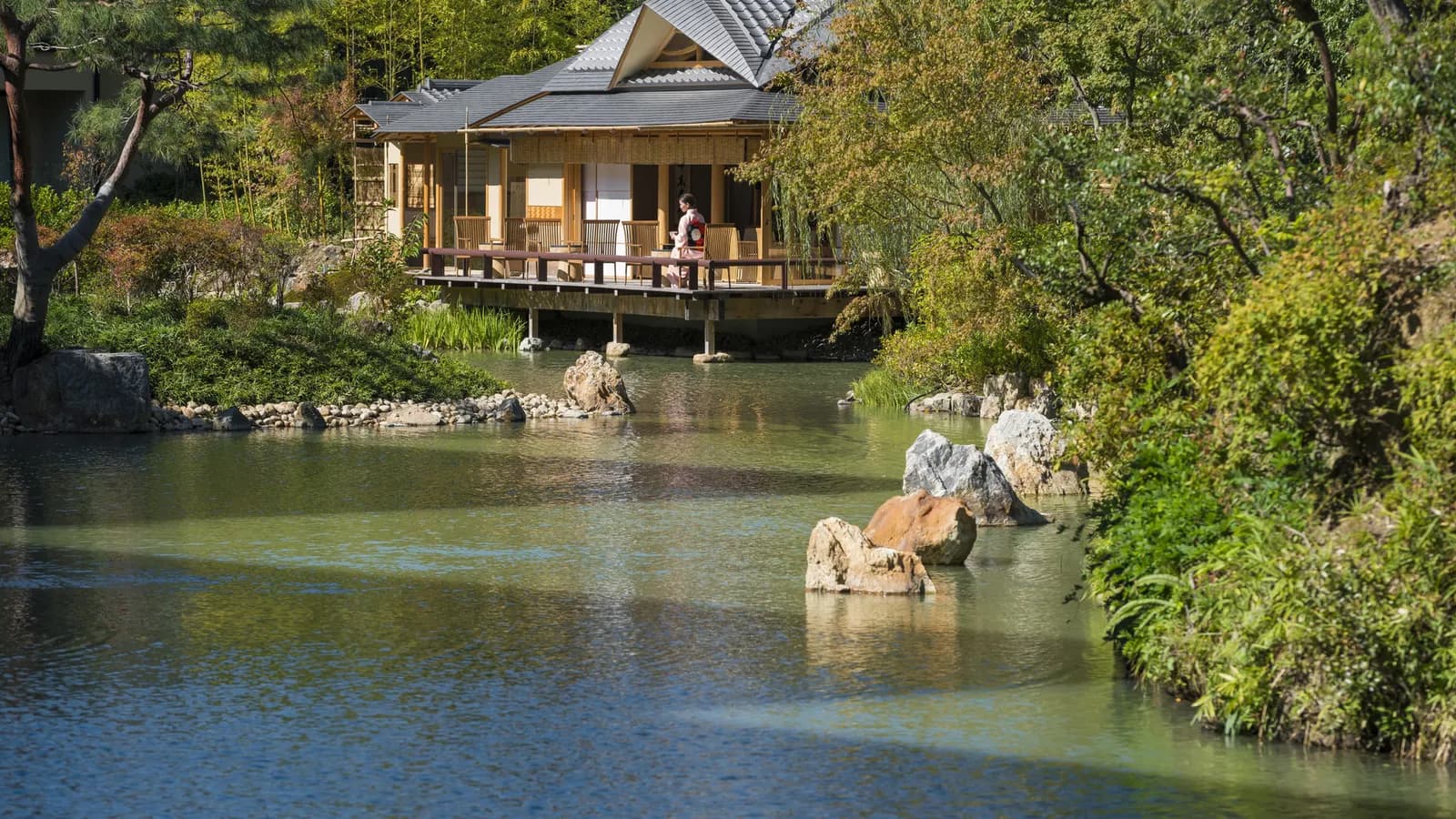
- Kyoto: kaiseki in historic houses such as Kikunoi, private rooms on request and subject to availability; dinners in Gion or Pontocho.
- Osaka: street food evenings in Dotonbori, kaiseki in Kitashinchi, teppanyaki and wagyu for mid-sized groups.
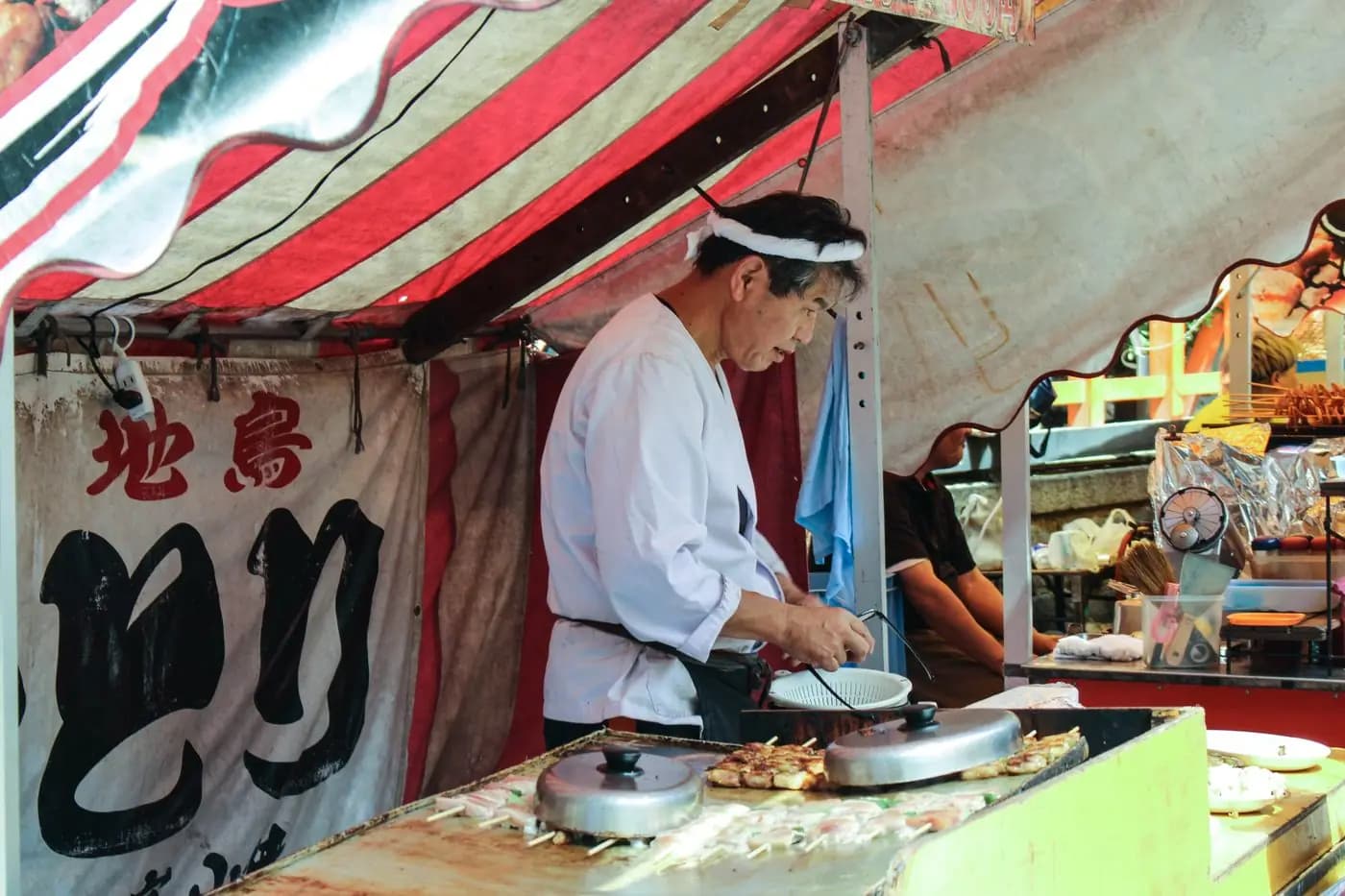
- Fukuoka: the yatai street stalls of Nakasu and Tenjin each seat only around ten people; for a group, we organize a team-based tour across several stalls.
- Okinawa: Ryukyu cuisine and awamori, private beach dinners at the resorts; in the north of the island, Ten no Fune, a buckwheat galette cafe that opened in late 2025, recommends reservations, especially for groups.
Indicative budgets and the DMC's role
The following budgets are purely indicative, per person, excluding drinks unless stated, and vary with season and venue:
- Private izakaya with a drinks package (nomihodai, often 120 min): about ¥8,000 to ¥15,000.
- Hotel banquet, Japanese or mixed cuisine: about ¥15,000 to ¥30,000.
- Kaiseki dinner in a private room: about ¥20,000 to ¥50,000.
- Sushi counter or starred restaurant: often ¥40,000 and above.
A DMC's role is to make these reservations possible and secure: booking in Japanese through the right contacts, introducing the group and its purpose, negotiating cancellation terms, translating dietary restrictions, confirming numbers, hosting the group on site and settling the bill. Since 2005, our team has built these relationships with restaurants across the five cities where we operate. Whether you need group restaurants in Japan for a convention or a private dinner in Kyoto, the method is the same: the right format, early planning and respect for the house rules.
Frequently asked questions
Can a starred restaurant be booked for a group of 20?
Rarely at the counter, since most seat only 6 to 12. Some restaurants have private rooms or accept buyouts on request and subject to availability. An effective alternative is to split the group across several quality restaurants close to one another.
How far ahead should a group restaurant in Tokyo be booked?
As an indication, 2 to 3 months for a private room for 10 to 30, and 4 to 6 months for a buyout. In December, when Japanese companies hold year-end dinners, plan even further ahead.
How are dietary restrictions handled?
They should be collected at participant registration and passed to the restaurant in Japanese at booking, with a named list. Since kaiseki and omakase menus are prepared in advance, last-minute requests are rarely possible.
What happens in case of cancellation?
Terms vary, but a late cancellation or no-show is often charged in full, because ingredients are purchased for the exact number of covers. We negotiate these terms upfront and include them in the quote.
Should we tip at restaurants in Japan?
No. Tipping is not customary and can even cause embarrassment. A service charge is often included in hotels and some restaurants. The best way to show appreciation is punctuality, respect for the house rules and a sincere thank-you to the chef.
Rédaction SHINOGI DMC · Updated