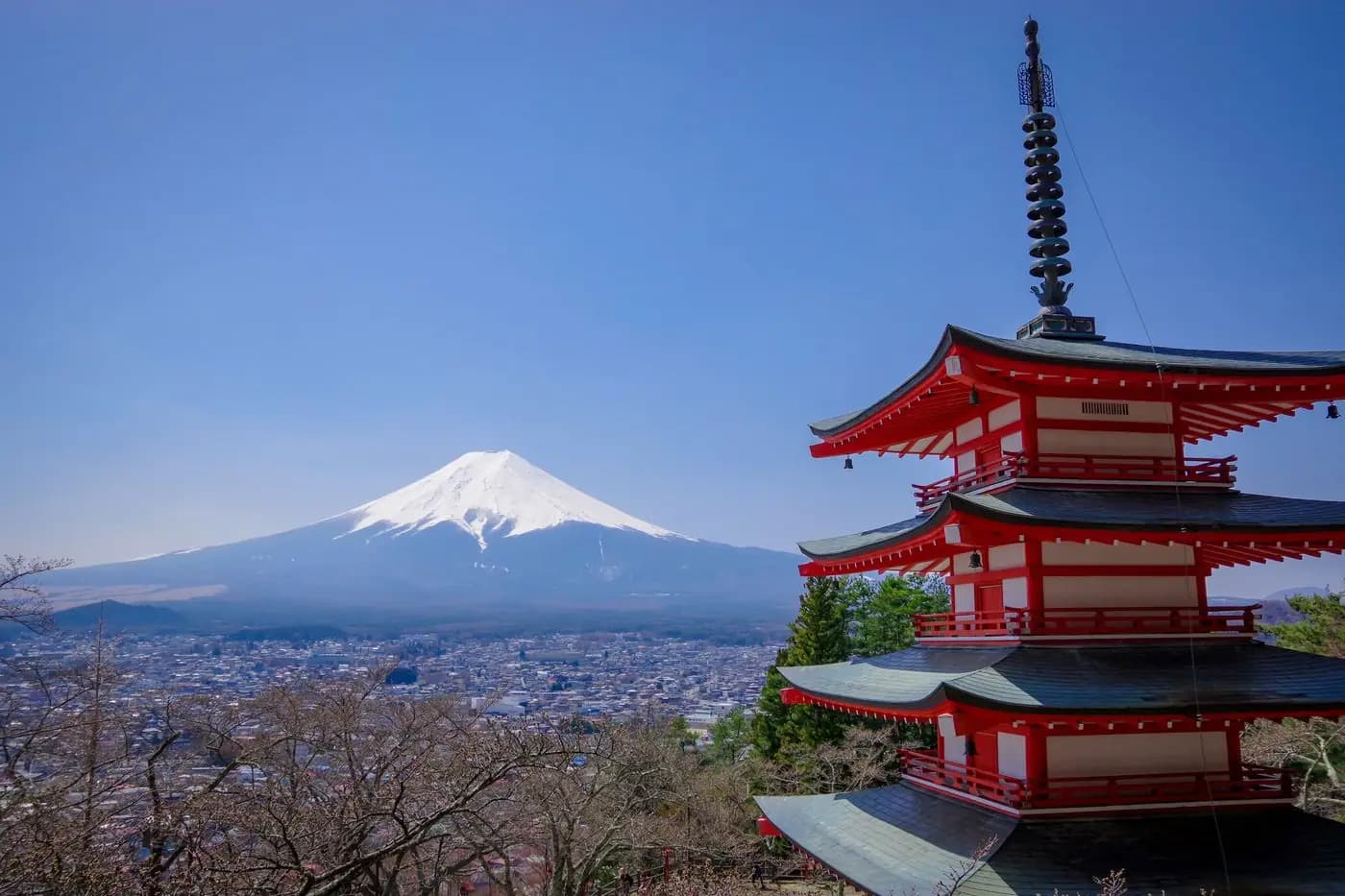
When can you see Mount Fuji? Visibility by season and time of day
Mount Fuji is shy. You can spend two days by Lake Kawaguchi without seeing it, then find it sharp and snow-capped one morning at 6am. Three factors decide everything: season, time of day and humidity.
- November to February: the best period. Cold, dry winter air gives the clearest mornings, and the mountain is snow-covered. North-westerly winds can also cap the summit with a lenticular cloud, which is very photogenic.
- March to May: decent morning visibility, with cherry blossoms around the lakes in mid-April (later than in Tokyo) and pink shibazakura moss near Lake Motosu in late April and May. Spring haze builds quickly during the day.
- June to August: the hardest season. Rainy season in June, then humid heat: Fuji can stay hidden for several days in a row. Try your luck before 8am.
- September and October: variable, with typhoons in September. The first snow on the summit usually falls in late September or early October, and the maples turn red around the lakes in late October and early November.
During the day, the rule is simple: the earlier, the better. Clouds rise as the morning warms; a second window sometimes opens at sunset, when the air cools.
Before setting off, check the live cameras around the lakes and on the roads: they show in real time whether the mountain is visible. On a stay of several days, keep your Fuji day flexible and move it to the first clear morning.
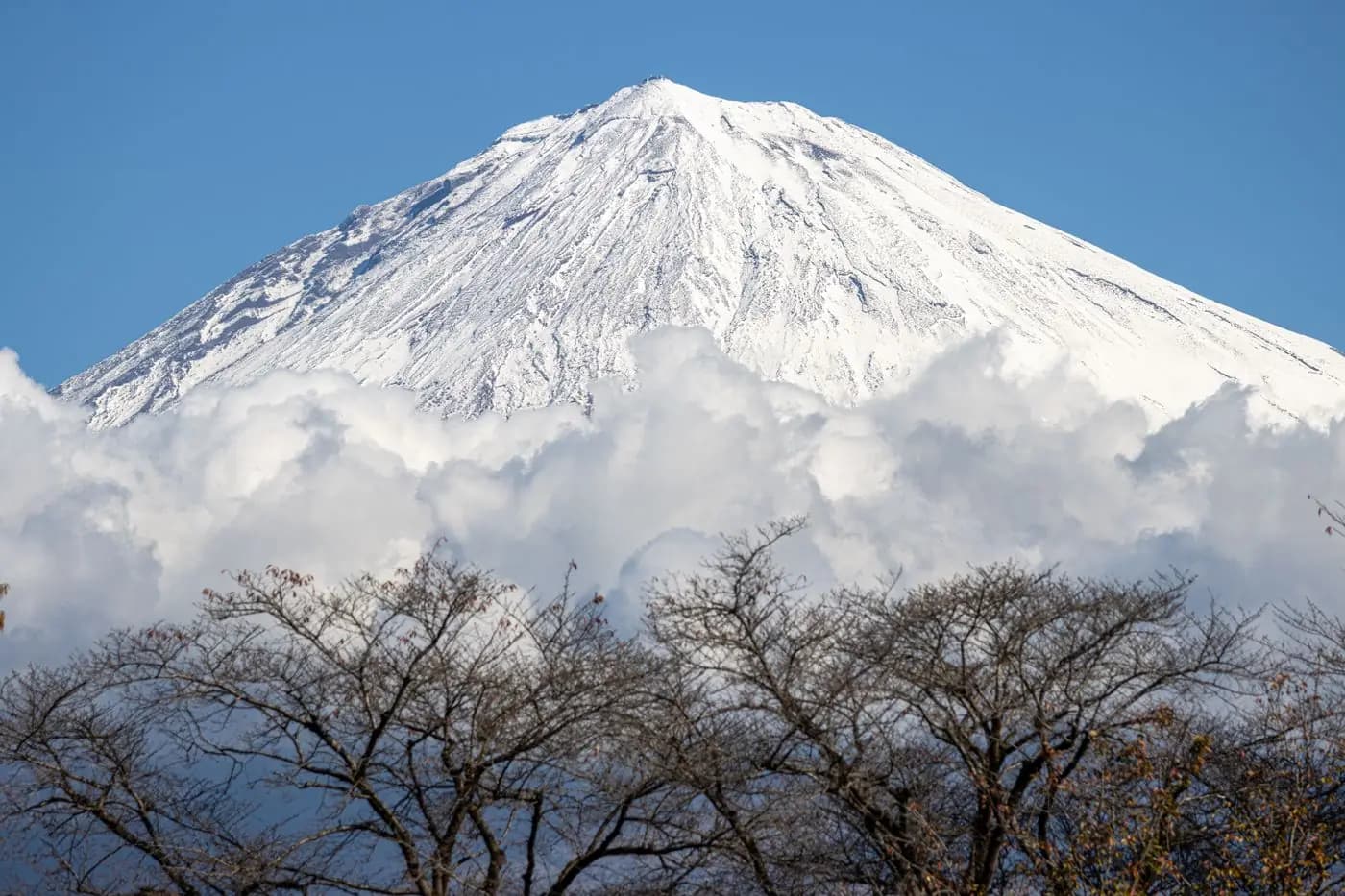
The Fuji Five Lakes: where to see the mountain up close
North of the volcano, on the Yamanashi side, the five lakes offer the closest and most varied views. Kawaguchiko, 2 hours from Tokyo by Fuji Excursion train or express bus from Shinjuku, is the base.
- Lake Kawaguchi: the most accessible. On the north shore, Oishi Park frames the mountain above the water, with beds of lavender in June–July and kochia, which turns red in October. The Mount Kachi-kachi ropeway on the east shore gives a view down over the lake and Fuji. On still mornings, the mountain is reflected in the water.
- Lake Yamanaka: the largest and highest, open to the east. In winter, people watch for Diamond Fuji, when the sun sets exactly on the summit.
- Lake Saiko: the quietest, with Iyashi no Sato, a rebuilt village of thatched-roof houses, from which you see Fuji behind the roofs.
- Lake Shoji: the smallest, with the Panorama-dai hike (an hour's climb) for an open view of the mountain and the Aokigahara forest.
- Lake Motosu: the deepest and bluest. The viewpoint on the north shore is the one that featured on the back of the old ¥1,000 note. The shibazakura festival takes place nearby in late April and May.
To get around, sightseeing buses loop around Lakes Kawaguchi, Saiko and Narusawa; for Motosu and Shoji, a car or coach is far more practical. Staying overnight in a ryokan with rooms facing the mountain is the best way to catch the first clear morning.
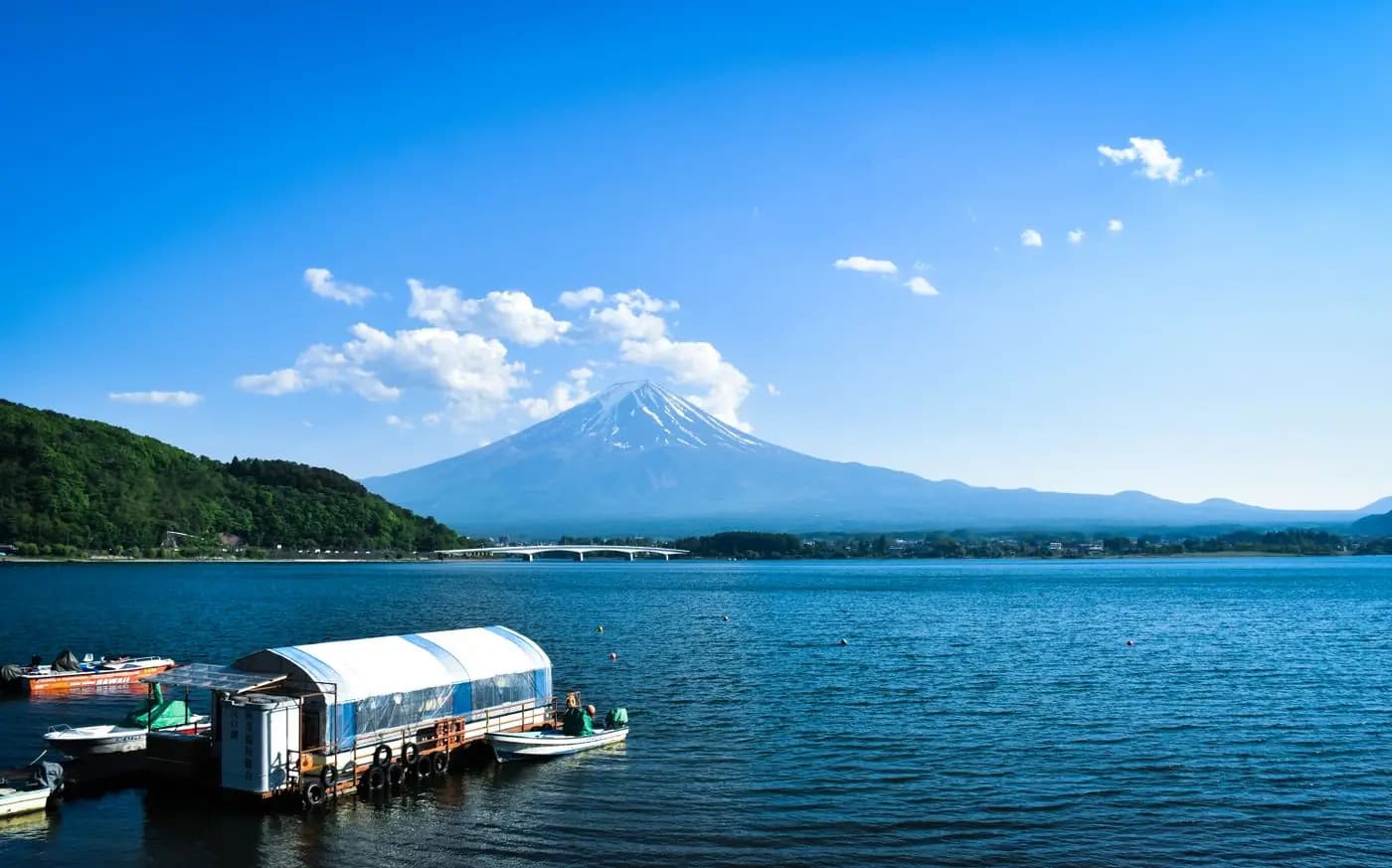
Chureito pagoda and Fujiyoshida: the famous photo and its rules
This is the image everyone knows: a red five-storey pagoda in the foreground, snow-capped Fuji behind, and cherry trees in bloom. It is taken in Arakurayama Sengen Park in Fujiyoshida, 5 minutes' walk from Shimoyoshida station on the Fujikyu line, about fifteen minutes by train from Kawaguchiko.
The route. From the shrine below, 398 steps lead to the pagoda and, a few dozen metres higher, to the viewing platform where you frame the classic view. Allow 15 to 20 minutes' climb. A gently sloping path exists for those avoiding stairs.
The right time. Dawn, for the light and the quiet. Cherry trees usually bloom around mid-April; maples turn red in early November. Between 10am and 3pm the platform can be packed, with a queue for photos.
The rules. Fujiyoshida cancelled its 2026 cherry blossom festival to protect residents, fed up with people entering gardens, litter and crowds on schoolchildren's route. The park remains open, but a few rules apply:
- stay on the paths and never enter private yards;
- do not stop in the road on Honcho shopping street, another famous spot where Fuji towers over the street: staff keep photographers moving;
- do not fly drones;
- take your rubbish with you, as there are no public bins.
Tip: shoot Honcho street from the pavement, early in the morning, without blocking traffic. The rest of Fujiyoshida deserves an hour too: the great Kitaguchi Hongu Fuji Sengen shrine, the historic starting point for pilgrims heading to the summit, with its giant cedars.
Hakone, Shizuoka and Tokyo: other viewpoints on Fuji
Hakone. Further from the volcano (about thirty kilometres), but with varied foregrounds. The best-known views:
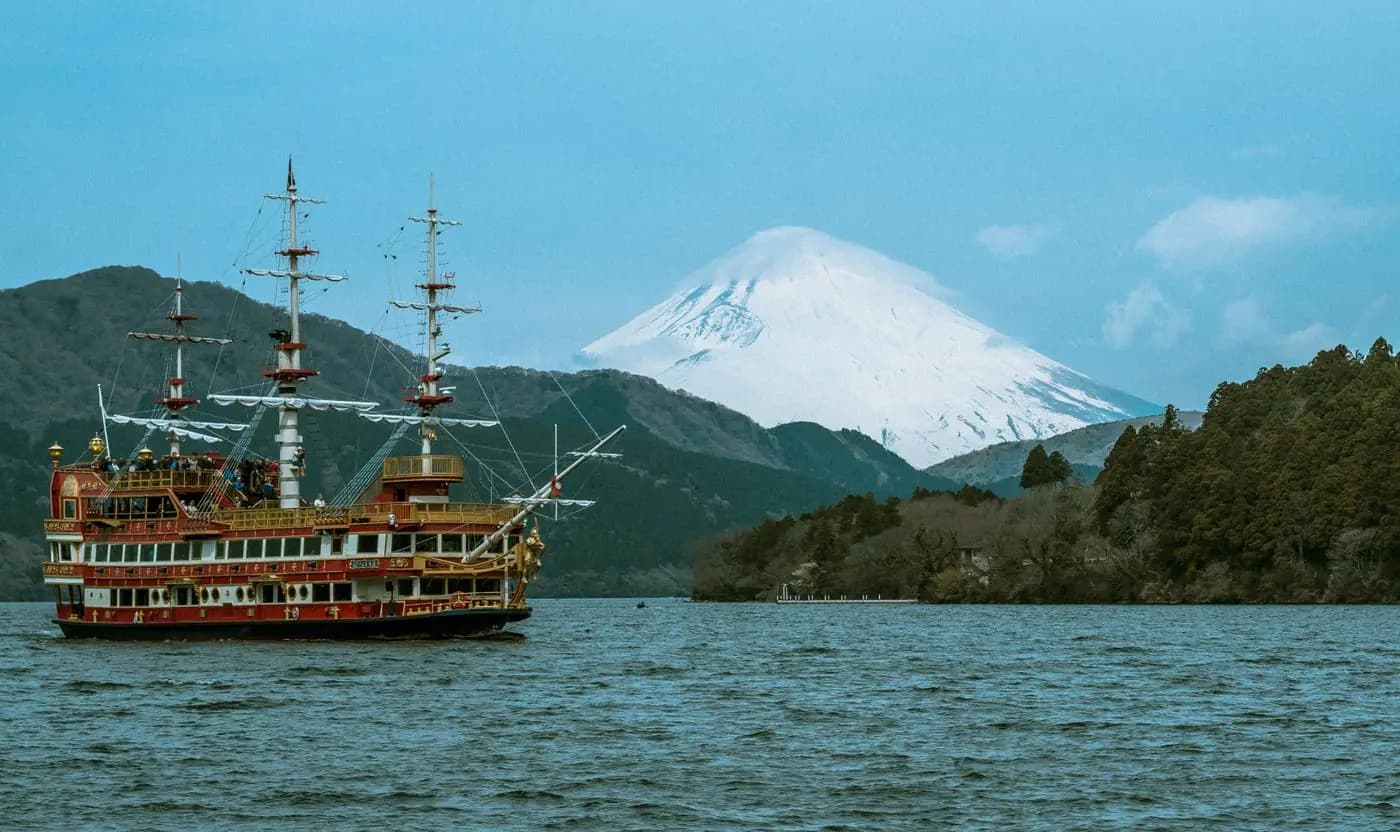
- Lake Ashi, with Fuji behind the hills, from Moto-Hakone or the boat;
- Owakudani, from the ropeway, above the volcanic vents;
- Otome Pass, on the road to Gotemba, and the Mount Komagatake ropeway.
Hakone has the advantage of a ryokan night with a hot-spring bath, but Fuji is visible there less often than from the Five Lakes.
On the Shizuoka side (south). Fuji shows its other, broader face:
- Miho no Matsubara, a pine-lined beach on Suruga Bay, listed as World Heritage together with the mountain;
- the Nihondaira plateau above Shizuoka;
- the Mishima Skywalk, a 400-metre pedestrian suspension bridge with Fuji on one side and the bay on the other;
- the tea fields around Fuji and Shizuoka in spring.
From Tokyo. Yes, you can see Fuji from the capital, 100 kilometres away, on clear winter mornings: from the free Tocho observatory in Shinjuku, Shibuya Sky, Tokyo City View in Roppongi, or the free 25th floor of the Bunkyo Civic Center. Enoshima island, an hour from Tokyo, gives a fine silhouette at sunset above the sea.
The most unexpected view is from the Shinkansen: heading from Tokyo to Kyoto, E seats (right-hand side), between Mishima and Shin-Fuji, about 40 minutes after departure. Only a few minutes, but on a winter morning the mountain fills the window.
Climbing Mount Fuji in 2026: season, trails and new rules
Fuji can only be climbed officially in summer. In 2026, the opening dates were:
- Yoshida trail (Yamanashi) and Subashiri trail (Shizuoka): 1 July to 10 September;
- Fujinomiya and Gotemba trails (Shizuoka): 10 July to 10 September.
Out of season, all trails are closed above the 5th station: snow, ice and violent winds make the climb genuinely dangerous.
Rules common to all four trails since 2025:
- an access fee of ¥4,000 per person, paid online at registration;
- advance registration on the official system (this is not a mountain hut booking); for the Yoshida trail, registration opened in late April 2026 and closes as soon as the daily quota is reached;
- no entry onto the trail between 2pm and 3am, except for climbers with a mountain hut booking. This ends the overnight bullet climbs without rest;
- an equipment check at the gates: hiking boots, rain gear, warm layers. At the summit at dawn it is around 0°C even in August.
Which trail? The Yoshida trail, starting from the Fuji Subaru Line 5th Station (2,305 m), is the busiest and best served by huts: allow 5 to 7 hours up and 3 to 5 hours down. Fujinomiya is the shortest but steepest. Subashiri goes through forest; Gotemba is the longest and least equipped.
The classic plan: climb in the afternoon to a hut at the 7th or 8th station, sleep a few hours, set off around 2am for sunrise at the summit (goraiko), then descend. Huts are booked from spring and are full on July weekends and in mid-August.
Altitude sickness affects some climbers above 3,000 metres: go slowly, drink, and turn back if headaches persist.
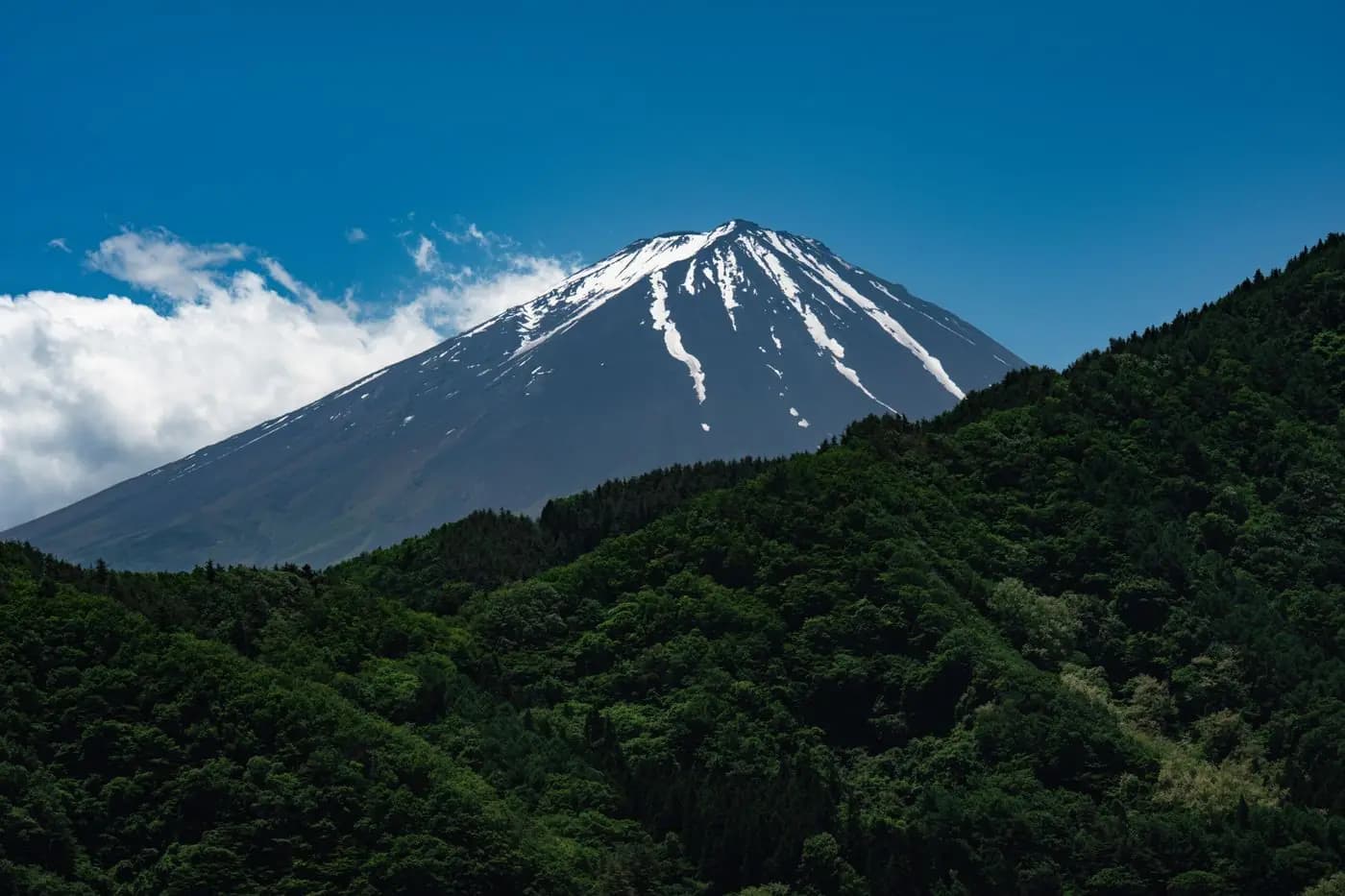
Where to stay to see Fuji and how to organise your visit
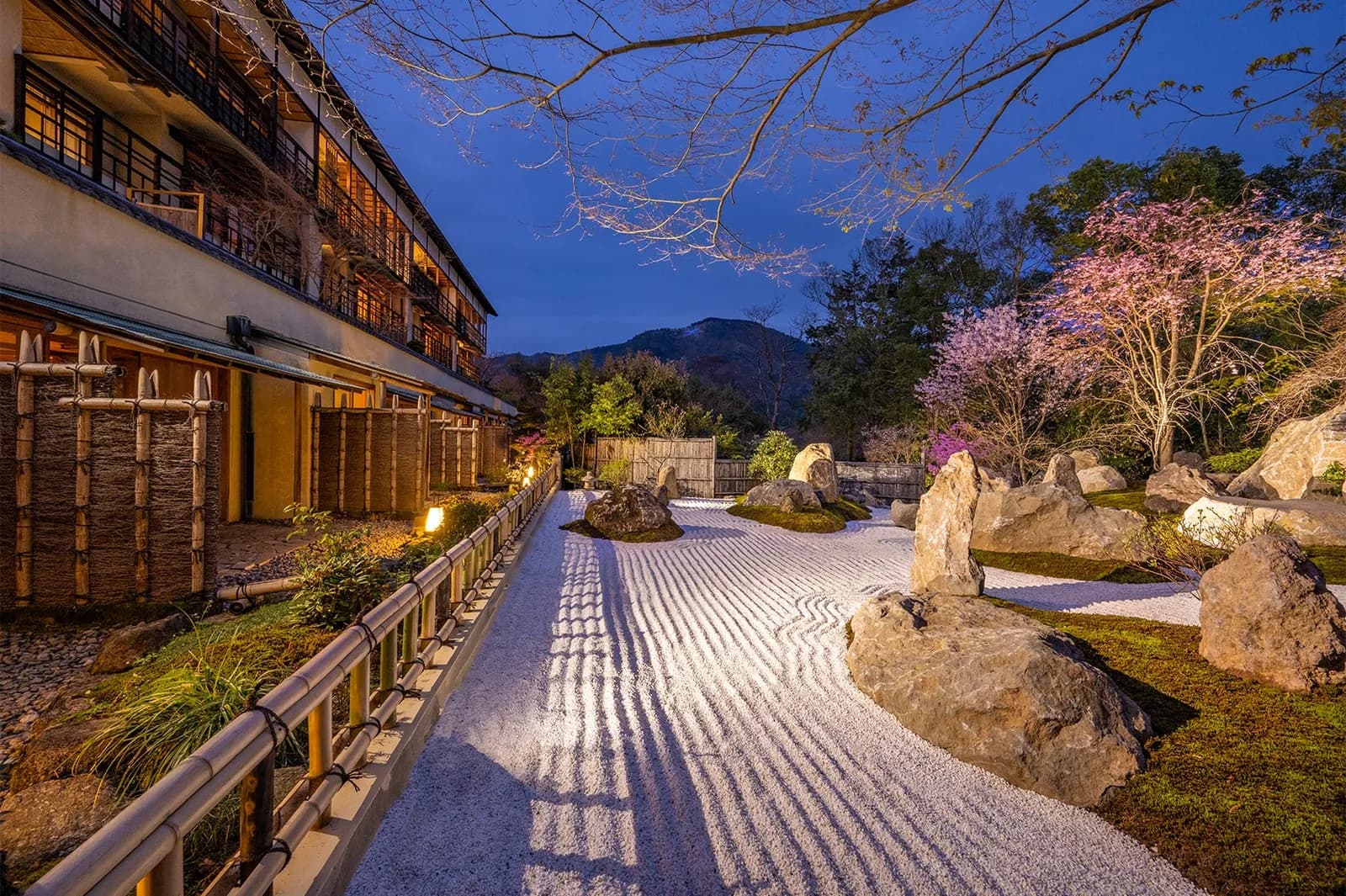
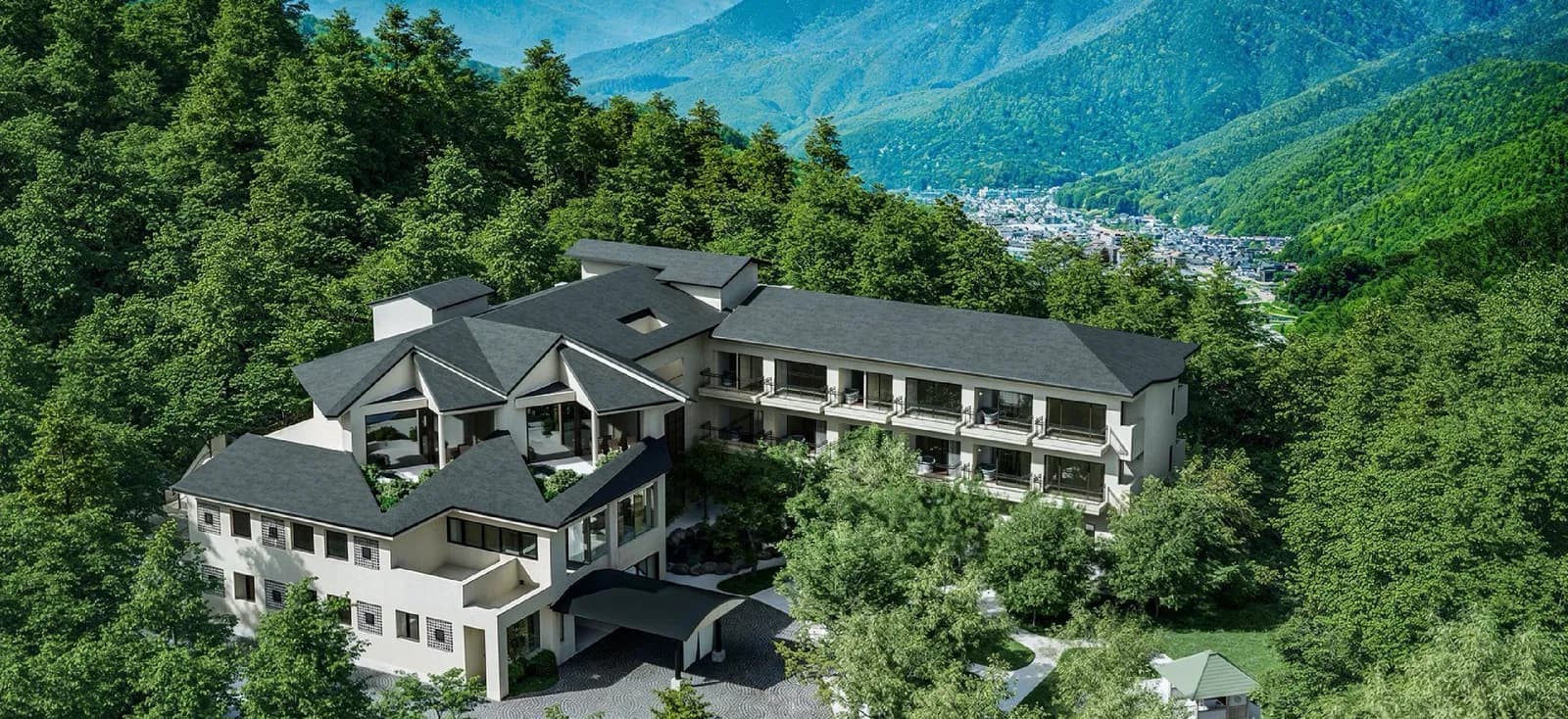
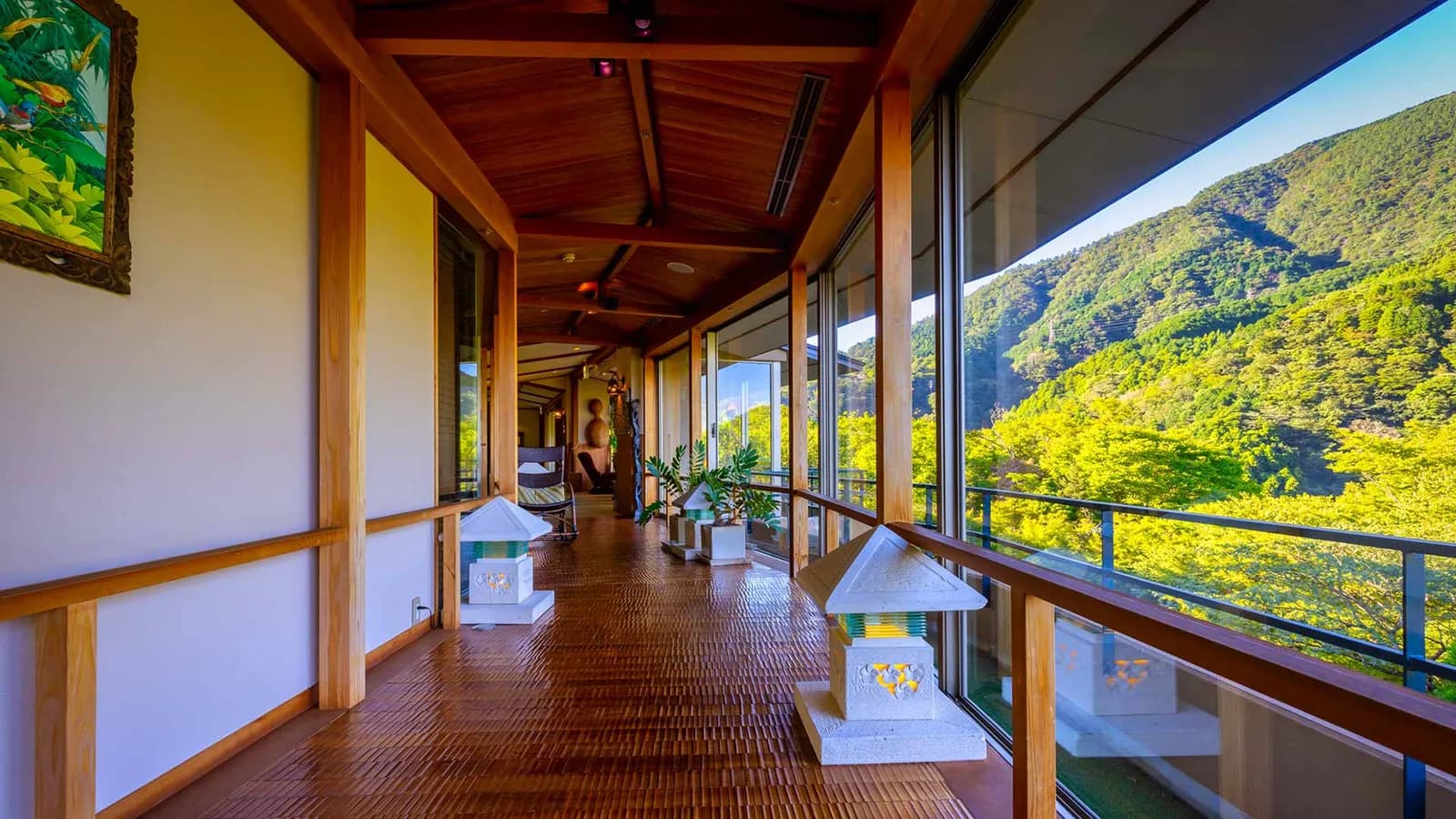
Staying overnight improves your chances. A single night by a lake gives two windows: sunset and, above all, sunrise. Ryokan and hotels on the north shore of Lake Kawaguchi often have rooms and open-air baths facing the mountain: ask for a Fuji view when booking, as it is a separate, more expensive room category.
A typical day around the lakes:
- 6–7:30am: sunrise over Lake Kawaguchi or at Chureito pagoda;
- 8–10am: breakfast, then Oishi Park or the Mount Kachi-kachi ropeway while the sky is still clear;
- 10am–1pm: Oshino Hakkai, or the lava caves and Aokigahara forest near Lake Saiko, interesting even under cloud;
- afternoon: the Itchiku Kubota Art Museum (kimonos dyed with Fuji landscapes) or a hot-spring bath;
- late afternoon: Lake Yamanaka for sunset.
Fuji's 5th Station (Yoshida trail, 2,305 m) is reached by bus or coach on the Fuji Subaru Line toll road, open year-round to the 5th Station except when snow or ice close it partially in winter. Even without climbing, it is a chance to see the mountain up close, with its red volcanic rock and the sea of clouds below. In summer the road is closed to private cars during the climbing season; buses and coaches still go up.
Avoid Golden Week, August weekends and autumn public holidays, when the roads around Kawaguchiko jam. And avoid the habit of planning everything for the afternoon: the mountain almost always shows itself in the morning.
Seeing or climbing Mount Fuji with a group
For a corporate group, Fuji poses a simple problem: the weather cannot be guaranteed. Good programmes take this into account.
- Two days rather than one. A night by Lake Kawaguchi or in Hakone, with a sunrise wake-up, doubles the chances of seeing the mountain. A day trip from Tokyo arriving at 10am is often a disappointment in summer.
- A solid plan B. If Fuji stays hidden: a dyeing workshop or hoto-making (the local noodles), a sake brewery visit in Fujiyoshida, a hot-spring bath, the Itchiku Kubota museum. The programme must still work without the mountain.
- A coach is the only sensible way to link the lakes, Chureito pagoda and the 5th Station in one day. Allow 2 h 30 min to 3 hours from Tokyo, more at weekends.
- Chureito pagoda is visited in small groups, early in the morning, with a reminder of the local rules: Fujiyoshida residents have good reason to be wary of whole coachloads arriving.
- Climbing as a group requires licensed mountain guides (one per 8 to 10 climbers), individual registration and the ¥4,000 fee for each participant, hut bookings from winter, and a medical certificate is recommended. Not everyone reaches the summit: plan for a staff member to go down with those who turn back.
- A gentler alternative: the walk between the 5th and 6th stations of the Yoshida trail, or a walk around Lake Saiko, which anyone can do.
A dinner in a ryokan facing Fuji, with an open-air bath at sunrise, remains the moment participants talk about when they get home. SHINOGI DMC organises these stays around Fuji and Hakone for corporate groups, with a plan B ready at every stage.
Frequently asked questions
What is the best time of year to see Mount Fuji?
From November to February, early in the morning. Cold, dry air gives the clearest skies and the mountain is snow-capped. In summer it is often hidden by haze after 9–10am.
Where can you see Mount Fuji from Tokyo?
On clear winter mornings: the free Tocho observatory in Shinjuku, Shibuya Sky, Tokyo City View in Roppongi, or the free 25th floor of the Bunkyo Civic Center. For a close view, you need to go to the Five Lakes or Hakone.
How much does it cost to climb Mount Fuji in 2026?
The access fee is ¥4,000 per person on all four trails, paid at online registration. Add transport to the 5th Station and, usually, a night in a mountain hut, booked separately.
Can you climb Fuji overnight without staying in a hut?
Not really any more. Since 2025, climbers without a hut booking may not enter the trails between 2pm and 3am. You can start at 3am and climb by day, but you will not see sunrise from the summit.
Is Chureito pagoda still open to the public?
Yes, Arakurayama Sengen Park remains open, but Fujiyoshida cancelled its 2026 cherry blossom festival because of overtourism. Go early, stay on the paths and respect residents.
Where should you stay to see Mount Fuji?
On the north shore of Lake Kawaguchi or near Lake Yamanaka, in a room booked with a Fuji view. Hakone is an alternative with excellent ryokan, but the mountain is visible less often.
Rédaction SHINOGI DMC · Updated
Sources
- Site officiel de l'ascension du mont Fuji — Périodes d'ouverture 2026 par sentier
- Site officiel de l'ascension du mont Fuji — À savoir avant de grimper (droit de 4 000 ¥, interdiction 14 h-3 h, inscription)
- Site officiel de l'ascension du mont Fuji — Comparaison des sentiers
- Ministère de l'Environnement — Parc national de Fuji-Hakone-Izu
- Fuji Five Lakes — Office du tourisme de Fujikawaguchiko
- Forbes — Fujiyoshida annule sa fête des cerisiers 2026
- Hakone Navi (Odakyu) — Hakone Freepass
- JNTO — Préparer son voyage au Japon