Takayama and Shirakawa-go: how many days and in what order?
Takayama, in the Hida mountains, and Shirakawa-go, about an hour's drive to the north-west, are almost always visited together. Both sit on the route between Nagoya and Kanazawa, so they fit into a crossing of central Japan without backtracking.
Two realistic options:
- 2 days: arrive in Takayama late morning from Nagoya, spend the afternoon in the old town and stay the night. Next day, morning market at 7 or 8am, a mid-morning bus to Shirakawa-go, 3 to 4 hours in the village, then a bus to Kanazawa in the late afternoon.
- 3 days: add a night in a gassho house in Shirakawa-go (to see the village without the day-trippers, early in the morning and in the evening) or a day at the Hida Folk Village and in the small town of Hida-Furukawa, 15 minutes by train from Takayama.
Going Kanazawa → Shirakawa-go → Takayama → Nagoya works the same way. What to avoid: a day trip to Shirakawa-go from Tokyo or Kyoto, which means more than eight hours of travel for two hours on site.
Takayama's old town: Sanmachi, sake breweries and Takayama Jinya
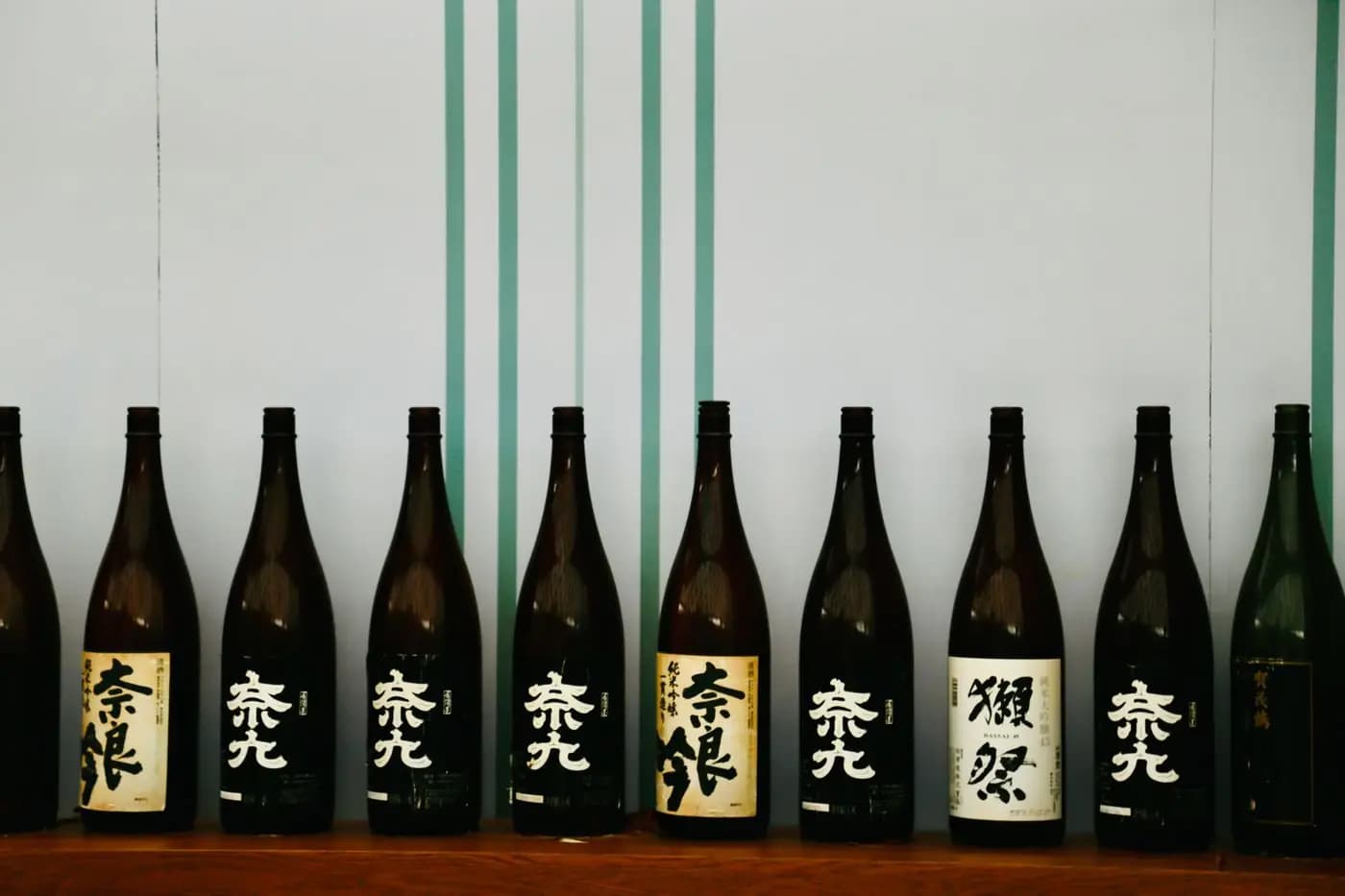
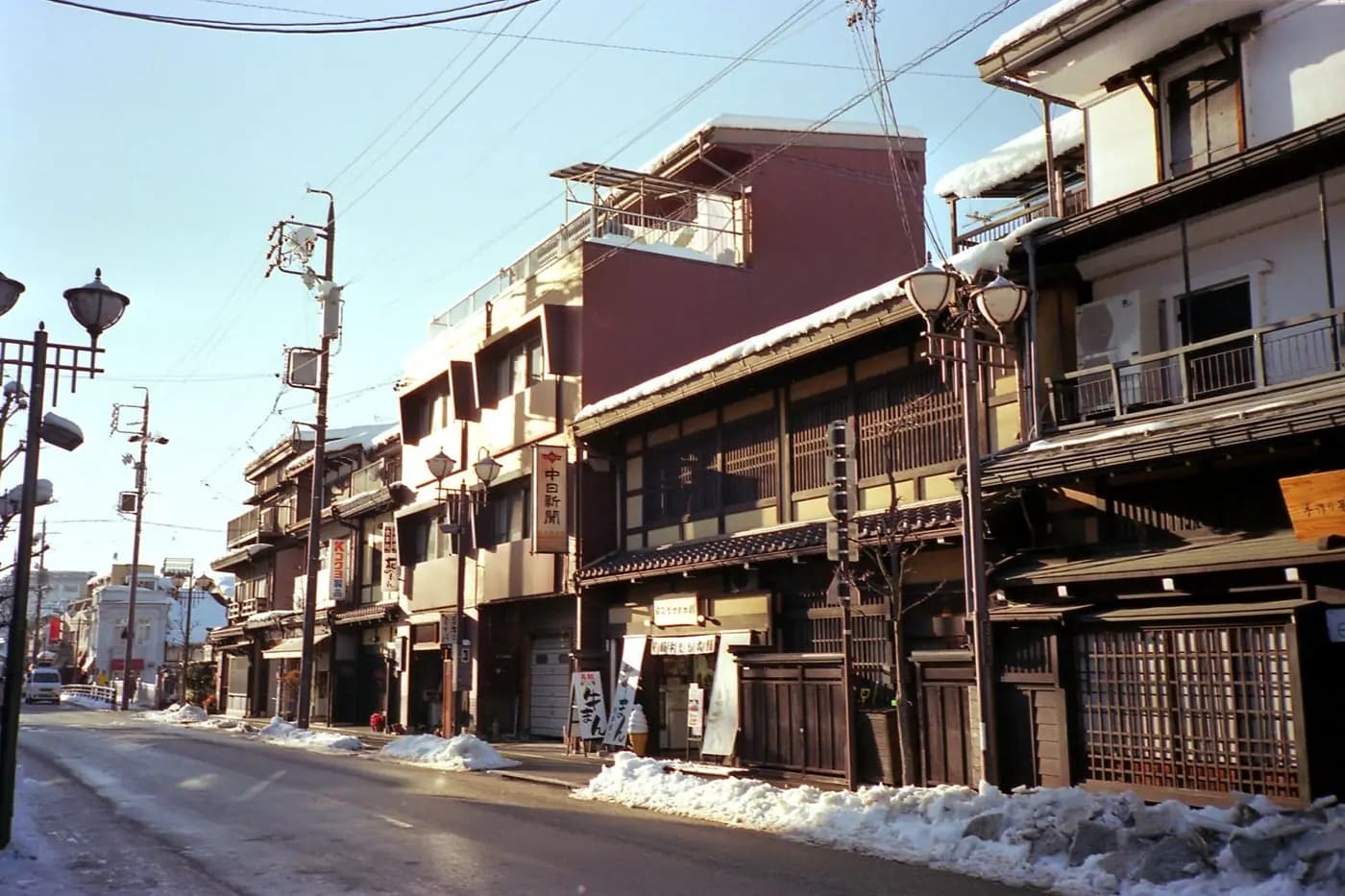
Takayama's historic core, the Sanmachi district (or Sanmachi-suji), lines three parallel streets with dark-wood Edo-period merchant houses. You will find craft shops, cafés and above all sake breweries, recognisable by the large ball of cedar branches (sugidama) hanging above the entrance. Several offer tastings at the counter for a few hundred yen.
What to see in the old town:
- Takayama Jinya, the only shogunate governor's office whose main buildings have survived to this day. Open 8:45am–5pm from April to October (last entry 4:30pm) and 8:45am–4:30pm from November to March. Admission: ¥500 since 1 April 2026, ¥450 for groups, free for high-school students and younger. Allow 30 minutes; volunteer guides show you round free of charge.
- The Takayama Festival Floats Exhibition Hall (Yatai Kaikan), which displays some of the carved and lacquered floats paraded each year at the spring (14–15 April) and autumn (9–10 October) festivals. These dates draw huge crowds and fill every hotel months ahead.
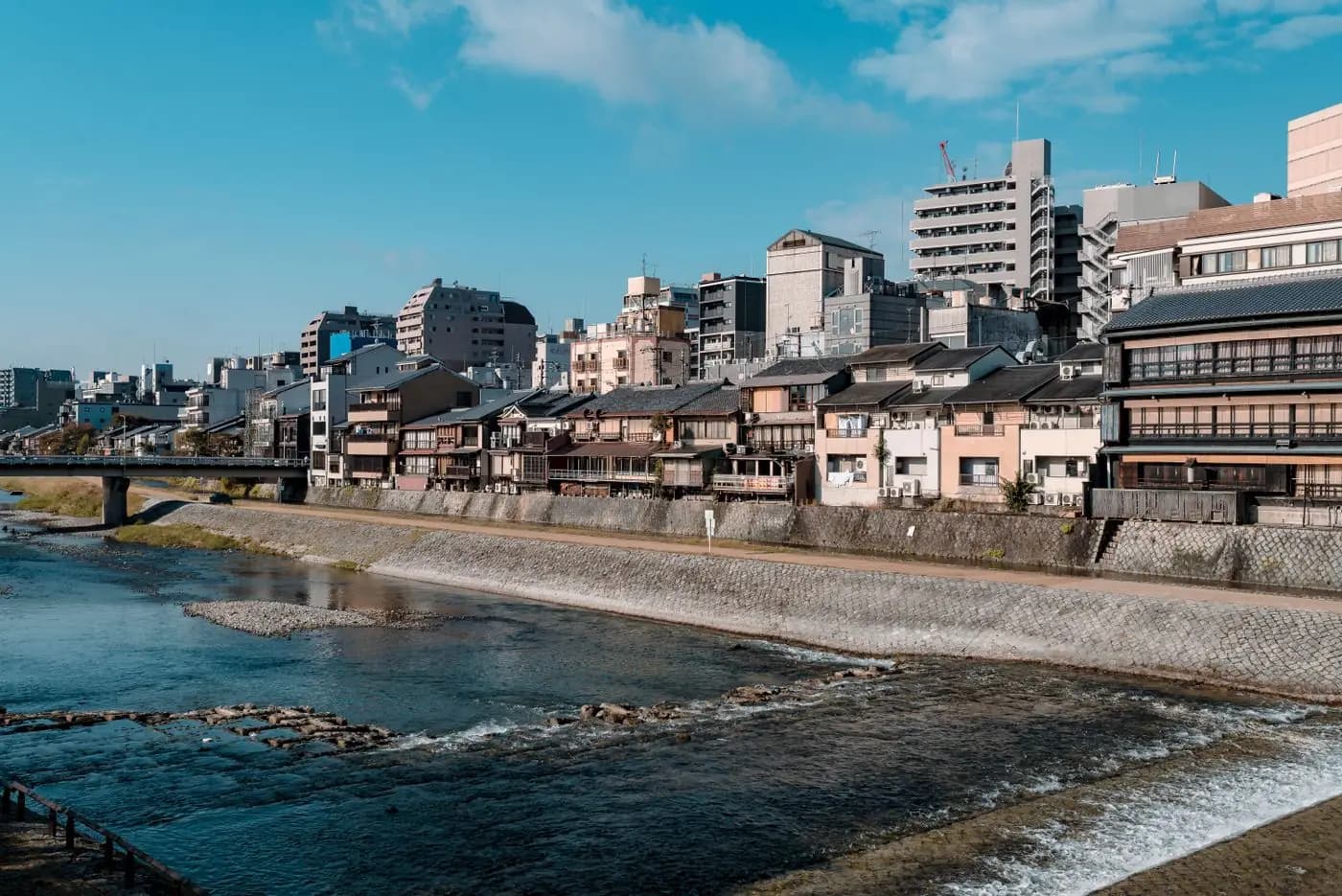
- The banks of the Miyagawa and the much-photographed red Nakabashi bridge.
The old town is small and flat: everything is on foot, 10 minutes from the station. Shops close early, often around 5pm, and the town gets very quiet in the evening.
Morning markets and Hida beef: what to eat in Takayama
Takayama has two morning markets (asaichi):
- Miyagawa Market, along the river, with its white tents: mountain vegetables, fruit, pickles, miso, crafts, a few food stalls. Open every day 7am–noon, and 8am–noon from December to March. The number of stalls varies with weather and season.
- Jinya-mae Market, smaller, on the square in front of Takayama Jinya.
Go early, around 7:30 or 8am, before the tour coaches arrive. It is the right time to try grilled mitarashi dango with soy sauce, quite different from the sweet Kyoto version.
Hida beef (Hida-gyu) is the great speciality. It is a black wagyu raised in Gifu Prefecture and graded to strict criteria. Three ways to try it:
- as lightly seared beef sushi, served on a crispy rice cracker in the streets of Sanmachi (¥500 to ¥1,000 a piece);
- as a grilled skewer or croquette to take away;
- as hoba miso, the most typical local dish: miso and beef grilled on a large dried magnolia leaf set over a small brazier, often served at dinner in a ryokan.
For a proper Hida beef meal (sukiyaki, shabu-shabu or grilled), expect ¥5,000 to over ¥15,000 per person depending on the cut. Takayama ramen, with a clear soy broth and thin wavy noodles, is the budget option.
Shirakawa-go: the village of gassho-zukuri houses
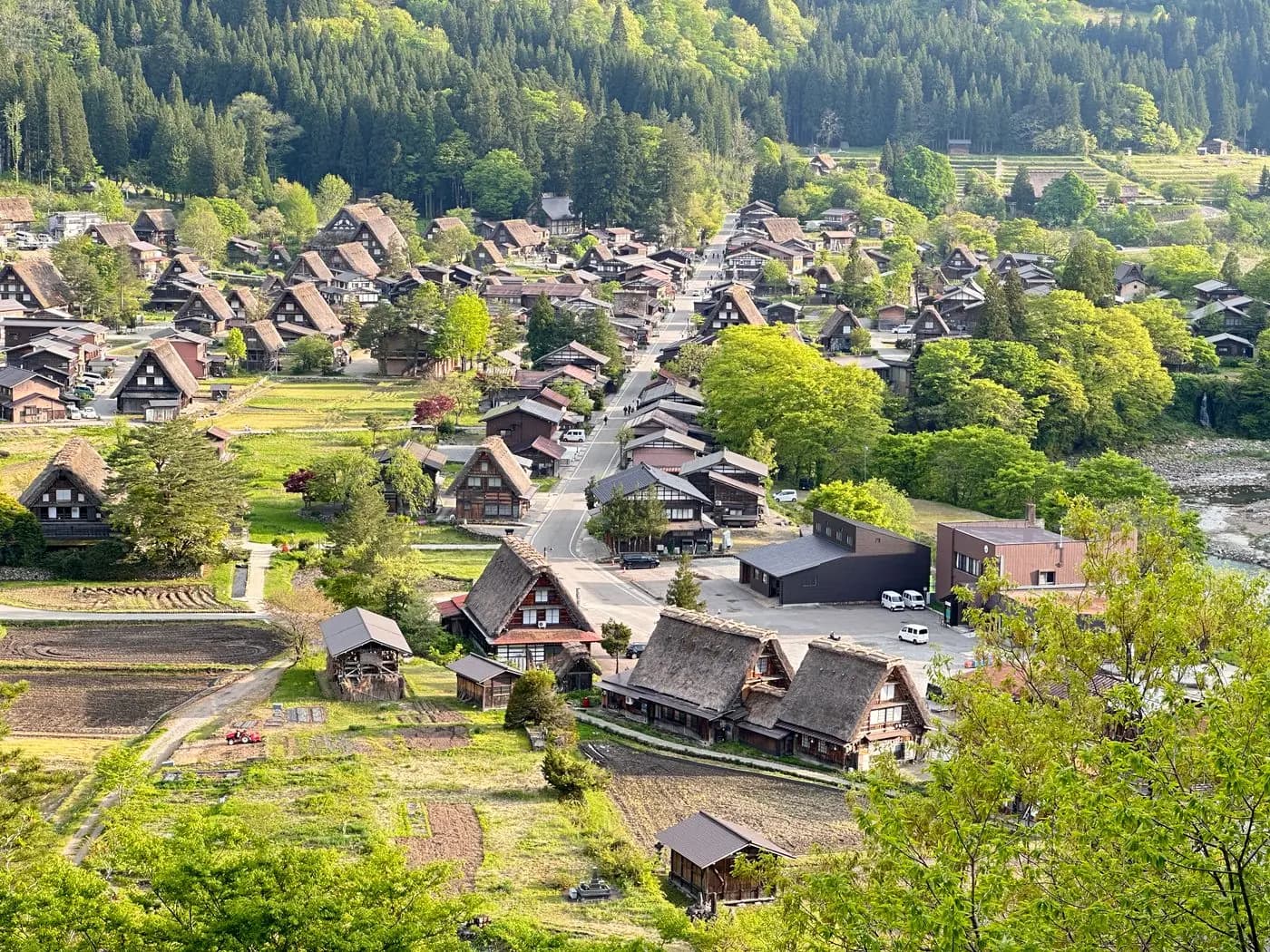
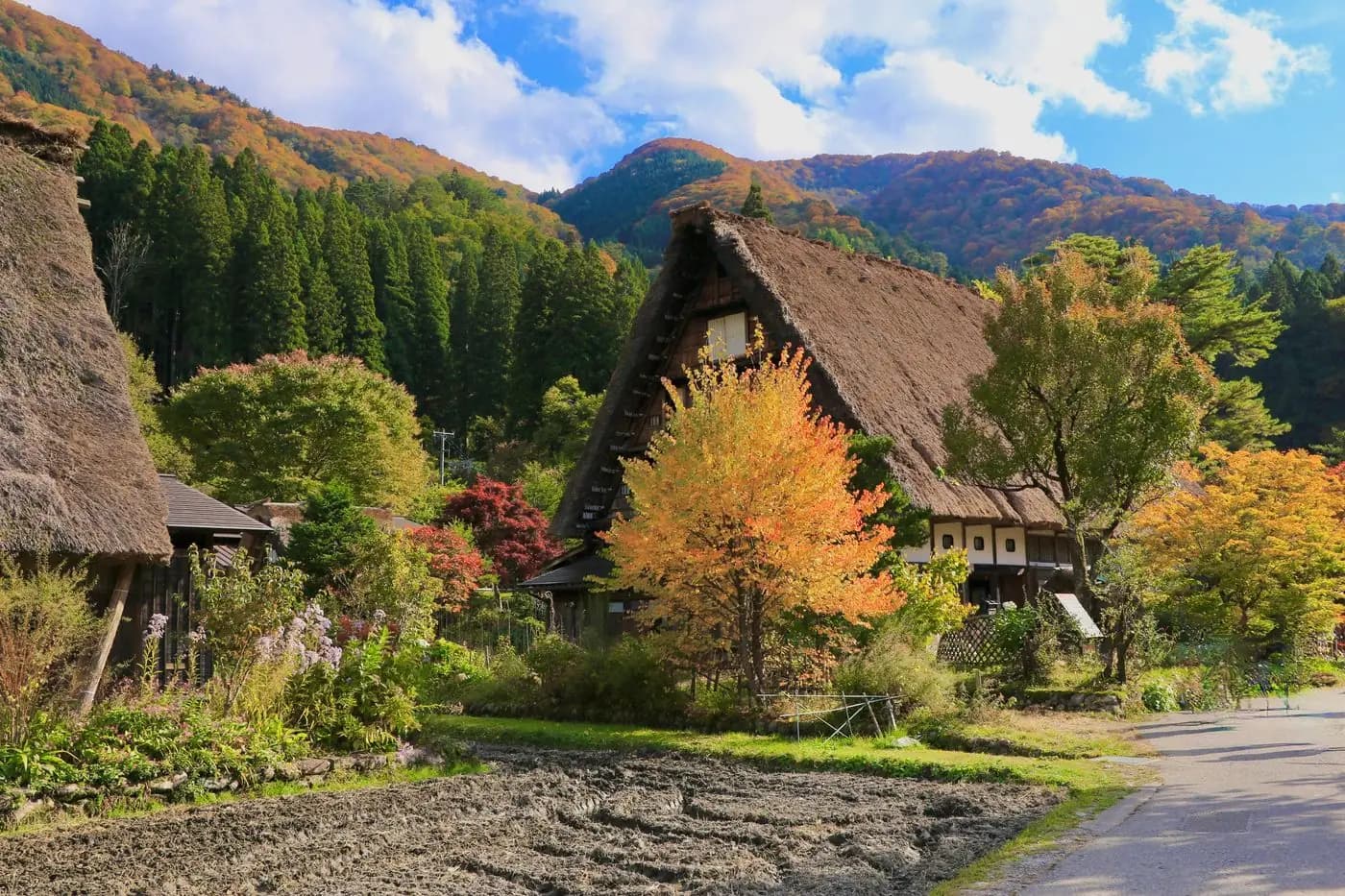
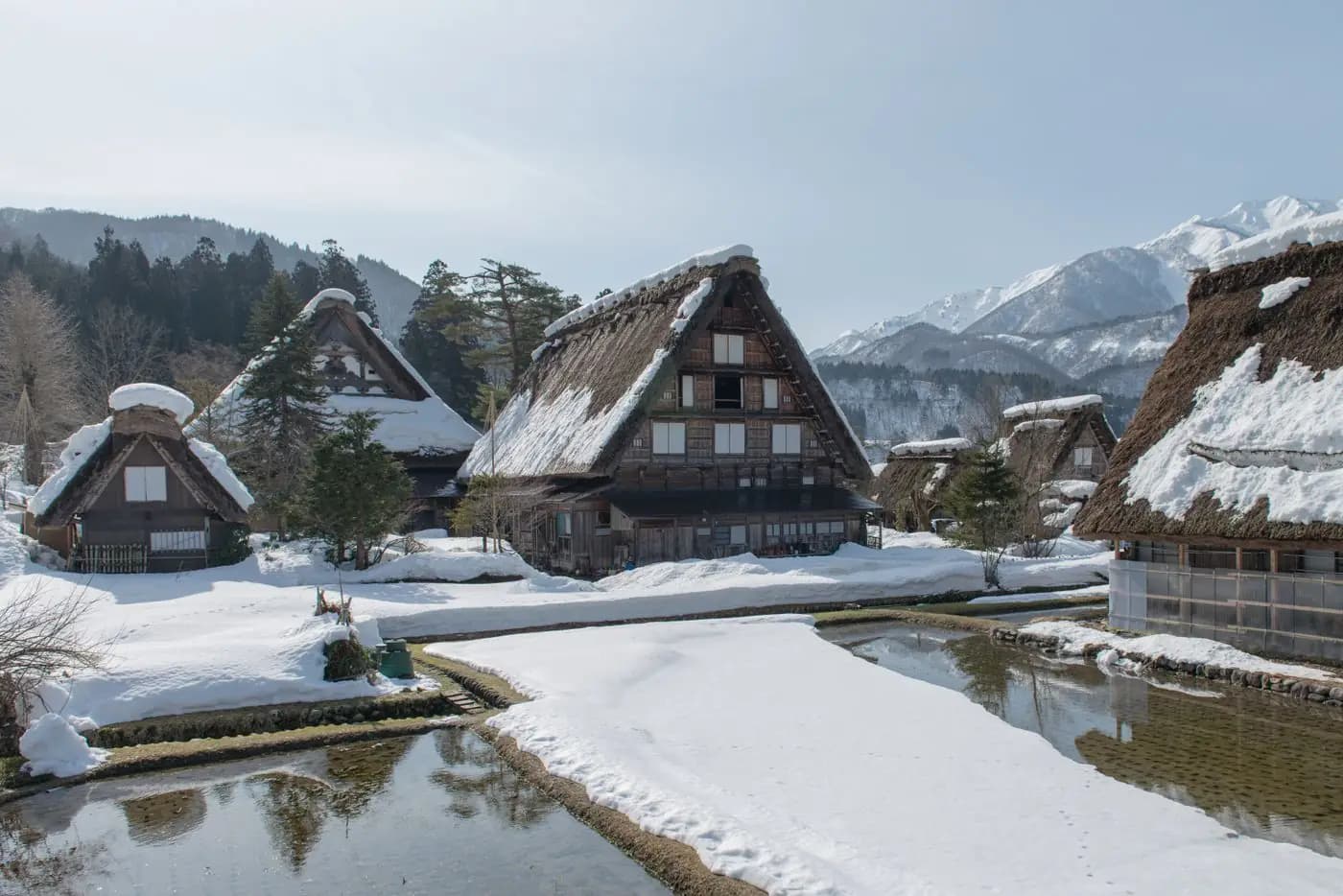
Shirakawa-go, or more precisely the village of Ogimachi, has been a UNESCO World Heritage Site since 1995, together with the hamlets of Gokayama. Its gassho-zukuri houses have very steep thatched roofs whose shape recalls two hands joined in prayer (gassho). The slope lets the snow, often over a metre deep in winter, slide off, and the large attics under the roof were once used to raise silkworms.
What to do in 3 to 4 hours:
- Climb to the viewpoint of the former Ogimachi castle (Shiroyama Tenbodai), 15–20 minutes on foot or by shuttle from the village centre: this is the panoramic view you see in every photo.
- Visit a gassho house open to the public, such as the Wada house, the largest in the village, or the Kanda and Nagase houses: climb the upper floors to see the frame, assembled without nails and tied with rope.
- Cross the Deai-bashi suspension bridge over the Sho River, between the car park and the village.
- Wander through the rice fields between the houses, especially at the end of the day.
The thatch is redone every 30 to 40 years by the villagers under a mutual-aid system called yui. Fire is the great fear: each autumn a drill in which all the village's water cannons spray the roofs at once draws photographers from around the world.
Sleeping in a gassho house is a different experience: a small number of houses run as minshuku, with dinner around the hearth (irori). Rooms are simple, often without a private bathroom, and bookings are made well ahead.
Shirakawa-go visitor rules and booking the winter light-up
A few hundred people live in Ogimachi, and the village receives hundreds of thousands of visitors a year. Residents ask for a few simple rules:
- Do not enter private houses, gardens or rice fields; only houses marked as open can be visited.
- Take your rubbish with you: there are almost no bins in the village.
- Do not smoke while walking; fire is the biggest risk for thatched roofs.
- No drones without permission, no tripods in narrow lanes.
- Keep the peace in the evening and early morning, especially around the minshuku.
The winter light-up. On a few January evenings, the snow-covered houses are lit up. It is the most sought-after event in the region. For 2027, the tourist association has announced four dates: 11, 17, 24 and 31 January 2027. The conditions are strict:
- reservation required and an admission ticket checked at the entrance; visitors without a ticket are asked to leave;
- no tickets sold on the day;
- access to the viewpoint is a separate, limited ticket: not everyone can go up;
- lodging handled by the tourist association is allocated by lottery;
- cars must book their parking, and coaches can only use the car park from 3pm;
- the event may be cancelled if a cold wave seriously disrupts transport.
New for coaches. From 1 December 2026, all tour coaches (large, medium and minibuses) must book a space at the Seseragi Park (Oro) car park, the site's main gateway. Bookings have been open since 1 June 2026.
Getting to Takayama and Shirakawa-go: train, bus and car
Takayama is served by the JR Hida limited express:
- from Nagoya, about 2 h 20, with a beautiful stretch through the Hida valley in the second half;
- a few Hida trains run directly from Osaka and Kyoto;
- from Toyama (Hokuriku Shinkansen), about 1 h 30.
Express buses also link Takayama with Tokyo (Shinjuku), Nagoya and Matsumoto.
Shirakawa-go has no station. You get there:
- by Nohi / Hokutetsu express bus from Takayama (about 50 minutes) or Kanazawa (about 1 h 20–1 h 30), as well as from Toyama and Nagoya (nearly 3 hours);
- most of these buses are reservation-only; in autumn and holiday periods they are full several days ahead;
- by car on the Tokai-Hokuriku Expressway (Shirakawa-go IC exit, 5 minutes from the village).
The bus drops you at the Shirakawa-go terminal, a minute's walk from the village. There are a limited number of lockers at the terminal; one large suitcase per person seriously complicates the day.
In winter, from December to March, the road is snowy: do not drive without snow tyres and experience of snow driving. Buses keep running, sometimes with delays.
Takayama and Shirakawa-go with a group: planning and timing
The Takayama – Shirakawa-go pairing appears in many group itineraries, often between Nagoya and Kanazawa. The difference between a good day and a gruelling one comes down to a few decisions:
- A private coach all the way. With more than 15 people, express buses are not a reliable option: limited seats, per-seat booking, bulky luggage. A private coach that follows the group from Nagoya to Kanazawa, with suitcases in the hold, makes everything simpler.
- Book the Shirakawa-go car park. Since 1 December 2026 this is compulsory for coaches: build it into the quote, just like the hotel.
- Arrive early or late. Coaches converge on Shirakawa-go between 10am and 2pm. Arriving around 9am, or late in the afternoon with a night nearby, transforms the visit.
- Sub-groups and guides. Ogimachi's lanes and the stairs in gassho houses are narrow: groups of 15–20 with a guide each, and a fixed meeting point (the Deai-bashi bridge, for example).
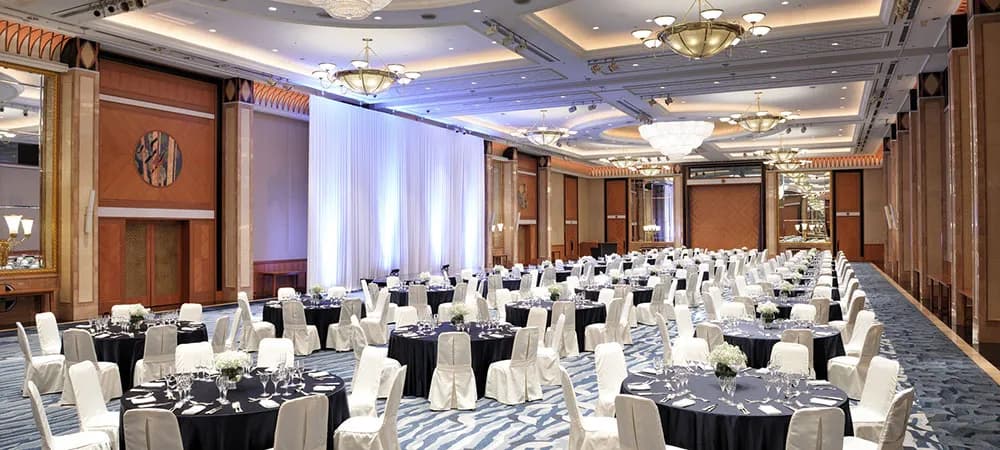
- Accommodation. Each gassho house sleeps only a handful of people. A group stays in Takayama, where several ryokan and hotels have large baths and banquet rooms, and a Hida beef hoba-miso dinner is easy to arrange for 30 to 80 people.
- Winter light-up. For a group, access is through organised tours and a dedicated, tightly capped booking system. Start many months ahead and keep an alternative.
- Activities. A tasting in a Sanmachi sake brewery (in small groups of 10–15), a yew-wood carving workshop (ichii-ittobori), an early-morning market visit with a guide.
SHINOGI DMC organises this kind of circuit, coordinating private coaches, parking reservations, guides and lodging between Nagoya, Takayama, Shirakawa-go and Kanazawa.
Frequently asked questions
How do you get from Takayama to Shirakawa-go?
By express bus (Nohi Bus) from Takayama bus station: about 50 minutes. Booking is strongly recommended, especially in autumn and holiday periods.
Do you need to book for the Shirakawa-go light-up?
Yes. The event is fully by reservation with an admission ticket and no sales on the day. In 2027 it takes place on 11, 17, 24 and 31 January.
What time does the Takayama morning market open?
Miyagawa Market is open every day from 7am to noon, and from 8am to noon from December to March.
How long do you need in Shirakawa-go?
Three to four hours are enough for the viewpoint, one gassho house open to the public and a walk through the village. A night on site lets you see it without the crowds.
Where can you eat Hida beef in Takayama?
As sushi or a skewer in the streets of Sanmachi for a taste, or at dinner in a ryokan and in sukiyaki and grill restaurants for a full meal (¥5,000 to over ¥15,000).
Can a group visit Shirakawa-go by coach?
Yes, but from 1 December 2026 coaches must book a space at Seseragi Park (Oro) car park. SHINOGI DMC includes this booking when organising the tour.
Rédaction SHINOGI DMC · Updated
Sources
- Shirakawa-go Tourist Association — Access
- Shirakawa-go Tourist Association — Overview of the 41st Shirakawa-go Light-Up Event (2027)
- Shirakawa-go Tourist Association — Advance reservation system for tour buses at Seseragi Park Oro
- Takayama Jinya — Horaires (site officiel)
- Takayama Jinya — Révision du droit d'entrée au 1er avril 2026
- Marché du matin de Miyagawa — Horaires (site officiel)
- Nohi Bus — Highway buses (site officiel)
- Kanpai — Shirakawa-go (inspiration)