How to read these ranges
A Japan seminar budget is not just a price per person. It depends on four variables that we always clarify at the brief stage: the city, the season, the hotel category and the number of evenings held outside the hotel.
The figures below are indicative. They reflect orders of magnitude seen on our recent programs, for groups of 20 to 200 people, and are quoted in yen, before tax and service charge unless stated otherwise. They are not an offer: only a quote built on your dates and requirements is binding.
Why think in yen? Because our Japanese suppliers invoice in yen, and the exchange rate can move between quotation and payment. Converting to euros too early creates a false sense of precision.
Finally, a robust budget separates fixed costs, committed at signature (hotel deposits, private venues, speakers), from variable costs that follow the final headcount (meals, transfers, activities). This distinction makes it easier to adjust calmly if participant numbers change, and to know exactly from which date a lower headcount no longer produces savings.
We also advise setting aside a contingency line, usually expressed as a percentage of the total budget, to absorb a currency movement, an extra transfer or a last-minute request from leadership.
Accommodation: the largest budget line
Japanese hotels are highly segmented, and the gap between categories is wider than in Europe. Indicative benchmarks in Tokyo, per room per night, before tax:
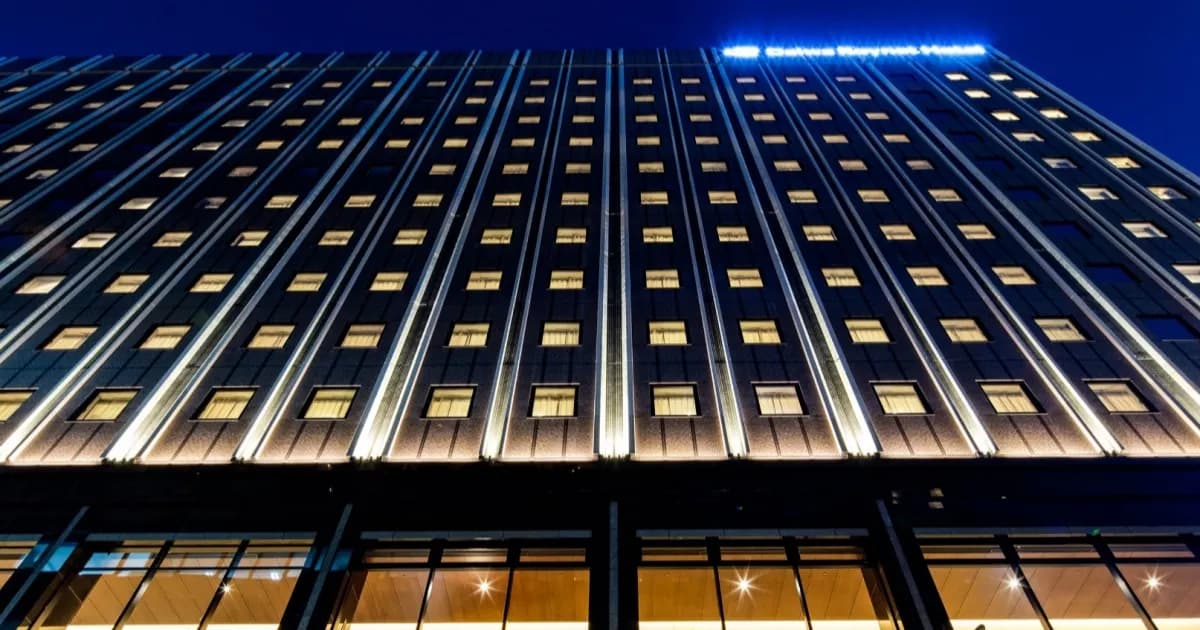
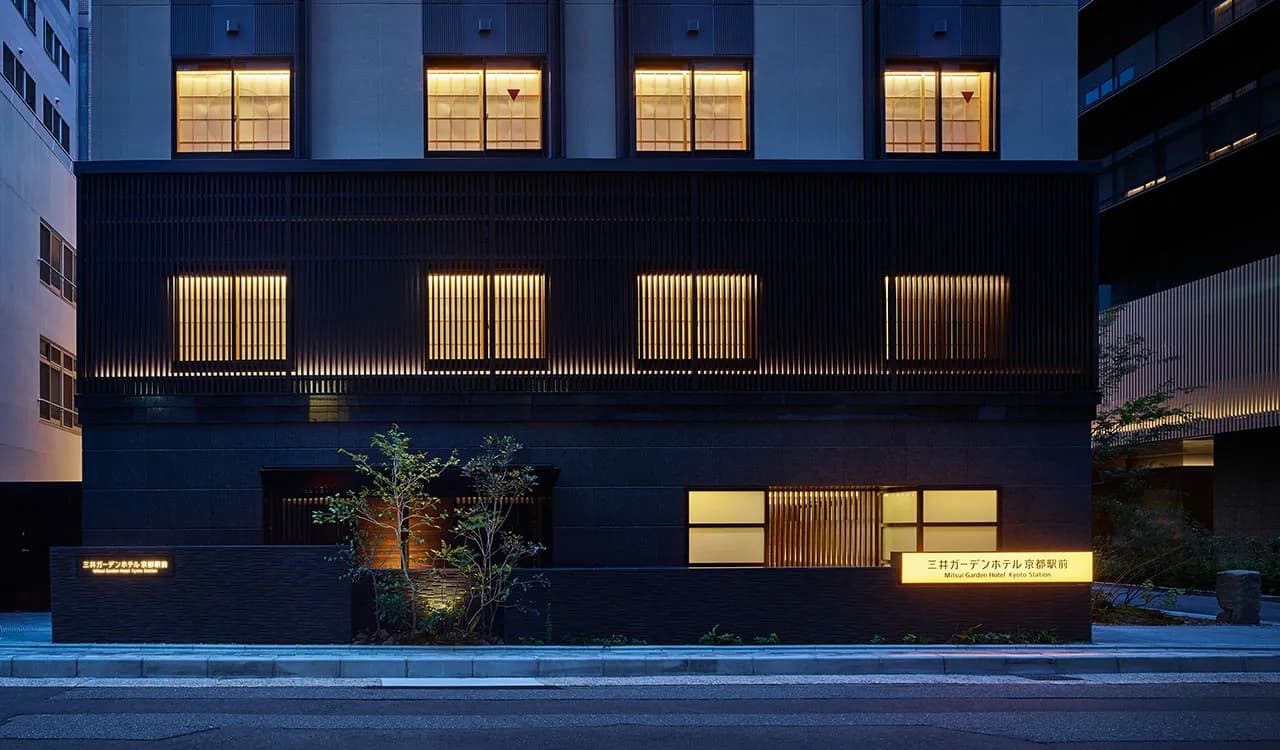
- Quality business hotel (Mitsui Garden, Daiwa Roynet, JR Kyushu Hotel Blossom): ¥20,000–40,000. Compact rooms, excellent locations, rarely large meeting rooms.
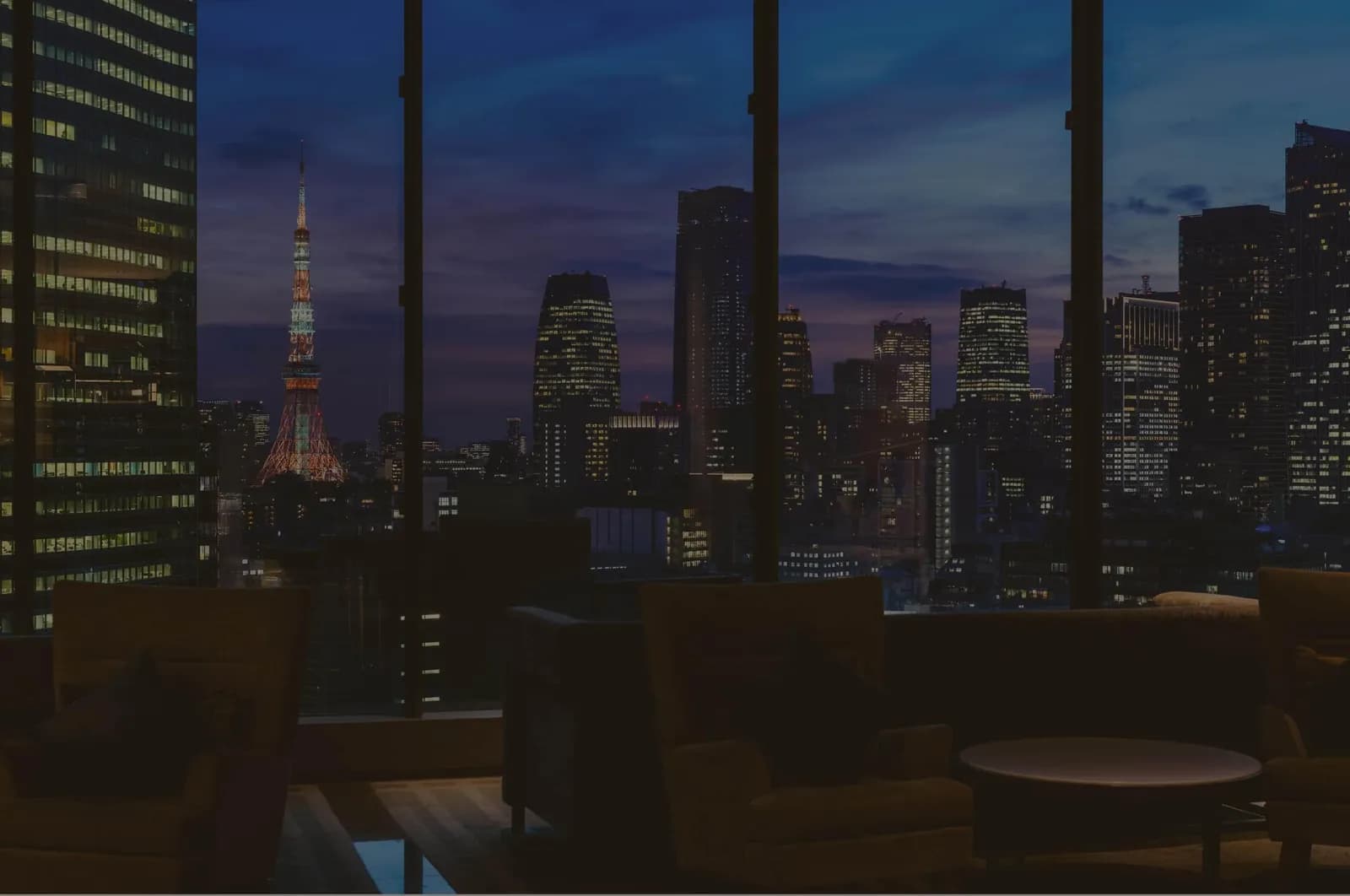
- International conference hotel (Hilton Tokyo, Tokyo Marriott, The Prince Park Tower): ¥50,000–100,000. Banquet rooms, event teams, group services.
- Luxury and palace hotels: from ¥100,000, sometimes far more in peak season.
For the same category, Osaka and Fukuoka are generally less expensive than Tokyo, except during major local events. Kyoto is the tightest market in peak season, and its accommodation tax rose sharply on March 1, 2026: it now reaches ¥4,000 per person per night for rooms between ¥50,000 and ¥100,000, and ¥10,000 above that.
Our advice: Japanese rooms are often smaller than in Europe. For an executive committee, we always check room size and bed configuration before confirming a category.
Meals and evenings: from bento boxes to gala dinners
Food and beverage is the most flexible budget line. Indicative ranges per person, before tax and service:
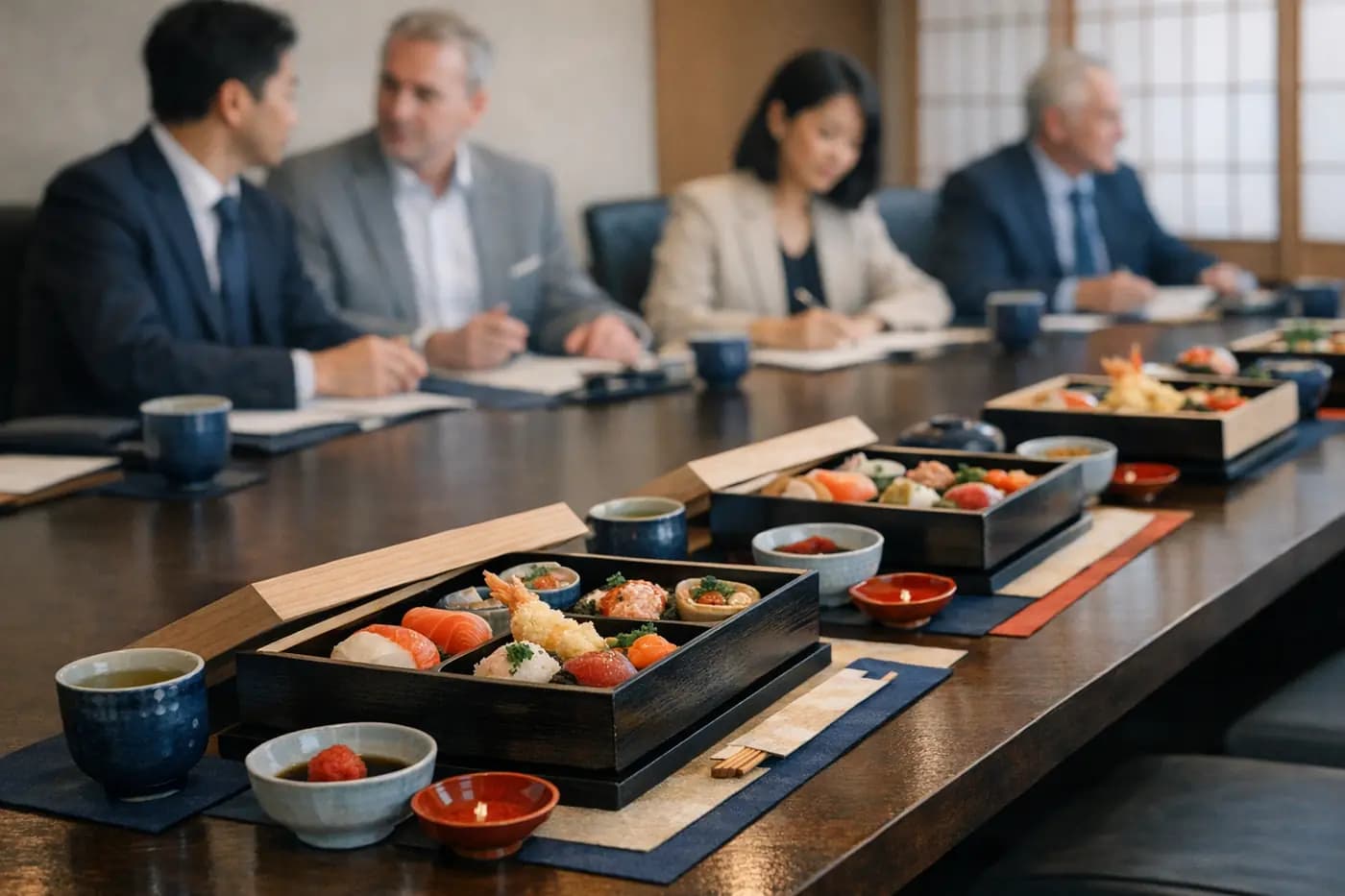
- Bento lunch in the meeting room: ¥2,500–5,000. Practical, quick and well liked by participants.
- Restaurant lunch (set menu): ¥3,000–8,000.
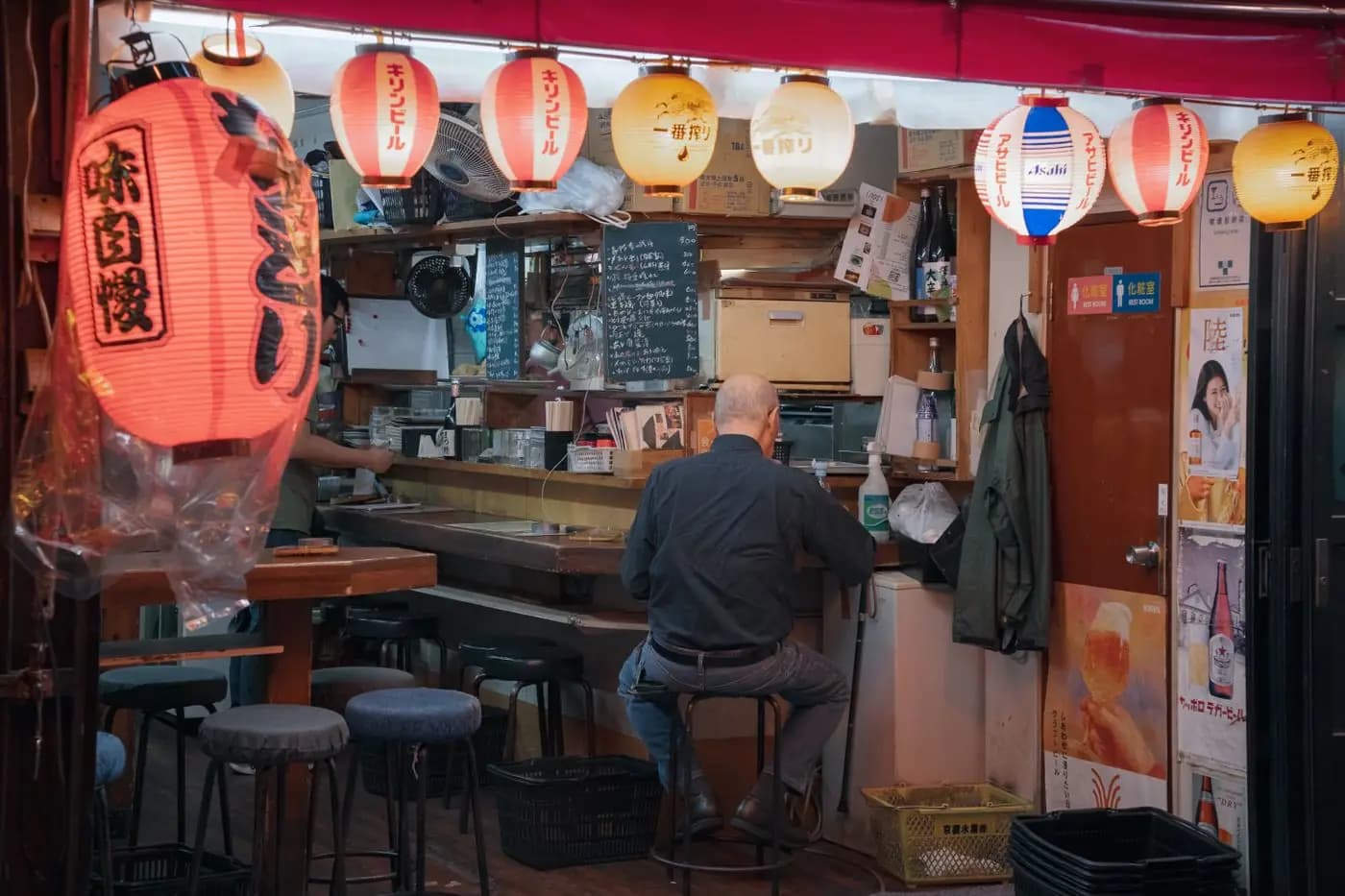
- Izakaya dinner in a private room, drinks included: ¥8,000–15,000.
- Hotel gala dinner, beverage package included: ¥20,000–40,000.
- Kaiseki or fine dining: from ¥25,000, often above ¥50,000 at the most sought-after addresses.
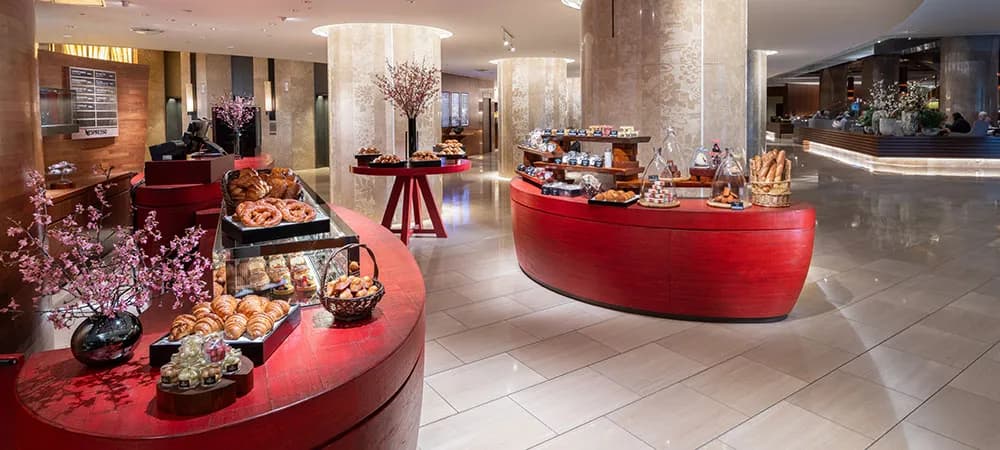
- Hotel coffee break: ¥1,500–3,000 per person per break.
Two points are specific to Japan. First, many of the best restaurants seat fewer than twenty guests; a group of 40 is then split across several nearby restaurants or moved to a larger private venue. Second, dietary requirements (vegetarian, halal, allergies) must be shared early, because Japanese cuisine relies heavily on fish-based dashi.
Transfers and travel
Japanese transport is reliable, but group transfers need precise planning. Indicative benchmarks:
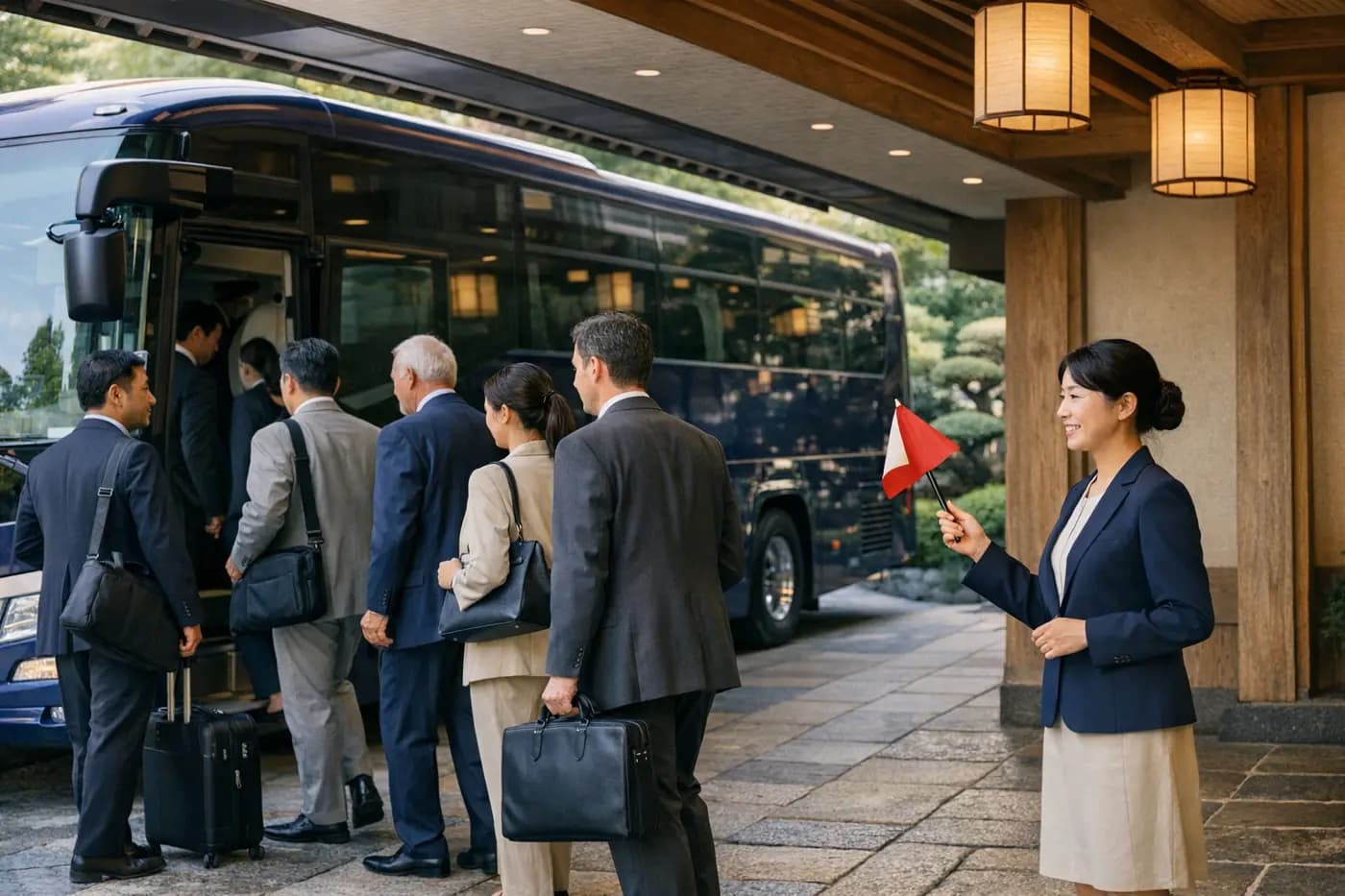
- Private 45-seat coach, airport–hotel transfer: ¥80,000–180,000 per vehicle, depending on the airport (Haneda is much closer to central Tokyo than Narita) and the time of day.
- Coach at disposal for a full day: ¥150,000–250,000 per vehicle. Driver working hours are regulated, which may require a second driver or an extra vehicle on long days.
- Shinkansen Tokyo–Kyoto in a reserved ordinary car: roughly ¥14,000–15,000 per person one way; the Green Car (first class) costs more.
- Professional guide-interpreter: ¥40,000–80,000 per day depending on language and specialization.
On the Shinkansen, luggage whose three dimensions total more than 160 cm requires a reserved seat with an oversized baggage area on the Tokaido, Sanyo and Kyushu lines, according to JR Central. For groups, we almost always send suitcases separately by luggage delivery service, which adds a modest cost but makes the days far smoother.
For sightseeing days, we always compare a private coach with public transport. For a small committee in Tokyo, trains and a few taxis are often faster and cheaper than a coach stuck in traffic. Beyond 25 to 30 people, or when the program links several venues with poor rail access, the coach becomes the safest and most comfortable option again.
Taxes, service charges and often-forgotten costs
A Japan seminar budget must include several lines that European quotes rarely show:
- Consumption tax: 10% at the standard rate, according to the National Tax Agency.
- Service charge: often 10–15% in upscale hotels, applied to rooms and food and beverage. Tipping, on the other hand, is not customary.
- Accommodation taxes: charged per person per night in Tokyo, Osaka, Kyoto, Fukuoka and other cities, under different and regularly revised scales.
- International Tourist Tax: ¥3,000 per person for departures from July 1, 2026, usually included in the airfare.
- Meeting rooms: often billed by time slot (morning, afternoon, evening), with AV and catering on top. The all-inclusive day delegate rate common in Europe is less widespread.
We always present budgets with these lines itemized, so the final amount holds no surprises.
Yen/euro rate and seasonality: the two main levers
Currency. The yen has moved significantly against the euro in recent years. The same yen budget can therefore represent a noticeably different amount in euros depending on the payment date. Our recommendations:
- Set the reference budget in yen and convert it at the current rate with a safety margin.
- Align the payment schedule with the deposits required by hotels.
- For large budgets, consider currency hedging with your finance team.
Seasonality. In Japan, domestic and international demand concentrates on a few periods:
- Peak season: late March–early April (cherry blossoms), Golden Week (late April–early May), October–November, especially in Kyoto.
- Favorable periods: January–February, outside Lunar New Year, and early December. June, the rainy season, often has good availability.
- Summer: July and August are hot and humid; August and September are also the peak of typhoon season.
Moving a seminar by a few weeks, for example from early April to mid-May, can be enough to noticeably improve hotel conditions.
Frequently asked questions
What budget per person should we plan for a 3-day seminar in Tokyo?
As an indication and excluding international flights, a 3-day seminar in an international conference hotel with meeting space, meals, transfers and one evening event often falls between €2,500 and €4,500 per person. The amount depends mainly on the season, hotel category and number of dinners outside the hotel.
Should we budget for tips in Japan?
No, tipping is not customary in Japan and can even cause embarrassment. However, upscale hotels often add a 10–15% service charge, which should be budgeted on top of the 10% consumption tax.
In which currency are quotes issued?
Our suppliers invoice in yen, and we issue detailed quotes in yen. We provide an indicative euro conversion at the current rate, with a recommended safety margin, because the yen/euro rate can change between quotation and payment.
When is the least expensive time for a seminar in Japan?
January–February (outside Lunar New Year) and early December generally offer the best hotel conditions. June, during the rainy season, also has good availability. Conversely, cherry blossom season, Golden Week and autumn are the most expensive periods.
Are meeting rooms included in a day delegate package?
Rarely. In Japan, rooms are usually rented by time slot (morning, afternoon, evening), with AV equipment and catering billed separately. We negotiate combined terms when accommodation and meeting space are booked in the same hotel.
Rédaction SHINOGI DMC · Updated