Do you need a visa for Japan? Visa-free stays by nationality
For tourism, family visits, trade fairs, seminars or business meetings, the answer is no. Japan grants short-stay visa exemption to the four most common French-speaking nationalities:
- France: 90 days.
- Belgium: 90 days.
- Canada: 90 days.
- Switzerland: 90 days, with the option of applying for an extension up to 6 months in total at an immigration office in Japan.
The stamp you receive on arrival corresponds to "temporary visitor" status (tanki taizai). It rules out any paid activity in Japan: a consultant paid by a Japanese client, a speaker paid by a conference organizer or a photographer on assignment for a local company generally fall under other rules. When in doubt, the Japanese embassy has the final word, not a travel forum.
The 90 days run from your date of entry. There is no Schengen-style "90 days in 180" rule, but back-to-back stays of nearly three months draw the attention of immigration officers, who may ask for a return ticket, a hotel booking or proof of funds.
Beyond 90 days, or to work, study or do an internship, you need a visa obtained before departure from the Japanese embassy or consulate in your country of residence. Working holiday visas exist for French, Belgian and Canadian citizens aged 18 to 30, with annual quotas.
A word for dual nationals and third-country residents: the passport you use to enter Japan determines which rules apply.
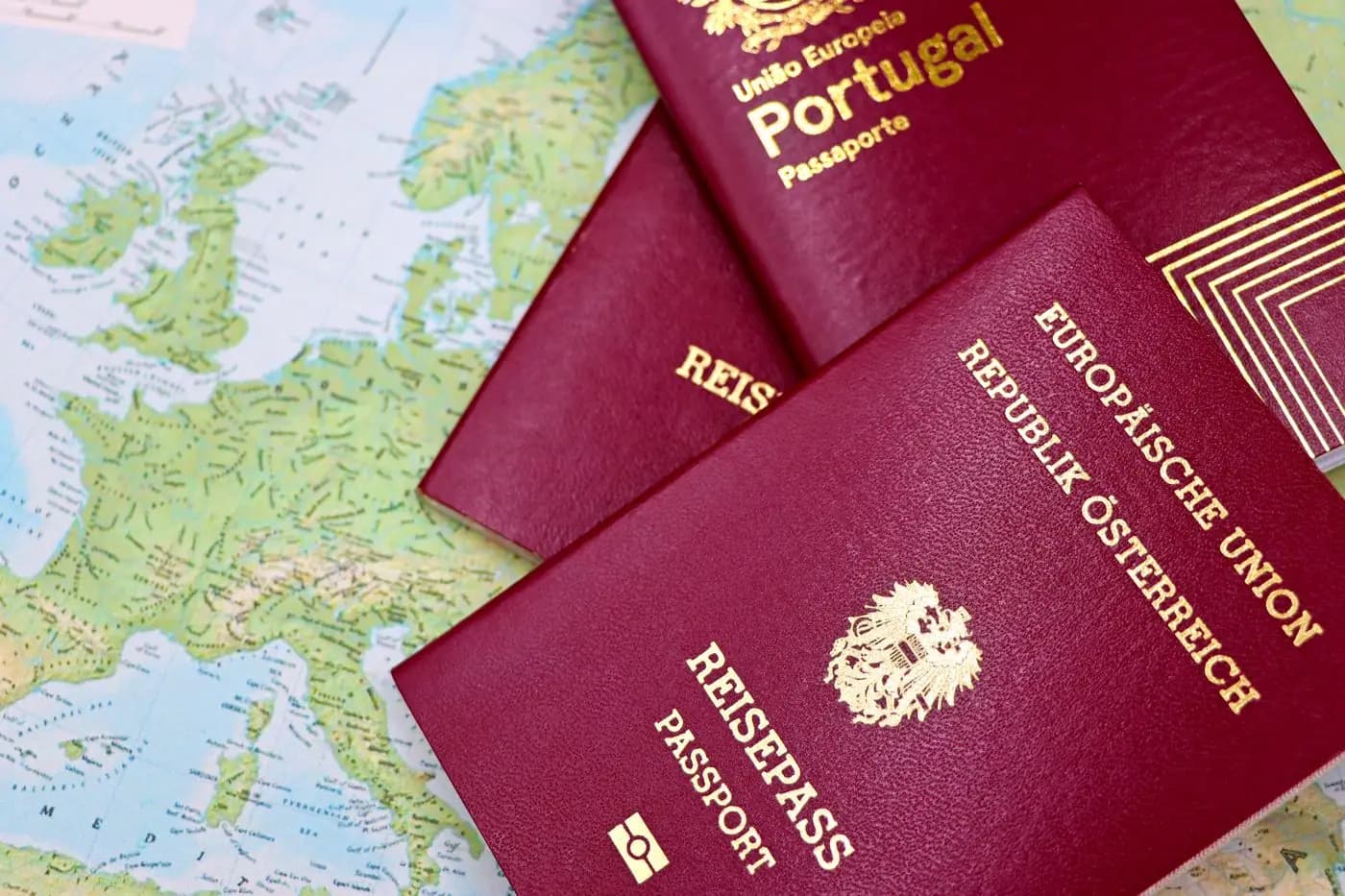
Passport, fingerprints and arrival at the airport
Japan requires a passport valid for the whole duration of your stay. It does not impose the six months' remaining validity some countries demand, but we suggest keeping a margin of a few months: some airlines and transit countries are stricter than Japan itself. National ID cards, driving licenses or a passport reported lost are not accepted, and every child needs their own passport.
On arrival, the sequence is always the same:
- Biometric check: fingerprints of both index fingers and a face photo, for all foreigners aged 16 and over.
- Immigration: show your passport and Visit Japan Web QR code, or the paper disembarkation card handed out on the plane.
- Baggage claim, then customs: QR code or paper declaration, one per family.
Allow 30 to 60 minutes between landing and exit at Narita or Haneda, longer when several wide-body jets arrive at once, usually between 6 and 9 a.m. The joint immigration-customs kiosks installed at the major airports (Narita, Haneda, Kansai) speed things up considerably for those who have prepared their QR code.
One last, often forgotten point: keep the address and phone number of your first hotel to hand. It is the most common question at the immigration desk, and it is mandatory on the disembarkation card.
Visit Japan Web: how to fill in the arrival QR code
Visit Japan Web is the free online service run by Japan's Digital Agency. For those who want it, it replaces the paper disembarkation card and customs declaration. Since early 2024, a single QR code covers both immigration and customs.
The process takes about fifteen minutes the first time:
- Create an account with an email address.
- Register your passport, ideally by scanning it with your phone camera to avoid typos.
- Add family members traveling with you, children included.
- Enter your trip: arrival date, airline, flight number, address of your first accommodation.
- Complete the immigration and customs sections, then display the QR codes.
We suggest filling everything in at home, calmly, a few days before departure, then taking a screenshot of the QR codes: Wi-Fi in arrival halls sometimes gets saturated. Beware of paid websites imitating Visit Japan Web: the official service is free and its address ends in digital.go.jp.
Visit Japan Web remains optional. If your phone lets you down, the paper forms handed out on the plane are still accepted. For older relatives or travelers who are not comfortable with digital tools, paper remains a perfectly valid option.
Japanese customs: allowances, banned meat and cash
Duty-free allowances for an adult are generous for a normal trip:
- Alcohol: 3 bottles of about 760 ml (age 20 and over).
- Tobacco: 200 cigarettes or 50 cigars or 10 packs of heated tobacco (age 20 and over).
- Perfume: 2 ounces, about 56 ml.
- Other goods: ¥200,000 in total value at the overseas market price.
The point that most surprises European travelers is meat. Ham, saucisson, rillettes, pâté, dried duck breast, sausages, beef jerky: all meat products, even factory-made and vacuum-packed, are banned without a veterinary certificate, which no tourist has. Airport detector dogs find them very effectively, and the law provides for up to 3 years in prison or a ¥3 million fine. Fresh fruit and plants go through plant quarantine, and many are refused. For a host gift, chocolate, biscuits, jam, tea or a good bottle are better choices.
Cash: above ¥1 million (or the equivalent in foreign currency, cheques and securities), declaration is mandatory, both on entry and exit. It is not a ban, just a formality.
Also prohibited are narcotics, weapons, counterfeit brand goods (including a fake bag bought for yourself) and obscene material. Kitchen knives bought in Japan go in checked luggage on the way home, never in the cabin.

Medication allowed and banned in Japan: pseudoephedrine, prescriptions, quantities
Japan is one of the strictest countries in the world on medication, and several products sold over the counter in Europe are a problem there.
The basic rule, set by the Ministry of Health (MHLW), allows the following with no formalities:
- Prescription medicine: up to 1 month's treatment.
- Over-the-counter medicine: up to 2 months of normal use.
- Contact lenses: 2 months.
Beyond that, you must apply in advance to the MHLW for an import certificate (Yunyu Kakunin-sho), now online. Allow one to two weeks.
Products to leave at home:
- Pseudoephedrine-based decongestants: Sudafed, Actifed, many cold and flu tablets with a decongestant, and some inhalers. Pseudoephedrine is classified in Japan as a stimulant precursor; above 10% of the substance in the product, import is prohibited. The safest approach is to bring none at all.
- Amphetamines and derivatives, including some ADHD treatments (Adderall, for example): banned even with a prescription.
- Narcotics (morphine, oxycodone, high-dose codeine): prior permission required from a regional health bureau, to be requested several weeks before departure.
- Cannabidiol (CBD): products containing even trace amounts of THC are illegal.
In all cases, travel with medication in its original packaging, in your carry-on, with a copy of the prescription and ideally a doctor's letter in English stating the active ingredient (generic name), dosage and length of treatment. Japanese pharmacies sell equivalents for most minor ailments, but doses are often lower than in Europe.
¥3,000 departure tax and JESTA: what is changing in 2026
Two changes affect all visitors.
The departure tax triples. The International Tourist Tax, introduced in 2019 at ¥1,000 per departure, rose to ¥3,000 for departures from July 1, 2026. It applies to all travelers leaving Japan by air or sea, Japanese citizens included. Children under 2 and transit passengers staying under 24 hours are exempt. You pay nothing at the airport: the tax is included in your ticket price. Tickets issued up to June 30, 2026 for a later departure stay at the ¥1,000 rate. For a family of four, that is ¥8,000 more than before, about €45.
JESTA is coming. Japan is preparing an electronic travel authorization along the lines of the US ESTA or Europe's ETIAS. Visa-exempt travelers will have to fill in an online form before departure; without authorization, the airline will refuse boarding. The immigration law reform creating JESTA was approved by the Cabinet in March 2026, with launch targeted during fiscal 2028 (April 2028 to March 2029). The fee and validity period had not yet been set in autumn 2026. For trips before 2028, nothing changes.
A third change concerns shopping: from November 1, 2026, tax-free shopping switches to a refund system. You pay consumption tax in the shop, then get it refunded at the airport after customs checks your purchases. We cover this in detail in our guide to money in Japan.
Entry formalities for a group trip or seminar in Japan
For a group of 20, 50 or 150 people, each individual rule becomes a checkpoint to organize. Here is the list we follow for seminars and incentive trips:
- Collect passport details three months ahead: exact name, nationality, expiry date. This flags passports expiring during the trip and participants of other nationalities who may need a visa.
- Check speakers' status: a participant leading a conference or training session paid by a Japanese entity may need a status other than "temporary visitor".
- Visit Japan Web for everyone: a reminder one week before with simple instructions, and a screenshot of the QR code requested before boarding. For 50 people, this can save 30 to 45 minutes on arrival.
- A note on medication and food in the travel booklet: pseudoephedrine, cured meats and meat-based gifts to avoid. It is the topic that triggers the most customs checks.
- Professional equipment: screens, banners, giveaways and samples above ¥200,000 may be taxed; for equipment that will leave Japan again, an ATA carnet avoids paying duties up front.
- A greeter at the customs exit: an assistant with a sign, a name list and a reachable phone number, because a group always comes out in several waves.
This administrative preparation, before departure and on arrival, is what SHINOGI DMC handles for groups, so the seminar starts at the first meeting rather than at the end of passport control.
Frequently asked questions
Do French passport holders need a visa for Japan?
No, for a tourist or business stay of up to 90 days with no paid activity in Japan. A passport valid for the whole stay is enough.
Is Visit Japan Web mandatory?
No. The service is free and optional; it speeds up immigration and customs with a single QR code. The paper forms handed out on the plane are still accepted.
Can you take paracetamol or Sudafed to Japan?
Paracetamol is fine within the 2-month limit. Sudafed and other pseudoephedrine decongestants should stay at home: above 10% pseudoephedrine they are banned.
Can you bring saucisson or cheese to Japan?
Saucisson, ham and all meat-based products are banned, even vacuum-packed. For a gift, choose chocolate, biscuits, jam or wine, up to 3 bottles per adult.
How much is Japan's departure tax in 2026?
¥3,000 per person for departures from July 1, 2026, included in the airfare. Tickets issued before July 1 stay at ¥1,000; children under 2 are exempt.
When will JESTA become mandatory?
The government is aiming for launch during fiscal 2028 (April 2028 to March 2029). The fee and exact procedure have not yet been published; until then, no prior authorization is required.
Rédaction SHINOGI DMC · Updated
Sources
- Ministry of Foreign Affairs of Japan — Visa exemption arrangements
- France Diplomatie — Japon, conseils aux voyageurs : entrée et séjour
- Digital Agency — Visit Japan Web
- Japan Customs — Customs procedures for passengers (allowances, cash declaration)
- Ministry of Health, Labour and Welfare — Personal import of medicines (医薬品等の個人輸入)
- Japan Customs — Medicines and cosmetics for travelers (Customs Answer 9005)
- JNTO — Japan's International Tourist Tax is increasing
- Japan Tourism Agency — Tax-free shopping, refund method from November 1, 2026
- Immigration Services Agency of Japan
- JNTO — Préparer son voyage au Japon