Japan Rail Pass 2026: 7, 14 and 21-day prices
On October 1, 2023, the JR Pass went up by 65 to 77% in one go. The 7-day ordinary pass rose from ¥29,650 to ¥50,000, the 14-day pass from ¥47,250 to ¥80,000 and the 21-day pass from ¥60,450 to ¥100,000. Three years on, those prices still stand. The old reflex of "we're going to Japan, so we'll get the JR Pass" no longer works: you have to do the math.
Here are the rates in force in autumn 2026 when buying on the official JR Pass website (adult, 12 and over):
- 7 days: ¥50,000 in ordinary cars, ¥70,000 in Green Car (first class).
- 14 days: ¥80,000 ordinary, ¥110,000 Green Car.
- 21 days: ¥100,000 ordinary, ¥140,000 Green Car.
- Children aged 6 to 11: half price. Up to two children aged 1 to 5 travel free with an adult as long as they do not occupy a reserved seat.
Bought from a travel agency outside Japan, the same pass costs a little more: ¥53,000 for 7 days, ¥84,000 for 14 days and ¥105,000 for 21 days in ordinary class. With the euro at around ¥180 in September 2026, the 7-day pass comes to roughly €280.
The pass is reserved for foreign visitors entering Japan as a "temporary visitor" (visa-free tourist stay, which applies to French, Belgian, Swiss and Canadian citizens). Days are counted as calendar days, midnight to midnight, from the start date you choose: activating it on an arrival evening at 9 p.m. means losing a whole day.
Is the JR Pass worth it? Three itineraries worked out
The method is simple: add up the JR trips you would take anyway, in reserved seats, and compare with the pass price. The amounts below are regular Nozomi fares, reserved ordinary seat, standard season (autumn 2026).
Case 1: Tokyo–Kyoto–Tokyo in one week. Tokyo–Kyoto costs ¥14,170 one way, so ¥28,340 return. Even adding a day trip to Nara and the airport transfer, you stay far below ¥50,000. Verdict: no pass.
Case 2: the Tokyo–Kyoto–Hiroshima–Tokyo loop. Tokyo–Kyoto ¥14,170, Kyoto–Hiroshima ¥11,940, Hiroshima–Tokyo ¥19,760: total ¥45,870. Close to the threshold. The JR ferry to Miyajima, a day in Himeji and a few local trains tip the balance, but only just. Verdict: the pass is mostly about convenience, provided everything fits into 7 days.
Case 3: Tokyo–Kyoto–Hiroshima–Fukuoka–Tokyo in 7 days. Tokyo–Kyoto ¥14,170, Kyoto–Hiroshima ¥11,940, Hiroshima–Hakata ¥9,630, Hakata–Tokyo ¥23,810: total ¥59,550. Here the pass saves nearly ¥10,000 per person. Verdict: 7-day pass.
A common trap: the 14-day pass. A two-week Tokyo–Kanazawa–Kyoto–Hiroshima–Fukuoka–Tokyo circuit comes to about ¥67,700 in separate tickets (including ¥14,600 for Tokyo–Kanazawa and about ¥7,700 for Kanazawa–Kyoto), less than the ¥80,000 pass. What makes a pass pay off is not the length of the trip but how many long journeys fall within the period it covers. Many travelers do better with a 7-day pass for the most mobile part of the trip and single tickets for the rest.
Also remember that the pass does not cover private lines (Kintetsu to Nara, Keihan and Hankyu in Kyoto and Osaka, Odakyu to Hakone) or the Tokyo and Osaka subways. For city travel, a Suica or ICOCA card remains essential.
Nozomi and Mizuho: the special ticket for pass holders
For years the rule was strict: no Nozomi or Mizuho trains with the JR Pass. You had to make do with Hikari and Sakura trains, slightly slower and less frequent. Since the October 2023 reform, you can board these fast trains by buying a supplement called the "Nozomi/Mizuho ticket".
Some prices, the same for non-reserved, reserved or Green Car:
- Tokyo–Nagoya: ¥4,180.
- Tokyo–Kyoto and Tokyo–Shin-Osaka: ¥4,960.
- Tokyo–Hiroshima: ¥6,500.
- Shin-Osaka–Hakata: ¥4,960.
- Hakata–Kagoshima-Chuo (Mizuho): ¥5,150.
The ticket is valid for one day, for the section and direction shown, and can only be bought in Japan at a JR station (ticket office or reserved-seat ticket machine), from one month before departure. It cannot be booked online.
Is it worth it? Between Tokyo and Kyoto, the Hikari takes about 2 h 40 versus 2 h 15 for the Nozomi, with two Hikari per hour. For a daytime trip with no time pressure, we suggest sticking with the Hikari. The supplement makes sense for Tokyo–Hiroshima: direct Hikari trains are rare, and with the pass alone you usually change at Shin-Osaka or Okayama. On Shin-Osaka–Hakata, the Sakura (covered by the pass) is a very good option, often less crowded than the Nozomi.
Careful: if your itinerary needs a Nozomi on every leg, redo the math with these supplements. Two or three special tickets are enough to make the pass less attractive than single tickets.
Regional passes: JR West Kansai, Hiroshima, Hokuriku and others
If your trip does not cross the whole country, regional passes are often far better value. The JR companies sell them directly, with the same eligibility rules (foreign passport, temporary visitor status).
At JR West, the line-up changed in autumn 2026:
- Kansai Area Pass (1 to 4 days, Haruka included): sales ended on September 30, 2026. Passes bought before then remain valid.
- Kansai Mini Pass: ¥3,000 for 3 consecutive days on JR rapid and local trains between Kyoto, Osaka, Kobe and Nara. The Haruka to Kansai Airport is not included.
- Kansai Wide Area Pass: ¥12,000 for 5 days, with the Sanyo Shinkansen as far as Okayama, the Haruka and limited express trains to Kinosaki Onsen, Amanohashidate, Shirahama or Takamatsu.
- Kansai-Hiroshima Area Pass: ¥17,000 for 5 days, including the Shin-Osaka–Hiroshima Shinkansen and the JR ferry to Miyajima.
- Kansai-Hokuriku Area Pass: ¥19,000 for 7 days, with the Hokuriku Shinkansen between Tsuruga and Joetsu-Myoko (Kanazawa, Toyama) and the Thunderbird.
- Hokuriku Area Pass: ¥7,000 for 4 days around Kanazawa, Toyama and Fukui.
A concrete example: arrival at Kansai Airport, four nights in Kyoto and Osaka, a return trip to Hiroshima and Miyajima. In separate tickets, Shin-Osaka–Hiroshima return alone costs more than ¥20,000. The ¥17,000 Kansai-Hiroshima Area Pass covers that trip, the Haruka and all local JR trains. It is one of the best deals available today.
JR East, JR Kyushu and JR Hokkaido offer their own passes (JR East Pass Tohoku or Nagano-Niigata, JR Kyushu Rail Pass, Hokkaido Rail Pass). Prices change regularly: check each company's website before building your budget.
Buying, activating and booking seats with the JR Pass
There are two ways to buy it, and we clearly recommend the first.
On the official website (japanrailpass.net): card payment, the lowest price, and above all the ability to book seats online before you have even collected the pass. In Japan, you pick up the pass at a compatible reserved-seat ticket machine or a JR ticket office, with your passport and the QR code received by email.
From an agency outside Japan: you receive an exchange order, which must be converted within 3 months of issue at a designated JR office (Narita, Haneda and Kansai airports, major stations). Queues there can be long on mornings when long-haul flights arrive.
Either way, you choose a start date, which must fall within one month of collection. Our advice: collect the pass on arrival, but start it on the day of your first long journey. The first three days in Tokyo work perfectly well on the subway with an IC card.
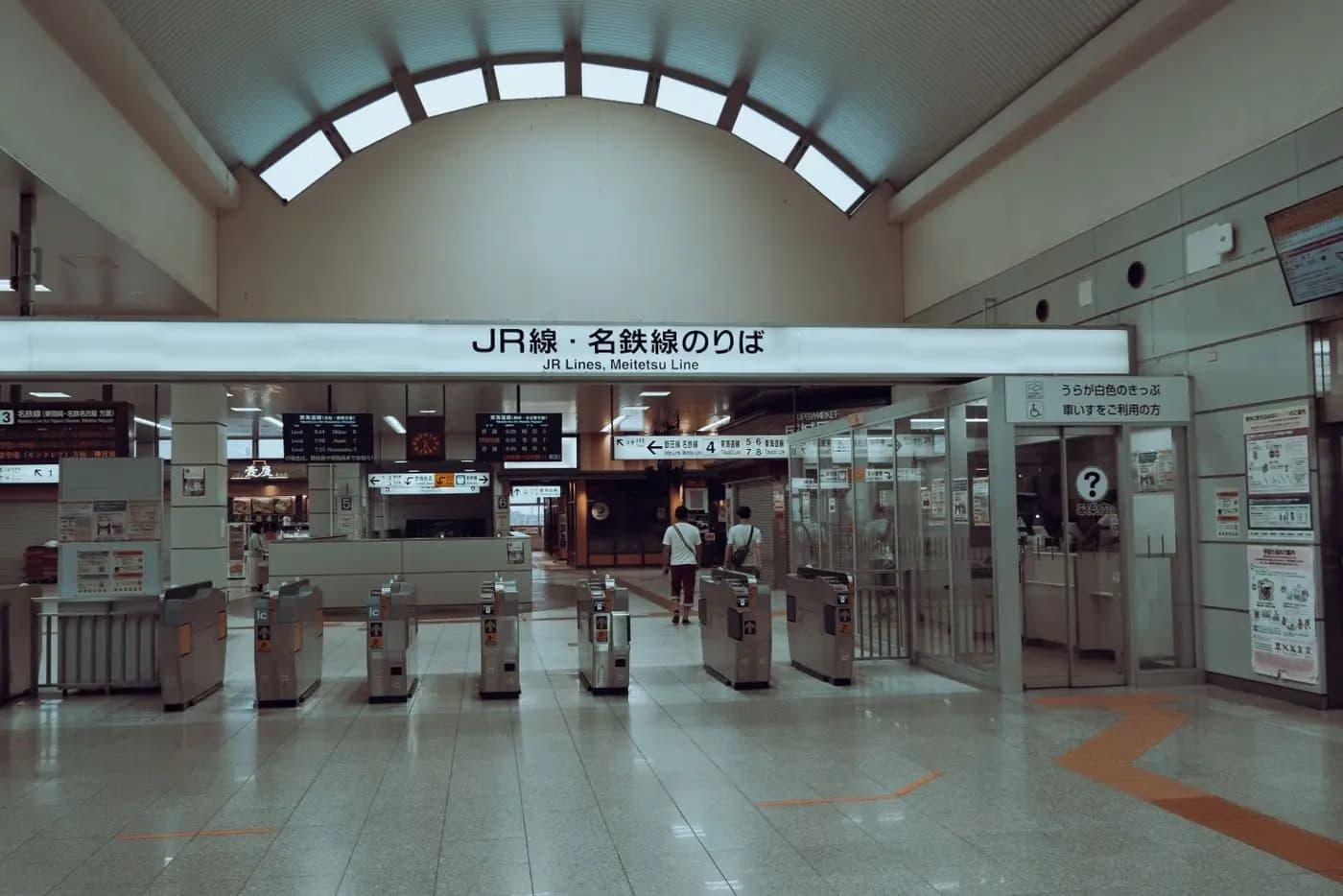
Once you have the pass, you go through automatic gates by inserting the ticket (it comes out the other side) and book seats free of charge, as often as you like, at reserved-seat ticket machines: the screen is in English and you just scan the pass. On busy lines (the Tokaido line at weekends, the Hokuriku line to Kanazawa, trains to Kinosaki or Takayama), book as early as possible.
Two precautions: the pass is personal and must be shown with your passport if checked; if lost, it is neither replaced nor refunded.
Alternatives to the JR Pass: smartEX, single tickets and IC cards
For most one- to two-week trips, the winning combination in 2026 looks like this: individual Shinkansen tickets, an IC card for city travel and possibly a regional pass.
- smartEX: the official app for the Tokaido, Sanyo and Kyushu Shinkansen. Free registration, foreign credit cards accepted, English interface. Tokyo–Shin-Osaka costs ¥14,520 in a reserved seat, slightly less than at the counter, and "Hayatoku" advance fares go lower on some trains. You link an IC card or a QR code and walk straight through the gate.
- Tickets from machines: all JR machines in major stations have an English mode and take cards. Handy for a trip decided the day before.
- IC cards (Suica, ICOCA, PASMO): essential for subways, buses and local trains, JR or private. They also work in convenience stores and drink machines.
- Private railway passes: the Kintetsu Rail Pass for Nara, Ise and Yoshino, Odakyu's Hakone Freepass.
- Flying: for Tokyo–Fukuoka, Tokyo–Sapporo or Okinawa, domestic airlines often undercut the Shinkansen, especially when booked early.
Our rule of thumb: if your itinerary has fewer than three long Shinkansen journeys within a 7-day window, forget the national pass.
Group rail travel in Japan: passes or group tickets?
For a seminar or company trip, the question is different. You rarely compare 50 JR Passes with 50 individual tickets: you compare them with the JR group fare, which has its own rules.
- From 8 people traveling together on the same route, the group ticket (dantai) reduces the base-fare part of the ticket by 15% in January–February (excluding early January), June, September and November to mid-December, and by 10% the rest of the year. The Shinkansen surcharge is not discounted.
- From 31 to 50 people, one place is free; beyond that, one more free place per additional 50. Handy for the guide or tour leader.
- Seats are blocked by whole car or by rows, and requests are made before individual sales open (one month before departure). For spring and autumn weekends on the Tokaido line, start at least three months ahead.
With a group, the individual pass has another drawback: everyone has to collect their own with their passport, which quickly adds up to an hour of queuing at the airport. Group tickets are issued in advance and handed out by the tour leader.
Other points to lock down: luggage (over 160 cm, large suitcases must be declared on the Tokaido and Sanyo lines, hence the value of shipping them by courier), connection timing (allow 15 minutes' margin at Tokyo, Kyoto or Shin-Osaka for 40 people), and a platform greeter who knows the car and seat numbers.
This rail booking, car blocking and luggage coordination is what SHINOGI DMC handles for seminars and incentive trips in Japan, so the Shinkansen ride stays a highlight of the program rather than a source of stress.
Frequently asked questions
How much does the JR Pass cost in 2026?
On the official website, the ordinary pass costs ¥50,000 for 7 days, ¥80,000 for 14 days and ¥100,000 for 21 days; the Green Car version ¥70,000, ¥110,000 and ¥140,000. Children aged 6 to 11 pay half.
Is the JR Pass worth it for a Tokyo–Kyoto round trip?
No. The return trip by Nozomi costs ¥28,340 in a reserved seat, far less than the ¥50,000 7-day pass. The pass only pays off with several long journeys, for example to Hiroshima and Fukuoka.
Can you take the Nozomi with the JR Pass?
Yes, since October 2023, provided you buy a special Nozomi/Mizuho ticket at the station: ¥4,960 between Tokyo and Kyoto or Shin-Osaka, ¥6,500 between Tokyo and Hiroshima. Without it, the pass covers Hikari, Kodama and Sakura trains.
Does the JR Pass work on the Tokyo subway?
No. It covers JR lines, including the Yamanote loop line and the Haneda monorail, but not Tokyo Metro, Toei or private lines. Get an IC card (Suica or PASMO) for the rest.
Which pass should you choose for Kyoto, Osaka and Hiroshima?
JR West's Kansai-Hiroshima Area Pass: ¥17,000 for 5 days, including the Shin-Osaka–Hiroshima Shinkansen, the Haruka from Kansai Airport and the JR ferry to Miyajima.
Should a group use the JR Pass?
Rarely. From 8 people, the JR group ticket cuts the base fare by 10 to 15% depending on the season, gives one free place for 31 to 50 travelers and saves everyone from queuing to collect a pass.
Rédaction SHINOGI DMC · Updated
Sources
- JAPAN RAIL PASS (official) — Types and prices
- JAPAN RAIL PASS (official) — Use of NOZOMI/MIZUHO trains
- JAPAN RAIL PASS (official) — Traveling with a JAPAN RAIL PASS
- JR West — JR-WEST RAIL PASS (Kansai Mini, Kansai Wide, Kansai-Hiroshima, Kansai-Hokuriku, Hokuriku)
- JR West — Kansai Area Pass (end of sales, September 30, 2026)
- smartEX — Tokaido, Sanyo and Kyushu Shinkansen online reservation (official)
- JR Central — Group discount tickets (団体割引乗車券)
- JR Central — Oversized baggage on the Tokaido, Sanyo and Kyushu Shinkansen
- JNTO — Préparer son voyage au Japon