Hakuba in summer: when to come and how to get there
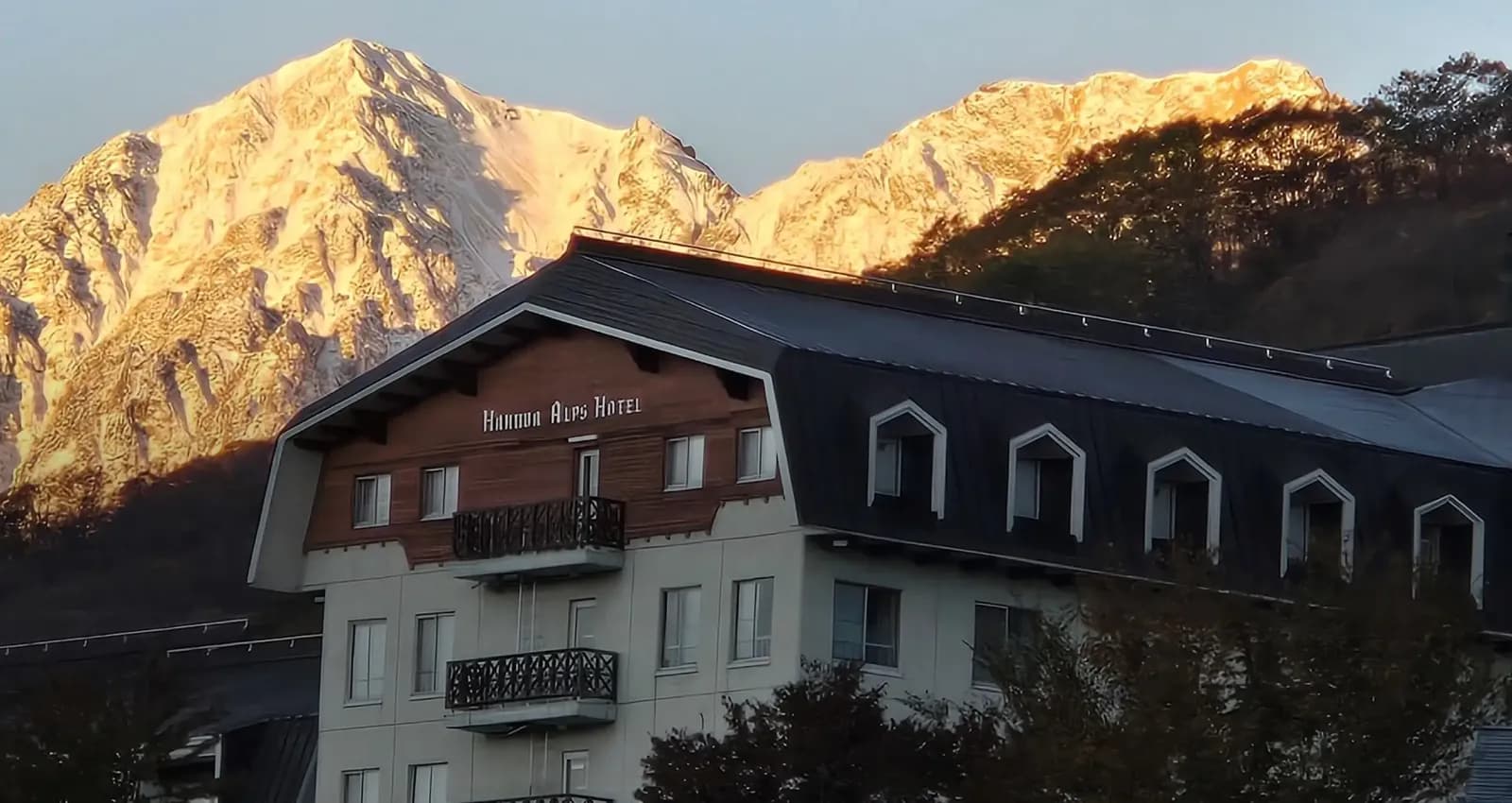
Hakuba is best known for its snow, but the valley does very well without it. As soon as the slopes close, the gondolas reopen for hikers, rivers swollen with snowmelt draw rafters, and the village, at 700 metres, stays mild while Tokyo swelters at 35°C.
The green season runs from late May to early November, with a few nuances:
- late May-June: snowmelt, rivers at their highest, snowfields still lingering up high; the rainy season (tsuyu) usually arrives around mid-June and lasts until mid-July;
- mid-July to late August: peak hiking season, alpine flowers in the wetlands, warm days in the village (25-30°C) and cool ones at altitude (10-15°C); frequent late-afternoon thunderstorms;
- September-October: drier air, clearer skies, and autumn colours creeping down from the peaks from late September. Lifts close in early November.
Access: from Tokyo, the Hokuriku shinkansen to Nagano (1h20 to 1h40), then the Alpico express bus to Hakuba (about 1 hour). Direct buses also link Shinjuku to Hakuba in 4h30 to 5 hours. From Nagoya or Osaka, go via Matsumoto and the JR Oito Line. Once there, a car or minibus helps a lot: sites are spread over some twenty kilometres, from the south (Nishina lakes) to the north (Tsugaike).
How long? Two full days for the classic hikes; three to four to add rafting, the lakes and a day on the Kurobe Alpine Route.
Hiking in Hakuba: Happo-one, Happo Pond and Hakuba Iwatake
Happo-one and Happo Pond make up the valley's signature hike. Three linked lifts, the Happo Alpen Line (Adam gondola, then the Alpen Quad and Grat Quad chairlifts), climb from the village to Happo-ike Sanso at 1,830 metres. The return ticket costs ¥3,500 per adult in 2026, a little less in advance; the green season runs from 30 May to 3 November 2026.
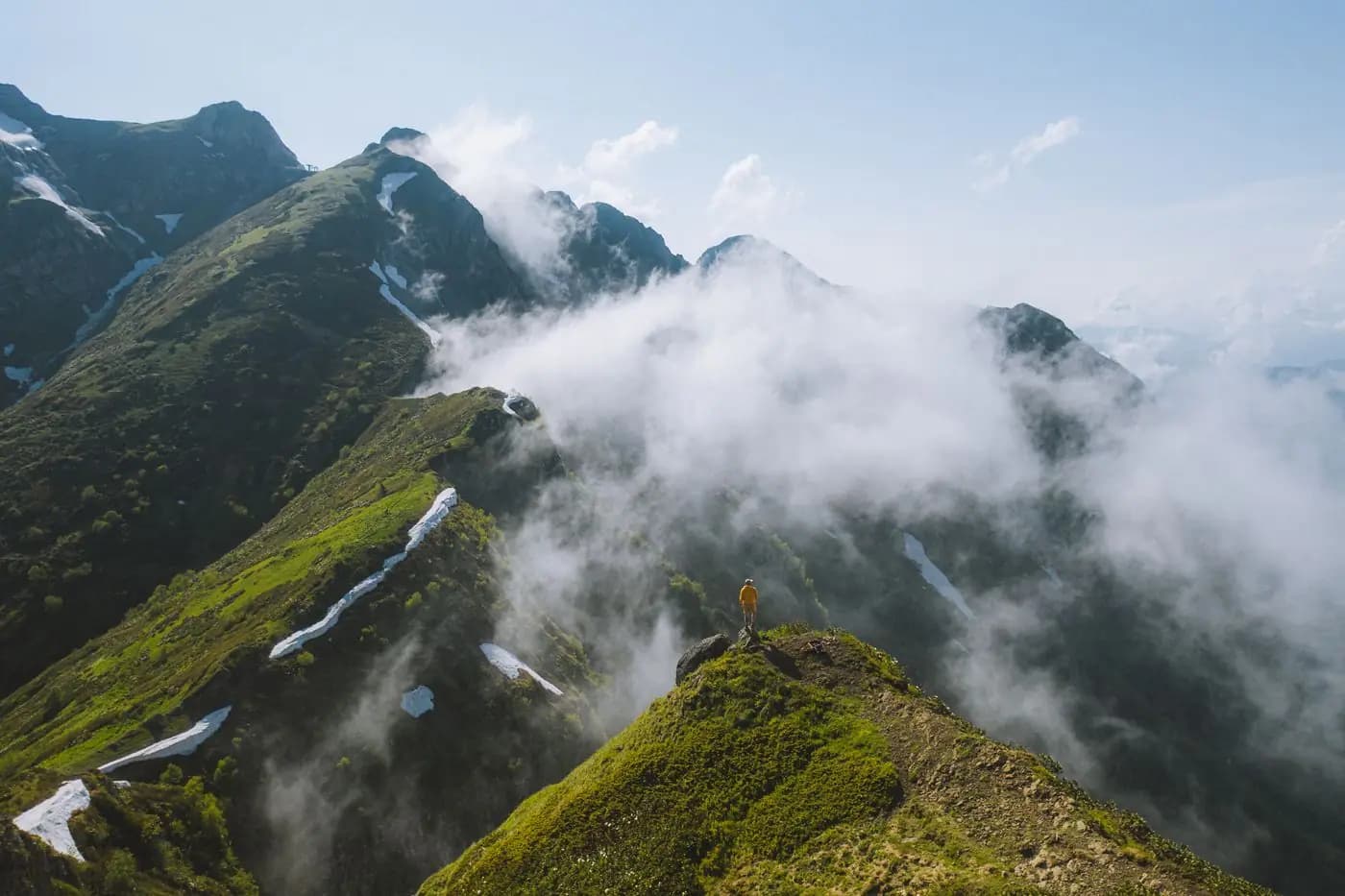
From there, a built path (stone steps, then boardwalk in places) climbs in 1 to 1.5 hours to Happo Pond (Happo-ike), at about 2,060 metres. On a calm day, the Hakuba range (Shirouma, Shakushi, Yarigatake, all above 2,800 metres) is reflected in it. This is the Hakuba photo. The climb is moderate but the ground is rocky: proper hiking boots, not sneakers. Full return trip from the village: 4 to 5 hours.
Fit hikers can continue to Mount Karamatsu (2,696 metres), 2.5 to 3 hours further along an exposed ridge; you then stay at the summit hut, which must be booked.
Hakuba Iwatake, opposite, is the mountain of easy walks and effortless views. The gondola rises to the Hakuba Mountain Harbor terrace, facing the whole range, coffee in hand. 2026 green season: 23 April to 15 November, 8:30am to 5pm, adult gondola and lift ticket ¥2,900. There are also forest trails, a swing facing the peaks, downhill mountain biking and, in summer, flower fields. Ideal for a group with mixed abilities, or for a morning above the clouds.
Good to know: black bears live in the area. Attacks are rare, but walk with a bell, talk as you go and never leave food behind.
Tsugaike Nature Park: the high-altitude wetland
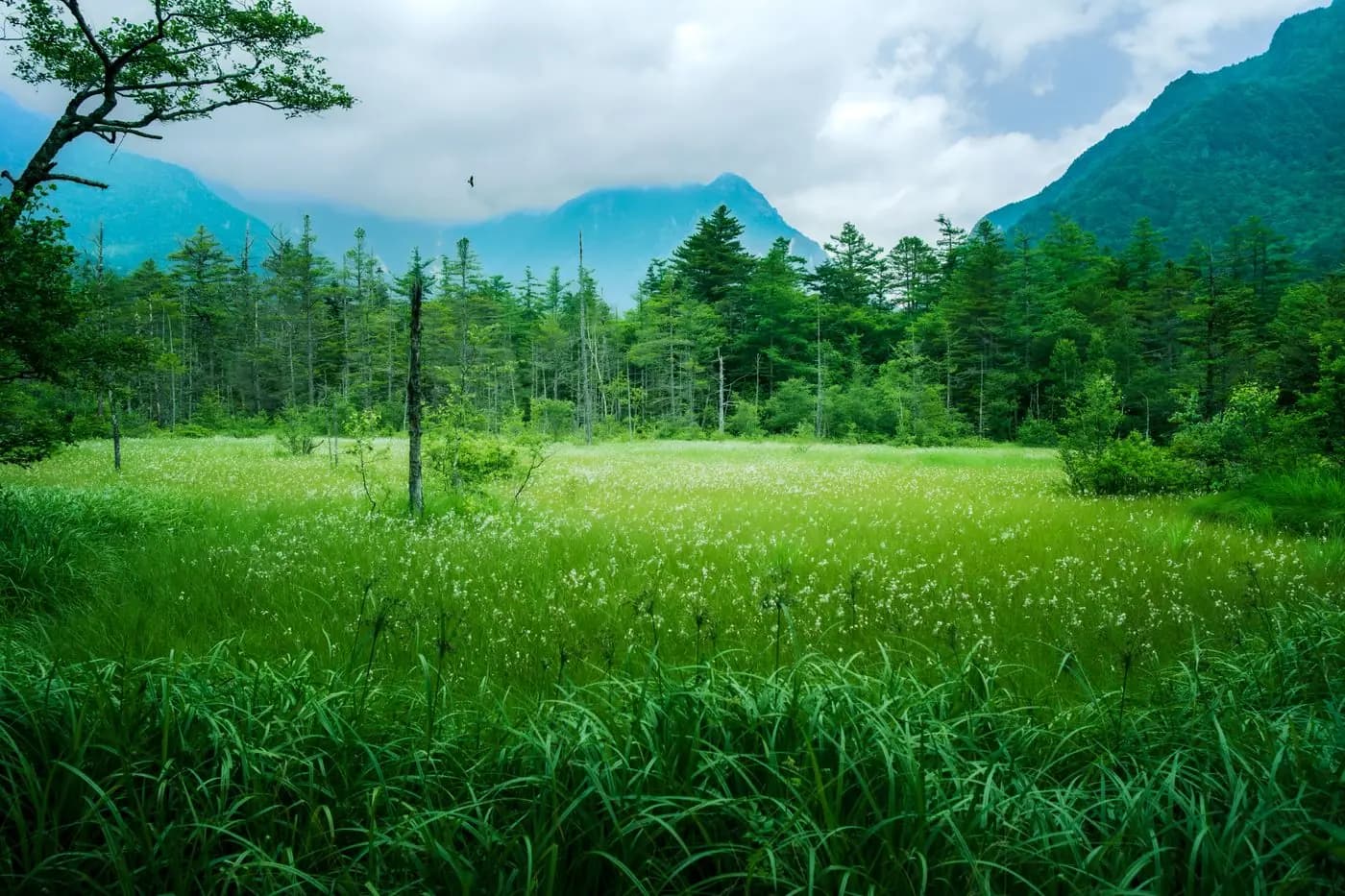
In the north of the valley, in Otari, Tsugaike Nature Park is a marshy plateau at about 1,900 metres, at the foot of Mount Shirouma. You get there by the Eve gondola and then the Tsugaike ropeway from the Tsugaike Kogen resort; the ride up takes about 40 minutes.
The park is crossed by a boardwalk loop of about 5.5 km through wet meadows, small ponds and birch groves. You can do part of it in an hour or the full loop in 3 to 4 hours, up to the Tenbo-shitsugen viewpoint facing the Shirouma's remnant glaciers. The elevation gain is small, making it an outing almost anyone can manage.
Seasons:
- June-early July: snowmelt, white mizubasho (skunk cabbage) flowering in the wetlands;
- mid-July-August: the main alpine bloom, orange nikko kisuge day lilies, gentians, lilies;
- late September-October: the marsh grasses turn russet and the maples red; one of the finest times.
Prices: in 2026 the adult return ticket combining gondola, ropeway and park entry costs around ¥4,000; park entry alone is ¥320. The park is open from June to late October, depending on snow.
Tips: even in August, bring a windproof jacket; it can be 12°C in the park and rain within minutes. Boardwalks are slippery after rain. And stay on them: trampling the marsh destroys vegetation that takes decades to recover.
Rafting, canyoning and lakes: Hakuba on the water
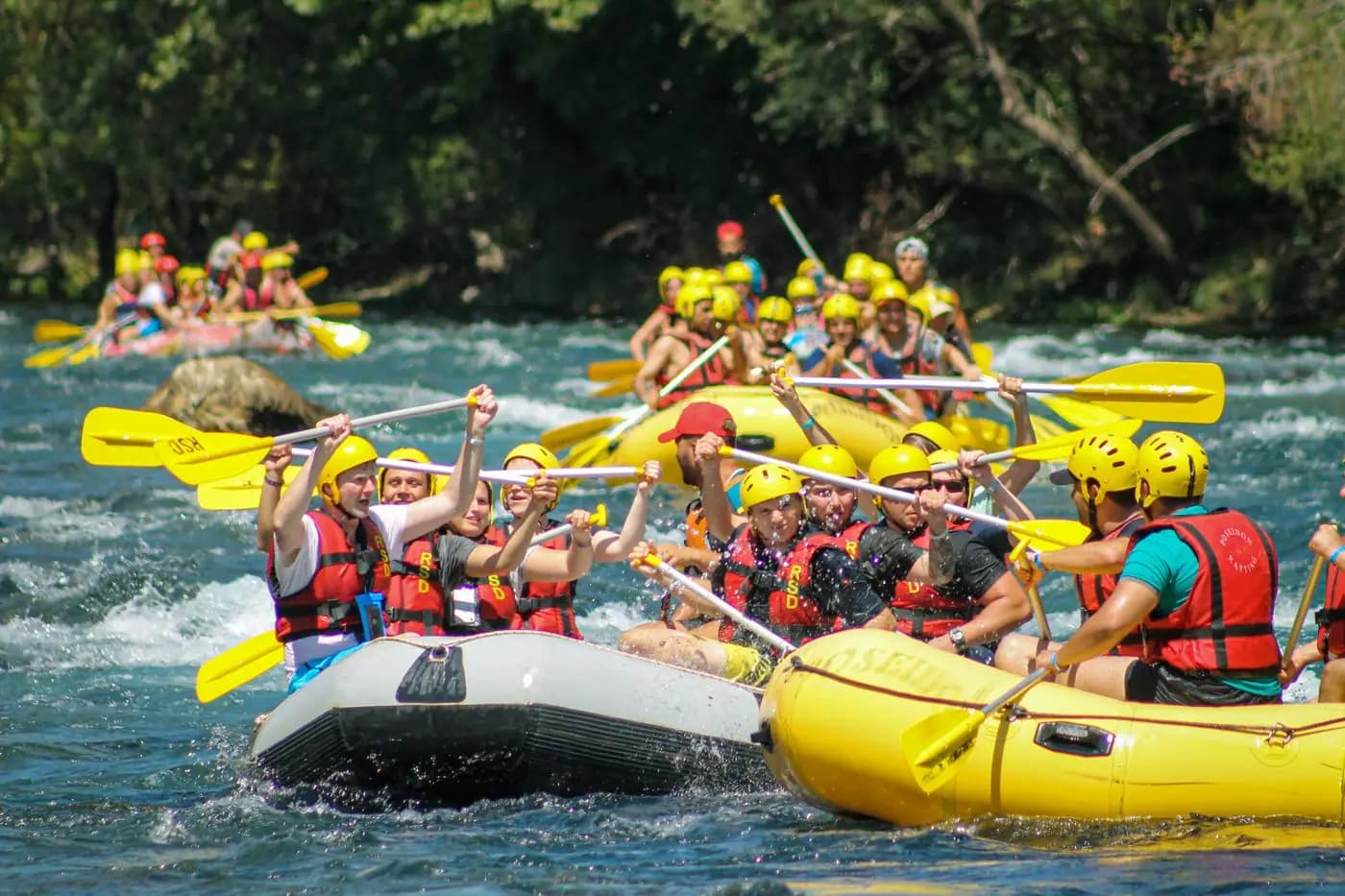
The Himekawa river, which runs down the valley to the Sea of Japan, is fed by snowmelt from the Northern Alps. Local operators run rafting from late April to October. Water levels change a lot with the season:
- May-June: rapids at their strongest, the best time for thrills (around class III depending on the day);
- July-August: the water drops and the run becomes calmer and more playful, with swimming and jumps;
- September-October: low water, but autumn colours on the banks.
A half-day usually costs ¥7,000 to ¥10,000 per person, wetsuit, helmet and life jacket included; minimum age is 6 to 12 depending on the season, and you don't need to be able to swim. Canyoning (descending gorges by jumping and sliding into pools) and packrafting complete the offer.
South of Hakuba, the three Nishina lakes (Aoki, Nakatsuna and Kizaki) show another side of the valley. Lake Aoki, the largest and deepest, has remarkably clear water: try stand-up paddle and Canadian canoe, ideally in the morning when the lake is still. Lake Kizaki, more developed, has campsites and a beach. Allow 20 to 30 minutes by road from central Hakuba.
Other activities fit well into a day: tandem paragliding over the valley (early morning flights, wind permitting), mountain biking and e-bikes along the rice-field roads, and tree-top adventure courses for families.
All water sports are booked through local operators: check they have certified guides and insurance, and that the programme includes an alternative if the river is too high after heavy rain.
The Tateyama Kurobe Alpine Route from Hakuba
The Tateyama Kurobe Alpine Route crosses the Northern Alps between Nagano and Toyama prefectures over 37 km, linking electric bus, a walk across the dam, cable car, ropeway, trolleybus and coach. Its Nagano-side entrance, Ogizawa, is about 1 hour's drive from Hakuba, via Omachi. It is the region's great excursion.
2026 season: 15 April to 30 November. Highlights:
- Kurobe Dam, 186 metres high, the tallest in Japan; from late June to mid-October you can watch its spectacular water discharge from the observation platform (220 steps up to the viewpoint);
- the Tateyama Ropeway, spanning 1.7 km with no intermediate tower, above the forests;
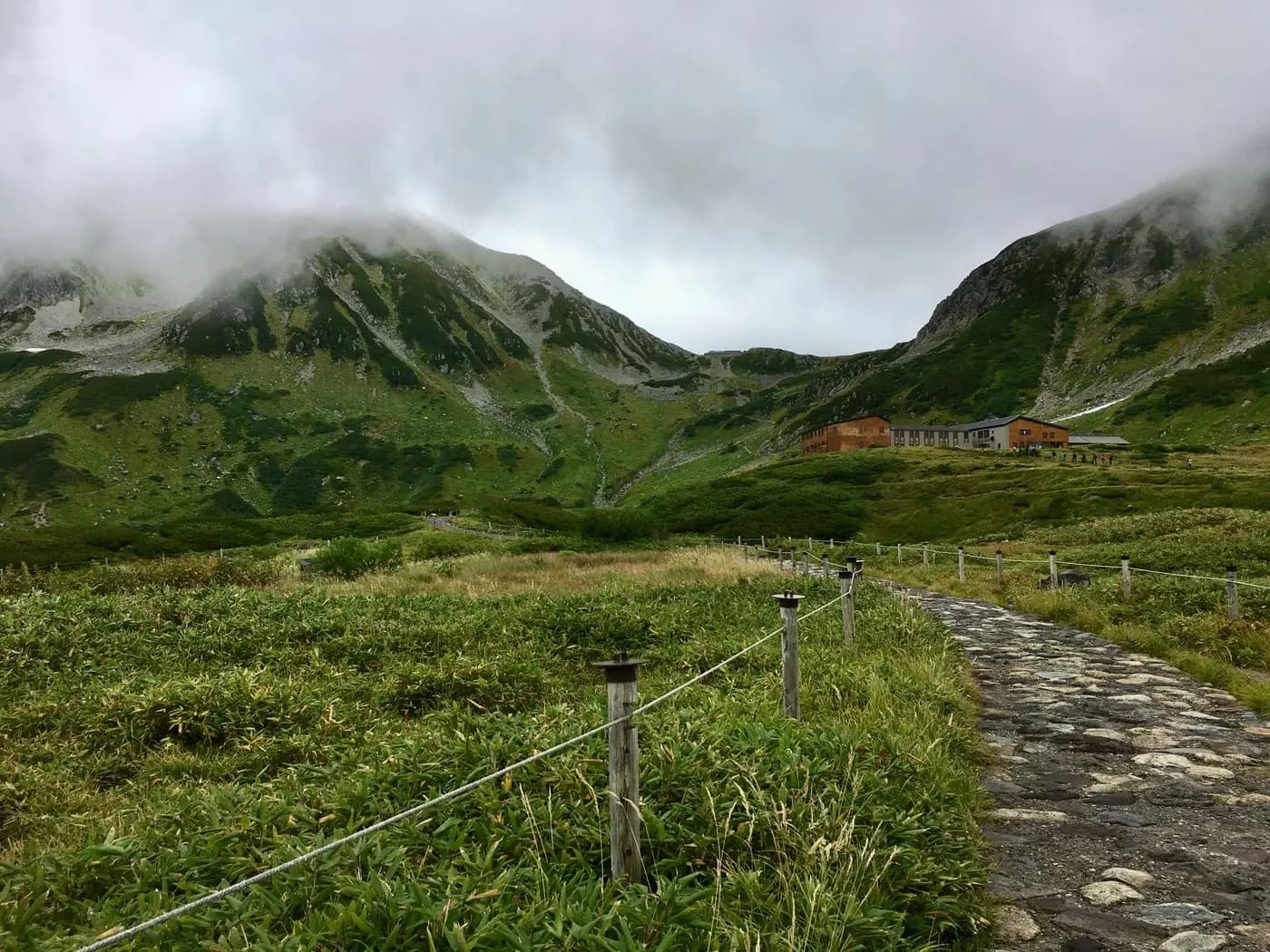
- Murodo, the route's highest point at 2,450 metres, with Mikuri-ga-ike pond, the Jigokudani fumaroles and high-altitude trails. In spring (April to June), the Yuki no Otani snow corridor reaches 15 to 20 metres high.
Planning: you can do an Ogizawa-Murodo return in a day (allow 7 to 8 hours there) or cross to Toyama and forward your luggage. The full one-way trip from Ogizawa to Tateyama costs over ¥10,000 per adult; fares vary by season and direction, so check the official site. In summer and October, book timed slots online (web tickets with departure times), especially at weekends.
Traps to avoid: underestimating the cold at Murodo (5-10°C even in summer, strong wind) and waiting times at connections in high season. Leaving Hakuba before 7am saves an hour of queuing.
Onsen and evenings in Hakuba in summer
After a day of hiking or rafting, a hot bath is part of the programme. The valley has several springs:
- Hakuba Happo Onsen, in the centre of the village, with very alkaline water that feels soft on the skin; several public baths and hotels draw from it;
- Obinata no Yu, a simple neighbourhood bath popular with locals;
- the Tsugaike onsen, to the north, close to the lifts;
- and, an hour's drive away, the Omachi onsen, gateway to the Alpine Route.
Public baths usually cost ¥600 to ¥1,000. The rules are those of any Japanese onsen: full shower before entering the pool, towel out of the water, and beware of tattoos, still refused in some places (hotels often offer private baths).
In the evening, Hakuba is quieter than in winter: some of the international restaurants in the Echoland area close between seasons. There are always izakaya, soba restaurants (Nagano is soba country) and craft breweries. Try Shinshu soba, oyaki (small buns stuffed with vegetables) and sake from the Omachi breweries, made with Alpine water.
On clear August nights, people sometimes head up to Iwatake or Happo for the stars: the valley has little light pollution and the Milky Way shows up very well.
Outdoor team building in Hakuba: organising a group
Hakuba in the green season is one of Japan's best destinations for an outdoor seminar: high-mountain nature 3 hours from Tokyo, hotels and chalets that welcome groups outside ski season at softer rates, and a network of outdoor operators used to international clients.
- Format. Split the group into teams of 6 to 10, each with a certified guide, and rotate activities: rafting in the morning for one team, the Happo Pond hike for the other, then swap. Small numbers work better on trails and in rafts (6 to 8 per boat).
- Mixed abilities. For a mixed group, Hakuba Iwatake and Tsugaike suit everyone; Happo Pond requires reasonable fitness; Mount Karamatsu is for the sporty.
- Weather. The mountain rule: start early and come down by 2-3pm in July-August, because of thunderstorms. Each day has a valley plan B (soba workshop, brewery, onsen, e-bike).
- Season. Avoid mid-June to mid-July (rain) and Obon (mid-August), when sites are crowded. September is often the best compromise.
- Accommodation. The large hotels in Happo and nearby have meeting rooms; for a more convivial feel, privatise a lodge or a cluster of chalets with a barbecue.
- Ideas that work. An orienteering race at Iwatake, a team rafting challenge, a barbecue on a terrace facing the peaks, a sunrise outing to a viewpoint, a soba class followed by dinner.
- Combination. Hakuba pairs with the Kurobe Alpine Route, Matsumoto (castle) or Kanazawa, 1h30 from Nagano by shinkansen.
SHINOGI DMC organises retreats and team-building programmes in Hakuba in summer and winter, with guides, transport from Tokyo and built-in fallback plans.
Frequently asked questions
What is there to do in Hakuba in summer?
Hiking to Happo Pond, the Hakuba Iwatake panoramic terrace, Tsugaike Nature Park, rafting on the Himekawa, paddleboarding on Lake Aoki, paragliding, mountain biking, onsen and a trip on the Tateyama Kurobe Alpine Route.
How long does it take to reach Happo Pond?
About 30 minutes of lifts up to 1,830 m, then 1 to 1.5 hours on foot. Allow 4 to 5 hours return from the village. The return lift ticket costs ¥3,500 in 2026.
When can you go rafting in Hakuba?
From late April to October on the Himekawa. May and June have the strongest rapids thanks to snowmelt; July and August are calmer and more playful.
Can you do the Kurobe Alpine Route from Hakuba?
Yes. The Ogizawa entrance is about 1 hour's drive away. A return trip to Murodo can be done in a day; the route is open from 15 April to 30 November 2026.
What is the weather like in Hakuba in August?
Around 25-30°C by day in the village and 10-15°C at altitude, with frequent late-afternoon thunderstorms. Bring a waterproof jacket and come down before 3pm.
Is Hakuba suitable for a corporate retreat in summer?
Yes: about 3 hours from Tokyo, Hakuba combines hotels with meeting rooms, off-season rates and guided group activities (rafting, hiking, orienteering). September is often the best time.
Rédaction SHINOGI DMC · Updated
Sources
- Hakuba Happo-one — Tickets & Passes (Happo Alpen Line)
- Hakuba Iwatake Mountain Resort — site officiel
- Forestry Agency — Tsugaike-Moor Recreation Forest
- Tateyama Kurobe Alpine Route — site officiel (saison 2026)
- Go Nagano — A Summer Day Trip to Hakuba (Happo Pond)
- Hakuba Valley — site officiel
- Alpico — Nagano ⇆ Hakuba (Green Season) bus
- JNTO — Préparer son voyage au Japon (inspiration)