What is Bizen ware (Bizen-yaki)?
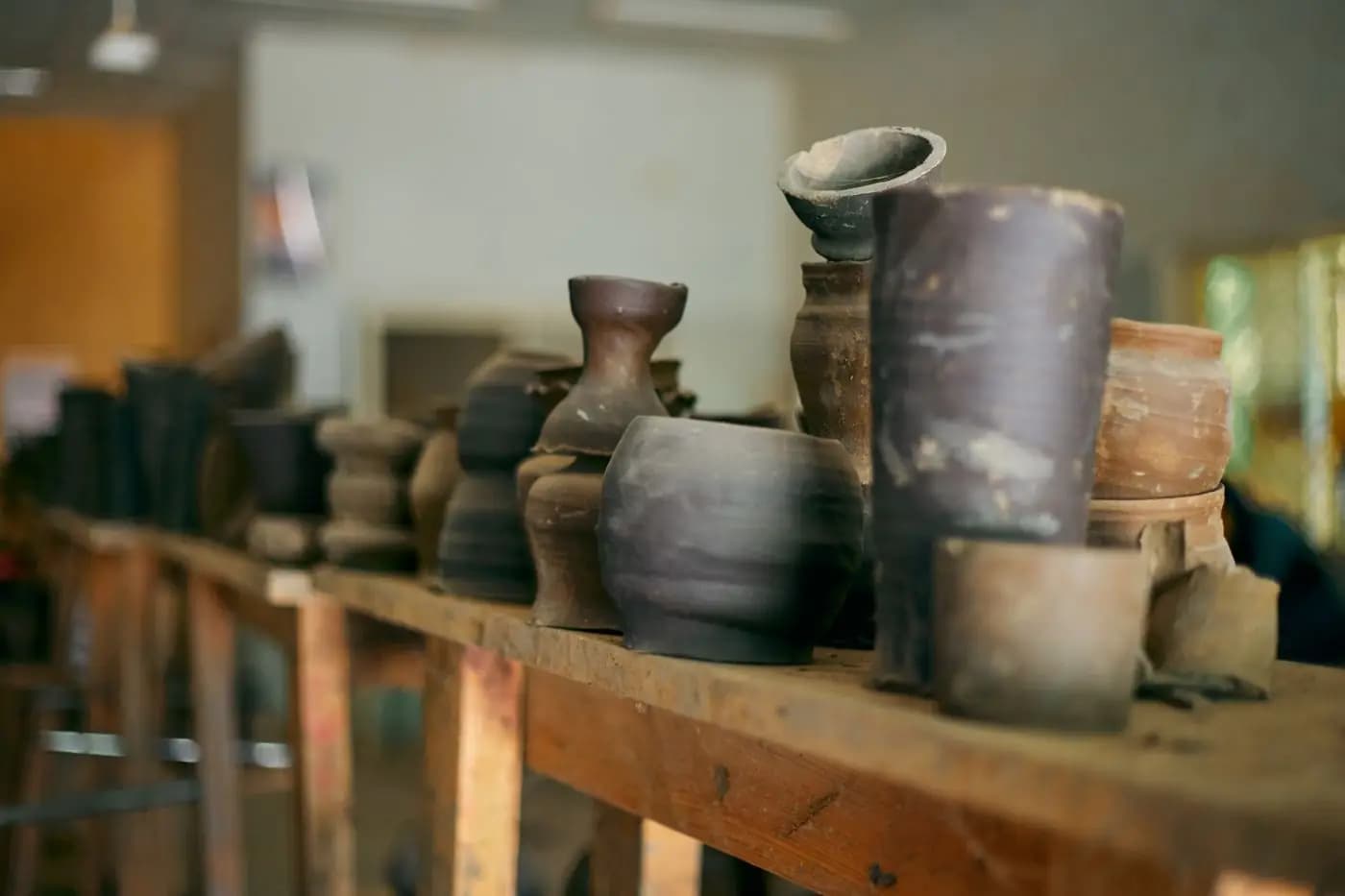
Bizen ware is a stoneware fired at very high temperature with no glaze and no painted decoration. All of its colour comes from the clay, the burnt wood and the fire. That is what makes it recognisable at a glance: reddish-brown tones, almost metallic sheens, runs of melted ash, and never two identical pieces.
It has been made for about a thousand years in south-eastern Okayama Prefecture, around the village of Imbe (Bizen City), and is one of Japan's "Six Ancient Kilns" (Nihon Rokkoyo), alongside Seto, Tokoname, Echizen, Shigaraki and Tamba. The six were jointly listed as Japan Heritage in April 2017. Bizen-yaki has also been a designated traditional craft of the Ministry of Economy, Trade and Industry (METI) since 1982.
In medieval times Bizen mainly made jars, grinding bowls and storage pots, valued because they almost never broke. In the 16th century tea masters adopted its vases and water jars for their raw simplicity. After a period of decline, the potter Kaneshige Toyo revived the tradition in the 20th century and was named a Living National Treasure in 1956; several Bizen potters have received that title since.
In Imbe they like to say that a Bizen cup makes beer foamier and keeps cut flowers fresh for longer. Exaggeration or not, the slight porosity of unglazed stoneware is real, and it is something shopkeepers enjoy letting you test.
How Bizen ware is made: clay, anagama kiln and two weeks of fire
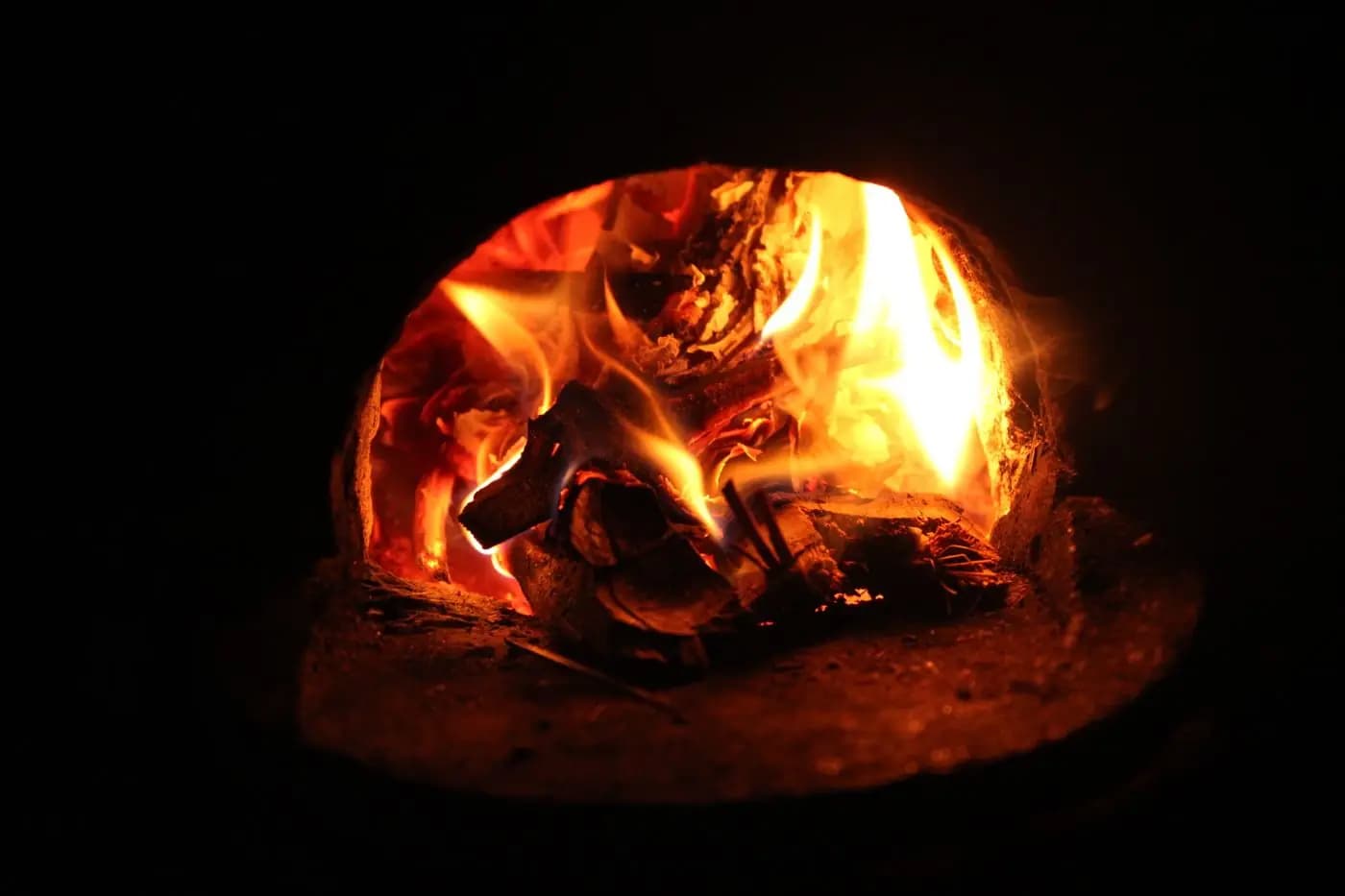
Everything starts with the clay. Bizen potters use earth dug from beneath rice paddies (hiyose), rich in iron and very plastic, which is sometimes left to age for years before use. It is shaped on the wheel or by hand, dried slowly, then loaded into the kiln unfired.
Firing uses red pine wood, in two types of kiln:
- Anagama: a single-chamber tunnel kiln dug into a hillside, the oldest design.
- Noborigama: a multi-chamber climbing kiln stepping up the slope. The tall brick chimneys you see around Imbe belong to these kilns.
A firing lasts one to two weeks, often around 10 to 14 days, day and night. Potters take turns stoking the fire every few minutes. Many fire only once or twice a year, which explains the prices.
Patterns come from where each piece sits in the kiln:
- Goma ("sesame"): drops of melted pine ash, yellow or olive green, on surfaces facing the flames.
- Hidasuki: bright red lines left by rice straw wrapped around the piece, sheltered from direct flame.
- Botamochi: pale circles where a small piece placed on top protected the surface.
- Sangiri: grey or bluish areas on pieces buried in the ash at the bottom of the kiln.
What you see on a piece is therefore a direct record of its place in the kiln. It is also why the same potter can never make the same object twice.
What to see in Imbe: kilns, museum and potters' shops
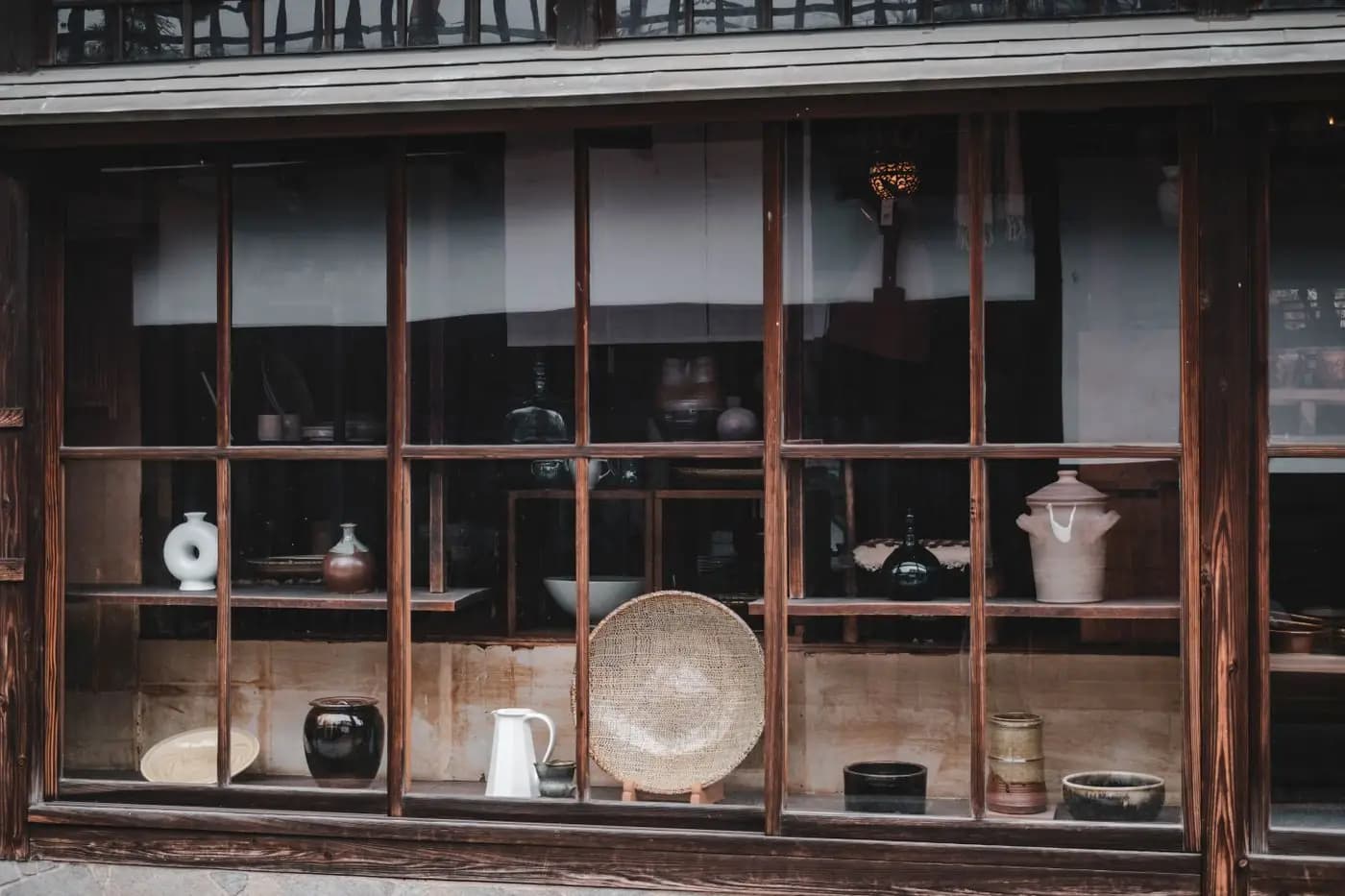
Imbe is easily covered on foot. The village stretches along the old Sanyo road just behind JR Imbe Station, with potters' houses, firebrick walls and kiln chimneys. There are several dozen galleries and workshops within a few hundred metres.
Landmarks:
- Bizen City Museum of Art (Bizen-shi Bijutsukan), 1 minute from the station. Opened in July 2025 in place of the former Bizen ware museum, it shows historic and contemporary pieces plus art and craft exhibitions. Hours: 9am–5pm (last entry 4:30pm), closed Mondays (or the day after a Monday holiday). General admission: ¥500 (¥400 for groups), varying with special exhibitions.
- Bizen-yaki Dento Sangyo Kaikan (traditional craft centre), in the station building: a showcase for members of the potters' association (Toyukai) and a tourist information point. It has been under renovation since 1 April 2026, with its sales area temporarily relocated: check progress before you go. Closed Tuesdays.
- The great historic kilns: remains of the shared kilns of the medieval and Edo periods are a national historic site on the hills around the village, such as the great south kiln (Minami Ogama). At Amatsu Shrine, in the village itself, the roof tiles and komainu (guardian dogs) are Bizen ware.
- Open workshops: many potters have a gallery on the ground floor. Walk in, greet, look. Smoking chimneys signal a firing in progress; do not approach the kiln unless invited.
For buying, some price benchmarks: a small sake cup (guinomi) or tea cup starts at a few thousand yen in shops; a signed piece by a well-known potter runs to tens of thousands of yen, and far more for a Living National Treasure. Artist pieces come in a signed wooden box (tomobako).
The Bizen pottery festival (October) and the spring fair
The big event is the Bizen-yaki Matsuri, held every year on the third Sunday of October and the Saturday before. The 2026 edition, the 42nd, takes place on 17 and 18 October around Imbe Station. Around 100,000 people come over the two days.
The draw is the prices: in the shops of potters' association members and on the special stands, pieces sell at 20% below the marked price. Entry is free. There are also local food stalls, wheel-throwing demonstrations and activities for children.
Tips to make the most of it:
- Come by train: Imbe Station is at the heart of the festival. Car parks fill up; outlying car parks are linked by shuttles and some paid spaces can be booked online.
- Arrive early on Saturday morning for the best choice, or on Sunday afternoon for the atmosphere.
- Bring cash (many small stalls) and a sturdy bag; sellers wrap carefully.
- Heavy pieces can be shipped: ask for takkyubin at the stall.
Since 2026 a spring fair has been added to the calendar: the first edition was held on 3 and 4 May 2026 (Golden Week), 9am to 5pm (4pm on the second day), also around the station. It is smaller and calmer.
Outside these dates Imbe is peaceful, sometimes too much so: some workshops close on weekdays without notice. A Friday or Saturday is the best compromise.
Making your own piece: pottery workshops in Imbe
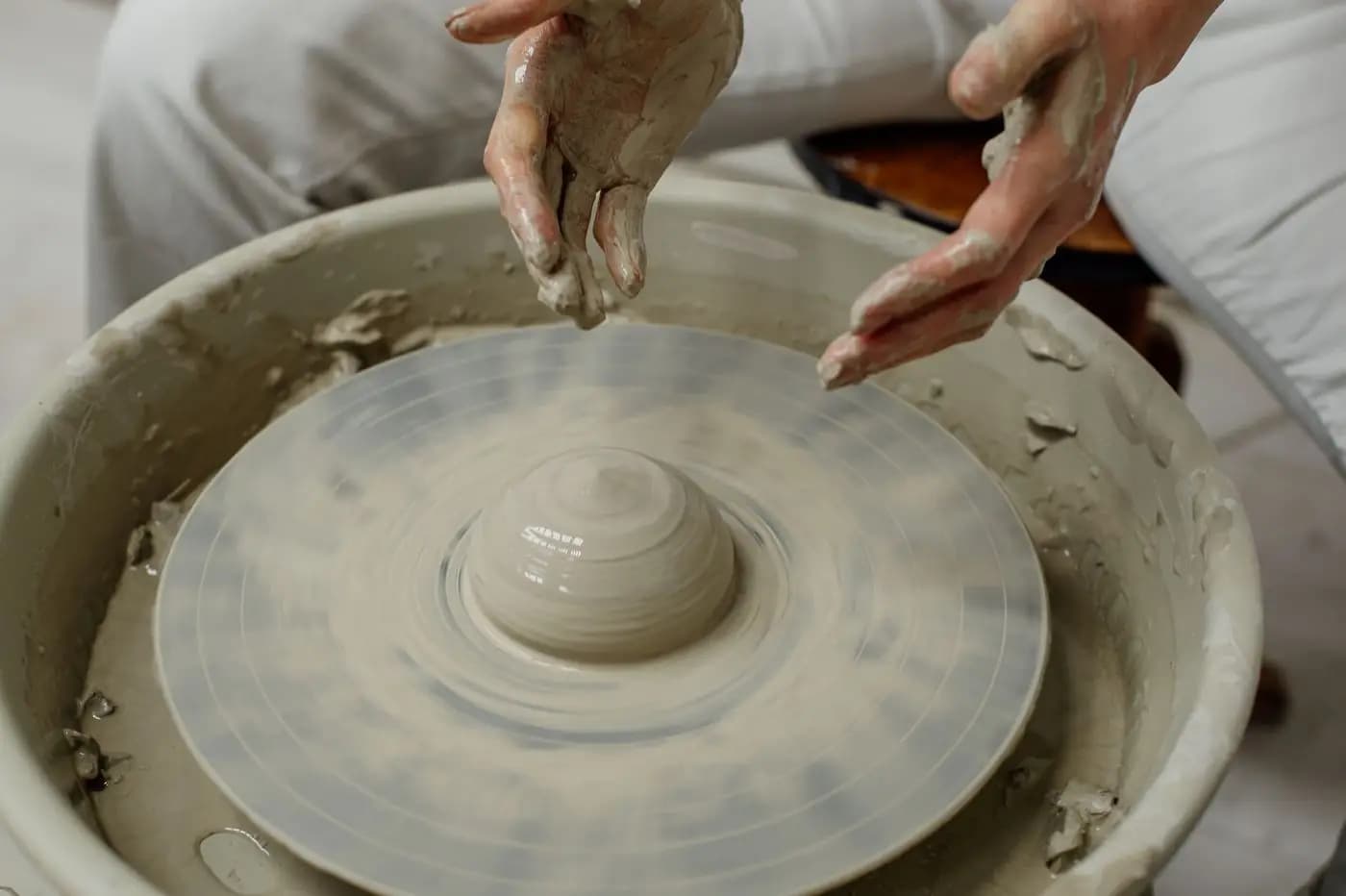
The most common experience is tsuchi-hineri: hand-building (no wheel) a cup, tumbler or small plate with Bizen clay, in about an hour. The workshop then dries and fires the piece and ships it. Allow two to three months before it arrives, sometimes more for a wood firing, plus shipping costs abroad.
A few places with published conditions:
- Mugen-an Bizen-yaki Kobo: hand-building at ¥2,750 (firing with hidasuki pattern) or ¥3,850 (small-kiln firing), about 1 hour, groups up to 200 people, large coach park. The workshop also travels to hotels in Okayama or Kurashiki for groups of up to about 150, and can arrange bento meals.
- Bishu-gama: founded in 1974 at the suggestion of Living National Treasure Yamamoto Toshu; hand-building for groups up to 200, open for bookings 9am to 3pm.
- Bizen Togei Center: courses and taster sessions on weekdays (closed Saturdays, Sundays and holidays), a 20-minute walk from the station.
- Independent potters' studios: several offer wheel throwing for small groups (often 15 people maximum), by reservation.
The wheel is more spectacular, but hand-building gives beginners better results. For a mixed group we recommend hand-building: everyone leaves happy, and wood-fired pieces have more character than electric-kiln ones.
Wear clothes you do not mind getting dirty, take off rings and watches, and allow 15 minutes to choose a shape: that is often where time gets lost.
Getting to Bizen, how long to stay and nearby Okayama Korakuen
Access. Imbe is on the JR Ako Line, about 40 minutes from Okayama Station by local train (about 30 minutes by car via the Sanyo Expressway, Bizen or Wake exits). Okayama itself is about 45 minutes from Shin-Osaka and 3 hr 15 min from Tokyo on the Nozomi shinkansen. From Osaka or Kyoto, a day in Bizen is entirely realistic.
How long. Half a day covers the museum, a walk through Imbe and a few galleries. With a pottery workshop and lunch, allow the whole day.
Combine with:
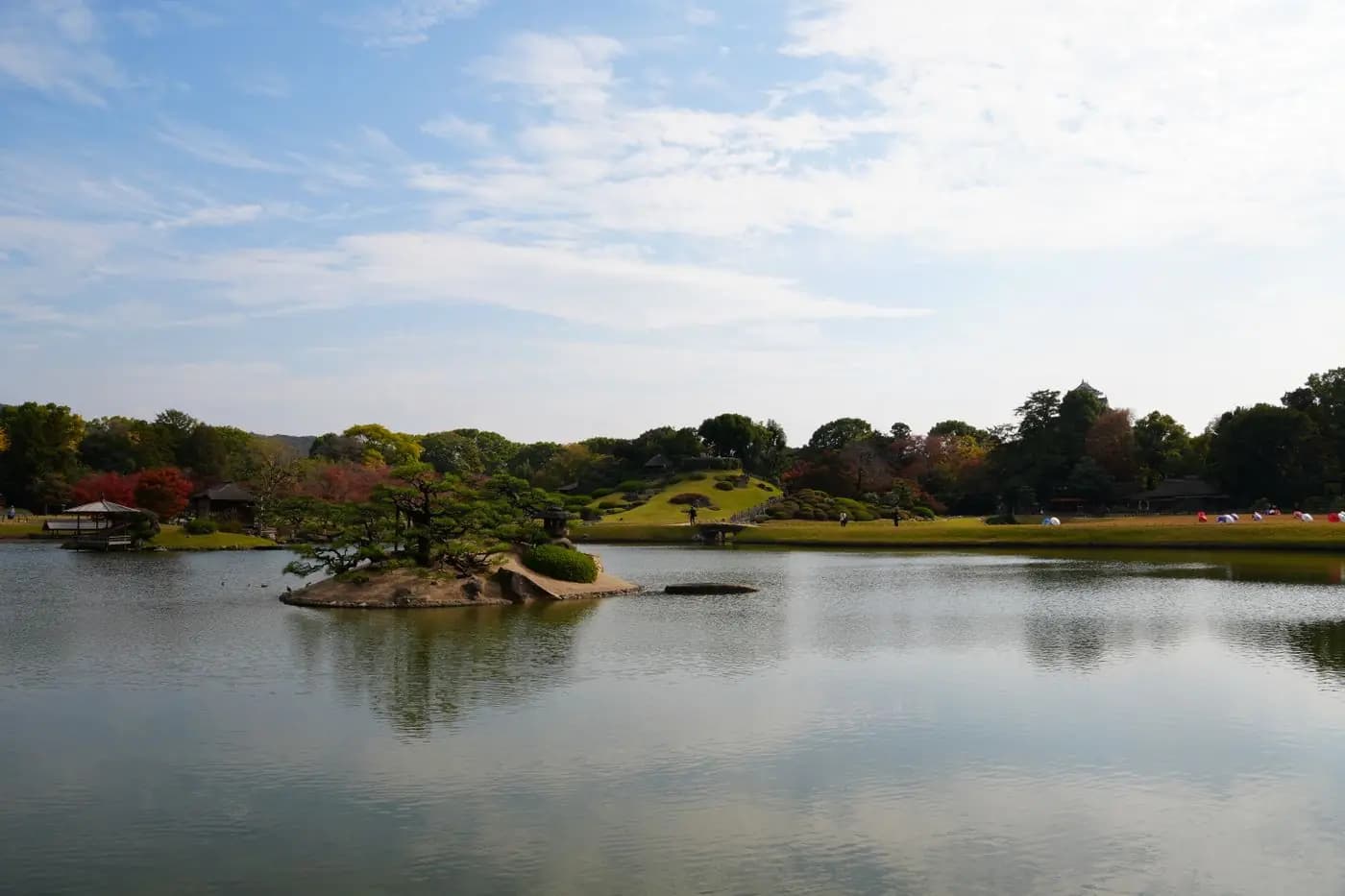
- Okayama Korakuen, one of Japan's three great gardens, completed in 1700 by the lord Ikeda Tsunamasa. Lawns, ponds, a teahouse and views of Okayama Castle. Admission ¥500 (¥400 per person for groups of 20 or more, with a prior application form). Hours: 7:30am–6pm from 20 March to 30 September, 8am–5pm from 1 October to 19 March. Allow 1 hr 30 min including the castle next door.
- The former Shizutani School (Kyu Shizutani Gakko), about 20 minutes by taxi from Imbe: Japan's oldest public school for commoners (founded 1670), whose main hall, a National Treasure, is roofed with Bizen ware tiles. Admission ¥400, 9am–5pm. Superb in November, when its two great Chinese pistache trees turn red.
- Kurashiki and its Bikan canal quarter, 15 minutes from Okayama by train, for an evening.
- Hinase, Bizen City's port, for oysters in winter and the kaki-oko pancake.
A balanced plan from Osaka: morning in Imbe (workshop, galleries), lunch, Korakuen in the late afternoon, night in Okayama or Kurashiki.
Bizen for groups: workshops for 20 to 200 people and ceramic gifts
Bizen is one of the few craft destinations in Japan where a group of 40, 80 or even 150 people can do a hands-on activity at the same time and in the same place. That is a real asset for an incentive or seminar based in the Kansai region.
Organisational points to remember:
- Workshop venue: the large Imbe workshops host up to 200 people on site, with coach parking. To skip the transfer, some travel to hotels in Okayama or Kurashiki (up to about 150 people): the workshop then becomes a late-afternoon activity before dinner.
- Delivery times: pieces arrive two to three months later. For an international group, plan a consolidated shipment to company headquarters rather than to individual participants, then hand them out there. It also makes a good internal-communications moment after the trip.
- Pacing: allow 1 hour of shaping, 15 minutes of explanation and 30 minutes to browse the galleries. Beyond that, attention drops.
- Guided visit: a potter explaining the firing in front of his kiln gives the workshop its full meaning. This is arranged in advance, outside firing periods.
- Gifts: beer tumblers, sake cups or small signed vases can be ordered in series from potters. For 30 identical pieces, allow several weeks; wood-fired pieces inevitably vary, which should be explained to the client.
- Timing: avoid the October festival weekend with a group unless shopping is the point. May and November are the most pleasant months.
SHINOGI DMC can build Bizen into an Osaka-Okayama-Kurashiki programme: workshop booking, coach, lunch, interpreter and shipping logistics for the pieces.
Frequently asked questions
How do you get to Bizen (Imbe) from Osaka?
Shinkansen to Okayama (about 45 minutes from Shin-Osaka), then the JR Ako Line to Imbe Station (about 40 minutes). A day trip is realistic.
When is the Bizen pottery festival?
On the third Sunday of October and the Saturday before: 17 and 18 October 2026 around Imbe Station. Association members' pieces sell at 20% off; entry is free.
Why does Bizen ware have no glaze?
By tradition: since medieval times Bizen potters have fired bare clay for 10 to 14 days with pine wood. Colours and patterns (goma, hidasuki, sangiri) come from ash, straw and position in the kiln.
How much is a pottery workshop in Bizen?
About ¥2,750 to ¥3,850 per person for roughly an hour of hand-building. The piece is fired and delivered two to three months later; overseas shipping is extra.
How much does a piece of Bizen ware cost?
From a few thousand yen for a cup or tumbler in a shop; tens of thousands of yen for a signed piece by a recognised potter, with wooden box.
What is there to see near Bizen?
Okayama Korakuen garden (¥500), Okayama Castle, the former Shizutani School roofed with Bizen ware tiles (¥400, 20 minutes by taxi), Kurashiki's Bikan quarter and Hinase port.
Rédaction SHINOGI DMC · Updated
Sources
- Okayama Kanko Web — Bizen-yaki Matsuri 2026 (42e édition)
- Okayama Kanko Web — Premier festival de printemps du Bizen-yaki 2026
- Okayama Kanko Web — Mugen-an Bizen-yaki Kobo (ateliers et groupes)
- Okayama Kanko Web — Dossier Bizen-yaki (histoire, cuisson)
- Okayama Kanko Web — Bizen Togei Center
- Bizen City Museum of Art — ouverture 2025 (Tokyo Art Beat)
- Okayama Korakuen — Informations d'entrée (site officiel)
- Okayama Korakuen — Admission Information (English)
- Préfecture d'Okayama — Bizen-yaki, artisanat traditionnel