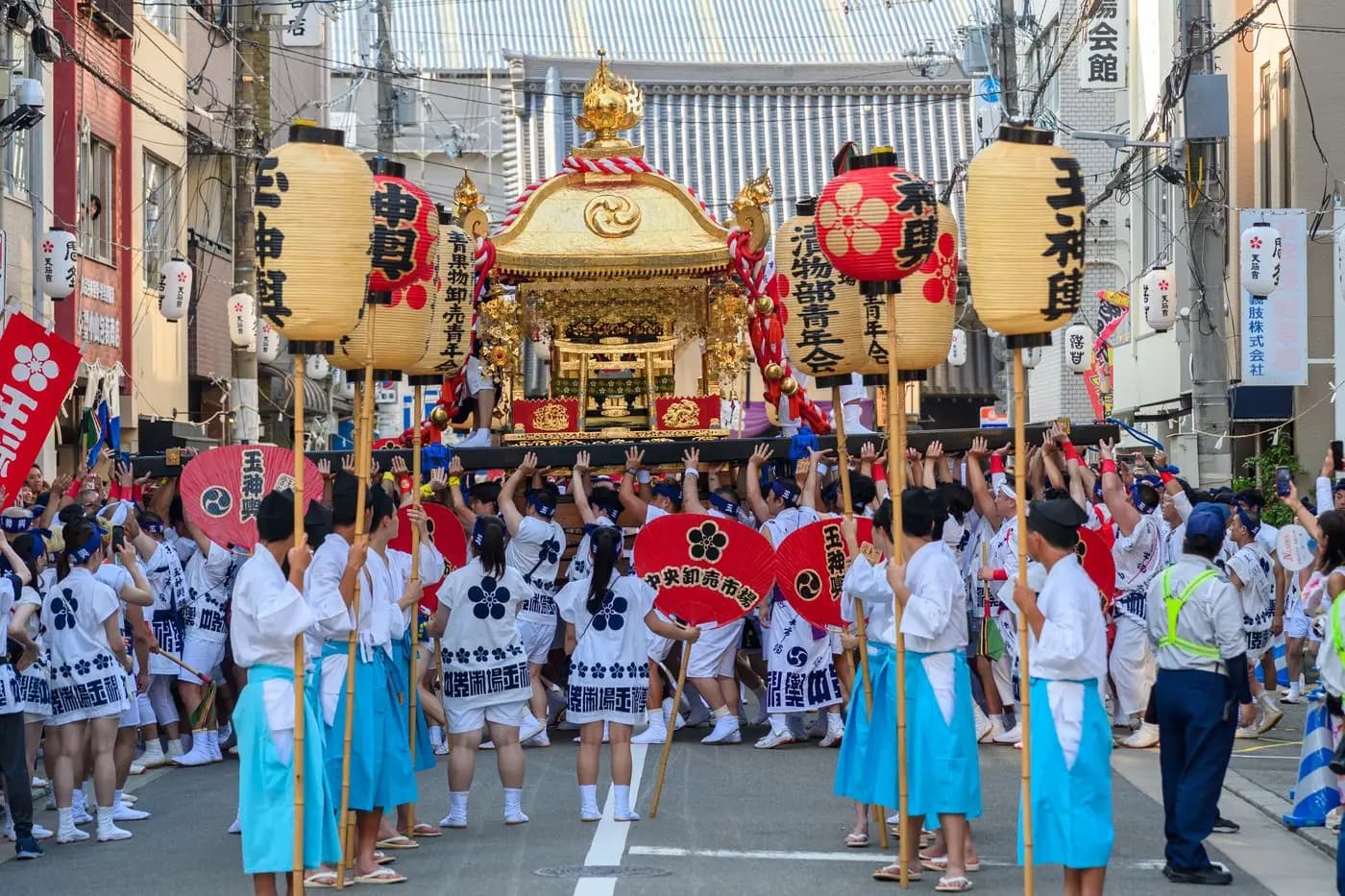
What is a matsuri and how do you choose a Japanese festival?
A matsuri is first of all a religious festival. Most are organised by a Shinto shrine: the local deity is carried through the streets in a portable shrine (mikoshi) or on huge floats (yamaboko, dashi) to bless the neighbourhood, ward off epidemics or give thanks for the harvest. Others are linked to the Buddhist Obon, the festival of the dead in mid-August, such as the great summer dances.
Japan holds thousands of matsuri every year. For a trip, four criteria help you choose:
- the type of spectacle: monumental floats (Gion, Takayama), giant lanterns (Nebuta), street dancing (Awa Odori), portable shrines carried at arm's length (Sanja), a procession on water (Tenjin), fireworks (hanabi);
- the season: summer has the biggest festivals, but also the heat and the crowds; spring and autumn are more comfortable;
- access: Kyoto, Osaka and Tokyo fit easily into an itinerary, while Aomori or Tokushima need a day's detour;
- the highlight: many festivals last several days, but the main procession lasts only a few hours on a specific date.
The dates below are those announced by organisers or set by tradition. Detailed timetables are published a few weeks before each edition, and a typhoon warning or heatwave can change a programme on the day.
Gion Matsuri in Kyoto and Tenjin Matsuri in Osaka: the two great July festivals
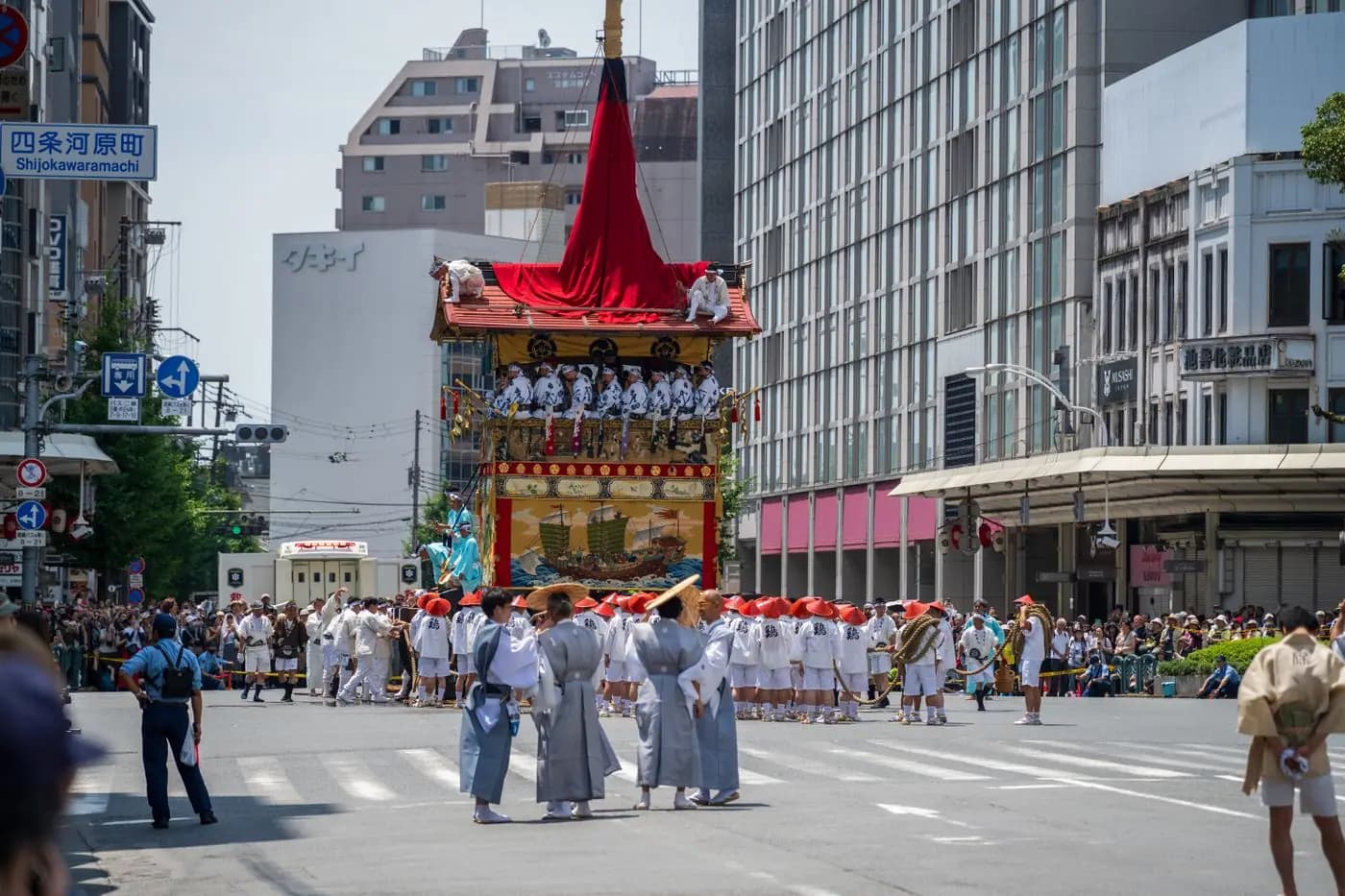
Gion Matsuri (Kyoto, 1–31 July) is the festival of Yasaka Shrine, born in the 9th century to ward off epidemics. It lasts the whole month, but three moments matter for visitors:
- the yoiyama evenings, 14–16 July and 21–23 July: the floats stand in the streets of the centre (around Shijō-Karasuma), lit with lanterns, and some streets become pedestrian in the evening;
- the main procession on 17 July (saki-matsuri): 23 floats in 2026, including hoko more than 20 m tall and weighing 10 tonnes, set off around 9am from Shijō-Karasuma; the right-angle turns on wet bamboo slats (tsuji-mawashi) are the most spectacular moment;
- the procession on 24 July (ato-matsuri), shorter and slightly less crowded.
These dates are fixed and will be the same in 2027. Paid seats are sold along the route (Oike and Kawaramachi avenues), going on sale in spring.
Tenjin Matsuri (Osaka, 24–25 July) honours Sugawara no Michizane, deity of learning, at Osaka Tenmangū Shrine. On the evening of the 25th, a land procession takes the deity to the Ōkawa River, where around a hundred boats parade by lantern light during the funatogyo, accompanied by fireworks. The shrine and some operators offer seats on boats, which are in high demand.
Practical tip: in Kyoto, watch the 17 July procession from 8am on Oike avenue, in the shade if possible; in Osaka, the banks of the Ōkawa are packed from 5pm, and a restaurant or hotel terrace overlooking the river remains the most comfortable option.
Nebuta in Aomori and Awa Odori in Tokushima: the August festivals
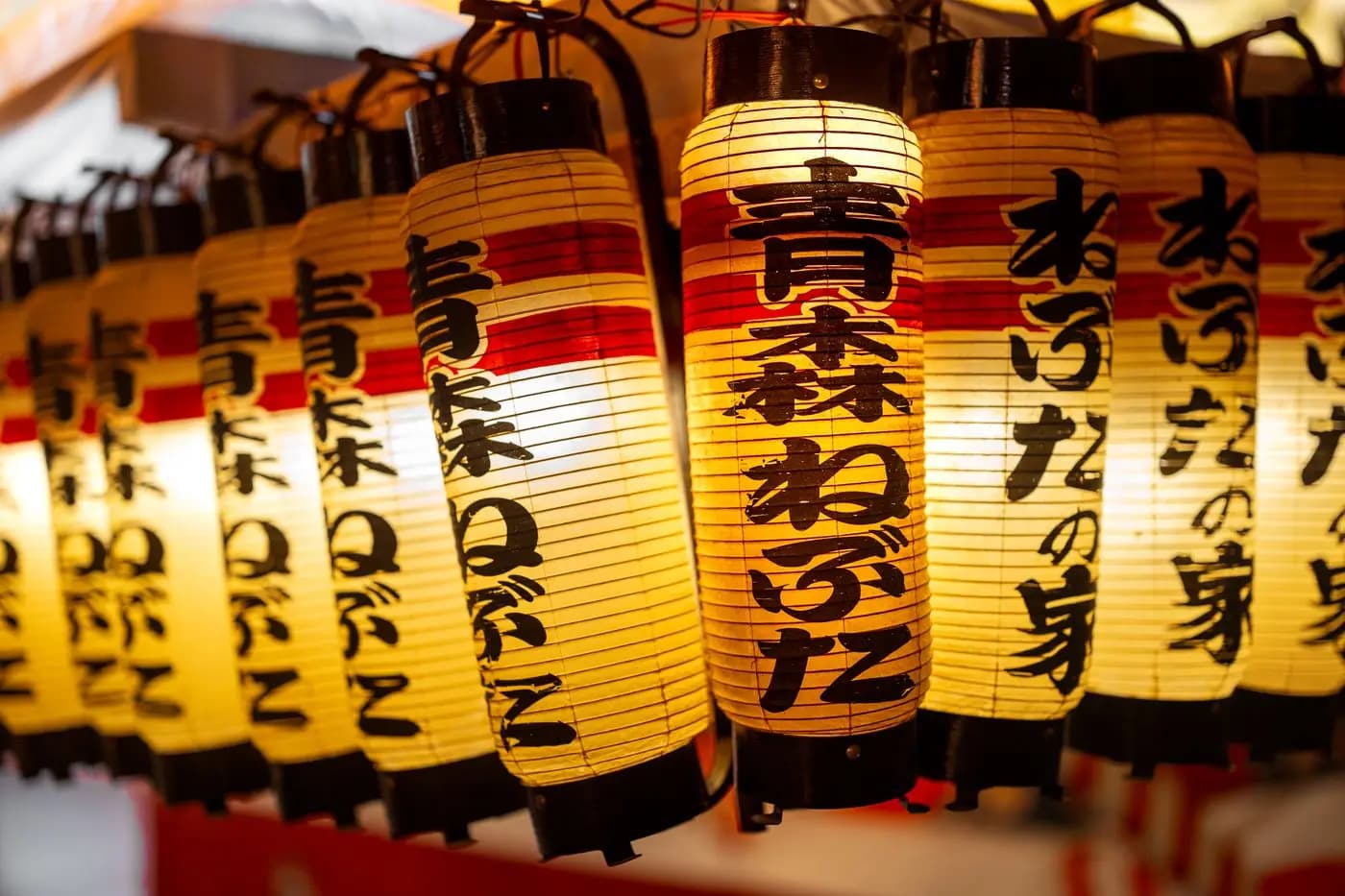
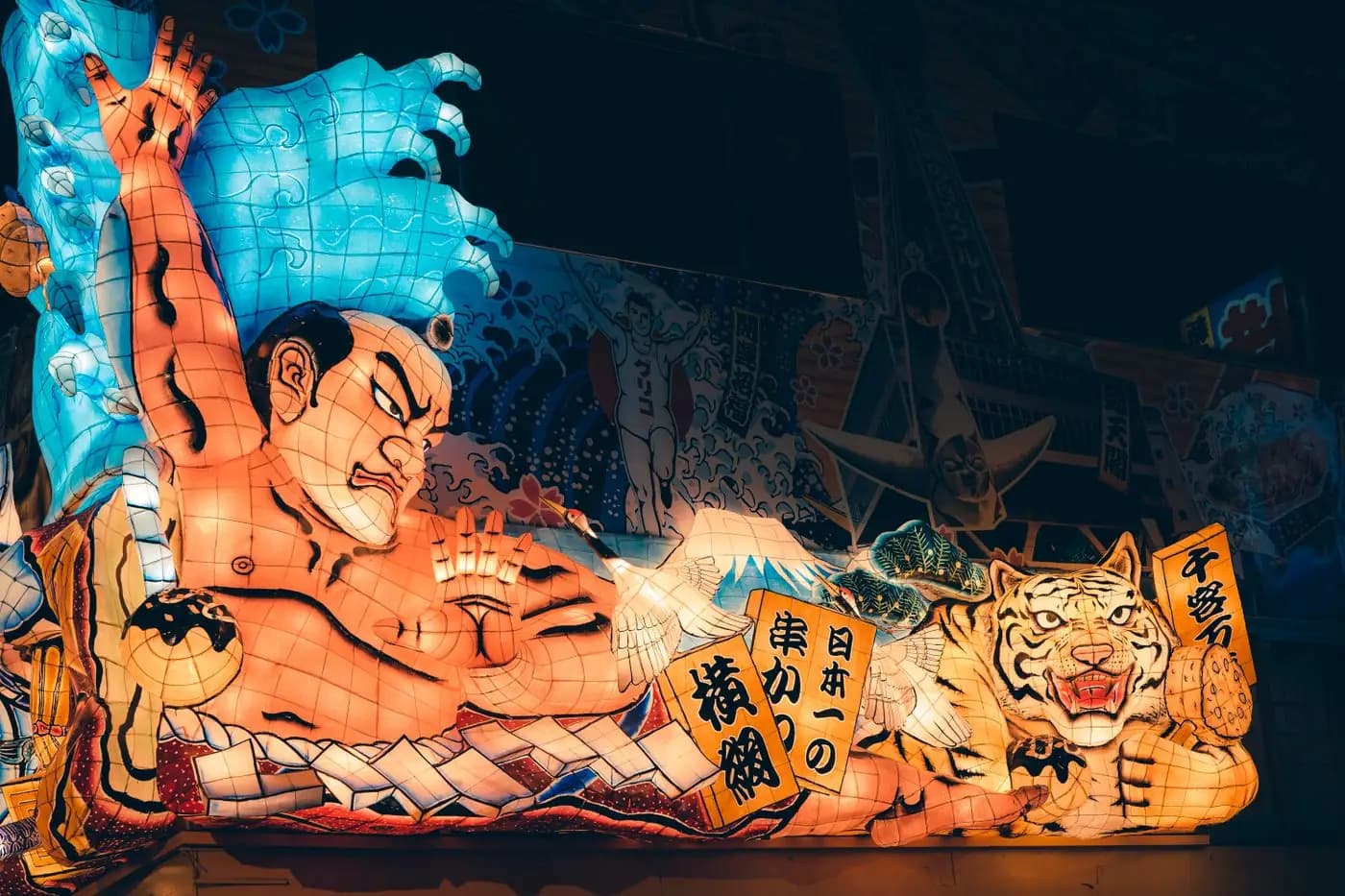
Aomori Nebuta (2–7 August) parades huge painted-paper lanterns built on wood and wire frames every evening, depicting warriors and mythological figures, lit from inside. The official programme:
- 1 August: eve-of-festival evening at the Rasseland site;
- 2 and 3 August, from 7pm: a parade of about 25 nebuta, including children's ones;
- 4 to 6 August, from 6:45pm: around twenty large nebuta, with the prize-winners parading on the 6th;
- 7 August: daytime parade, then a procession on the bay and the Aomori fireworks in the evening.
The route is about 3.1 km long, 10 minutes' walk from JR Aomori Station. In 2026, reserved seats cost ¥4,000 (¥9,500 for the 7 August daytime parade and fireworks package), and groups of 10 or more used a dedicated sale that opened in April. A rare feature: anyone can join the parade as a haneto, the dancers who leap around the floats, provided they wear the official costume, available to rent locally.
Tokushima's Awa Odori (11–15 August) is the country's biggest dance festival, linked to Obon. Hundreds of troupes (ren) parade chanting “Erai yatcha, erai yatcha, yoi yoi yoi yoi” to the rhythm of shamisen, flutes and drums. Paid stands (enbujō) are booked in advance; in the streets, niwaka-ren welcome visitors after a short lesson. Tokushima is about 2.5 to 3 hours by bus from Osaka or Kobe.
Around these two big events, the Tōhoku region strings together other festivals in early August, such as Akita Kantō and Sendai Tanabata, making it possible to build a one-week circuit in the north.
Sanja Matsuri in Tokyo and the Takayama festivals: spring and autumn
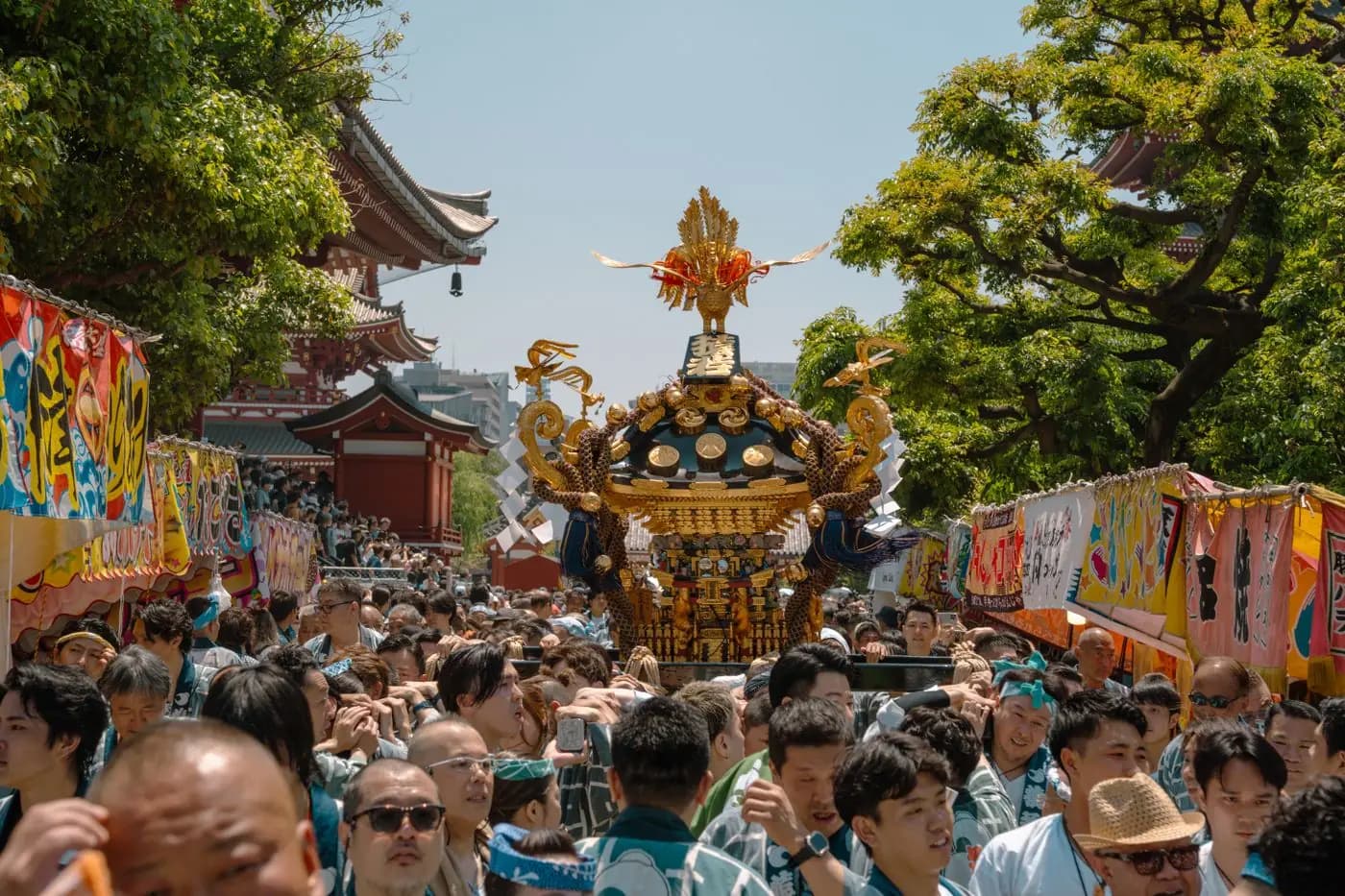
Sanja Matsuri (Tokyo, third weekend of May) is the great festival of Asakusa Shrine, next to Senso-ji. For three days, Friday to Sunday, around a hundred neighbourhood mikoshi are carried rhythmically through the streets of Asakusa to cries of “wasshoi” by bearers in happi coats and tabi. On Sunday, the shrine's three main mikoshi come out from early morning: it is the most intense moment, and the most crowded. In 2026 the festival was held on 15–17 May; for 2027, plan on mid-May and wait for the shrine's confirmation in spring.
Also in Tokyo, the Kanda Matsuri holds its grand procession in odd-numbered years, in mid-May: 2027 will be a main-festival year, which can be combined with Sanja.
The Takayama festivals are among the most beautiful in the country, and their dates never change:
- Sannō Matsuri, 14–15 April: the spring festival of Hie Shrine;
- Hachiman Matsuri, 9–10 October: the autumn festival of Sakurayama Hachiman Shrine.
You see yatai, lacquered and carved floats from the 17th to 19th centuries, some carrying mechanical puppets (karakuri) that come to life in front of the crowd. In the evening, the floats, lit with lanterns, parade through the old town. Takayama is about 2.5 hours by limited express from Nagoya; the town is small and accommodation goes very fast, often a year ahead.
Kyoto completes this calendar with the Aoi Matsuri (15 May), a procession in Heian-period court dress, and the Jidai Matsuri (22 October), a historical parade more than two kilometres long.
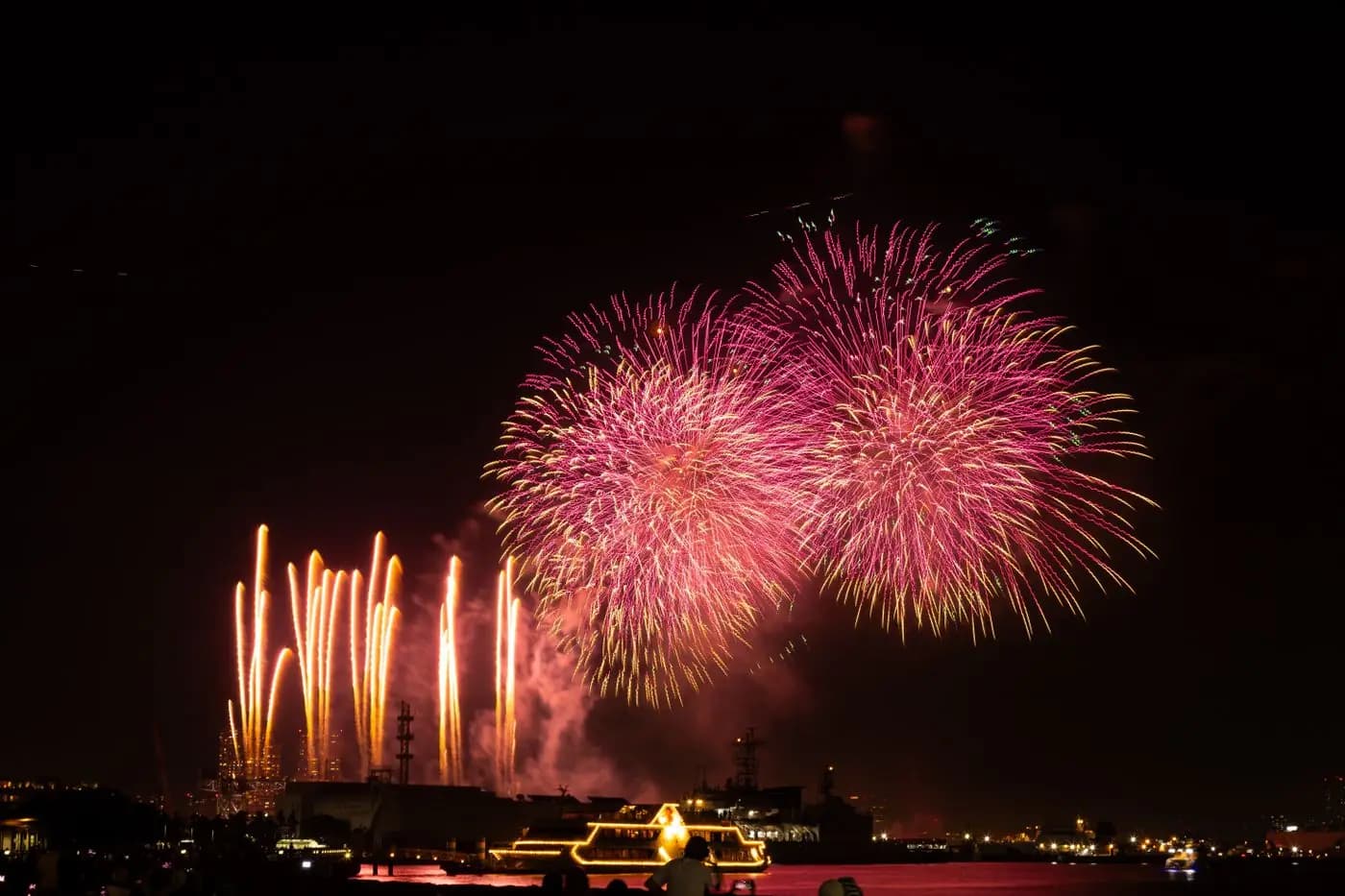
Fireworks in Japan (hanabi): where and when to see them
Hanabi taikai, the great summer fireworks displays, are almost a genre of their own. They run from late July to late August, often by a river or bay, and draw hundreds of thousands of spectators in yukata.
A few markers:
- Sumidagawa (Tokyo), on the last Saturday of July: 25 July in 2026, and by the same rule 31 July 2027 (to be confirmed in spring). About 20,000 shells fired between Asakusa and Kuramae. There are no public stands apart from a limited number of citizen-sponsor seats;
- Nagaoka (Niigata), 2–3 August: famous for its giant shells and the “Phoenix” display;
- Ōmagari (Akita), on the last Saturday of August: a national competition where the country's best pyrotechnicians face off;
- Tenjin Matsuri (Osaka, 25 July) and Nebuta (Aomori, 7 August) also end with fireworks.
The big question is where to watch. The best ways to see the show without fighting for a patch of pavement:
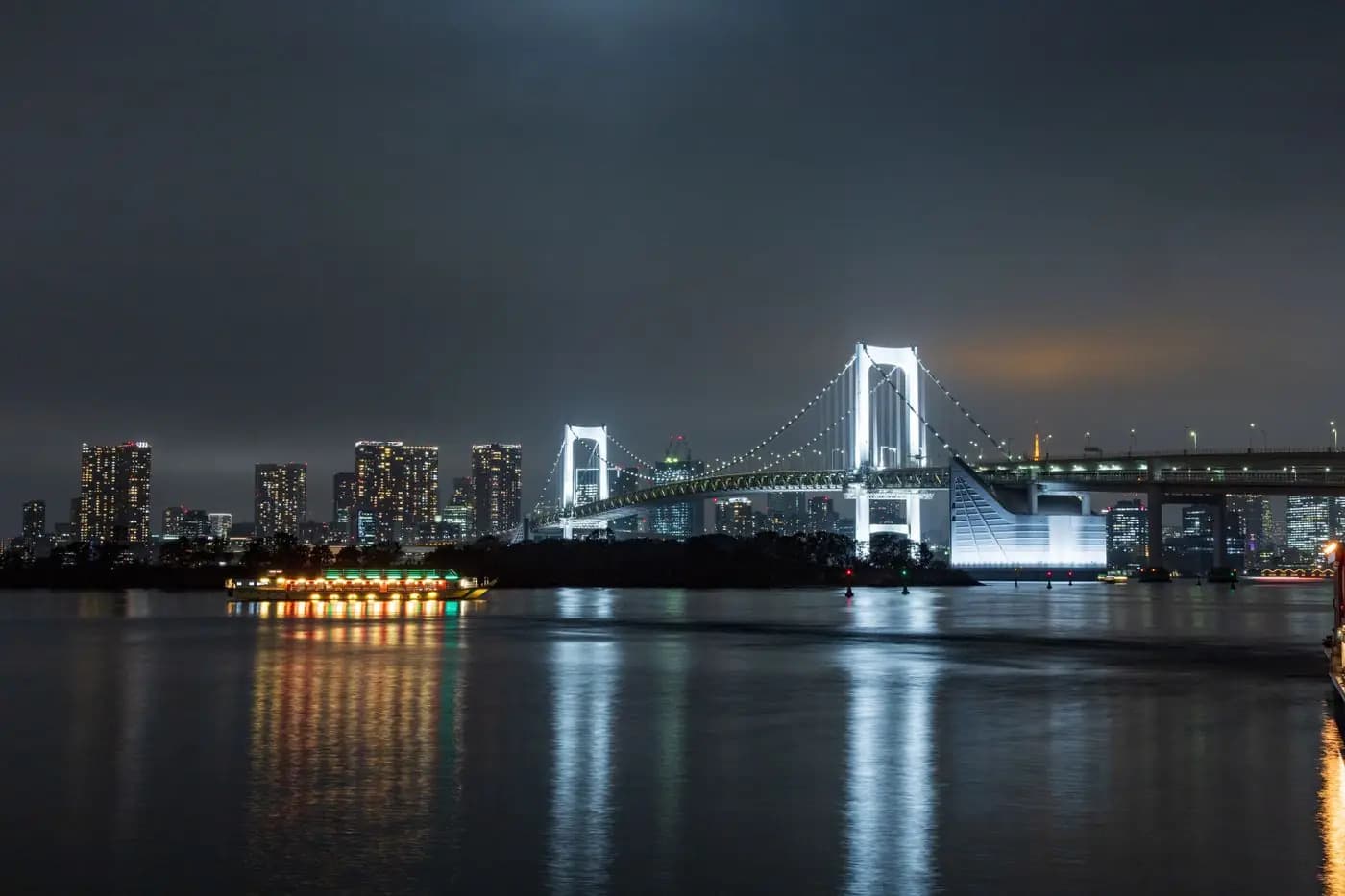
- a yakatabune, a traditional boat chartered with dinner, on the Sumida or Tokyo Bay (book in winter for fireworks dates);
- a restaurant or hotel function room with a view, often sold as packages months in advance;
- an office building rooftop rented for the evening.
In all cases, expect very slow crowd dispersal (an hour to reach a station is not unusual), few toilets, and possible cancellation in case of storms or strong wind.
Winter festivals in Japan: Sapporo, Yokote and snow lanterns
Winter has its own festivals, calmer and often easier to organise for a group than the big summer matsuri.
The Sapporo Snow Festival will run from 4 to 11 February 2027 (77th edition) at three sites: Ōdōri Park, right in the centre, with its large snow sculptures several metres high; Susukino, the nightlife district, with ice sculptures; and Tsudome, more family-oriented, with slides and snow games. The Ōdōri site is free and lit up in the evening. Sapporo hotels fill up very early for that week: a year ahead is not excessive for a group.
Yokote Kamakura (Akita), 15–16 February, is a different affair: dozens of snow huts where children invite passers-by in to drink hot amazake and make an offering to the water god. It is intimate, glowing, and very photogenic at dusk.
Other winter events worth the trip:
- the Otaru Snow Light Path, in February, with snow lanterns along the canal, 30 to 40 minutes by train from Sapporo;
- the Chichibu Night Festival, 2–3 December, about 1.5 hours from Tokyo, with illuminated floats and winter fireworks;
- the New Year bells and hatsumōde, the first shrine visit of the year, from 31 December to 3 January.
Pack non-slip shoes: in Sapporo, icy pavements send visitors to hospital every year, and the festival even lends out shoe spikes.
Attending a matsuri with a group: bookings, seats and safety
A festival can become the highlight of a seminar or incentive trip, provided you anticipate what makes it difficult: crowds, heat and a shortage of rooms.
Lead times. For the major summer matsuri and the Sapporo festival, hotels in host cities are blocked 9 to 12 months ahead for a group. Takayama and Aomori have few large hotels: you often need to split the group or stay in a nearby city (Kanazawa or Nagoya for Takayama, Hirosaki for Aomori).
Seats. Several festivals sell seats: Gion Matsuri stands, Nebuta bleachers (group sales in spring), Awa Odori stands, Tenjin Matsuri boats. Elsewhere, you rent a private space: a restaurant with a view, a hotel terrace, a yakatabune, a room overlooking a parade street.
Taking part. For a group, watching is good; taking part is better. Parading as haneto in Aomori, dancing in a niwaka-ren in Tokushima, or carrying a small mikoshi with a neighbourhood association, when it agrees, leaves a far stronger memory than an evening in the stands. It requires a short lesson beforehand and a costume.
Safety. In July and August, temperatures often exceed 33°C with high humidity. Plan water, electrolytes, cooling towels, a fixed meeting point and a realistic return time. Crowds disperse slowly: better to leave 15 minutes before the end or wait an hour on site. Finally, August and September are typhoon season: every festival evening needs a plan B.
SHINOGI DMC builds these evenings around each festival's official calendar, with reserved seats, guides and return logistics.
Frequently asked questions
What are the dates of Gion Matsuri 2027?
As every year, 1–31 July, with yoiyama evenings on 14–16 and 21–23 July and float processions on 17 and 24 July.
What is the biggest festival in Japan?
Kyoto's Gion Matsuri, Osaka's Tenjin Matsuri and Tokyo's Kanda Matsuri are traditionally named the three great festivals. In attendance terms, Aomori Nebuta, Awa Odori and the Sapporo Snow Festival each draw more than a million visitors.
Can tourists take part in a Japanese festival?
Yes, in some cases: you can parade as a haneto at Aomori Nebuta in the official costume, or dance in a niwaka-ren at Tokushima's Awa Odori after a short lesson.
When is the Sapporo Snow Festival in 2027?
From 4 to 11 February 2027, at the Ōdōri, Susukino and Tsudome sites.
How far in advance should you book for a festival in Japan?
For individuals, 4 to 6 months for the hotel. For groups, 9 to 12 months, especially Kyoto in July, Aomori in early August, Tokushima in mid-August, Takayama and Sapporo in February.
When are the Sumida River fireworks in Tokyo?
On the last Saturday of July: 25 July in 2026, and normally 31 July in 2027, with the date confirmed by the organisers in spring.
Rédaction SHINOGI DMC · Updated
Sources
- Aomori Nebuta Matsuri — Programme officiel (anglais)
- Aomori Nebuta Matsuri — Places assises 2026 (観覧席購入案内)
- Awa Odori Kaikan — Calendrier et réservations (Tokushima)
- Sumidagawa Fireworks Festival — Site officiel
- Sapporo Snow Festival — Site officiel (dates 2027)
- Osaka Tenmangū — Tenjin Matsuri (site officiel)
- Yasaka-jinja — Gion Matsuri (site officiel)
- Hida Takayama — Office de tourisme officiel
- Asakusa-jinja — Sanja Matsuri (site officiel)
- Terres Japonaises (inspiration)