Hokkaido in winter: when to go and how many days to plan
Winter in Hokkaido really starts in mid-December, when snow settles in the cities and resorts open all their runs. It ends in early March for the cities, late March for the drift ice and sometimes April or early May for spring skiing. If you can only go once, aim for the first half of February: the Sapporo festival, Otaru's lanterns and the Abashiri drift ice all fall in the same window.
Sapporo temperatures are not extreme (around -4°C on average in February, with lows near -8°C), but humidity and wind make them bite harder than in Europe. On the Okhotsk coast and in the centre of the island (Furano, Asahikawa), nights at -15°C or -20°C are nothing unusual. It snows often, sometimes heavily: a cancelled flight or a road closed for half a day is part of the deal.
How long? A few benchmarks:
- 4 to 5 days: Sapporo, Otaru and a day of skiing or snowshoeing. The simplest format, all by train or coach from Sapporo.
- 7 to 8 days: add the east (Abashiri, Shiretoko) or the centre (Furano, Asahikawa, Sounkyo). Fly to Memanbetsu for the east (about 45 minutes from Sapporo) rather than spending 5 hours on the train.
- 10 days or more: combine skiing in Niseko with a coach loop to the east, including a night at an onsen.
The arrival airport is almost always New Chitose, about 40 minutes from Sapporo by rapid train. From Tokyo the flight takes 1h30; from Europe you connect through Tokyo, Seoul or Helsinki depending on the season. Days get short fast: it is dark by about 4:30pm in January, which matters for outdoor visits and driving.
Sapporo and its Snow Festival: what you need to know
The Sapporo Snow Festival (Sapporo Yuki Matsuri) lasts eight days in early February. The 2027 edition, the 77th, is scheduled from 4 to 11 February 2027. Three very different sites:
- Odori: the park that cuts through downtown for about 1.5 km, with the large snow sculptures (some over 10 metres tall), the international contest pieces and evening projection shows. Free entry.
- Susukino: the bar and restaurant district, where ice sculptures are displayed. Best at night, after dinner.
- Tsudome: a more family-oriented site on the outskirts, with slides and games. Not much to offer adults or corporate groups.
The festival draws more than two million visitors. Sapporo hotels fill months ahead and rates often double on those dates. Book the summer before, or stay in Otaru and commute.
Outside the festival, Sapporo deserves a day or two:
- Nijo Market or the Central Market for a breakfast of crab, sea urchin and salmon;
- the Sapporo Beer Museum, in an old brick building, with paid tastings;
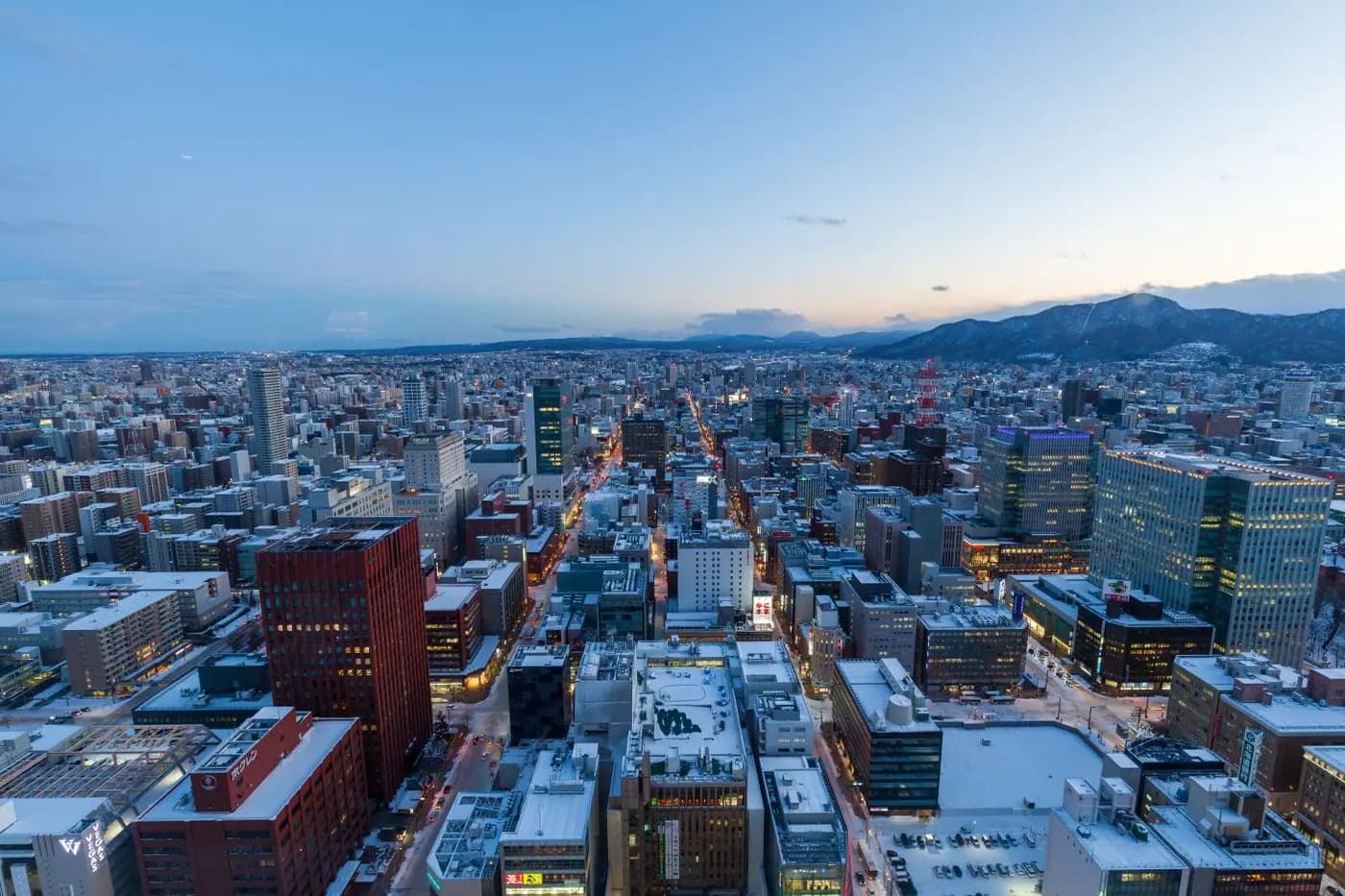
- Mount Moiwa, by ropeway, for the night view over the snowy city;
- the Clock Tower and the former Hokkaido Government Office, relics of the island's Meiji-era colonisation;
- miso ramen, the city's speciality, and jingisukan, mutton grilled on a cast-iron dome.
The subway and the underground walkway linking Sapporo Station to Odori and Susukino (Chikaho) let you cross the centre without going outside: very welcome at -8°C.
Otaru in winter: canal, lanterns and blown glass
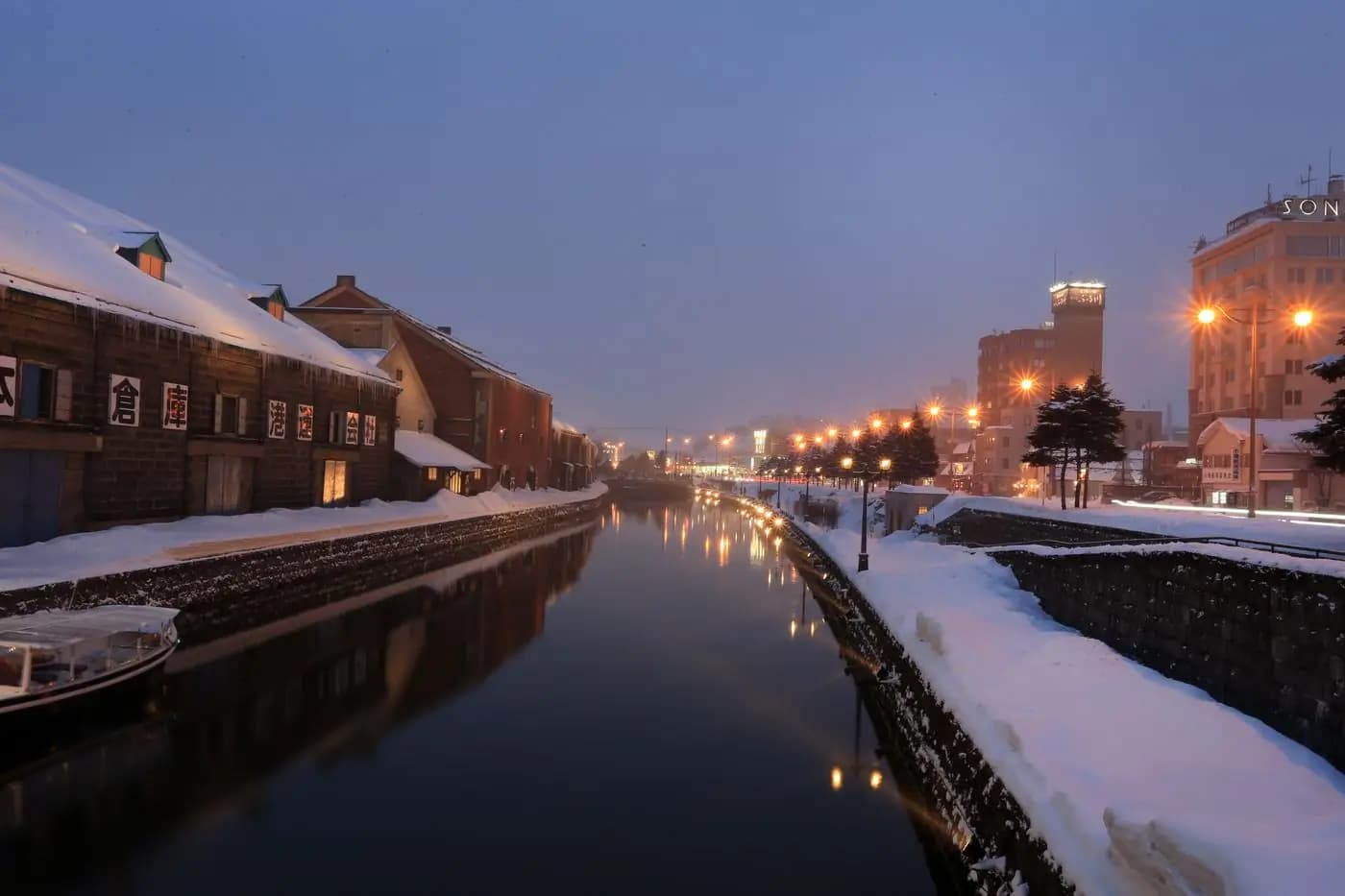
Otaru is about 35 to 45 minutes from Sapporo by JR train (Hakodate Line, rapid Airport or local). It is the easiest trip from Sapporo, and the most photogenic: a canal lined with early-20th-century stone warehouses from the days when the port was one of the busiest in northern Japan.
For a first visit, half a day is enough:
- the canal and its warehouses, walked along the promenade (about 1 km); the gas lamps come on in late afternoon;
- Sakaimachi Street, with glass-blowing workshops, music boxes and patisseries (LeTAO was born here);
- a sushi lunch on Sushi Street (Sushiya-dori) or at Sankaku Market, right by the station.
The best moment is the Snow Light Path (Otaru Yuki Akari no Michi), about ten days in February, during or right after the Sapporo festival. In 2026 it ran from 7 to 14 February. Thousands of candles in snow lanterns are lit each evening, roughly from 5pm to 9pm, along the canal and the former Temiya railway line. Free entry.
Avoid trying to do Otaru in the morning and the Sapporo festival in the evening on a February weekend. Trains are packed, pavements slippery, and you spend the day in crowds. Give each its own evening.
Practical tip: Otaru's pavements are sloping and often icy. Slip-on shoe spikes (a few hundred yen in convenience or souvenir shops) make all the difference.
Niseko and Furano: where to ski in Hokkaido
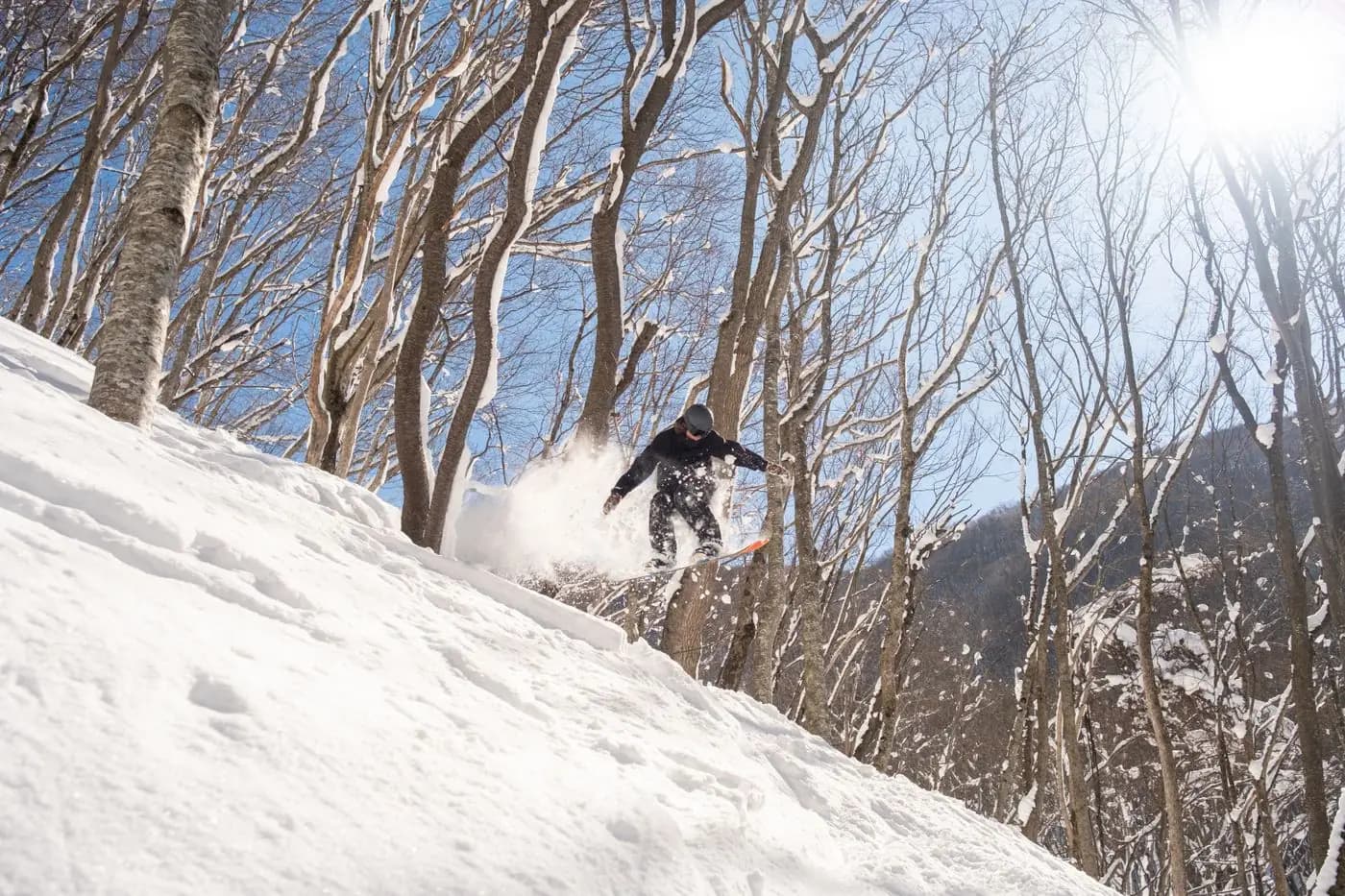
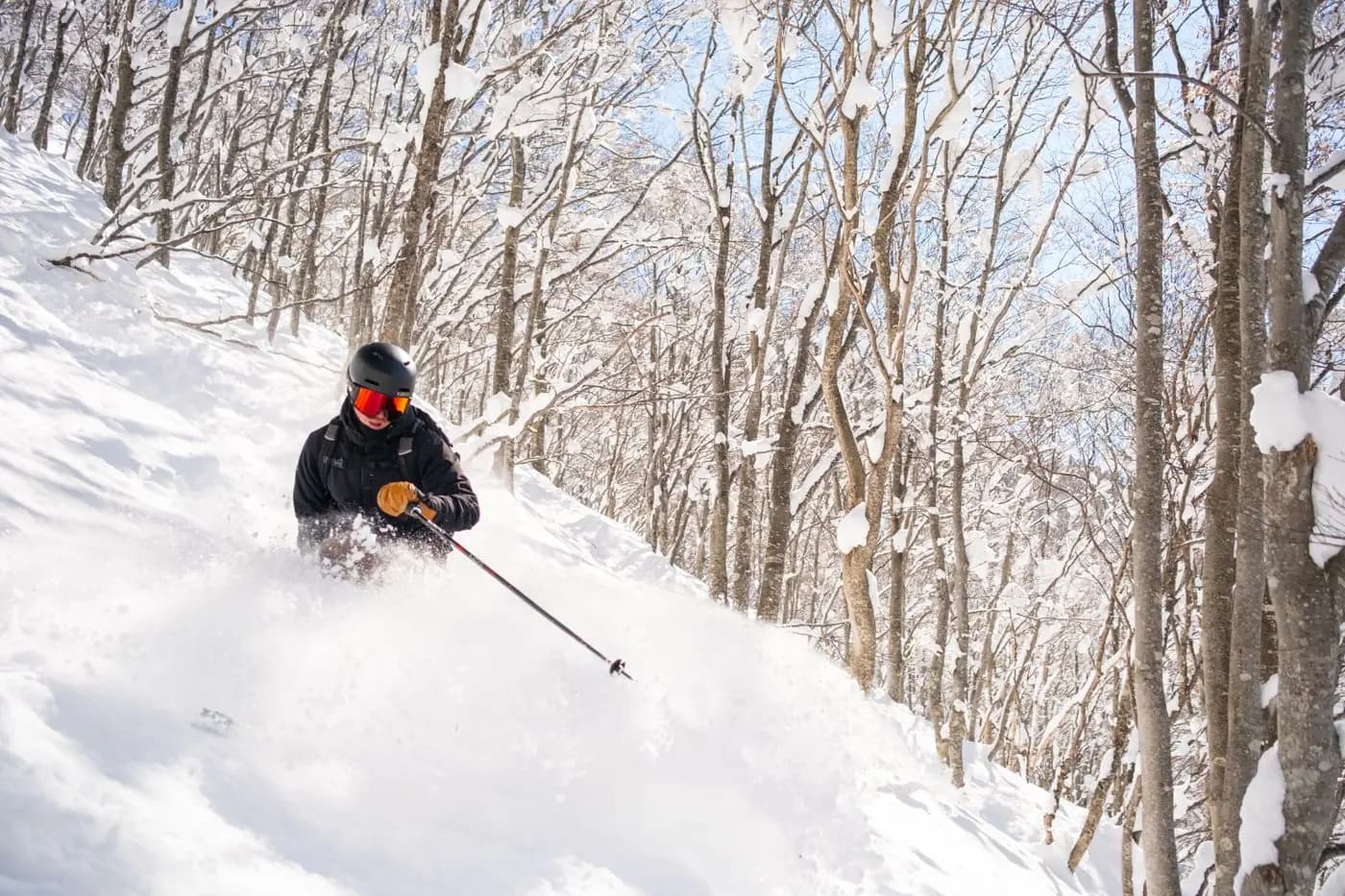
Hokkaido's snow is world-famous for a simple reason: cold Siberian air picks up moisture over the Sea of Japan and dumps it on the island as very dry snow, the famous japow. January and early February are the best months.
Niseko is the best-known resort, about 2 hours from New Chitose by coach (just over 100 km). Four areas linked at the top (Grand Hirafu, Hanazono, Niseko Village, Annupuri) make up Niseko United. The All Mountain pass cost ¥12,000 per day at the counter in the 2025-26 regular season, slightly less online. Hirafu is a very international village: Western restaurants, English-speaking instructors, prices to match. Off-piste skiing is only allowed through the gates opened by the resort, under the local Niseko Rules; leaving the area elsewhere is forbidden and rescues are charged.
Furano, in the centre of the island, is more Japanese and quieter. It opens in late November or early December and stays open until early May. The cold is drier and sharper than in Niseko. Combine it with Asahikawa (1 hour's drive), its Asahiyama Zoo and penguin walk (twice daily in winter, late December to mid-March), and the Sounkyo gorge, where an ice-fall festival runs from late January to early March (around ¥1,000 entry).
For non-skiers, every resort offers snowshoeing, snowmobiles, ice fishing, sled rides or simply a day at an onsen. That mix often works best for a group with very different levels.
Equipment rental: you can find everything on site, including ski jackets and trousers, which saves carrying bulky gear from Europe.
Seeing the drift ice at Abashiri and Shiretoko
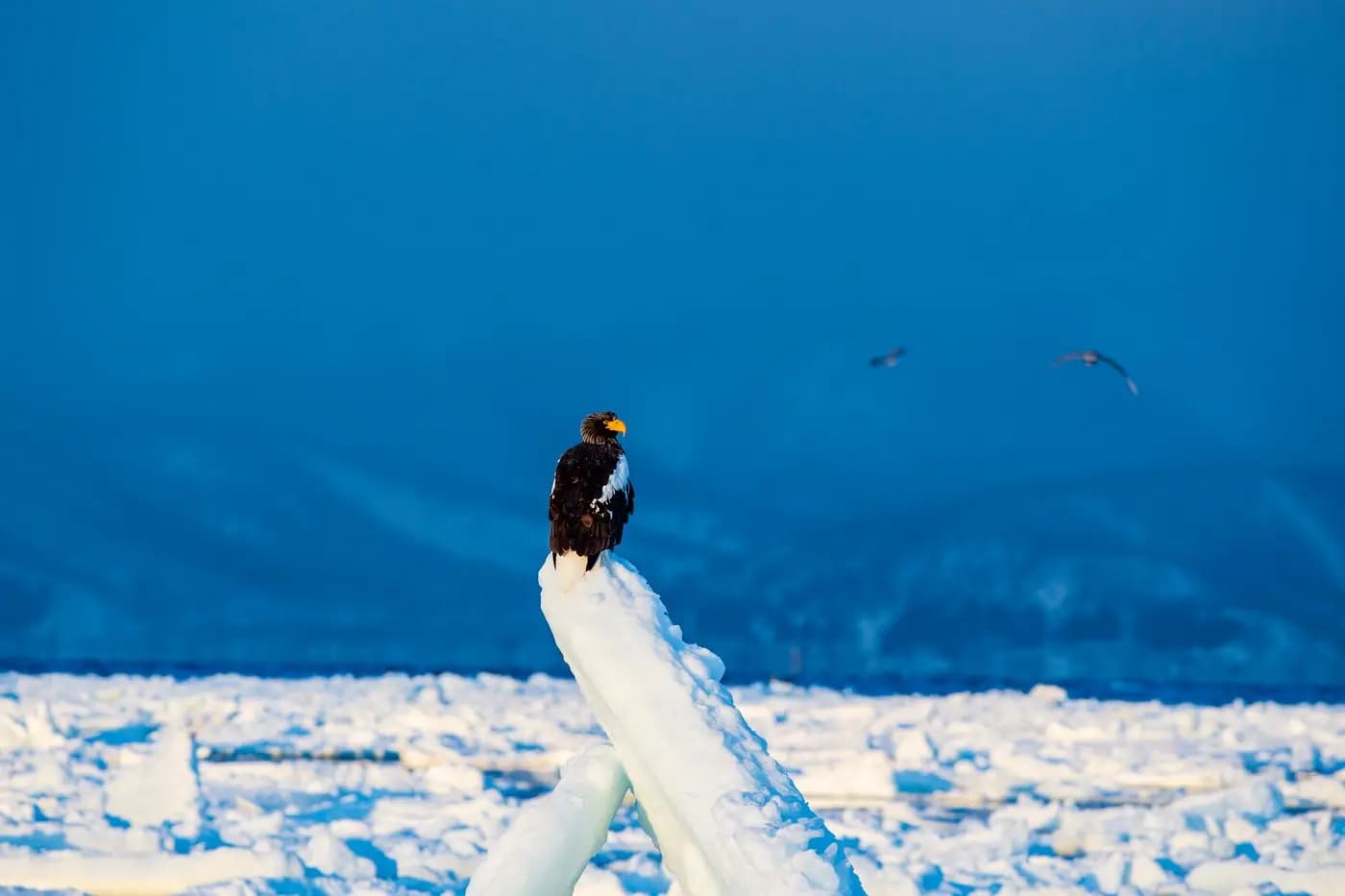
Every winter, ice formed at the mouth of the Amur River in Russia drifts south and reaches Hokkaido's north-east coast. It is the lowest latitude in the world where you can see sea ice from the beach. It usually arrives in late January and leaves during March; the best period is mid-February to early March. But it depends on the wind: one day the sea is covered to the horizon, the next it is clear.
Two ways to see it:
- The Aurora icebreaker in Abashiri. A cruise of about 1 hour over some 10 km. Operating 20 January to 31 March. 2026 adult fare: ¥5,000 in January and March, ¥6,000 in February, with roughly 10% off for groups. The company decides an hour before each departure whether it sails. The deck is freezing: hat, gloves and balaclava are a must.
- The drift ice walk at Utoro (Shiretoko). In a supplied dry suit, you walk on the ice and float between the floes with a guide. Around ¥6,000 to ¥7,000 and about 1h30. No need to swim, but reasonable fitness is required.
In Abashiri, the Okhotsk Ryuhyo (Drift Ice) Museum on Mount Tento lets you touch real ice in a room kept at -15°C, even when the sea is empty. Pair it with the Abashiri Prison Museum, a striking record of Hokkaido's colonisation.
Access: fly from Sapporo or Tokyo to Memanbetsu Airport, then 30 minutes by road to Abashiri. Utoro is about 1h30 from Abashiri. Along the way you often see Steller's sea eagles and whooper swans.
Key point: never bet on a single date for drift ice. Two nights in the area give you two chances.
Driving in Hokkaido in winter: licence and rules
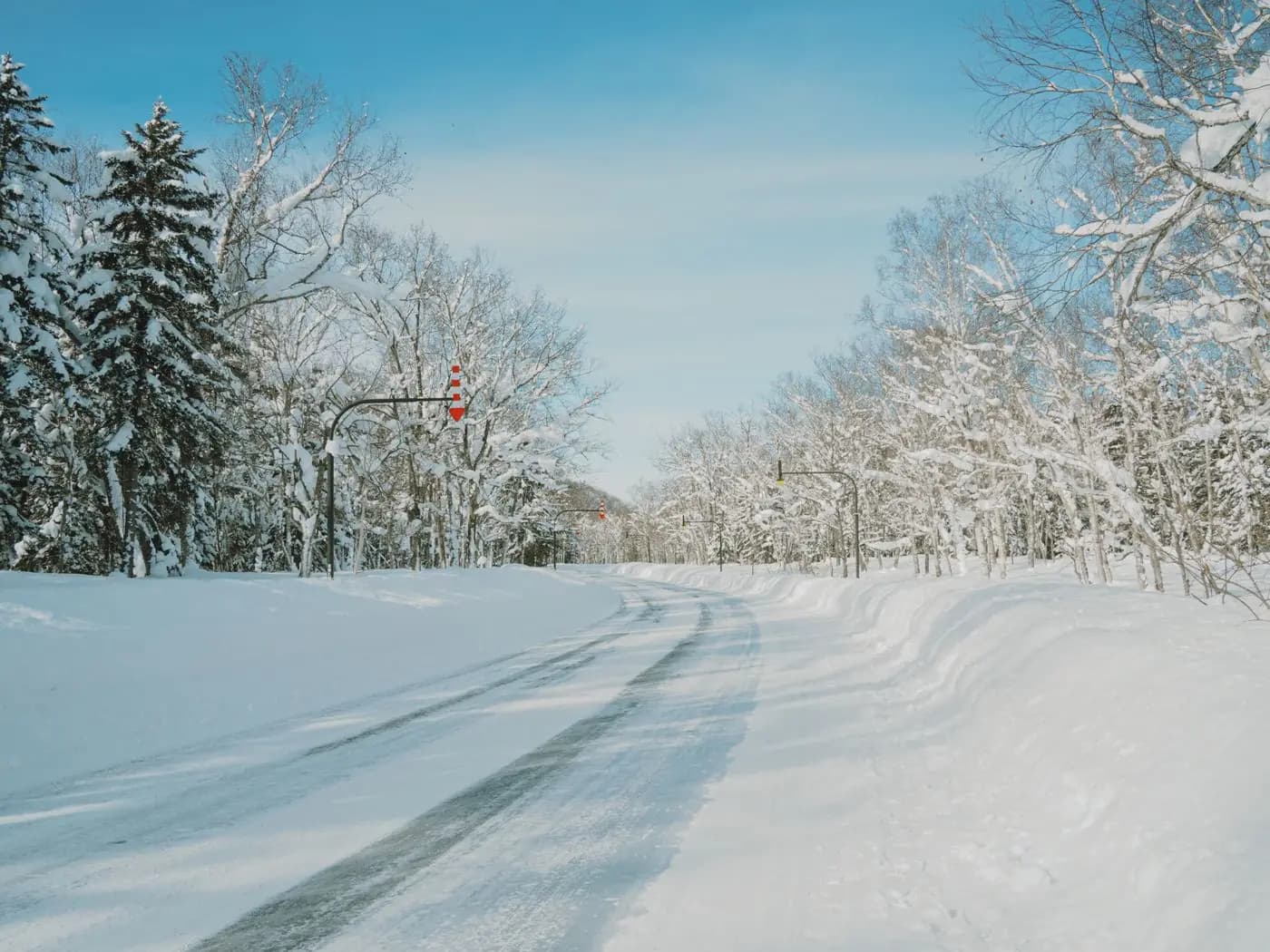
Hokkaido is the region of Japan where a car makes the most sense: long distances, infrequent trains in the east. In winter it is also where it demands the most care.
Licence. Japan only accepts international permits issued under the 1949 Geneva Convention. For licences issued in France, Belgium, Switzerland, Germany, Monaco and Taiwan, the rule is different: you need an official Japanese translation of your licence, issued by JAF (Japan Automobile Federation) or your embassy, valid for one year from entry into Japan. JAF takes one to two weeks, so apply before you leave. Most other nationalities, including Canadians, need a 1949 international permit.
Vehicle. From November to April, rental cars come fitted with studless winter tyres. Choose four-wheel drive if you are leaving the main roads. English GPS is standard; ask for an ETC card reader for tolls.
Driving. A few rules that prevent most accidents:
- no sudden moves: no hard braking, sharp steering or fast acceleration;
- double your following distance, especially at junctions where packed snow turns into polished ice (locals call it "mirror");
- obey 止まれ (tomare, stop) signs to the letter: a full stop is mandatory, and Hokkaido rental companies cite ignoring them as a frequent cause of accidents involving foreign drivers;
- avoid mountain passes at night; it is dark by 4:30pm;
- add 30% to the GPS estimate, more in a storm (roads can close in a whiteout).
Distance benchmarks: New Chitose to Niseko, about 110 km and 1h45 in good weather; Sapporo to Furano, about 2 hours; Abashiri to Utoro, about 1h30.
If you have never driven on snow, keep the car for the east (wide, quiet roads) and use trains or coaches for Sapporo, Otaru and Niseko.
How to dress for Hokkaido in winter
The classic mistake is to dress as for an Alpine resort and overheat the moment you step inside. Japanese interiors are heated to 23-25°C, trains and shops included. Layering is the only approach that works:
- a thin thermal base layer (merino wool or Heattech-type fabric, sold everywhere in Japan at Uniqlo);
- a sweater or fleece;
- a long down jacket or waterproof parka, loose enough to take off easily;
- for the east and sea trips, ski trousers or over-trousers.
Extremities make the difference: a hat covering the ears, lined gloves, a neck warmer and thick socks. Shoes should be waterproof with a lugged sole; city sneakers are a very bad idea on packed snow. Removable shoe spikes are sold in every convenience store in Sapporo and Otaru.
Two very Japanese accessories worth adopting: kairo, disposable heat packs (adhesive or pocket-sized), and small backpacks rather than handbags, so your hands stay free on icy ground.
The Sapporo festival and Otaru Canal are visited at night and standing still: that is when you feel the cold most. A break every 45 minutes in a café or shopping arcade works better than another layer.
Finally, the light: glare off the snow is strong, even in town. Sunglasses and sunscreen for skiing and drift ice.
Hokkaido in winter with a group: what changes
Hokkaido in winter works very well for a seminar or incentive trip, as long as you plan around the weather and peak dates.
- Transport. For a group, forget rental cars: a coach with a local driver, equipped and used to snow, costs less than you might think and removes the accident risk. On the long legs to the east, flying to Memanbetsu saves half a day.
- Accommodation. During the Sapporo festival, rooms must be blocked 9 to 12 months ahead. Large downtown hotels have meeting rooms; ryokan in nearby onsen towns (Jozankei, 1 hour from Sapporo, or Noboribetsu, 1h30) host group dinners in banquet halls.
- Timing. Every outdoor stop takes longer with 30 or 50 people to equip, count and load onto the coach. Build in 30% margins and warm breaks.
- Plan B. On a stormy day, drift ice, skiing and mountain roads can all be closed at once. Keep an indoor activity in the programme: glass-blowing in Otaru, the Sapporo brewery, a cooking class, a privatised onsen.
- Equipment. Send participants a clothing list a month ahead and hand out shoe spikes and heat packs on arrival. A ski rental shop can kit out a whole group in an hour if it is warned.
- Activities that bring people together. Building a snow sculpture with a local artist, a snowmobile race, ice fishing followed by tempura of the catch, a crab dinner in a privatised restaurant.
For a group that cannot travel in February, Niseko and Furano remain reliable from late December to late March. SHINOGI DMC can put together this kind of winter programme, or a closer-to-Tokyo alternative in Hakuba.
Frequently asked questions
When is the best time to visit Hokkaido in winter?
The first half of February combines the Sapporo festival, Otaru's Snow Light Path and the start of the best drift ice period. For skiing alone, January has the most consistent powder.
What are the dates of the 2027 Sapporo Snow Festival?
The 77th edition is scheduled from 4 to 11 February 2027 at the Odori and Susukino sites. Viewing the sculptures is free.
Can I drive in Hokkaido with a French licence?
Yes, with an official Japanese translation of the licence issued by JAF or the embassy, valid for one year after arrival. Belgian and Swiss licences follow the same rule.
How much does the Abashiri icebreaker cost?
The Aurora icebreaker costs ¥5,000 per adult in January and March and ¥6,000 in February, for a cruise of about 1 hour. It operates from 20 January to 31 March.
Is Sapporo very cold in February?
The average is around -4°C, with lows near -8°C. The east and centre of the island (Furano, Asahikawa) often drop below -15°C at night.
How many days do you need for Hokkaido in winter?
Four to five days for Sapporo, Otaru and a day in the snow; seven to eight days to add the Abashiri and Shiretoko drift ice or Furano and Asahikawa.
Rédaction SHINOGI DMC · Updated
Sources
- Sapporo Snow Festival — site officiel (dates 2027)
- Abashiri Drift Ice Sightseeing Icebreaker Aurora — tarifs et période
- JAF — Driving in Japan with a foreign driver's license
- Niseko United — All Mountain Pass
- HOKKAIDO LOVE! — Otaru Snow Light Path Festival
- HOKKAIDO LOVE! — Drift Ice Walk (Shiretoko)
- JNTO — Walk on Drift Ice (Shiretoko National Park)
- Kanpai — Visites au Japon (inspiration)